

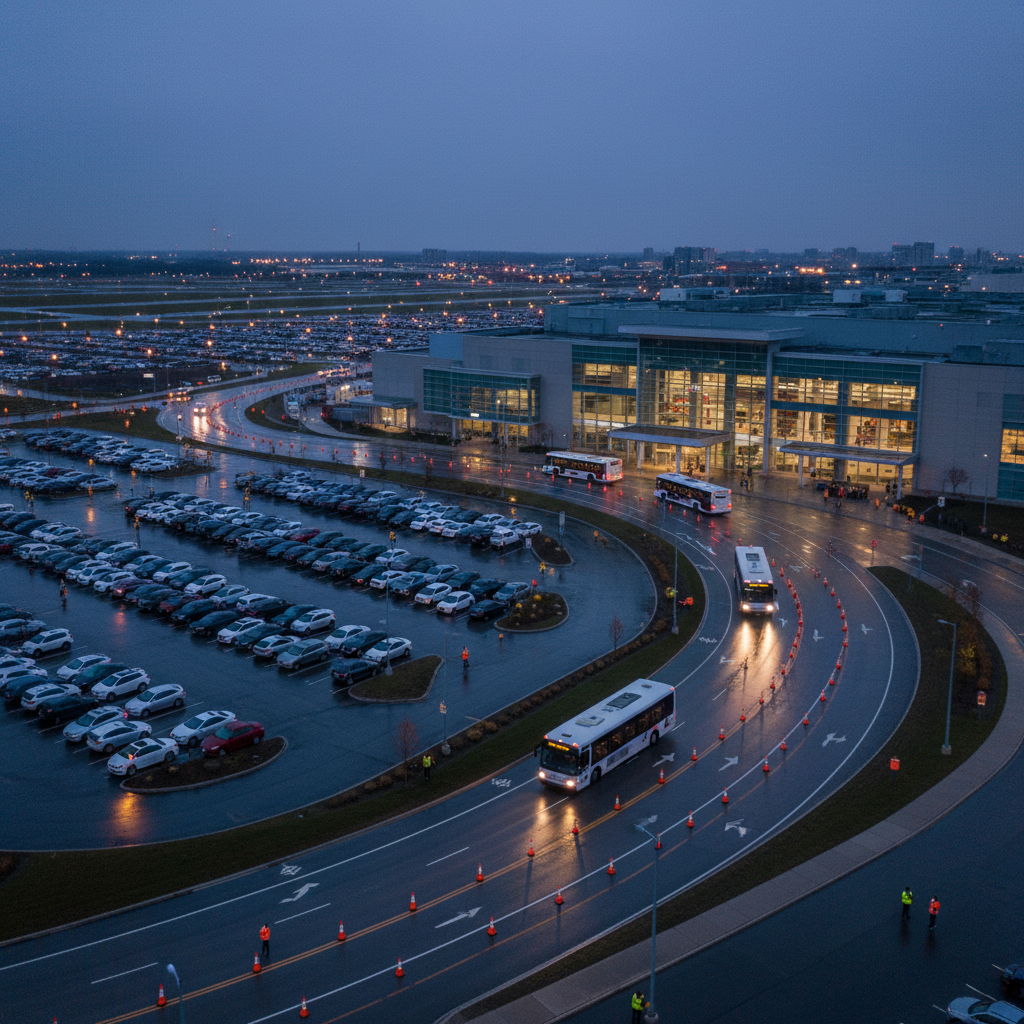
Event parking logistics management is the coordinated planning and real-time control of vehicle flow, parking capacity, wayfinding, staffing, shuttles, and safety to ensure guests arrive and depart smoothly. It aligns traffic engineering with guest experience so attendees park faster, walk less, and start your program on time without bottlenecks.
Quick Answer
Event parking logistics management combines capacity forecasting, traffic routing, staffed entry points, and wayfinding to move vehicles in minutes, not hours. At 75 Derry Rd W (Mississauga Convention Centre), 700 on-site parking spots, shuttle options, and coordinated signage streamline corporate events, weddings, and trade shows across the GTA.
Summary
This guide shows planners how to design, staff, and run frictionless event parking at Mississauga Convention Centre (MCC), near Toronto Pearson International Airport and major 400-series highways.
- What you’ll learn: Practical capacity math, lot zoning, routing plans, wayfinding, shuttle planning, accessibility, incident response, and post-event analytics.
- Why it matters: Parking is your first impression; it impacts satisfaction, dwell time, and on-time starts. MCC offers 700 on-site spaces and seven flexible halls serving 2,200+ guests.
- Who it’s for: Corporate planners, HR and marketing teams, school administrators, and wedding/social coordinators across the GTA.
- Outcomes: Faster ingress/egress, fewer queuing delays, safer walk paths, and better reviews.
Above the Fold: Hook + Table of Contents
Parking is where guests decide if your event is organized. Nail this and everything else feels elevated.
Design parking for people, not just cars. Map demand by arrival wave, assign zones, staff decision points, sign every turn, and communicate early. MCC’s accessible location and on-site capacity make execution simpler when you plan with clear roles and rehearsed traffic control.
- What Is Event Parking Logistics Management?
- Why Parking Logistics Matters
- How Parking Logistics Works
- Types, Methods, and Approaches
- Best Practices (2026)
- Tools and Resources
- Case Studies and Examples
- FAQ
- Conclusion + Key Takeaways
- Related Articles
What Is Event Parking Logistics Management?
Event parking logistics management is the end-to-end design and operation of parking for events. It spans forecasting, zoning, staffing, traffic flow, signage, shuttles, accessibility, and safety so attendees can park quickly and walk a short, safe route to the venue.
- Core scope: Demand modeling, capacity allocation, traffic control plans, wayfinding, staffing schedules, and incident response.
- At MCC: 700 on-site spots, seven ~4,250 sq ft halls, and proximity to highways 401, 410, 407, and 403 reduce off-site overflow risk for 2,200+ guest events.
- Deliverables: Operations timeline, lot/zone maps, staffing matrix, signage list, radio channels, shuttle routes, and guest communications.
- Outcomes to track: Peak queue length, average entry time per vehicle, walk time from farthest stall, and departure clearance time.
- Guest experience: Clear signs, visible attendants, short walks, well-lit paths, and quick exits set a premium tone before guests enter the ballroom.
Here’s the thing: when the lot feels intuitive, guests relax. That increases on-time starts for conferences, smooth seating for galas, and fewer late-arrival disruptions during wedding ceremonies.
Why Parking Logistics Matters
Parking is your event’s first impression. Efficient flow, short walks, and visible help reduce stress and boost satisfaction. At high-volume venues like MCC, organized ingress and egress protect on-time agendas and improve safety for large GTA audiences.
- First-impression effect: Guests judge event quality in the first 15 minutes. A smooth arrival earns trust before registration begins.
- Program timing: Minimizing late arrivals reduces agenda slippage for keynotes, demos, and ceremony starts.
- Safety and liability: Controlled speeds, lit paths, and marshaled crossings mitigate incidents during peak traffic.
- Accessibility: Reserved ADA-accessible stalls near entrances and curb ramps support mobility needs for inclusive experiences.
- Brand consistency: Corporate and wedding planners want elegance and order everywhere—from parking lines to ballroom lighting.
- Local context: MCC’s location near Toronto Pearson shortens shuttle times for VIPs and exhibitors flying in, improving schedule certainty.
In our experience supporting large corporate meetings and multicultural celebrations, arrival calm sets the tone for the night—and your post-event survey scores show it.
How Event Parking Logistics Management Works
Parking operations work by matching demand waves with staffed capacity and clear routing. Build an operations timeline, assign zones and roles, sign every decision point, and communicate arrival instructions before guests depart.
- 1) Forecast demand: Break RSVPs by arrival wave (e.g., 30% in first 20 minutes for galas; doors-open spikes for expos).
- 2) Allocate zones: Prioritize accessible, VIP, supplier, media, and general parking to minimize conflicts and walking distances.
- 3) Route vehicles: Define entry/exit splits, left-turn restrictions, and one-way loops to prevent cross-traffic.
- 4) Staff decision points: Place attendants at forks and busy crosswalks where drivers hesitate.
- 5) Wayfinding: Use high-contrast arrow signage and portable lighting from curb to door.
- 6) Communications: Send arrival maps and shuttle details in pre-event emails and reminder texts.
- 7) Monitor and adapt: Use radios to open overflow and call shuttles as lots fill.
At MCC, seven elegant halls allow parallel events. That flexibility makes pre-assigned zones and clear stanchion lines essential so wedding and conference guests never mix queues.

Operations Timeline: Ingress to Egress
- Minus 30–60 days: Confirm hall capacities, create lot map, publish arrival instructions on invites and event sites.
- Minus 7 days: Finalize staffing counts, test radios, stage cones and signs, verify lighting and snow removal plans in winter.
- Event day (T–2 hours): Brief team, place signage, program loops, and test shuttle cadence.
- Doors open: Run peak ingress plan; supervisors roam to balance lanes.
- Program start: Scale down to skeleton crew; watch for late influxes.
- Show close: Trigger egress routes, hold pedestrians while exit waves clear, and coordinate post-show shuttles.
Parking Roles and Responsibilities
- Parking Lead: Owns plan, radios, contingencies, and decisions under pressure.
- Zone Captains: Manage VIP, accessible, exhibitor, and general zones; redeploy staff as lots fill.
- Attendants/Marshals: Direct vehicles, protect crosswalks, and assist guests with questions.
- Shuttle Coordinator: Manages vehicle loops and communicates ETAs to the lead.
- Safety Officer: Monitors lighting, slip hazards, and weather-related adjustments.
Sample Process Table
| Phase | Goal | Key Actions | Primary Owner |
|---|---|---|---|
| Forecast | Right-size capacity | Segment arrivals; assess lot counts | Parking Lead |
| Design | Reduce conflict points | One-way loops; left-turn limits | Parking Lead |
| Staff | Cover decision nodes | Assign captains; brief radios | Zone Captains |
| Communicate | Set expectations | Email/SMS maps; shuttle info | Event Team |
| Operate | Keep flow moving | Monitor queues; open overflow | All |
| Debrief | Improve next time | Measure KPIs; update SOPs | Parking Lead |
Local Tips
- Tip 1: For peak arrivals from Highway 401 and 410, schedule staggered check-in times to spread the 15-minute surge common to GTA commutes. Use signage at 75 Derry Rd W to pre-sort VIP, accessible, and general lanes.
- Tip 2: Winter events need pre-booked snow clearance and extra grit on crosswalks. Build a 10-minute buffer in your parking timeline for boots and coats at the curb during cold snaps.
- Tip 3: During trade shows with large exhibits, stage exhibitor vans earlier than guest arrivals to avoid blocking guest loops near the main entrance and patio area.
IMPORTANT: These tips align with MCC’s on-site capacity and location near Toronto Pearson, reducing shuttle time for VIPs and out-of-town presenters.
Types, Methods, and Approaches
Use a layered approach: zone-based self-park, prioritized accessible/VIP areas, timed exhibitor windows, and shuttles for overflow. Combine clear lanes, stanchions, lighting, and radios to maintain high throughput and safety.
- Zone-based self-park: Color-code zones on your map and email before show day; assign ushers to protect zone borders.
- Accessible & VIP: Hold these closest to the entrance with cones, bollards, and clear markings; train ushers to enforce respectfully.
- Exhibitor logistics: Stage earlier with dock-style controls; verify load-in/out windows to avoid guest conflicts.
- Rideshare & taxi: Create a separate loop. Wayfinding arrows should never point two flows at each other.
- Bus/shuttle operations: Fixed headways (e.g., every 8–12 minutes) during ingress; on-demand bursts at egress.
- Overflow planning: Identify nearest overflow options in advance; brief the radio call sign that triggers the move.
For corporate planners, this structure mirrors how you assign breakout rooms. Define where each “audience” parks, then communicate early and often.
Best Practices for 2026
The best approach is to publish arrival maps, pre-sort vehicles at the curb, staff conflict points, and keep lighting and signage consistent from street to door. Validate with radio drills and walk the guest path in low light the night before.
- Publish early: Put arrival maps in invites and reminder emails; include GPS-safe links and screenshots.
- Pre-sort at the curb: Cones and attendants channel VIP, accessible, and general cars into separate flows.
- Light the path: Temporary LED towers reduce slips and improve confidence after sunset.
- Train for hand signals: Standardize gestures and radio codes so mixed teams work as one.
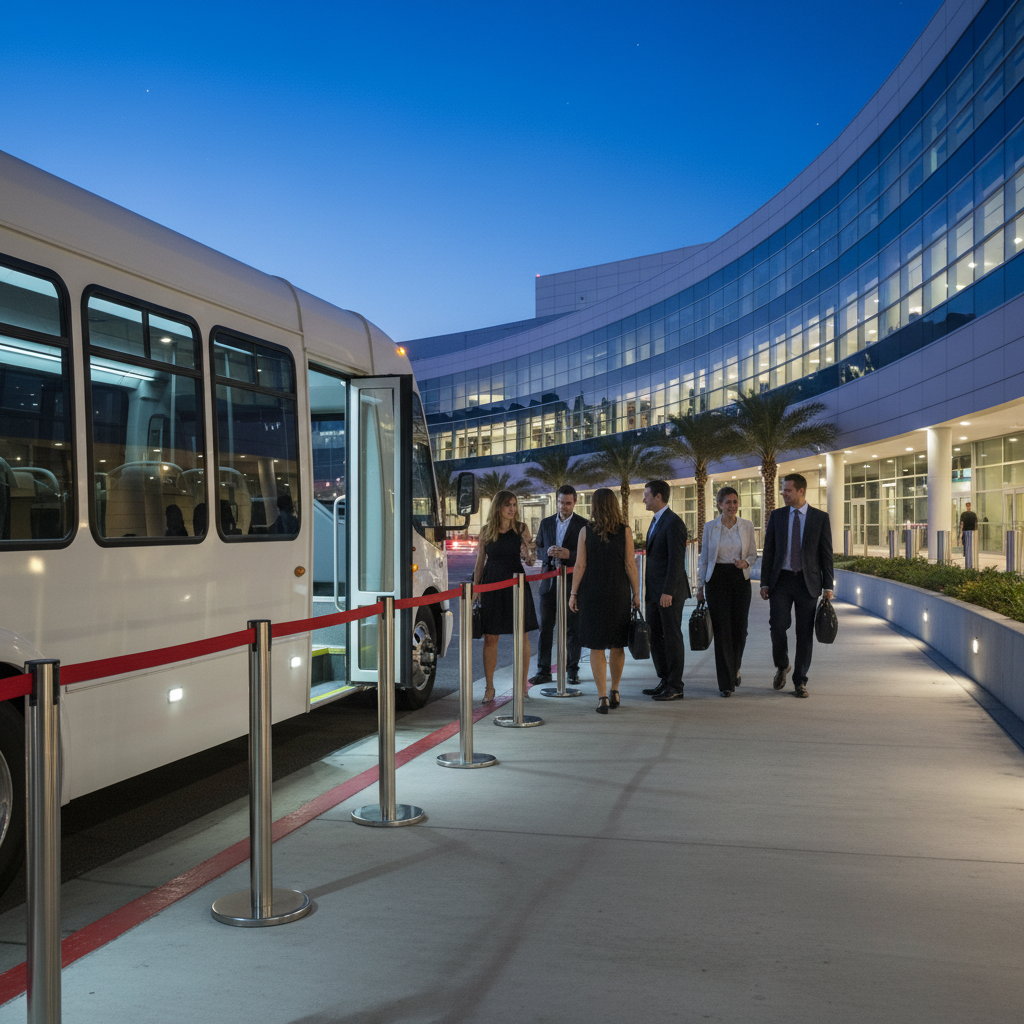
- Protect pedestrians: Marshal crosswalks and consider stanchions to create defined walk lanes.
- Weather playbooks: Wind and snow change signage stability and braking distances—adjust spacing and speed prompts.
- Measure results: Track average entry time, max queue length, and time-to-clear at egress to improve next time.
Consistency matters. Keep arrow colors, cone spacing, and staff vests uniform so drivers instantly interpret what to do.
Tools and Resources
Use radios with labeled channels, portable LED towers, high-contrast signage, cones/barriers, stanchions, and detailed maps. Pair gear with a plain-language arrival guide that guests actually read on their phones.
- Communications: Two-way radios, backup batteries, channel labels, and a simple radio protocol card.
- Signage kit: Arrows, zone letters, and reflective markers; pre-staged by placement order.
- Lighting: LED towers and headlamps for staff during evening events.
- Traffic control: Cones, bollards, and barricades for lane definition and no-parking zones.
- Wayfinding aids: Floor-standing signs and stanchions leading to registration doors.
- Maps and printouts: Laminated lot maps for captains; QR codes on invites for guests.
When working with clients in Mississauga, we’ve found that the most effective tool is the pre-event email with a clear map and a one-line parking instruction. Guests actually follow it.
Case Studies and Real-World Examples
Anchor every plan to clear zones, visible staff, and early communication. These examples show how MCC teams reduce wait times and keep programs on schedule across event types.
1) Corporate Conference With Parallel Sessions
- Context: 1,000+ attendees across multiple halls; arrivals compressed into a 30-minute window.
- Plan: Two entry lanes, VIP loop nearest the main doors, and rideshare redirected to a side loop to prevent curb pile-ups.
- Result: Average entry time under 4 minutes; registration lines stayed inside the lobby despite rain.
- Tip: Link to your venue selection playbook; MCC’s corporate event venue rental guide helps align room flow with parking flow.
2) South Asian Wedding Reception
- Context: Large family arrivals with elders; priority on proximity and accessibility.
- Plan: Accessible stalls and VIP family zone closest to entrance; ushers stationed at crosswalks.
- Result: Ceremony started on time; grandparents avoided long walks thanks to reserved zones.
- Tip: For overall planning context, see MCC’s page on what events you can host at MCC.
3) Trade Show With Exhibitor Vans
- Context: Early exhibitor load-in overlapped with general audience arrivals.
- Plan: Dedicated exhibitor window pre-doors; cones protected the guest loop and kept loading out of sight-lines.
- Result: Zero guest conflicts at curb; egress cleared in under 25 minutes after show close.
- Tip: Review MCC’s how to choose an event venue to align exhibit floor entries with parking wayfinding.
4) School Prom and Graduation
- Context: High-volume drop-offs with mixed parent and student vehicles.
- Plan: One-way drop-off loop with marshals; stanchions created a safe pedestrian channel to the doors.
- Result: Clear separation kept the curb safe and photo-friendly; no vehicle cross-backs.
- Tip: MCC’s on-site parking resources highlight capacity advantages for school events.
Frequently Asked Questions
The fastest gains come from pre-event communication, staffed decision points, and consistent wayfinding from street to door. These quick answers address what planners ask most.
- How do I size parking for my event?
Estimate vehicles by group size and arrival mode. For corporate sessions, plan roughly 1 car per 2–3 attendees, adjusted for carpools, shuttles, and rideshare demand. Then zone VIP, accessible, exhibitor, and general parking to reduce conflicts, and monitor in real time to open overflow. - What’s the best way to avoid curbside congestion?
Create a separate rideshare/taxi loop, enforce one-way traffic at the curb, and staff crosswalks. Use cones to hold a small buffer area for unexpected stops and keep VIP and accessible areas clearly delineated with bollards and signage. - Do I need shuttles if I have on-site parking?
Shuttles help during peak ingress and egress, or when protecting close-in stalls for accessibility and VIP. Fixed headways during arrivals and on-demand bursts at close reduce walk times and prevent traffic from backing up to the street. - How should I prepare for winter events?
Pre-arrange snow and ice removal, add lighting, and widen cone spacing to account for longer braking distances. Build a buffer in the schedule for coat handling and slower curbside movements. Test walk paths the evening prior under similar conditions. - What KPIs matter most?
Track average entry time per vehicle, peak queue length, percent of guests in priority zones, incident count, and total time-to-clear after close. Use these to tune staffing and signage for the next event.
Conclusion and Key Takeaways
Plan for waves, staff the forks, sign every move, and light the walk. MCC’s on-site capacity, location, and experienced teams make it easier to deliver a calm, premium arrival for any GTA audience.
- Design for arrival waves: Build lane capacity for the first 20 minutes.
- Protect priority users: Accessible and VIP zones stay closest and clearest.
- Communicate early: Share maps and one-line instructions guests can follow.
- Measure and improve: Use entry time and egress clearance as your compasses.
Plan Your Next Event With Confidence
Align room flow, registration, and parking with a single playbook. Explore MCC’s corporate event venue rental insights to connect logistics with agenda design, or book a walkthrough to see access routes and signage placements in person.
Key Takeaways
- Event parking logistics management is the bridge between city traffic and your show’s on-time start.
- MCC’s 700 on-site spaces plus highway and airport access simplify large-event operations.
- Simple maps, clear signs, and trained staff deliver the biggest wins fast.
Soft CTA
Need a custom parking plan for a conference, wedding, or trade show? Our team can walk the lot, sketch routes, and align staffing to your agenda.
Related Articles
Looking to go deeper on full-event design? These adjacent planning topics help you integrate parking with programs, menus, and guest experience.
- Designing guest flows from parking lot to registration
- Creating inclusive arrival experiences for accessible needs
- Coordinating exhibitor load-in with attendee ingress
- Lighting and signage setups that photograph beautifully at night
Featured Image Alt (context): Wide aerial of a large event parking lot with attendants and cones guiding vehicles near a modern convention venue at dusk.