 20 September, 2026
Last updated: October 2026
What should you look for in a corporate event venue?
The best corporate venue is not simply the room with the largest capacity. It is the space that supports your agenda from guest arrival through registration, presentations, breaks, networking, meals, and departure. A venue should make the program easier to operate, not require the planning team to coordinate disconnected rooms, caterers, production suppliers, and parking arrangements.
Start with five questions: how many people will attend, what must they do during the event, which spaces must run at the same time, what technology will presenters need, and how will food and traffic move through the building? These questions reveal whether you need one flexible hall, several concurrent rooms, an exhibition floor, or a combination of all three.
Capacity should support the agenda, not just the guest list
Headcount is only the starting point. A 300-person conference may need a plenary room, three breakout rooms, a registration area, sponsor space, and a meal area. A 150-person leadership event may need fewer seats but more room for a stage, executive tables, demonstrations, and an evening reception.
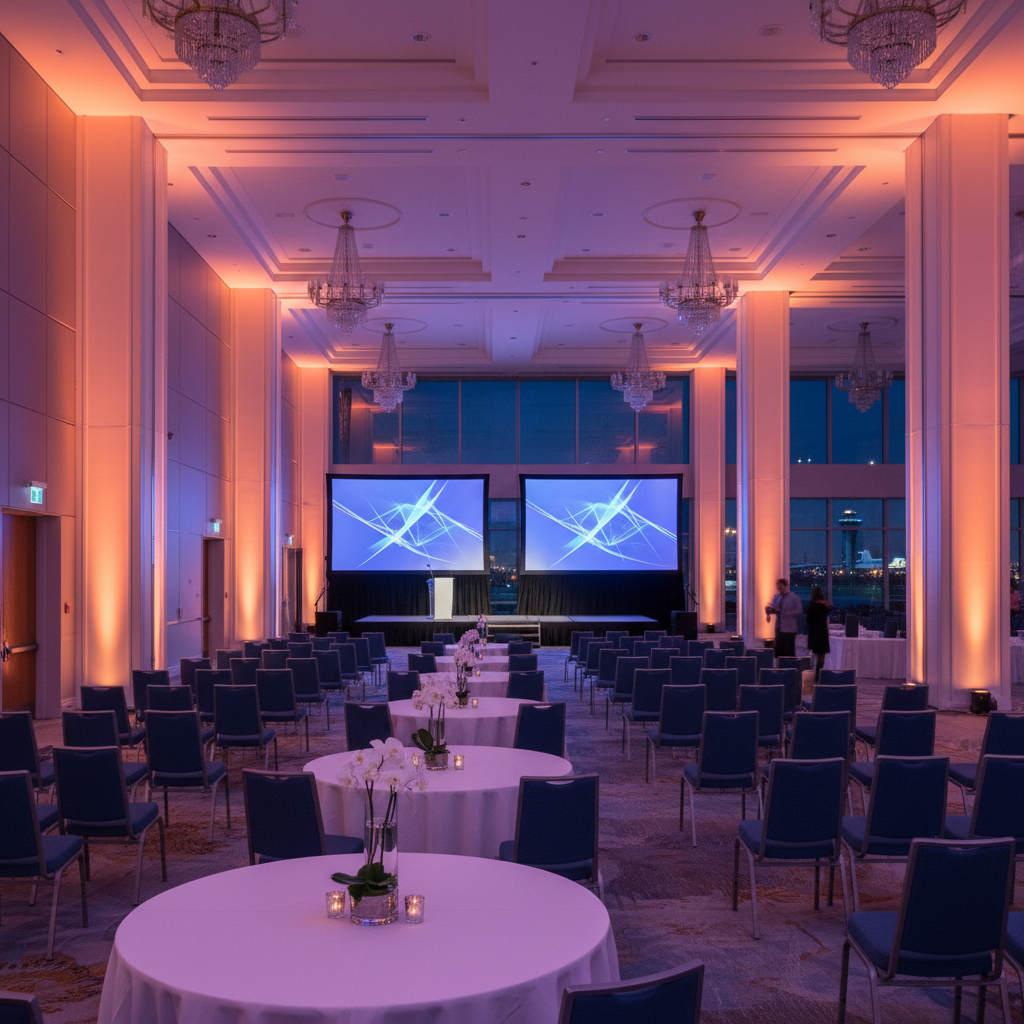
Mississauga Convention Centre has seven elegant halls of approximately 4,250 square feet each and a total capacity of more than 2,200 guests. That modular footprint allows planners to use one room for a focused meeting, combine halls for a general session, or run several program tracks under one roof.
Check how the venue supports different room setups
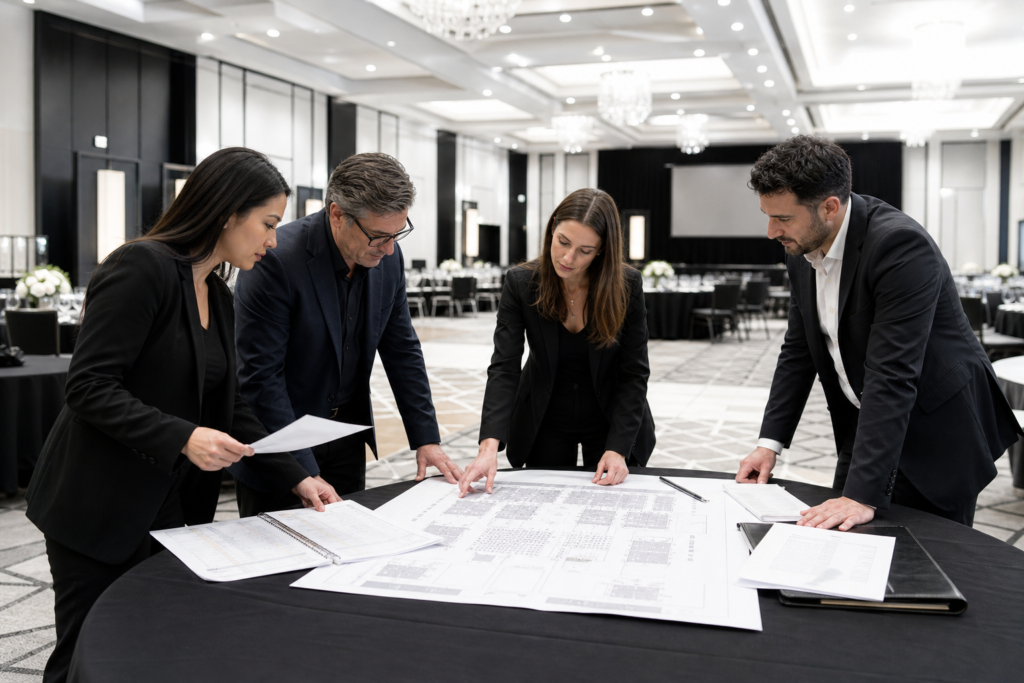
Ask to see proposed floor plans rather than relying on a capacity number. Theater seating usually accommodates more attendees and works well for keynotes, town halls, and product announcements. Classroom seating uses more floor area but gives participants writing surfaces for training and workshops. Banquet rounds support meals and awards, while an expo arrangement needs aisles, booth access, power, demonstrations, and networking space.
A strong venue conversation should cover sightlines, stage position, registration placement, food-service routes, accessible paths, speaker holding areas, and the distance between concurrent rooms. These details affect the attendee experience as much as the room itself.
Evaluate the services attached to the room
A rental decision should include more than the physical hall. Confirm how audiovisual equipment, lighting, staging, technical support, catering, décor, parking, load-in, signage, and event-day coordination are handled. When several of these services are managed in-house, the planning team has fewer suppliers and fewer handoffs to track.
For a broader pre-site comparison, use this guide on how to choose an event venue in Mississauga. It is especially useful when stakeholders need a consistent checklist for comparing acoustics, accessibility, layout flexibility, guest flow, and operational support.
Why choose Mississauga for a corporate event?
Mississauga is practical for regional corporate programs because it connects local attendees with airport, highway, hotel, and business-district access. A venue near Toronto Pearson International Airport can reduce travel uncertainty for speakers, executives, vendors, and guests arriving from outside the GTA. Highway access is also important for teams travelling from Toronto, Brampton, Oakville, and other parts of the region.
Mississauga Convention Centre is located at 75 Derry Road West, minutes from major highways and Toronto Pearson International Airport. The location gives planners a recognizable arrival point while the venue’s approximately 700 on-site parking spaces help accommodate guests who drive.
Arrival planning affects the first impression
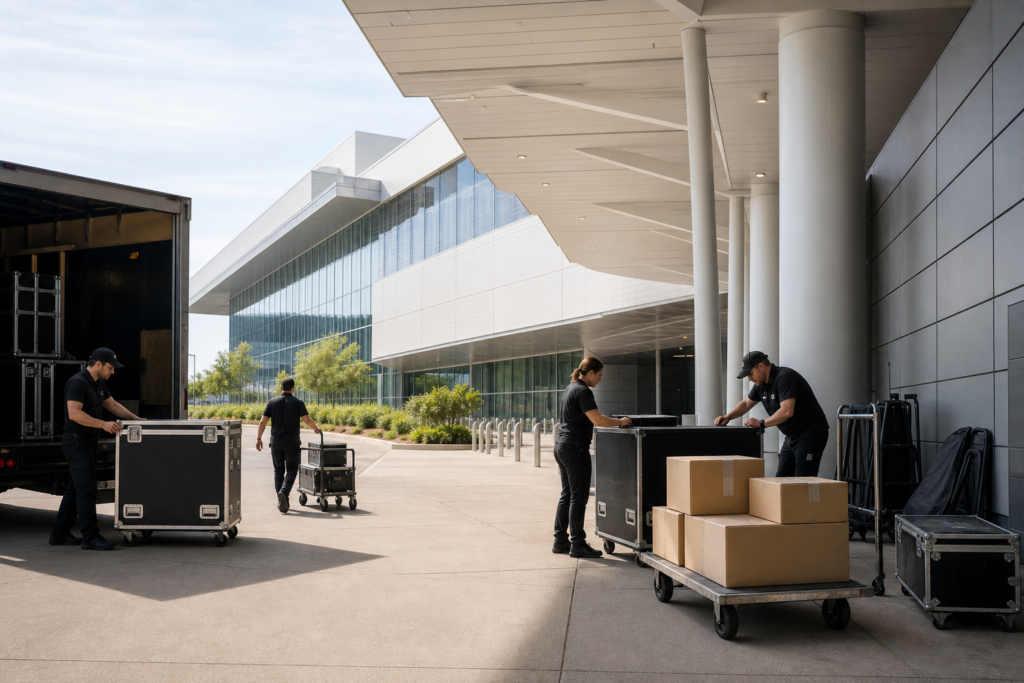
Arrival is part of the event experience. Guests need to know where to park, where registration begins, which entrance to use, and how to reach the correct hall. Exhibitors and production teams need a separate plan for deliveries, equipment, setup windows, and vehicle movement so that load-in does not conflict with guest arrival.
For programs at 75 Derry Road West, build signage and staffing into the timeline rather than treating them as final-day details. Place registration where it can be found quickly, provide clear directions to breakouts, and brief staff on how to answer common questions about parking, washrooms, coat check, meals, and accessibility.
Accessibility and comfort belong in the venue brief
Ask how attendees using mobility devices will move from parking to registration and from registration to each room. Also consider seating flexibility, washroom access, sound levels, lighting, rest areas, and the needs of guests who may require additional assistance. A venue that can discuss these points early helps planners create a more reliable experience.
Comfort also includes temperature, meal timing, hydration, coat storage, and the amount of space available between sessions. These operational details matter during full-day conferences, especially when guests are moving between plenaries, workshops, networking areas, and meals.
How does corporate event venue rental work?
The rental process should move from event objectives to a documented operating plan. Begin with the purpose of the event and finish with a confirmed run of show, floor plan, menu, technical specification, staffing plan, and arrival schedule. A clear sequence prevents the common mistake of choosing a room before understanding how the program will use it.
1. Define objectives, audience, and attendance
Write down what the event must accomplish. Training, sales alignment, executive communication, product education, recognition, and networking each require different room and service decisions. Then separate the expected registration number from the number likely to attend each activity, because not every guest will be in the same room at the same time.
Note the number of speakers, exhibitors, sponsors, VIPs, staff, vendors, and guests with dietary or accessibility requirements. This information gives the venue a more useful planning brief than a single estimated headcount.
2. Build the space plan
Map every activity before selecting the final hall combination. Include the main session, breakouts, registration, speaker preparation, storage, sponsor displays, meal service, networking, and staff operations. If the event changes from classroom training during the day to a banquet or reception in the evening, show both configurations in the plan.
Seven halls of approximately 4,250 square feet provide flexibility for programs that need simultaneous activities. Depending on the agenda, planners can use halls independently, combine them for a larger audience, or assign a dedicated room to operations and speakers.
3. Confirm the production specification
Prepare a simple technical brief covering presentation inputs, screen or LED requirements, microphones, playback, confidence monitors, lighting, stage dimensions, lecterns, recording, and internet-dependent demonstrations. Identify who owns each presentation file and when presenters must complete technical checks.
Mississauga Convention Centre provides professional audiovisual systems, lighting, staging, and technical support. The venue team can therefore be included in the show-flow conversation early, rather than being brought in only after the room and agenda have already been finalized.
4. Plan the food and beverage schedule
Food service should match the rhythm of the program. A short refreshment break may work for a tightly scheduled seminar, while a large conference may need multiple stations to prevent queues. Lunch format, dietary labels, hydration points, coffee service, and the location of meal areas all influence how quickly guests return to sessions.
Mississauga Convention Centre provides in-house catering across South Asian, Pakistani Halal, Middle Eastern, Sri Lankan, Caribbean, and Continental cuisines. Discuss menu preferences and dietary requirements during the initial planning stage so the service style supports the audience rather than becoming a last-minute add-on.
5. Confirm commercial and operational details
Before approval, ask for a written summary of the selected spaces, included services, setup and teardown times, catering arrangements, AV scope, staffing, parking, signage, access requirements, and cancellation or change procedures. Public rental pricing and availability are not stated consistently, so a direct enquiry is needed for an accurate proposal.
Have every decision-maker review the same version of the plan. This reduces late changes caused by different assumptions about room count, production, food service, or arrival times.

Which room layout suits your corporate event?
Room layout should follow the behaviour you want from attendees. A presentation-led event needs clear sightlines and consistent sound. A workshop needs writing space and surfaces for collaboration. An exhibition needs circulation, power, demonstrations, and time for conversations. A gala needs dining, stage visibility, service lanes, and a comfortable transition between meal and program.
| Layout | Best suited to | Planning priority |
|---|---|---|
| Theater | Keynotes, town halls, launches, and presentations | Sightlines, aisle access, stage position, and audio coverage |
| Classroom | Training, seminars, workshops, and certification sessions | Writing surfaces, screen visibility, power, and comfortable spacing |
| Banquet | Awards, dinners, galas, and recognition events | Table spacing, meal service, stage visibility, and guest circulation |
| Cabaret | Interactive sessions and collaborative presentations | Table orientation toward the stage and space for discussion |
| Expo | Trade shows, product demonstrations, and sponsor activations | Booth access, aisle width, power, registration, and traffic flow |
Leadership meetings and executive offsites
Leadership programs often need a polished general session, private breakouts, comfortable meal service, and a transition to an evening reception or dinner. A classroom or cabaret arrangement can support discussion during the day, while banquet seating can create a more formal recognition or networking experience later.
Keep executive movement simple. A clearly marked registration point, nearby breakout rooms, dependable presentation technology, and a quiet area for speakers or staff can make a smaller event feel highly organized.
Conferences, sales kickoffs, and training programs
Multi-track programs benefit from co-locating plenary and breakout spaces. Use one room for the opening session, then direct attendees to clearly named halls for concurrent content. A central registration and refreshment area can help maintain orientation while giving guests a place to network between sessions.
For training, allow more room per person than a theater presentation requires. Confirm power access, screen visibility, microphones, room temperature, and the timing of breaks. A venue with several halls can help keep different cohorts separate without requiring attendees to travel to another building.
Trade shows and exhibitions
Exhibitions require a different planning lens. The room must support booth dimensions, sponsor visibility, aisles, demonstrations, storage, power, load-in, registration, and food service without creating bottlenecks. Exhibitor instructions should state arrival windows, delivery routes, setup deadlines, and the location of freight or staging areas.
Mississauga Convention Centre’s halls can be arranged for combined expo space, while the venue’s Derry Road West location supports a planned load-in schedule. Staggered exhibitor arrivals are preferable to an unstructured rush, particularly when the show floor must be ready before guests enter.
Recognition galas and corporate celebrations
A gala combines hospitality with production. Confirm the banquet arrangement, stage and award presentation area, lighting, music playback, meal timing, speeches, and photo opportunities. The program should allow enough time for service while maintaining momentum between courses and recognitions.
In-house catering that spans several cuisines can help a diverse corporate audience feel considered. Menu labels and clear communication about Halal, vegetarian, and other dietary choices should be part of the guest experience rather than an afterthought.
How do AV and in-house catering affect the event?
AV and catering are often the two services most visible to attendees. A microphone failure interrupts the program immediately, while slow meal service can shorten networking and delay the next session. Treat both as core components of the venue decision.
Build a practical AV brief
List every content type that will appear on screen: slide decks, videos, demonstrations, remote contributors, sponsor loops, awards content, and walk-in music. State the number of presenters, microphone types, stage movements, playback devices, and confidence-monitor needs. Include a backup laptop, spare adapters, duplicate presentation files, and a named person who can approve last-minute changes.
Schedule a technical rehearsal for the most complex parts of the program. Speakers should test their own files, but the event producer should also verify aspect ratios, audio levels, clicker operation, lighting cues, and transitions. On-site technical support can reduce the time needed to diagnose microphone swaps, playback issues, and show-calling questions.
Coordinate food service with the agenda
Meal planning is a timing exercise as well as a menu decision. Estimate how many guests will be served at once, whether stations or plated service are more suitable, where queues will form, and how long guests need before the next session. Place coffee, water, and light refreshments where they are easy to reach without blocking registration or expo traffic.
When selecting in-house catering in Mississauga, give the venue the audience profile early. South Asian, Pakistani Halal, Middle Eastern, Sri Lankan, Caribbean, and Continental options can support a wide range of corporate preferences, but the final menu and service plan should be confirmed against the actual guest requirements.
What should the planner confirm before event day?
A detailed checklist protects the program from small omissions that become visible under pressure. Use one shared document for the venue, production team, caterer, speakers, exhibitors, and internal stakeholders. Assign an owner and deadline to every open item.
Six to eight weeks before the event
- Confirm the event objective, date, attendance range, agenda, and preferred hall combination.
- Approve the initial room layouts, registration location, meal areas, breakouts, and sponsor zones.
- Identify speakers, exhibitors, VIPs, accessibility requirements, and dietary considerations.
- Request the proposed AV, staging, lighting, signage, décor, and catering scope in writing.
- Set the approval process for budgets, artwork, menu selections, and program changes.
Two to four weeks before the event
- Submit the final or working headcount and identify expected changes.
- Share presentation specifications, speaker instructions, file deadlines, and rehearsal requirements.
- Confirm menu selections, dietary labels, meal timing, refreshment locations, and service style.
- Finalize registration, directional signs, room names, sponsor branding, and accessibility information.
- Issue exhibitor load-in windows, delivery instructions, booth requirements, and teardown timing.
- Review the event-day contact list and escalation process with the venue team.
One week before the event
- Distribute the final run of show, floor plan, contact sheet, and venue schedule.
- Test presentation files and identify backup devices, adapters, microphones, and batteries.
- Confirm speaker arrivals, registration staffing, coat check, parking directions, and VIP handling.
- Walk through meal and break transitions so the agenda does not create avoidable queues.
- Verify the load-in route and ensure production, exhibitors, and guest arrivals have separate timing.
On event day
- Complete a room and signage check before guests arrive.
- Test microphones, playback, slides, lighting cues, stage furniture, and confidence monitors.
- Brief registration, venue, AV, catering, security, and program staff together.
- Keep a short buffer between sessions to absorb questions, room changes, and technical adjustments.
- Monitor traffic at entrances, food stations, breakouts, and expo aisles.
- Record decisions and issues so the post-event review produces useful improvements.
How to keep approvals moving
Corporate events often involve procurement, marketing, HR, executives, speakers, and external suppliers. A single decision tracker should show the current choice, the person responsible, the deadline, and any dependency. For example, the final screen specification may depend on the stage design, while the catering quantity may depend on registration data.
Schedule a venue walkthrough when several stakeholders need to understand the space. If travel is difficult, a virtual review can still help teams examine layouts, arrival routes, production positions, and meal-service assumptions before approving the plan.
Which corporate events can the venue accommodate?
Mississauga Convention Centre hosts corporate meetings, conferences, seminars, exhibitions, trade shows, and gala-style events. The seven-hall configuration supports both focused programs and larger events that require separate rooms for plenaries, breakouts, meals, exhibitors, and staff operations.
A meeting may use one hall with a boardroom-style or classroom arrangement. A conference can combine a larger general session with concurrent tracks. An exhibition can use combined halls for booths and demonstrations, while a recognition event can shift the room toward banquet seating, stage programming, and dinner service.
The right recommendation depends on the actual agenda, attendance, setup, and service requirements. Ask the venue to respond to your event brief rather than selecting a package based only on a room name or advertised maximum.
What information should you include in a venue enquiry?
A useful enquiry allows the venue to recommend a realistic layout and service plan. Include the preferred date or date range, event type, estimated attendance, arrival and departure times, number of rooms, agenda outline, food requirements, AV expectations, exhibition needs, parking questions, and any accessibility considerations.
Also state what is still uncertain. A venue can often propose options for a changing headcount, but it needs to know which elements are fixed and which may move. For example, a flexible date may create more space choices, while a fixed keynote setup may determine the main hall before other rooms are assigned.
For planning ideas, compare the venue’s corporate event formats and package options with your internal requirements. The final proposal should make clear what is included, what is optional, which services are supplied in-house, and which items require separate coordination.
Corporate event venue rental FAQ
What is included in corporate event venue rental in Mississauga?
Inclusions vary by venue and event plan, so request a written proposal. At Mississauga Convention Centre, the available in-house services include professional audiovisual systems, lighting, staging, technical support, and catering, while the building provides seven halls and approximately 700 on-site parking spaces. Confirm the exact room, setup, service, and timing requirements for your event.
How much does corporate event venue rental in Mississauga cost?
There is no consistently published rental price that applies to every event. Cost depends on the date, halls, attendance, setup, AV, staging, catering, staffing, décor, and timing. Contact the venue with a complete event brief to receive an accurate proposal rather than relying on a generic estimate.
Is Mississauga Convention Centre suitable for a conference with breakout rooms?
Yes, its seven halls of approximately 4,250 square feet each can support a plenary and concurrent sessions, subject to the final capacity and layout plan. The venue can also coordinate AV, staging, catering, registration, and other event-day requirements. Ask for a floor plan based on your expected attendance and agenda.
Does the venue provide in-house catering for diverse corporate groups?
Yes. Mississauga Convention Centre’s in-house catering includes South Asian, Pakistani Halal, Middle Eastern, Sri Lankan, Caribbean, and Continental cuisines. Menu choices, dietary accommodations, service style, and quantities should be confirmed during proposal development.
Is parking available for a large corporate event?
The Centre has approximately 700 on-site parking spaces. Include arrival patterns, coach or vendor requirements, accessible parking needs, signage, and peak arrival times in the event plan so parking and guest movement can be reviewed with the venue team.
Plan your Mississauga corporate event
Start with your objectives, attendance, agenda, room layouts, production needs, menu requirements, and arrival plan. Mississauga Convention Centre at 75 Derry Road West gives planners a scalable venue with seven halls, in-house AV and catering, more than 2,200 total guest capacity, and approximately 700 parking spaces.
Contact Mississauga Convention Centre with your preferred date, event format, estimated attendance, and service requirements to discuss venue availability and the next planning step.