


 20 September, 2026
Last updated: October 2026
Planning a prom is more than finding an attractive ballroom. The venue must support a school-sanctioned event with clear supervision, accessible movement, reliable sound, practical food service, and a schedule that students, staff, families, and suppliers can follow.
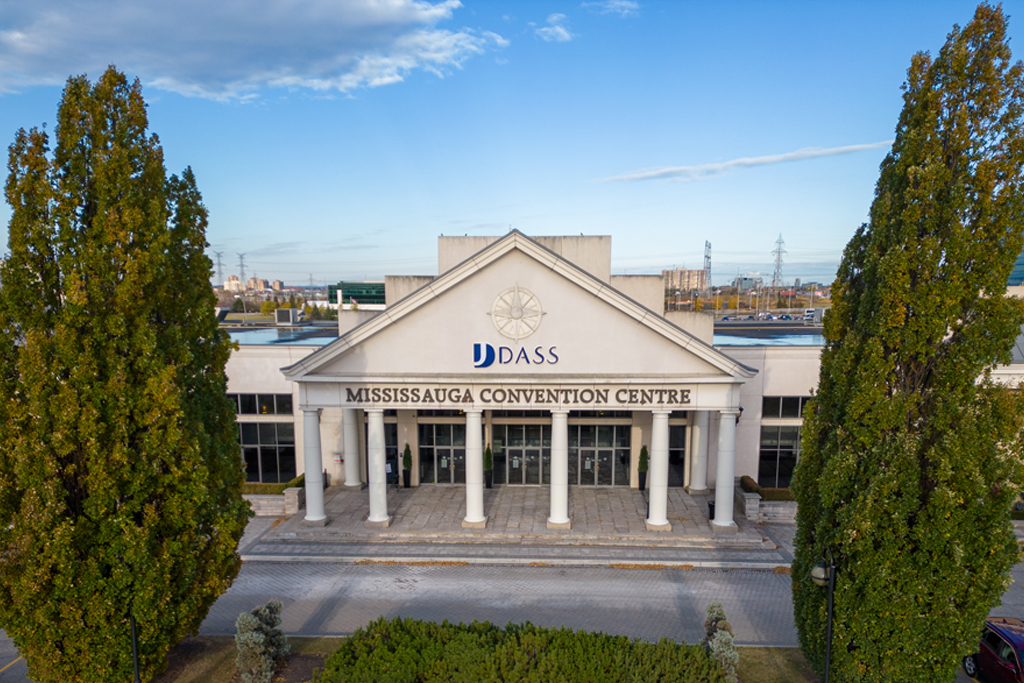
For schools comparing a prom venue in Mississauga, Mississauga Convention Centre offers seven halls of approximately 4,250 square feet each, professional audiovisual systems, lighting, staging, technical support, in-house catering, and approximately 700 on-site parking spaces. Its location at 75 Derry Road West is minutes from major highways and Toronto Pearson International Airport, making arrival planning relevant for schools across Mississauga, Brampton, Toronto, and the wider GTA.
What this school prom venue planning guide covers
This guide explains how to choose and prepare a venue without leaving important decisions until the event week. It covers room sizing, the venue tour, catering, the event AV checklist, accessibility, supervision, a 16-week timeline, and questions to ask before signing an agreement.
- What school prom venue planning includes
- How to choose a prom venue
- The planning process from date to event day
- Venue types and when they fit
- The prom venue checklist
- The 16-week planning timeline
- Inclusive catering
- The event AV checklist
- Safety, accessibility, and guest flow
- Common mistakes
- Frequently asked questions
What does school prom venue planning include?
School prom venue planning is the end-to-end coordination of the space, schedule, services, people, and safety arrangements needed for a school dance. It includes selecting a date and hall, estimating attendance, designing the floor plan, confirming food service, planning sound and lighting, assigning chaperone posts, and rehearsing the run of show.
Because a prom may be organized or sanctioned by a school, the committee should involve the principal or designated administrator early. Ontario school-board guidance commonly treats off-site proms as school-related events requiring attention to student focus, supervision, accessibility, and venue arrangements. Each school should also follow its own board policies and approval process.
The planning goal is not simply to fill a room. It is to make the route from arrival to check-in, photographs, dinner, dancing, and departure easy to understand and easy to supervise.
How to choose a prom venue in Mississauga
The strongest venue decision balances room size, services, accessibility, travel, and the amount of work your committee can realistically manage. Start by writing down non-negotiables before touring venues, rather than allowing décor or a dramatic entrance to decide the event.
Start with attendance and room fit
Estimate expected attendance from eligible students, likely ticket sales, staff, chaperones, and invited guests. A room that is technically large enough may still feel uncomfortable once dining tables, a dance floor, a stage, a photo area, a DJ position, and circulation routes are included.
Ask the venue to show the proposed layout rather than quoting capacity alone. Flexible halls are useful when attendance is uncertain because the committee can choose one room or combine spaces without rebuilding the entire supplier plan.
Compare included services, not just the room
A lower room price can become a more complicated event if the school must separately source speakers, lighting, staging, tables, caterers, technicians, and setup labour. Compare what is included, who operates it, when suppliers may load in, and who responds if equipment fails.
A full-service venue can reduce the number of handoffs. At Mississauga Convention Centre, in-house audiovisual support, lighting, staging, technical staff, and catering give the committee one venue team to coordinate with alongside its DJ or MC.
Consider arrival, parking, and travel
Ask how school buses, parent vehicles, rideshares, and accessible drop-offs will use the property at the same time. Confirm parking, exterior lighting, the covered arrival route if available, and where students wait before check-in. The Centre’s approximately 700 on-site parking spaces can help simplify arrival planning for a large event, but the committee should still publish arrival instructions.
Ask about accessibility before signing
Accessibility should be visible in the plan, not treated as a last-minute accommodation. Confirm accessible entrances, routes to the ballroom, restrooms, dining tables, stage or photo area, and any upper-level spaces. Ask how a student using mobility equipment can move through the same social areas as other students.
Inclusive-prom guidance emphasizes that the facility should be accessible to all students. Include this review in the first venue tour and document any changes needed before the agreement is finalized.
How school prom planning works step by step
A reliable process moves from high-impact decisions to detailed production. The order below keeps the committee from finalizing menus or decorations before it knows the date, attendance, room, approvals, and operating requirements.
- Set the event brief. Record the date range, grade or school groups, expected attendance, budget authority, theme, meal format, conduct expectations, and accessibility requirements.
- Confirm school approvals. Identify the principal, administrator, student leaders, parent representatives, and staff members who can approve the venue, contract, ticketing, and safety plan.
- Shortlist and tour venues. Walk the route from drop-off to check-in, coat check, photos, dining, dancing, restrooms, and exits. Take notes on bottlenecks and staff sightlines.
- Place a date hold. Popular spring Fridays may be limited. Confirm the hold period, deposit, cancellation terms, included services, setup time, and final headcount deadline.
- Build the room plan. Place tables, dance floor, stage, DJ, screens, food stations, water, photo areas, accessible seating, chaperone posts, and exits on one working floor plan.
- Confirm catering. Choose the meal format, dietary labels, allergy process, hydration stations, service timing, and staff contact for questions.
- Develop the AV plan. Confirm microphones, speakers, screens, lighting scenes, music handoffs, slideshow files, power, cable routes, and the technician’s show-call.
- Publish student information. Explain tickets, arrival, dress expectations, conduct, dietary submissions, accessibility requests, and departure procedures before the event week.
- Assign supervision. Place named adults at entry, check-in, dining, photo areas, water stations, dance-floor edges, restrooms or corridors where appropriate, and exits.
- Rehearse and document. Run the timeline with venue staff, check radios, review emergency routes, test AV, and distribute the final run of show.
Which type of venue fits a school prom?
The right venue type depends on the committee’s staffing, budget, desired atmosphere, and appetite for outside vendors. The comparison below focuses on planning effort rather than assuming one option suits every school.
| Venue type | Strengths | Questions to ask | Planning effort |
|---|---|---|---|
| Full-service ballroom | Integrated catering, AV, staging, tables, and event staff | Which services and setup hours are included? | Lower |
| Community centre | Potentially flexible room use and familiar local access | Who supplies food, sound, lighting, furniture, and technicians? | Medium to high |
| Museum or attraction | Distinctive setting and memorable photography | Are sound, dancing, food service, and load-in restricted? | Medium |
| Raw loft or warehouse | Creative control over the visual design | What infrastructure, rentals, permits, and labour are required? | High |
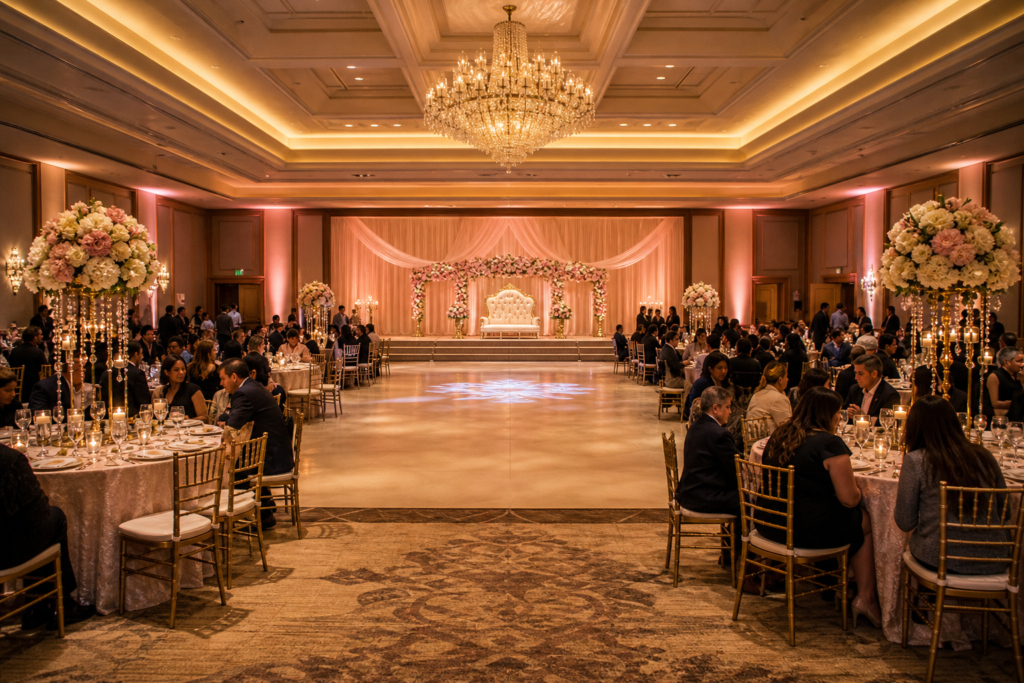
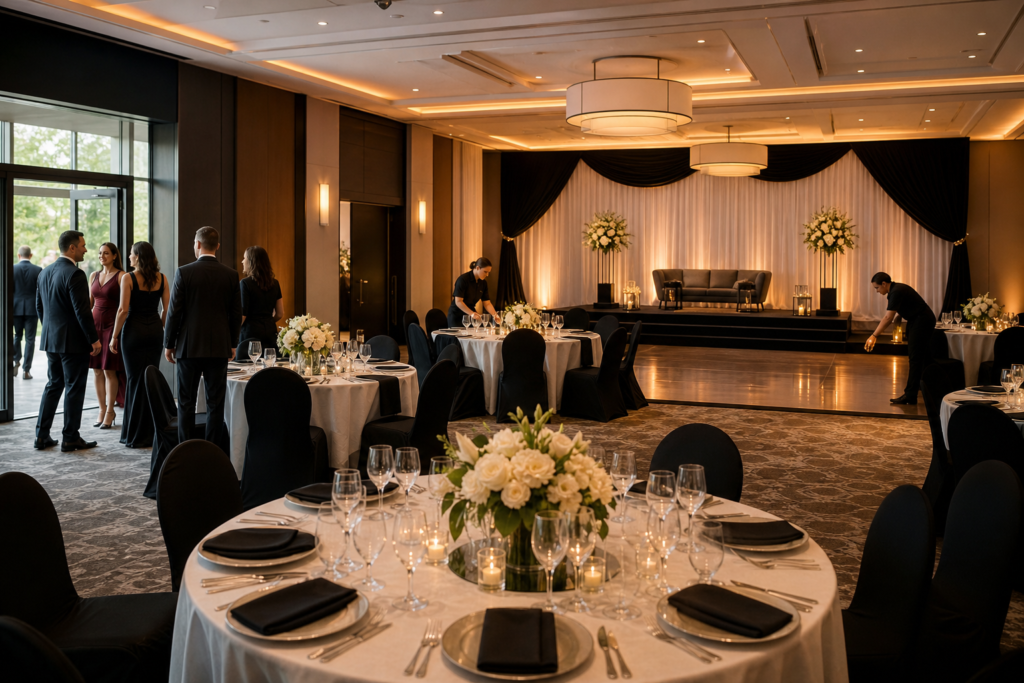
Seven similarly sized halls give Mississauga Convention Centre flexibility for different school groups and layouts. A committee may use one hall for a compact event or coordinate multiple halls for separate dining, photo, and dance areas, subject to the final venue plan.
Prom venue checklist: what to verify
Use this checklist during the first tour, then repeat the most important checks during the final walk-through. Ask for written answers where the agreement or event order depends on them.
Capacity and layout
- Expected students, staff, chaperones, and guests compared with the proposed layout.
- Enough space for dining, dancing, photography, check-in, coat storage, and circulation.
- Clear lines of sight for staff without placing adults in the middle of student activities.
- Water stations and food service positioned away from the busiest aisles.
- A floor plan showing accessible routes and seating.
Contract and operations
- Event hours, access time, setup and teardown windows, and overtime terms.
- Deposit, payment schedule, final attendance deadline, cancellation terms, and insurance requirements.
- Named venue contact for the planning period and event-day escalation.
- Rules for outside DJs, décor, photographers, signage, and deliveries.
- Parking, drop-off, coat check, waste removal, and lost-property procedures.
Catering and student inclusion
- Halal, vegetarian, and other requested options identified with clear labels.
- Allergy information collected through the school and shared with the catering contact.
- Separate utensils or service procedures where cross-contact is a concern.
- Meal timing that does not leave students waiting while the dance programme starts.
- Water and non-alcoholic beverages available without a long queue.
The 16-week school prom planning timeline
A 16-week schedule is a useful working model for a committee that already has a potential date. A school booking farther in advance can complete these decisions earlier, especially when spring dates are competitive.
| Timing | Primary decisions | Responsible group |
|---|---|---|
| Week 16 | Set objectives, projected attendance, date range, approvals, and venue shortlist | Administrator and committee |
| Weeks 15–14 | Tour venues, review layouts, confirm accessibility and parking, place a hold | Committee and venue |
| Weeks 13–12 | Review agreement, confirm deposit, select room configuration, establish budget | Administrator |
| Weeks 11–10 | Launch ticketing and communications; outline theme and conduct information | Student leaders and staff |
| Weeks 9–8 | Review attendance, discuss menu, collect dietary and accessibility information | Committee and caterer |
| Weeks 7–6 | Confirm floor plan, DJ or MC requirements, staging, screens, lighting, and photography | Venue and production team |
| Weeks 5–4 | Assign chaperones, draft arrival plan, map radios, and approve the run of show | School and committee |
| Weeks 3–2 | Finalize headcount, menu labels, seating, signage, music files, and student instructions | All leads |
| Week 1 | Complete final walk-through, test AV, confirm staff posts, and distribute contacts | Venue and school |
| Event day | Check setup, run a radio and microphone test, brief staff, and follow the show call | All event staff |
How to plan inclusive prom catering
Inclusive catering starts with information collected early and presented clearly on the night. A menu can be culturally varied without becoming operationally complicated if the committee agrees on a manageable number of stations, labels, and service points.
Mississauga Convention Centre’s in-house catering covers South Asian, Pakistani Halal, Middle Eastern, Sri Lankan, Caribbean, and Continental cuisines. Schools can use that range to create a menu that reflects their community while still checking ingredients, service procedures, and student-specific requirements.
Build a menu students can navigate
- Offer a small selection of popular mains, sides, and desserts rather than too many confusing choices.
- Use large, readable labels for Halal, vegetarian, vegan, allergy-aware, and other agreed categories.
- Use distinct serving utensils where the catering team recommends them.
- Place water and non-alcoholic drinks where students can reach them without crossing the dance floor.
- Share the menu and the process for dietary requests with families before the final deadline.
Stations can reduce queues, but they need enough space and staff. During the venue walk-through, observe where a line would form and move the station before it blocks an exit, photo area, or accessible route.
Event AV checklist for a school prom
Audio and lighting affect both the atmosphere and the event schedule. A detailed event AV checklist prevents the common mistake of treating the DJ’s equipment, venue systems, microphones, screens, and lighting as separate conversations.
Before the event
- Confirm who supplies the DJ console, microphones, speakers, screens, lighting, staging, and cables.
- Identify the sound operator or venue technician and give that person the final programme.
- Confirm power access, cable routes, speaker positions, sightlines, and accessible circulation.
- Provide slideshow or video files in the requested format and test them on the venue system.
- Prepare entrance, dinner, awards or prom-court, and peak-dance lighting scenes.
During the final test
- Check microphone volume from the stage and from the back of the room.
- Listen at dining tables as well as on the dance floor; announcements must remain intelligible.
- Confirm the DJ-to-MC handoff and the cue for speeches, dinner, photographs, and the final dance.
- Check that screens do not obstruct sightlines and that lighting does not create unsafe dark routes.
- Run a short show-call before doors open, with the school lead, DJ or MC, and venue technician present.
Safety, accessibility, and guest flow
A prom plan should make it easy for adults to see where students are, easy for students to find essential services, and easy for everyone to leave calmly. School-board policies determine the exact supervision requirements, so the committee should confirm its board’s expectations rather than relying on a generic ratio.
Design the movement plan
Separate arrival and departure instructions from the main entertainment schedule. Use signage for check-in, dining, photography, restrooms, and exits. Keep photo backdrops, water stations, and queues outside the main walking route where possible.
Assign and brief adults
Create a staffing map with names, locations, shift times, and radio call signs. Posts may include the entrance, check-in, dining area, dance-floor perimeter, corridors, photo zone, water station, and exits. Conduct a short radio check before doors open and explain how staff escalate a concern.
Confirm accessibility in practice
Do not stop at the entrance. Test the complete route to the ballroom, tables, restrooms, photo area, stage, and any quiet space. Leave sufficient table clearance and ensure that a student using a mobility aid can participate in photographs and dancing without being separated from peers.
Prepare for weather and transport
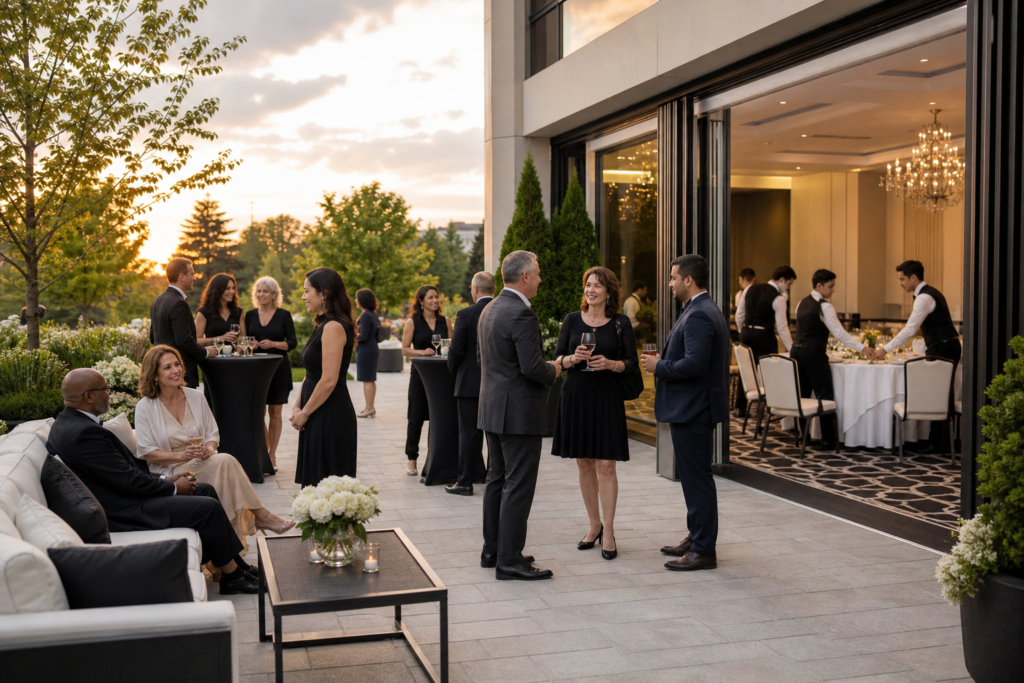
Mississauga spring weather can change quickly. Give buses and rideshares clear instructions, identify the safest waiting point, and confirm how coats, umbrellas, and wet footwear will be handled. A simple arrival plan reduces pressure at the doors and helps staff focus on check-in.
Common school prom planning mistakes to avoid
Booking by appearance alone
A beautiful room is not enough if it cannot accommodate your floor plan, equipment, food service, or accessibility needs. Ask to see a realistic setup and walk the complete guest route.
Leaving AV until the final week
Late AV decisions can affect the DJ contract, staging, screen content, electrical access, and programme timing. Assign one production lead and complete a technical test before event day.
Using capacity as the only sizing measure
Maximum occupancy does not show how the room will feel with tables, a dance floor, food stations, and staff posts. Compare the proposed layout with projected attendance and circulation needs.
Assuming dietary inclusion happens automatically
Options must be identified, labeled, and served consistently. Collect requests by a stated deadline and give the catering team one consolidated list.
Giving chaperones general instructions
“Keep an eye on the room” is not an operating plan. Provide fixed posts, rotations, radio details, escalation instructions, and a brief rehearsal.
Planning a prom at Mississauga Convention Centre
Mississauga Convention Centre is designed for school proms, graduations, social celebrations, meetings, and larger events. Its seven halls, approximately 4,250 square feet each, can support different layouts, while combined halls provide more than one configuration for dining, dancing, or photography. Overall venue capacity exceeds 2,200 guests, subject to the selected layout and event requirements.
The Centre’s in-house audiovisual systems, lighting, staging, and technical support can reduce the number of suppliers a school committee must coordinate. Its catering team provides South Asian, Pakistani Halal, Middle Eastern, Sri Lankan, Caribbean, and Continental options, allowing the menu conversation to reflect the school community rather than defaulting to one format.
When comparing the venue with alternatives, ask for a room diagram, service inclusions, access times, final headcount deadline, accessibility route, parking instructions, and the name of the event-day contact. Those details make the decision more useful than a room photograph or a capacity figure on its own.
For a broader venue-selection framework, review this Mississauga event venue checklist alongside your school’s approval and supervision requirements.
Frequently asked questions about school prom venue planning
How far in advance should a school book a prom venue?
Begin venue research several months before the event and use a focused 16-week plan once the date is available. Popular spring Fridays can fill early, so an initial date hold gives the school time to confirm approvals, room configuration, catering, AV, and setup access.
What should be included in an event AV checklist?
Include speakers, microphones, screens, lighting, staging, power, cable routes, file formats, DJ and MC handoffs, cue times, and the responsible technician. Test the system from the dance floor and dining tables, then run a short show-call before guests arrive.
How can a prom venue support students with accessibility needs?
The venue should provide an accessible route from arrival through check-in, dining, restrooms, photography, entertainment, and departure. Confirm the route during a site visit, preserve table clearance, and ask students or families what arrangements will support full participation.
How should schools organize prom supervision?
Create a staffing map with named adults, fixed posts, rotation times, radio call signs, and escalation instructions. Place coverage at arrival, check-in, dining, corridors, photo areas, the dance-floor perimeter, and exits according to the school’s own board guidance and risk assessment.
Start your school prom venue plan
A successful prom comes from matching the room and services to the school’s real requirements. Start with attendance, approvals, accessibility, supervision, catering, and the event AV checklist; then use the 16-week schedule to turn those decisions into a rehearsed event plan.
To discuss halls, layouts, catering, and technical support, contact Mississauga Convention Centre about your school prom requirements.