

 06 October, 2026
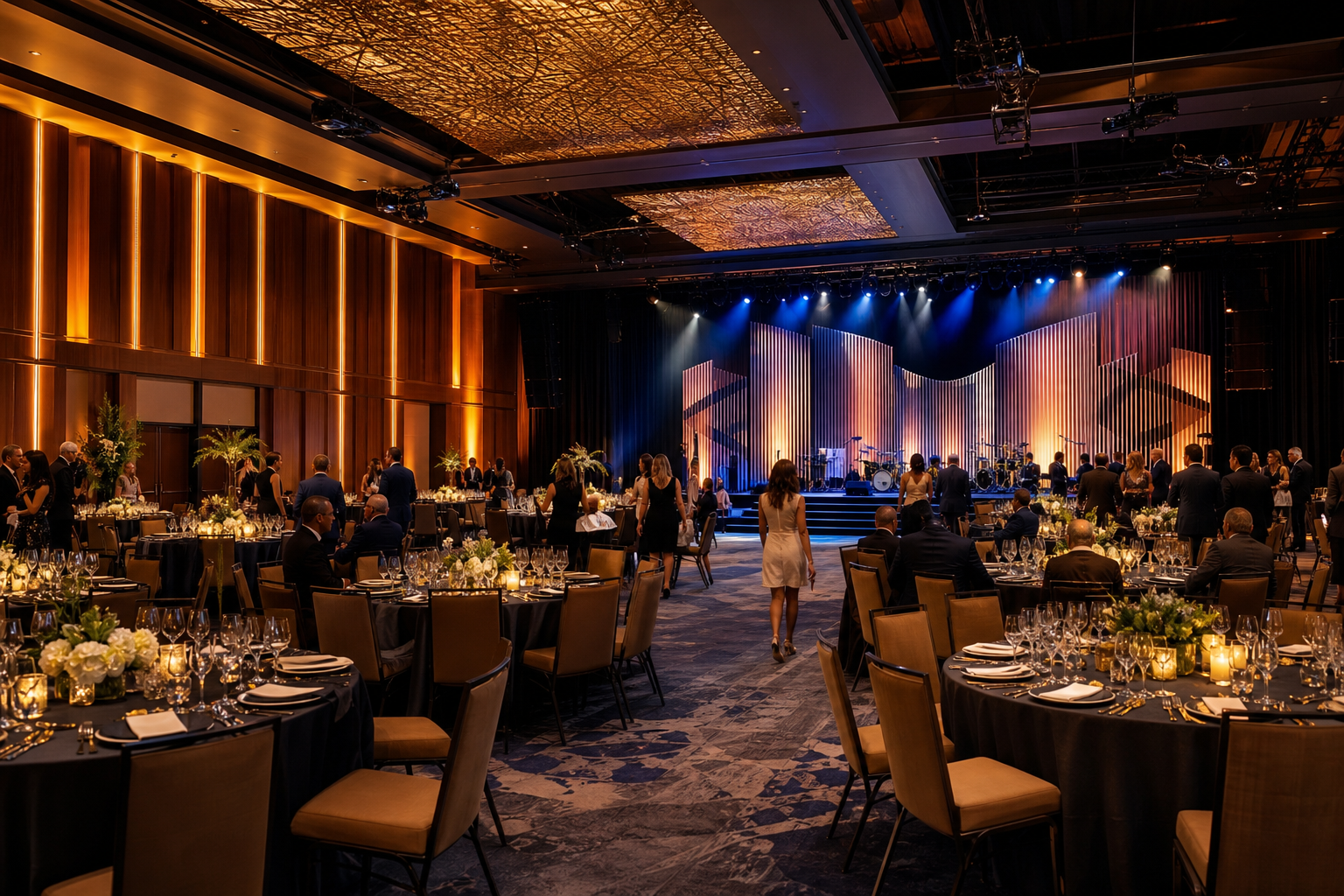
 Effective event lighting does more than make a room look attractive. It helps guests find their way, directs attention to speakers or performances, supports photography, and changes the atmosphere as the program develops.
Start by deciding what guests must see and do, then build the lighting around the room layout, schedule, décor, staging, and camera requirements. These seven event lighting design tips can help you create a clear brief for your venue or AV team.
Key Takeaways
- Define the event’s main purpose before selecting fixtures or colours.
- Layer ambient, accent, task, stage, and dynamic lighting instead of relying on one effect.
- Give speakers, performers, screens, and cameras clean, even visibility.
- Review the lighting plot with the floor plan, staging, décor, power routes, and guest flow.
- Create lighting cues for arrival, meals, speeches, awards, dancing, and closing, then rehearse them.
1. Define What the Lighting Must Help Guests Do
Begin with the event objective, not the fixture list. A corporate presentation needs clear faces, readable screens, and an environment that keeps attention on the speaker. A wedding or gala may place more emphasis on warmth, photographs, décor, and transitions from dinner to dancing.
A trade show needs product and exhibitor visibility, while a school formal needs comfortable circulation, a strong focal area, and an energetic dance floor. Write down the most important guest actions, such as registering, finding tables, watching an award presentation, viewing an exhibit, or moving safely to a patio.
This approach helps resolve competing priorities. If a dramatic colour wash makes a stage difficult to see, the design is serving appearance at the expense of the program.
2. Build the Design in Layers, Not With One Effect

A polished lighting plan normally combines several layers. Ambient lighting establishes the general feel of the room. Accent lighting draws attention to a centerpiece, backdrop, sign, architectural feature, or branded area. Task lighting supports registration, dining, exhibit viewing, and reading printed materials.
Stage lighting gives speakers and performers consistent visibility, while dynamic lighting introduces movement for dancing or selected program moments. Options may include ambient washes, pinspots, stage lighting, gobos, dance-floor effects, and outdoor accent lighting.
| Lighting approach | Primary purpose | Useful event moments |
|---|---|---|
| Ambient wash | Creates an even base level and overall mood | Arrival, dining, and networking |
| Uplighting | Adds colour and depth around walls or drape | Weddings, galas, and receptions |
| Pinspots | Highlights small focal details | Centerpieces, cakes, awards, and signage |
| Stage wash | Keeps presenters and performers visible | Speeches, panels, ceremonies, and awards |
| Gobo projection | Adds a pattern, texture, or logo | Branding, entrances, and backdrops |
| Dance-floor effects | Creates movement and energy | DJ sets and live performances |
| Outdoor accent lighting | Highlights features and supports movement | Patios, paths, and ceremony areas |
Use restraint when combining layers. A room with strong colour, moving effects, bright screens, and multiple focal points can feel visually confused. Choose one or two dominant features for each moment.
3. Protect Speaker, Guest, and Camera Visibility
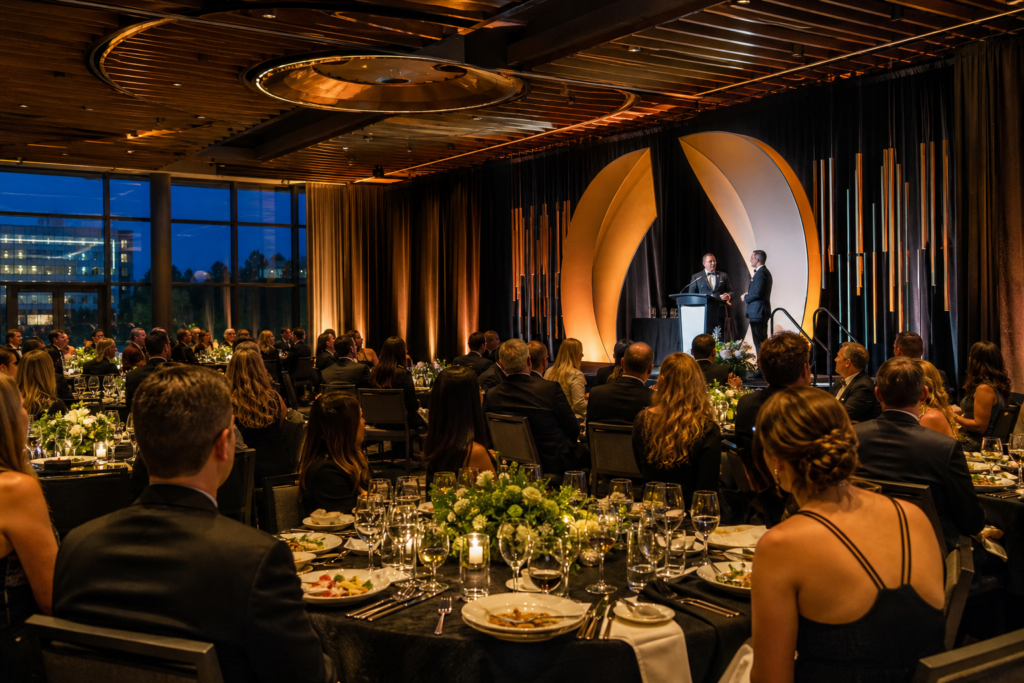
Atmospheric lighting should never make the main content difficult to see. Speakers need even light on their faces, performers need enough coverage to move naturally, and guests need unobstructed views of stages and screens.
For presentations and hybrid programs, use stage or key lighting to keep presenters’ faces evenly illuminated on camera. Check that fixtures do not reflect off screens or wash out projected content.
Test the room from the back row, side seating, stage, camera position, and registration area. Ask whether guests can see facial expressions, slides, signage, and performers without squinting or looking into a fixture.
4. Match Lighting to the Floor Plan and Guest Flow
Mark the entrance, registration point, bar, dining area, stage, aisles, restrooms, exhibit zones, dance floor, photo area, and outdoor routes. These spaces do not need equal brightness, but each should be legible and comfortable.
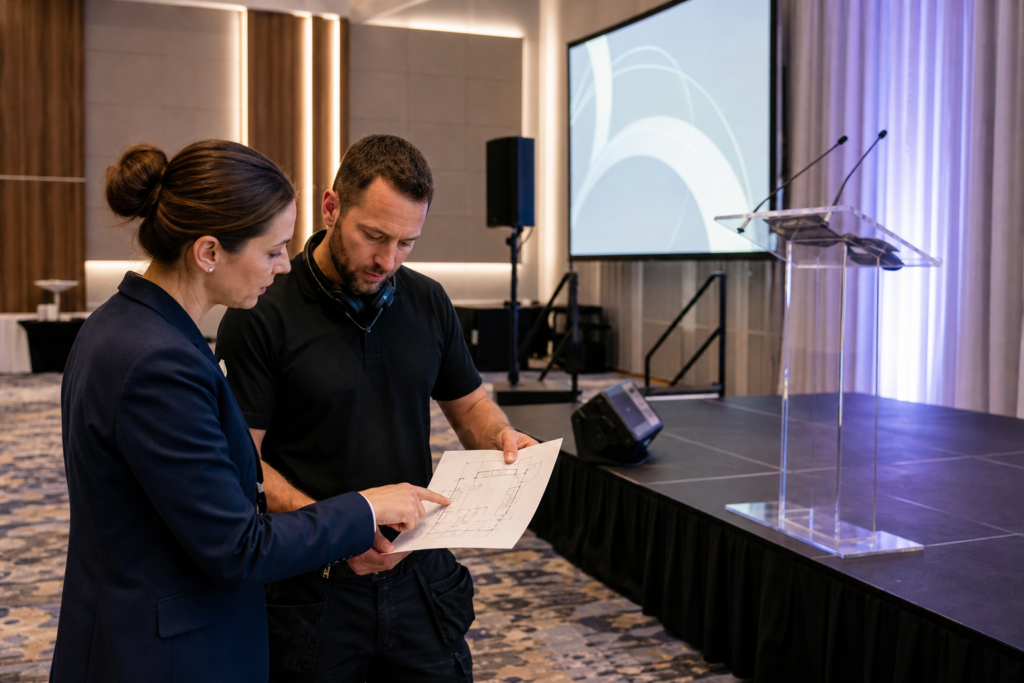
Review the lighting design beside the tables, staging, service routes, screens, and power plan. Before finalizing fixtures, create lighting plots that show how each look supports the room layout, stage, and guest flow.
Mississauga Convention Centre has seven halls of approximately 4,250 square feet each, so a room-by-room plan is more useful than a single generic diagram.
5. Use Light to Reinforce Décor, Branding, and Culture
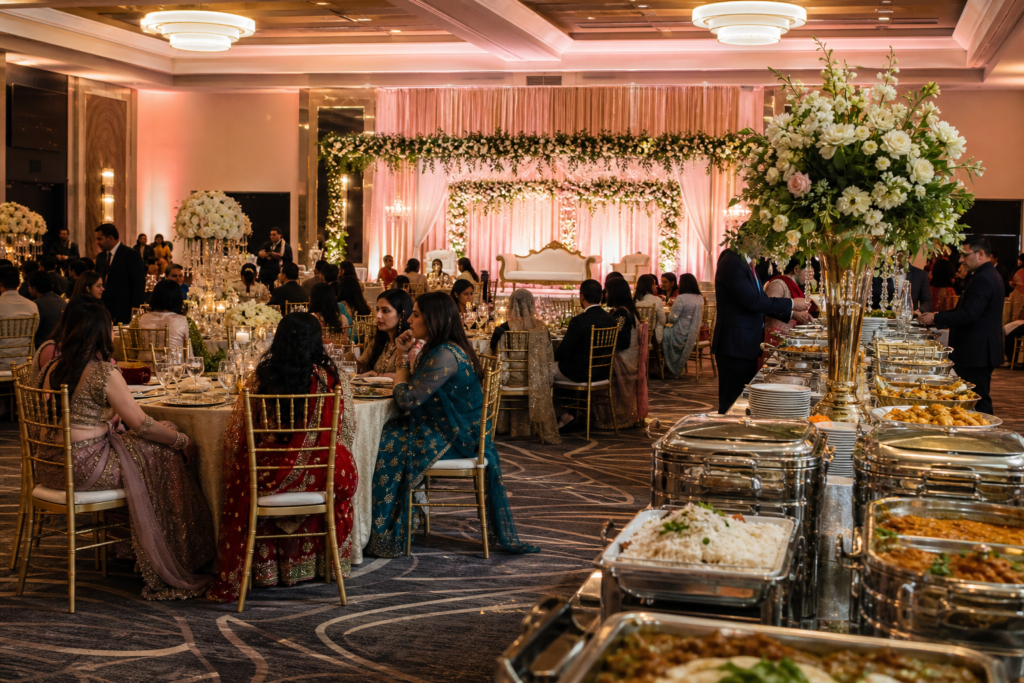
Select colours and textures that complement linens, florals, stage backdrops, signage, brand palettes, or cultural details. A wedding may use warm, soft light, while a corporate event may use controlled brand colours around the stage and registration areas.
Consider what will appear in photographs. A strong photo area needs a clear focal point, flattering light, and separation from nearby traffic. Pinspots, backdrop lighting, and carefully placed accent fixtures can help, but direct glare or intense colour on faces can produce unhelpful images.
More effects do not necessarily create a better result. Limit the palette, identify the primary focal points, and repeat visual cues across the stage, tables, entrance, and signage.
6. Plan Lighting Looks Around the Run of Show
Create named lighting states for guest arrival, presentation, meal service, awards, performance, dancing, and closing. Each state should have a clear purpose and defined transition.
Put these states into a concise cue sheet. Include the cue name, trigger, responsible person, audio or video connection, and any catering or staging dependency. The lighting operator should know whether a change happens on a speaker’s introduction, video roll, meal course, performance, or room transition.
Keep the number of looks manageable. A smaller set of tested cues is easier to call accurately than a long list of subtle changes that no one has rehearsed.
7. Confirm the Design With a Technical Rehearsal
A lighting plan is complete only when the team has confirmed placement, focus, control, visibility, cable routes, timing, and responsibilities in the actual room. Run the opening, speaker walk-ons, videos, awards, performances, meal transitions, dance-floor change, and closing.
Use the event AV and staging checklist to coordinate room layout, lighting, sound, visuals, safety, responsibilities, rehearsal, and show-day checks. Confirm who can make changes on site and who approves last-minute adjustments.
For outdoor areas, review weather contingencies, path visibility, fixture protection, and the transition between indoor and outdoor lighting. Treat outdoor lighting as part of the guest journey rather than a separate decorative add-on.
Pre-Event Lighting Checklist
- Priorities: Identify the moments and guest actions needing the most visibility.
- Lighting layers: Select ambient, accent, task, stage, and dynamic effects by area.
- Lighting plot: Mark fixtures, focal points, stages, cameras, screens, entrances, and pathways.
- Floor plan: Coordinate lighting with tables, staging, décor, registration, exhibits, service routes, and power.
- Camera check: Test faces, presentations, reflections, contrast, and sightlines.
- Cue sheet: List lighting states and their audio, video, speaker, meal, or performance triggers.
- Rehearsal: Schedule a technical run-through with venue, AV, décor, and production teams.
- Contingencies: Confirm backup responsibilities, outdoor alternatives, cable protection, and approval procedures.
Frequently Asked Questions
What type of lighting is most useful for a corporate presentation?
Start with even stage or key lighting for presenters, controlled ambient light for the audience, and enough separation between the stage and screen. Test the setup from the back of the room and through the presentation camera.
How should wedding or gala lighting change between dinner and dancing?
Dinner benefits from comfortable ambient light, restrained accents, and clear visibility for conversation and service. Dancing can use more movement and colour, while preserving important focal points such as the head table, stage, or dance floor.
What should an event lighting plot include?
It should show the room layout, fixture locations, stage, screens, cameras, focal points, entrances, pathways, power considerations, and lighting states. Review it with staging, décor, AV, and event production.
How can outdoor patio lighting support guest safety and atmosphere?
Use light to make paths, steps, entrances, signage, and gathering areas easy to understand while keeping the atmosphere consistent indoors and outdoors. Confirm weather, power, fixture protection, and the backup plan.
Conclusion: Choose Lighting That Serves the Whole Event
The best event lighting design starts with function. Define what guests need to see and do, layer atmosphere around those priorities, protect faces and screens, and coordinate every fixture with the floor plan, décor, staging, AV, and schedule.
Mississauga Convention Centre is located at 75 Derry Road West and offers in-house audiovisual systems, lighting, staging, technical support, custom décor options, and lighting packages for corporate, wedding, school, social, conference, exhibition, and trade show events. To discuss a lighting-ready event plan, visit Mississauga Convention Centre.