

 27 November, 2026
The best wedding venue near you is the one that fits your guest count, ceremony and reception sequence, food requirements, room flow, access needs, and budget framework. For couples searching near Mississauga, the fastest way to build a useful shortlist is to filter venues by location, celebration style, space, catering, parking, and the details guests will experience. Related reading: Weddings.
Mississauga Convention Centre is at 75 Derry Road West in Mississauga. It presents itself as a venue for weddings and receptions, with seven halls of approximately 4,250 square feet each, total capacity of more than 2,200 guests, and approximately 700 on-site parking spaces. Specific hall assignments, layouts, packages, pricing, and availability still need to be confirmed for your wedding.
Start Your Mississauga Shortlist With the Decision That Matters Most
“Best” means something different for every couple. Start with the factor that would rule out a venue, then use the remaining criteria to narrow your options.
- If guests are travelling from across the GTA, begin with access near major highways and Toronto Pearson International Airport, then assess parking, drop-off, and wayfinding.
- If your guest list is large, prioritize flexible halls, practical circulation, dining capacity, stage placement, dance-floor space, and parking over a headline capacity number.
- If you are planning a multicultural or South Asian wedding, ask about menu customization, dietary requirements, ceremony traditions, multiple functions, and the timing of cultural moments.
- If you want fewer supplier handoffs, compare in-house catering, audiovisual support, lighting, staging, technical support, décor-related services, beverage service, and coordination together.
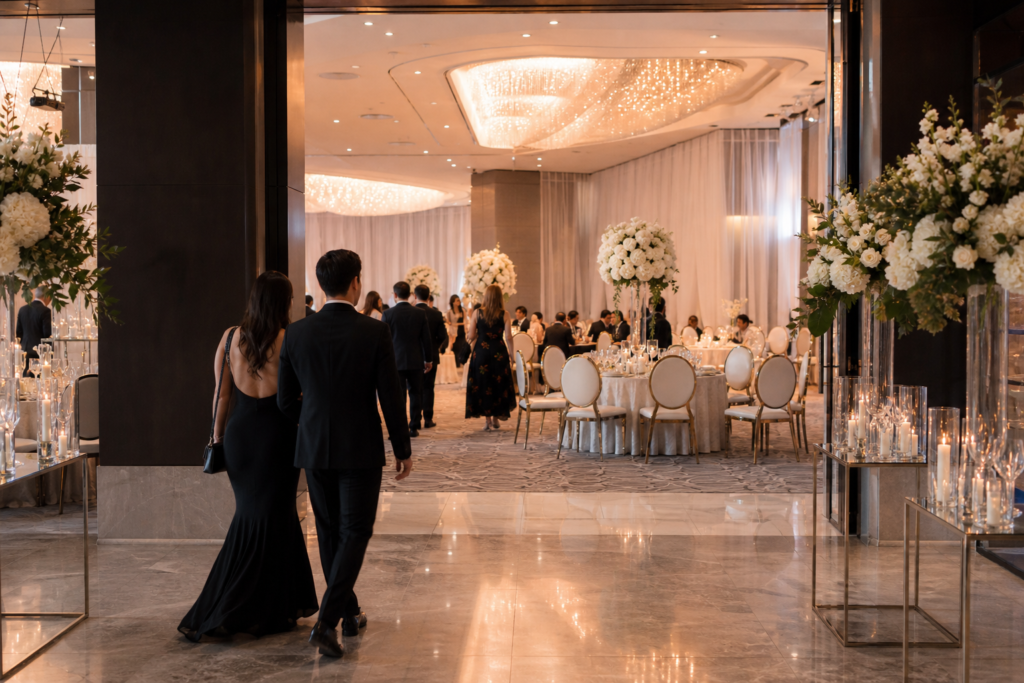
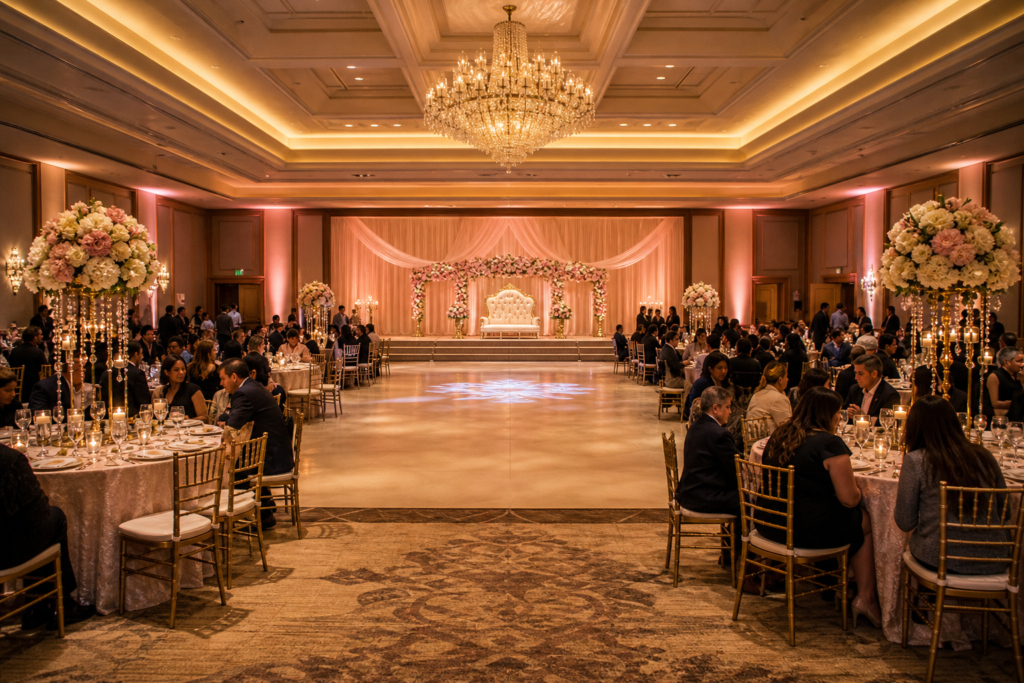
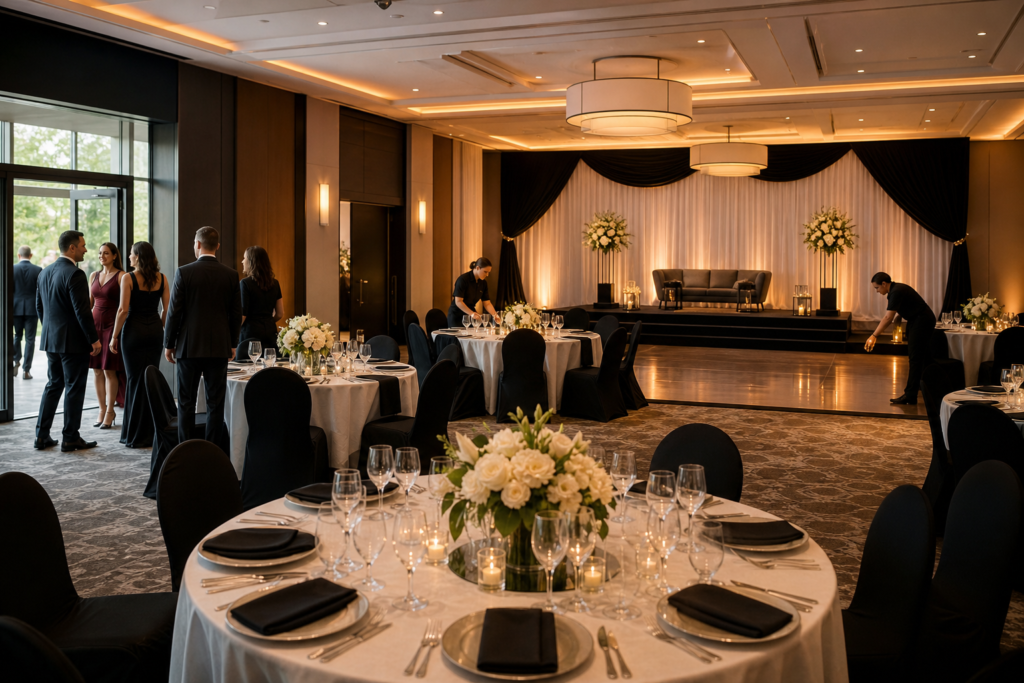
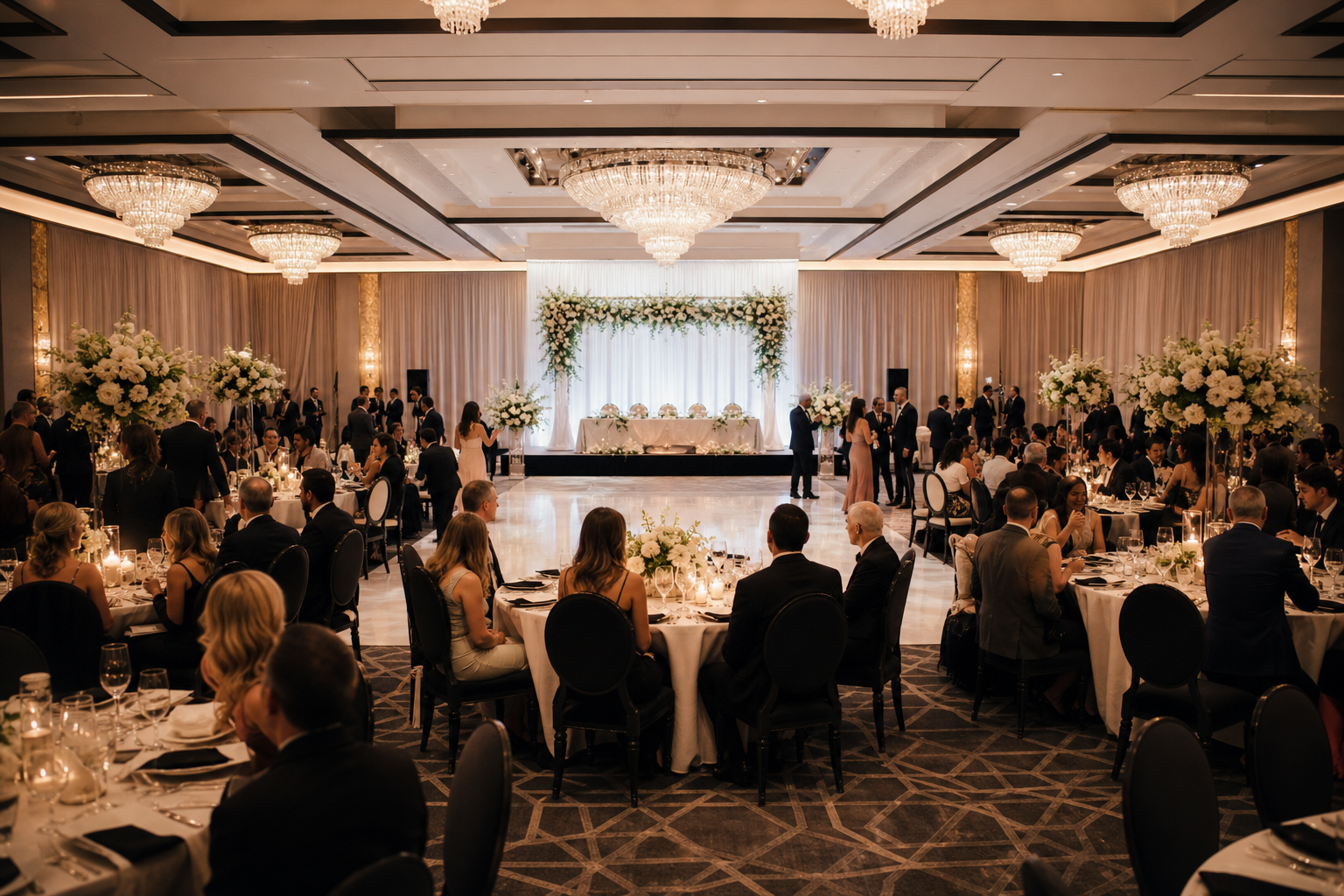
- If atmosphere matters most, assess how the room will look with your ceremony structure, head table, guest tables, lighting, photography areas, and dance floor in place.
Couples planning several wedding functions should compare the movement between events, not only the appearance of the ballroom. A useful wedding event flow review considers where guests gather, how the room changes, and whether food, photography, entertainment, and traditions can happen without creating bottlenecks.
Match the Room to Guest Count, Ceremony, Dinner, and Dancing
Your invitation count is only the starting point. The room must also hold tables, chairs, service aisles, a ceremony area or stage, a dance floor, photography positions, entertainment equipment, and enough open space for guests to move comfortably.
Mississauga Convention Centre states that each of its seven halls is approximately 4,250 square feet. That figure gives you a useful starting point for comparison, but it does not establish a fixed wedding capacity for any individual hall. Seating style, stage size, dance-floor dimensions, buffet or plated service, décor, and whether other rooms are used will change the workable layout.
| Wedding scenario | What the room must support | Questions to ask |
|---|---|---|
| Intimate ceremony and reception | Concentrated dining, a small ceremony setup, a clear area for speeches, and space for photographs without making the room feel empty. | Can the layout keep guests close to the action? Can ceremony seating be removed or repurposed efficiently? |
| Mid-sized reception | Seated dining, a visible stage or head table, a dance floor, guest circulation, and service routes that do not cut through the main activity. | Where will the dance floor, DJ or band, bar, photography area, and guest tables sit at the same time? |
| Large cultural celebration | Multiple guest activities, cultural traditions, larger dining and staging requirements, photography movement, and clear arrival and departure routes. | Can the venue support the full sequence, including room changes, ceremonies, meals, speeches, dancing, and vendor access? |
These are illustrative planning scenarios, not approved floor plans. Before booking, ask the venue team to review your guest count and event sequence against the selected room configuration. Use venue layout and decor planning to test whether your design supports guest movement instead of obstructing it.
Filter Shortlisted Wedding Venues by the Details Guests Actually Experience
Once location and room size have narrowed your list, compare the parts of the wedding day guests will notice. This prevents a convenient venue from advancing simply because its photographs look impressive.
| Shortlist filter | What to compare |
|---|---|
| Arrival and access | Distance from major routes and the airport, parking, drop-off, wayfinding, and how easily guests can reach the ceremony room. |
| Venue style | Whether the room suits your ceremony, reception, cultural traditions, photography, dining, speeches, and dancing without excessive room changes. |
| Catering | Menu formats, tasting or review process, dietary handling, service timing, customization, beverage service, and whether outside food or caterers are permitted. |
| Cultural fit | Experience with your traditions, ceremony timing, regional preferences, vegetarian or Halal requirements, family expectations, and menu presentation. |
| Décor and atmosphere | Available décor-related services, lighting options, staging, ceremony structures, table settings, signage, photography backdrops, and setup responsibilities. |
| Production | Audio, microphones, presentations, music, dance-floor lighting, staging, technical support, rehearsal time, and who operates each element. |
| Package structure | What is included, what is optional, what is excluded, which items are date-dependent, and which services require separate suppliers or fees. |
Mississauga Convention Centre describes in-house catering across South Asian, Pakistani Halal, Middle Eastern, Sri Lankan, Caribbean, and Continental cuisines. Its site also presents Afghan wedding offerings with Afghan-inspired dishes and Gujarati wedding offerings that include Gujarati favourites and vegetarian menu options. Treat those descriptions as a starting point for your conversation, then ask which dishes, preparation requirements, service formats, and menu customizations apply to your wedding.
A venue should also make social event planning easier by coordinating food, entertainment, lighting, and the movement of guests throughout the celebration. Ask who owns each handoff, especially if your schedule includes speeches, live performances, a ceremony, a meal, and dancing.
Decide Whether One Location Belongs on Your Shortlist
A ceremony and reception at one location can reduce travel for guests and simplify photography, catering, décor, and production. It is only an advantage if the venue can support the transition without forcing guests through service areas, delaying the meal, or creating a difficult room reset.
Ask whether the ceremony and reception can use the same hall, separate halls, or a planned room transformation. Then map the sequence: guest arrival, ceremony seating, ceremony exit, photographs, room reset, reception entrance, dinner, speeches, cultural moments, dancing, and departure.
For each transition, identify four owners: the venue team, the caterer, the décor or production team, and the couple or planner. Record what must move, who approves the change, how long it takes, and where guests wait during the transition. Availability of a particular room arrangement, patio use, vendor access, and timing must be confirmed for the date and package you are considering.
Worked Example: A Hypothetical 300-Guest Wedding Brief
Consider this illustrative scenario: a couple expects approximately 300 guests, wants a ceremony followed by seated dinner and dancing, needs space for speeches and cultural moments, and prefers one location. This is not a real client event or an approved floor plan. It shows how to turn a broad wedding idea into useful venue questions.
- Room brief: Ask which hall configuration can accommodate ceremony seating, dinner tables, a stage or head table, a dance floor, service aisles, photography positions, and guest circulation together.
- Schedule brief: Provide the ceremony start time, photography window, meal service timing, speeches, cultural moments, and dancing so the venue can identify reset or transition requirements.
- Catering brief: List cuisine preferences, vegetarian or Halal requirements, allergies, service style, number of courses, late-night food, and whether the menu needs regional customization.
- Production brief: Specify microphones, music, speeches, presentations, live entertainment, stage requirements, lighting looks, and rehearsal or sound-check needs.
- Arrival brief: Ask how guests and vendors will arrive, where parking and drop-off occur, how wayfinding works, and whether the plan supports older guests and anyone with mobility requirements.
- Quote brief: Request separate lines for venue space, catering, beverage service, décor, lighting, staging, audiovisual support, coordination, setup, cleanup, taxes, payment terms, and optional upgrades.
The point is not to choose a room from the guest count alone. It is to check whether the room, schedule, menu, and production plan can operate together without sacrificing sightlines, comfort, or time.
Ask for Only the Quote Details Needed to Choose
After access, event style, and room fit have narrowed your shortlist, send the remaining venues the same brief. Ask them to label each item as included, optional, excluded, or dependent on the date and selected configuration.
- Date: Preferred date, alternative dates, event hours, access time, and flexibility.
- Guest count: Expected attendance, maximum estimate, children, seniors, and guests requiring specific accommodations.
- Event sequence: Ceremony, cocktail period, photographs, dinner, speeches, cultural moments, entertainment, dancing, and departure.
- Room needs: Desired layout, ceremony seating, dining style, stage or head table, dance floor, buffet or food stations, bar, photography area, and storage.
- Menu needs: Cuisines, Halal or vegetarian requirements, allergies, service style, tasting or menu review, beverage service, and late-night food.
- Design and production: Décor, draping, florals, lighting, staging, microphones, music, screens, presentations, and technical support.
- Operations: Parking, guest arrival, vendor access, setup, room changes, cleanup, coordination, outside suppliers, and end-of-night collection.
- Commercial terms: Venue fee, food and beverage pricing, taxes, service charges, payment schedule, cancellation terms, overtime, and date-specific conditions.
Ask the venue to return the proposal in the same categories. That lets you compare the remaining finalists without confusing a low room price with a lower total wedding cost.
Questions to Resolve Before You Choose
Use these questions during a tour or planning call to expose differences between shortlisted wedding venues near you:
- Which room configuration fits our guest count and full event sequence?
- Can the ceremony and reception happen in one location on our preferred date?
- How long does a room reset take, and where will guests go during it?
- Which menu formats and cultural or dietary requirements can be accommodated?
- How are Halal, vegetarian, allergy, and cross-contact questions handled?
- Who supplies and operates microphones, music, screens, staging, and lighting?
- What décor can be provided, and which installations require outside vendors or approval?
- What does the guest arrival and parking plan look like at our expected attendance?
- Which spaces are available for photography, family gatherings, changing, storage, or private preparation?
- Which items in the proposal are confirmed, optional, excluded, or dependent on the date?
- What happens if our guest count, menu, schedule, or room requirements change?
For weddings with multiple functions or South Asian traditions, ask the same questions for each event, not only the main reception. A venue that works for one evening may need a different room plan, staffing discussion, or menu conversation for a mehndi, ceremony, sangeet, walima, or additional family gathering.
FAQ: Wedding Venue Decisions Near Mississauga
Can a wedding venue host both the ceremony and reception in one location?
Some venues can support both, but the answer depends on the date, room configuration, schedule, and package. Ask whether the ceremony and reception share a room, use separate rooms, or require a reset, and request the transition plan in writing.
How should I compare wedding venue quotes when packages include different services?
Normalize every proposal into the same categories: venue space, catering, beverage service, décor, lighting, staging, audiovisual support, coordination, setup, cleanup, taxes, and payment terms. Mark each line as included, optional, excluded, or date-dependent before comparing totals.
What should I ask about catering for a multicultural or Halal wedding?
Ask which cuisines and dishes are available, how menus are customized, how Halal and vegetarian requirements are handled, whether allergies can be accommodated, which service formats are offered, and how food timing fits the wedding schedule.
How much space should I plan for a wedding with dinner, dancing, and a stage?
Plan for more than guest seating. Your room must also accommodate service aisles, a stage or head table, a dance floor, entertainment, photography, décor, and circulation. The Centre’s halls are approximately 4,250 square feet each, but the workable wedding layout depends on the exact configuration and event requirements.
Turn Your Shortlist Into a Venue Conversation
Before you contact a venue, write down your preferred date, guest count, event sequence, menu priorities, ceremony format, and non-negotiable access or parking needs. That brief gives the planning team enough context to discuss a realistic room and package instead of sending a generic description.
When you are ready to compare those details with a local wedding team, Mississauga Convention Centre can discuss your wedding plans through its wedding venue and reception services at 75 Derry Road West.