 20 September, 2026
Last updated: October 2026
By Preet Dass | Mississauga Convention Centre
Last updated: October 27, 2026
What custom wedding decor means
Custom wedding decor is a coordinated set of design choices created for a particular couple, celebration, and venue. It can include a ceremony structure, backdrop, draping, flowers, tablescapes, signage, lighting, staging, cultural displays, and the way each feature supports the event schedule.
The word custom does not mean that every item must be built from scratch. A more useful definition is intentional combination. Rental pieces, in-house venue services, personal details, and cultural elements can be arranged into a look that feels specific to your wedding rather than copied from a catalogue.
For a Mississauga wedding venue, the room itself should be part of the design conversation. Mississauga Convention Centre is located at 75 Derry Road West and offers seven elegant halls of approximately 4,250 square feet each, together with an outdoor patio. The venue can accommodate events of different sizes, with total capacity across the Centre of more than 2,200 guests and approximately 700 on-site parking spaces.
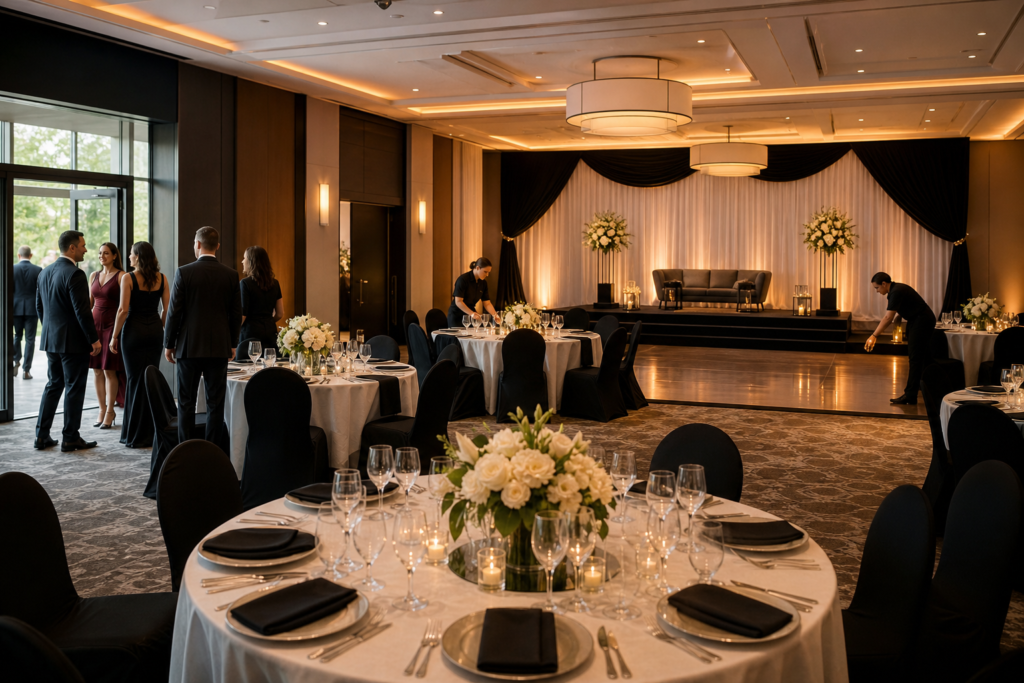
Those facts affect design decisions. A large guest count may require a stronger stage focal point and more deliberate aisle planning, while a smaller reception may benefit from concentrated lighting and a lower floral installation. The best wedding decor ideas respond to the real room instead of treating the venue as an empty background.
How to start custom decor ideas for weddings
Begin with the experience you want guests to have, then work backward to the visible details. Ask what people should notice when they enter, where they should look during the ceremony and speeches, how they will move between areas, and which traditions or personal stories should be represented.
Choose a design direction
Most cohesive weddings can be described with a short design direction. Examples include modern glam with clean lines and reflective finishes, romantic garden with greenery and warm light, or a cultural celebration built around colour, textiles, ceremony structures, and food displays.
A design direction is not a rigid theme. It is a decision filter. When you are considering a new backdrop, linen, floral arrangement, or sign, ask whether it supports the direction. If it does not, leave it out or adapt it rather than adding another unrelated style.
Limit the visual system
A practical starting point is two primary colours and one accent. Add texture through linen, draping, glassware, florals, metal finishes, or wood rather than introducing many more colours. Repeating a shape or finish also creates continuity: a curved arch can be echoed in menus and signage, while gold accents can appear in chargers, candleholders, and stage details.
Select two focal points
Choose one major focal point and one supporting focal point. The main stage, ceremony arch, mandap, or sweetheart table usually carries the primary visual weight. The second feature might be an entrance installation, seating chart, dessert display, photo area, or cultural welcome feature.
Two focal points are usually easier for guests to read than a room filled with competing installations. They also help control the design effort. Once the key areas are established, tables and smaller details can support them without requiring every surface to make a separate statement.
Planning custom decor at Mississauga Convention Centre
Decor planning should combine creative decisions with a practical room plan. At Mississauga Convention Centre, the process can account for the selected hall, guest count, ceremony format, patio use, audiovisual requirements, staging, lighting, catering, and the timing of room changes.
1. Define the event moments
List the moments that need visual or technical support. These may include guest arrival, a processional, a mandap or nikkah ceremony, a grand entrance, speeches, dinner service, a first dance, a cake or dessert presentation, and the final dance set.
For each moment, record the location, the people involved, the lighting state, and any decor that must be moved or reused. This prevents a beautiful installation from interfering with the next part of the evening.
2. Confirm the room and guest flow
Decide how guests will enter, where they will find the seating chart, how they will reach the ceremony or reception area, and how service staff will move through the room. The stage, dance floor, guest tables, bar, buffet or stations, and photo areas should be considered together.
Do not place a feature only because it looks attractive in a reference image. Check whether it blocks sightlines, narrows an aisle, creates a queue beside the entrance, or competes with a projection surface. Room planning is part of wedding decor because it determines what guests can see and how comfortably they can move.
3. Build a visual concept board
Collect references for colour, fabric, flowers, lighting, furniture, signage, and ceremony structures. Annotate each reference with what you actually want to borrow. “Warm amber light,” “low centrepieces,” or “textured ivory draping” is more useful than saving an image without explanation.
Include practical notes on the same board: approximate guest count, preferred ceremony format, accessibility needs, indoor or patio use, and features that cannot be changed. A concept board should help the venue and event partners make decisions, not simply communicate a mood.
4. Draw the floor plan
Mark the stage, dance floor, tables, ceremony area, service routes, guest entrance, signage, and photography positions. Protect clear routes for guests and staff. If the ceremony and reception use the same hall, show both layouts and identify which elements will move during the transition.
5. Coordinate lighting and staging
Lighting should be planned at the same time as the backdrop and tablescape. Confirm which features need a focused wash, which walls should carry colour, and where pinspots or table-level light will be useful. In-house audiovisual, lighting, staging, and technical support can help coordinate the visual plan with music, speeches, presentations, and entrances.
| Planning area | Decision to make | Why it matters |
|---|---|---|
| Style | Choose a design direction, two primary colours, and one accent. | Creates a consistent visual filter for every later choice. |
| Focal points | Select one main feature and one supporting feature. | Guides guest attention and concentrates the design effort. |
| Layout | Map tables, stage, dance floor, ceremony area, and service routes. | Protects comfort, safety, sightlines, and efficient service. |
| Lighting | Assign perimeter, stage, and table-level lighting. | Creates depth and supports changing moments throughout the event. |
| Transition | Identify what stays, moves, or changes between ceremony and reception. | Reduces delays and prevents decor from disrupting the schedule. |
Wedding decor ideas by style
Modern glam
Modern glam relies on clean geometry, controlled shine, and strong contrast. Consider a structured stage backdrop, satin or velvet linens, metallic chargers, glass candleholders, and a focused white or neutral stage wash. Reflective finishes can add energy, but use them selectively so the room does not become visually busy.
A modern glam design also benefits from disciplined signage. Use one type family, one border treatment, or one repeated line shape across the seating chart, menus, table numbers, and welcome sign. The result feels more considered than a collection of unrelated printed pieces.
Romantic garden
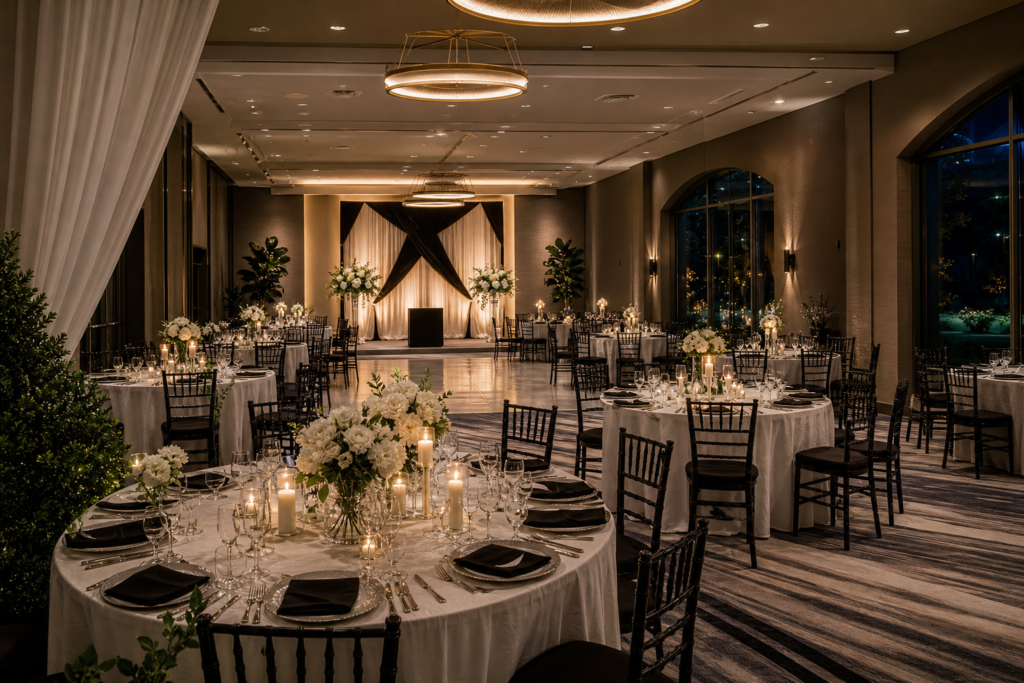
A romantic garden look can be created indoors or on the patio with greenery, soft florals, flowing fabric, lanterns, and warm light. Use low arrangements on guest tables so people can talk across them. A floral arch or greenery wall can provide the main photo moment without requiring flowers throughout every part of the room.
Layering is more important than quantity. Combine one textured linen, a restrained floral profile, candlelight, and a soft backdrop rather than filling every surface with different botanical elements.
Contemporary minimal
Minimal decor depends on proportion and finish. A simple arch, monochrome flowers, a clean stage line, and carefully positioned lighting can feel more luxurious than a crowded installation. Leave visual breathing room around the primary feature so its shape remains legible in photographs.
South Asian and multicultural celebrations
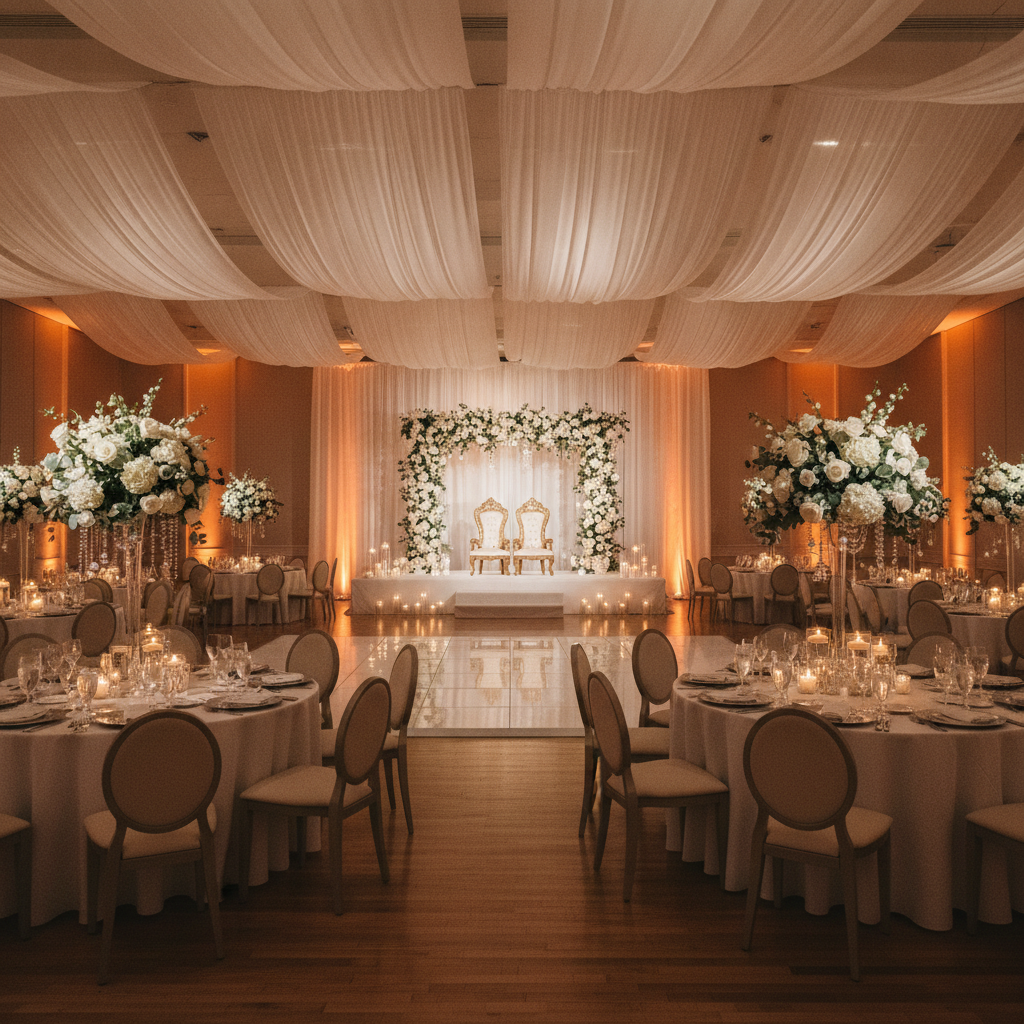
South Asian and multicultural wedding decor can combine ceremony traditions with a contemporary reception environment. A mandap, canopy, aisle feature, welcome sign, mehndi detail, floral installation, or dessert display can become a clear design anchor. Coordinate the structure with guest sightlines, the ceremony positions, and any audiovisual or photography requirements.
Colour can carry cultural meaning, but it should also work with the venue lighting and the couple’s clothing. Jewel tones, gold accents, marigold-inspired hues, rich textiles, and floral colour can be repeated across the stage, table details, signage, and culinary presentation without making every item identical.
Lighting, staging, and backdrop ideas
Lighting changes how every other decor decision appears. The same linen or floral arrangement can feel cool, dramatic, intimate, or flat depending on the colour and direction of the light. Treat lighting as a design layer rather than an item added after the backdrop and flowers have been selected.
Use three lighting zones
- Perimeter lighting: Use wall uplighting to establish the room’s overall colour story. A subtle tone during dinner can shift to a brighter or more saturated look for entrances and dancing.
- Feature lighting: Give the stage, ceremony structure, sweetheart table, or main backdrop an even wash that keeps faces visible. Add controlled backlight when a silhouette or dimensional effect is desired.
- Table-level lighting: Use candles or discreet LED light to create intimacy. Varying candle heights can add depth, while reflective chargers and glassware can distribute small points of light.
Size the backdrop to the room
A backdrop should frame the couple or ceremony rather than overwhelm them. Consider its width, height, depth, stairs, floral projections, and relationship to screens or speakers. The structure must also leave service routes and guest sightlines clear.
Possible backdrop ideas include fabric draping, a floral wall, a structured panel, a geometric frame, a greenery installation, a layered curtain, or a mandap-inspired canopy. The right choice depends on the ceremony format, hall proportions, photography plan, and whether the feature will remain in place for the reception.
Plan technical cues
Write down when the lighting changes. A typical sequence might use brighter general light for guest arrival, a focused ceremony state, a warm dinner setting, a brighter entrance cue, and more dynamic dance-floor lighting. Test the cues alongside music and microphones so the room changes feel deliberate.
Tablescapes and floral details
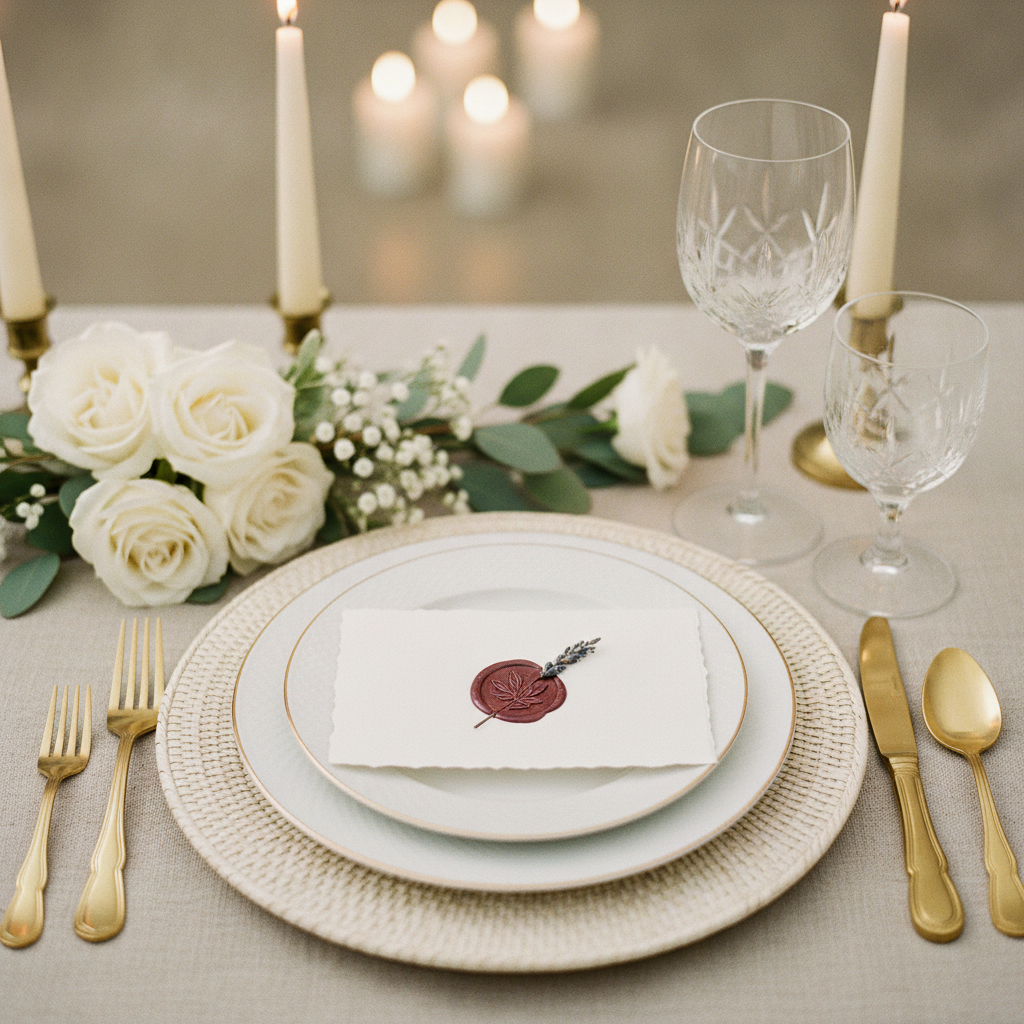
Tables are experienced at close range, so comfort is as important as appearance. Build each setting in layers: linen or runner, charger, plate, napkin, menu or place card, glassware, and centrepiece. Keep the arrangement easy to use and leave enough room for service.
Choose the hero element
Decide whether the table’s hero element will be the linen, floral arrangement, charger, candlelight, menu, or another detail. If the floral design is dramatic, keep the place setting quieter. If the linen has a strong texture, use a simpler floral profile and restrained stationery.
Protect conversation and photography
Low centrepieces support conversation, while tall arrangements can create impact when they leave a clear viewing area beneath or above the flowers. Avoid placing a dense arrangement directly at face height. Check the view from seated positions as well as from the entrance and dance floor.
Repeat one or two details across the room. A metal finish, napkin fold, floral variety, menu shape, or monogram can connect the tables to the stage without forcing every component to match exactly.
Use floral details strategically
Concentrate florals where they will be seen most: the ceremony structure, stage, sweetheart table, entrance, seating chart, and selected photo areas. Smaller arrangements or candles can carry the palette to guest tables. This approach creates visual continuity while keeping the room usable and the design proportionate to the celebration.
Custom decor ideas for patio ceremonies
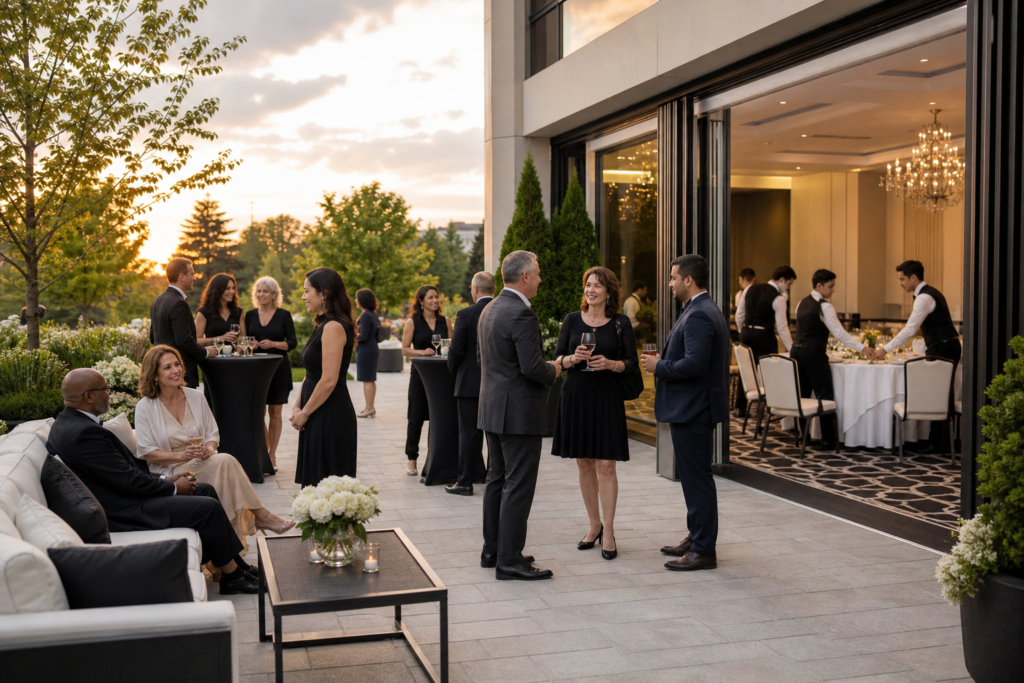
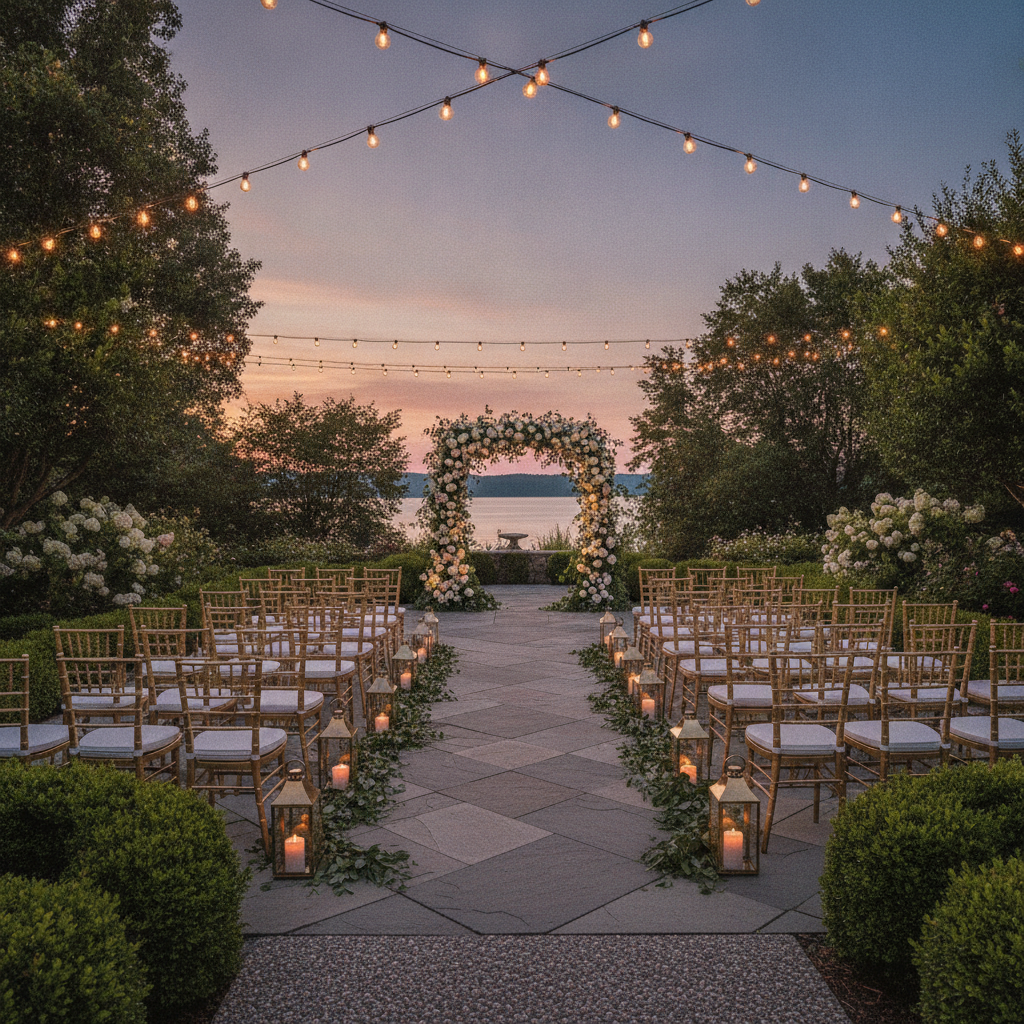
The outdoor patio can provide a distinct ceremony or cocktail-hour setting before guests move into a hall. Patio decor should be attractive from the aisle, guest seating, entrance, and photography positions. It also needs a practical indoor alternative if weather changes.
Frame the ceremony
Use a custom arch, mandap, canopy, or simple floral frame to establish the ceremony focal point. Pair it with aisle markers, lanterns, low arrangements, or restrained fabric. Keep the structure proportionate to the patio and avoid blocking the couple from guests.
Design for changing light
A patio ceremony may begin in daylight and continue into dusk. Choose colours and materials that remain legible as natural light changes. String or bistro lighting can add atmosphere later, while controlled lighting on the ceremony feature helps maintain clear photographs.
Prepare the indoor plan
Build an indoor version of the same design language instead of creating a completely different backup. Repeat the colour palette, floral varieties, signage style, or arch shape inside so a weather change feels like a planned transition. Confirm the decision point for moving indoors and explain it to the coordinator and key family members.
If the patio is used for the ceremony and the hall for the reception, decide whether the arch or floral feature will move. Reusing a major element can connect the two spaces, but the schedule must allow for a safe and efficient changeover.
Cultural and culinary decor details
Food presentation can extend the wedding’s visual story. Mississauga Convention Centre offers in-house catering that spans South Asian, Pakistani Halal, Middle Eastern, Sri Lankan, Caribbean, and Continental cuisines. The menu and display should be planned alongside the room design so stations, desserts, and service points are easy to find and complement the palette.
Coordinate display materials
Use serving pieces, signs, linens, florals, or lighting that support the broader design. A dessert display can repeat the stage’s metallic finish, while a regional station can use a colour or pattern already present in the welcome signage. The goal is coordination, not decoration for its own sake.
Make cultural features legible
Important traditions should have enough room and visibility to be experienced comfortably. Confirm where participants stand, how guests are seated, whether photography needs a clear angle, and whether the feature requires a stage, canopy, table, or technical support.
For multicultural weddings, create a visual bridge between different traditions. A shared neutral base with carefully selected colour accents, repeated floral forms, or coordinated signage can let each ceremony and meal feel distinct while preserving an overall sense of unity.
Decor logistics and guest flow
Decor succeeds when guests notice the atmosphere without having to navigate around it. Keep the entrance welcoming, make seating information easy to locate, and avoid placing tall or dense features where they obstruct the route to tables, washrooms, food service, or the dance floor.
Protect service routes
Discuss service paths with the venue team before finalizing the floor plan. Tables, decor structures, signage, and photo areas should not create unnecessary obstacles for catering or technical staff. A visually clear route can improve both guest comfort and the pace of dinner service.
Plan the ceremony-to-reception change
If one hall serves both purposes, label every item in the transition plan as stay, move, remove, or add. Assign responsibility for each action and include the order in the run of show. This makes it easier to decide whether a ceremony backdrop should become the reception stage feature or whether a separate reception installation is more practical.
Consider accessibility and comfort
Leave accessible routes clear, provide stable surfaces, and avoid loose cables or unstable decor. Check that signage can be read from a practical distance and that seating areas are not narrowed by installations. These decisions are part of thoughtful design, not compromises to be made after decorating.
Planning timeline and tools
The exact schedule depends on the event, but a useful planning sequence begins with the venue and guest count, then moves through concept, layout, technical coordination, and final confirmation.
| Stage | Main work | Output |
|---|---|---|
| Venue and vision | Confirm hall or patio, guest count, ceremony format, and design direction. | Initial brief and room choice. |
| Concept development | Collect references, select palette, choose focal points, and identify cultural details. | Annotated mood board. |
| Layout planning | Map tables, stage, dance floor, ceremony area, service routes, and signage. | Working floor plan. |
| Technical coordination | Assign lighting zones, stage requirements, microphones, music cues, and screens if needed. | Lighting and run-of-show notes. |
| Final confirmation | Confirm rentals, florals, installation order, weather backup, and room reveal process. | Approved event-day plan. |
Keep four working documents
- Mood board: Shows palette, materials, flowers, furniture, signage, and reference images.
- Scaled floor plan: Shows guest tables, stage, dance floor, ceremony feature, service routes, and photo positions.
- Lighting map: Identifies perimeter, stage, table, and transition lighting.
- Run of show: Lists entrances, speeches, meal service, first dance, lighting changes, and decor transitions.
Share the same versions with the venue, planner, decorator, florist, photographer, DJ or band, and immediate family members who are involved in the event. One agreed plan reduces conflicting instructions on the wedding day.
Common custom decor mistakes to avoid
Copying a reference without adapting it
A design photographed in another ballroom may rely on a different ceiling height, stage position, wall colour, or guest count. Use reference images for the mood and individual techniques, then adapt the proportions to your selected hall or patio.
Adding too many focal points
When every wall, table, and corner has a statement feature, guests may not know where to look. Prioritize the ceremony or stage, then use supporting details to guide people toward the entrance, seating, food, or photo area.
Ignoring light during photography
Beautiful decor can photograph poorly if faces are shadowed, the backdrop is overlit, or coloured uplights affect skin tones. Review the stage and table plan with the technical team and schedule a cue check before guests enter.
Forgetting the transition
A ceremony structure, seating layout, or floral feature may need to change before dinner. Decide in advance what happens to each item and allow enough time for the room to be reset safely.
Designing only for the front of the room
Guests experience the event from their seats, at the entrance, beside the bar, and while moving through the room. Check the design from multiple angles. A backdrop that looks excellent head-on may block a table’s view or make the entry feel crowded.
How to choose your final decor plan
When several ideas appeal to you, compare them against the same practical questions. Does the design support the ceremony and reception schedule? Does it fit the selected room? Can guests move comfortably? Will the lighting flatter the couple and important details? Can the feature be installed, removed, or changed within the available time?
Next, rank the elements by importance. The first tier might include the ceremony structure, main stage, and lighting plan. The second tier could include guest tables, entrance signage, and dessert styling. The third tier may include smaller favours, secondary signs, or extra decorative accents. This hierarchy helps protect the design when time, space, or availability changes.
Finally, ask the venue team to review the complete plan rather than isolated items. A backdrop, centrepiece, or sign may work on its own but create a problem when combined with the stage, service route, screens, or guest seating. A coordinated review gives you a more reliable event-day result.
Frequently asked questions
What are the best custom decor ideas for weddings?
The strongest ideas usually combine a clear ceremony or stage focal point, coordinated tablescapes, layered lighting, and personal or cultural details. Start with two primary colours and one accent, then repeat one shape, material, or finish across the room. The final choices should fit the venue’s layout and support guest movement as well as photography.
How can I make wedding decor feel custom without decorating every surface?
Concentrate the design on the areas guests notice most: the entrance, ceremony feature, stage, guest tables, seating chart, and one photo or dessert moment. Repeat a small number of visual details across those areas instead of adding unrelated items everywhere. A consistent palette, lighting plan, and motif can make a room feel highly personal with fewer pieces.
Can a patio ceremony work with an indoor wedding reception?
Yes. Use a patio arch, mandap, canopy, aisle treatment, or floral feature for the ceremony, then continue the same colours, flowers, signage, and lighting language inside the reception hall. Prepare an indoor backup plan with matching design elements so a weather change does not create a completely different visual experience.
What should I ask a Mississauga wedding venue about custom decor?
Ask which halls and outdoor areas fit your guest count, how staging and lighting are coordinated, where service routes run, what audiovisual support is available, and how ceremony-to-reception transitions are handled. Also confirm the venue’s catering formats, parking, installation timing, technical requirements, and indoor weather-backup options. These answers help you choose decor that is attractive and workable.
Plan your wedding decor with confidence
Bring your palette, inspiration board, guest count, ceremony format, and draft floor plan to the planning conversation. The team at Mississauga Convention Centre can help you evaluate halls, the patio, lighting, staging, audiovisual needs, catering displays, and the practical sequence from room setup to reception.