 19 October, 2026
Effective event parking is not only a question of how many spaces a venue has. It is an arrival-operation problem involving guest groups, arrival windows, registration, accessibility, wayfinding, and pedestrian movement. A strong plan helps attendees, exhibitors, speakers, staff, and vendors reach the right place with less confusion.
The method below works for conferences, seminars, trade shows, school events, galas, weddings, and other large gatherings. It gives you a practical way to estimate demand, organize arrivals, and confirm the details that must be handled by the venue.
Key Takeaways
- Estimate parking needs by stakeholder group, not just total guest count.
- Communicate separate arrival instructions for early arrivals, exhibitors, and general attendees.
- Ensure accessible parking and drop-off points are clearly marked and communicated.
- Confirm venue-specific parking capacity and operational details before finalizing plans.
- Utilize a comprehensive checklist to streamline event parking logistics.
Quick Summary

- Build your parking estimate by stakeholder group, not guest count alone.
- Separate early arrivals, exhibitors, vendors, staff, VIPs, and general attendees in your communications.
- Connect parking instructions to registration, drop-off points, pedestrian routes, and event entry.
- Plan accessible parking and drop-off information early, with clear signs that remain readable in all lighting conditions.
- Ask the venue to confirm current parking capacity, registration placement, access arrangements, and event-day coordination before publishing arrival instructions.
Start With Parking Demand, Not Just Guest Count
A room capacity does not tell you how many vehicles will arrive at the same time. Two events with the same attendance can create very different parking pressure if one has shared rides, exhibitors, or staggered programming while the other has mostly individual drivers.
Create a simple worksheet with one row for each group:
- General attendees and guests
- Exhibitors, vendors, and sponsors
- Speakers, performers, and VIPs
- Event staff, organizers, and contractors
- Accessible parking and assisted drop-off needs
- Vehicles carrying equipment, décor, or event materials
For each group, record the estimated number of vehicles, expected arrival period, likely departure period, and access requirement. Do not turn the venue’s stated parking figure into an automatic guarantee. Confirm how much parking is available for your event date and whether another booking or venue operation could affect access.
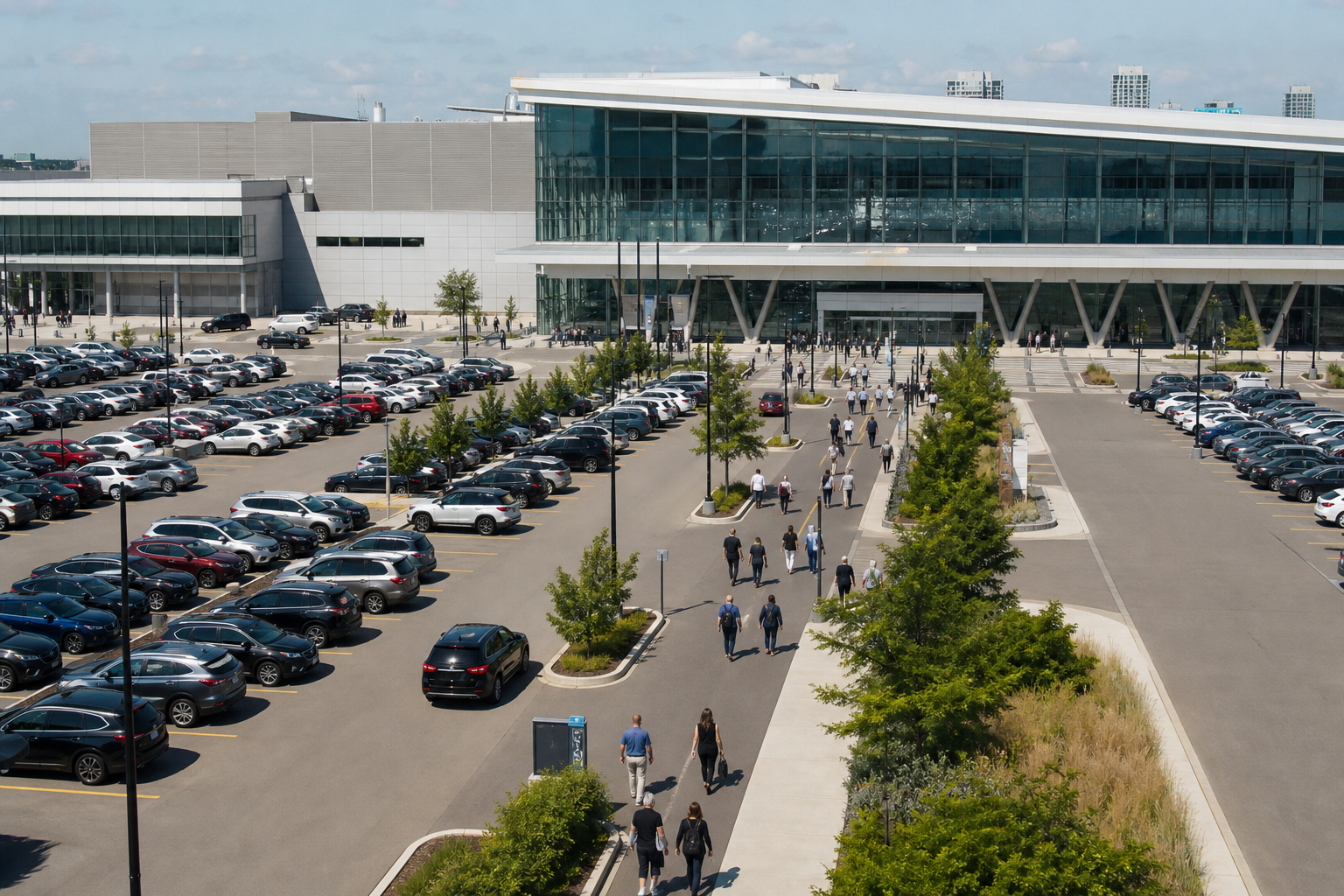
Mississauga Convention Centre lists approximately 700 on-site parking spaces at 75 Derry Road West in Mississauga. That is useful planning context, but your final plan should still reflect your event format, audience, schedule, and current venue confirmation.
Allocate Parking by Stakeholder and Arrival Pattern

Parking priorities should reflect what each group needs, not simply who registered first. A trade show exhibitor arriving with displays has a different requirement from an attendee arriving for a keynote, while staff may need to arrive before either group.
| Group | Typical arrival | Planning priority | Communication need |
|---|---|---|---|
| Exhibitors and vendors | Early, before public opening | Clear instructions and equipment access | Separate arrival time, entry instructions, and setup contact |
| Speakers and VIPs | Before or shortly after doors open | Simple route to the entrance | Personalized instructions and named contact |
| Staff and contractors | Earliest arrival and latest departure | Reliable setup and closeout access | Briefing on arrival sequence and escalation |
| General attendees | Near the published start time | Fast wayfinding to registration | Directions in invitations and day-of messages |
| Accessible parking users | Varied | Proximity, visibility, and continuous access | Specific drop-off and entrance information |
For events with booths, a trade show venue in Mississauga should be able to discuss exhibitor layouts, registration areas, sponsor activations, and parking for exhibitors and attendees. Ask how those functions connect operationally rather than assuming every group will use the same entrance or route.
Match Arrival Windows to the Event Format
Arrival windows reduce pressure by spreading demand across the schedule. Assign practical windows to groups that must arrive first, then communicate when general attendees should come.
Conferences and seminars
Speakers, AV technicians, registration staff, and exhibitors may arrive before attendees. Registration often creates the first visible queue, so confirm when it opens and where people should go after parking. A conference venue in Mississauga can help you review how parking, registration, networking spaces, and gathering areas fit into the attendee journey.
Trade shows and exhibitions
Give exhibitors and vendors an earlier setup window, with separate instructions for people carrying materials. General attendees should receive a simple opening-time recommendation and a clear destination after leaving their vehicles. Avoid sending all groups the same message when their arrival needs differ.
Galas, weddings, and social events
Social events often create a concentrated arrival period, especially when dinner, a ceremony, or a formal program begins at a fixed time. Include parking and drop-off instructions with invitations and confirmations, and explain where guests should proceed after parking.
School events
Proms, graduations, and formals may involve families, students, staff, buses, photographers, and vendors. Confirm where each group should arrive and how pedestrian movement will be managed around the entrance. A written plan is especially important when many guests arrive together.
Coordinate Parking With Registration and Entry Sequencing
Parking works best when it is designed together with registration. If attendees leave their vehicles without knowing where registration is located, they may gather near the wrong entrance, cross vehicle paths, or create a queue that reaches back toward the parking area.
Map the sequence in plain language: where guests park, which route they follow on foot, where registration begins, and where they go after checking in. Confirm whether registration desks, sponsor displays, networking spaces, or gathering areas will affect the route. The venue’s conference and seminar information identifies registration and gathering areas as event capabilities, but the exact arrangement should be confirmed for your program.
Also decide how late arrivals will enter without interrupting a presentation, meal service, ceremony, or awards program. Give staff a simple answer they can repeat, such as the correct entrance, registration point, or waiting location.
Plan Accessible Parking, Drop-Offs, and Pedestrian Routes
Accessibility planning should cover the complete journey from vehicle to event space. Confirm the location and number of accessible parking spaces, the nearest suitable drop-off point, the surface and route to the entrance, and how guests can request assistance. Do not infer these details from a general venue description.
Ontario’s official accessible-events guidance recommends placing accessible parking as close as possible to the event and using clear signs at drop-off zones and parking areas. It also emphasizes signs that can be read in all lighting conditions. Review the Ontario guide to accessible events when building your plan.
Make accessible instructions visible before guests arrive. Include relevant information in confirmation emails, event websites, attendee apps, and staff briefings. On site, keep the route clear and ensure signs direct guests consistently from parking or drop-off to the entrance.
Make Wayfinding Work Before Guests Arrive
Wayfinding starts in the invitation, not in the parking lot. Give guests the venue address, recommended arrival window, parking destination if the venue confirms one, and route from the vehicle to registration or the event entrance.
Use the same words everywhere. If one message says “main entrance” and another says “registration lobby,” guests may stop to ask for clarification. Provide short, mobile-friendly instructions and a contact method for questions on the day.
Before publishing the plan, ask who will place or manage signs, whether signs are permitted in proposed locations, and how staff will respond if a guest follows the wrong route. Do not promise an overflow lot, shuttle, valet service, rideshare zone, or traffic marshal unless the venue has specifically confirmed it.
Compare Parking Plans by Event Type
| Event type | First arrivals | Main concern | Useful action |
|---|---|---|---|
| Conference or seminar | Staff, speakers, exhibitors | Registration queues | Stagger setup and attendee instructions |
| Trade show | Exhibitors, vendors, contractors | Equipment and mixed arrival groups | Issue separate exhibitor and attendee instructions |
| School formal | Staff, photographers, vendors, families | Many pedestrians arriving together | Confirm entry points and brief supervisors |
| Gala or social event | Hosts, décor teams, vendors, guests | Concentrated arrivals | Publish an arrival window and drop-off guidance |
Questions to Ask the Venue Before You Book
- What is the current on-site parking capacity for the event date?
- Will another event or venue operation affect parking access?
- Where will attendees, exhibitors, vendors, speakers, and staff enter?
- Where will registration, networking, and gathering areas be located?
- What accessible parking and drop-off details should be communicated?
- Can the venue review your arrival schedule and stakeholder categories?
- Who handles event-day parking questions and operational changes?
- Are overflow parking, shuttles, valet service, or rideshare arrangements available, if needed?
- What are the confirmed rules for signage, drop-off, loading, and pedestrian routes?
Ask for current, event-specific answers rather than relying on a general website statement. If a service is not confirmed in writing, treat it as an open planning question.
What to Confirm at Mississauga Convention Centre
Mississauga Convention Centre serves conferences, seminars, trade shows, weddings, school events, galas, and other social occasions. Its published information lists approximately 700 on-site parking spaces, and its conference, seminar, and trade-show offerings identify parking, registration, gathering, and exhibitor-related capabilities.
For a specific booking, confirm how those capabilities will apply to your event. Discuss vehicle groups, arrival schedule, registration placement, accessible routes, exhibitor access, and the staff contact for event-day questions. This turns general venue information into an operational plan suited to your date and format.
Event Parking Checklist
Before the event
- Estimate vehicles by attendee, exhibitor, vendor, staff, speaker, sponsor, VIP, and accessibility category.
- Identify early setup groups and assign practical arrival windows.
- Confirm current parking capacity and event-date availability with the venue.
- Map the route from parking or drop-off to registration and the event entrance.
- Confirm accessible parking, drop-off, signage, and pedestrian-route details.
- Publish consistent parking instructions in invitations, confirmations, and exhibitor materials.
- Confirm who will answer parking questions and handle changes on event day.
On event day
- Brief staff on arrival groups, routes, registration, accessibility, and escalation contacts.
- Place approved signs before the first vendors, exhibitors, or staff arrive.
- Check that accessible routes and drop-off information remain visible and unobstructed.
- Direct exhibitors and vendors according to confirmed setup instructions.
- Watch the connection between parking, pedestrian routes, registration, and event entry.
- Record recurring questions so staff can give one consistent answer.
Frequently Asked Questions
How do you plan parking for a large trade show?
Separate exhibitors, vendors, contractors, staff, sponsors, and general attendees in your worksheet. Give setup groups earlier arrival instructions, confirm how equipment access works, and provide attendees with a different parking and registration message. The venue should confirm the current arrangement for exhibitor access and event-day coordination.
Is a venue’s stated parking capacity enough for my event?
Not necessarily. Compare the stated capacity with expected vehicles, simultaneous arrival periods, other venue activity, accessible parking needs, and equipment or staff requirements. A capacity figure is a starting point, not a guarantee that every space will be available at every moment.
What accessibility parking details should event planners confirm?
Confirm the location and number of accessible spaces, closest suitable drop-off point, route to the entrance, signage, surface conditions, and how guests can request assistance. Share those details before event day and check that the route remains clear.
What should a venue confirm about registration and parking?
Ask where registration will be located, when it opens, how guests reach it from parking, where exhibitors and vendors should go, and who manages operational questions. Also confirm event-specific arrangements for accessible access, signage, drop-off, and alternative parking options.
Conclusion: Turn Parking Into a Planned Arrival System
The most useful event parking logistics tips focus on coordination rather than a single space count. Estimate demand by stakeholder, separate arrival windows, connect parking to registration and wayfinding, plan accessible routes, and confirm every venue-specific detail before sending instructions.
Mississauga Convention Centre offers approximately 700 on-site parking spaces and supports conferences, seminars, trade shows, school events, weddings, galas, and other gatherings at 75 Derry Road West. To discuss parking, registration, and arrival planning for your event, contact Mississauga Convention Centre.