 20 September, 2026
Last updated: October 2026
Good décor does more than make a room attractive. It establishes the atmosphere at the entrance, helps guests understand where to go, supports the program on stage, and gives photographers clear moments to capture. The best plans also account for sightlines, accessibility, service routes, power, installation time, and the way the room will change during the event.
Mississauga Convention Centre at 75 Derry Road West serves corporate, social, school, cultural, and community events across Mississauga and the wider GTA. Its seven halls, modern ballrooms, meeting spaces, outdoor patio, on-site parking, and integrated event services give planners a practical setting for both intimate designs and larger celebrations.
How to use these event venue decoration ideas
- Start with the event objective: networking, learning, recognition, celebration, fundraising, or ceremony.
- Choose one visual direction, such as modern minimal, classic formal, warm cultural, branded, or immersive.
- Build the design in layers: foundation, lighting, focal points, guest comfort, and finishing details.
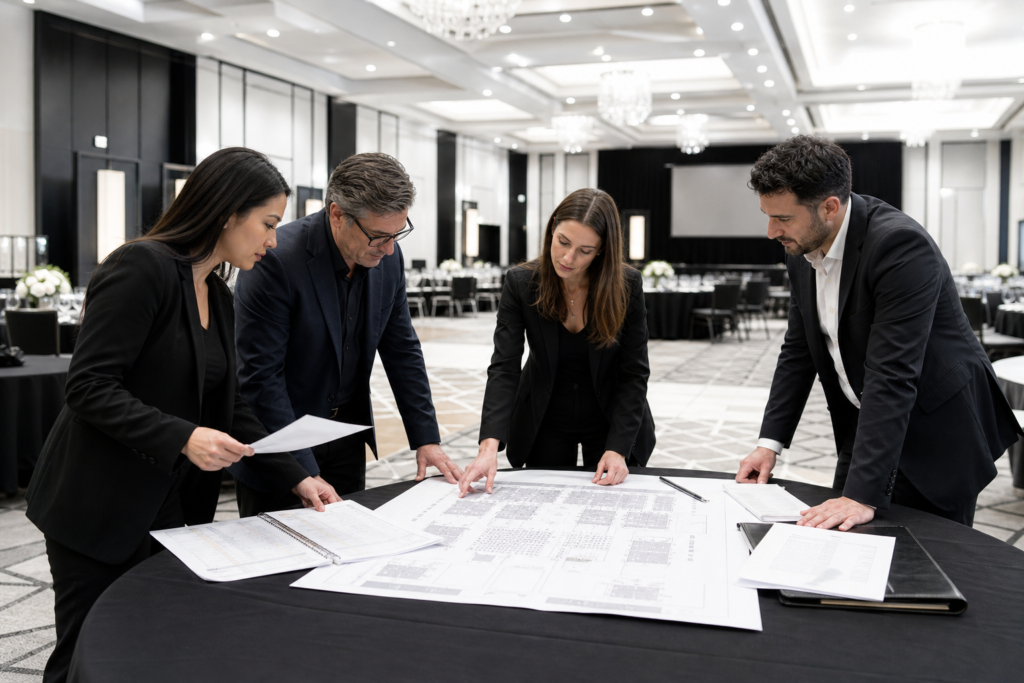
- Review the plan with venue, AV, staging, catering, and décor teams before ordering rentals.
- Test a representative table, entrance, or stage vignette before repeating it throughout the room.
What does event venue decoration include?
Event venue decoration is the coordinated use of visual and functional elements to shape a space for a particular audience and program. It can include linens, chairs, tables, florals, draping, arches, backdrops, signage, lounge furniture, lighting, staging, media walls, candles, branded graphics, and dining details.
A complete design considers the guest journey as well as the room’s appearance. That means planning the entrance, registration or welcome area, seating, stage, food and beverage points, restrooms, exits, photo locations, and transitions between program segments. Decoration should support movement rather than create obstacles.
Why decoration matters at a professional venue
It creates a clear first impression
Guests form an immediate impression from the arrival sequence, lighting temperature, signage, furniture, and visible level of detail. A defined entrance can make a large venue feel welcoming, while a restrained palette can help a corporate event feel focused and credible.
It improves wayfinding and circulation
Lighting zones, floor decals, branded signs, furniture groupings, and clear pathways help guests understand where to register, gather, eat, network, or sit. This is especially important when an event uses more than one room or includes separate sessions.
It supports the program
Stage height, backdrop design, screen placement, speaker lighting, and table orientation all affect whether guests can see and hear the important moments. A visually impressive centerpiece is not successful if it blocks a presentation, ceremony, or conversation.
It carries brand and cultural details
Color, texture, menu presentation, signage, florals, and furniture can communicate a company identity or reflect a family’s traditions. Mississauga Convention Centre’s catering options include South Asian, Pakistani Halal, Middle Eastern, Sri Lankan, Caribbean, and Continental cuisines, allowing décor and food presentation to be planned as one experience.
A five-step decoration planning framework
1. Define the event outcome
Write down what guests should do, feel, or remember. A conference may prioritize concentration and networking; a wedding may prioritize ceremony, dining, dancing, and photography; a fundraiser may need strong recognition moments and clear visibility for announcements.
List the signature moments before selecting décor. These might include a branded reveal, keynote, awards presentation, first dance, cultural ceremony, fundraising appeal, or graduation walk. The most important moments deserve the clearest sightlines and most deliberate lighting.
2. Map the room and guest journey
Identify the arrival point, registration, seating, stage, food service, lounge areas, restrooms, exits, and photo opportunities. Then draw the routes between them. Keep guest paths wide and direct, and separate service movement from guest circulation wherever possible.
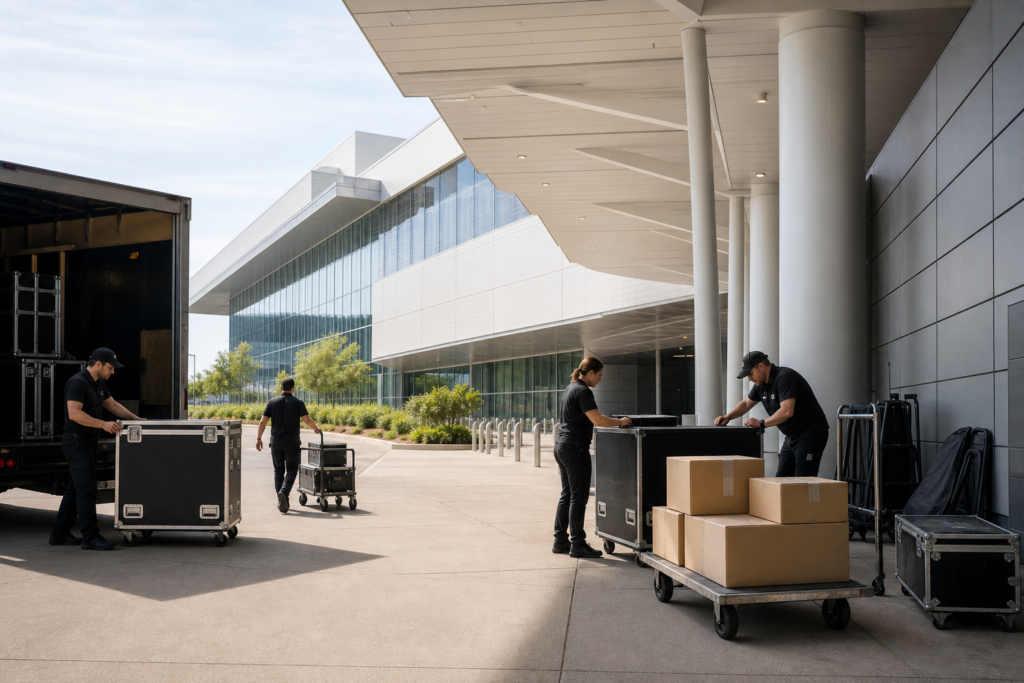
Review ceiling height, available power, rigging points, doors, loading access, screen locations, and sightlines with the venue team. A design that looks good in a mood board still needs to fit the actual room and installation process.
3. Build the design in layers
- Foundation: tables, chairs, linens, floor plan, stage risers, podiums, and dance floor.
- Ambiance: uplighting, pin-spots, ceiling washes, candles, draping, and controlled color changes.
- Focal points: entrances, arches, stage backdrops, media walls, sweetheart tables, or product displays.
- Guest experience: lounge seating, wayfinding, coat-check presentation, registration details, and comfortable circulation.
- Finishing details: menus, place cards, chargers, napkin folds, florals, branded graphics, and coordinated food stations.
4. Coordinate technical and service teams
Bring AV, lighting, staging, catering, entertainment, photography, and décor suppliers into the plan early. Lighting affects photography and video; staging affects sightlines; catering affects table space and traffic; and scenic pieces may affect power, rigging, or egress.
Share a simple room diagram and cue sheet with the teams. Mark the moments when the room changes, such as doors opening, a speaker entering, a video playing, a meal being served, or a dance floor opening.
5. Rehearse and inspect before guests arrive
Complete a technical run for microphones, presentations, video, stage entrances, and lighting cues. Walk the guest route from the parking and entrance areas through registration, seating, washrooms, and exits. Photograph the finished setup so stakeholders can approve the details before doors open.
Event venue decoration ideas by event format
Corporate conferences and product launches
Use a neutral base with brand colors in controlled accents, signage, lighting, and stage content. A clean backdrop or media wall keeps attention on speakers while color-coded registration or session zones make a multi-part agenda easier to navigate.
- Use a branded entrance or restrained projection rather than covering every surface with graphics.
- Create lounge clusters for informal conversations and one-to-one meetings.
- Place product demonstrations under focused lighting with cables secured and pathways clear.
- Keep table décor low enough for note-taking and face-to-face discussion.
- Coordinate stage lighting with presentation screens so speakers remain visible without washing out content.
Weddings and social celebrations
For weddings, begin with the ceremony, reception, and photography priorities. A floral arch, mandap, sweetheart backdrop, or layered drape can create a strong focal point, while warm uplighting and coordinated table details carry the look across the room.
- Choose one dominant palette and repeat it through linens, florals, stationery, lighting, and menu presentation.
- Use pin-spots carefully so centerpieces photograph well without creating glare for guests.
- Keep a clear view toward the ceremony or sweetheart table from major guest seating areas.
- Add lounge seating for older guests and quieter conversations without narrowing the dance-floor route.
- Plan room flips in advance when ceremony and reception use the same space.
Galas and fundraisers
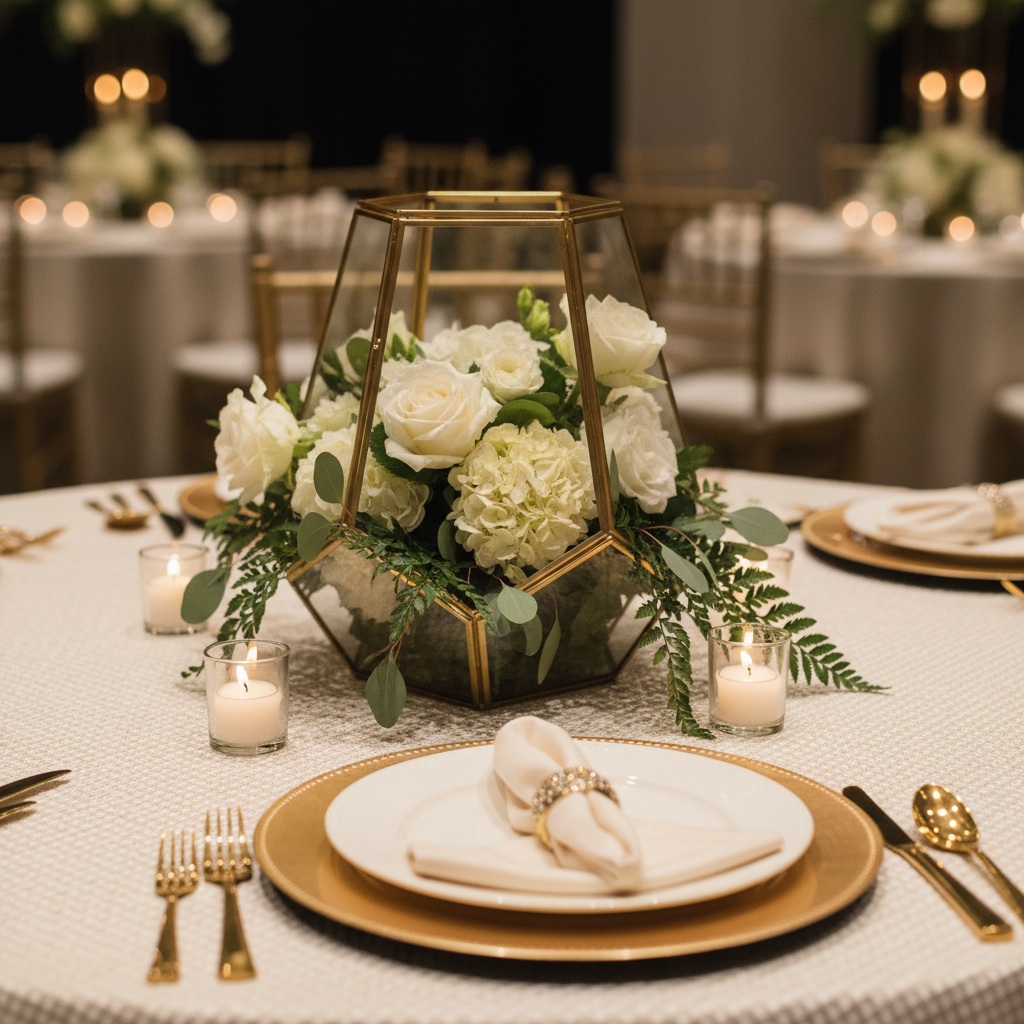
Galas benefit from a small number of dramatic moments rather than many competing features. Consider a photo-ready arrival wall, a recognizable stage treatment, donor or honouree recognition graphics, and dining décor that leaves a clear view across the table.
Plan lighting changes for speeches, presentations, dinner, auctions, and dancing. The room should become brighter when guests need to read, bid, or move and more focused when attention returns to the stage.
Trade shows and exhibitions
Decoration at an exhibition must help people navigate as well as attract attention. Use consistent aisle markers, booth identifiers, branded photo points, and distinct zones for demonstrations or quieter conversations.
- Keep display structures stable and avoid narrowing accessible routes.
- Use overhead or high-level identifiers only where the venue has approved the installation method.
- Plan electrical distribution and cable management before booth furniture arrives.
- Place high-impact graphics where arriving guests can see them without blocking traffic.
School proms and graduations
Proms can use color-changing lighting, a photo station, lounge corners, and a defined dance floor to create energy without making the entire room visually busy. Graduations need a wide, well-lit stage, readable backdrops, safe access, and enough room for graduates, presenters, families, and photographers.
Outdoor patio ceremonies and receptions
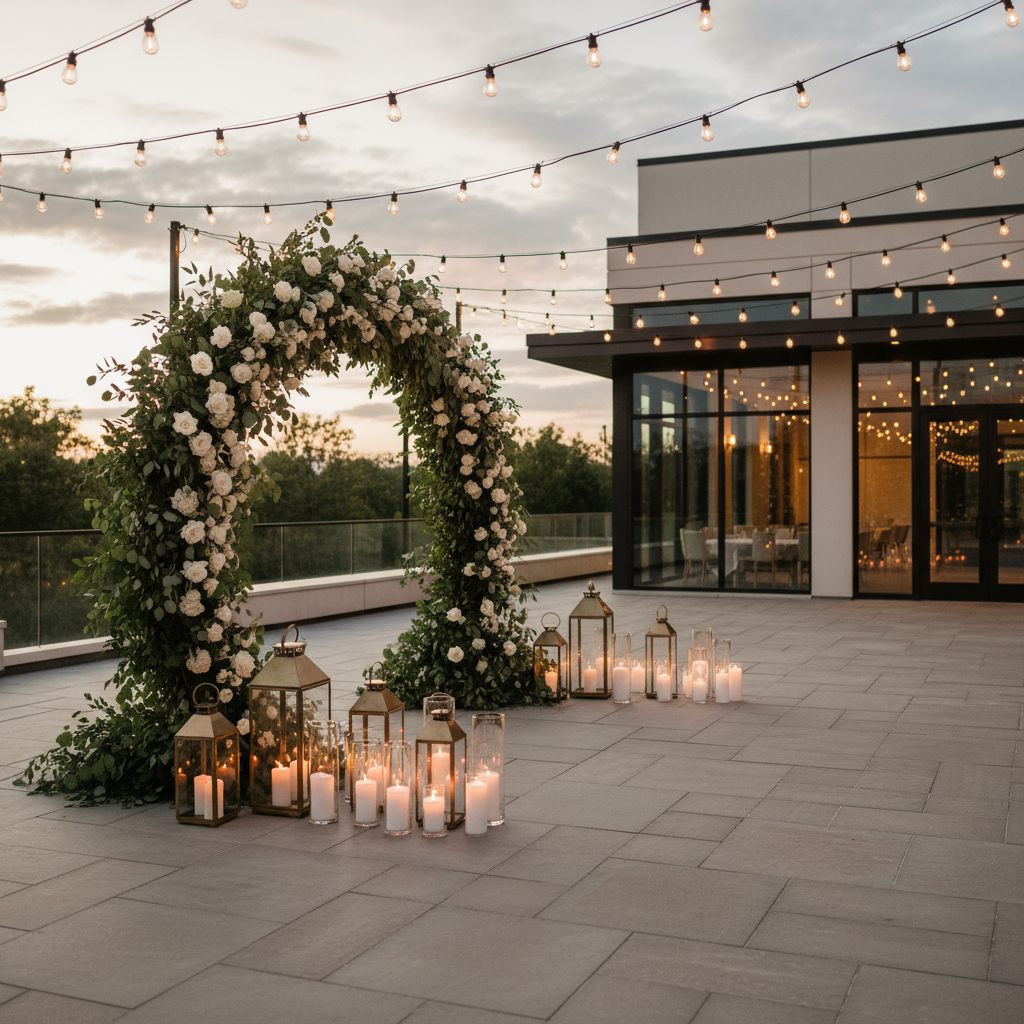
An outdoor design can combine a floral arch or modern frame with lanterns, string lighting, simple seating, and a planned photo position. Confirm wind tolerance, electrical needs, weather protection, and an indoor contingency before installing lightweight décor.
Safety, accessibility, and installation checks
Decoration must remain compatible with the venue’s safety requirements and the event’s accessibility plan. Ontario’s guide to accessible events recommends considering accessible arrival, pathways, seating, washrooms, communication, and emergency procedures throughout planning.
- Keep accessible routes, exits, ramps, and emergency equipment unobstructed.
- Provide accessible seating locations with clear sightlines rather than isolating them.
- Secure cables, rugs, freestanding walls, arches, and tall décor against movement or tipping.
- Use flame-resistant materials where required and keep candles controlled and stable.
- Confirm that temporary structures are approved before installation.
For stages, arches, trusses, hanging décor, and other temporary structures, review the Ontario safety guidance for temporary performance and event structures. The venue and relevant authorities should be involved when a proposed installation affects rigging, structure, electrical systems, or public safety.
Also review the Ontario Fire Code and fire-safety requirements with the appropriate venue contact before finalizing decorations, room layouts, staging, temporary structures, or electrical equipment. Do not assume a rental item is suitable simply because it has been used at another event.
Which décor elements deliver the most impact?
| Element | Best use | Planning consideration |
|---|---|---|
| Wireless uplighting | Fast room-wide atmosphere | Test color on walls, linens, and skin tones |
| Stage backdrop | Presentations, ceremonies, and photos | Protect speaker sightlines and screen readability |
| Feature entrance | Arrival experience and photos | Never narrow registration or accessible paths |
| Centerpieces | Dining atmosphere | Balance height with conversation and photography |
| Lounge clusters | Networking and guest comfort | Keep routes to food, exits, and washrooms clear |
| Media wall | Brand content and focal moments | Confirm power, content format, heat, and installation |
Materials and team coordination
Useful materials may include linens, chargers, candles, florals, lanterns, drape, scenic flats, arches, stage risers, signage, vinyl graphics, lounge furniture, uplights, pin-spots, media displays, and weather equipment for patio events. The right combination depends on the room, schedule, guest profile, and installation restrictions.
Ask the venue team who is responsible for each element. At Mississauga Convention Centre, planners can coordinate in-house audiovisual, lighting, staging, and technical support with catering and the room setup. Confirm what is included, what must be rented, who installs it, and when the room can be accessed.
Local planning tips for Mississauga events
- Use the venue address, 75 Derry Road West, consistently on invitations, signage, and arrival instructions.
- Build the arrival plan around the venue’s location near major highways and Toronto Pearson International Airport.
- Use the available on-site parking information in guest communications and keep the entrance sequence easy to recognize.
- For winter events, make coat-check and wet-weather movement part of the décor plan rather than an afterthought.
- For patio events, schedule outdoor photography around the desired light while keeping an indoor weather plan ready.
Frequently asked questions
What are the best event venue decoration ideas for a large ballroom?
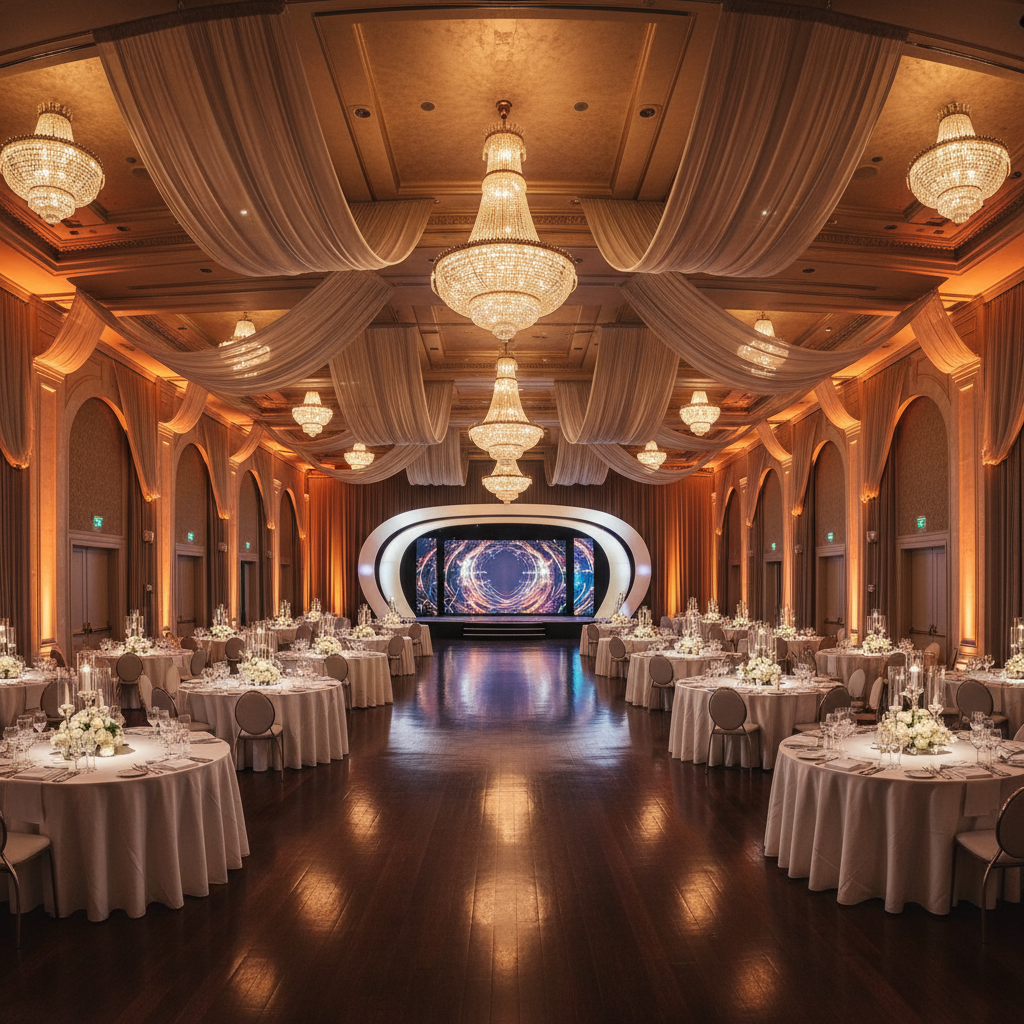
Start with a clear entrance, a coordinated lighting plan, a readable stage or focal wall, and table décor that preserves sightlines. Neutral foundations with a limited accent palette make a large room feel intentional without overwhelming the program.
How can décor support an event without blocking accessibility?
Map accessible routes before placing furniture, signs, arches, cables, or scenic pieces. Keep ramps, exits, washrooms, and accessible seating clear, and review the complete arrival and emergency route with the venue team.
When should AV and staging be involved in decoration planning?
Involve them before final décor selections or rental orders. Backdrops, draping, media walls, hanging elements, lighting, and stage pieces can affect power, rigging, screen visibility, installation time, and guest sightlines.
How do I decorate an outdoor ceremony when the weather may change?
Choose stable décor, confirm wind and electrical requirements, and plan shade, heaters, rain protection, or an indoor alternative. Keep the ceremony design transferable so the visual direction can continue inside if conditions change.
Plan a cohesive decorated event space
The most effective event venue decoration ideas are purposeful rather than excessive. Begin with the guest journey and event outcome, then layer lighting, staging, florals, furniture, signage, and tablescapes around those priorities. Finally, validate the design for accessibility, safety, sightlines, service routes, and installation before guests arrive.
To compare room possibilities and coordinate décor with audiovisual, staging, lighting, and catering support, contact Mississauga Convention Centre about your event requirements and preferred setup.