 12 May, 2026
Last updated: October 2026
By Mississauga Convention Centre
Last updated: October 29, 2026
- What the Centre offers
- Why planners choose this event venue
- How to plan an event
- Event types and room setups
- Capacity and layout decisions
- Catering and audiovisual planning
- Parking, access, and local logistics
- Planning checklist
- Frequently asked questions
- Next steps
What does Mississauga Convention Centre offer?
Mississauga Convention Centre is a multi-purpose convention and event facility at 75 Derry Road West in Mississauga, Ontario. The Centre has seven elegant halls, each approximately 4,250 square feet, giving planners a consistent starting point for room selection, seating plans, stage placement, exhibitor layouts, and guest-flow decisions.
The venue can accommodate more than 2,200 guests across its spaces. That range makes it suitable for a small corporate meeting, a multi-room conference, a wedding reception, a school formal, or a large exhibition. The final capacity depends on the selected hall or combination of halls, furniture, stage dimensions, service areas, aisles, dance floor, production equipment, and the type of event.
In-house services include audiovisual systems, lighting, staging, and technical support. Catering is also available in-house, with menus spanning South Asian, Pakistani Halal, Middle Eastern, Sri Lankan, Caribbean, and Continental cuisines. Keeping these functions connected can make planning easier because room design, production requirements, meal timing, and service operations can be discussed together.
- Seven halls: Approximately 4,250 square feet per hall, supporting separate sessions or combined programs.
- Large-event capacity: More than 2,200 guests across the facility, subject to the final floor plan and event requirements.
- Event production: Audiovisual equipment, lighting, staging, and technical support for meetings, presentations, celebrations, and performances.
- In-house food service: Diverse cuisine options for corporate, social, school, and multicultural events.
- On-site parking: Approximately 700 parking spaces are available for guests and event participants.
Why choose this event venue in Mississauga?
Venue selection is not only about appearance. A successful event also depends on whether guests can arrive easily, whether the room supports the program, whether speakers can be heard and seen, and whether food service fits the schedule. Mississauga Convention Centre brings these decisions into one planning conversation instead of requiring the organizer to coordinate every major component with unrelated suppliers.
The location at 75 Derry Road West is convenient for guests travelling through Mississauga, Toronto, Brampton, and the wider GTA. The Centre is minutes from major highways and Toronto Pearson International Airport, which can be useful when an event includes out-of-town speakers, delegates, exhibitors, or wedding guests.
One venue for different event scales
The seven-hall format gives planners options. A single hall may suit a focused meeting, reception, or smaller celebration, while multiple halls can separate a keynote from workshops, dining from registration, or an exhibition from a conference program. Similar room dimensions can also make expansion easier when attendance changes during the planning process.
Integrated event services
When audiovisual, lighting, staging, catering, and room setup are planned together, the event team can identify conflicts earlier. For example, a large stage affects seating capacity; a dance floor affects banquet-table placement; a presentation schedule affects meal timing; and an exhibition affects registration and electrical requirements.
Support for diverse celebrations
Multicultural events often require more than a single menu choice. They may involve multiple cuisines, dietary requirements, ceremonial moments, family entrances, live entertainment, cultural traditions, and different service timings. In-house catering and venue coordination allow these needs to be discussed as part of the overall event plan.
How to plan an event at Mississauga Convention Centre
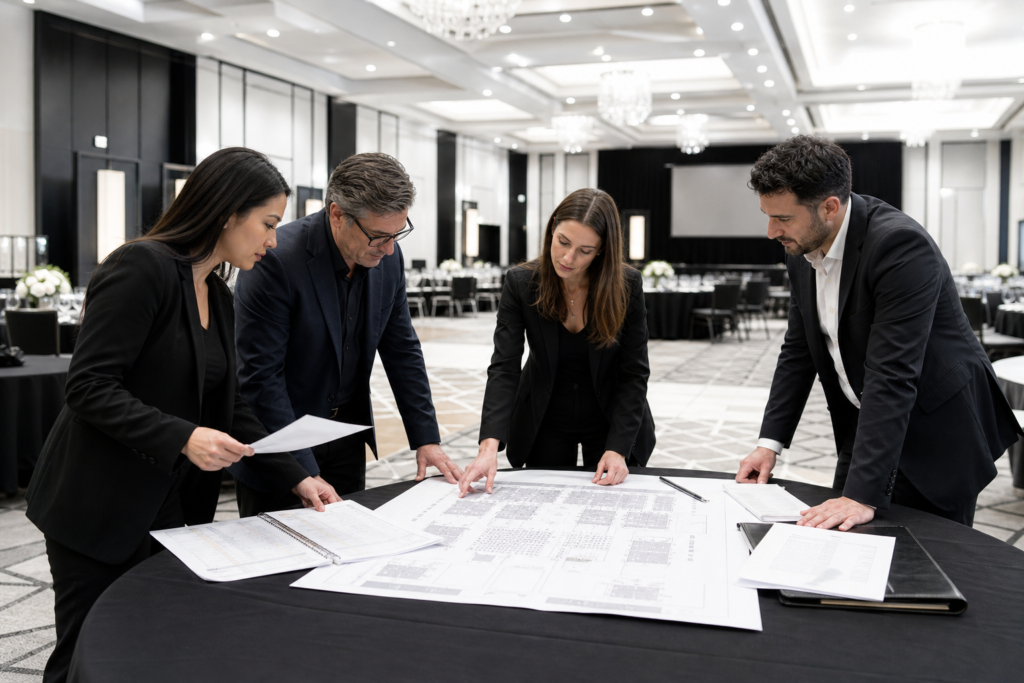
A practical planning process begins with the event outcome rather than the décor. Once the purpose, attendance, and program are clear, the venue team can help connect the room, service, technical, and catering decisions.
1. Define the event brief
Start with the information that affects every later decision: event type, preferred date, expected attendance, arrival pattern, program length, presentation needs, meal format, and any cultural or accessibility requirements. A brief for a 300-person conference will look different from one for a 500-person wedding reception, even if both use a similar amount of floor space.
Also identify the event’s priorities. A conference may prioritize sightlines, registration, sound, breakouts, and power. A wedding may prioritize the entrance, head table, dance floor, photography, dining rhythm, and décor. A school event may need controlled entry, coat check, non-alcoholic service, supervision, and a clear departure plan.
2. Match attendance to the layout
Do not select a room based only on the maximum number of seats. Ask how much space the event needs for stages, aisles, registration, buffet or service stations, production equipment, sponsor displays, lounges, dance floors, and accessible circulation. A theatre-style meeting may seat more people than a banquet reception because tables and dining service require additional floor area.
3. Build the guest-flow plan
Map the journey from parking and arrival to registration, the main room, washrooms, dining, networking, and departure. Registration should be visible without blocking the entrance. For a multi-room event, signs should identify the main program, breakouts, food service, and accessible routes before guests reach a decision point.
4. Confirm production requirements
List every technical element rather than asking for “standard AV.” Include screens, presentation playback, microphones, lecterns, confidence monitors, stage lighting, music, recording, livestreaming if required, exhibitor power, and any special effects. The production plan should also identify who advances slides, cues music, manages microphones, and responds if a presentation file fails.
5. Coordinate menus and dietary needs
Confirm the meal format, service sequence, guest count, dietary categories, allergen communication, and timing. For multicultural celebrations, specify which dishes are central to the event and how they will be labelled. For conferences, decide whether food should be plated, buffet-style, or served at stations based on the agenda and available break time.
6. Finalize the run of show
A run of show should include doors open, guest arrival, welcome remarks, presentations, meal service, entertainment, transitions, and closing. Add realistic time for speaker changes, room resets, photography, meal clearing, and technical checks. A short rehearsal or production meeting can prevent avoidable delays on the event day.
Which events can the Centre host?
Mississauga Convention Centre supports a broad range of occasions. The right room arrangement depends on the event’s audience behaviour, not just the guest count. Guests who need to take notes require different furniture from guests attending a reception; exhibitors require different circulation from a seated dinner.
Corporate meetings and conferences
Corporate programs may include a keynote, panels, workshops, networking, sponsor areas, and meals. A common approach is to use one room for the plenary and additional rooms for breakouts. Registration and refreshment areas should be positioned so that breaks do not interrupt presentations or create bottlenecks at the main entrance.
Trade shows and exhibitions
Exhibitions need clearly marked booths, practical aisle widths, exhibitor access, power planning, loading coordination, registration, and food or beverage points. Organizers should decide whether the event is primarily a trade floor, a conference with exhibits, or a hybrid of both because each model affects the placement of stages and visitor traffic.
Weddings and receptions
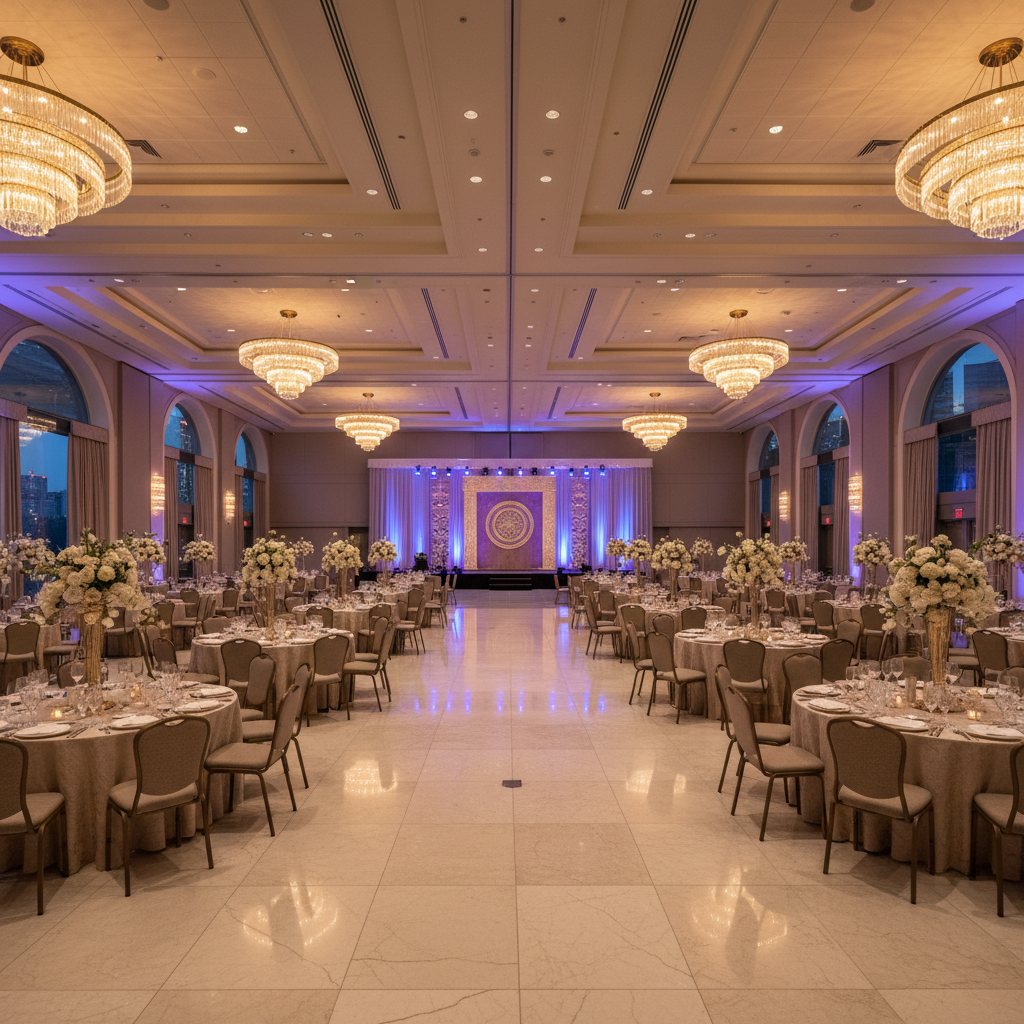
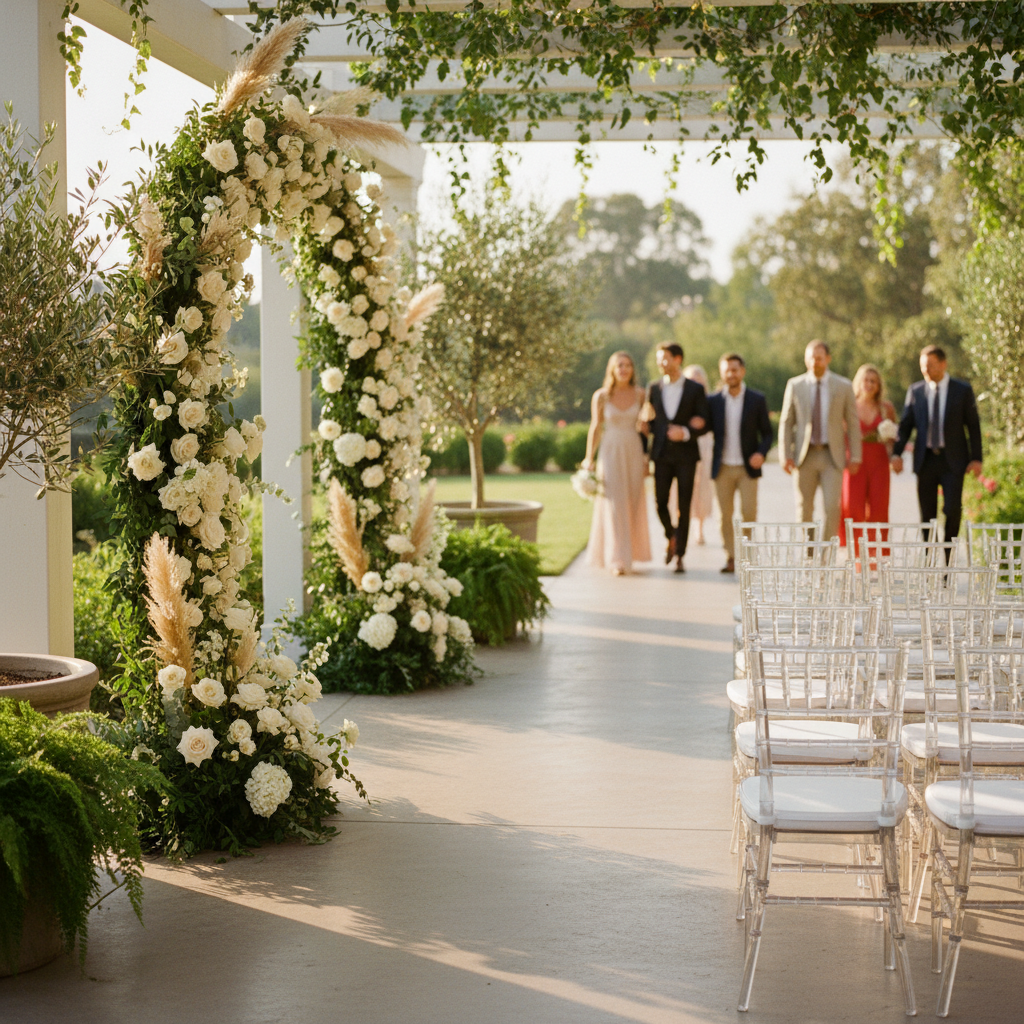
Wedding layouts commonly include a head table or sweetheart table, guest tables, a dance floor, a DJ or band area, a bar or beverage station, a cake location, photography space, and an entrance route. A patio option may also be considered for a ceremony or outdoor portion of the celebration, subject to the event plan and conditions.
School proms and graduations
School events require careful arrival and departure planning. Organizers should confirm supervision, guest identification, coat check, food and beverage controls, entertainment placement, emergency communication, and the timing for student transportation. A well-planned layout keeps the dance floor visible, maintains clear routes, and prevents queues from forming around food or registration.
Galas and cultural celebrations
Galas and cultural events often combine dining, speeches, performances, awards, music, and ceremonial moments. The planning team should identify every transition and confirm which parts of the program require special lighting, microphones, music playback, stage access, or additional rehearsal time.
How should you choose a room setup?
Room selection should begin with the program, then move to the furniture and production plan. The examples below are planning starting points rather than guaranteed capacities. Final numbers should be confirmed against the chosen floor plan, safety requirements, service model, and event equipment.
| Event objective | Useful starting layout | Planning priorities |
|---|---|---|
| Keynote or town hall | Theatre seating with stage and screen | Sightlines, sound coverage, registration, speaker access |
| Training or seminar | Classroom or cabaret seating | Writing space, power, visibility, break service |
| Wedding or gala | Banquet rounds with stage and dance floor | Guest comfort, service aisles, entrances, photography |
| Trade show | Exhibition booths with marked aisles | Traffic flow, power, loading, registration, signage |
| Prom or social reception | Open dance floor with lounge or cocktail areas | Supervision, food stations, entertainment, controlled entry |
For corporate organizers comparing layouts, the corporate event venue decision checklist can help structure questions about room fit, service, and production before a site visit.
Allow space for the parts guests do not see
Back-of-house needs can affect the guest experience. Include room for registration supplies, presentation backups, speaker staging, catering preparation, coat check, gifts, photography equipment, and vendor storage. If these functions are ignored, they may end up in corridors or near guest seating.
Plan for accessibility from the beginning
Accessibility should be part of the floor plan, not a last-minute adjustment. Confirm accessible entrances, circulation routes, seating positions, washroom access, stage access where needed, and communication requirements. The Centre is identified by venue information as wheelchair accessible, but organizers should still discuss the precise needs of their guests and program.

How should catering and AV be coordinated?
Catering and production are connected to the schedule. A keynote that ends late can compress a meal service; a long plated meal can affect entertainment; a buffet can create queues if the room has too few service points; and a live performance may require a stage change that affects the next course.
Questions for the catering plan
- Which cuisine or combination of cuisines best reflects the event and guest list?
- How many guests require vegetarian, vegan, Pakistani Halal, allergen-sensitive, or other dietary options?
- Will food be plated, buffet-style, served at stations, or offered as passed items?
- How much time is available for meal service without disrupting the program?
- How will dietary meals be labelled and delivered to the correct guests?
The Centre’s in-house catering includes South Asian, Pakistani Halal, Middle Eastern, Sri Lankan, Caribbean, and Continental options. Menu discussions should confirm current selections, service format, ingredients, and final dietary procedures for the specific event.
Questions for the AV plan
- How many speakers need microphones, and will they use handheld, lapel, or headset units?
- What content must be shown on screen, and who will operate the presentation?
- Does the event require stage lighting, music cues, video playback, recording, or livestream support?
- Where will presenters wait, and how will they reach the stage without crossing the audience?
- When will files, slides, videos, and microphones be tested?
Integrated audiovisual, lighting, staging, and technical support can simplify accountability, but the organizer should still provide a written production schedule. Include contact names, cue times, file versions, speaker order, and contingency instructions.
Parking, access, and local logistics
The Centre is located at 75 Derry Road West, Mississauga, Ontario, near major highways and Toronto Pearson International Airport. This location can work well for GTA events with guests arriving from Mississauga, Toronto, Brampton, and surrounding communities, as well as for programs that include travel by air.
Approximately 700 on-site parking spaces are available. Even with substantial parking, organizers should communicate arrival instructions clearly, especially for conferences with a concentrated start time or weddings with several family and vendor arrivals. Include the venue address, entrance information, event start time, registration location, and any instructions for accessible drop-off or vendor loading in the attendee communication.
Build an arrival plan
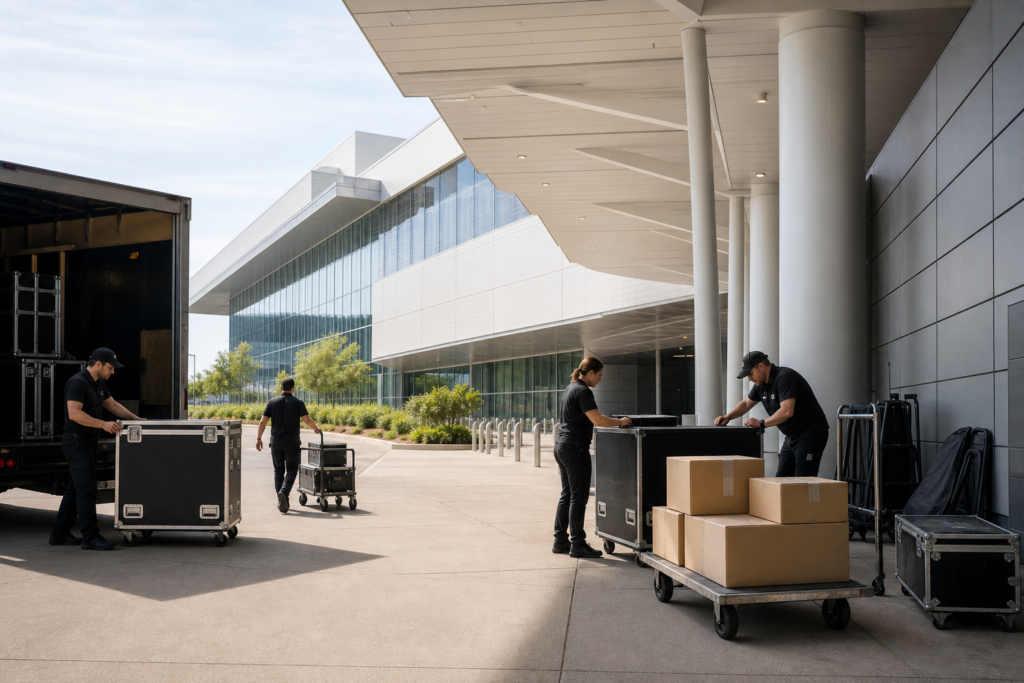
For a conference, consider early access for exhibitors, speakers, and registration staff before general doors open. For a wedding, coordinate the arrival of décor, photography, entertainment, and family members separately where possible. For a school event, align guest entry, identification, supervision, coat check, and transportation timing.
Protect the schedule with buffers
Allow additional time for setup, technical checks, photography, guest arrival, and room transitions. The correct buffer depends on the event, but a schedule with no contingency is vulnerable to traffic, late arrivals, missing files, delayed deliveries, and unexpected changes in the program.
A practical planning checklist
Use the following checklist when comparing an event venue in Mississauga or preparing for a conversation with the Centre’s event team.
- Event brief: Confirm event purpose, date, attendance range, program length, and guest profile.
- Room plan: Select the preferred hall or combination of halls and sketch seating, staging, dining, registration, and circulation.
- Guest experience: Map arrival, parking, accessibility, registration, wayfinding, food service, and departure.
- Production: List screens, microphones, lighting, staging, playback, recording, power, and rehearsal requirements.
- Catering: Confirm cuisine, service format, dietary requirements, labelling, meal timing, and final guest-count deadlines.
- Vendors: Identify décor, entertainment, photography, exhibition, transportation, and other suppliers that need access.
- Schedule: Create a run of show with setup, sound check, doors open, program cues, meals, transitions, and close.
- Contingencies: Prepare alternatives for delayed speakers, technical problems, attendance changes, and weather-dependent plans.
For a broader comparison framework, the guide on how to choose an event venue in Mississauga can help organizers evaluate space, services, access, and planning support before making a decision.
Frequently asked questions about Mississauga Convention Centre
How many guests can Mississauga Convention Centre accommodate?
The Centre can accommodate more than 2,200 guests across its seven halls. Each hall is approximately 4,250 square feet, but the usable capacity for a particular event depends on the layout, stage, dining format, aisles, production equipment, and service requirements.
What types of events can be held at the Centre?
The venue hosts corporate meetings, conferences, seminars, exhibitions, trade shows, school proms and graduations, weddings, receptions, galas, anniversaries, birthdays, and cultural celebrations. The halls can be configured for seated presentations, dining, networking, entertainment, or exhibit traffic.
Does the venue provide audiovisual and staging support?
Yes. In-house services include audiovisual systems, lighting, staging, and technical support. Organizers should provide a detailed production brief so the team can confirm the equipment, staffing, rehearsal, and cue requirements for the event.
What catering options are available?
In-house catering includes South Asian, Pakistani Halal, Middle Eastern, Sri Lankan, Caribbean, and Continental cuisines. Menu availability, dietary accommodations, service style, and final selections should be confirmed directly for the event because requirements vary by date, format, and guest list.
Is parking available for guests?
Approximately 700 on-site parking spaces are available at the Centre. Event organizers should still provide clear arrival instructions and discuss accessible drop-off, vendor access, and concentrated arrival periods as part of the event plan.
Where is Mississauga Convention Centre located?
The Centre is located at 75 Derry Road West, Mississauga, Ontario, L5W 1G3. It is near major highways and Toronto Pearson International Airport, making it accessible for local, regional, and out-of-town attendees.
Plan your event at Mississauga Convention Centre
Mississauga Convention Centre gives planners a practical combination of scale, room flexibility, production support, in-house catering, and on-site parking. The best results come from discussing the event as a complete experience: guest arrival, room layout, technical cues, food service, accessibility, and the final departure should all work together.
When you are ready to compare room options and service requirements, contact Mississauga Convention Centre with your expected attendance, preferred date, event type, and draft program. Those details provide a useful starting point for discussing space, catering, audiovisual support, and the next planning steps.