 24 October, 2026
Corporate event catering works best when it is planned as part of the run of show, not added after the agenda is finished. For a Mississauga conference, reception or gala, define each food-service window, menu format, staffing handoff and programme cue before requesting a venue quote. Related reading: Mississauga.
Why In-House Catering Changes the Run of Show
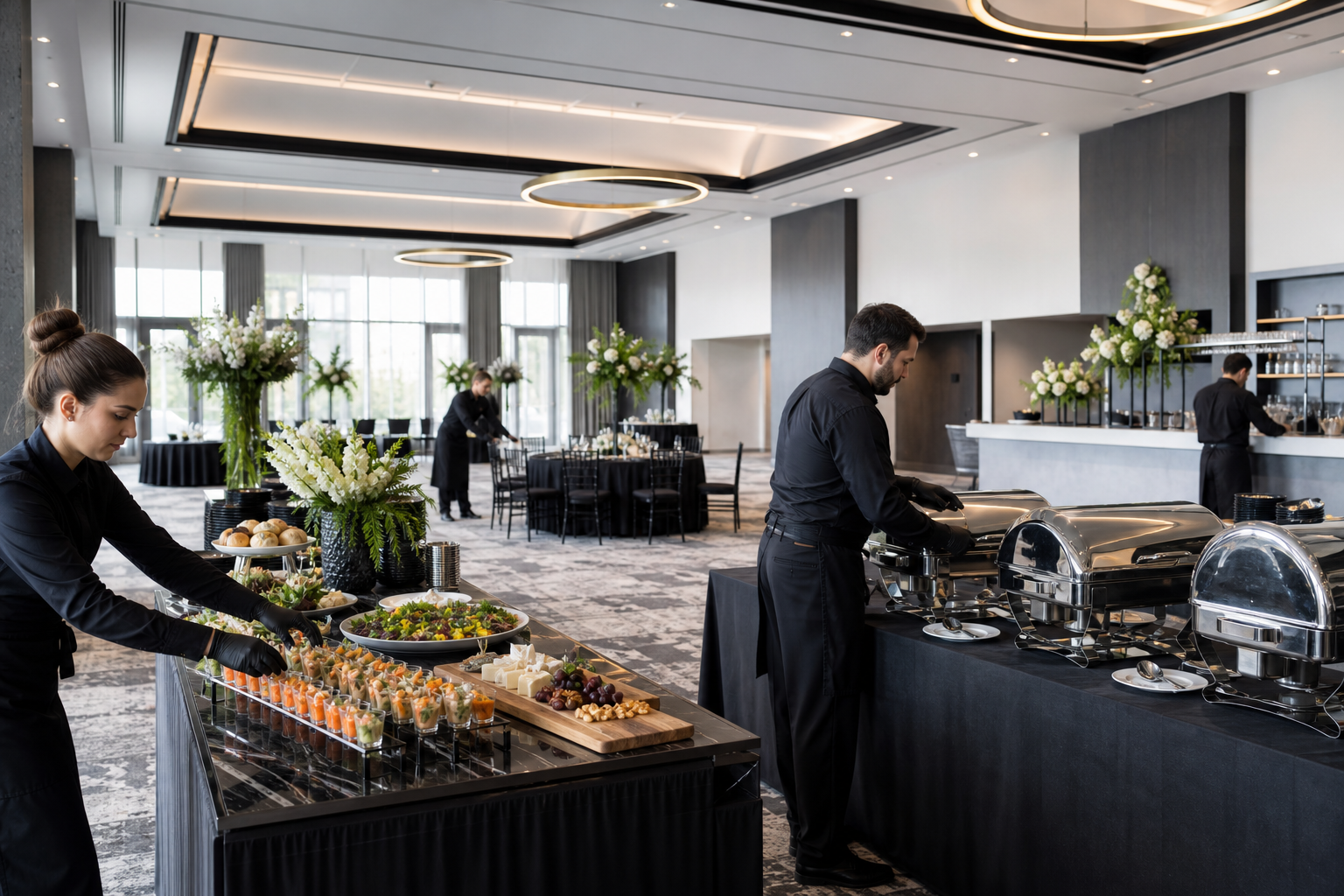
Venue-managed catering connects menu planning, kitchen production, staffing and service timing with the event schedule. That lets you plan a meal, break or reception alongside registration, presentations, room changes and guest movement.
At Mississauga Convention Centre, in-house catering is managed by the venue’s culinary and operations teams. This can reduce handoffs for planners coordinating speakers, exhibitors, dietary requirements and tight transitions. Read more about in-house catering benefits before choosing an operating model.
The Centre hosts corporate meetings, conferences, trade shows and galas, with seven halls available for event planning. Its corporate event information also describes integrated AV and staging, which makes it useful to define food service and production cues in the same run of show.
Venue-Managed Catering or Outside Catering: Which Model Fits?
You do not need to provide your own caterer simply because you are organizing a corporate event. Mississauga Convention Centre offers in-house catering, while any request to use an outside caterer should be discussed with the venue before comparing proposals or signing an agreement.
| Decision area | Venue-managed catering | Outside catering |
|---|---|---|
| Accountability | Menu, kitchen, service and venue operations can follow one event plan. | You may manage the caterer and venue as separate parties. |
| Timing | Food service can be built around presentations, breaks, awards and transitions. | Delivery, setup, service and cleanup windows must be coordinated across suppliers. |
| Staffing and equipment | The venue defines the service approach and operational scope in its proposal. | Confirm kitchen access, equipment, staffing, waste removal and venue rules. |
| Dietary communication | Dietary information stays within the venue’s menu and service process. | Details must pass accurately between outside staff and venue teams. |
| Price comparison | The quote may combine food with space, staffing, setup and other services. | A lower food price may exclude delivery, rentals, labour, kitchen access or cleanup. |
In-house catering is not automatically cheaper. The better question is which proposal gives you the clearest total scope, fewest operational handoffs and right level of control for your agenda.
Ask whether outside catering is permitted, which conditions apply, and who handles food service, equipment, cleanup and timing. Treat that answer as part of the catering plan.
Match the Catering Format to the Corporate Event
The best format for a corporate cocktail reception is usually passed or displayed reception service supported by a defined food window, beverage plan and networking layout. The final choice depends on guest count, programme length, room design and menu direction.
| Event format | Useful catering window | Service direction | Planning priority |
|---|---|---|---|
| Executive meeting | Arrival coffee, short break or working meal | Refreshments, individual meals or compact buffet | Protect discussion time and reduce service noise. |
| Seminar | Arrival service and one scheduled break | Refreshments with timed replenishment | Return attendees on schedule. |
| Conference | Breakfast, breaks, lunch and possible reception | Buffet, plated meal or multiple service zones | Prevent queues and registration bottlenecks. |
| Trade show | Exhibitor meals, attendee breaks and closing reception | Fast stations, boxed options or reception service | Separate meal traffic from booths and freight routes. |
| Networking reception | One cocktail or light-meal period | Passed items, stations or displayed small plates | Keep food easy to carry and access. |
| Corporate gala | Cocktail arrival, dinner and programme-linked service | Plated, buffet or stations | Coordinate courses with speeches, awards and entertainment. |
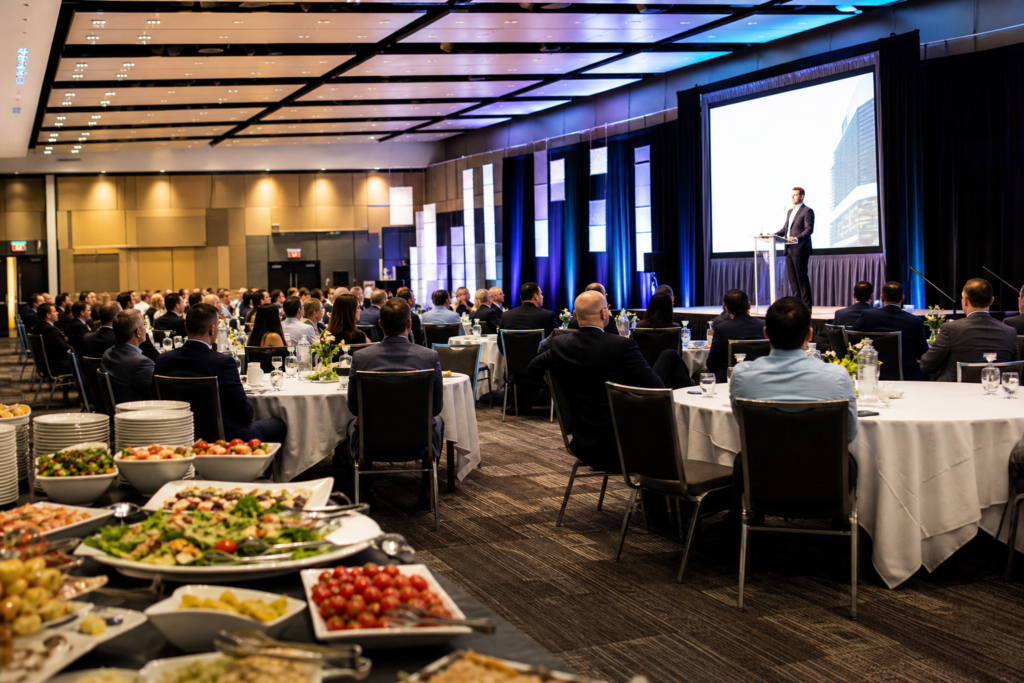
For a conference, decide whether food supports arrival, scheduled breaks, a dedicated meal or an evening reception. For a gala, place dinner service around speeches, awards and entertainment. For a trade show, separate food queues from booths, demonstrations and exhibitor movement.
Write the actual service windows into the brief instead of using a general phrase such as “full catering.” That gives the venue a clearer basis for planning staffing, room setup and timing.
Plan the Menu for a Mixed Corporate Audience
Start with the audience profile. Record attendance, cultural preferences, dietary requirements, allergens, beverage needs and whether guests will eat during a dedicated meal period or between sessions.
Mississauga Convention Centre identifies South Asian, Pakistani Halal, Middle Eastern, Sri Lankan, Caribbean and Continental cuisine categories. These are useful directions for a multicultural audience, but a category does not guarantee every dish, substitution, preparation detail or dietary accommodation in every package.
- Audience: attendance estimate, guest profile and cultural preferences.
- Dietary needs: vegetarian, vegan, Halal, allergy and special-meal requirements.
- Service format: buffet, plated meal, stations, passed items, boxed meals or refreshments.
- Timing: arrival service, break duration, meal start, meal finish and programme cues.
- Labelling: how special items will be identified and explained.
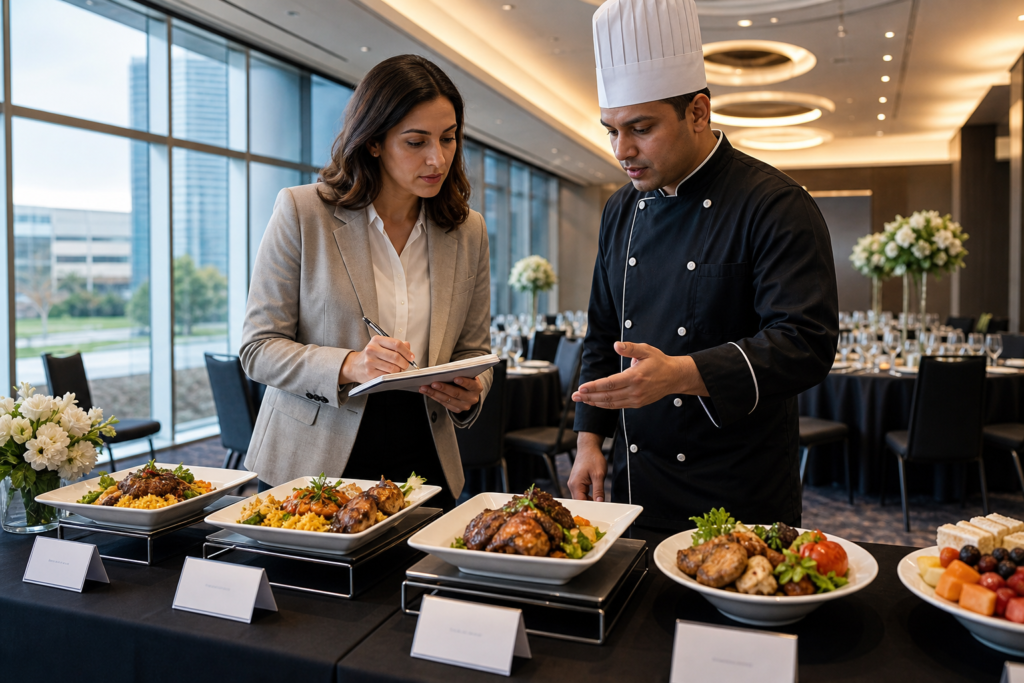
Ask which menu combinations are currently available, how special meals are prepared and labelled, how substitutions affect the quote, and how service staff will answer questions during the event.
Build Catering Into the Run of Show

Each service window needs an owner, start trigger, finish target and defined relationship to the programme. Catering, operations and technical teams should review these points together.
The following hypothetical example shows how catering can fit a one-day corporate conference.
| Time | Programme | Operations decision |
|---|---|---|
| 8:00–9:00 | Registration and networking | Place coffee near registration without blocking check-in or accessible routes. |
| 9:00–10:30 | Keynote | Clear food service and protect speaker sightlines and audio. |
| 10:30–10:50 | Refreshment break | Open service before the cue and set a return signal. |
| 10:50–12:30 | Panels | Reset service areas quietly. |
| 12:30–1:30 | Lunch and networking | Choose service based on room, queue capacity and available time. |
| 1:30–3:30 | Breakouts | Confirm whether refreshments need separate room support. |
| 3:30–4:00 | Closing reception | Move guests without interfering with equipment teardown. |
| 4:00–4:30 | Awards and closing remarks | Keep stage, microphone paths and sightlines clear. |
For every meal period, confirm staff access, food staging, open routes and the person signalling service start. Review stage access, speaker movement, AV cues, room resets and transitions between halls at the same time.
If remote attendees are included, catering still affects the production plan. The hybrid event production guide can help you consider room movement, microphones, camera views and online participation during breaks.
Define the Catering Details Before You Book
A catering-led venue decision should answer how food service will work inside the programme. Confirm the proposed hall, meal zones, service routes, staging areas, staff access and the time available for each transition.
For a conference, ask where registration and refreshment service can sit without creating a bottleneck. For a reception, ask how guests will circulate with food and beverages. For a gala, confirm how courses or buffet movement will fit around speeches, awards and entertainment.
Production details also belong in the same conversation. Ask who is responsible for microphones, displays, staging, lighting, rehearsal time and technical cues, then place those responsibilities beside catering tasks in the run of show.
Understand What Changes the Quote
There is no single reliable price for in-house corporate catering without an event brief. Mississauga Convention Centre uses tailored quotes based on event type, size, menu and selected enhancements.
- Guest count and guaranteed attendance.
- Menu complexity, cuisine, dietary meals and beverages.
- Service style, staffing, meal duration and service points.
- Room size, additional halls, setup, resets and teardown.
- AV, lighting, staging and technical support.
- Décor, registration areas, signage and furniture.
- Taxes, service charges, deposits, minimums, overtime and cancellation terms.
Compare proposals using the same attendance, schedule, menu scope and service assumptions. A food-only figure is not comparable with a proposal including room setup, staffing, AV, staging or cleanup.
Request an itemized scope showing inclusions, options, exclusions and items awaiting confirmation. The all-inclusive corporate package comparison can help organize the review.
Prepare a Catering-Led Quote Brief
A useful request for quote gives the venue enough operational detail to price and plan accurately. Include:
- Purpose: meeting, seminar, conference, trade show, reception or gala.
- Date: preferred and alternate dates, access time and teardown window.
- Attendance: expected range, VIPs, speakers, exhibitors and staff.
- Agenda: registration, presentations, breaks, meals, networking, awards and room transitions.
- Menu: cuisine, service style, beverages, dietary needs, allergens and special meals.
- Space plan: seating, stage, registration, meal zones, breakouts, exhibitors and storage.
- Production: microphones, screens, lighting, staging, recording, rehearsal and technical support.
- Arrival: parking, drop-off, buses, rideshare, accessibility and vendor load-in.
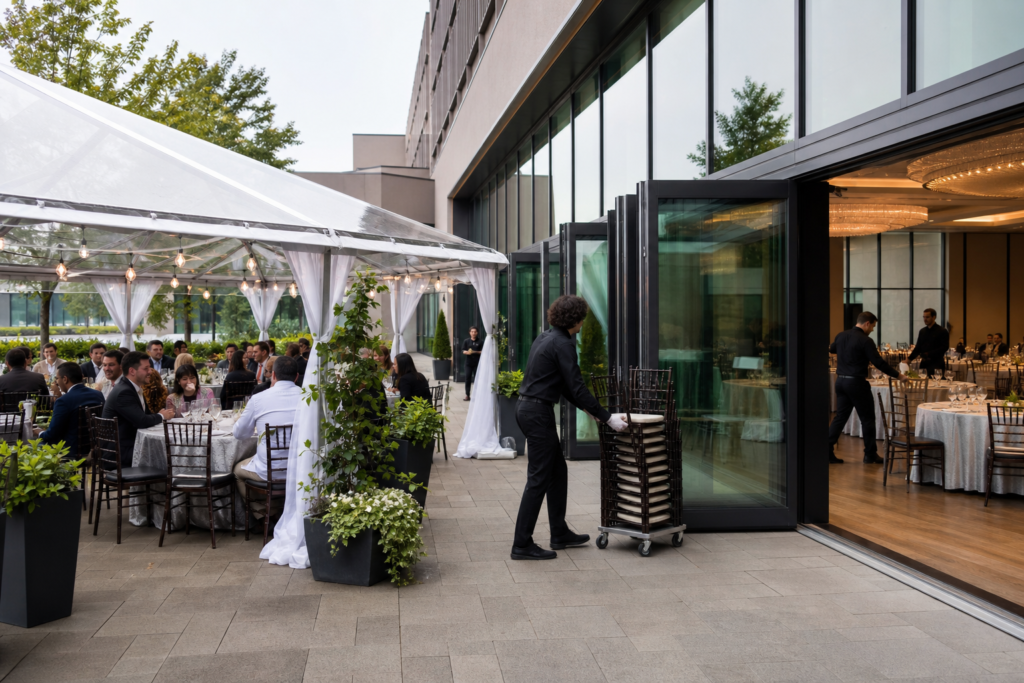
- Enhancements: décor, signage, branding, patio use and additions.
- Commercial terms: inclusions, exclusions, taxes, charges, deposits, minimums, overtime, cancellation and payment schedule.
Ask that the proposal use the same assumptions you supplied. If attendance changes, you can identify which line items need revision instead of restarting the comparison.
Choose the Next Planning Step
Choose venue-managed catering when you want food planning, service timing and venue operations coordinated around one corporate programme. Choose an outside caterer only after confirming permission and clarifying responsibilities, costs and access requirements.
For a tailored discussion about attendance, agenda, menu direction, room layout and production needs, Mississauga Convention Centre can help you evaluate its corporate event services and prepare an event-specific proposal.