

 20 September, 2026
 Multicultural wedding catering is the coordinated planning and service of multiple regional cuisines—such as South Asian, Pakistani Halal, Middle Eastern, Sri Lankan, Caribbean, and Continental—at one celebration. It aligns menus, service styles, and kitchen protocols so every guest eats confidently and joyfully, without cross-contact or confusion.
By Mississauga Convention Centre • Last updated: 2026-04-13
Overview
Design multicultural wedding catering by mapping guest cultures and dietary needs, choosing two to three anchor cuisines, confirming Halal protocols, and selecting service styles (plated, buffet, live stations). Schedule a tasting, plan kitchen sequencing, and label dishes clearly to deliver an inclusive, on-time dinner service.
- What you’ll get: step-by-step planning, menu frameworks, Halal and allergen safety, signage templates, and logistics checklists.
- Why it matters: inclusive catering raises guest satisfaction, protects dietary needs, and reflects family traditions.
- Local edge: our Mississauga venue at 75 Derry Rd W offers seven elegant halls (~4,250 sq ft each), capacity for 2,200+, and 700 on-site parking spots.
Quick Answer
Multicultural wedding catering succeeds when you pair two to three anchor cuisines, keep strict Halal separation where required, and plan service flow around your room layout. At 75 Derry Rd W in Mississauga, our in-house culinary team coordinates South Asian, Pakistani Halal, Middle Eastern, Sri Lankan, Caribbean, and Continental menus under one roof.
What Is Multicultural Wedding Catering?
Multicultural wedding catering is a structured program for serving more than one regional cuisine at the same event. It combines parallel menus, Halal and allergen protocols, and guest-friendly labeling so every attendee recognizes safe, familiar dishes without sacrificing elegance or timing.
Core Definition and Scope
- Scope: Two or more cuisines presented in one reception (e.g., South Asian + Middle Eastern + Caribbean).
- Inclusion-first: Vegetarian, vegan, and non-alcoholic choices are planned alongside meat-based options.
- Service options: Plated, buffet, or live chef stations—often blended for balance and speed.
Why It’s Different From “International” Menus
- Depth over tokenism: Real recipes, spice calibrations, and prep methods—not a single “fusion” dish.
- Protocols matter: Halal integrity, allergen controls, and cross-contact prevention drive kitchen design.
- Communication: Clear labels, icons, and staff training prevent confusion during peak service.
How We Support It in Mississauga
- In-house cuisines: South Asian, Pakistani Halal, Middle Eastern, Sri Lankan, Caribbean, and Continental.
- Modular space: Seven ~4,250 sq ft halls enable parallel kitchen and service lines for large guest counts.
- Access & parking: Near major highways and Toronto Pearson—with approximately 700 free on-site spots.
Self-contained answer: Multicultural catering delivers multiple regional cuisines at one wedding by coordinating menus, Halal and allergen safety, and labeled service. At our Mississauga Convention Centre, we align South Asian, Pakistani Halal, Middle Eastern, Sri Lankan, Caribbean, and Continental menus to serve up to 2,200 guests smoothly.
Why Multicultural Wedding Catering Matters
Inclusive catering ensures every guest feels seen and fed, reduces dietary risk, and honors family traditions. In the GTA, consolidating diverse cuisines under one venue also simplifies logistics by centralizing kitchen, AV, staging, and staffing within a single accountable team.
Guest Experience and Cultural Respect
- Comfort and celebration: Familiar dishes sustain energy across long ceremonies, speeches, and dances.
- Representation: Parallel menus acknowledge both sides of the family and extended communities.
- Clear expectations: Labels with cuisine type and icons (Halal, vegetarian, allergens) reduce uncertainty.
Risk Reduction and Food Safety
- Hot-holding 135°F+; cold 41°F or below: In line with FDA Food Code guidance for catered service.
- Halal integrity: Separate storage, utensils, fryers, and chafers for Halal-only dishes.
- Allergen control: Avoid shared utensils; list common allergens like nuts, dairy, shellfish clearly.
Logistics Simplified
- One hub: Venue integrates kitchens, AV, lighting, staging, and technical support.
- Easy access: Minutes from Toronto Pearson and major highways for out-of-town guests.
- Parking on-site: Approximately 700 spots streamline arrivals for big wedding parties.
Self-contained answer: Multicultural catering matters because it improves guest satisfaction, safeguards dietary needs, and reduces coordination headaches. With integrated AV, staging, and kitchens, our Mississauga venue keeps complex receptions on schedule while honoring each family’s traditions.
How Multicultural Wedding Catering Works (Step-by-Step)
Define represented cultures and dietary rules, select two to three anchor cuisines, and book a tasting. Choose service styles, build a kitchen timeline, and align room flow with AV. Finish by approving labels, translations, and staffing so service is fast, safe, and inclusive.
- Discovery: Guest count, cultures, must-have dishes, Halal needs, vegetarian/vegan requirements, and service vision.
- Menu design: Pick two to three anchor cuisines with balanced proteins and celebratory plant-based mains.
- Tasting: Validate flavor, heat levels, plating, and presentation with decision-makers present.
- Service choice: Decide plated, buffet, live stations, or a hybrid based on pacing and space.
- Operations plan: Batch-cooking windows, hot/cold holding, and chef assignments by cuisine.
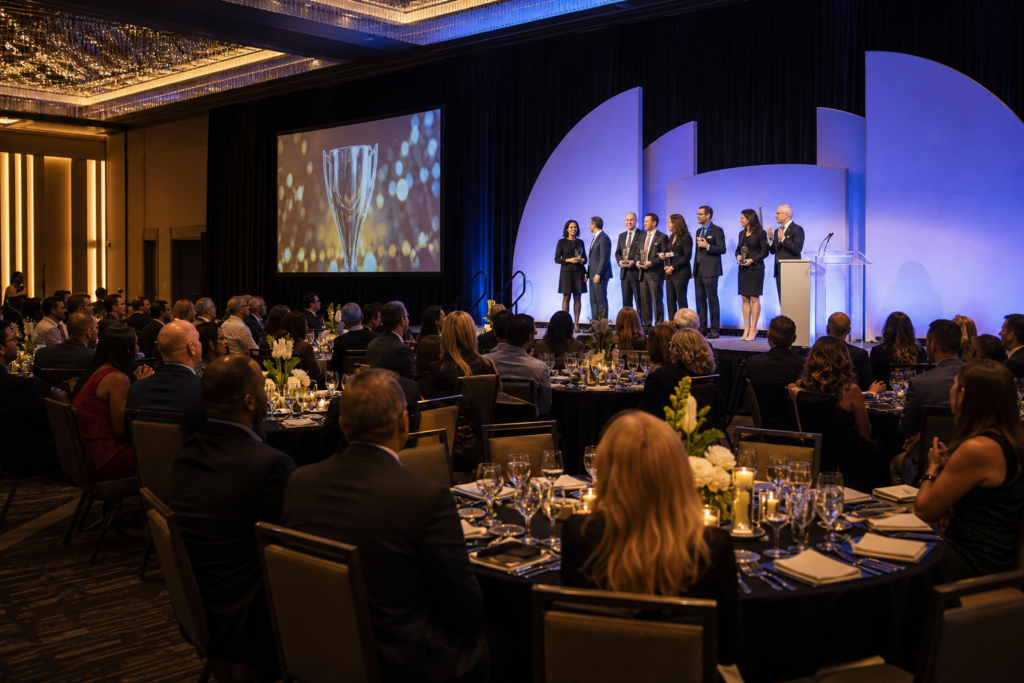
- Room & AV: Stage placement, spotlighting, and traffic lanes between buffets and stations.
- Signage & labels: Cuisine names, Halal and allergen icons, and ingredient highlights for clarity.
- Final walkthrough: Confirm timelines with MC, planner, and venue captain to sync speeches and service.
Sample Run-of-Show (Dinner Focus)
- Cocktail hour (45–60 min): Passed Middle Eastern mezze bites + South Asian chaat station; mocktails featured.
- Grand entrance (10–15 min): AV cues for spotlights and music; staff set final chafers.
- First service (25–35 min): Plated starter or dual-buffet opening to avoid bottlenecks.
- Main service (40–60 min): Live dosa or shawarma station plus buffet lines by cuisine.
- Speeches and dessert (35–45 min): Plated dessert + tea/coffee + regional sweets (gulab jamun, baklava).
Common Pitfalls (and Fixes)
- Long buffet lines: Mirror the buffet on both sides; open stations after 30% of guests are seated.
- Unclear labels: Use large icons for Halal/vegetarian; place tent cards at eye level near serving utensils.
- Spice mismatch: Offer mild, medium, and chef’s-spicy condiments to personalize heat.
Self-contained answer: The workflow pairs discovery, menu design, tasting, service selection, and a kitchen-run sequence with AV and room flow. Clear labeling and staggered stations prevent bottlenecks so diverse menus reach guests hot and safe.
Types of Multicultural Wedding Catering (Service Styles)
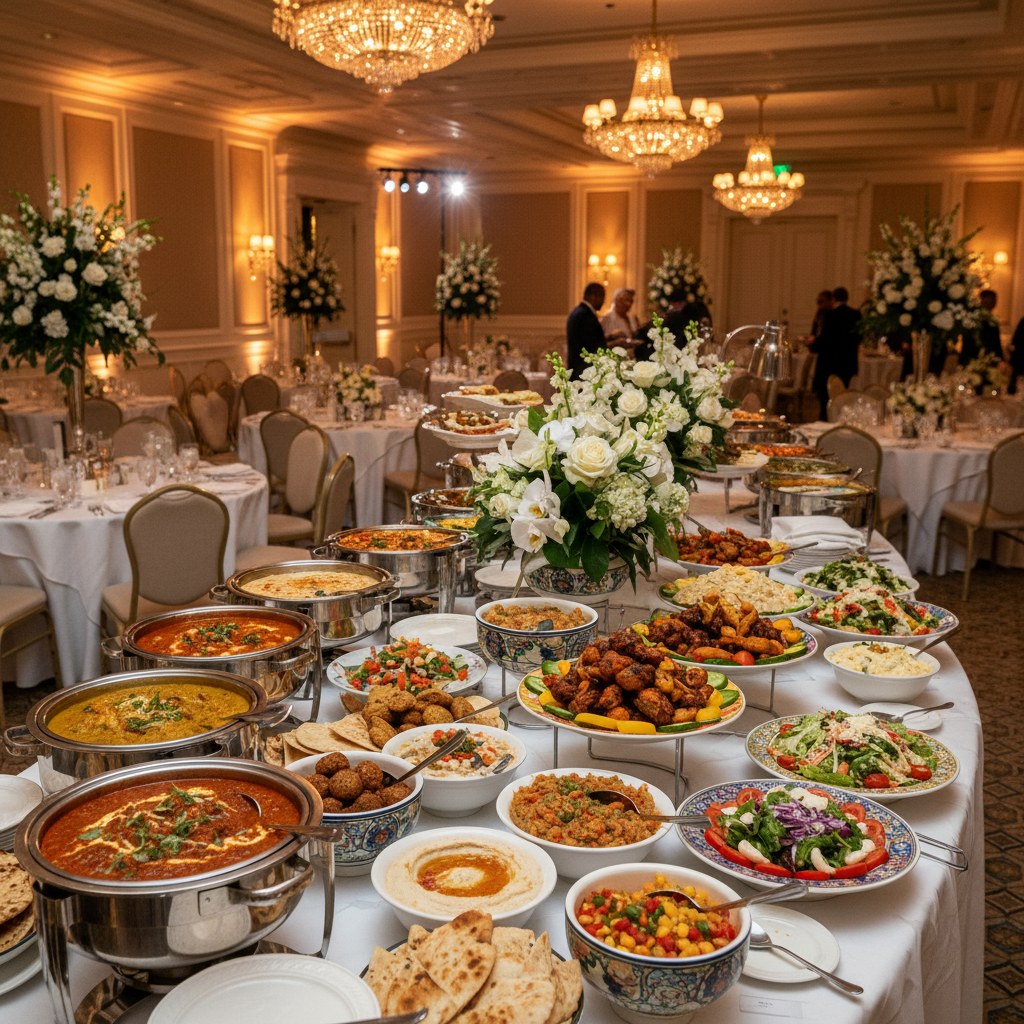
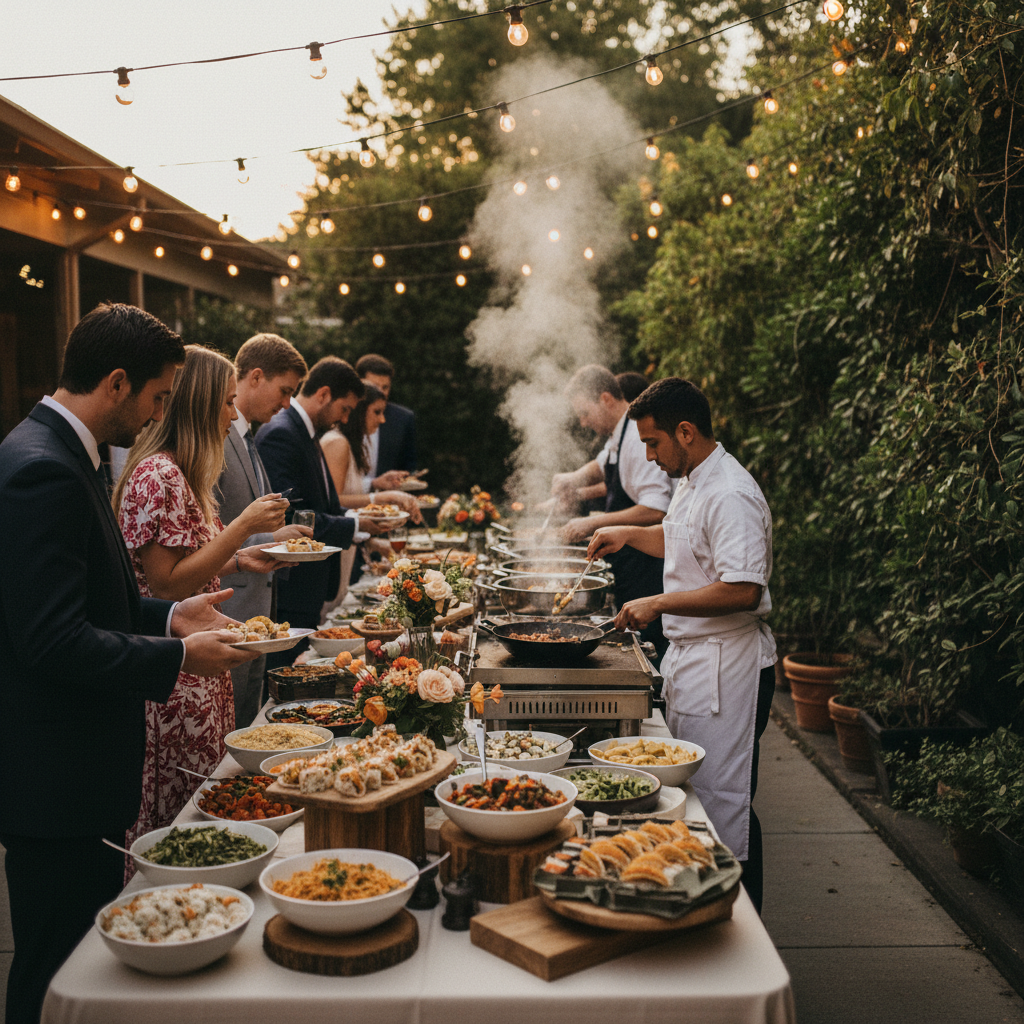
Blend plated, buffet, and live stations to balance elegance, speed, and variety. Many GTA weddings plate starters and desserts, then open buffets and chef stations for mains, ensuring inclusive choice without sacrificing timeline control or formality.
| Service Style | Best For | Pros | Considerations |
|---|---|---|---|
| Plated | Black-tie receptions | Elegant pacing; guaranteed portions | Less variety per plate; kitchen timing is tight |
| Buffet | Diverse tastes (250–800) | High choice; efficient when mirrored | Requires traffic planning and signage |
| Live Stations | Interactive dining | Fresh, customizable, memorable | Needs chef staffing and footprint |
| Hybrid | Large multicultural weddings | Best of all worlds | More coordination; align AV with service |
Choosing Based on Guest Count and Room Layout
- <200 guests: Plated or hybrid is smooth; one live station adds energy without crowding.
- 200–500 guests: Hybrid shines; mirror buffets and open two stations to cut wait times.
- 500+ guests: Multiple mirrored buffets and three to four stations maintain momentum.
Where to Place Stations
- Edges of the room: Keep dance floor and stage lines clear for AV and photography.
- Near kitchen doors: Faster replenishment; less time off-heat.
- Signage sightlines: Guests should see cuisine labels from 12–15 feet away.
Self-contained answer: Use plated service for formality, buffets for variety, and stations for interactivity. A mirrored-buffet hybrid with two or more live stations is the most reliable format for large, multicultural receptions.
Best Practices: Menus, Halal, Allergen Safety
Create parallel menus by cuisine, separate Halal prep and service lines, and label dishes with clear icons. Calibrate spice, feature celebratory plant-based mains, and run a full tasting with decision-makers so final approvals stick.
Menu Frameworks That Work
- Two anchors + 1–2 stations: Example: South Asian + Middle Eastern with live shawarma and dosa.
- Vegetarian mains feel special: Paneer tikka, mushroom biryani, or roasted cauliflower steak.
- Dessert unifies: Pair regional sweets (gulab jamun, baklava) with a plated Western dessert.
Halal Protocols in Practice
- Dedicated equipment: Separate knives, boards, fryers, and storage for Halal-only items.
- Service separation: Distinct chafers and utensils; staff trained to prevent cross-contact.
- Alcohol-free prep: Halal dishes avoid alcohol in marinades, sauces, or flambé.
Allergen and Spice Calibration
- Icons on labels: Nuts, dairy, shellfish, gluten, and spice heat levels.
- Condiment strategy: Mint chutney, raita, harissa, and hot sauces offer control without altering base dishes.
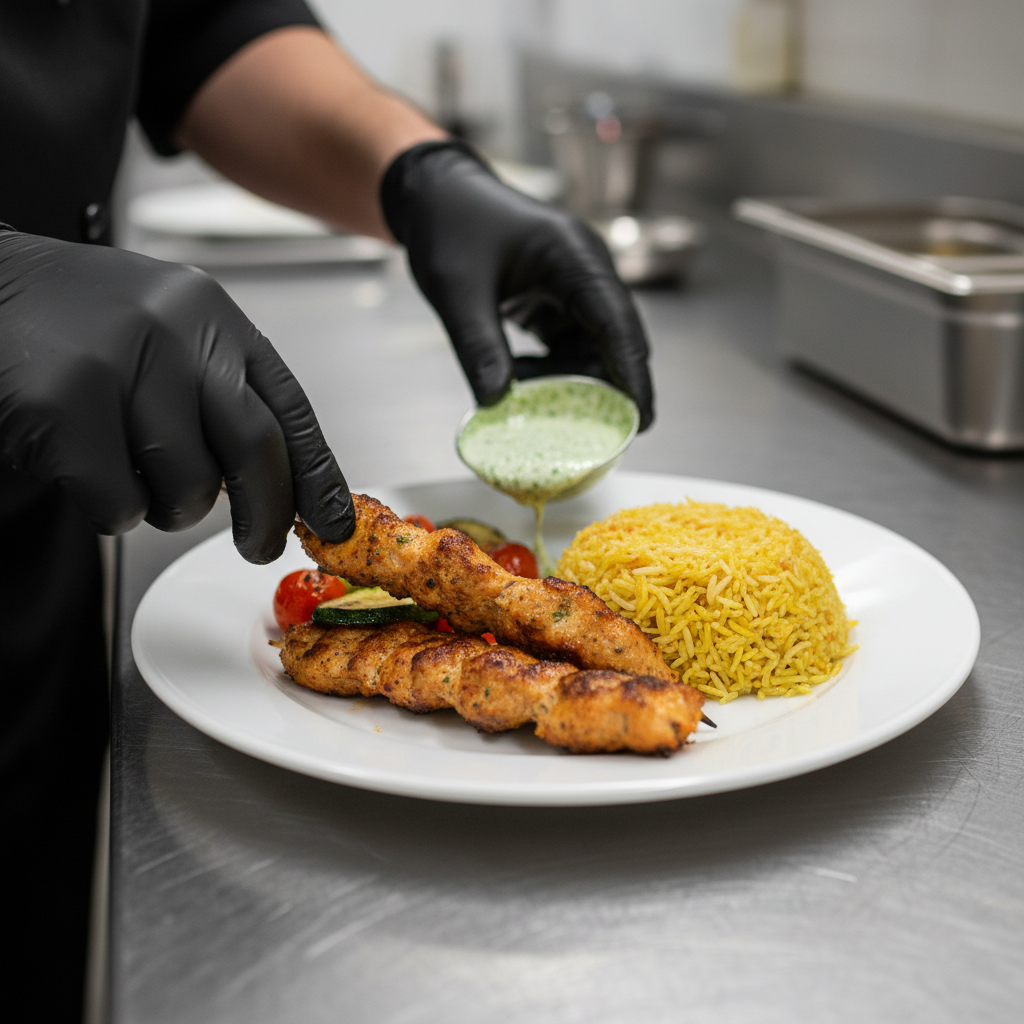
- Kid-friendly plates: Mild kebabs, butter chicken, or baked salmon alongside rice and vegetables.
Self-contained answer: Parallel menus, strict Halal separation, and labeled allergens keep service safe and inclusive. Celebratory vegetarian mains and flexible condiments let guests tailor spice without slowing the kitchen.
Tools and Resources
Use a shared run-of-show, station map, allergen matrix, and tasting scorecard. Digital seating charts, AV cue sheets, and kitchen timelines keep large multicultural dinners aligned and on time.
- Planning templates: Run-of-show, station map, allergen matrix, label set, tasting scorecard.
- Venue assets: State-of-the-art AV, lighting, staging, on-site technical support, and outdoor patio options.
- Preview spaces: Explore layouts with a virtual tour to evaluate seating, buffet mirroring, and dance floor sightlines.
For deeper menu inspiration, see our in-house catering overview and browse the wedding menu template when sketching your first draft. If Halal is essential, this focused guide on Halal catering menu planning can help you finalize protocols quickly.
Local Tips
- Tip 1: For Friday arrivals near Toronto Pearson, route shuttles via Derry Rd W and Hurontario St to ease rush-hour congestion before guest check-in at 75 Derry Rd W.
- Tip 2: Summer weekends fill fast; align your tasting and AV walkthrough during weekday afternoons for smoother access and parking coordination.
- Tip 3: For South Asian baraat or outdoor ceremonies, stage on our customizable patio and mirror buffets inside to keep hot-holding within safe ranges and lines short.
IMPORTANT: These tips reflect our on-site flow, cuisine capabilities, and proximity to major highways and the airport.
Case Studies and Real Examples (GTA Weddings)
Pair two anchor cuisines and add one or two interactive stations. Sequence the kitchen and label each dish clearly. This formula consistently delivers hot, safe service for 300–900 guests without long lines or confusion.
Example 1: South Asian + Middle Eastern Hybrid
- Menu: Butter chicken, paneer tikka, biryani; grilled shawarma, mezze, fattoush; live shawarma carving.
- Service: Plated starter, mirrored buffets for mains, live station; plated Western dessert + regional sweets.
- Result: Guests circulated in under 45 minutes for 600 attendees; no bottlenecks at condiments.
Example 2: Sri Lankan + Continental
- Menu: Hoppers, deviled potatoes, seeni sambol; plated salmon or roasted chicken; seasonal salads.
- Service: Live hopper station draws guests in waves; buffets replenish from kitchen doors behind.
- Result: Smooth 500-guest service; spice control managed via condiments and raita.
Example 3: Pakistani Halal + Caribbean
- Menu: Seekh kebabs, chicken karahi, naan; jerk chicken, rice and peas, Caribbean slaw; mango lassi welcome.
- Service: Hybrid: plated starter and dessert with dual buffets; chefs at jerk and kebab stations.
- Result: 700-guest event completed mains in ~55 minutes; Halal lines remained fully separated.
Self-contained answer: The “two anchors + stations” pattern balances variety and speed. Mirrored buffets, kitchen adjacency, and prominent labels keep lines moving while honoring regional techniques and Halal needs.
FAQ
Anchor two to three cuisines, confirm Halal protocols, and select a hybrid service style. Use mirrored buffets, live stations, and clear labels to maintain pace for large guest counts. A tasting with decision-makers finalizes flavor, presentation, and spice.
- How do we balance spice levels across cultures?
Offer a base medium profile and provide condiments—mint chutney, raita, harissa, and hot sauces—so guests dial heat individually. Keep kid-friendly mains mild, such as butter chicken or baked salmon, and flag a few chef’s-spicy items. - What does Halal separation look like in practice?
Use dedicated knives, cutting boards, fryers, and labeled storage. On the floor, maintain distinct chafers and utensils for Halal dishes and train servers to prevent cross-contact. Avoid alcohol in Halal marinades and sauces. - How can we speed up dinner without losing formality?
Plate starters and desserts, then open mirrored buffets and two or more live stations for mains. Coordinate AV cues so speeches align with service windows, keeping the program tight and elegant. - What’s the best way to label allergens clearly?
Use tent cards with cuisine name and icons for nuts, dairy, shellfish, gluten, and spice heat. Place cards near utensils and at standing height. Keep cold items at 41°F or below and hot dishes at 135°F+. - Can we see the space and menus before we commit?
Yes—explore layouts via our virtual tour and review sample options in the wedding menu template. We also host tastings to finalize flavor, presentation, and spice alignment.
Plan With Confidence
- Download a run-of-show outline, allergen matrix, and label checklist to start.
- Schedule a tasting to lock flavors and presentation with key decision-makers.
- Walk the room to set station placement, signage sightlines, and AV cues.
When you’re ready, review our wedding venue rental guide to align space size, timeline, and service style.
Key Takeaways
Pick two to three anchor cuisines, protect Halal and allergens with dedicated tools and labels, and choose a hybrid service style with mirrored buffets and live stations. Confirm details at a tasting, then sync AV with service windows to keep the evening on time.
- Anchor wisely: Two to three cuisines provide variety without overloading kitchens.
- Protect safety: Halal separation and allergen icons are non-negotiable.
- Go hybrid: Plated + buffets + stations = elegance and speed.
- Label everything: Clear signage avoids lines and confusion.
- Walk the room: Map stations around traffic lanes and AV needs.
Ready to taste and tour?
Book a consultation for multicultural wedding catering at our centrally located venue near Toronto Pearson. We’ll map your cuisines, run a tasting, and design a service plan that fits your guest count and timeline.
Conclusion
The most reliable multicultural wedding dinners combine inclusive menus, Halal and allergen discipline, and a hybrid service style. At our Mississauga Convention Centre, integrated AV, staging, and on-site kitchens turn a complex meal into a smooth, joyful celebration for parties up to 2,200.
- Use the discovery → tasting → hybrid service sequence to guide decisions.
- Mirror buffets and open stations strategically to prevent lines.
- Leverage our on-site AV, parking, and modular halls to keep your program on schedule.
Next step: Schedule a tasting and space walkthrough at 75 Derry Rd W so we can translate your family traditions into a dinner every guest will remember.