

 20 September, 2026
Last updated: October 2026
By Preet Dass, Mississauga Convention Centre Last updated: October 2026
What to decide before you reserve
Planning a private dining room reservation is easier when the first conversation covers the decisions that affect space, staffing, food service, and timing. Start with the purpose of the event, the likely number of guests, two to four possible dates, and the moments that must happen during the meal.
For events at Mississauga Convention Centre, planners can coordinate room setup, in-house audiovisual services, lighting, staging, and catering through one venue team. The Centre is at 75 Derry Road West in Mississauga and has seven halls of approximately 4,250 square feet each, more than 2,200 total guest capacity across the site, and 700 on-site parking spaces.
- Define whether the event is a business dinner, reception, awards program, family gathering, or celebration.
- Give the venue a realistic headcount range rather than changing an exact number repeatedly.
- Choose a service direction: plated, family-style, stations, or a combination.
- List Halal, allergy, accessibility, and other guest requirements at the start.
- Identify microphones, screens, music playback, staging, lighting, or presentation cues.
What does a private dining room reservation include?
A private dining room reservation is an agreement for exclusive use of a defined event space at a set time, usually with an agreed layout, menu pathway, service plan, and venue contact. Depending on the location and event, it may also cover reception space, table settings, technical equipment, décor coordination, staging, and parking or arrival instructions.
The important distinction is that a reservation is more than a table booking. A restaurant table may reserve seats for a meal while the public dining room remains active. A private event reservation is designed around your group’s flow, privacy, timing, and program. Confirm exactly what is included before you compare venues, because “private” can mean a fully enclosed room, a semi-private area, or an exclusive room block.
Questions to ask about the booking
- Is the room fully exclusive, and can another event be operating nearby?
- What arrival, event, meal, and departure times are included?
- Does the space support the preferred table layout and a clear route for service?
- Are AV, staging, lighting, microphones, and technical support provided in-house?
- How are menu selections, dietary alternates, taxes, service charges, deposits, and final counts handled?
Mississauga Convention Centre’s multi-hall format can support an intimate dinner, a larger banquet, or a reception-to-dinner transition. The right room is determined by the guest count and program, not simply by the number of chairs: speeches, buffet or station access, dance space, screens, and service lanes all need room.
Why private dining works for Mississauga events
Private dining gives an event a controlled environment for conversation, hospitality, and scheduled remarks. That matters when a group needs to make decisions, recognize employees, welcome family, host clients, or keep a celebration moving without competing restaurant noise or public foot traffic.
Mississauga is a practical meeting point for guests coming from across the GTA. At the Centre’s 75 Derry Road West location, planners can share a single arrival address and use the venue’s 700 parking spaces. Guests travelling from outside the area may also value the site’s proximity to major highways and Toronto Pearson International Airport, although each group should allow for its own traffic and travel conditions.
Local details that affect the guest experience
- Arrival window: If the agenda begins during a busy commute period, open doors early enough for registration, coat storage, and informal conversation before the first course.
- Wayfinding: Put the complete venue address, parking guidance, entrance instructions, and start time on the invitation or event email.
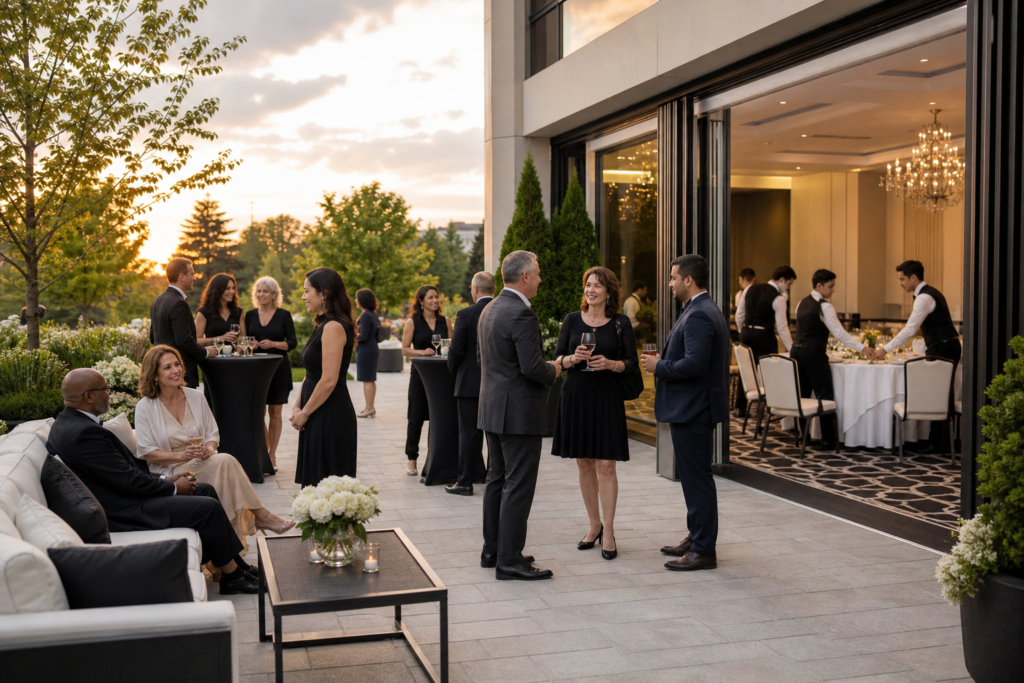
- Seasonal planning: In colder months, allow time for coats and slower arrivals. In warmer months, ask whether an outdoor reception or patio element fits the event plan.
- Guest mix: A multicultural guest list may require more than one menu pathway and clear identification of dietary alternatives.
For a year-end program that combines dinner, awards, and dancing, review these holiday party venue ideas while comparing dates and room flows. The same planning principles apply to many Mississauga events: settle the guest journey before choosing decorative details.
How to make a private dining room reservation
The most efficient process moves from broad decisions to precise production details. You do not need every place card or presentation file at the first inquiry, but you do need enough information for the venue to recommend a suitable room and service model.
- Describe the event: Explain the purpose, audience, preferred atmosphere, approximate guest count, and whether the meal is the main activity or part of a longer program.
- Offer date flexibility: Provide two to four possible dates and identify any dates that cannot move. Flexibility can make it easier to find the right room.
- Request room options: Ask for layouts that show dining tables, reception space, stage or lectern positions, screens, and service access.
- Choose the service style: Compare plated dining, family-style service, stations, or a reception followed by dinner. The choice affects pacing, table space, staffing, and guest movement.
- Share food requirements: Identify Halal needs, allergies, vegetarian or vegan requirements, and other dietary considerations before menus are finalized.
- Build the production plan: List microphones, screens, playback audio, lighting, staging, speeches, award cues, and any content tests.
- Approve the function sheet: Use one current document for the room set, menu, timeline, contacts, guest notes, and AV cues. Confirm the final guest count and outstanding questions by the venue’s stated deadline.
Useful planning timeline
| Planning point | Primary decision | Information to provide |
|---|---|---|
| Initial inquiry | Date and room fit | Event purpose, date range, guest-count band, meal format |
| Early planning | Menu and guest experience | Service style, dietary requirements, reception needs |
| Production planning | Layout and AV | Floor plan, stage or lectern, screens, microphones, cues |
| Final planning | Execution details | Final count, table assignments, menu alternates, presentation files |
| Event day | Run of show | Arrival contacts, sound check, service cues, timing changes |
Six to eight weeks is a useful planning target for many corporate and social dinners, while December dates or complex programs may require more lead time. The actual availability and confirmation deadline depend on the venue, event size, date, and menu, so treat the timeline as a planning guide rather than a guarantee.
Which private dining room layout should you choose?
The best layout supports the event’s main action. A dinner focused on conversation needs different sightlines from an awards program, and a networking reception needs different circulation from a formal plated meal.
Boardroom and long-table layouts
A boardroom or long-table arrangement keeps guests facing one another and works well for leadership dinners, negotiations, intimate client events, and discussion-heavy meetings. It is less suitable when every guest must see a stage or presentation screen from a distance. Keep service access clear and avoid placing equipment where it interrupts conversation.
Round-table layouts
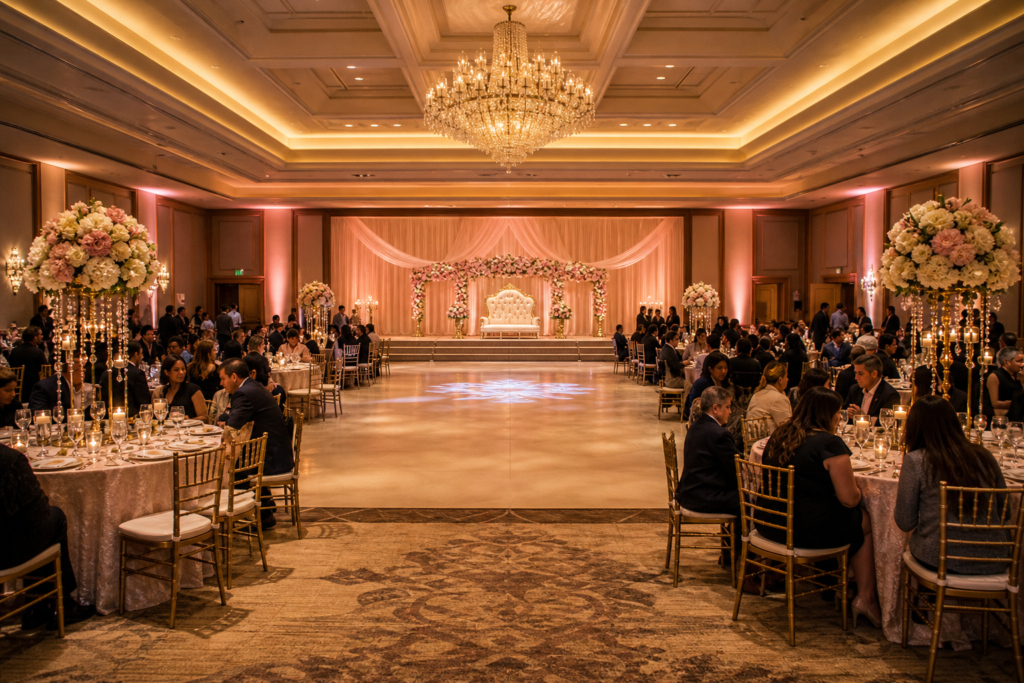
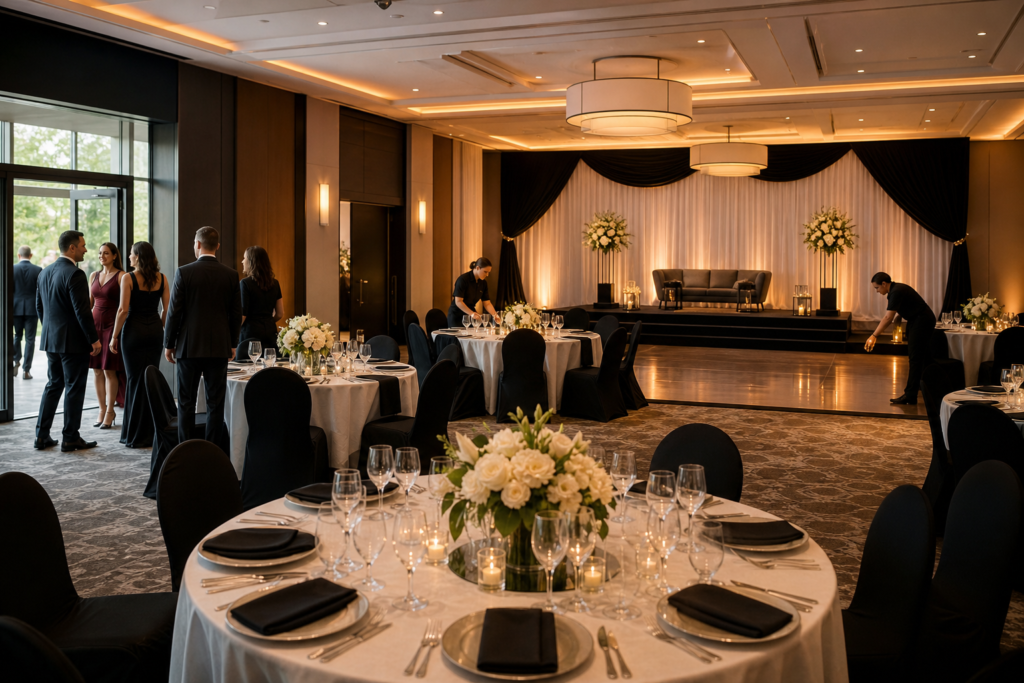
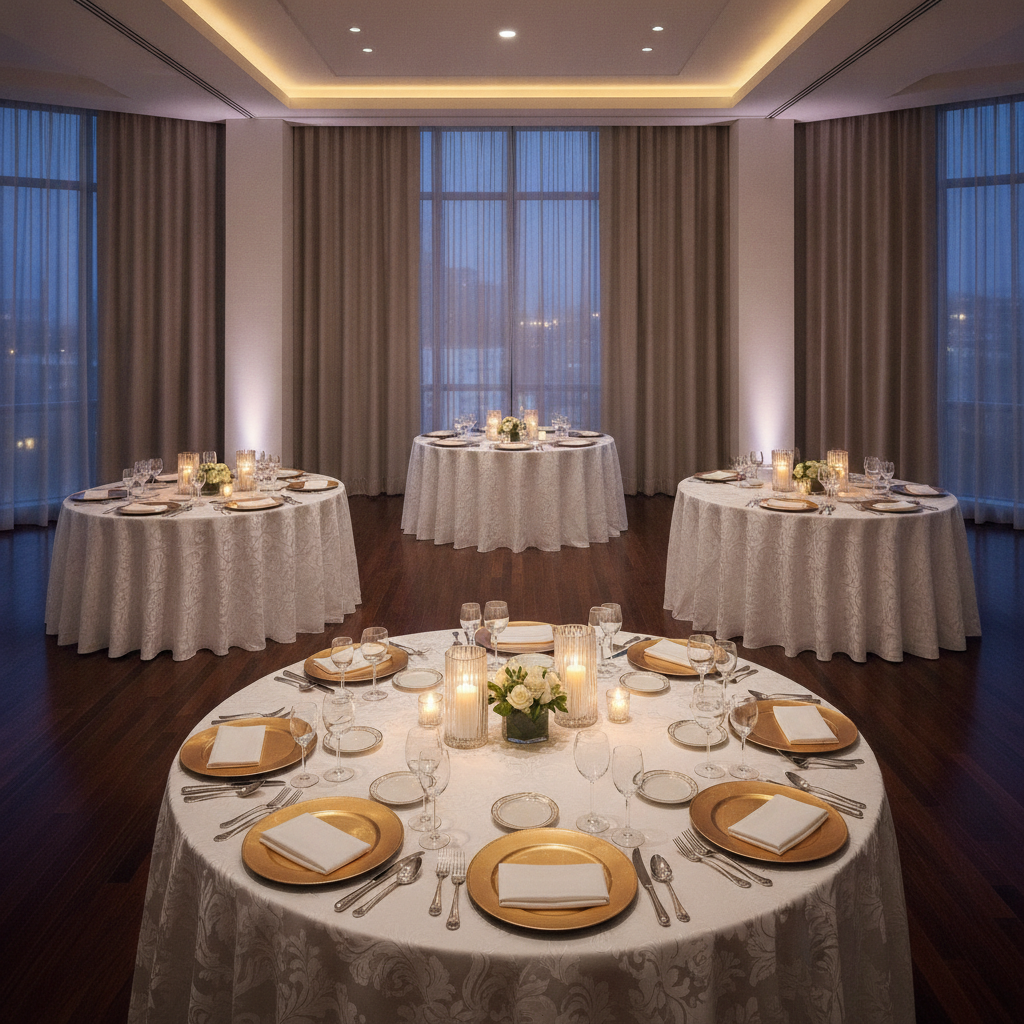
Rounds create a familiar banquet setting for celebrations, awards, cultural events, and larger dinners. They allow conversation within each group but can make speeches harder to see if the stage, screen, or lectern is not positioned carefully. A small stage and tested sound system can help maintain attention.
U-shaped or classroom layouts
A U-shape supports discussion and gives participants a shared focal point. Classroom seating prioritizes note-taking and presentations, so it may work for a meeting that becomes a meal later. If dinner follows, plan where tables will be moved or how guests will transition without disrupting the program.
King tables, stations, and mixed layouts
Long communal tables suit family-style dining and family celebrations, while stations encourage movement and informal networking. A mixed layout can place a reception or station area near the entrance, then move guests into a seated dinner space. Ask for a floor plan that shows circulation, not only table counts.
How should you choose the menu and service style?
Menu format should match the agenda, guest profile, and desired pace. Plated meals create predictable timing and make it easier to coordinate speeches between courses. Family-style service encourages sharing and conversation but needs adequate table space and clear information about dish contents. Stations support movement and networking, although they require thoughtful placement to prevent queues.
For a diverse guest list, discuss menu alternatives early rather than adding them at the last minute. Mississauga Convention Centre’s in-house culinary offering includes South Asian, Pakistani Halal, Middle Eastern, Sri Lankan, Caribbean, and Continental cuisines. Confirm the final menu, preparation requirements, service method, and labeling approach directly with the venue.
Menu questions that prevent surprises
- Which dishes are suitable for the confirmed dietary requirements?
- Will alternate meals be plated, served separately, or selected in advance?
- Does the menu need to support speeches, awards, or a fixed presentation schedule?
- Where will stations, coffee, dessert, and water service be positioned?
- When is the final guest count due, and how does it affect quantities?
What belongs on the function sheet?
The function sheet is the shared operating document for the reservation. It should be specific enough for the venue team, caterer, AV technician, speakers, and event host to understand what happens next without relying on separate email threads.
Function-sheet checklist
- Event name, date, room, access time, guest arrival time, and end time.
- Planner, venue, host, AV, and emergency contact details.
- Expected and final guest count, table assignments, and accessibility notes.
- Floor plan showing tables, stage, lectern, screens, speakers, stations, and service lanes.
- Menu, beverage plan, dietary alternates, and prominent allergy or Halal notes.
- Minute-by-minute run of show for arrivals, welcome remarks, courses, awards, speeches, and close.
- Presentation files, microphone requirements, playback sources, lighting cues, and sound-check time.
- Parking, loading, signage, décor, and any approved vendor instructions.
Keep the document version-controlled and identify the person authorized to approve changes. This simple rule prevents an old floor plan or menu attachment from becoming the version used on event day.
How to compare private dining options
When comparing private dining rooms, evaluate the complete operating experience rather than the room photograph alone. A lower apparent room cost may not be the better choice if it requires separate AV, additional staffing, complicated food logistics, or an arrival plan that does not suit your guests.
| Decision factor | What to compare | Why it matters |
|---|---|---|
| Privacy | Exclusive room, semi-private area, or shared dining room | Determines noise, control, and guest comfort |
| Capacity and flow | Seated capacity, reception space, service lanes, stage area | Prevents crowded tables and blocked movement |
| Food service | Plated, family-style, stations, dietary flexibility | Shapes pacing and guest experience |
| Production | Screens, microphones, lighting, staging, technical support | Reduces presentation and timing risk |
| Access | Parking, travel instructions, arrival and departure process | Improves punctuality and comfort |
Ask each venue to respond to the same information: date, guest range, event purpose, menu direction, AV needs, and timing. Then compare the proposed room set and inclusions line by line. Availability, minimum spends, room fees, capacities, and operating conditions can change and should be confirmed directly before you commit.
Simple tools that speed up planning
A small set of shared planning tools can reduce revisions and make approvals easier. Begin with a headcount band, such as an expected range rather than a single uncertain number. Use a menu matrix to list the main selections and dietary alternates, then connect each choice to the appropriate table or guest record.
Add an AV checklist covering screens, content inputs, microphones, playback audio, lectern, lighting, and test times. Finally, connect the function sheet to a run of show so that every speech, course, transition, and technical cue has an owner.
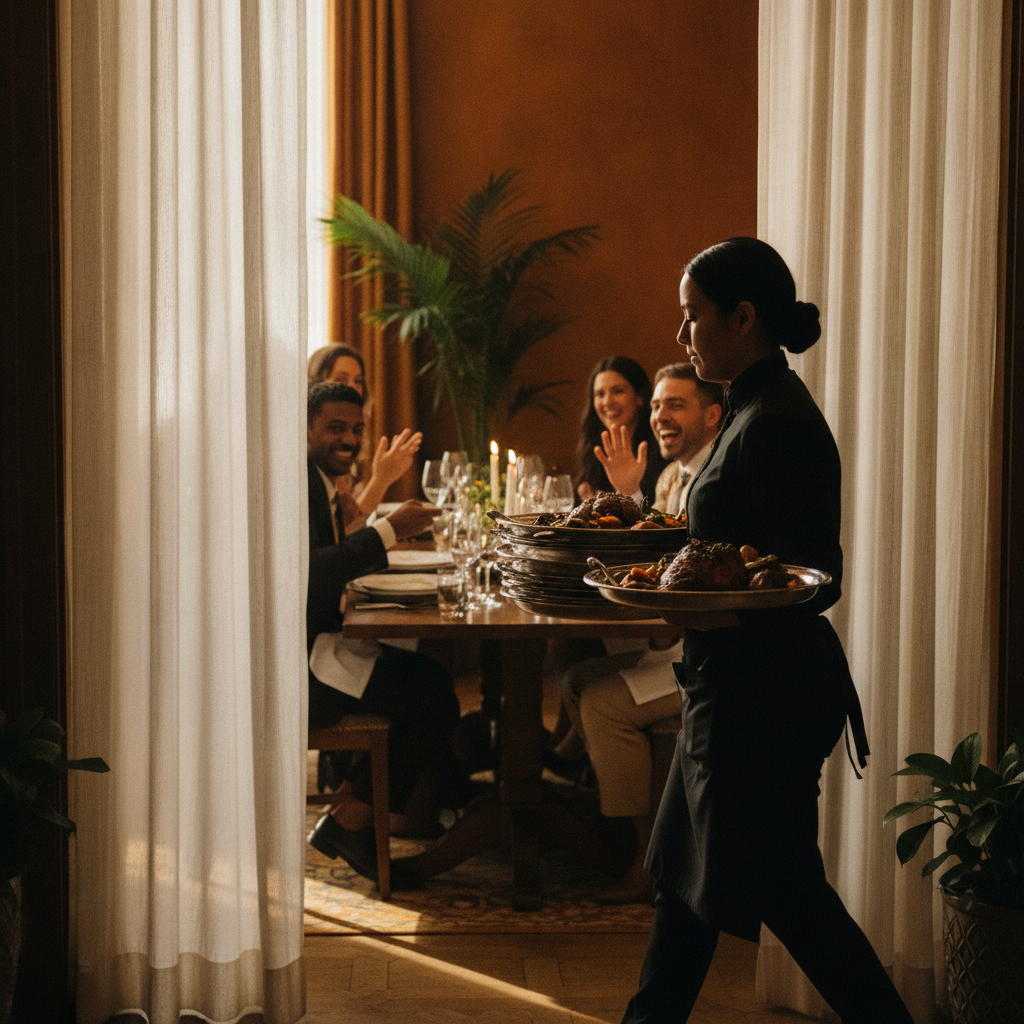
For teams arranging a dinner as part of a broader corporate program, the venue’s event planning conversation should cover meals, room use, AV, and timing together. That approach is also useful for social events where a reception, meal, speeches, and dancing share one schedule.
Private dining room reservation FAQ
How far in advance should I make a private dining room reservation?
Begin six to eight weeks ahead for many corporate and social dinners, and start earlier for December dates, large guest counts, or programs with extensive AV and staging. Provide several date options so the venue can suggest a workable room. Confirm the final guest count and detailed function sheet according to the venue’s stated deadline.
What is the difference between a private and semi-private dining room?
A private dining room is generally reserved exclusively for your group, while a semi-private area may be separated from other diners but remain within a shared venue. The exact definition varies, so ask about sound, access, adjacent events, décor, and whether another group can use the same dining area.
Can a private dining room support Halal and other dietary requirements?
Yes, dietary planning can be built into the menu discussion when requirements are shared early. Mississauga Convention Centre offers Pakistani Halal and other regional culinary options, along with South Asian, Middle Eastern, Sri Lankan, Caribbean, and Continental cuisines. Confirm preparation, labeling, alternate meals, and service details with the culinary team.
What should I ask before confirming the reservation?
Ask what the room, menu, staffing, AV, staging, furniture, setup time, parking, fees, payment schedule, cancellation terms, and final-count deadline include. Request a proposed floor plan and written function sheet so you can check guest flow and program timing before signing.
Plan your private dining room reservation
Start with your purpose, guest-count range, date options, menu direction, and production needs. Then ask for a room plan and consolidate the approved details in one function sheet. A coordinated venue team can make the reservation easier to manage from arrival through the final course.
To discuss layouts, menus, AV, and event timing at Mississauga Convention Centre, contact the venue team with your preferred dates and estimated attendance.