

 20 September, 2026
Last updated: October 2026
By Preet Dass · Updated October 27, 2026
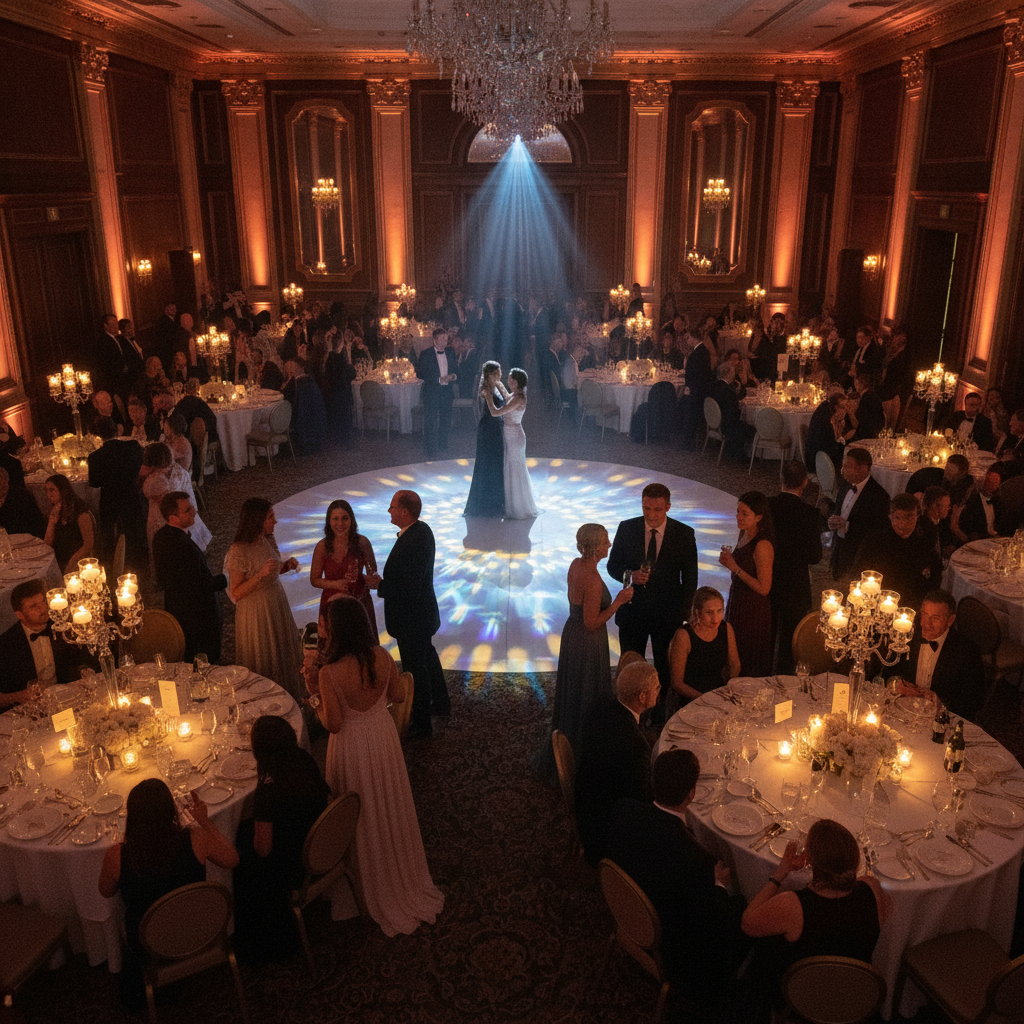
A social party is a planned private gathering built around connection, celebration, food, music, and shared experiences. The phrase can describe a birthday, anniversary, engagement party, shower, school formal, cultural celebration, fundraiser, gala, or reunion. Venue teams may also call these occasions social events or private events, so using the specific occasion when requesting proposals usually produces the clearest conversation.
This guide explains how to plan a social party in Mississauga from the first guest estimate to the final song. It focuses on practical decisions: choosing among banquet halls in Mississauga, selecting a menu, positioning the stage and dance floor, managing speeches and entertainment, and preparing guests for a smooth arrival near 75 Derry Road West.
What Does “Social Party” Mean?
A social party is a hosted gathering whose main purpose is social interaction rather than business instruction or a formal meeting. It normally combines a guest list, a defined occasion, food and beverages, music or entertainment, décor, and a schedule for key moments such as speeches, cake cutting, a first dance, awards, or a cultural presentation.
The format is flexible. Guests might circulate at a cocktail reception, sit for a plated dinner, move between food stations, or gather around a dance floor after a short program. What matters is that the space and schedule support the way people are expected to interact.
Occasions that fit the format
- Milestone birthdays and anniversaries: Use a welcome reception, tribute slideshow, brief speeches, and dancing to create a personal evening without overloading the program.
- Engagement parties and showers: Plan for conversation, photographs, gift or activity stations, and a menu that works for daytime or early-evening timing.
- School proms and graduations: Give careful attention to entry control, supervision, water access, lighting, music, and a clearly defined dance area.
- Cultural celebrations: Allow room for processions, performances, prayer or ceremonial elements, family seating, and cuisine that reflects the guest community.
- Fundraisers and galas: Separate registration, auction, dining, stage, and networking areas so the program can move without obstructing guest circulation.
- Reunions and community gatherings: Mix comfortable seating with memory displays, photo opportunities, open-mic moments, and easy access to refreshments.
When contacting a venue, describe the occasion, approximate attendance, preferred date, meal style, entertainment, and any cultural or accessibility requirements. “A 180-person anniversary dinner with a slideshow and dancing” gives a planner more useful information than “a social party” alone.
Why the Venue Shapes the Social Party
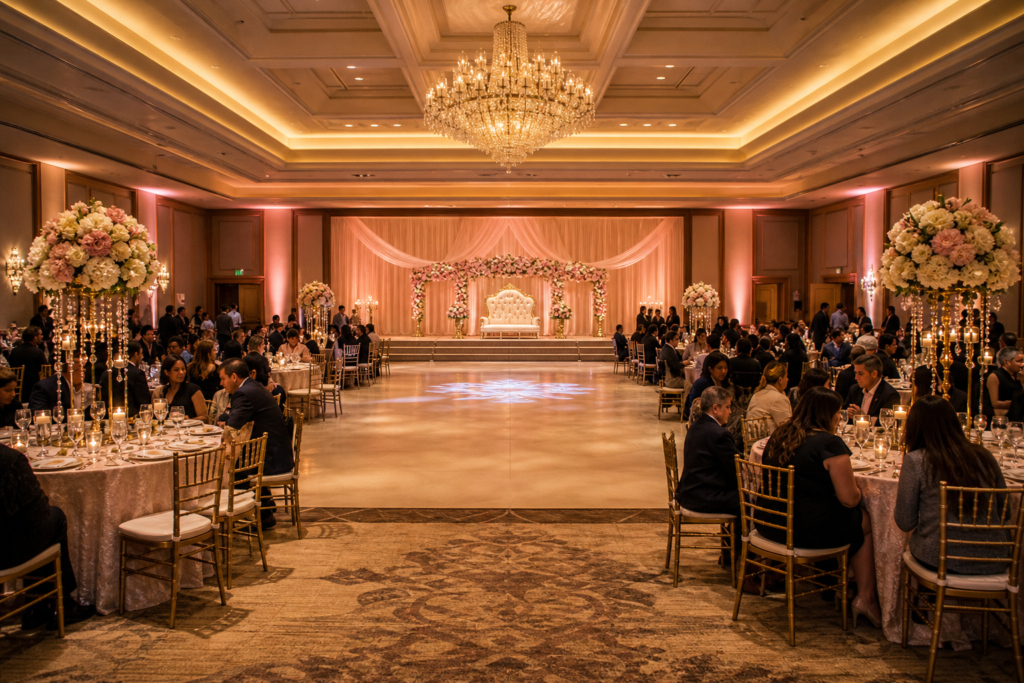
The venue influences more than appearance. It determines how quickly guests enter, whether they can hear a toast, how far they walk for food, where a photographer can work, and whether the dance floor remains visible from the seating area. A room that looks impressive but creates long queues or poor sightlines can make an otherwise thoughtful event feel disjointed.
Mississauga Convention Centre is located at 75 Derry Road West, near major highways and Toronto Pearson International Airport. The Centre has seven halls of approximately 4,250 square feet each, total capacity of more than 2,200 guests across its spaces, and approximately 700 on-site parking spaces. These facts make it possible to plan both smaller private functions and large banquet-style celebrations while keeping arrival logistics in view.
Questions to ask before reserving a room
- What is the comfortable seated capacity after allowing space for a stage, dance floor, buffet, bar, or cultural presentation?
- Can the room support both conversation and entertainment, or will the music area dominate the gathering?
- Where will guests enter, register, leave coats, find washrooms, and access accessible seating?
- What audiovisual equipment, lighting, staging, and technical assistance are available on site?
- How will the venue accommodate Halal, vegetarian, vegan, gluten-aware, or other dietary requirements?
- What happens if an outdoor portion of the event cannot proceed because of weather?
How to Plan a Social Party in Seven Steps
A written planning sequence reduces last-minute decisions. It also gives the host, venue, caterer, entertainer, decorator, and speakers a shared version of the event rather than separate assumptions.
1. Define the occasion and guest experience
Write down why people are gathering and what you want them to remember. A birthday may prioritize personal tributes and dancing; a fundraiser may need efficient registration and a visible stage; a shower may need relaxed conversation and activity stations. Choose two or three outcomes before discussing décor.
2. Build a realistic guest estimate
Start with an invited number and identify how certain it is. A working range such as 120 to 135 guests helps the venue consider room size, table count, meal quantities, staffing, and dance-floor space. Separate adults, children, vendors, performers, speakers, and staff where those groups affect seating or catering.
3. Shortlist the room and layout
Compare banquet halls, ballrooms, patio areas, and conference-style spaces according to the event’s actual requirements. Ask for both a seated plan and a reception plan. A room that works for 200 dinner guests may feel crowded once a stage, DJ, photo booth, buffet, or dance floor is added.
4. Select the meal and beverage format
Choose plated service, buffet, family-style dining, passed appetizers, stations, or a combination. The choice affects timing, queue length, staffing, table configuration, and the point at which guests can begin dancing. Confirm dietary accommodations early rather than trying to redesign the menu after invitations are sent.
5. Design the program and production plan
List every formal moment, including introductions, speeches, videos, performances, cake cutting, awards, cultural elements, and special dances. Assign an approximate duration and identify who introduces each item. A short, rehearsed program is usually more engaging than a long sequence of unplanned remarks.
6. Confirm logistics and suppliers
Coordinate invitations, parking directions, registration, signage, décor arrival, photography, entertainment, accessibility, and any required permits or insurance. Confirm where suppliers load in and where equipment can be stored. If an outdoor patio or public space is involved, determine who is responsible for approvals and weather contingencies.
7. Rehearse, host, and review
At least once before doors open, test microphones, videos, slides, lighting cues, music transitions, and stage movement in the actual room. After the event, record useful observations while they are fresh: which food stations moved quickly, whether speeches ran long, and when the dance floor became active.
Which Venue Type Fits a Social Party?
The right setting depends on guest count, weather exposure, privacy, program complexity, and the level of operational support required. The following comparison is a planning framework; actual capacities and inclusions must be confirmed with the selected venue.
| Venue type | Best suited to | Strengths | Planning cautions |
|---|---|---|---|
| Private home | Small informal gatherings | Personal atmosphere and flexible hosting | Limited parking, washrooms, sound control, and weather protection |
| Restaurant private room | Small dinners, showers, and family occasions | Established menu and dining service | Less room for dancing, staging, entertainment, or large décor installations |
| Banquet hall or ballroom | Birthdays, anniversaries, weddings, galas, and cultural celebrations | Privacy, formal presentation, adaptable layouts, dining, and entertainment space | Requires careful planning for room scale, queues, sightlines, and program timing |
| Conference-style room | Awards, presentations, fundraisers, and structured programs | Clear stage sightlines, screens, seating plans, and presentation support | May need additional décor and music planning to feel social rather than instructional |
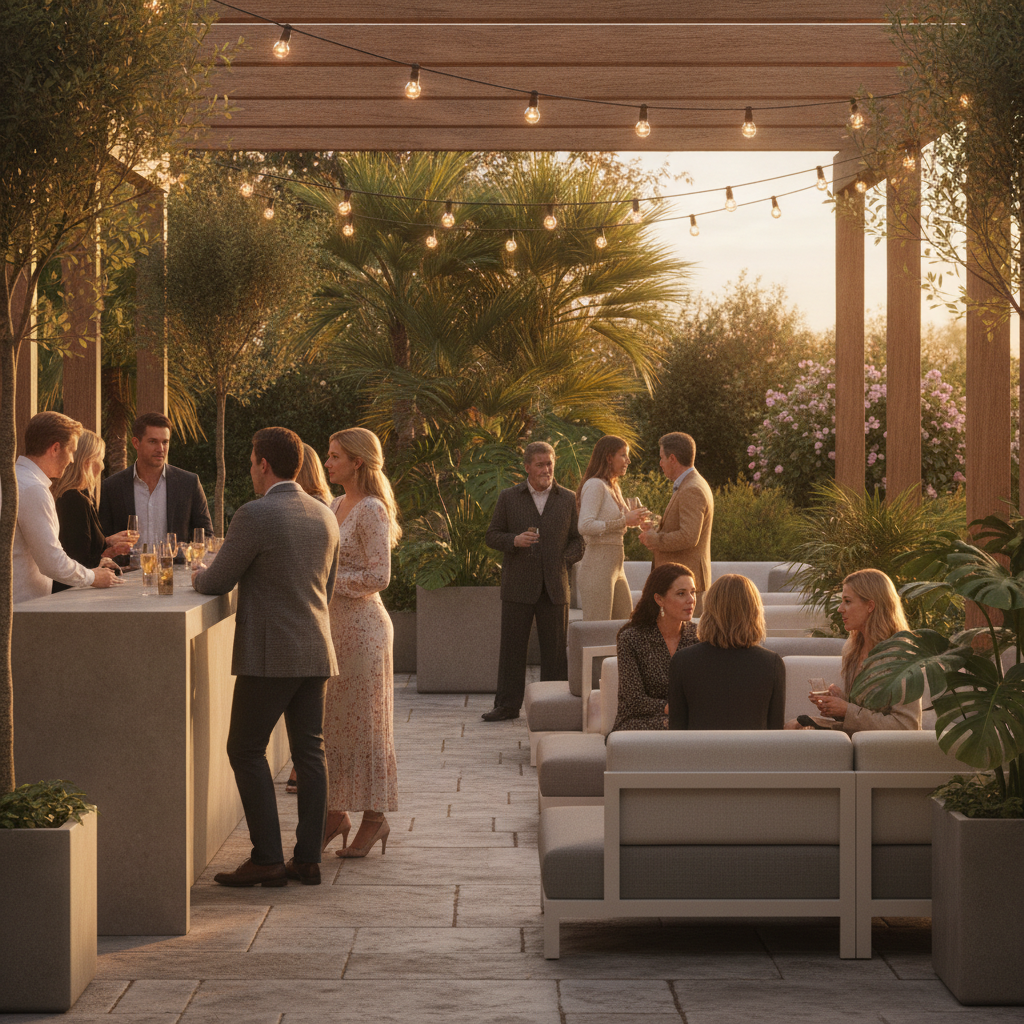
| Outdoor patio | Cocktails, summer gatherings, and welcome or dessert periods | Fresh air, natural photographs, string lighting, and relaxed circulation | Weather, sound, surface access, temperature, permits, and an indoor backup require attention |
For a large or highly programmed occasion, a dedicated event venue often simplifies coordination because room, food, staging, lighting, and technical support can be discussed together. Mississauga Convention Centre’s halls are approximately 4,250 square feet each, allowing the event team to consider a room that feels proportionate rather than automatically placing every party in the largest available space.
How to Plan the Menu for a Social Party
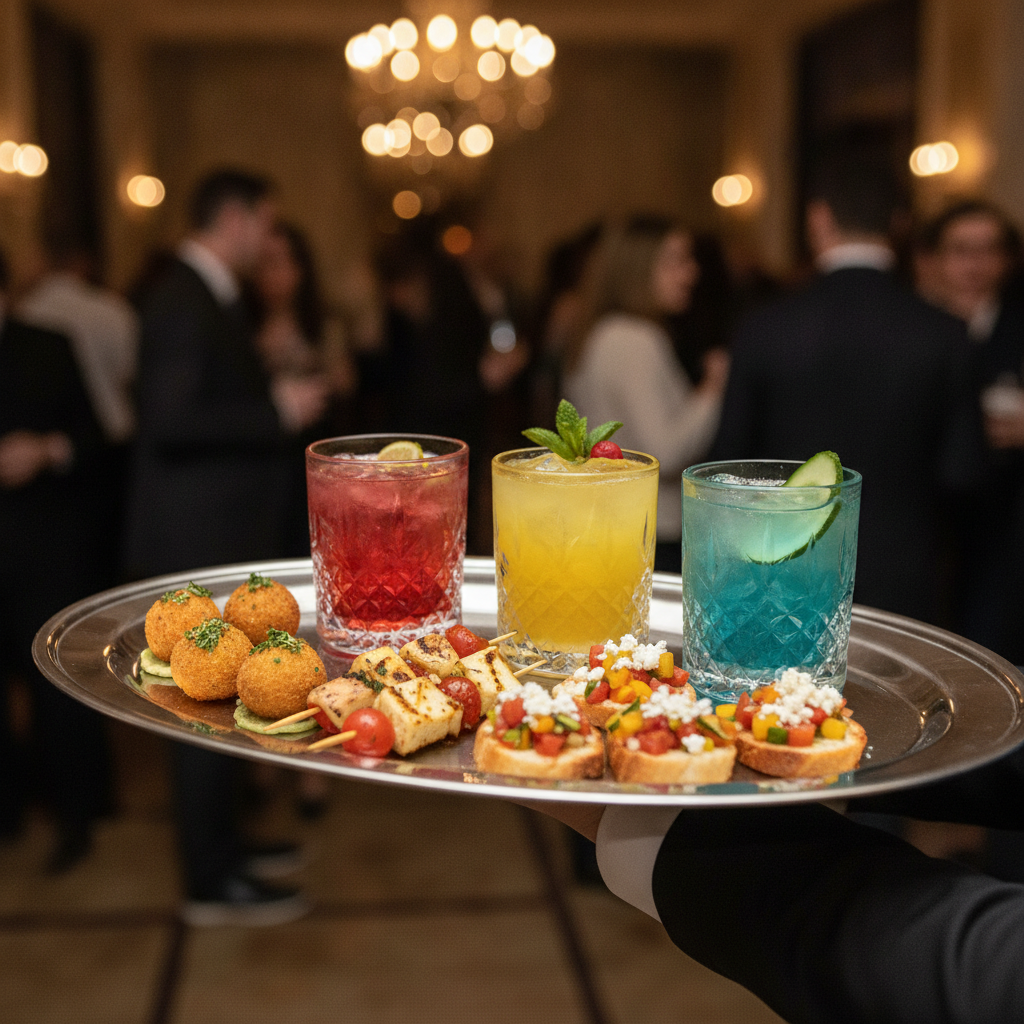
Food should support the rhythm of the evening. Passed bites work well while people are arriving and talking. A buffet or station format encourages movement and choice, while plated service creates a more formal and predictable sequence. Family-style service can make a milestone or cultural celebration feel communal, but it needs sufficient table space and clear service paths.
Match service style to the occasion
- Passed appetizers: Useful during the first 30 to 45 minutes, when guests are arriving, taking photographs, and finding their seats.
- Stations: Appropriate for a social party where interaction and movement matter. Place stations apart from one another to prevent one queue from becoming a bottleneck.
- Buffet: Offers variety and can work well for multicultural menus, but use more than one access point or stagger tables when the guest count is high.
- Plated dinner: Creates a polished, structured meal and keeps guests in place for speeches, presentations, and performances.
- Late-night food: A small comfort-food item or regional sweet can restore energy after dancing, especially at a longer evening event.
Mississauga Convention Centre provides in-house catering across South Asian, Pakistani Halal, Middle Eastern, Sri Lankan, Caribbean, and Continental cuisines. Ask for a menu discussion that covers allergies, vegetarian and vegan requirements, children’s meals where relevant, beverage service, dessert timing, and how food will be labelled for guests.
Questions that improve the catering plan
Ask how long each service style takes, where food will be staged, and whether guests can continue to access refreshments during speeches or dancing. Confirm whether the venue can accommodate cultural service traditions, special utensils, children’s portions, and clearly separated dietary options. These operational details are as important as the menu names.
AV, Lighting, and Staging Essentials
Sound is one of the first things guests notice when it fails. A social party normally needs microphones for welcomes and toasts, music playback or DJ connectivity, a way to show photographs or videos, and lighting that supports both conversation and dancing. Staging should give speakers and performers a clear focal point without cutting off the view of seated guests.
- Microphones: Test the microphone in the room rather than relying on a check in an empty hallway. Keep a backup microphone and batteries available.
- Playback: Store videos and slideshows on a local device, use the correct cables, and confirm file formats before guests arrive.
- Lighting scenes: Prepare separate welcome, dinner, speech, performance, and dance settings so transitions are deliberate.
- Stage and cables: Confirm stage dimensions, lectern placement, performer access, and safe cable routes before décor is installed.
- Technical lead: Give one person authority over cues so the MC, DJ, caterer, and venue team are not issuing conflicting instructions.
Professional audiovisual systems, lighting, staging, and technical support are available through Mississauga Convention Centre. Even with in-house support, the host should supply a final cue sheet and identify the person who will approve last-minute changes.
How to Design the Floor Plan and Guest Flow
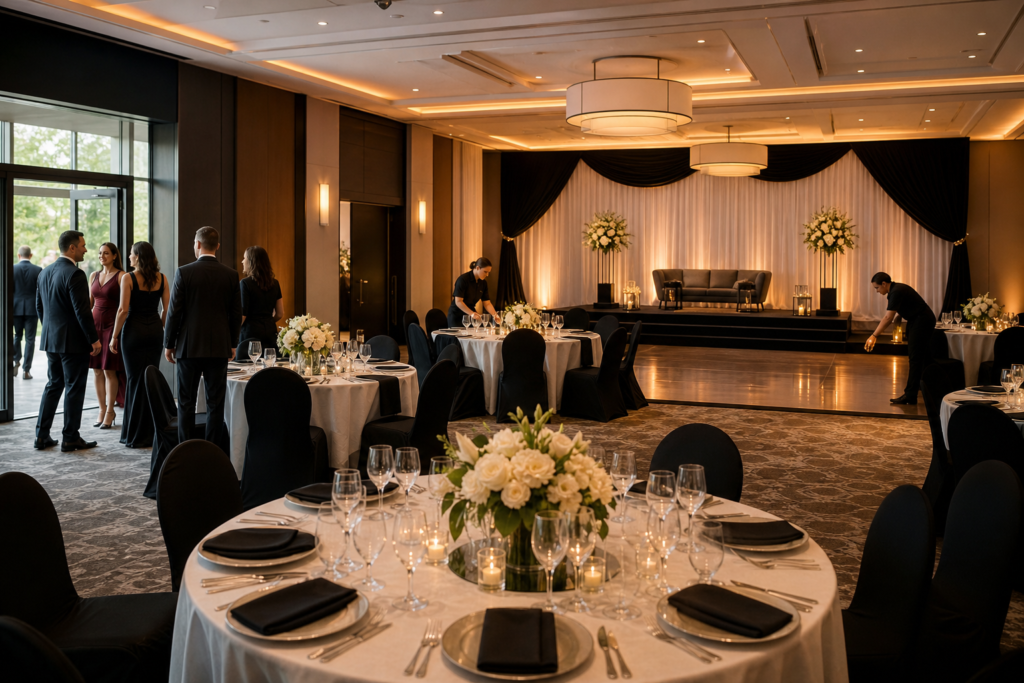
Draw the guest journey before choosing table linens or centrepieces. Follow the path from drop-off to entrance, registration or welcome drink, seating, food, washrooms, photographs, stage, dance floor, and exit. Every important activity should be easy to find without forcing guests through a service area.
Place the main activity where guests can see it
Position the stage or presentation area so seated guests have a clear view. Keep the dance floor close enough to the entertainment that it feels connected, but do not place it where servers must cross continuously. A photo backdrop can sit near the edge of the room, while a bar or food station should not block the entrance.
Protect service and accessible routes
Leave clear routes for servers, mobility devices, older guests, and emergency movement. Confirm the path between the entrance, washrooms, seating, and exits. If children, elders, or guests who need a quieter area will attend, include a comfortable retreat that remains near the main event.
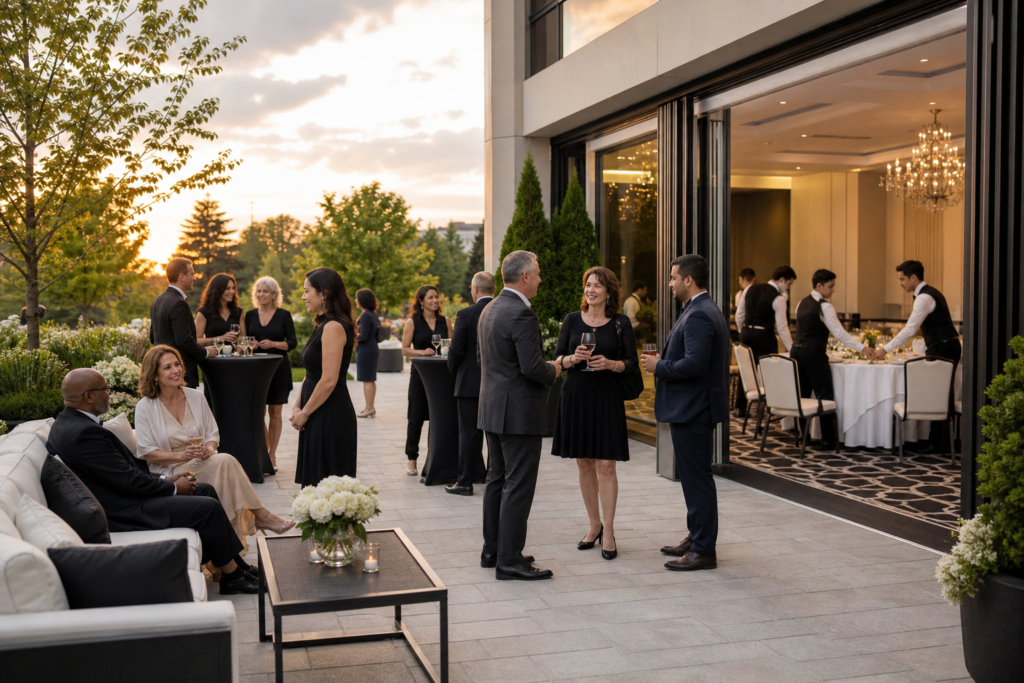
For patio events, consider the surface, lighting, temperature, rain protection, and route back indoors. A patio can work well for welcome drinks or dessert even when the main meal and entertainment remain inside.
Mississauga Planning and Permit Considerations
A private event in a commercial venue and a gathering in a public park do not follow the same process. If alcohol, amplified sound, outdoor space, public access, or a large attendance is involved, ask the venue and the relevant authority which approvals apply before advertising the event.
The City of Mississauga explains that its nuisance-gathering by-law places responsibilities on people hosting social gatherings to control participant behaviour. Hosts should plan for reasonable noise, guest conduct, clear arrival information, and a response process if a concern develops. Do not assume that a private invitation removes all obligations.
For outdoor community events, the City’s permit guidance distinguishes small personal gatherings, such as a birthday party or family picnic, from events that require a formal application. Alcohol service may require permits and facility approval. Public events may also require insurance, security, first aid, traffic or access planning, and advance submission of event information.
These requirements are especially important when the event is not entirely inside a staffed private venue. Ask specific questions about noise, alcohol, insurance, security, public-space use, and weather plans. The venue can clarify its own requirements, but the host remains responsible for confirming obligations that apply to the event’s location and format.
A Practical Social Party Timeline
A four- to five-hour social party can feel generous when transitions are planned. The following example is a starting point rather than a rule. Adjust it for cultural ceremonies, religious observances, performances, meal service, and the age of the guests.
- 0:00–0:45, arrival: Welcome guests with music, refreshments, passed bites, registration, and an active photo area.
- 0:45–1:00, welcome: Offer a short greeting, explain the evening, and direct guests toward seating or the first activity.
- 1:00–2:15, meal: Serve dinner or open stations while keeping background music at a conversation-friendly level.
- 2:15–2:35, formal program: Group two or three concise speeches, a slideshow, presentation, or performance into one well-rehearsed segment.
- 2:35–4:00, entertainment: Open the dance floor, vary the music, and use lighting to signal the shift in energy.
- 3:30 or later, refreshment: Add dessert or a small late-night item if the event continues into the evening.
Tell speakers their time limits and give the MC a printed sequence. If dinner service is delayed, the MC should have a low-key transition ready rather than filling time with improvised announcements. The venue team can coordinate kitchen pacing and production cues when those responsibilities are agreed in advance.
Décor and Theme Decisions That Matter
Start with one visual anchor and two supporting accents. The anchor might be a stage backdrop, floral installation, cultural textile, dessert display, or illuminated photo wall. Supporting elements could include table lighting and a consistent colour palette. This approach creates a finished look without obstructing food service, sightlines, or movement.
- Entrance: Use signage, a welcome display, or a small floral feature to establish the mood immediately.
- Tables: Keep centrepieces low enough for conversation unless the event deliberately calls for tall arrangements.
- Stage: Make sure the backdrop works on camera and does not compete with presentation screens.
- Photo area: Place it where groups can queue without blocking the bar, buffet, or main entrance.
- Lighting: Use warm ambient light during dinner and brighter, more dynamic settings for dancing or performances.
Ask the venue about installation windows, ceiling attachments, candles, open flames, electrical access, floor protection, and removal deadlines. Confirming these details early prevents a decorator’s design from conflicting with venue operations.
Guest Comfort and Risk Reduction
Good planning includes contingencies that guests never notice. Keep a printed run sheet, backup copies of media, spare microphone batteries, extra cables, and a contact list for the venue, caterer, entertainer, decorator, and transportation providers. Assign one decision-maker for the host so vendors do not interrupt the guest of honour for routine questions.
- Arrival: Provide the address, parking information, entrance instructions, and a contact number before the event.
- Comfort: Make water available, protect quiet seating, and consider temperature, coat storage, and rest periods.
- Accessibility: Keep mobility routes clear and confirm accessible entrances, washrooms, seating, and drop-off arrangements.
- Weather: Have an indoor alternative for patio activities and protect equipment from rain, wind, and temperature changes.
- Safety: Keep exits and service lanes clear, brief staff on emergencies, and follow venue requirements for security and insurance.
For events involving alcohol, large crowds, outdoor areas, or public attendance, ask about the venue’s operating procedures and any City requirements. A written plan is more useful than relying on a verbal assumption made during an early site visit.
Example Social Party Formats
Examples help translate a broad idea into a workable brief. These are planning scenarios rather than claims about completed client events.
Milestone birthday for 180 guests
Use passed appetizers during arrival, a slideshow near the stage, a 15- to 20-minute tribute program, and a dance floor that opens immediately afterward. Keep the cake or dessert moment short and place a late-night snack after the main dancing period.
Anniversary dinner for 240 guests
A plated meal can create a formal rhythm, with two short toasts between courses or immediately after dinner. If a patio is available, use it for photographs or dessert only if the route, lighting, weather plan, and accessibility needs are covered.
School formal for 400 students
Prioritize controlled entry, clearly marked supervision areas, water access, a visible DJ position, and enough open space for dancing. Confirm the responsibilities of the school, venue, security providers, and event organizers before invitations are distributed.
Cultural gala for 350 guests
Build the layout around performances, ceremonial movement, family or VIP seating, and a menu that reflects the community. Leave enough stage sightline and backstage access for performers, and schedule technical rehearsals for music, microphones, and presentations.
Working With Mississauga Convention Centre
Mississauga Convention Centre serves Mississauga, Toronto, Brampton, and the wider GTA from 75 Derry Road West. Its seven halls, approximately 700 on-site parking spaces, in-house catering, professional audiovisual systems, lighting, staging, and technical support allow hosts to explore the event as one connected plan rather than as a series of unrelated supplier bookings.
When requesting an initial discussion, provide the occasion, preferred date, estimated attendance, meal format, entertainment, accessibility needs, cultural requirements, and whether you want indoor, patio, or combined use. Ask for a proposed layout as well as a menu direction. A room recommendation is more useful when it shows where guests will eat, speak, dance, photograph, and move.
Before confirming, review what is included, what is optional, how changes are handled, when final guest numbers are due, and which responsibilities remain with the host. A clear proposal helps prevent misunderstandings about décor, AV, alcohol, staffing, permits, insurance, and timing.
Frequently Asked Questions About Social Parties
How far in advance should I plan a social party?
Begin as early as practical, particularly for popular dates, large guest counts, cultural celebrations, or events requiring custom décor and entertainment. An earlier start gives you time to compare rooms, confirm catering, send invitations, rehearse media, and address permit or insurance questions. Simpler reception-style events may require less planning time, but availability should still be checked before setting the date.
Which is better for a social party: plated dinner, buffet, or stations?
Choose plated service when formality, predictable timing, and seated speeches are priorities. Choose a buffet when variety and guest choice matter most, and choose stations when movement and interaction are central to the experience. Guest count, dietary needs, room layout, staffing, and the desired time on the dance floor should guide the decision.
What audiovisual equipment does a social party usually need?
Most programs need clear microphones, dependable music playback, lighting appropriate for dinner and dancing, and a reliable way to show slides or video. Speeches and media should be tested in the room, with a cue sheet shared with the MC and technical lead. A backup playback device and spare microphone batteries are sensible precautions.
What should I consider for an outdoor social party in Mississauga?
Confirm whether the space requires a permit, insurance, alcohol approval, security, or other event documentation. Plan for weather, lighting, sound, accessible surfaces, washroom access, guest comfort, and a fast indoor alternative. A patio can be used for the whole event or simply for arrival drinks, photographs, or dessert.
Plan Your Social Party With Confidence
Start with the guest experience, then match the room, menu, production plan, and timeline to that goal. For a Mississauga celebration near 75 Derry Road West, a venue with adaptable halls, in-house catering, technical support, and on-site parking can reduce the number of moving parts the host must coordinate.
Share your occasion, estimated attendance, preferred date, meal style, and must-have moments with the Mississauga Convention Centre team. A focused venue conversation can help you compare layouts, identify practical requirements, and shape a social party that feels personal, comfortable, and well paced.