

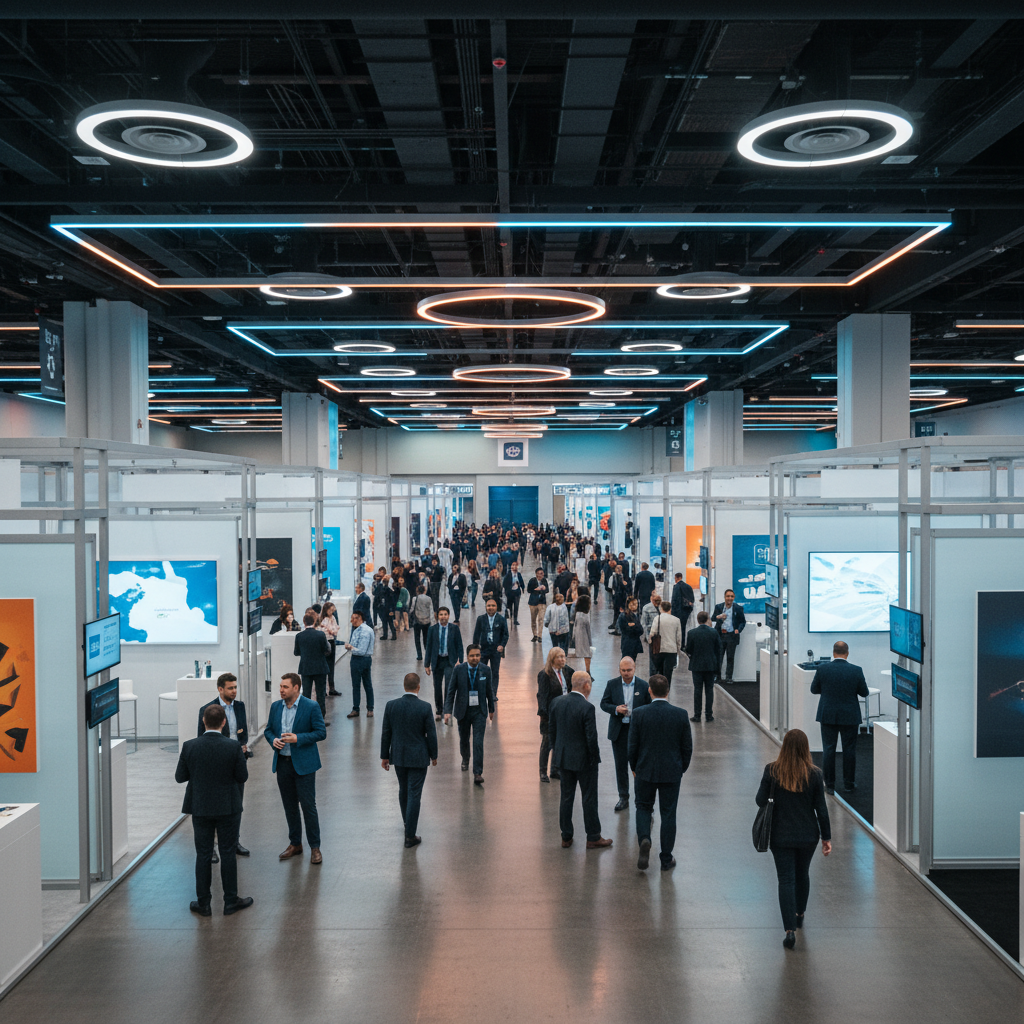
A trade show exhibit planning guide is a structured, step-by-step framework for designing, staffing, and promoting a booth to generate qualified leads and brand visibility. At Mississauga Convention Centre (75 Derry Rd W), this guide helps teams use on-site AV, catering, and large halls to streamline setup and maximize results.
By Preet Dass | Last updated: 2026-06-05
Quick Summary
Plan an exhibit by defining measurable goals, selecting the right booth format, mapping traffic flows, scripting demos, and aligning staffing and promotions. At Mississauga Convention Centre, leverage in-house AV, staging, and diverse catering to speed logistics, improve engagement, and capture more qualified leads with less friction.
Heres what youll get from this trade show exhibit planning guide:
- Clear definitions, checklists, and a step-by-step process used by successful GTA exhibitors
- Tools, templates, and a sample run-of-show timed to the venues logistics
- Mini case insights from events hosted at 75 Derry Rd W
- Troubleshooting playbooks for traffic dips, AV hiccups, and staff gaps
- Advanced tips for measurement, sustainability, and post-show velocity
Introduction: Why Exhibits Win (and What This Guide Covers)
Winning exhibits focus on outcomes, not ornamentation: qualified conversations, scheduled meetings, and post-show conversions. This guide shows how to set numeric goals, choreograph demos, and integrate AV, catering, and floor plans to boost dwell time, recall, and follow-up momentum.
Exhibit success starts with clarity. Youre not building a booth; youre building a pipeline engine that runs for three days. The mechanics are simple: get attention, hold attention, and convert attention.
- Get attention: Sightlines, lighting, and a crisp message pull people in.
- Hold attention: Demos and micro-experiences sustain dwell time to 30 minutes.
- Convert attention: Fast lead capture and next-step commitments lock in value.
At Mississauga Convention Centre, seven elegant halls (about 4,250 sq ft each) support modular builds, from 109 inline booths to large island footprints. In-house AV, staging, and diverse, Halal-friendly menus reduce vendor wrangling and increase execution speed.
Local considerations for 75 Derry Rd W
- Schedule deliveries outside peak arrivals near Derry Rd At Hurontario St to keep move-in smooth.
- Winter and early spring: add 100 minutes to your run-of-show for coat-check surges.
- For shuttle coordination, reference the HWY 407 Park and Ride area for easy attendee pickup planning.
Your Trade Show Exhibit Planning Guide: Before You Start
Set numeric targets, choose an exhibit format, map staffing, and confirm space services before design begins. Lock in AV, electrical, internet, and catering early at Mississauga Convention Centre to prevent downstream changes that inflate timelines and dilute outcomes.
Before sketching a wall or ordering graphics, align stakeholders and parameters. This prevents late revisions and protects timelines.
Prerequisites checklist
- Business goals: Commit to two primaries (e.g., 120 qualified scans; 30 meetings booked; 1 partner MOU).
- Audience: Prioritize 23 buyer roles; list their top 3 pains each.
- Offer focus: One hero story; two supporting stories. Keep messaging under 12 words per banner.
- Footprint & utilities: Confirm booth size, ceiling height, rigging, power drops, Internet, and storage.
- Venue services: AV, staging, lighting, and on-site tech support at 75 Derry Rd W.
- Food & hospitality: Plan light hospitality (e.g., tea/coffee) via in-house catering to extend dwell time.
- Compliance: Insurance certificates, fire codes for materials, and electronics testing as required.
If youre new to exhibits, skim our primer on booth layouts for traffic flow insights from our booth layout tips. For a venue capabilities overview, see tradeshows and expos at MCC.
Plan Your Exhibit at Mississauga Convention Centre
At 75 Derry Rd W in the Regional Municipality of Peel, plan exhibits around seven similarly sized halls, ample on-site parking, and integrated AV and catering. This reduces vendor count, accelerates approvals, and improves show-day reliability.
Heres the thing: logistics create or kill engagement. MCCs integrated services compress timelines and simplify approvals.
- Capacity & flow: Halls around 4,250 sq ft each support modular islands and multi-aisle flows.
- Access: Minutes from major highways and Toronto Pearson International Airport.
- Parking: Approximately 700 on-site spots reduce arrival friction and late starts.
- In-house AV: Pro lighting, staging, and technical support mean fewer third-party dependencies.
- Diverse catering: South Asian, Pakistani Halal, Middle Eastern, Sri Lankan, Caribbean, and Continental menus.
Explore MCCs broader services in our venue overview and corporate planners guide.
Step-by-Step Process (From 90 Days Out to Show Close)
Work backward from your move-in time. Sequence goals, design, production, staffing, and promotions. Lock assets by T30 days, run staff rehearsal at T7, and execute a daily open-to-close cadence that protects demos, lead capture, and resets.
Step 1: Set outcomes (T90 days)
- Pick two primary KPIs: e.g., 200 badge scans and 25 scheduled meetings.
- Define conversion ratios (e.g., 20% of scans meetings; 60% of meetings proposals).
- Translate to staffing math: 1 staffer can hold ~10 meaningful conversations/hour in peak windows.
Step 2: Choose booth format & message (T75)
- Inline 109: Focused message, one demo station, 23 staff on rotation.
- Inline 1010 or 1020: Add micro-theater; 34 staff to prevent crowding.
- Island (2020+): Multi-entry storytelling; 57 staff with clear zones and reset roles.
- Message rule: 81 words on top banner; one verb promise; visible from 30 feet.
Step 3: Map the floor plan & flows (T60)
- Reserve 40% of space for open engagement, 40% for demos, 20% for storage/back-of-house.
- Place hero demo at a 304 angle to the aisle to slow passersby.
- Use lighting contrasts (key light + wash) to guide eyes to the demo zone.
- Check rigging and height limits with MCCs in-house team before final drawings.
Step 4: Produce assets (T50)
- Lock graphics and animations; export in venue-approved specs for LED and projection.
- Prepare two 6090 second demos and one 5-minute deep dive.
- Design a 3-card handout set: problem, solution, outcome. Keep QR lead capture prominent.
- Confirm electrical, Internet, and hardline needs with the MCC tech desk.
Step 5: Script staffing & training (T40)
- Staffing ratio guideline: 1 staff per 5060 sq ft at peak times.
- Role cards: Greeter (qualify), Demo lead (show), Closer (book next step).
- Run 2 rehearsals: internal (T14) and on-site (T7) with full AV check.
- Micro-scripts: 15-second hook; 60-second demo story; 1-question handoff to closer.
Step 6: Promote (T45 to T1)
- Send 35 email waves: announce, value teaser, appointment push; aim for 2030% opens.
- Book 103 early meetings on-site in a quiet corner or lounge.
- Post 4 social updates: teaser, setup day, live demo, recap. Use show hashtags.
Step 7: Move-in & setup (T1 day)
- Sequence: flooring structure power/data lighting content staging QA.
- Use a 25% time buffer for rigging or electrical variances.
- Run a full dress rehearsal with audio levels and walk-by tests from two aisles away.
Step 8: Show days cadence
- Open checklist by H0: lights, content loops, lead app test, hospitality ready.
- Peak windows: 10:301:45 a.m. and 1:303:30 p.m.; schedule A-team in those blocks.
- 2-minute reset after each demo: tidy, restock, log notes in the lead app.
- Daily 15-minute standup at close: wins, blockers, next-day tweaks.
Step 9: Post-show follow-up (within 2448 hours)
- Send same-day thank-you with next-step CTA; book debrief calls within 5 business days.
- Tag leads by fit and urgency; protect your best 25 with executive outreach.
- Publish a recap post with booth photos to extend reach and social proof.
Tools and Resources Youll Actually Use
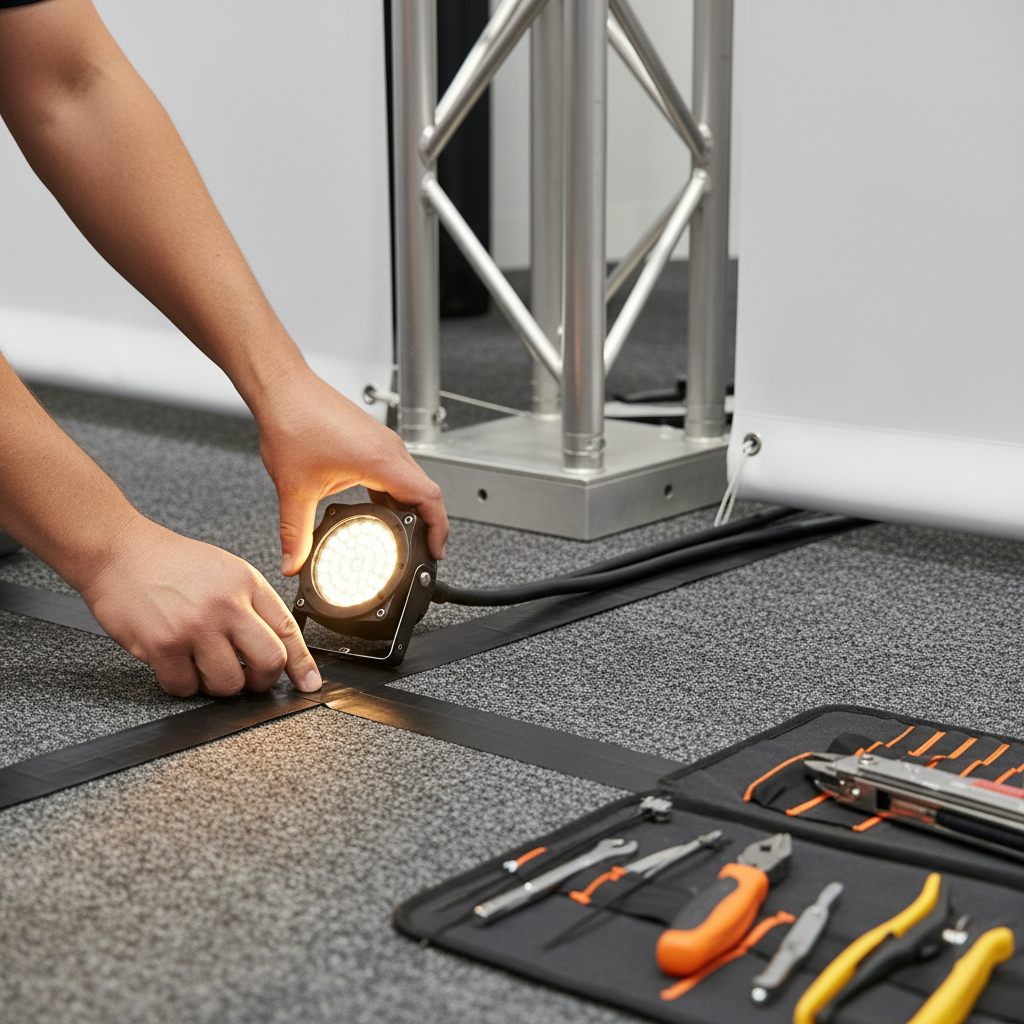
Use a lead capture app, floor plan software, content playlist manager, and a rehearsal timer. At MCC, coordinate with in-house AV for power, rigging, and show control to keep devices and content in sync during peak traffic.
Core toolkit
- Lead capture: Badge scanner + note fields + photo capture for cards and sketches.
- Floor planning: CAD or drag-and-drop tools for 109 to island layouts.
- Content control: Playlist manager that supports 4K and silent-mode captions.
- Run-of-show: Shared timeline with alerts (setup milestones, demo times, resets).
- Hospitality: Coordinated tea/coffee or snacks via MCC in-house catering.
For quick layout inspiration by category, browse the MCC tradeshows in Mississauga tag and the expo Mississauga archive. For print needs, reference this guide to large-format event printing to steer substrate and finish choices.
Mini Case Insights (What Works at 75 Derry Rd W)
Exhibits that win here pair a simple headline with a choreographed, repeatable demo and light hospitality. Teams that rehearse twice (off-site and on-site) and assign a closer for every hour convert more scans into meetings within 48 hours.
- SaaS launch: 1020 inline; 60-second demo loop; 34 staff. Net-new scans beat target by ~18% through scheduled micro-theaters every 30 minutes.
- Industrial equipment: Island build with lift-safe rigging; 5-minute deep dives; hospitality station. Average dwell ~4 minutes led to 30% meeting conversion the week after.
- Education & careers fair: Parallel mini-booths; clear wayfinding; QR-enabled program. Hourly traffic peaks sustained with 2-minute resets and visible signage sightlines.
Want more layout tactics specific to our halls? See our exhibit layout tips and trade show overview.
Booth Formats Compared (At-a-Glance)
Choose formats by story complexity, staffing, and sightline needs. Inline booths favor focused stories; islands enable multi-entry, multi-demo experiences. Match format to KPIs, not the other way around.
| Format | Best for | Staffing (peak) | Demo capacity | Notes |
|---|---|---|---|---|
| Inline 109 | One hero story | 23 | 12 viewers | Keep message under 81 words |
| Inline 1020 | Two linked stories | 34 | 48 viewers | Add a micro-theater |
| Island 2020+ | Multi-audience journeys | 57 | 122+ viewers | Zone roles; 2-minute resets |
Troubleshooting Common Exhibit Problems
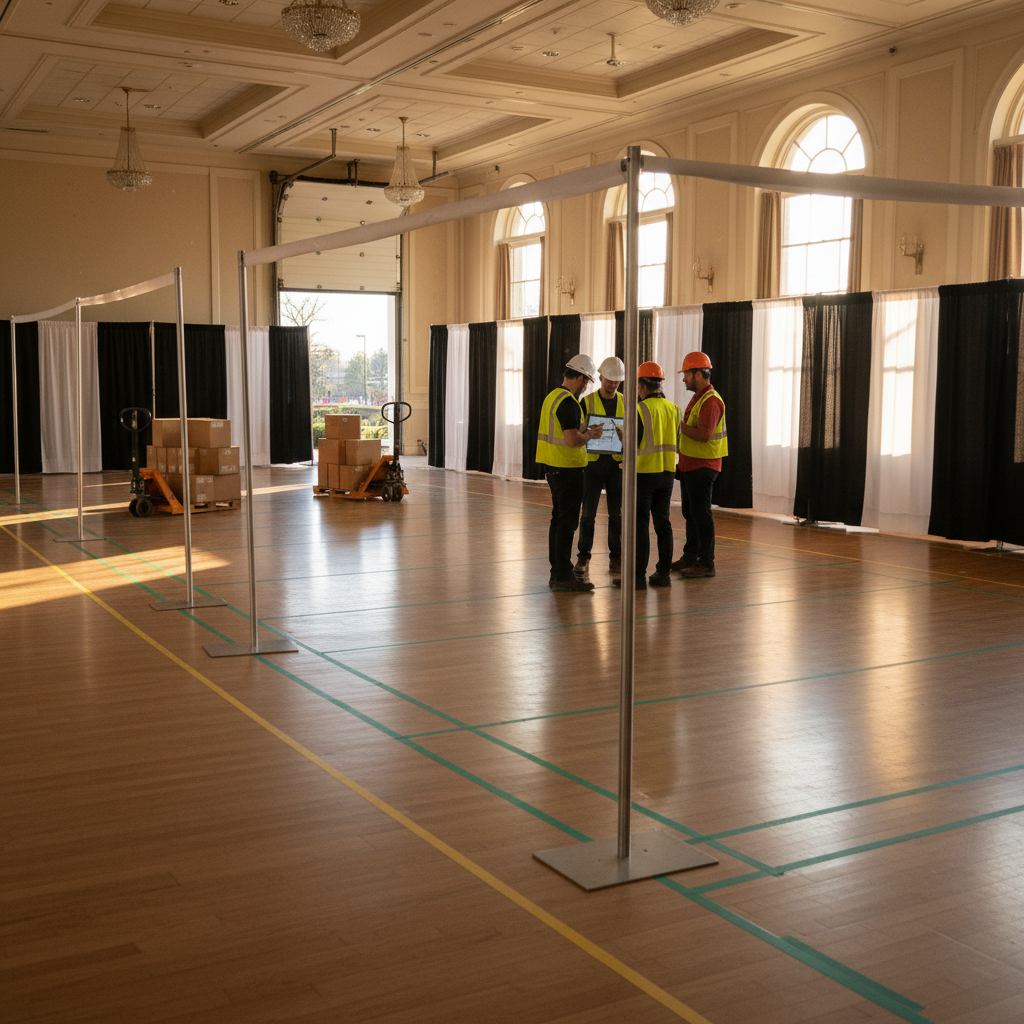
When traffic dips, change the motion and message. When AV hiccups, failover to a preloaded 60-second demo. When staffing thins, collapse zones and run fewer, better demos.
Low traffic or low dwell
- Rotate a motion element (looped animation) every 20 minutes during lulls.
- Shift staff to the aisle with a 15-second hook and soft handoff back inside.
- Add hospitality moments (water, tea/coffee) to keep visitors longer.
AV or power issues
- Keep a local copy of a 60-second silent demo on a laptop HDMI-ready.
- Label power runs and use gaffer-safe cable paths; verify with the in-house tech team.
- Set audio max levels during setup and lock them before doors open.
Staffing gaps
- Collapse from 3 zones to 2; keep greeter and demo live, pause secondary zones.
- Use QR lead capture at the entrance for self-serve scans during peaks.
- Shorten demos to 450 seconds; protect your closing script.
Advanced Tips: Measurement, Sustainability, and Speed
Instrument your exhibit like a campaign. Track leads by source and time block, measure dwell with simple counters, and commit to a same-day outreach SLA. Reuse modular walls, rent lighting, and choose recyclable substrates to reduce waste.
- Measurement: Tag scans by hour; correlate spikes with demo times and staffing.
- Dwell tracking: 10-tally clickers near the hero demo provide trendlines without hardware.
- Follow-up velocity: Same-day outreach lifts meeting conversion compared to next-day batches.
- Modularity: Design 70% reusable components to cut rebuild time for your next show.
- Sustainability: Prioritize recyclable boards and rental lighting to reduce landfill impact.
Need help choosing a hall and move-in window? Our venue selection checklist and parking tips speed up approvals.
Need a hands-on run-through?
Book a pre-show walkthrough at Mississauga Convention Centre to pressure-test your demo flow, power needs, and staffing plan. Hands-on reviews reduce move-in surprises and increase day-one readiness.
Request a site visit and well map your flow on the actual floor, confirm power and Internet routes with our AV team, and sample light hospitality options from in-house catering to increase dwell time.
Frequently Asked Questions
Exhibit planning hinges on timing, staffing, and logistics. These direct answers cover timing, staffing ratios, demo design, and how Mississauga Convention Centres in-house services reduce friction.
How far in advance should we start exhibit planning?
Begin 812 weeks out for small inline booths and at least 1216 weeks for island builds. Lock graphics by T30 days, run a full rehearsal at T7, and confirm electrical and Internet with the venues AV team before move-in.
Whats a good staffing ratio for busy windows?
Plan roughly 1 staffer per 5060 sq ft at peak traffic. Assign clear rolesgreeter, demo lead, closerto prevent crowding. When short-staffed, collapse zones and shorten demos to protect quality conversations.
How do we design a 60-second demo that converts?
Use a hookpainpromise format: name the problem in 5 seconds, show the outcome in 20, and invite a next step in 10. Leave 25 seconds for Q&A and transition. Rehearse with AV levels set and a two-minute reset checklist.
What venue services should we confirm first?
Confirm power drops, Internet, rigging permissions, and show control with the in-house AV team. Add light hospitality via in-house catering to extend dwell time. Align these services before finalizing graphics and demo equipment.
Conclusion and Key Takeaways
Great exhibits are built like campaigns: clear goals, crisp stories, rehearsed demos, and fast follow-up. At MCC, integrated AV and catering compress timelines and lift reliability so your team can focus on conversations, not logistics.
- Define two numeric outcomes and script toward them.
- Match booth format to story complexity and staffing.
- Use lighting, angles, and hospitality to lift dwell time.
- Rehearse twice and protect peak windows with A-team coverage.
- Follow up within 2448 hours; momentum compounds results.
Ready to pressure-test your plan? Schedule a site walkthrough at 75 Derry Rd W and well help you tune the flow, power, and staffing model for your show day.
Additional Resources
Use these venue-focused resources to finalize layout, logistics, and approvals. They align with Mississauga Convention Centres halls, AV, and parking flows.