

 20 September, 2026
Last updated: October 2026
By Preet Dass • Mississauga Convention Centre • Refreshed for the next publication cycle
What a wedding ceremony timeline includes
A wedding ceremony timeline is the working schedule for everything from guest arrival and prelude music through the recessional and immediate photographs. It is more useful than a list of ceremony traditions because it connects each segment to a clock time, a responsible person, and a practical cue. The officiant may control the words, but the coordinator, DJ or band, AV technician, photographer, venue team, ushers, and family members all affect whether the schedule works.
Build the plan around four fixed points: when guests can enter, when the ceremony begins, when the couple must be available for photographs, and when the next event begins. Dinner service, cocktail hour, transportation, sunset light, and venue access can all become fixed points as well. Once those are known, work backward and assign reasonable durations rather than hoping each transition will happen automatically.
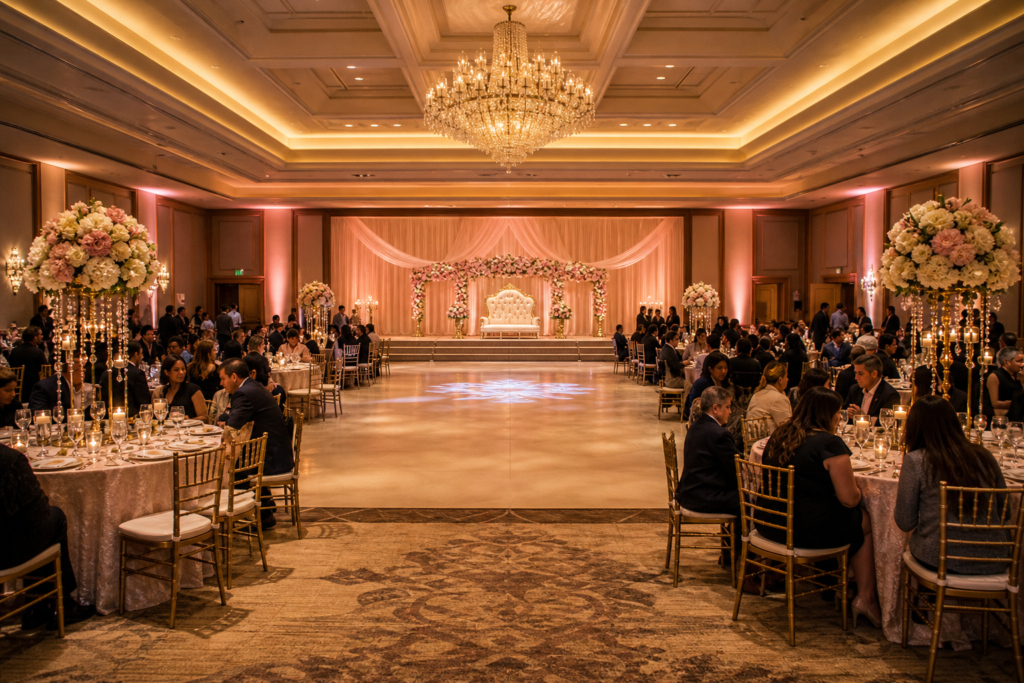
For a ceremony at Mississauga Convention Centre, the venue is at 75 Derry Road West in Mississauga and offers seven halls of approximately 4,250 square feet each, with on-site parking for about 700 vehicles. Those confirmed venue features can simplify guest arrival, room changes, staging, and portrait planning, but they do not remove the need for a detailed schedule.
Typical ceremony durations
| Format | Ceremony time | Plan for |
|---|---|---|
| Civil or short personalized ceremony | 15–25 minutes | Welcome, declarations, vows, rings, pronouncement, and recessional |
| Christian or other religious service | 30–45 minutes | Readings, prayers or blessings, message, vows, and music |
| Interfaith ceremony | 30–60 minutes | Two sets of rituals, readings, explanations, and transitions |
| South Asian or fusion ceremony | 45–90 minutes or more | Ritual sequence, family participation, movement around the ceremonial space, and clear sightlines |
These are planning ranges, not rules. A short ceremony can run long when a processional is crowded or personal vows expand. A longer cultural ceremony can remain comfortable when rituals are rehearsed, explained to guests, and supported by good audio and seating.
How to build a wedding ceremony timeline step by step
The most reliable method is to begin with constraints, create the ceremony sequence, assign ownership, and then test the handoffs. Do not start by choosing songs or writing a minute-by-minute schedule before confirming the room, guest count, traditions, and following event. The same ceremony script can require different timing in a compact chapel, a ballroom, or a multi-hall event venue in Mississauga.
1. Confirm the fixed times first
Write down the advertised ceremony start, the time guests may enter, the time the couple must begin family portraits, and the beginning of cocktail hour or dinner. If the photographer has a limited light window, record that as a constraint. If transportation is involved, include the latest safe arrival time rather than the ideal arrival time.
For an Ontario wedding, also confirm the legal paperwork and officiant arrangements before finalizing the run sheet. The province requires a valid marriage licence and an authorized officiant. An Ontario marriage licence is valid for three months from its issue date; verify current details and municipal procedures through the Ontario marriage licence application guidance.
2. Plan guest arrival and prelude music
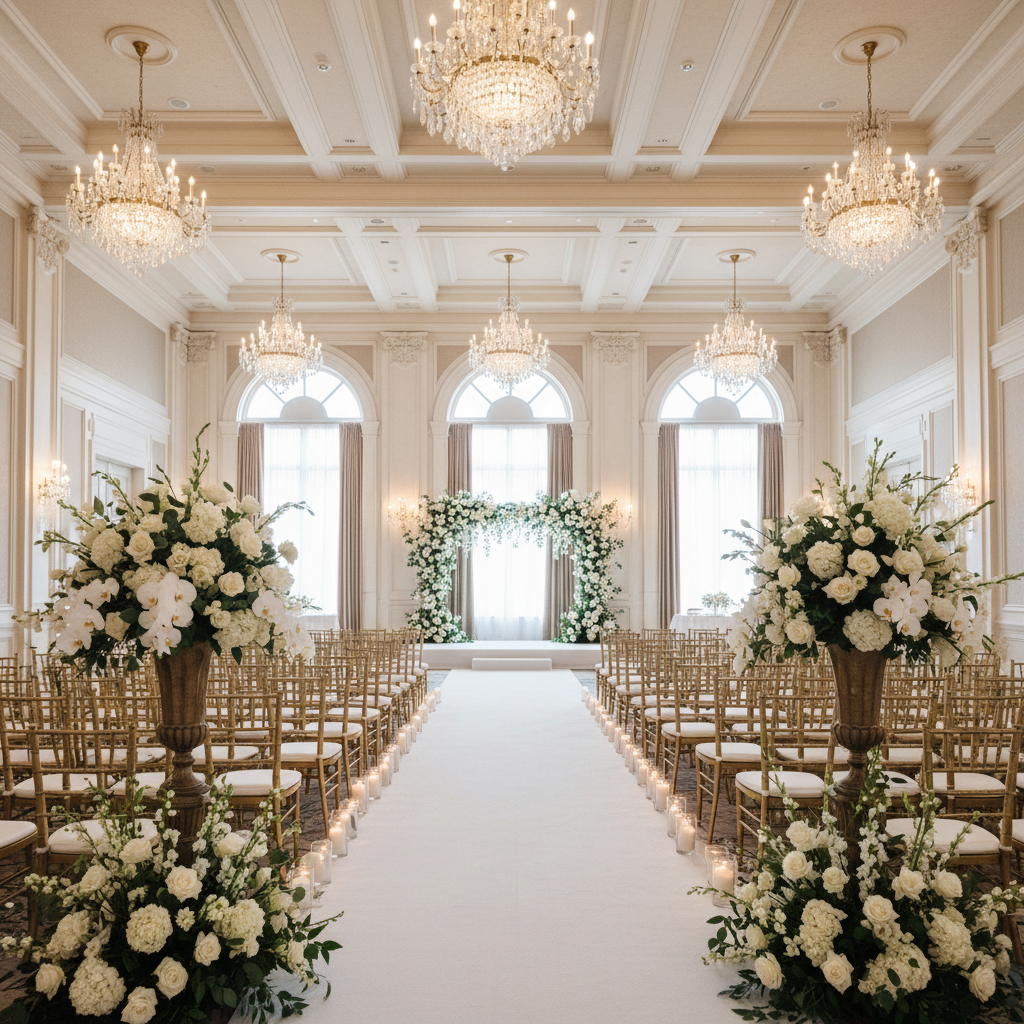
Invite guests to arrive 15–30 minutes before the ceremony start, depending on the size of the guest list, parking arrangement, venue layout, and whether guests must find a separate ceremony room. Begin prelude music as doors open. The music gives ushers a clear signal that seating has begun and gives late-arriving guests a less conspicuous way to enter.
Allow extra time for elderly guests, families with young children, mobility devices, winter coats, and guests unfamiliar with the building. If the ceremony and reception use different halls, include directional signs and a named usher or coordinator at each decision point. Do not treat parking capacity as a guarantee that every guest will arrive at the same speed.
3. Draft the ceremony segments
List every segment in order and give it a duration. Include the processional separately from the welcome; include each reading or ritual separately from the vows; and include the pronouncement, kiss, and recessional as distinct cues. This makes it easier to identify the part that needs adjustment when the ceremony grows longer than expected.
- Prelude and seating: 15–20 minutes.
- Final lineup and checks: 5–10 minutes away from the guest view.
- Processional: 5–8 minutes, depending on the number of people and aisle length.
- Welcome and opening remarks: 2–5 minutes.
- Readings, prayers, or explanations: 3–7 minutes each.
- Personal vows: 2–4 minutes per person when written in advance.
- Ring exchange: approximately 2–4 minutes, including instructions.
- Cultural rituals: assign a separate duration to each ritual rather than one broad block.
- Pronouncement and kiss: about 1–2 minutes.
- Recessional: 2–5 minutes, depending on the number of participants and whether guests are dismissed by rows.
4. Assign every cue to a person
A timeline is incomplete if it says only “play music” or “start ceremony.” Name the person responsible for each action. The officiant may signal the entrance with a nod, while the coordinator releases the next person and the DJ starts the track. Agree on the signal during rehearsal so nobody is waiting for a cue that another person assumes has already happened.
- Officiant: controls the script, pacing, declarations, vows, rings, and pronouncement.
- Coordinator: manages the lineup, doors, family readiness, and recovery if a segment slips.
- DJ or bandleader: controls prelude, processional, recessional, fades, and backup tracks.
- AV technician: tests microphones, manages sound levels, and supports lighting or staging cues.
- Photographer: identifies positions, family-photo order, and the time needed after the recessional.
- Ushers or attendants: guide seating, support guests, and manage late arrivals discreetly.
5. Add buffers without hiding the real schedule
Use buffers at transitions, not as vague extra time at the bottom of the page. A five-minute lineup buffer helps people settle before the first entrance. A 10-minute transition after the recessional allows for congratulations, a private pause, and movement to portraits. If an outdoor patio or another exposed area is involved, create an indoor backup and identify the person who makes the change.
Protect the portrait window first when recovering from a delay. Shorten an optional receiving line, a nonessential reading, or the time between family groups before cutting the couple’s planned photographs. Tell vendors which elements are flexible before the wedding day.
Wedding ceremony timeline templates
Use the following templates as starting points. Replace the example clock times with the actual ceremony start, then circulate the finished version to the officiant, coordinator, DJ or band, photographer, venue, and key family members. The durations describe the ceremony flow; arrival, setup, and portrait periods appear separately so they are not accidentally mistaken for ceremony time.
20-minute civil ceremony
| Segment | Duration | Primary owner |
|---|---|---|
| Guest seating and prelude | 15–20 minutes before start | DJ and ushers |
| Final lineup | 5 minutes | Coordinator |
| Processional | 5 minutes | Coordinator and DJ |
| Welcome and short reading | 3–4 minutes | Officiant |
| Declarations and personal vows | 5–6 minutes | Officiant and couple |
| Rings, pronouncement, and kiss | 3–4 minutes | Officiant |
| Recessional | 2 minutes | Coordinator and DJ |
This format works best when the couple agrees on vow length and the officiant has a final script. If guests must move to another space afterward, add that movement before promising a cocktail-hour start time.
30–45-minute religious or interfaith ceremony
- Prelude and seating: 15–20 minutes before the start.
- Processional and opening music: 6–8 minutes.
- Welcome, prayer, or opening blessing: 4–7 minutes.
- Readings, sermon, message, or shared explanation: 10–15 minutes.
- Vows, declarations, and rings: 8–12 minutes.
- Additional blessing, unity ritual, or signing: 4–8 minutes.
- Pronouncement, final music, and recessional: 3–5 minutes.
For an interfaith ceremony, explain unfamiliar rituals briefly in the script or printed program. That improves guest participation and prevents the coordinator from having to pause the ceremony to explain where people should stand or what happens next.
60–75-minute South Asian or fusion ceremony
- Guest seating and prelude: 20–30 minutes before the start.
- Opening blessing or Ganesh puja, when included: 8–10 minutes.
- Family blessings or kanyadaan: 8–12 minutes.
- Varmala or garland exchange: 5–8 minutes.
- Seven steps, vows, or saptapadi: 12–18 minutes.
- Mangalsutra, sindoor, ring exchange, or related ritual: 6–10 minutes.
- Closing blessings, announcements, and recessional: 6–10 minutes.
Names, order, and meaning vary by family and tradition, so confirm the sequence with the couple, officiant, and cultural leaders. Plan microphones for anyone speaking from the ceremonial area, and make sure elders and guests can see each ritual without standing in the aisle. A South Asian wedding venue in the GTA should be assessed not only for guest capacity but also for mandap placement, family movement, catering flow, staging, and the ability to transition the room afterward.
Processional order, recessional order, and guest access
There is no single correct processional. Start with the relationships, cultural expectations, and practical needs of the people walking. A common sequence is officiant, grandparents, parents, wedding party, flower child or ring bearer, one partner, and the other partner. Other couples enter together, walk with parents, or have both partners waiting at the front.
Write the exact order in a separate lineup chart. Include each person’s name, position, companion, song cue, waiting location, and any assistance required. A lineup chart prevents the ceremony timeline from becoming overloaded with details and gives the coordinator something usable while people are moving.
Practical spacing and pacing
Leave enough space between pairs for photographs and safe movement. A rough six-to-eight-second interval can work for a conventional procession, but the coordinator should adjust it to the song, aisle length, walking pace, and mobility needs. The goal is not to force people to walk to a stopwatch; it is to prevent bunching and ensure each person reaches the front before the next cue.
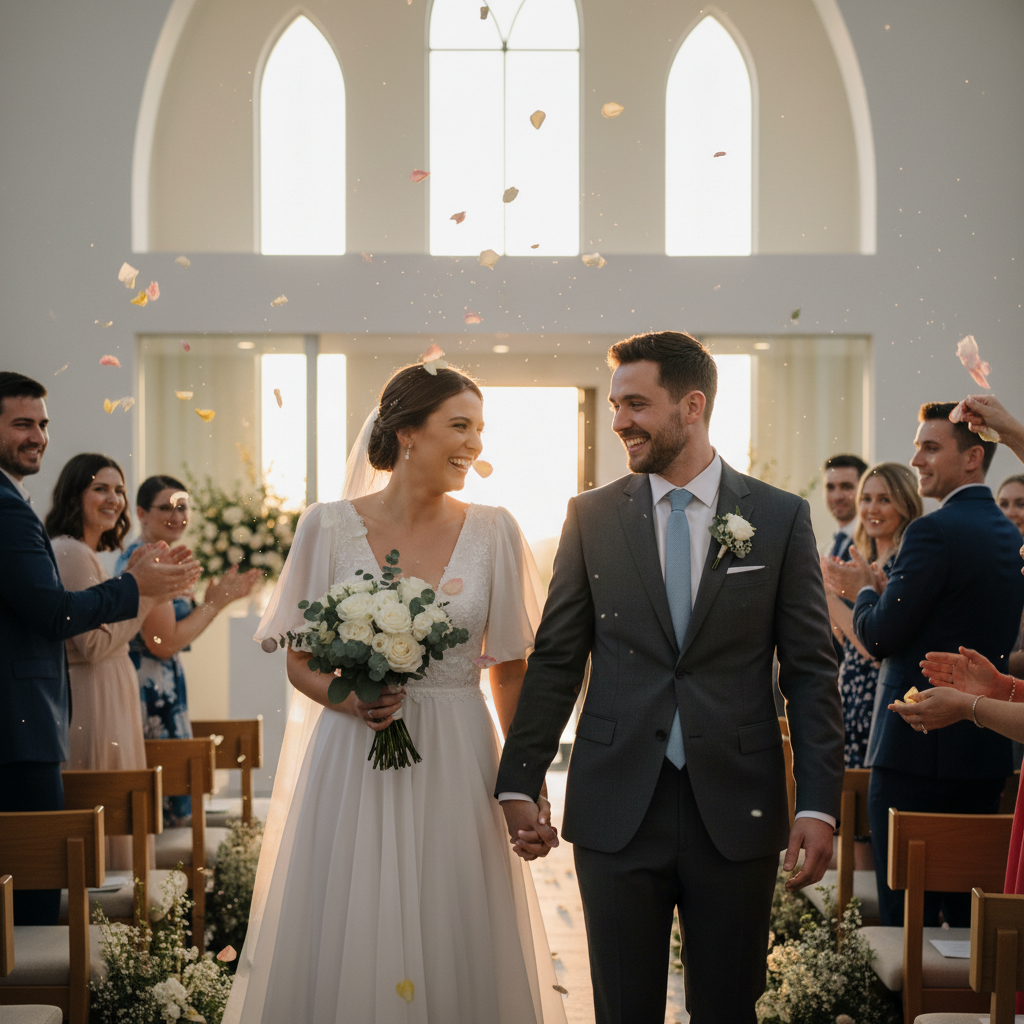
For the recessional, the couple usually exits first, followed by the wedding party and family members. If the aisle is narrow, release pairs only after the previous pair has cleared the end. Ushers can dismiss guests by rows afterward, which reduces congestion at the ceremony entrance and gives the photographer a clean route.
Accessibility and comfort checks
- Reserve clear seating with a practical route for wheelchairs, walkers, and guests who cannot use stairs.
- Ask participants whether they need a slower pace, a companion, an aisle seat, or a chair at the lineup location.
- Keep bouquets, cables, décor, and camera bags out of travel paths.
- Provide clear audio for guests at the back and for anyone who relies on hearing the officiant rather than seeing every movement.
- Offer water and appropriate temperature control during longer ceremonies.
- Tell ushers how to seat late arrivals without interrupting a reading, vow, or entrance.
Music, AV, lighting, and ceremony cues
Music should support the timeline rather than dictate it. List each track by name, purpose, start point, end point, and backup location. A simple cue sheet might identify “family processional,” “wedding party processional,” “partner entrance,” “signing music,” and “recessional.” If the DJ or band uses a different name for a track, record both names to prevent a last-minute search.
Test the complete audio path in the ceremony room. A microphone that works in an empty hall may sound different once guests, décor, and soft furnishings are present. Test the officiant’s microphone, reader microphone, handheld backup, music playback, and any microphones used during cultural rituals. Keep offline copies of essential music on more than one device and confirm who can start the backup.
Suggested AV check
- Confirm the officiant’s microphone position and battery status.
- Test reader and vow microphones at the exact standing positions.
- Check that the couple’s voices are audible without forcing them to turn away from guests.
- Test every processional and recessional track from the intended playback system.
- Identify a clear signal for pause, fade, restart, and emergency track.
- Set lighting bright enough for safe movement and flattering enough for photographs.
- Secure cables and keep technical equipment outside accessible routes.
Schedule the sound and lighting check before guests arrive, not during the final lineup. The coordinator should also tell the photographer where the technical team will stand so microphones, stands, and cameras do not compete for the same sightline.
Ontario legal details to place on the timeline
Legal requirements should be handled as a separate checklist within the wedding plan. In Ontario, couples need a valid marriage licence and an authorized officiant, and two witnesses are required. The officiant completes the relevant portion of the marriage documentation after the ceremony, and the couple and witnesses sign as required.
Confirm who holds the licence, where the rings and identification documents will be kept, and when the witnesses need to be present. The timeline should include a quiet handoff after the ceremony rather than leaving paperwork among décor boxes or personal bags. The officiant should confirm the current process and any municipal instructions before the wedding date; venue staff do not replace the officiant’s legal responsibilities.
Keep legal preparation distinct from ceremonial styling. A beautiful run sheet still needs the correct licence, officiant, witnesses, and signatures. Build a reminder into the final-week checklist and verify the licence issue date because an Ontario marriage licence is valid for three months.
Venue logistics for a Mississauga ceremony
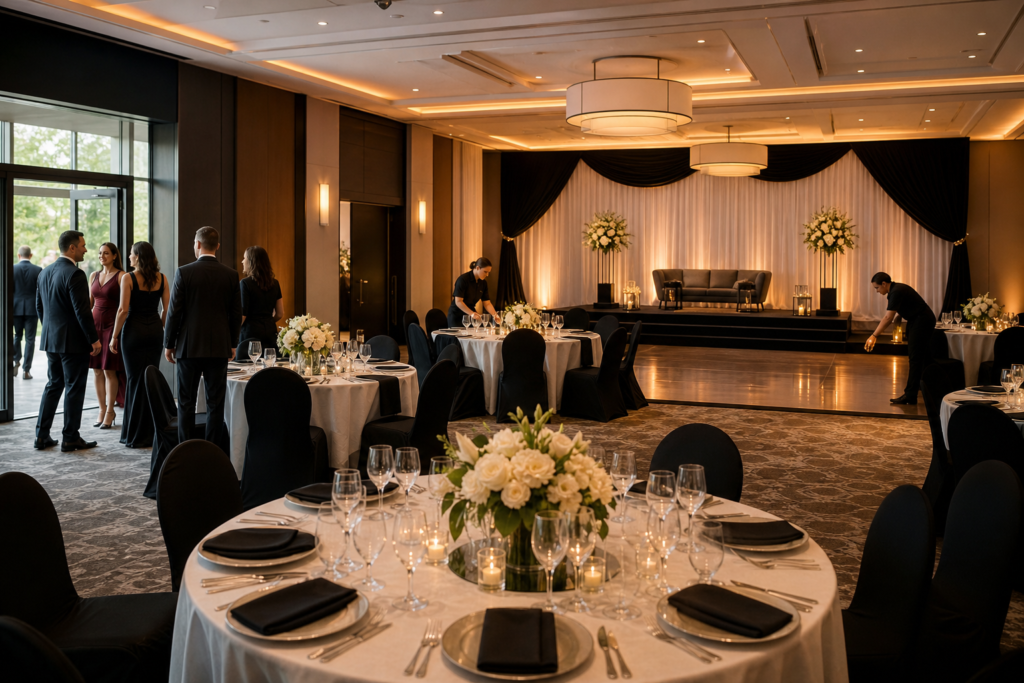
Venue planning affects timing before the processional begins. At Mississauga Convention Centre, the seven halls and approximately 4,250-square-foot room sizes can support different ceremony and reception arrangements, subject to the confirmed booking and layout. Ask which room will be used, where guests enter, where the lineup occurs, how décor is loaded, and whether portraits can happen nearby without crossing guest traffic.
The Centre serves Mississauga, Toronto, Brampton, and the wider GTA and is located near major highways and Toronto Pearson International Airport. Those access points are useful context for invitations and vendor planning, but the schedule should still allow for traffic, parking, weather, and guests who need additional arrival time. Give vendors a precise arrival instruction rather than relying on the venue address alone.
Questions to settle with the venue
- What is the earliest permitted access time for décor, AV, and personal items?
- Where do the couple and wedding party wait before the processional?
- Can family portraits happen in an adjacent hall or designated area?
- Which entrance should guests use, and who directs them when they arrive?
- Where are accessible entrances, washrooms, coat-check areas, and quiet waiting points?
- What lighting, staging, microphone, and music equipment is included?
- How will the room change from ceremony to reception, and how long does that change take?
- What is the indoor backup if an outdoor ritual or patio plan becomes impractical?
In-house audiovisual systems, lighting, staging, technical support, and catering can reduce the number of handoffs, but the couple should still name a decision-maker for the day. A venue team can support the room and technical plan; the coordinator remains responsible for aligning the full vendor schedule.
Sample wedding ceremony run of show
Copy this structure into your planning document and replace the relative durations with clock times. Add names and phone numbers in the working version shared privately with the vendor team. Keep the guest-facing version simpler so it is easy to read.
| Segment | Planning duration | Lead or cue | Operational note |
|---|---|---|---|
| Guest arrival and prelude | 15–30 minutes | DJ, ushers, venue | Doors open; accessible seating and directions ready |
| Final lineup and checks | 5–10 minutes | Coordinator | Confirm people, bouquets, rings, attire, and first track |
| Processional | 5–8 minutes | Coordinator and DJ | Release each person or pair at the agreed signal |
| Welcome and reading | 4–8 minutes | Officiant | Reader waits at the marked position; microphone is live |
| Vows and rings | 6–12 minutes | Officiant and couple | Keep ring holder and backup tray accessible |
| Rituals or blessings | As confirmed | Officiant or cultural leaders | Use separate rows for each ritual and participant |
| Pronouncement and kiss | 1–2 minutes | Officiant | Photographer and recessional track ready |
| Recessional | 2–5 minutes | Coordinator and DJ | Release pairs safely; keep aisle clear |
| Transition and congratulations | 5–10 minutes | Coordinator | Move the couple without losing the portrait start time |
| Family and couple portraits | 30–45 minutes | Photographer | Use a written family list in priority order |
Prepare at least one version for the professional team and one short version for the wedding party. The professional version can include contact information, room names, equipment notes, and contingency decisions. The short version should show where each person needs to be and when.
Rehearsal and day-of execution
A rehearsal does not need to repeat every word of the ceremony. It should test movement and ownership: where people stand, how they enter, who holds rings, when the music changes, where readers wait, how the couple exits, and how guests move afterward. Practise the longest or most complicated ritual rather than only the easiest civil sequence.
- 60 minutes before guest entry: complete the microphone, music, lighting, and room check.
- 30 minutes before the ceremony: confirm the wedding party, family participants, rings, documents, bouquets, and seating plan.
- 10 minutes before the ceremony: move participants to the lineup location, confirm the first cue, and tell ushers how to handle late arrivals.
- During the ceremony: let the officiant lead the words while the coordinator watches movement, timing, and safety.
- Immediately afterward: allow a short private pause, begin the agreed portrait list, and direct guests toward the next part of the event.
If the ceremony runs late, do not let every subsequent vendor improvise. The coordinator should announce the revised portrait start, tell catering whether service changes, and decide which optional items can be shortened. One clear decision prevents five separate versions of the schedule.
Common timeline mistakes to avoid
Making the ceremony start time the only real time
“Ceremony at 3 p.m.” does not tell the wedding party when to arrive, the ushers when to begin seating, or the DJ when to start the prelude. Add the preparation and transition milestones around the advertised start.
Using one large block for all cultural rituals
A block labelled “South Asian ceremony: 60 minutes” is difficult to rehearse. List each ritual, participant, item, microphone, and movement so the team can identify what changes if the ceremony starts late.
Leaving photo time until the end
Photographs are not leftover time. Put the family list and portrait location into the schedule before finalizing cocktail hour or dinner. If the venue allows a nearby portrait area, confirm it in advance rather than assuming it will be available.
Giving cues to everyone
Shared responsibility can become no responsibility. Name one lead for each cue and one backup. The backup should know where the files, rings, documents, and printed run sheet are kept.
Frequently asked questions
How long should a wedding ceremony be?
Most civil ceremonies take about 20–25 minutes, while many religious ceremonies take 30–45 minutes. South Asian and fusion ceremonies can take 60 minutes or longer because they include multiple rituals and family participants. Confirm the duration with the officiant or cultural leaders, then add transition time for seating, the processional, the recessional, and portraits.
When should guests arrive for the ceremony?
Ask guests to arrive 15–30 minutes before the scheduled start. Use the longer end of that range for a large guest list, a separate ceremony room, complicated parking, or a venue where guests need to find a new hall. Prelude music should begin as doors open, and ushers should know how to seat late arrivals quietly.
How much buffer should be added to a wedding ceremony timeline?
Use a five-to-10-minute buffer before the first entrance and another five-to-10-minute transition after the recessional. Longer ceremonies, outdoor plans, large family groups, and room changes may need more. Put buffers at the points where people move, because that is where delays are most likely to occur.
Who should manage the ceremony cues?
The coordinator should manage movement and timing, while the officiant leads the script and the DJ or band manages music. The AV technician handles microphones, sound, and lighting, and the photographer plans positions and portraits. Everyone should rehearse the signal for each entrance, track change, reading, ritual, and recessional.
What legal documents are needed for an Ontario wedding?
Ontario couples need a valid marriage licence, an authorized officiant, and two witnesses. The licence is valid for three months from its issue date, and the officiant handles the required completion and submission process after the ceremony. Confirm current requirements with the province, municipality, and officiant before the wedding day.
Final checklist for your wedding ceremony timeline
Start with the ceremony start time and work backward. Confirm the guest arrival window, processional order, script length, ritual sequence, microphone plan, portrait list, legal paperwork, and next-event handoff. Then add realistic transition buffers and circulate one final version to every person who controls a cue.
- Confirm the venue room, access time, guest entrance, lineup area, and portrait location.
- Write the processional and recessional order by name.
- Assign each music, door, microphone, lighting, and movement cue.
- Test audio, lighting, playback backups, and accessible routes.
- Give the officiant the final script and confirm the Ontario licence and witnesses.
- Print the run sheet, lineup chart, family-photo list, and vendor contact sheet.
- Identify what can be shortened if the ceremony starts late.
Plan your venue walkthrough
Need help matching the ceremony flow to a room? Contact Mississauga Convention Centre to discuss hall layout, staging, audiovisual coordination, guest movement, and a ceremony plan suited to your celebration.