

 20 September, 2026
 A wedding reception timeline template is a structured schedule that maps every key moment—from cocktail hour to the last dance—so your celebration runs smoothly. It clarifies roles, aligns vendors, and protects guest flow. At our Mississauga venue, we use timelines to sync AV cues, catering service, and staging so everything stays on time.
By Preet Dass | Last updated: 2026-05-07
Quick summary and table of contents
Use this wedding reception timeline template to plan a seamless, on-time celebration. Work backward from your end time, lock anchor moments, add 10–15 minute buffers, and attach AV and catering cues. Circulate the final schedule to your vendors and wedding party one week before the big day.
This complete guide from Mississauga Convention Centre offers step-by-step planning, sample schedules for different formats, and practical tips from our in-house AV and culinary teams.
- What is a wedding reception timeline template?
- Why a timeline matters
- How to build your timeline (step-by-step)
- Timeline styles and sample schedules
- Best practices that actually work
- Tools and resources
- Real examples from our venue
- Wedding reception template: building blocks
- Integrating AV, catering, and guest flow
- Menu and cultural moments without delays
- Timeline risks and how to avoid them
- Downloadable templates and checklists
- Frequently missed details
- FAQ: wedding reception timelines
- Conclusion + next steps
What is a wedding reception timeline template?
A wedding reception timeline template is a minute-by-minute plan that sequences arrivals, the grand entrance, dances, dinner service, toasts, cake cutting, and open dancing. It assigns owners to each cue, adds time buffers, and keeps vendors synchronized so the evening stays on track and guests stay engaged.
Think of your timeline as mission control for the night. It coordinates multiple teams—catering, AV, entertainment, and photography—so highlights land at the right time. Most couples benefit from structured blocks, like 45–60 minutes for cocktail hour, 75–90 minutes for dinner, and 20–30 minutes for speeches across one or two short rounds.
- Scope: Pre-reception photos, grand entrance, first dance, dinner, toasts, cake, open dance, bouquet/garter or alternatives, last call, formal exit.
- Ownership: Assign a point person (coordinator, MC, or venue captain) for each milestone to prevent drift.
- Buffers: Insert 10–15 minute cushions between transitions to absorb natural delays like photos or mic swaps.
- Distribution: Share with vendors and your wedding party at least one week in advance and re-confirm during rehearsal.
We include a timeline worksheet alongside room diagrams and AV cue sheets because couples relax when their plan is visible, concise, and shared early.
Why a timeline matters
A strong timeline protects guest experience and momentum. It reduces wait times, keeps hot food hot, places toasts in the right windows, and ensures must-capture photos happen in flattering light. Clear run-of-show documents also limit overruns and last-minute confusion among vendors.
Why couples tell us the timeline changed their day:
- Guest comfort: Long gaps cause disengagement. Tight 10–15 minute transitions keep energy high and conversations flowing.
- Food quality: Dinner service thrives on predictability. Appetizers pass in about 20–30 minutes; main service often lands in 45–60.
- AV precision: Lighting looks, walk-on music, and mic handoffs work best with fixed timestamps and a named owner.
- Photo outcomes: Golden-hour portraits typically need 20–30 minutes; protecting this time avoids rushed images.
- Family logistics: Group photos by list can save 10–20 minutes per set at larger headcounts.
Small delays compound quickly. Four five-minute lags equal 20 minutes lost. A disciplined template prevents that drift—especially with 150–400 guests and multiple program elements.
How to build your timeline (step-by-step)
Start with your end time and work backward. Anchor the grand entrance, dances, dinner service, and dessert. Then layer toasts, photos, and any cultural segments. Add 10–15 minute buffers, assign owners, and confirm everything with vendors seven days before the event.
Use the step-by-step approach our coordinators rely on:
- Fix the last dance and send-off: These are hard stops. Count backward to place dessert, speeches, and dinner service.
- Account for ceremony-to-reception travel: If offsite, budget 30–60 minutes for transit plus a 10-minute cushion.
- Define the grand entrance: 5–10 minutes with walk-on songs; confirm pronunciations at rehearsal.
- Plan first dance + parent dances: 2–3 minutes each; cue spotlights and audio checks 15 minutes before doors open.
- Sequence dinner service: Plated, family-style, or buffet affects service time by 15–25 minutes at scale.
- Timebox speeches: 3–5 minutes per speaker; cap total to 15–20 minutes per round to protect food temp.
- Schedule photography windows: 20–30 minutes for sunset portraits; 15–20 minutes for family formals per set.
- Design the dance arc: Open dance plays best after dessert; plan 90–120 minutes of high-energy music.
- Insert cultural moments: Dhol entrance, money dance, tea ceremony—allocate 15–30 minutes each with short resets.
- Build in technical resets: 5–10 minutes to flip lighting looks, swap microphones, or stage a performance.
Share the draft as a one-page overview for the wedding party plus a detailed cue sheet for AV, entertainment, and the venue captain. Print two copies for the head table and DJ booth.
Timeline styles and sample schedules
Match your template to the reception format. Classic evenings often run 6–7 hours; brunch receptions compress to 4–5; South Asian celebrations layer cultural elements across longer arcs. Use the samples below as starting points and customize to your headcount and priorities.
Below are four models our team runs frequently. Adjust for travel time, photography windows, and cultural elements.
| Style | Duration | Sample flow (times adjustable) |
|---|---|---|
| Classic Evening | 6–7 hrs | 5:00 Cocktail hour (45–60) → 6:00 Grand entrance (10) → 6:15 First dance (5) → 6:25 Dinner service (75–90) → 7:40 Toasts (20) → 8:10 Cake + dessert (20) → 8:35 Open dance (90) → 10:05 Last call (10) → 10:30 Send-off |
| Brunch Reception | 4–5 hrs | 11:00 Welcome beverages (20) → 11:20 Brunch buffet (60) → 12:30 Toasts (15) → 12:50 First dance set (15) → 1:15 Cake cutting (10) → 1:30 Games/photo lounge (45) → 2:15 Farewell |
| South Asian Fusion | 7–8 hrs | 4:30 Guest arrival (30) → 5:00 Couple entrance + dhol (10) → 5:15 Blessing/tea (20) → 5:40 Starters pass (30) → 6:15 Program + performances (30) → 6:50 Dinner service (90) → 8:20 Speeches (25) → 8:50 Cake + sweets table (20) → 9:15 Open dance (90) → 10:45 Exit |
| Micro-Wedding | 3.5–4.5 hrs | 5:00 Intimate cocktails (30) → 5:35 Family-style dinner (60) → 6:45 Toast circle (15) → 7:10 First dance (5) → 7:20 Dessert + mingling (30) → 7:55 Private send-off |
Use these as plug-and-play templates. If your photographer needs a 30-minute sunset slot, move speeches earlier and hold dessert until after portraits to preserve pacing.
Best practices that actually work
Keep toasts under 20 minutes per round, cue first dances before dinner to energize the room, and land dessert before opening the dance floor. Print one-page cues for the MC and vendors, and build 10–15 minute buffers. These small choices can save 20–40 minutes across the evening.
- One-page run-of-show: Give your MC a concise sheet with timestamps, phonetic pronunciations, and transition notes.
- Mic discipline: Label handhelds and prep one lapel. Plan a quick sanitization and pass protocol.
- Front-load energy: Entrance → first dance → dinner keeps momentum stronger than delaying dances until late night.
- Service order: Plated entrees land faster at large headcounts; family-style is a flexible middle ground.
- Photography windows: Protect 20–30 minutes for couple portraits and slot them for golden hour when possible.
- Performance spacing: Give live acts a 5–10 minute reset to avoid dead air during setups.
- Guest movement: Minimize room flips by clustering activities; each full flip can add 10–20 minutes.
We coordinate exact service timing with our culinary and AV teams so food hits the table hot and cues land precisely. That’s how we reduce gaps and keep the dance floor packed.
Tools and resources
Build your timeline with a shared calendar, a printable one-pager, and cue sheets for AV and catering. Confirm final times with vendors one week out, rehearse key handoffs the day before, and keep a contact tree available to your MC and coordinator.
Helpful resources and how they fit in your planning process:
- Printable template: Create a one-page version for the wedding party and a detailed cue sheet for vendors.
- AV checklist: Microphones, walk-on music, lighting looks, spotlight cues, video playback, and backup tracks. For a structure-first approach, see our event timeline guide.
- Vendor contact tree: MC, coordinator, venue captain, DJ/band lead, photographer, videographer, and catering lead with cell numbers.
- Room diagram: Seat the head table near AV sightlines and power; leave 8–10 feet clear for dances and speeches.
- Rehearsal plan: 30–45 minutes the day prior to review entrances, mic tests, and toast order.
If you’re choosing where to celebrate, our wedding venue comparison guide helps you weigh options. When you’re ready to lock dates, review wedding venue rental details and request a walkthrough.
Real examples from our venue
At Mississauga Convention Centre, we coordinate seven halls, in-house AV, and multicultural catering to keep receptions punctual. Our cue sheets align with dinner service and speeches, which typically trims 20–30 minutes of drift and sustains a 90–120 minute dance window.
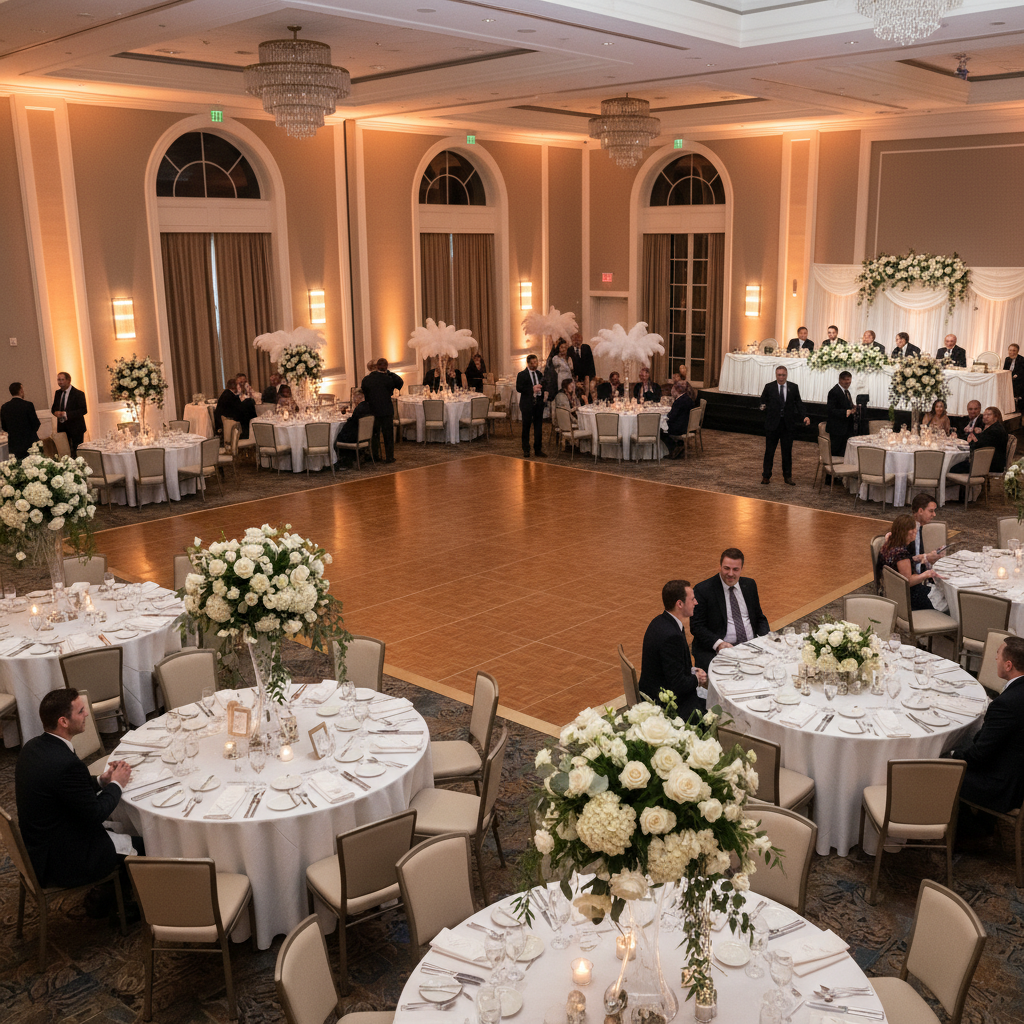
Example 1: Classic ballroom with live band
- Challenge: 260 guests, live band sets, and golden-hour portraits at 7:45 p.m.
- Approach: First dance before salad, two tight toast clusters, dessert plated during the band’s first break.
- Outcome: Dinner in 80 minutes; portraits in 25; a 110-minute dance block with no dead air.
Example 2: South Asian fusion with performances
- Challenge: Three dance performances, a blessing, and a vegetarian-forward menu for 340 guests.
- Approach: 30-minute starters pass, 30-minute program, 90-minute dinner with staged mic swaps and lighting resets.
- Outcome: Speeches capped at 25 minutes; cultural elements kept center stage without delaying service.
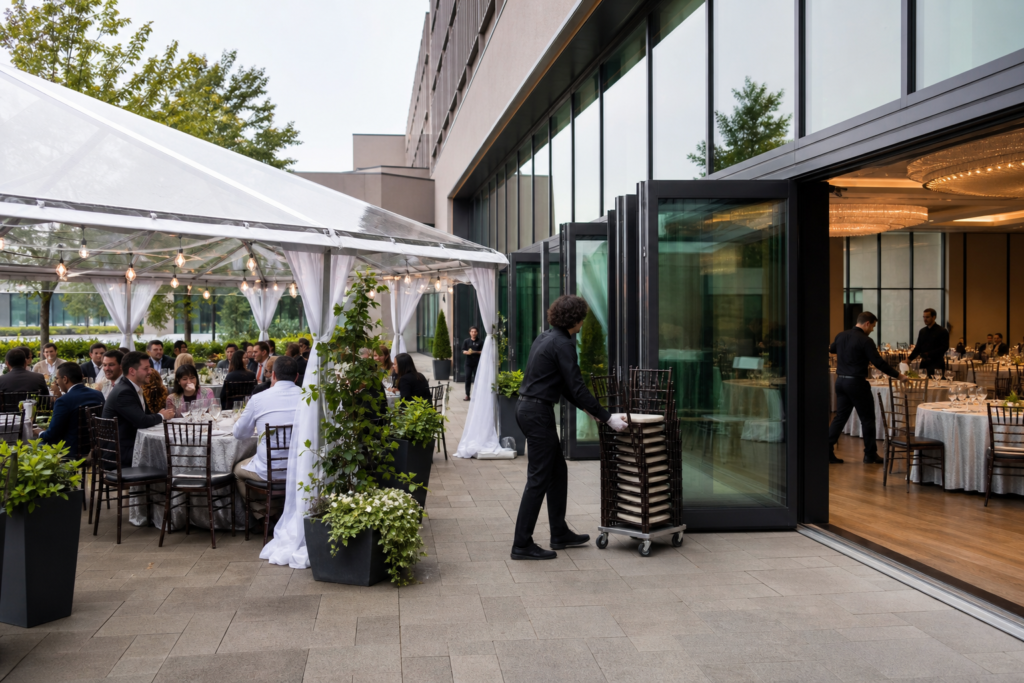
Example 3: Brunch reception on the patio
- Challenge: Outdoor ceremony flip to a relaxed brunch with a photo lounge.
- Approach: 20-minute welcome beverages, 60-minute buffet, 15-minute toast circle, games while the photographer took 20-minute portraits.
- Outcome: A breezy 4.5-hour event with zero bottlenecks and great midday light.
Want to see how space and flow interact? Explore our wedding venue rental options and take a reception planning walkthrough for more examples.
Local considerations for Mississauga weddings
- Weekend traffic across the GTA can add time. If your ceremony is offsite, add 15–25 minutes to guest arrival buffers.
- Peak season (late spring to early fall) books quickly. Confirm vendors 6–8 weeks out and finalize your printed timeline 10 days before.
- If many guests fly into Toronto Pearson, stagger shuttle pickups and note flight ETAs on the contact sheet to protect your run-of-show.
Wedding reception template: the building blocks
Build your template in four layers: hard stops (end time, last call), anchor moments (entrance, dances), service blocks (cocktail hour, dinner, dessert), and flexible segments (toasts, photos, performances). Assign an owner to every cue and attach AV and catering notes to each block.
Layer 1: Hard stops
- Venue close + last call: Treat these as immovable and work backward to set dessert and dance windows.
- Noise or curfew rules: If applicable, adjust the entertainment arc and last dance accordingly.
Layer 2: Anchors
- Grand entrance: 5–10 minutes with music per group; confirm order and pronunciations during rehearsal.
- First dance + parent dances: 2–3 minutes each; spotlight and audio checks happen 15 minutes prior.
Layer 3: Service blocks
- Cocktail hour: 45–60 minutes with passed hors d’oeuvres or stations; coordinate with photography needs.
- Dinner: 75–90 minutes typical; align with toast clusters and any stage resets.
- Dessert: 15–25 minutes; time cake cutting just before opening the dance floor.
Layer 4: Flexible segments
- Toasts: 3–5 minutes each, capped in two rounds to maintain momentum.
- Performances: 5–8 minutes, plus a 5-minute setup/reset buffer.
- Photo blocks: 15–30 minutes as needed for golden hour or family groupings.
Combine these layers into a one-page overview and a detailed cue sheet. For more structure, skim our reception planning walkthrough and the event timeline guide.
Integrating AV, catering, and guest flow
Sync AV cues to service beats. Mic checks land 15 minutes before speeches, spotlights cue for entrances and first dances, and dessert lands just before opening the dance floor. Proper alignment saves 10–20 minutes and lifts the room’s energy arc.
- AV cues: Entrance tracks, spotlight fades, video rolls, live performance mics, and DJ transitions with backups.
- Catering cues: Salads down, water refills, entree pass, dessert set, coffee service, late-night bites.
- Guest movement: Space speeches across courses rather than stacking them at the end to avoid congestion.
- Stagecraft: Keep 8–10 feet clear in front of the head table; mark taped positions for performers.
For a checklist-first approach, our event timeline guide outlines who owns which cue so nothing slips.
Menu and cultural moments without delays
Honor tradition and keep momentum by separating ceremonial segments from peak service times. Use a 30-minute starter window, schedule performances during short stage resets, and cluster brief speeches between courses. This protects hot entrees and preserves your dance window.
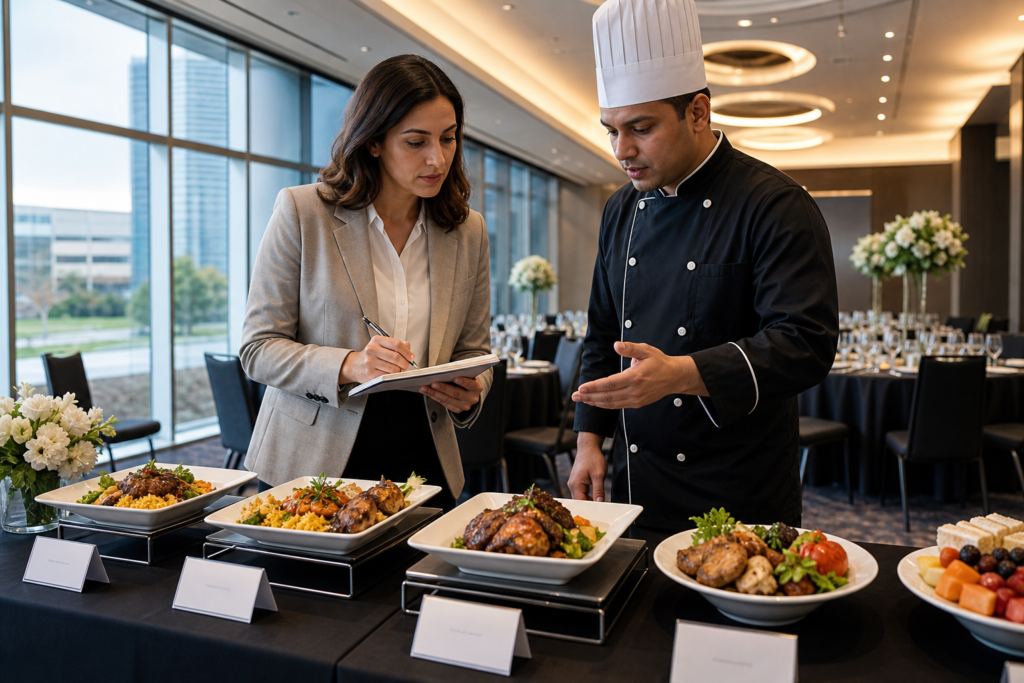
- Multicultural menus: Our culinary team serves South Asian, Pakistani Halal, Middle Eastern, Sri Lankan, Caribbean, and Continental selections with clear pacing notes.
- Traditions timed well: Blessings or tea ceremonies fit best pre-dinner; performances work between courses.
- Sweets tables: Open alongside cake cutting to disperse lines; 15–20 minutes is typical for dessert service.
For menu-planning inspiration and pacing ideas, review this regional catering overview as you curate desserts and late-night bites.
Timeline risks and how to avoid them
The biggest risks are stacked speeches, long photo callouts, and room flips that require full resets. Cap toasts at 3–5 minutes, pre-list family photo groups, and design layouts that minimize flips. Avoided resets can save 10–20 minutes each.
- Speech creep: Uncapped toasts double in length. Use a visible timer and keep one extra mic ready.
- Photo bloat: Consolidate family groupings. Label 8–12 groups and appoint a wrangler to move people quickly.
- Room flips: Avoid full resets. If necessary, place a 20-minute entertainment segment during the flip.
- Unclear ownership: Every cue needs a named owner—MC, DJ, coordinator, photographer, or venue captain.
We’ve hosted thousands of large events; the consistent pattern behind on-time nights is clear ownership plus short buffers.
Downloadable templates and checklists
Centralize your plan with a shareable calendar, a printable one-page run-of-show, AV cue sheets, and a room diagram. Confirm every timestamp with vendors seven days out and again at rehearsal. Keep hard copies at the DJ booth and head table.
- Editable template: Columns for time, item, owner, AV notes, catering notes, and contingency.
- AV checklist reference: Start with our event timeline checklist to assign cue ownership.
- Venue scouting: If you’re still deciding, read how to choose an event venue before your walkthrough.
- GTA context: A broad regional venue overview or a GTA venue guide can help frame early decisions.
When you’re ready to finalize, compare options with our venue comparison guide or jump straight to wedding venue rental details.
Frequently missed details
Print phonetic name pronunciations for the MC, pack spare batteries for mics, and pre-stage cake utensils. Keep a runner with the emergency kit and the contact tree at the DJ booth. These small steps routinely save 10–15 minutes and prevent awkward pauses.
- Name cards for the MC: Include phonetic notes and honorifics to speed the entrance and toast order.
- Backup audio: Load entrance and first-dance tracks on two devices and test volumes earlier in the day.
- Emergency kit: Fashion tape, safety pins, stain remover, a mini sewing kit, and stain wipes.
- Vendor meals: Time these during the first 20 minutes of open dancing to keep key crew near the action.
We align these details with our AV team and culinary crew so every handoff is intentional and swift.
Free coordination review: Book a 20-minute planning chat with our coordinator to sanity-check your run-of-show, AV cues, and service pacing. We’ll help you finalize a print-ready wedding reception timeline template.
Talk to our wedding team
FAQ: wedding reception timelines
Most receptions run 5–7 hours. Keep cocktail hour to 45–60 minutes, dinner to 75–90, and toasts to 15–25 total. Place first dances before or right after dinner, and open the dance floor as dessert lands. Share your final timeline one week out.
How long should a wedding reception be?
Most couples plan 5–7 hours from guest arrival to send-off. Cocktail hour often runs 45–60 minutes, dinner 75–90, and open dancing 90–120. Compact brunch formats land closer to 4–5 hours.
Where should we place speeches for the best flow?
Group toasts in two short rounds: one after salads and one after entrees. Cap speakers at 3–5 minutes each and provide a printed order. This keeps service hot and the room engaged.
What is the right time for first dances?
Either right after the grand entrance to set the tone, or immediately after dinner to relight the room. Keep each dance to 2–3 minutes and cue spotlight and audio checks 15 minutes prior.
How do we avoid timeline delays?
Add 10–15 minute buffers at transitions, pre-list family photo groups, cap toast lengths, and assign a named owner for every cue. Print one-page run-of-show sheets for the MC and vendors.
Can we combine cultural moments without slowing dinner?
Yes. Place blessings or short ceremonies before dinner and schedule performances between courses with 5-minute resets. Serve dessert just before opening the dance floor to keep energy high.
Conclusion + next steps
A thoughtful wedding reception timeline template keeps the focus on moments, not minutiae. Build backward, anchor the big beats, add buffers, and circulate a crisp one-pager. With AV and catering synced, you’ll reclaim 20–40 minutes for the memories that matter.
- Create your one-page run-of-show and detailed cue sheet.
- Confirm times with vendors seven days out and rehearse entrances and mics.
- Protect photo windows and open the dance floor as dessert lands.
- For multicultural menus and large headcounts, pace courses with brief toast rounds.
Ready to plan? Explore our spaces and connect with our team to align your run-of-show with lighting, staging, and service pacing. Book a venue walkthrough and let’s design your timeline together.
Key takeaways
- Build backward from your end time and add 10–15 minute buffers.
- Keep speeches to 3–5 minutes each and two rounds total.
- Sync AV cues to service beats; run mic checks 15 minutes before toasts.
- Serve dessert right before opening the dance floor to keep momentum.
- Distribute a one-page overview and a detailed cue sheet one week prior.