

 20 September, 2026
 Custom decor event themes are cohesive design concepts that align venue styling, lighting, staging, and cuisine into one memorable story for your guests. At Mississauga Convention Centre in Mississauga, themed experiences connect purpose to atmosphere—boosting brand recall for corporate events and elevating emotion for weddings, galas, school proms, and trade shows.
By Preet Dass — Mississauga Convention Centre
Last updated: 2026-05-06
Summary
This guide shows how to plan and execute custom decor event themes at scale. You’ll learn what a theme is, why it matters, how to build one step by step, proven approaches for different event types, and practical checklists. It’s tailored to Mississauga Convention Centre’s seven halls, in-house AV, and multicultural catering.
Here’s what you’ll find in this complete guide for planners, couples, school committees, and exhibitors across the GTA:
- What a theme really is—and how it drives decisions across decor, lighting, staging, and menu design
- Why themes increase engagement, clarity, and guest satisfaction for corporate, social, and school events
- A practical, 6-phase workflow that fits the seven-hall layout at Mississauga Convention Centre
- 14 theme approaches with real-world examples drawn from corporate galas, South Asian weddings, proms, and trade shows
- Best practices for signage-free wayfinding using color, floor plans, and light
- Tools, templates, and a planning timeline you can apply today
Local considerations for Mississauga events
- Build arrival buffers: Guests traveling across the GTA often face peak-hour traffic; schedule registration and welcome lounges to absorb early/late arrivals.
- Seasonal lighting: Winter sunsets require earlier uplighting and warmer palettes; summer events can lean on natural light and use the outdoor patio for ceremonies.
- Menu planning: Multicultural guest lists benefit from Halal-friendly and regionally inspired stations—an easy match with our in-house South Asian, Middle Eastern, Sri Lankan, Caribbean, and Continental menus.
What is a custom decor event theme?
A custom decor event theme is a unifying design narrative that links color, materials, lighting, staging, floor plans, and menus to a clear purpose. It turns a venue into a branded or story-driven environment so every touchpoint—from foyer to ballroom—feels intentional and memorable.
In practice, a theme is a decision-making North Star. It answers: What do we want guests to feel? What should they remember first? At Mississauga Convention Centre, themes anchor everything from foyer welcome moments to ballroom focal points across seven flexible halls (~4,250 sq ft each) and an optional outdoor patio.
- Design scope: Palette, textures, florals/greenery, rentals, lounge zones, stages, and media backdrops
- Experience scope: Arrival flow, transitions, interactive corners, photogenic installations, and dining reveals
- Support scope: In-house AV, lighting, staging, rigging, and technical support integrated into the creative plan
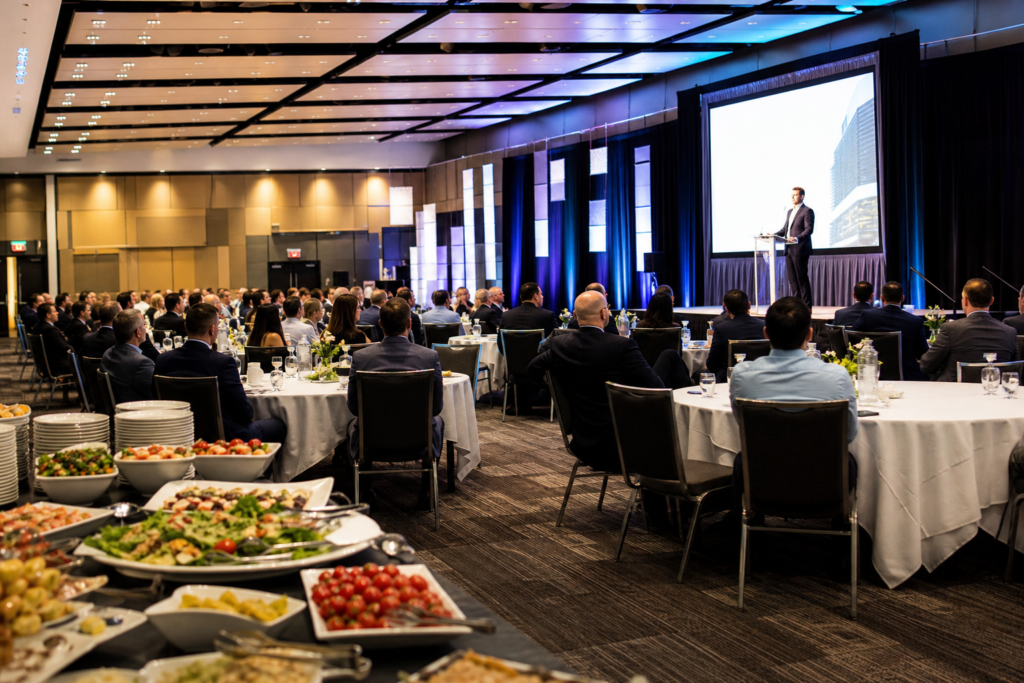
Because the Centre supports over 2,200 guests and 700 on-site parking spots, themes must scale. That’s why we translate the narrative into modular floor plans, zone lighting, and cuisine pairings that work hall-by-hall or across a full-venue buyout.
Why custom themes matter
Custom themes improve clarity, engagement, and memory. They help guests instantly understand the event’s purpose, guide movement without excessive signage, and raise perceived production value—vital for corporate launches, multicultural weddings, school proms, and fundraising galas.
Here’s the thing: people remember spaces that feel unified. When color temperature, music, menu aromas, and focal lighting all say the same thing, they reinforce your message. In our experience hosting thousands of GTA events over 56 years, the most praised evenings are cohesive from curb to last dance.
- Brand lift for business events: Consistent color, stage motion graphics, and branded tablescapes push recall long after the keynote.
- Emotion in weddings/socials: Ceremony arch, head table backdrop, and first-dance wash tie the couple’s story together.
- Wayfinding without signs: Light and color cue where to go—foyer check-in, cocktail zones, main stage—reducing congestion.
Want a deeper dive into decor fundamentals? See our internal primer on event venue decoration ideas for element-by-element inspiration that scales to all seven halls.
How custom themes work (step-by-step)
Successful themes follow a clear workflow: define purpose, shape the narrative, map zones, design light and stage, align menus, then rehearse and document. This 6-phase process keeps creative aligned with logistics, budgets, and Mississauga Convention Centre’s in-house capabilities.
Use this repeatable framework to co-create with our in-house AV and culinary teams. It’s built for corporate planners, couples, school committees, and trade show managers who need predictable outcomes in flexible spaces.
- Define outcomes: Clarify one sentence for success (e.g., “Launch the product with a bold, tech-forward reveal”).
- Build the narrative: Choose 1 metaphor or story, 3–5 signature colors, and 2 texture families.
- Zone the venue: Assign functions to halls/segments (registration, plenary, breakouts, lounges, dining, expo).
- Design light and stage: Lock focal points, scenic pieces, screen formats, and an A/B lighting cue stack.
- Pair the menu: Match cuisine stations to theme beats (e.g., regional tasting during networking).
- Rehearse and document: Run through cues, traffic flow, and service timing; publish a one-page show map.
Need help mapping lighting states? Our guide to professional event lighting design explains color temperature, wash vs. spot, and sequencing for awards, dances, and reveals.
| Phase | Primary Owner | Typical Duration | Key Outputs |
|---|---|---|---|
| 1. Define outcomes | Planner/Client | 1–2 days | Success statement, event priorities |
| 2. Narrative & palette | Planner/Designer | 2–4 days | Theme board, 3–5 colors, texture set |
| 3. Zoning & floor plans | Planner/Venue | 2–3 days | Scaled diagrams for halls, traffic plan |
| 4. Light & stage | AV/Technical | 2–3 days | Cue sheet, scenic list, rigging plan |
| 5. Menu pairing | Culinary | 1–2 days | Stations/courses aligned to agenda |
| 6. Rehearsal & run | All teams | 0.5–1 day | Show call, timelines, vendor matrix |
Theme approaches and examples (14 ideas)
Choose a theme that fits your purpose and audience. Start with a clear narrative, then translate it into palettes, textures, lighting states, staging, and menu cues. Below are 14 proven approaches tailored to corporate, wedding, school, and trade show formats in Mississauga.
These ideas work within our halls, foyer galleries, and patio—scaling from 150-person dinners to multi-hall, 1,000+ guest celebrations.
Corporate and association events
- Brand-Forward Gala: Use two brand colors as primaries, a neutral base, and one accent. Create a reveal-ready stage with kinetic lighting and LED content loops. Pair with a modern Continental menu and a signature mocktail at arrival.
- Innovation Lab: Modular lounges, neon accents, projection-mapped keynote, and interactive demos. Add tasting stations between exhibits for networking momentum.
- Sustainable Showcase: Natural textures, greenery walls, upcycled scenic elements, and warm 3000K lighting. Highlight plant-forward dishes and reduce single-use décor.
Weddings and social celebrations
- Modern Classic: Timeless whites and ivories with metallic accents, symmetrical florals, and a clean head table backdrop. Use spot accents for first-look moments.
- South Asian Royal: Jewel tones, intricate stage canopy, mirrored surfaces, and layered patterns. Complement with Halal-friendly South Asian courses and a dessert wall.
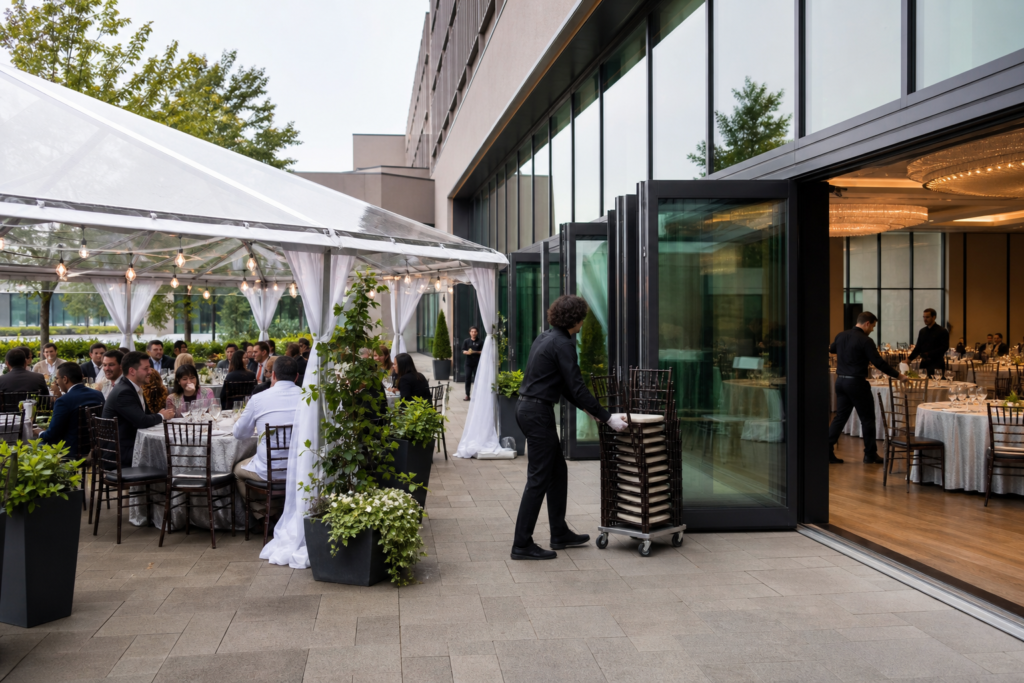
- Garden-on-the-Patio: Greenery arch, lanterns, and bistro lights outside; bring the palette in for the reception with coordinating linens and centerpieces.
School proms and graduations
- Starry Night: Deep blues, silver accents, star gobos, and a photobooth tunnel. Use a DJ riser and dynamic dance-floor washes.
- Glow Social: UV accents, color-changing uplights, lounge cubes, and a snack wall with playful labels (kept brand-neutral for schools).
- Red Carpet: Step-and-repeat backdrop, Hollywood-style spotlights, and staging for awards. Flavor-forward buffet with quick-serve stations keeps lines short.
Trade shows and exhibitions
- Product Runway: Catwalk-style demo stage with tiered seating, mirror-finish runway, and strong side lighting for photography.
- Exploration Zones: Themed pavilions by solution area. Color-code zones to shorten the visitor learning curve.
- Immersive Preview: Projection or LED arch at entry for instant immersion; use scent and audio to set expectations.
Multicultural and faith-centered moments
- Heritage Fusion: Blend regional color stories and textures, align with Halal-friendly stations, and script ceremonial moments with light cues.
- Quiet Reflection: Create serene corners with soft seating, 2700K lighting, and greenery for prayer or calm between program beats.
To see how different event formats play through the building, review what you can host in our spaces in this overview of events at Mississauga Convention Centre.

Best practices for theme success
Anchor every design choice to one narrative, then document it. Limit to 3–5 core colors, repeat textures across zones, light the hero moments, and rehearse transitions. Align menus to the story and publish a one-page show map for staff and vendors.
From foyer to ballroom, repetition builds recognition. Here are field-tested tactics we apply across corporate, wedding, school, and expo formats.
- Write a one-liner: “An elegant, modern celebration with warm hospitality” guides every choice.
- Pick 3–5 colors: Two primaries, one neutral, up to two accents. Avoid palette drift.
- Repeat textures: If you choose velvet or rattan, repeat it in lounges, stages, and table details.
- Light the story beats: Check-in, reveal, awards, first dance, and farewells each get a cue.
- Design for photographs: Place floral focal points at natural sightlines and ensure clean backgrounds.
- Publish a “show map”: One page with room functions, cue times, and vendor contacts keeps teams aligned.
For mood-first planning, our primer on event lighting design explains color temperature and cueing in simple terms for planners and couples.
Menus that match the theme
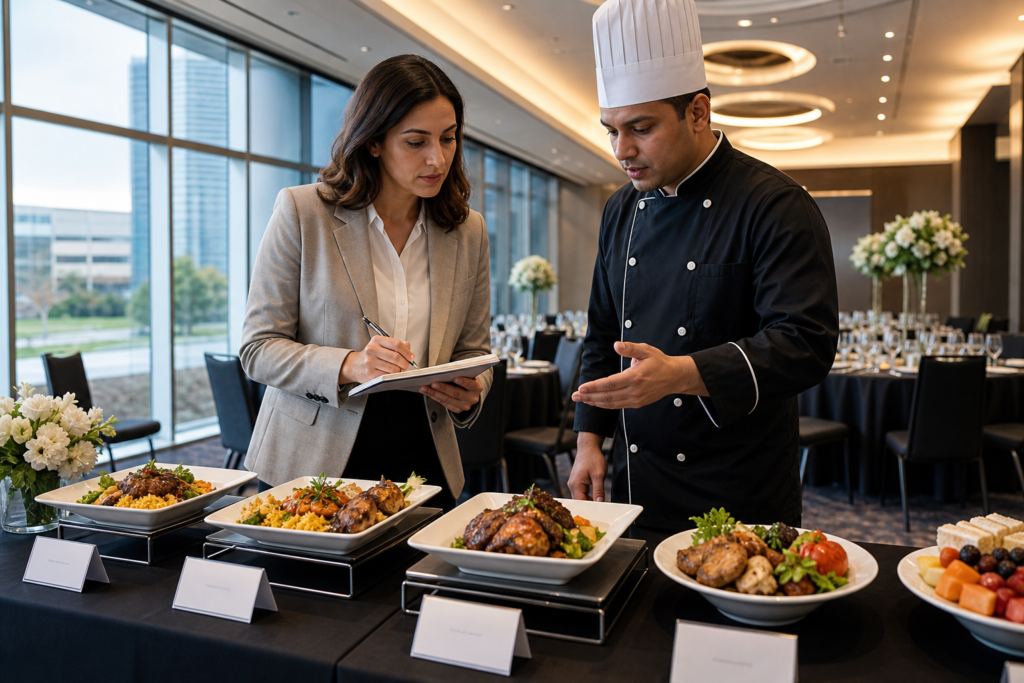
Cuisine reinforces your theme. Pair regional or stylistic menus with design cues—South Asian royal palettes, garden patio ceremonies, or brand-forward corporate galas. Use tasting stations to keep networking moving and seated courses for high-focus segments.
Because our culinary program spans South Asian, Pakistani Halal, Middle Eastern, Sri Lankan, Caribbean, and Continental cuisines, it’s straightforward to match food to story. The key is sequencing courses with the agenda so flavors support the moment—uplifting during networking, calming during toasts.
- Corporate launch: Modern Continental canapés at arrival, interactive tasting stations before the keynote, plated entrée for the awards block.
- South Asian royal: Halal-friendly courses with rich spice profiles, a live dessert station, and late-night snacks near the dance floor.
- Garden patio: Fresh herbs, citrus accents, and seasonal produce for an indoor-outdoor vibe that feels light and celebratory.
Explore sample approaches in our corporate catering menu options overview, or ask our culinary team to align stations with your narrative.
Floor plans, lighting, and staging
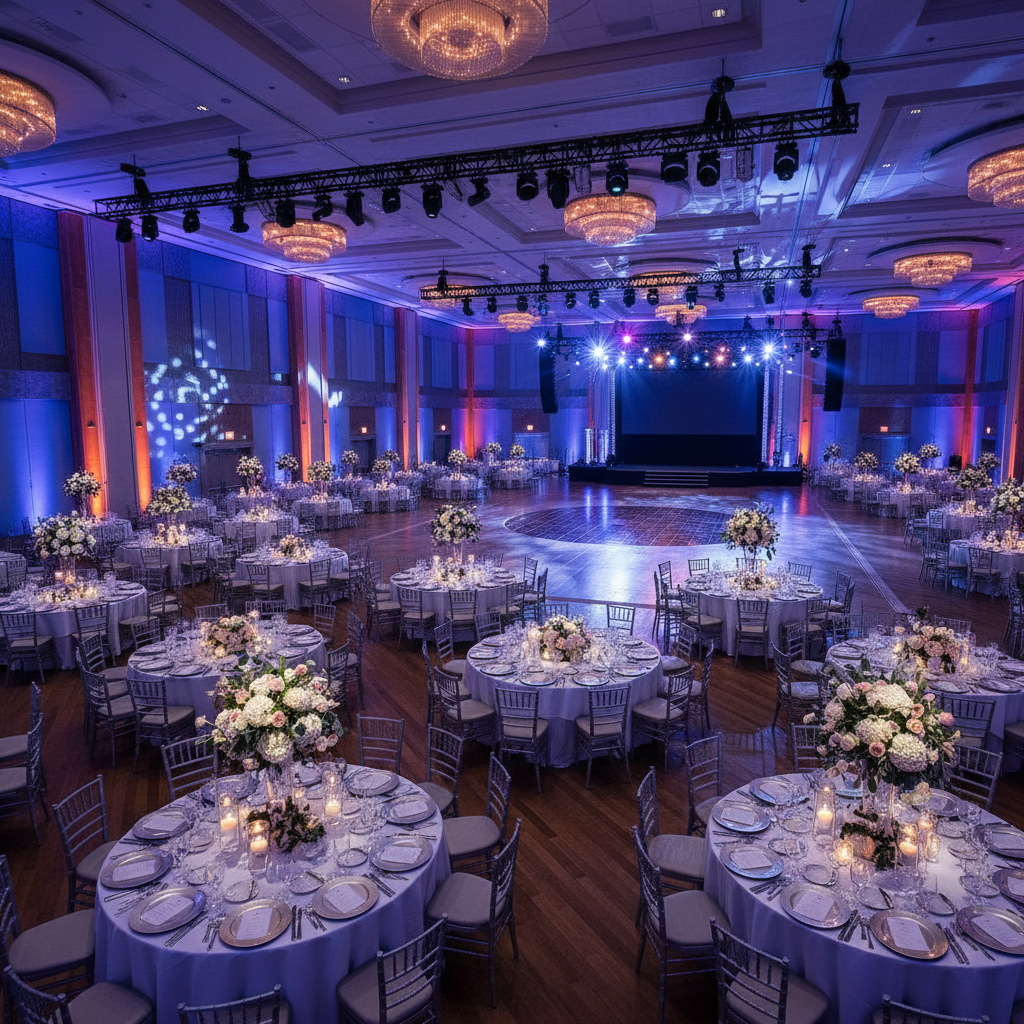
Plan movement first, then paint with light. Use floor plans to define traffic, lounges, and focal points. Layer lighting—ambient wash, accent, and pin-spots—so moments read clearly. Stage design should serve sightlines, audio coverage, and media backdrops.
Our seven modern halls let you separate registration, cocktails, main show, and after-party while keeping circulation smooth. Pin-spots make centerpieces pop without raising overall brightness; warm 2700–3000K light flatters faces; intelligent fixtures create dynamic shifts for reveals and first dances.
- Wayfinding with light: Cooler hues for traffic aisles, warmer pools for lounges and conversation.
- Stage focus: A/B cue stacks pre-programmed for awards vs. performance beats reduce delays.
- Audio-visual blend: Scenic elements must respect sightlines to IMAG/LED screens and camera positions.
If you’re comparing venues, our venue selection checklist highlights lighting grid flexibility, ceiling heights, and rigging points to evaluate anywhere you tour.
Timeline and checklists
Lock your theme 8–12 weeks out, confirm vendors 6–8 weeks out, finalize floor plans and cue sheets 2–3 weeks out, and complete a full rehearsal in the final week. Use concise checklists so each team owns specific deliverables.
Timeframes vary by event scale, but these benchmarks keep projects predictable across our halls and patio.
- 12–8 weeks: Confirm narrative, palette, and rentals; pencil-book staging and specialty lighting.
- 8–6 weeks: Finalize menus and service style; confirm entertainment; draft floor plans.
- 6–3 weeks: Approve mockups; lock cue sheets; send guest logistics; publish first “show map.”
- 7–3 days: Walkthrough on-site; place signage-free wayfinding cues with light/color.
- Event day: Tech rehearsal; mic and stage checks; service and show-call sync.
Need inspiration for school committees? We put together prom planning tips focused on timelines, safety, and photo-friendly focal points.
Tools and resources for planners
Use a one-page “show map,” lighting cue sheet, rental tracker, and floor plan diagrams. A theme board (colors, textures, hero images) keeps creative aligned. On-site, place a binder or shared drive with latest diagrams, cue sheets, and vendor contacts.
We recommend simple, visual templates to make handoffs painless between creative, AV, culinary, and venue teams. Even for smaller receptions, a minimal toolkit prevents last-minute ambiguity.
- Theme board: 1-page PDF with palette swatches, textures, and 2–3 hero references.
- Floor plans: Scaled layouts with furniture legends and traffic arrows.
- Cue sheets: Line-by-line lighting/audio/stage notes with timing.
- Rental log: Item, count, vendor, arrival window, and placement diagram link.
- Show map: Single page with room functions, timings, and lead contacts for quick briefings.
For seasonal styling ideas, see how we prepare for December in this look at holiday-ready celebrations across our halls and foyer galleries.

Case studies and scenarios (mini)
Real-world themes come alive when narrative meets logistics. These mini case scenarios show how corporate, wedding, school, and expo teams translate a story into floor plans, light, stage, and menus inside our seven-hall venue and outdoor patio.
Corporate product launch: “Blueprint to Breakthrough”
A tech brand needed high recall among 600 attendees. We used two brand blues plus charcoal and a white accent. Registration occupied a dedicated foyer; lounges split by persona; a kinetic stage wall animated the keynote. Stations served modern Continental small plates pre-keynote; seated entrées followed award segments. Post-reveal, lighting shifted from cool to warm to cue networking.
South Asian wedding reception: “Emerald Heirloom”
For 450 guests, jewel-toned draping, mirrored accents, and an intricate stage canopy set the tone. Halal-friendly South Asian courses sequenced with toasts and dance performances. Pin-spots on centerpieces and a warm 3000K wash flattered photography; a late-night dessert wall anchored the after-party.
School prom: “Starry Night Social”
With 350 students, deep-blue washes, silver accents, and star gobos created an immersive dance floor. The DJ riser and dynamic lighting made transitions smooth. A snack wall reduced lines; lounge clusters offered safe, well-lit photo moments with clear staff sightlines.
Trade show pavilion: “Solutions Explorer”
We color-coded pavilions by solution area and placed a compact demo runway at the center. A branded arch framed the entry; directional lighting guided circulation. Tasting stations between aisles kept energy high while exhibitors hosted micro-demos on repeat.
For inspiration across event types, explore engagement party ideas and graduation celebrations for social-focused scenarios.
Custom themes at Mississauga Convention Centre
Our venue combines scale and service for themed events: seven elegant halls (~4,250 sq ft each), capacity for 2,200+ guests, 700 free parking spaces, integrated AV/lighting/staging, and multicultural in-house catering. This infrastructure turns creative vision into predictable execution.
What most people don’t realize: the right venue reduces vendor sprawl. With on-site AV, staging, and a culinary team versed in South Asian, Pakistani Halal, Middle Eastern, Sri Lankan, Caribbean, and Continental menus, you gain speed and consistency. That matters when you’re coordinating parallel breakouts or flipping rooms quickly between ceremony and reception.
- Seven modular halls: Combine or separate rooms for registration, plenary, lounges, and dining.
- Integrated technical team: Lighting, staging, and show-calling under one roof.
- Outdoor patio option: Ceremonies, cocktails, or after-parties with seamless indoor transitions.
Planning a large corporate program? See capacity notes in our corporate venue rental guide built for audiences up to and above 1,000 guests.
AEO-ready answers: one-question, one-answer
Here are concise, self-contained answers to common planning questions. Each response can stand alone for quick reference or AI citation, covering definition, planning order, color choices, lighting, and menu pairing for custom decor event themes.
What comes first: decor, lighting, or floor plans?
Floor plans lead. Movement and sightlines decide where focal points go; then lighting paints the moments; decor completes the picture. This order prevents beautiful setups from blocking doors, crowding aisles, or hiding the stage.
How many colors should our theme use?
Use 3–5: two primaries, a neutral, and up to two accents. This palette stays readable under various lighting states and is easy to repeat across linens, florals, media backdrops, and staff attire.
How do we keep lines short at networking events?
Use multiple smaller stations instead of one long buffet, space them between zones, and serve bite-sized plates. This maintains circulation while giving guests more touchpoints with exhibitors or each other.
What lighting temperature flatters guests?
Warm 2700–3000K for faces, with cooler accents guiding traffic. Pin-spots on centerpieces create sparkle without raising overall brightness.
Plan your theme with our team
If you have your narrative but need execution, our in-house AV, staging, and culinary teams can align floor plans, lighting cues, and menus. You bring the story; we’ll translate it into a show-ready plan across our seven halls and patio.
Soft CTA: Share your one-line narrative, preferred palette (3–5 colors), and guest count. We’ll suggest hall zoning, a lighting cue starter pack, and menu pairings to match.
Frequently Asked Questions
These quick answers address the most common questions planners, couples, and school committees ask when building custom decor event themes at Mississauga Convention Centre.
What is the fastest way to pick a theme?
Write a one-sentence purpose, choose 3–5 colors that express it, and select one hero texture. From there, match lighting cues to your agenda and place focal points where guests naturally look first.
How do we design for both ceremony and reception in one venue?
Plan a flip: use adjacent halls or zones. Keep the ceremony arch or backdrop as a photo focal point, then refresh florals and lighting for the reception. Pre-stage rentals to reduce turnover time.
Which menu styles work best for networking?
Multiple tasting stations and passed small plates keep people moving. Place stations between exhibitor zones or lounge clusters to maintain natural circulation and reduce lines.
Do we need signage if our theme is strong?
Use minimal signs and let light, color, and floor plans lead the way. Warm pools draw people into lounges; cooler hues guide traffic. Stage-focused lighting tells guests where key moments happen.
Key takeaways
Strong custom decor event themes start with one clear story and flow through floor plans, light, staging, and cuisine. Keep palettes tight, rehearse transitions, and document a one-page show map so every team—creative, AV, culinary—executes in sync.
- Pick one narrative, then design everything to support it.
- Use 3–5 colors and repeated textures for cohesion at scale.
- Floor plans first, lighting second, decor third—every time.
- Pair menus with moments to reinforce the story arc.
- Rehearse cues and publish a concise show map for staff.
Next steps
Bring your one-sentence theme, guest profile, and desired mood. We’ll recommend hall zoning, a lighting cue starter pack, and culturally aligned menu options—then schedule a site walk to finalize floor plans and show flow.
Curious how different events translate into our spaces? Explore a wide-angle overview of what you can host here, then browse ideas for engagement parties and graduations to round out your inspiration.
Final CTA: Ready to translate your story into a show? Book a discovery session in Mississauga and tour our seven halls and patio options.