

 14 September, 2026
 Event Parking Management Strategies in Mississauga
Effective event parking management in Mississauga starts before invitations or registration open. Estimate vehicle demand, confirm event-specific arrangements with the venue, separate guest and vendor arrivals, communicate clear instructions, and assign someone to manage questions on the day.
Mississauga Convention Centre at 75 Derry Road West provides useful planning context, including approximately 700 on-site parking spaces, seven halls of about 4,250 square feet each, and capacity for more than 2,200 guests. These figures help frame the conversation, but they do not guarantee that parking will be available or sufficient for every booking. Confirm the final plan with the venue.
1. Estimate parking demand from the event profile
Start with expected attendance, then translate it into a parking estimate. The same guest count can create different demand depending on whether people arrive individually, share rides, use organized transportation, or arrive in family groups.
Record known information and label assumptions that still need confirmation. Include:
- Guests, employees, students, exhibitors, speakers, and service providers.
- Whether arrivals will spread across a registration window or concentrate before a ceremony, meal, or presentation.
- Vehicles needed by caterers, decorators, photographers, entertainers, production teams, and other vendors.
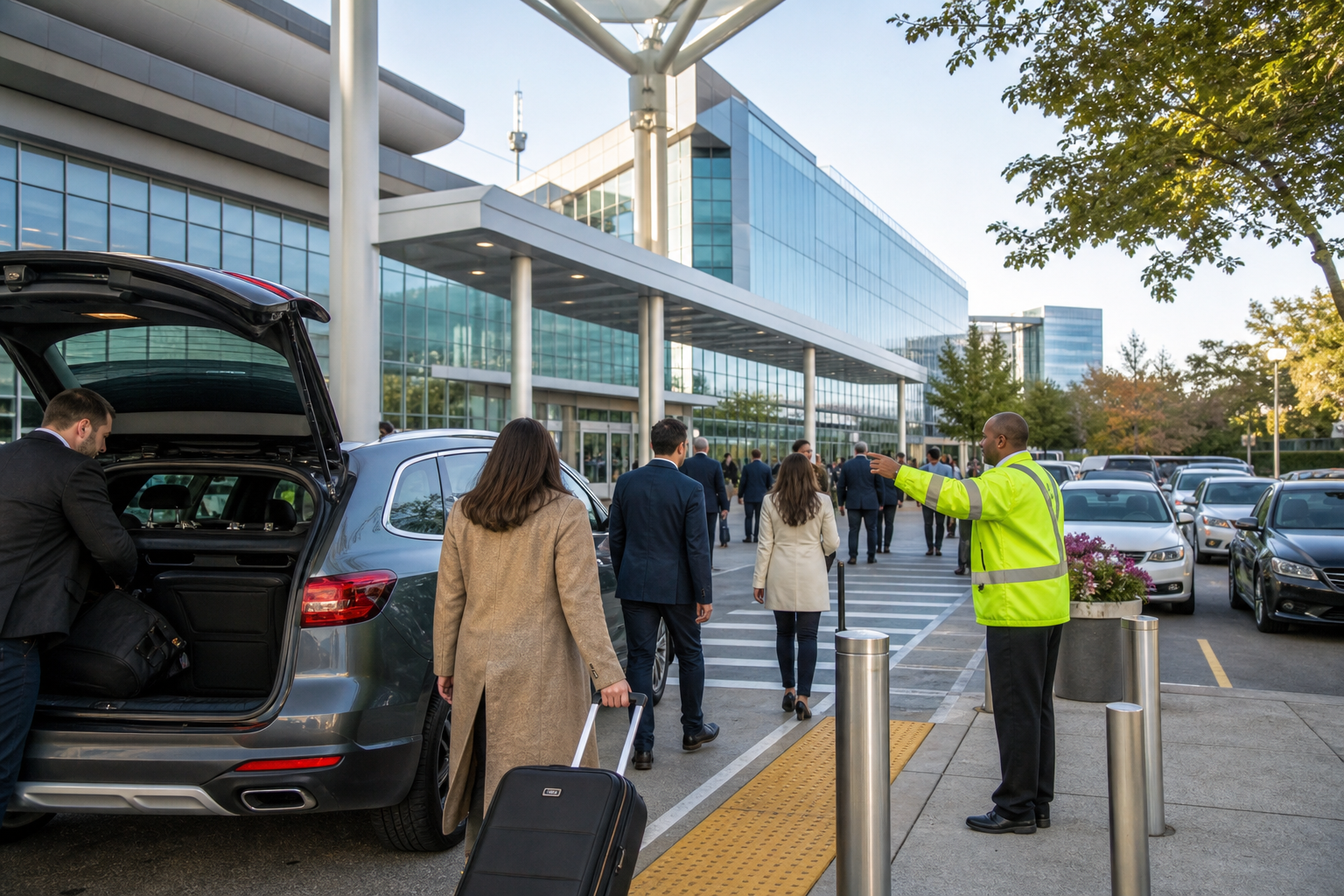
- Guests who may need passenger drop-off or additional assistance.
- Attendees traveling from Mississauga, Toronto, Brampton, or the wider GTA.
Do not apply a generic vehicle-to-guest ratio as if it were a venue rule. Show the venue your assumptions and ask whether the proposed arrangement fits the event schedule and room setup. A banquet hall capacity checklist can help you compare attendance, room configuration, and arrival patterns.
2. Match expected demand with confirmed venue capacity

Capacity is more than a number on a venue profile. It includes arrival timing, people working at the event, vendor vehicles, accessibility needs, and other activity around the booking.
Mississauga Convention Centre reports approximately 700 on-site parking spaces, seven halls of approximately 4,250 square feet each, and total capacity for more than 2,200 guests. These details indicate that parking should be discussed early for large or simultaneous events, but they do not establish that every event can use all spaces or that they will suit every attendance pattern.
Ask the venue to confirm the arrangement for your date and event. Clarify which areas guests, staff, vendors, and exhibitors may use, how arrivals should be sequenced, and whether booking-specific restrictions apply. Use an event venue site visit checklist to document the answers.
3. Separate guest arrivals, drop-offs, and vendor access
Parking becomes harder to manage when every vehicle arrives at the same time and for the same purpose. Build an access timeline that distinguishes regular guests from passenger drop-offs, deliveries, exhibitor setup, décor installation, entertainment, and technical production.
For each group, record the requested arrival window, responsible contact, items being delivered, and action required if the schedule changes. Vendors should know whom to call before arriving, especially when carrying equipment or requiring coordinated access.
Do not invent entrances, loading zones, pedestrian routes, or traffic procedures in event materials. Ask the venue to identify approved arrangements, then turn those instructions into a simple run sheet. The Mississauga Convention Centre tour questions can help structure that discussion.
4. Communicate parking instructions before event day
Guests should not have to search for basic arrival information while driving. Send one consistent set of instructions through the invitation, registration confirmation, reminder email, event website, or school communication channel.
Include the venue name and address, recommended arrival window, venue-confirmed directions, passenger drop-off guidance, the process for guests needing assistance, and a day-of contact. Keep the wording short and repeat it consistently. If arrangements change, update every channel rather than sending conflicting instructions.
The Centre’s location near major highways and Toronto Pearson International Airport may be relevant for regional attendees, but planners should still provide the confirmed address and arrival instructions instead of assuming guests know the area.
5. Plan accessible arrival and passenger drop-off
Accessibility planning should happen when the event is designed, not after guests begin responding. Consider guests using mobility devices, older attendees, families with young children, and anyone needing additional time or assistance between a vehicle and the event space.
Ask the venue to confirm accessible parking arrangements, the passenger drop-off process, walking route, entrance details, and the contact for assistance. Do not publish a specific space, route, or drop-off location until it is confirmed for your booking.
Collect accessibility requests respectfully and share them only with people who need the information to deliver the plan. Add the confirmed process to guest communication, the event run sheet, and the staff briefing.
6. Build parking responsibilities into the event run sheet
Parking instructions are easier to follow when ownership is clear. Assign one lead to confirm the venue plan, one contact for vendors, and one person or team to handle guest questions during arrivals.
Your run sheet can assign responsibility for confirming final instructions, sending approved information, checking signage, coordinating caterers and production teams, and escalating congestion, accessibility concerns, or unclear directions.
Mississauga Convention Centre provides in-house audiovisual systems, lighting, staging, and technical support. Even when technical services are handled in-house, include the responsible event and production contacts so equipment deliveries and setup activity are coordinated with the venue.
7. Prepare a response for full or disrupted parking
A contingency plan does not need to promise an unconfirmed overflow lot, shuttle, valet service, or municipal option. It needs to explain who decides, who contacts the venue, and how guests and vendors receive updated instructions.
Write responses for unexpected vehicle volume, concentrated arrivals, delayed vendors, weather affecting walking conditions, unplanned assistance needs, or changes to event-day access. For each situation, identify the trigger, decision-maker, venue contact, guest message, and vendor message. Keep the wording factual and calm.
Adjust the parking plan to the event type
Conferences and seminars
Confirm the largest registration wave, speaker and staff arrangements, and whether registration can be staggered.
Trade shows and exhibitions
Create a separate exhibitor schedule for equipment, materials, setup, and teardown before publishing attendee instructions.
Weddings, receptions, and galas
Plan for concentrated arrivals, passenger drop-offs, photography, vendor timing, and guests requiring additional assistance.
School proms and graduations
Coordinate student, family, staff, and vendor instructions with school representatives, especially when arrivals and group photographs are tightly timed.
Social celebrations
Consider larger family groups, varied arrival patterns, accessibility requests, meal timing, and vendor deliveries.
Event parking planning worksheet
- Attendance: What is the expected count, and when will it be updated?
- Vehicle demand: What vehicle types and arrival patterns are expected?
- Arrival window: When do guests, staff, vendors, exhibitors, speakers, and entertainers arrive?
- Capacity: What arrangement and applicable terms has the venue confirmed?
- Accessibility: Who needs passenger drop-off, assistance, or a confirmed route?
- Vendors: Who coordinates deliveries, equipment, décor, setup, and teardown?
- Communication: Where will approved instructions appear, and who updates them?
- Staffing: Who answers questions and contacts the venue if conditions change?
- Signage: What signs or notices has the venue approved?
- Contingency: What happens if arrivals are delayed, parking is unavailable, or the plan changes?
Questions to confirm with the venue
Before finalizing invitations, registration, or vendor contracts, ask:
- What parking capacity and access arrangements apply to this booking?
- How should guest arrivals, drop-offs, deliveries, vendor access, and exhibitor setup be sequenced?
- What accessible parking and drop-off process should guests receive?
- What directions and signage language should appear in communications?
- Who is the event-day contact for parking or access questions?
- What should the team do if attendance, weather, or arrival timing changes?
- Which vendors need to share arrival details in advance?
- Would an in-person walkthrough or virtual review help confirm the arrangement?
A walkthrough is especially useful for high attendance, concentrated arrivals, coordinated vendors, significant accessibility needs, or an unfamiliar venue. The Centre’s virtual tour can help a remote planning team prepare questions.
Why location should be part of the arrival plan
Mississauga Convention Centre is located at 75 Derry Road West in Mississauga and serves guests from Mississauga, Toronto, Brampton, and the wider GTA. Its location near major highways and Toronto Pearson International Airport may matter when attendees travel from different parts of the region or outside the area.
Use that context to improve communication, not to assume travel times or routes. Share the confirmed address, allow appropriate journey time, and ensure the event team knows how to respond to late arrivals or access questions.
Frequently asked questions about event parking in Mississauga
How many parking spaces should an event plan for?
There is no reliable answer based on guest count alone. Consider vehicle mix, arrival concentration, vendors, staff, exhibitors, accessibility needs, and event format, then ask the venue to confirm whether the arrangement matches those assumptions.
Is approximately 700 parking spaces enough for a large event?
Mississauga Convention Centre reports approximately 700 on-site spaces, but planners should not assume this is sufficient for every event. Confirm the spaces applicable to the booking, expected vehicle demand, simultaneous events, and approved arrival plan.
What parking information should guests receive before an event?
Provide the venue name and address, arrival window, venue-confirmed directions, passenger drop-off guidance, accessibility contact process, and a day-of contact. Repeat the same information across invitations, confirmations, reminders, and the event website.
When should planners request a parking walkthrough?
Request an in-person walkthrough or virtual review when attendance is high, arrivals are concentrated, vendors need coordinated access, accessibility needs are significant, or the team is unfamiliar with the venue. Use it to confirm approved arrangements rather than infer routes or overflow options.
Build the parking plan before the guest list is final
Smoother arrivals come from connecting seven decisions: estimate vehicle demand, confirm capacity, separate arrival phases, communicate clearly, plan accessible access, assign responsibilities, and prepare for disruption. The strongest plan is specific enough for guests and vendors to follow while leaving venue-specific arrangements to the venue’s confirmation.
For an event at Mississauga Convention Centre, review these details before finalizing registration, invitations, or vendor schedules. Contact Mississauga Convention Centre to discuss event-specific parking and venue arrangements.