

 15 September, 2026
 Which 7 Banquet Lighting Design Ideas Fit Your Event?
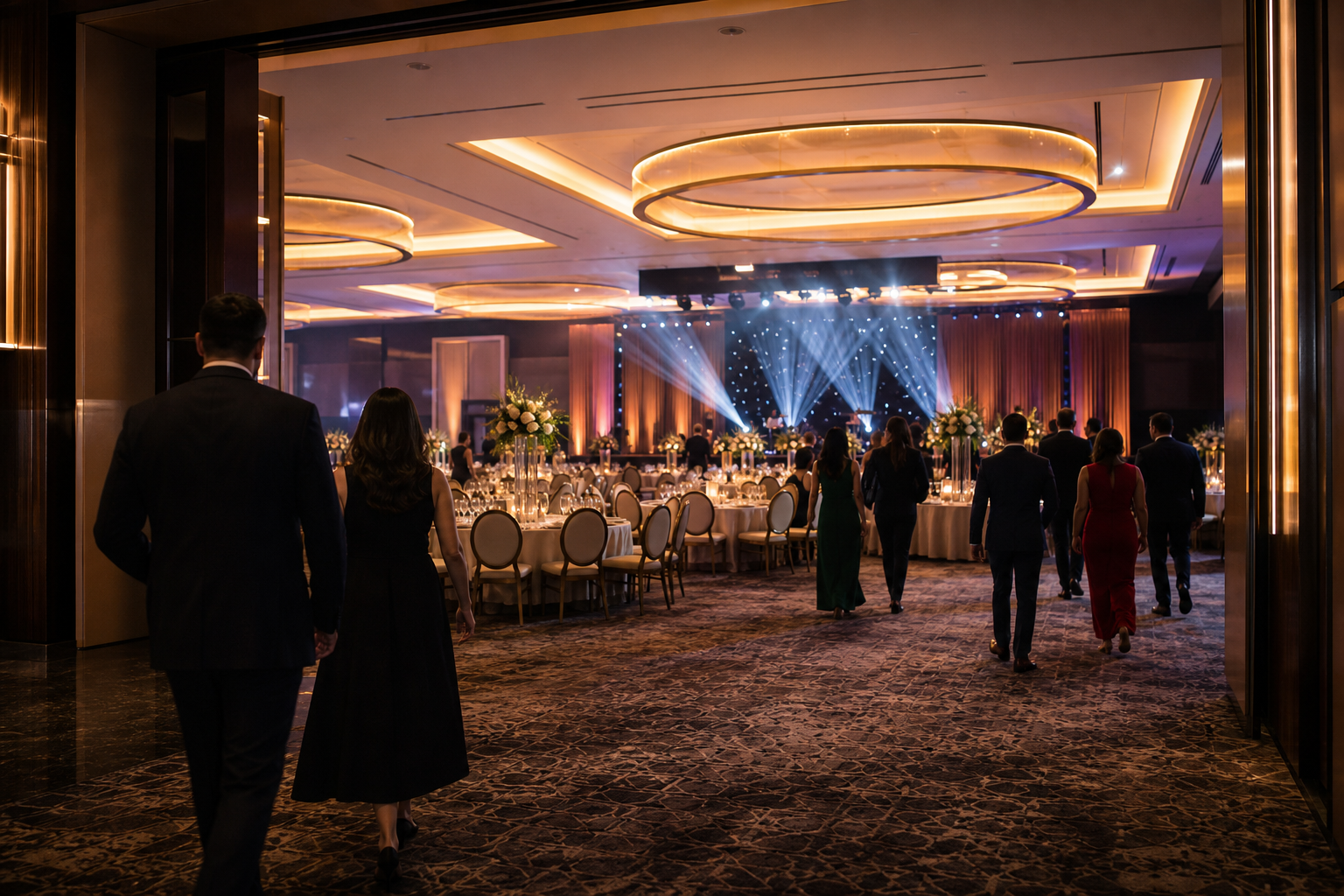
The right banquet lighting design should do more than make a room attractive. It should create the desired atmosphere while keeping dining areas comfortable, speakers visible, photographs clear, and guests able to move confidently between activities. The best approach depends on your event format, room layout, décor, program, and whether you are using indoor and outdoor spaces.
Use the seven ideas below to identify one primary lighting objective and one supporting objective. Then confirm the design, setup, transitions, and technical responsibilities with the venue or AV team.
1. Layered room lighting for depth and flexibility
Layered lighting combines broad room illumination with focused lighting for décor, tables, a stage, or a particular activity area. Instead of asking one treatment to do everything, you can give different parts of the room different jobs while keeping the overall design cohesive.
This approach suits weddings, gala dinners, corporate receptions, cultural celebrations, and events that move through several phases. A room may need a welcoming feel during arrival, stronger visibility during a meal or presentation, and a different atmosphere during dancing or socializing.
The tradeoff is coordination. More layers can create a richer result, but they require a clear plan for controls, timing, décor placement, and transitions. Ask which venue lighting is available, how the layers will be controlled, when installation occurs, and whether testing is included. A site-visit checklist for event venues can help you assess the plan in the actual room.
2. Stage and focus lighting for speeches and performances

If your event includes speeches, awards, performances, a head table, or a formal presentation, the stage or speaking area deserves its own lighting priority. Guests need to see who is speaking and where the main activity is happening, while the room should remain connected to the program.
This idea is useful for corporate meetings, conferences, school formals, galas, award programs, and receptions with a structured schedule. It can also support wedding entrances, ceremonies, and announcements when the focus shifts around the room.
Ask how the lighting will work with staging, screens, sightlines, décor, and the event schedule. Confirm whether the venue provides audiovisual systems, lighting, staging, and technical support, and ask who manages transitions. A rehearsal or technical review can identify visual conflicts before guests arrive.
3. Table and centerpiece lighting for dining spaces
Table-focused lighting can make dining areas, centerpieces, floral arrangements, and other décor feel intentional. It gives the room a more detailed visual structure and directs attention toward the places where guests spend much of the event.
This option works well for wedding receptions, banquets, milestone celebrations, cultural events, and gala dinners. It is especially useful when the tablescape is a major part of the event design.
Balance appearance with comfort and service. Ask whether the proposed lighting will interfere with centerpieces, obstruct conversations, affect food presentation, or complicate catering movement. Confirm how it will look from seated positions and whether it remains appropriate during both dining and speeches.
4. Color-led ambiance that reflects the event identity
A coordinated color direction can reinforce the identity of a wedding, corporate event, school formal, gala, or cultural celebration. It may align with a wedding palette, corporate brand, school colors, seasonal theme, or existing décor.
Color-led lighting is most effective when it supports the room rather than competing with it. Decide whether the treatment should remain consistent or change between arrival, dinner, speeches, and dancing.
The tradeoff is restraint. Too many competing colors can make the room feel visually busy. Ask which color options are available, what transitions can be planned, whether color is included in the selected package, and how it will interact with fabrics, flowers, signage, screens, and photography.
5. Photography-conscious lighting for key moments
Plan lighting around the moments you want to remember clearly: entrances, ceremonies, speeches, awards, dances, group photographs, and cake or dessert moments. A dramatic room is not automatically a room that works well for every photograph.
The strongest plan is developed with the photographer, planner, venue, and AV team. Review where important people will stand, which direction guests and cameras will face, and when the lighting will change.
There is a natural tradeoff between atmosphere and documentation. Dimmer or more stylized lighting may suit a reception, while a speech, group photograph, or formal entrance may need a different priority. Ask how transitions will be timed and whether the photographer has specific requirements.
6. Functional lighting for presentations, dining, and movement
Decorative lighting creates ambiance, but functional lighting supports what guests need to do. People may need to read materials, see a speaker, eat comfortably, locate their table, move between areas, or follow instructions during a formal program.
Corporate meetings, conferences, seminars, school events, and formal dinners often require different priorities at different times. Create a simple lighting schedule:
- Arrival: Make the entrance, registration area, and main room easy to understand.
- Presentation: Support the speaker, stage, and relevant visual materials.
- Dining: Give guests comfortable visibility and coordinate changes with meal service.
- Announcements: Shift attention without losing orientation.
- Social time: Adjust the atmosphere while preserving practical visibility.
Ask who manages these changes during the program and whether transitions will be tested in advance.
7. Adaptable lighting for indoor and patio event areas
Some events use more than one setting, such as an indoor ballroom for dinner and an outdoor patio for a ceremony, cocktail period, or reception activity. Lighting should help the event feel connected as guests move between areas.
Start with the guest journey. Decide where guests gather, when they move, which activities happen in each area, and how the transition is announced. The indoor and outdoor designs need not look identical, but they should support the same event identity.
Do not assume outdoor conditions match indoor conditions. Ask about the patio option, setup and transition timing, technical support, weather-related contingency planning, and restrictions that could affect the design. Mississauga Convention Centre offers an outdoor patio option as well as indoor halls, so a venue tour question checklist can help you evaluate how the spaces work together.
How to choose among the seven ideas
Start with the event’s primary purpose rather than the effect you like most. A wedding reception may prioritize table décor and photography, a corporate gala may prioritize stage visibility and brand alignment, and a school formal may need a balance of atmosphere, movement, dining, and program visibility.
- Main activity: Choose stage and focus lighting when speeches, awards, or performances drive the program.
- Guest attention: Choose table lighting or color-led ambiance when décor and room identity are central.
- Changing schedule: Choose layered or functional lighting when the room supports several phases.
- Important photographs: Add photography-conscious planning for entrances, ceremonies, speeches, and formal photos.
- Multiple areas: Choose an adaptable plan when the event includes an indoor room and patio.
Select one primary objective and one supporting objective, then ask the venue team to explain how the design serves the whole schedule.
Questions to ask before booking lighting
- What lighting, audiovisual, staging, and technical support are included?
- Which elements are standard and which require a custom quote?
- How will the design work with the room layout, stage, screens, tables, centerpieces, and décor?
- Who manages changes during arrivals, meals, speeches, performances, and dancing?
- When will setup, testing, and rehearsal take place?
- Can the plan support the photographer’s requirements?
- If the event uses a patio, how will indoor and outdoor transitions be coordinated?
- Are there restrictions, extra charges, or availability considerations?
Ask for the agreed scope in writing, including event areas, design priorities, responsible contacts, schedule, included services, and unresolved details.
Frequently asked questions
Can a venue help coordinate banquet lighting with AV and staging?
It can, but confirm the exact scope for your event. Mississauga Convention Centre provides professional audiovisual systems, lighting, staging, and technical support. Ask which services are included and who oversees setup and transitions.
How should lighting decisions change for a large banquet room?
Large rooms require attention to several activity zones. Review guest sightlines, table areas, stage visibility, entrances, and movement between activities. A site visit or virtual tour can help you understand the room’s scale.
How can lighting support both presentations and dining?
Plan changes around the program timeline. Presentations may need attention on the speaker and visual materials, while dining requires comfortable table visibility. Coordinate the schedule with the planner, venue, AV team, caterer, and photographer.
What should you ask before approving a banquet lighting plan?
Confirm included services, design scope, staging, setup and testing, transition responsibilities, décor coordination, patio requirements, custom-quote items, and final responsibilities.
Choose lighting that serves the whole event
The strongest banquet lighting plan balances atmosphere with practical needs. Layered lighting can provide flexibility, stage lighting can support the program, table and color treatments can reinforce décor, and functional planning can protect dining, photography, presentations, and guest movement.
Mississauga Convention Centre offers seven halls of approximately 4,250 square feet each, total capacity of more than 2,200 guests, in-house lighting, audiovisual systems, staging, technical support, custom décor, and an outdoor patio option. Explore Mississauga Convention Centre’s event spaces and services to discuss a lighting plan for your event.