

 20 September, 2026
Last updated: October 2026
By Preet Dass – Mississauga Convention Centre
Last updated: October 29, 2026
What to Look for in a Corporate Retreat Venue
A corporate retreat is more than a meeting held somewhere different. It is a planned period for strategic alignment, leadership discussion, training, team connection, or collaborative work away from normal office interruptions. The venue should therefore make the intended work easier rather than add complexity.
For most planners, the decision comes down to five connected questions: Can the space support the agenda? Will the AV be dependable? Can the menu accommodate the group? Is arrival straightforward? Can one venue team coordinate the details before and during the event?
- What a corporate retreat venue should provide
- How to compare venues
- How to plan the event step by step
- Which retreat format fits your goals
- Mississauga access and arrival planning
- Frequently asked questions
What Is a Corporate Retreat Venue?
A corporate retreat venue is a professional setting designed for a team to work, learn, plan, and connect outside its usual workplace. Unlike a basic meeting room, it may need several room types, production support, meal service, registration space, and areas for informal conversation.
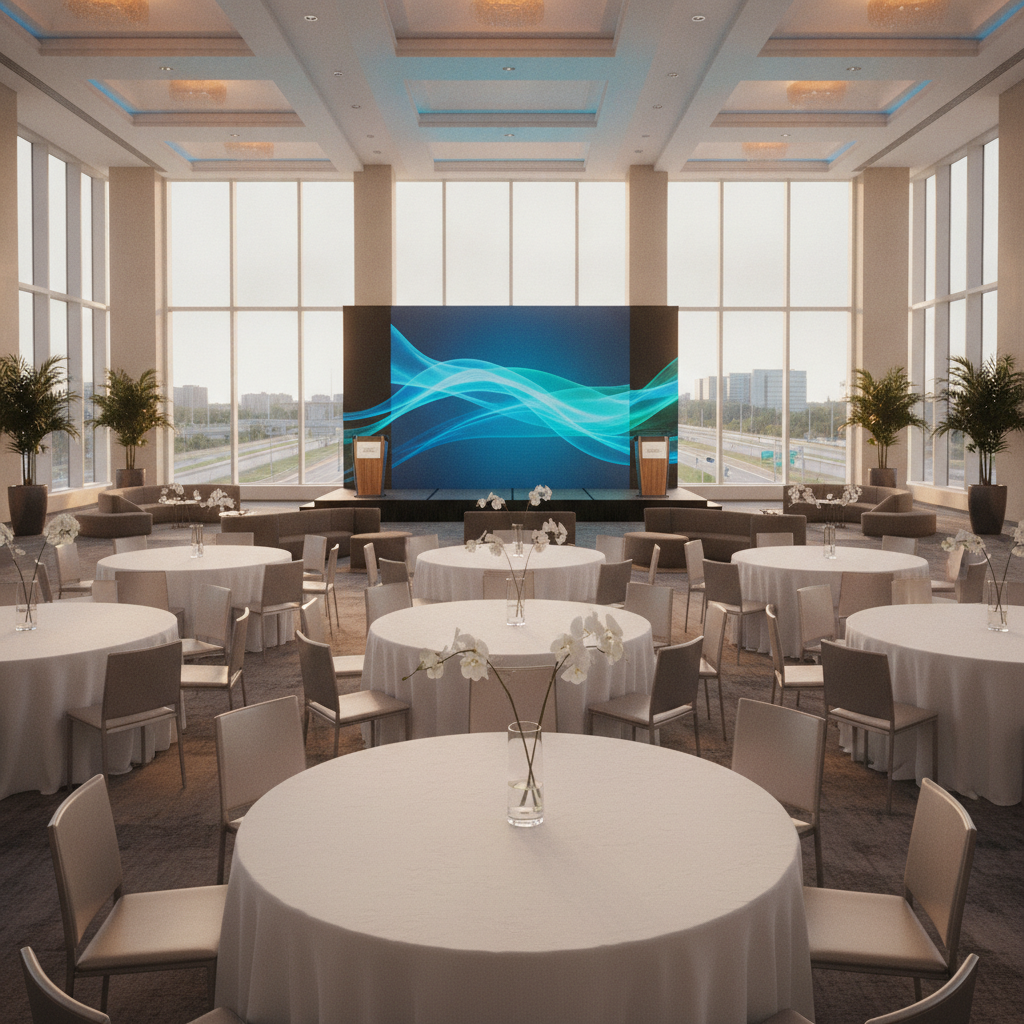
The best choice reflects the work your attendees must do. A leadership planning day may need one private room and a quiet area for focused discussion. A larger corporate retreat may require a plenary hall, several breakouts, staging, screens, microphones, meal stations, and space for networking between sessions.
Mississauga Convention Centre is located at 75 Derry Road West, minutes from major highways and Toronto Pearson International Airport. The Centre offers seven elegant halls of approximately 4,250 square feet each, total capacity of over 2,200 guests, and 700 on-site parking spaces. These confirmed venue features can support both concentrated executive meetings and larger multi-track corporate programs.
Core features that affect the experience
- Adaptable rooms: Flexible halls let planners separate plenary presentations, workshops, meals, and informal conversations instead of forcing every activity into one layout.
- Professional AV: Screens, sound, lighting, staging, and technical support help presenters communicate clearly and reduce setup pressure.
- Food that includes the group: In-house catering at the Centre spans South Asian, Pakistani Halal, Middle Eastern, Sri Lankan, Caribbean, and Continental cuisines.
- Practical arrival: Highway access, airport proximity, parking, signage, and check-in instructions influence whether the first session begins on time.
These features matter because a retreat has limited working time. When participants can arrive, find their rooms, eat comfortably, and hear the program without unnecessary friction, the agenda has more room for useful discussion.
How to Choose a Corporate Retreat Venue
Begin with the desired outcome, not the room. Write down what should be different when attendees leave: a prioritised roadmap, decisions on a project, leadership alignment, new skills, stronger relationships, or a combination of these. Then ask every prospective venue whether its space and services can support that result.
Match the venue to the headcount and agenda
Headcount alone does not determine the right room. A group of 150 may need one theatre-style presentation room, three workshop rooms, a registration area, a meal space, and a quiet place for one-to-one conversations. A smaller group may need fewer rooms but more privacy and a layout that encourages discussion.
Ask for floor plans and confirm the usable capacity for your intended layout. Also check the distance between plenary rooms, breakouts, washrooms, meal service, and exits. Short, intuitive transitions protect the timetable and make the day easier for attendees to navigate.
Confirm AV and technical support
Request a specific AV conversation rather than accepting a general promise of “technology included.” Discuss screens, microphones, presentation playback, lighting cues, staging, recording or streaming requirements, Wi-Fi expectations, adapters, and who will be available if a problem occurs.
Build a technical rehearsal into the schedule. Presenters should test their files, microphone assignments, videos, remote connections, and stage movements before participants arrive. A venue with professional audiovisual systems, lighting, staging, and technical support can simplify coordination, but the planner still needs a clear run-of-show.
Evaluate catering and dietary inclusion
Food affects energy, timing, and belonging. Ask how breakfast, breaks, lunch, and a reception will be served, where stations will be located, and how the venue handles vegetarian, Halal, allergy-related, and other dietary requirements.
Do not leave dietary planning until the final headcount. Collect requirements during registration, label choices clearly, and make inclusive options as visible and convenient as the rest of the menu. The Centre’s broad in-house culinary offering can help planners build a menu for a culturally diverse corporate audience.
Review service and coordination
A retreat usually involves more than booking a room. The venue may coordinate room layouts, staging, meal timing, signage, technical checks, arrival details, and changes to the schedule. Ask who owns each handoff and who will be the day-of contact.
For a broader comparison framework covering layouts, access, and venue questions, use this Mississauga venue selection guide. It can help your planning team create a consistent shortlist before requesting a proposal.
How to Plan a Corporate Retreat Step by Step
A useful retreat plan connects outcomes, agenda, rooms, people, and logistics. The following sequence works for a one-day offsite as well as a larger program with parallel sessions.
1. Define three to five outcomes
State the result of the retreat in observable terms. “Improve communication” is difficult to assess; “agree on the next-quarter priorities and assign an owner to each” gives the facilitator and participants something concrete to achieve.
2. Build the agenda around work modes
Alternate presentation, discussion, individual reflection, and small-group work. A long sequence of presentations can reduce participation, while too many transitions can consume useful time. Breaks every 60 to 90 minutes are a practical starting point, adjusted for the subject and audience.
3. Map each segment to a room
Assign a primary plenary room, breakout rooms, meal areas, and any quiet or networking spaces. Note the required layout for each segment, the equipment needed, and the time required to move or reset the room. Similar-sized halls can make parallel programming easier to coordinate.
4. Confirm the operational details
Finalize the headcount, floor plan, menu, dietary information, AV requirements, arrival instructions, parking message, accessibility needs, signage, and emergency contacts. Put the details into one shared production document so the facilitator, venue, caterer, and technical team are working from the same version.
5. Rehearse the critical moments
Run through registration, the opening, keynote transitions, videos, microphones, meal service, room changes, and the closing action review. A short rehearsal often identifies unclear ownership before it becomes a visible delay.
| Planning phase | Primary owner | Venue discussion | Useful checkpoint |
|---|---|---|---|
| Outcomes | Executive sponsor and facilitator | Room privacy and suitability | Three to five measurable results |
| Agenda | Facilitator and HR | Breakout availability and transitions | Plenary, workshops, breaks, and buffers |
| Production | Planner and AV lead | Sound, screens, lighting, staging, and support | Technical rehearsal scheduled |
| Catering | Planner and venue team | Menu, service timing, and dietary labels | Requirements confirmed before final guarantee |
| Arrival | Planner and registration lead | Parking, check-in, signage, and access | Instructions sent before event day |
| Follow-up | Facilitator and owners | Closing room setup | Actions, owners, and dates captured |
For venue-specific planning information, including the Centre’s halls and event capabilities, review the Mississauga Convention Centre overview while you develop your brief.
Which Corporate Retreat Format Fits Your Team?
The format should follow the purpose and travel pattern of the group. A single-day retreat may be ideal when attendees are local or when the goal is a focused decision. A longer program may make sense when the group needs substantial workshop time, leadership discussion, or structured team connection.
Single-day strategic offsite
This format can include an opening briefing, one or two decision-focused workshops, a working lunch, and a closing action review. It suits teams that need concentrated time without an overnight stay. Protect transition buffers because a tightly packed day leaves little room to recover from delays.
Leadership planning summit
A leadership summit may combine executive presentations, confidential discussions, scenario work, and a shared planning session. A primary room plus suitable breakouts allows leaders to move between alignment and detailed work without losing the group’s common thread.
Training or team workshop day
Training benefits from rooms that can change between presentation, demonstration, practice, and feedback. Confirm sightlines, sound, work surfaces, and any equipment required by the facilitator. Meal and break timing should support concentration rather than create a long interruption.
Hybrid strategy session
A hybrid program requires more than a camera at the front of the room. Plan for clear speech, visible materials, remote participation, screen management, technical support, and a facilitator who actively includes people joining from elsewhere. Confirm recording and privacy expectations before publishing the agenda.
Multi-track corporate program
Large groups may need simultaneous workshops, a central plenary, meal service, and networking areas. Seven halls of approximately 4,250 square feet at Mississauga Convention Centre provide a basis for discussing parallel room requirements, subject to the final layout and event plan.

Corporate Retreat Venue Checklist
Use this checklist when comparing proposals. A venue that looks attractive in a brochure still needs to work operationally for your particular group and agenda.
Before requesting a proposal
- Record the preferred date, alternate date, estimated attendance, and arrival pattern.
- List the retreat outcomes and the sessions that require privacy, staging, or breakouts.
- Identify accessibility, dietary, cultural, remote-participation, and confidentiality requirements.
- Decide whether you need overnight accommodation nearby or only a day venue.
Questions for the venue team
- Which rooms suit the plenary and each breakout, and what layouts are available?
- What AV, lighting, staging, Wi-Fi, and technical support are included?
- How are meals and breaks served, and how are dietary selections identified?
- What are the parking, check-in, loading, signage, and accessibility arrangements?
- Who is the planning contact before the event and the operational contact on the day?
- When can the facilitator and presenters complete a technical rehearsal?
During the retreat
- Open by stating the outcomes, decision rules, schedule, and practical information.
- Use visible timers and clear room signage to keep transitions predictable.
- End each working session with decisions, unresolved questions, owners, and dates.
- Keep the facilitator, venue contact, AV lead, and catering lead connected through one run-of-show.
Planning an Event Venue in Mississauga
For teams travelling from across the GTA or beyond, location can determine how much productive time survives the journey. Mississauga Convention Centre at 75 Derry Road West is near major highways and Toronto Pearson International Airport, which can help regional and visiting attendees plan their arrival.
Send practical instructions in advance rather than assuming people will find the venue and parking without help. Include the address, recommended arrival time, check-in location, parking information, accessibility contact, first-session start time, and a phone number for day-of questions.
Arrival and timing decisions
Build a realistic arrival window around the first important activity. If a keynote begins immediately after registration, allow enough time for parking, check-in, coffee, and seating. For winter events, consider whether a later opening gives attendees more reliable travel conditions; for summer programs, a patio or outdoor networking period may be appropriate when the event plan and weather allow.
The Centre has 700 on-site parking spaces, but planners should still provide clear directions and check whether any special arrival pattern applies to the event. A simple map or arrival note can prevent a queue at registration and protect the opening session.
Accessibility and participant comfort
Ask the venue team about accessible routes, seating, washroom access, dietary communication, quiet areas, and any accommodation requested by attendees. Include these considerations in the room plan, not as an afterthought. A retreat is more effective when participants can focus on the work instead of solving avoidable access problems.

Planning Resources and Follow-Up
A concise planning brief is often more useful than a long email thread. Include the event purpose, audience, attendance range, schedule, room requirements, AV needs, menu requirements, arrival plan, decision makers, and approval deadlines.
After the retreat, send a short action record while discussions are still fresh. Capture each decision, owner, due date, dependency, and follow-up meeting. The venue can create the right conditions for progress, but the organisation must carry the decisions into its normal work.
If you are comparing corporate event options, the corporate event venue decision checklist provides another way to organise questions about space, services, and planning responsibilities.
Frequently Asked Questions
What makes a good corporate retreat venue?
A good venue matches its rooms and services to the retreat’s outcomes. It should provide suitable layouts, dependable AV, practical catering, clear arrival arrangements, and a responsive planning team. The right balance depends on whether the program is a small leadership session, a training day, or a multi-track corporate event.
How long should a corporate retreat be?
Many retreats fit into one day, while more complex leadership or strategy programs may need two days. Choose the length based on the amount of discussion, practice, decision-making, and travel involved. Avoid extending the program simply to fill time; every session should support a stated outcome.
How many rooms do we need for a corporate retreat?
Start with one plenary room and add a breakout room for each genuinely simultaneous group, then consider space for registration, meals, quiet work, and networking. For a group of 120 to 240 people, two to four breakouts may be a useful planning range, but the final number depends on session design and seating layout.
How should we handle dietary needs at a corporate retreat?
Collect dietary information before the event, confirm it with the catering team, and label inclusive choices clearly at service points. Plan vegetarian, Halal, allergy-aware, and other required options with the same visibility and convenience as the rest of the menu. Mississauga Convention Centre offers diverse in-house catering that can support culturally varied corporate groups.
Plan Your Mississauga Corporate Retreat
Start with your outcomes, headcount, preferred date, room flow, AV requirements, and menu needs. The Mississauga Convention Centre team can help you evaluate a setup at 75 Derry Road West and coordinate the venue details around your corporate retreat plan. Contact Mississauga Convention Centre to begin the conversation.