

 20 September, 2026
Last updated: October 2026
By Mississauga Convention Centre • Updated: October 29, 2026
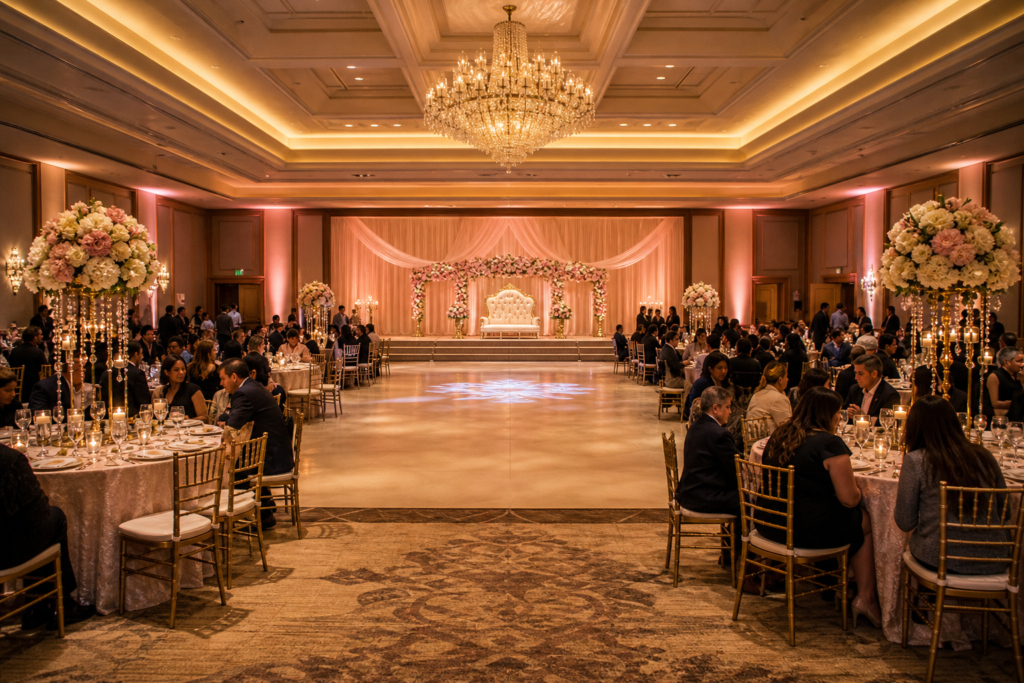
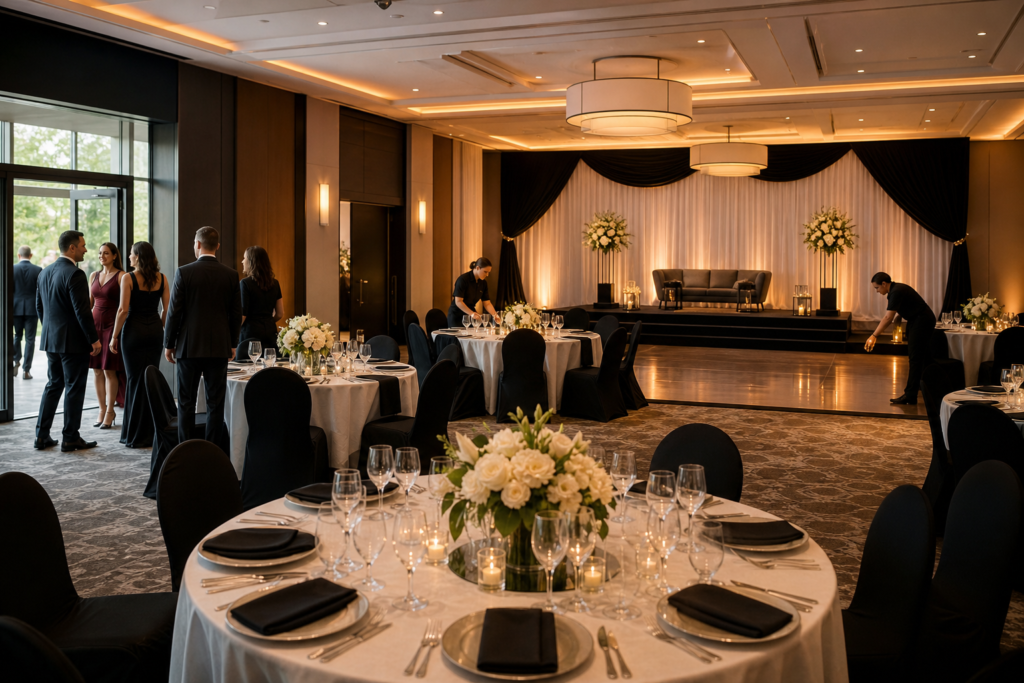
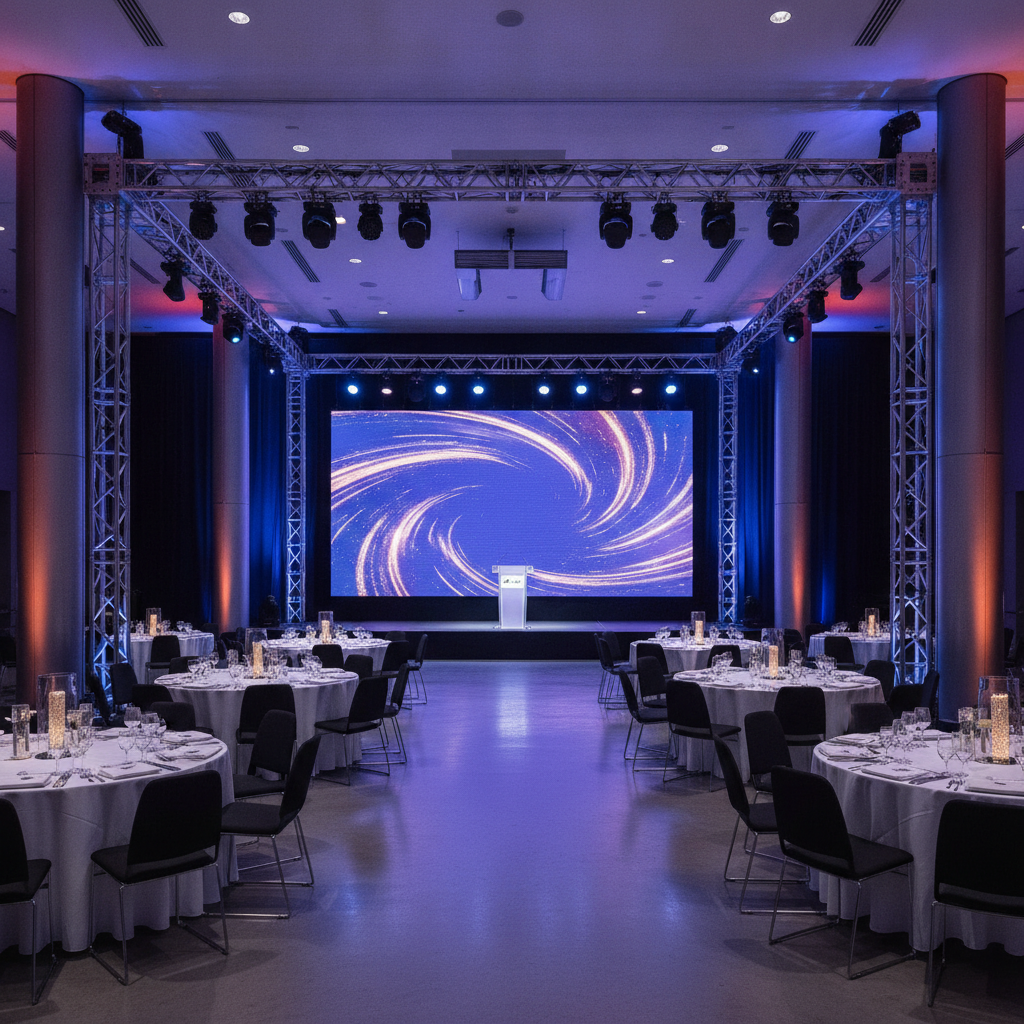
Event staging is more than placing a platform in front of a room. It is the coordinated production process that turns a ballroom, meeting space, exhibition floor, or outdoor ceremony area into a safe and purposeful environment for guests, presenters, performers, and service teams.
At Mississauga Convention Centre, 75 Derry Road West, staging can be planned alongside in-house audiovisual services, lighting, technical support, and catering. The venue has seven halls of approximately 4,250 square feet each, capacity for more than 2,200 guests, and approximately 700 on-site parking spaces. Those details matter because stage dimensions, guest movement, delivery access, and meal timing all affect the production plan.
What Do Event Staging Services Include?
Event staging services usually cover the physical stage, technical systems, scenic treatment, crew, and operating plan required to deliver an event. The exact package depends on the agenda, room, audience size, content, performers, and whether the event is a conference, gala, wedding, trade show, graduation, or cultural celebration.
Stage and scenic elements
- Stage decks and risers: Modular platforms, stairs, skirting, ramps, choir risers, and low-height presentation platforms.
- Presenter support: Lecterns, confidence monitors, timers, teleprompters, stage monitors, and furniture for panels.
- Backdrops and décor: Black drape, tension fabric, printed scenic panels, arches, florals, branded elements, and clean photo backgrounds.
Audiovisual and lighting systems
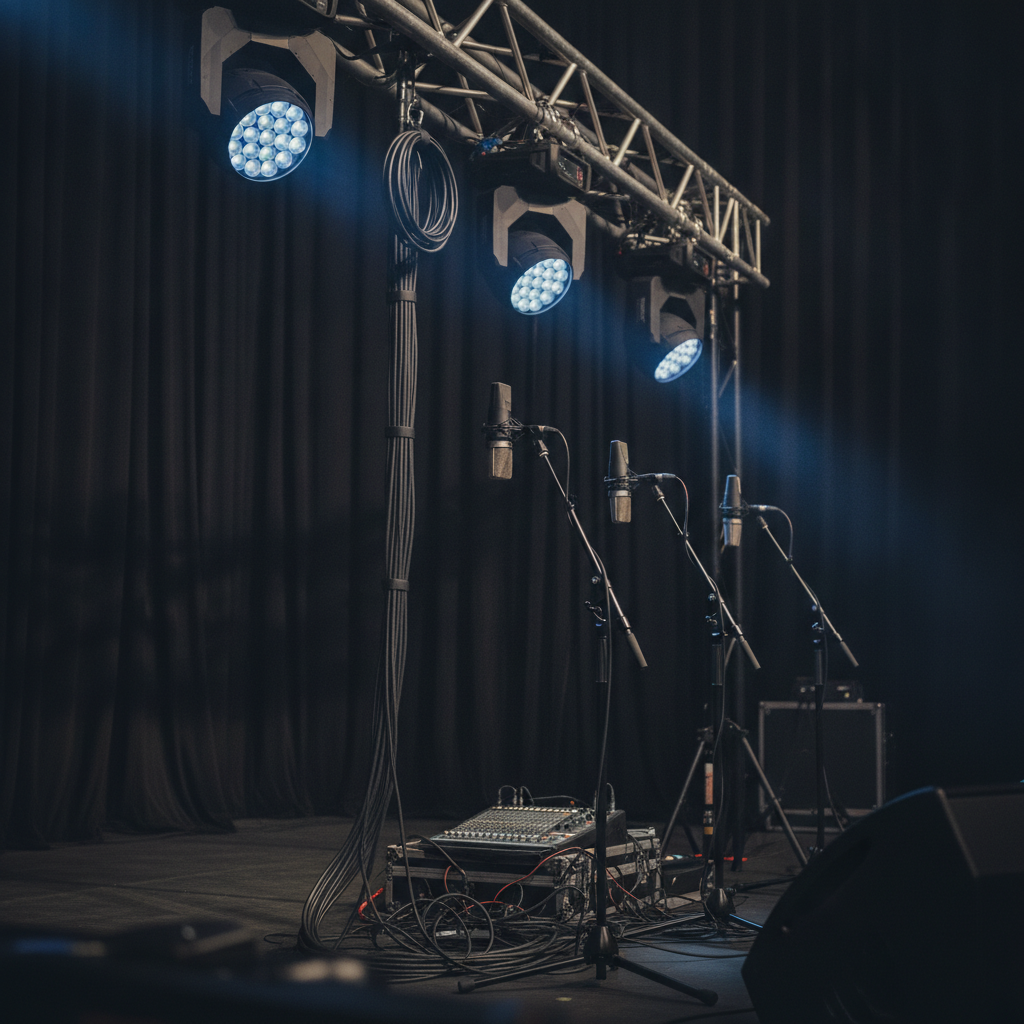
- Audio: Speakers selected for the room, digital mixing, wired or wireless microphones, monitors, and speech-focused tuning.
- Lighting: Front light for faces, colour washes, pinspotting, gobos, moving fixtures, and lighting cues for entrances or reveals.
- Video: LED walls, projection, presentation switching, playback, confidence screens, and content monitoring.
- Infrastructure: Cable ramps, protected cable paths, power distribution, control positions, communications, and equipment backup planning.
Production operations
- Load-in and load-out schedules, dock coordination, equipment manifests, and crew calls.
- Technical drawings, power plans, stage plots, seating layouts, and sightline checks.
- Rehearsal, cue sheets, show-calling, speaker support, scene changes, and safe teardown.
A useful brief should state what the audience must see and hear, what presenters need to do comfortably, and how the room must change during the day. That information is more useful than choosing equipment by brand name or appearance alone.
For room dimensions, seating layouts, and aisle planning, compare these conference room setup ideas before approving a stage footprint.
Why Professional Staging Matters
Good staging removes avoidable friction between the event plan and the guest experience. A presenter who can see the next slide, a guest who can hear from the back row, and a technician who knows the next cue are all signs of a coordinated production.
Four practical outcomes
- Clearer communication: Correct speaker placement, microphone selection, screen position, and front lighting help guests follow the programme.
- Better flow: Planned entrances, exits, meal cues, awards, entertainment, and room turns reduce pauses and confusion.
- More consistent presentation: Branded scenic elements, controlled colour, and balanced lighting create a coherent visual environment.
- Safer operations: Documented cable routes, protected power, stable platforms, accessible routes, and trained crew reduce production hazards.
For a corporate meeting, the priority may be speech intelligibility and presentation confidence. For a wedding or gala, the design may focus on entrances, décor, photography, music, and transitions between dinner and dancing. A school graduation may need low risers, repeated walk-up cues, clear names, and simple access for graduates. The service is strongest when the technical design follows the event’s purpose.
When comparing an audiovisual system for a conference room, ask how the microphones, displays, speakers, lighting, and operator position work together rather than reviewing each item in isolation.
How Event Staging Works at a Modern Venue
A reliable production follows a sequence from discovery through strike. The process can be scaled for a short meeting or expanded for a multi-session conference, exhibition, gala, reception, or performance.
The seven-stage workflow
- Discovery: Confirm the audience, agenda, headcount, room, presenters, performers, cultural elements, content formats, and special moments.
- Design: Select stage size and height, screen format, scenic treatment, lighting looks, speaker coverage, access routes, and control positions.
- Technical planning: Prepare stage plots, seating plans, power and cable routes, equipment lists, cue stacks, delivery windows, and contingency options.
- Build: Install the stage, scenic elements, speakers, screens, lighting, control stations, communications, and protected cable paths.
- Test and rehearse: Check microphones, presentations, videos, lighting, walk-ons, walk-offs, awards, performances, and meal-related cues.
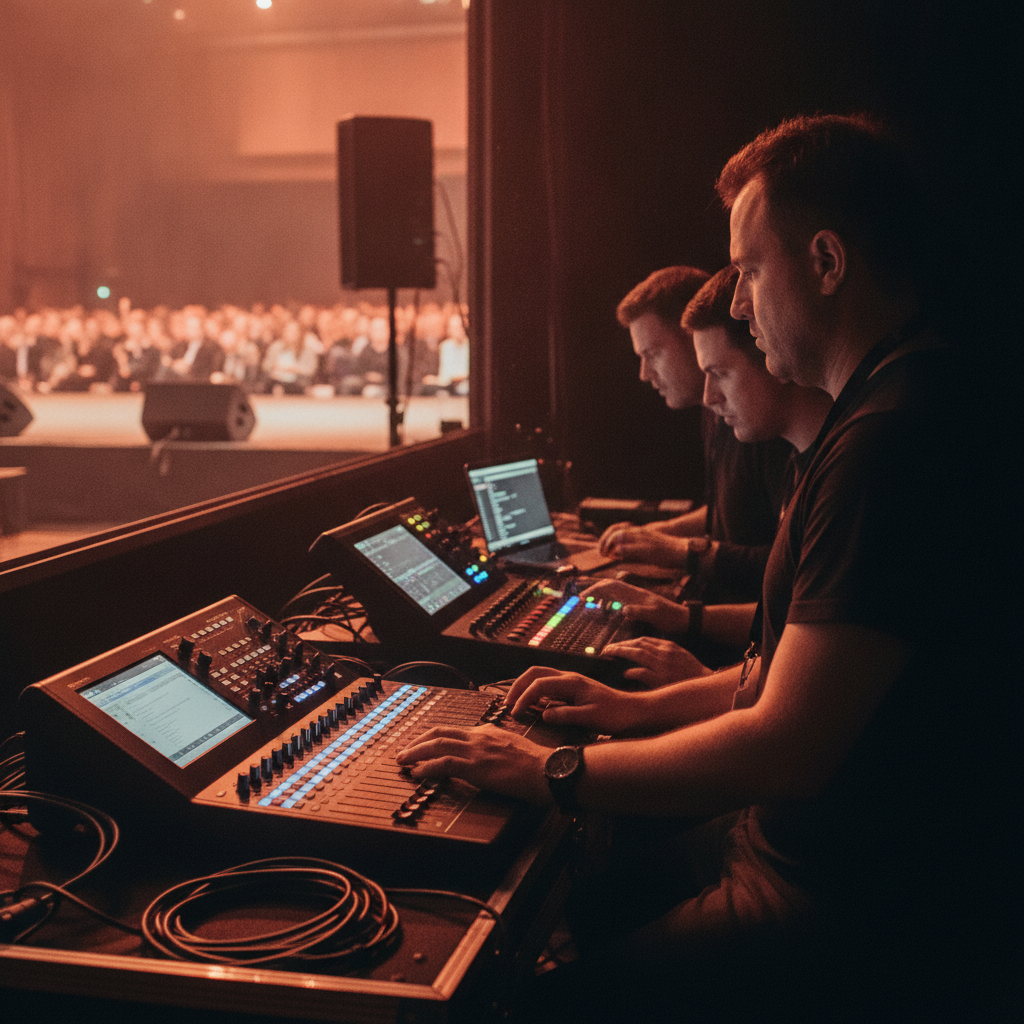
- Show-call: Coordinate the programme using cue sheets, radios, stage management, and communication between production, presenters, and venue teams.
- Strike: Dismantle equipment safely, pack and label gear, sequence the load-out, and return the room to its required condition.
Choosing an operating model
| Approach | Strength | Planning consideration | Suitable use |
|---|---|---|---|
| Integrated venue production | One coordinated team and venue-specific knowledge | Confirm the scope early and document late changes | Conferences, galas, weddings, meetings |
| Multi-vendor production | Access to specialist or touring capabilities | Assign one production lead and align technical standards | Large exhibitions, concerts, complex shows |
| Lightweight self-managed setup | Simple for small programmes | Limited redundancy, operation, and scenic flexibility | Small briefings and community meetings |
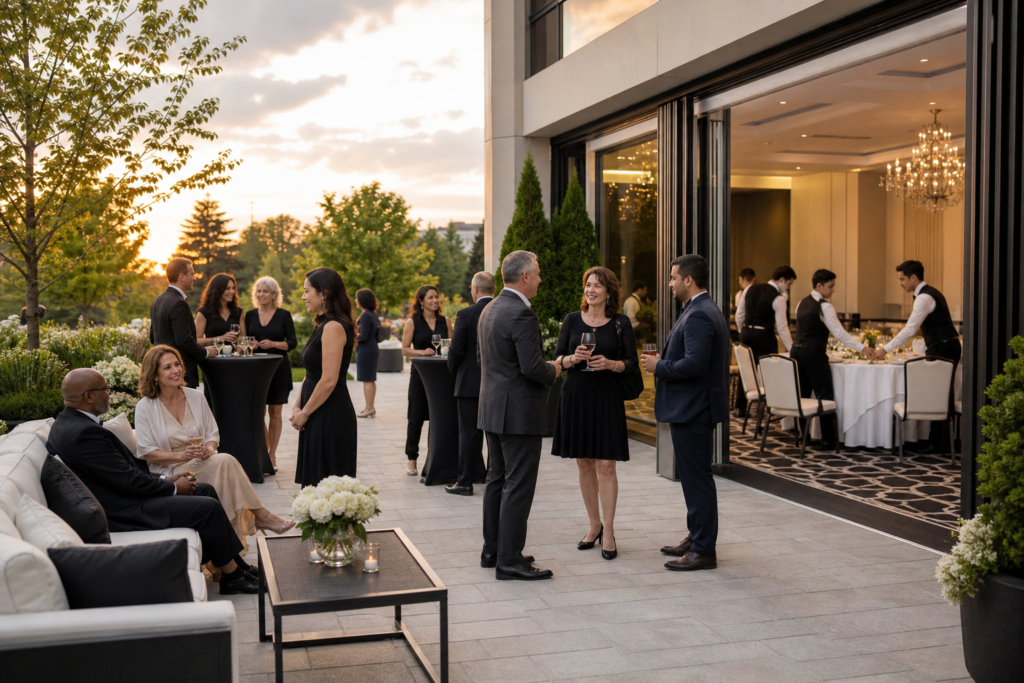
At 75 Derry Road West, planners should confirm delivery windows, room access, stage placement, guest circulation, and the relationship between production areas and food service. Seasonal weather can also affect outdoor cable paths, deliveries, and transitions between patio ceremonies and indoor receptions.
Which Stage and AV Setup Fits Your Event?
The right configuration depends on audience sightlines, programme movement, content, room brightness, and the number of people using the stage. There is no single best stage size for every event.
Common configurations
- Keynote or conference stage: A presentation area with a lectern, confidence monitors, front lighting, and one or more displays.
- Panel discussion: Chairs or stools, individual microphones, a moderator position, presenter support, and enough circulation behind the speakers.
- Awards or gala stage: A visually strong backdrop, clear walk-up route, award-handling position, lighting for photography, and cues coordinated with dinner.
- Wedding or cultural celebration: Scenic décor, entrance lighting, balanced dance-floor audio, microphone support, and transitions between ceremony, meal, speeches, and entertainment.
- Trade show or exhibition: A central presentation point, unobstructed aisles, distributed power, signage, and cable protection.
- Prom, graduation, or school formal: Safe low risers, edge lighting, clear photo areas, speech coverage, and straightforward cues for repeated movements.
Projection or LED?
Projection can work well when the room can be darkened and there is adequate throw distance. LED walls are often more visible in brighter rooms and can support high-impact motion content, but they require appropriate processing, power, structure, and viewing-distance planning. The decision should follow the room and content rather than a desire for the newest display.
How much stage is enough?
Start with the people and actions on stage. A lectern, moderator, and four to six panelists need different space from a band, choir, fashion runway, or award presentation. Preserve access at the sides, avoid blocking décor or cameras, and check the back-row view before finalizing the footprint.
Safety, Accessibility, and Technical Coordination
Temporary stages, truss, lighting, power, and scenic structures must be planned and operated responsibly. Ontario’s guidance for temporary performance and event structures addresses design, erection, use, dismantling, and maintenance considerations under the Occupational Health and Safety Act and related regulations.
Include these checks in the production brief
- Confirm that platforms, stairs, ramps, handrails, drape, and scenic elements are stable and appropriate for their use.
- Keep emergency routes, aisles, exits, accessible paths, and reserved viewing areas clear.
- Use protected cable runs and suitable power distribution; keep equipment away from moisture and public trip points.
- Confirm rigging requirements, load information, inspection responsibilities, and qualified personnel before installation.
- Plan stage access for presenters, performers, guests using mobility devices, and staff carrying awards or equipment.
- Document who approves technical changes and who has authority to pause work when conditions are unsafe.
Safety guidance should support, not replace, a venue-specific assessment and the direction of qualified professionals. Share the production design early so venue and technical teams can resolve access, capacity, power, rigging, and fire-safety questions before load-in.
Event Staging Planning Checklist
Use this checklist during the first planning meeting. It gives a staging provider enough information to recommend a proportionate design and identify constraints early.
- Event type, date, schedule, audience size, room, and expected attendance pattern.
- Stage activities, number of presenters, panel size, performers, awards, entrances, and exits.
- Presentation formats, playback requirements, branding, translations, captions, recording, or streaming needs.
- Preferred stage location, screen visibility, camera positions, accessible routes, and guest circulation.
- Meal timing, speeches, entertainment blocks, room turns, and any outdoor-to-indoor transition.
- Delivery access, setup window, rehearsal availability, strike deadline, storage, and parking or dock requirements.
- Venue rules for rigging, outside suppliers, power, equipment, insurance, supervision, and technical personnel.
- Contingencies for missing presenters, presentation failures, microphone problems, weather, or schedule changes.
Give the production team a current agenda rather than a rough concept alone. A final run-of-show should identify each cue, the person responsible, the expected duration, and the recovery plan if a segment runs late.
How Staging Changes by Event Type
Corporate conference or awards programme
Prioritize speech clarity, presentation visibility, confidence monitors, branded scenic design, and dependable transitions. A stage manager can coordinate speaker introductions, videos, awards, and meal service so the programme does not compete with kitchen or guest-flow operations.
Wedding, gala, or cultural celebration
Build the design around entrances, photography, speeches, music, décor, and the guest journey. Pinspotting can highlight florals or a head table, while controlled lighting and balanced audio can support both formal remarks and dancing without overwhelming the room.
Trade show or exhibition
Keep aisles open, protect power and cable routes, and place the presentation stage where it helps traffic rather than obstructing it. Signage, sightlines, exhibitor access, and rapid changeovers deserve as much attention as the stage appearance.
Graduation, prom, or school event
Repeated walk-ups benefit from clear cueing, low and accessible platforms, reliable microphones, readable content, and a photo-friendly background. A concise rehearsal with the host and stage team can prevent pauses when many participants must move through the programme.
Event Staging Services FAQ
How early should event staging be booked?
Reserve as early as practical, especially for peak wedding, gala, graduation, and conference dates. Early planning protects room availability, delivery windows, technical crew, equipment choices, rehearsal time, and the ability to coordinate staging with catering and décor.
What information does a staging provider need first?
Start with the event date, room, audience size, agenda, stage activities, content, performers, preferred look, setup window, and access requirements. A current floor plan and run-of-show make it easier to recommend the right stage, displays, microphones, lighting, crew, and contingency plan.
Can an outside audiovisual company work at the venue?
That depends on the venue’s technical and supplier policies, so confirm the arrangement before signing a production contract. The outside team and venue should align on rigging, power, access, insurance, supervision, equipment, delivery timing, and who is responsible for show operation.
Is a rehearsal necessary for a small event?
A full rehearsal may not be necessary for a simple meeting, but a microphone check, presentation test, walk-on review, and cue briefing are worthwhile. Complex programmes with awards, performers, multiple videos, room changes, or meal cues should include a cue-to-cue rehearsal.
Plan Your Event Staging Services
Effective staging begins with the audience experience and ends with a clear operating plan. Define what guests must see and hear, match the design to the room, document safety and access requirements, rehearse the important transitions, and assign one person to coordinate the show.
For events in Mississauga and the wider GTA, the Mississauga Convention Centre team can review staging, audiovisual services, room layout, catering timing, and décor together. Plan your event at Mississauga Convention Centre by starting with the date, event type, expected attendance, and programme requirements.