 28 October, 2026
Loading dock access is the controlled process for bringing event freight, staging, audiovisual equipment, décor, furniture, catering supplies, or exhibit materials into and out of a venue. At Mississauga Convention Centre, prepare a written delivery brief and confirm the event-specific dock location, access hours, vehicle limits, approval process, check-in instructions, equipment rules, and any fees before issuing supplier instructions.
This matters for conferences, meetings, seminars, trade shows, product launches, galas, and company celebrations because several suppliers may need access within the same setup window. Mississauga Convention Centre hosts these event formats and provides flexible spaces, in-house catering, modern event facilities, and professional service, but the exact delivery procedure remains specific to each event.
Confirm Venue-Specific Details Before You Promise Access
Do not copy generic loading dock rules from another convention centre into your supplier brief. Before confirming a delivery, obtain the venue’s instructions in writing and identify which details are approved for your event.
Ask the venue or assigned event contact to confirm:
- The loading dock, loading bay, or other approved delivery location.
- Operating hours and the approved delivery and collection windows.
- Whether suppliers need an appointment, prior authorization, or a named onsite contact.
- The check-in location and any driver identification or vehicle information required.
- Vehicle height, width, length, weight, trailer, and clearance limits.
- Whether pallet jacks, dollies, forklifts, ramps, liftgates, or other unloading equipment are permitted or provided.
- Whether temporary storage, overnight holding, or unattended freight is allowed.
- Any access fees, material-handling charges, damage responsibilities, cleanup requirements, or collection conditions.
- The process for early arrivals, late arrivals, oversized vehicles, damaged freight, and rejected deliveries.
- The correct venue contact for a driver who cannot find the approved entrance or arrives outside the confirmed window.
The venue is located at 75 Derry Rd W in Mississauga, with access from major highways and proximity to Toronto Pearson Airport. Those location benefits can simplify regional deliveries, but they do not confirm dock capacity, delivery hours, or vehicle suitability for a particular event.
Choose the Right Delivery Method for the Shipment

The best arrival method depends on the shipment, vehicle, handling requirements, guest traffic, and route approved by the venue. Treat the options below as planning guidance, not as confirmation that a particular route is available at Mississauga Convention Centre.
Loading dock delivery
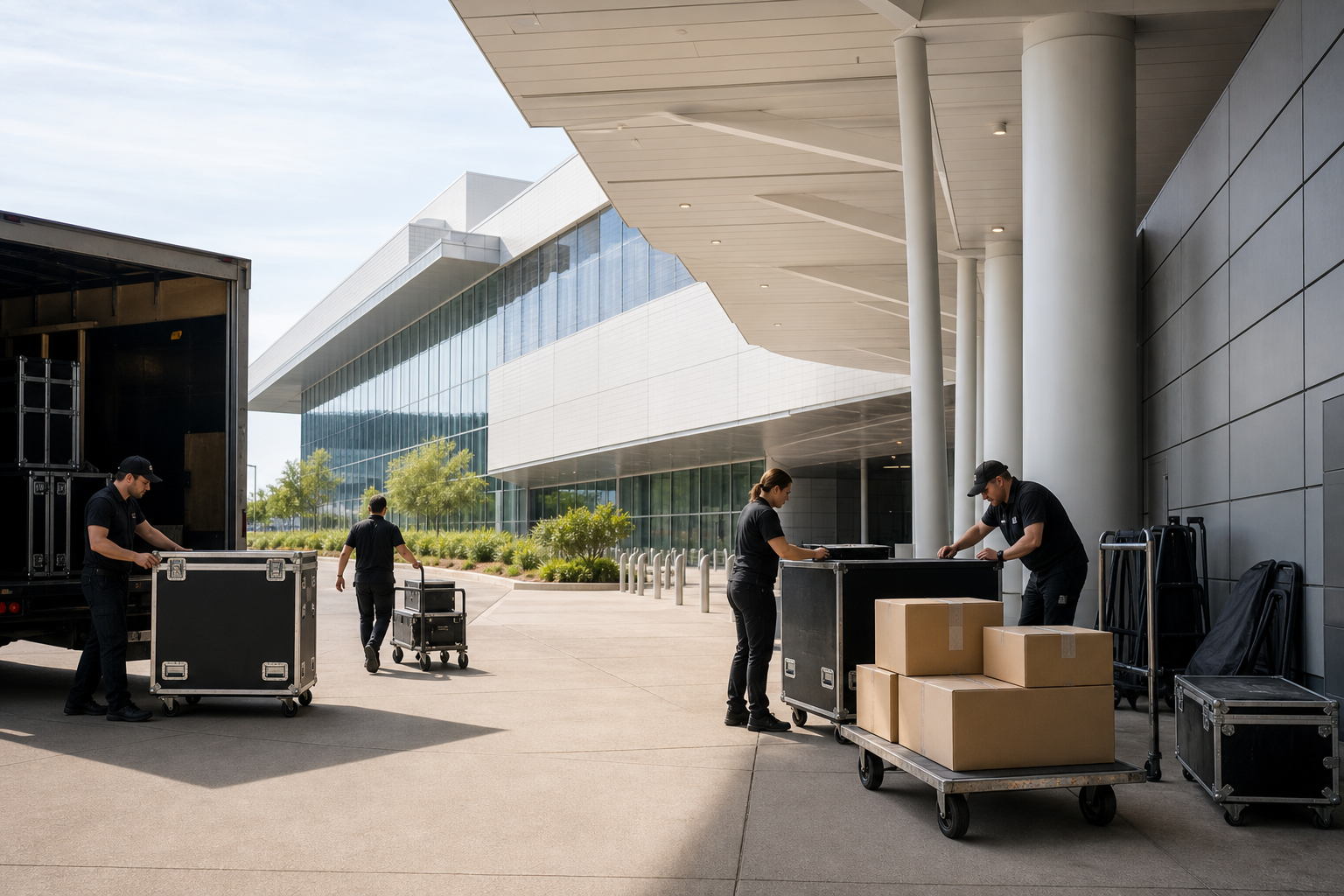
Use a loading dock when the shipment is bulky, palletized, heavy, or transported in a truck that needs a level vehicle-to-building transfer. This approach often fits staging, large AV cases, exhibition freight, furniture, and substantial décor, provided the venue approves the vehicle and delivery window.
Loading-bay delivery
“Loading bay” usually refers to the vehicle area where goods are received or dispatched. “Loading dock” often describes a raised platform or dedicated loading structure connected to that area. Venues may use the terms differently, so ask which entrance, level, and vehicle position your driver should use instead of assuming they mean the same route.
Curbside delivery
Curbside delivery can suit a small shipment that does not need a truck bay, such as boxed registration materials or a limited number of lightweight packages. It requires a clear plan for moving the items from the vehicle to the event space, and it should not obstruct guest arrivals, accessible routes, emergency paths, or other suppliers.
Front-entrance delivery
A front entrance may work for hand-carried materials or small parcels when the venue approves that route. It is usually a poor choice for palletized freight, long cases, large furniture, or deliveries made during guest arrival because it can conflict with registration and pedestrian flow.
Hand-carried freight
Hand-carried freight means a person transports items without a truck-based unloading operation. Choose it for small, portable materials that one person can move safely, such as branded folders, laptops, small signage, or personal exhibitor supplies. Do not use hand-carrying as a workaround for heavy or oversized equipment.
Build the Delivery Plan Around the Event Program
Work backward from the time the room must be ready, not simply from the event start time. Each supplier needs enough time to unload, move equipment to its destination, complete setup, remove packaging, and resolve missing or damaged items before guests arrive.
Conferences and meetings
Plan first for AV cases, presentation equipment, registration materials, furniture changes, and signage. A delivery that arrives after the technical rehearsal or registration setup begins can affect the agenda even if the freight itself is small.
Exhibitions and trade shows
Separate exhibitor freight from organizer materials and identify the final booth, storage, or service destination for every shipment. Include return arrangements before move-in so exhibitors do not improvise collection during attendee departure. For a trade show-specific view of equipment paths, staging, and dock planning, see the exhibition loading logistics guidance.
Galas, awards events, and company celebrations
Sequence staging, lighting, décor, furniture, registration items, and catering-related deliveries around the room reset and technical rehearsal. A décor team may need the room before a photographer or entertainment supplier, while furniture placement may determine where AV cases can travel.
Catering and service supplies
Identify whether the delivery is venue-managed catering, rental equipment, specialty serviceware, décor, or an outside supplier. Do not assume that a food, beverage, equipment, or rental delivery follows the same route or timing as production freight.
Coordinate Every Supplier Through One Handoff

Assign one person to maintain the master delivery schedule and one onsite lead to make event-day decisions. The planner coordinates the brief, the venue confirms access conditions, the supplier provides accurate freight details, the driver follows the approved instructions, and the onsite lead confirms where each item should go.
Create a vendor grid with these columns:
- Supplier and service category.
- Event date and delivery or collection date.
- Requested arrival window and estimated unloading duration.
- Driver name, phone number, vehicle type, and vehicle dimensions.
- Freight description, number of pieces, pallets, cases, or packages.
- Unloading equipment and the person responsible for operating it.
- Final destination, such as ballroom, breakout room, booth, stage, registration area, or storage location.
- Onsite event lead and venue contact.
- Return collection window, packaging plan, and departure owner.
- Approved exceptions or special instructions.
Include loading notes in the vendor schedule so delivery teams know when to arrive, what they are carrying, and whom to call. Arrival windows and vendor contact information should sit in the same document as the freight plan, not in separate email threads.
Hypothetical multi-supplier schedule
The following example is hypothetical. It illustrates sequencing only and does not represent a confirmed Mississauga Convention Centre schedule.
| Illustrative time | Supplier | Planning purpose |
|---|---|---|
| 8:00 a.m. | AV and staging | Move technical cases and staging components before room dressing. |
| 9:30 a.m. | Furniture provider | Place tables, chairs, registration counters, or lounge pieces. |
| 11:00 a.m. | Décor team | Install backdrops, signage, linens, and approved decorative elements. |
| 1:00 p.m. | Exhibitors | Move booth materials after the main production route is clear. |
| 2:30 p.m. | Catering or service supplier | Deliver approved service items without crossing active technical work. |
| 4:00 p.m. | Planner and venue lead | Complete room check, remove packaging, and verify show readiness. |
The actual order may change based on room access, freight size, supplier capabilities, venue instructions, and the event program. The useful principle is to prevent multiple teams from competing for the same route at the same time.
Pre-Arrival Checklist for Planners and Drivers
Send one completed brief to every supplier and retain the venue’s written approval with the event file. The checklist below covers the information most likely to prevent a failed or delayed arrival.
- Event: event name, event date, room or hall, and setup deadline.
- Supplier: company name, service category, onsite lead, and emergency contact.
- Delivery: delivery or collection, requested window, estimated unloading time, and final destination.
- Vehicle: make or type, truck or trailer configuration, height, width, length, and weight, where required by the venue.
- Freight: description, number of cases, boxes, pallets, furniture pieces, or exhibit components.
- Handling: liftgate, pallet jack, dolly, cart, ramp, or other equipment required, supplied, or prohibited.
- People: driver name and phone number, crew size, planner, onsite event lead, and venue contact.
- Route: approved entrance, check-in location, internal destination, and any access or pedestrian instructions confirmed by the venue.
- Departure: packaging removal, return shipment label, collection window, and person responsible for signing off.
- Approval: written confirmation of access, timing, vehicle suitability, equipment, storage, charges, and exceptions.
Plan for Early, Late, Oversized, or Problem Deliveries
Every exception needs an owner and a decision path. The planner can prepare alternatives, but only the venue can approve access, storage, routes, equipment, or changes to the agreed delivery arrangement.
If the delivery is early
Tell the driver not to assume that early arrival means early access or onsite storage. Ask the venue whether the vehicle should wait elsewhere, return during the approved window, or use another confirmed method.
If the delivery is late
Have the supplier call the event lead before arriving. The planner should identify which setup task is affected, whether another supplier can work first, and whether the run of show needs a documented adjustment.
If the vehicle or freight is oversized
Pause the delivery until the venue confirms the dimensions, weight, route, and handling plan. Do not rely on a driver’s estimate of clearance, and do not treat another venue’s truck limits as applicable here.
If freight is damaged, incomplete, or missing
Photograph the condition, record the package or case numbers, notify the supplier and event lead, and separate usable items from items that need replacement. Update the setup plan immediately so the team knows whether the affected element is essential to opening.
If the dock or approved route cannot be used
Do not redirect a large vehicle to the front entrance without approval. Ask the venue to confirm the alternative route, timing, handling method, and responsibility for moving the freight, then circulate the revised instruction to every affected supplier.
Loading Dock, Loading Bay, and Event Safety Terms Explained
A loading dock is a controlled vehicle-to-building area used to receive or dispatch goods. A loading bay is a designated space for loading or unloading and may be at ground level, raised, enclosed, or arranged differently depending on the building.
Other useful terms include:
- Production access: a route or access arrangement for staging, AV, lighting, furniture, décor, and other event-production equipment.
- Load-in: the movement of freight and equipment into the venue before setup.
- Load-out: the removal of freight and equipment after the event or teardown.
- Curbside delivery: unloading at an approved curb or exterior stopping point rather than a dock.
- Hand-carried freight: small items transported by people without a truck-based unloading operation.
- Delivery and collection: the full plan for bringing items in and removing them after the event.
General safety practice is straightforward: keep pedestrians separate from moving vehicles where possible, keep routes and exits clear, move equipment with a suitable method, do not exceed the capability of the crew or equipment, and follow the venue’s instructions. Binding requirements depend on the site, equipment, applicable rules, and venue procedures, so use written access control planning as part of the broader arrival brief rather than treating generic guidance as a venue rule.
Final Confirmation Before You Send Supplier Instructions
Before distributing the final brief, obtain written answers to the venue-specific questions, update the vendor grid, remove unapproved assumptions, assign one onsite decision-maker, and confirm both load-in and collection timing. Give drivers one current version of the instructions so they are not working from an outdated email.
Mississauga Convention Centre supports corporate events such as conferences, seminars, meetings, trade shows, and company celebrations through flexible spaces, modern facilities, in-house catering, and professional service. Those capabilities can support complex setups, but the access terms for each delivery still need to be confirmed for the event.
FAQ: Loading Dock Access for Event Deliveries
What information should I include in a loading dock access request?
Include the event name and date, supplier, delivery or collection window, driver and vehicle details, vehicle dimensions, freight description, number of pieces or pallets, unloading equipment, final destination, onsite contact, return plan, and any special handling needs. Add the venue’s requested approval or authorization information once it is provided.
Can an AV company, decorator, caterer, courier, or exhibitor use the loading dock?
Do not assume that any supplier or vehicle is automatically permitted. List each supplier and shipment in the request, then obtain event-specific confirmation of the approved route, timing, vehicle, equipment, and handling responsibilities.
What should I do if a delivery is early, late, oversized, or cannot use the dock?
Have the driver contact the event lead before proceeding. The planner should pause unapproved access, identify the schedule impact, and obtain the venue’s direction for an alternate time, route, vehicle, handling method, or collection plan.
What is the difference between a loading dock, loading bay, curbside delivery, and hand-carried freight?
A loading dock is generally a controlled vehicle-to-building receiving area. A loading bay is the designated loading space, which may or may not include a raised dock. Curbside delivery uses an approved exterior stopping point, while hand-carried freight is moved by people and is suited to small, portable items.
What loading dock details should be confirmed before sending a driver to the venue?
Confirm the approved location, hours, delivery and collection windows, authorization process, check-in point, vehicle limits, equipment rules, storage conditions, fees, damage responsibility, emergency contact, and procedure for early, late, oversized, or rejected deliveries. Keep that confirmation with the driver’s final brief.
Plan the Venue Access Conversation Before Your Event
Prepare your event date, program, supplier list, freight description, vehicle information, setup deadline, and collection plan before discussing access. Mississauga Convention Centre can help you evaluate the requirements for your corporate event through its corporate event services, while the final loading instructions should be confirmed for your specific setup.