 23 October, 2026
Choosing an in-house halal catering menu involves more than selecting appealing dishes. You need to confirm how halal requirements are handled, choose a service format that suits the event, plan for mixed dietary needs, and coordinate food service with the schedule and room layout.
The strongest menu brief gives the caterer enough information to recommend suitable options without making assumptions about certification, ingredients, preparation, or package inclusions. Use the seven decisions below to prepare for a productive tasting, quote conversation, or venue visit.
1. Confirm what halal means for your event
Halal requirements can differ in the level of documentation and preparation detail your guests expect. Before discussing menu variety, ask what ingredients and suppliers are used, how food is prepared, whether shared equipment is involved, and what procedures are in place to manage potential cross-contact.
Also ask whether the caterer holds a current formal certification, has supplier documentation available, or follows another verification process. Do not assume that a menu described as halal answers every question your family, organization, school, or corporate group may have.
For a practical framework, review halal catering menu planning before finalizing ingredients, preparation procedures, and serving formats. Confirm the proposed menu’s specific ingredients and procedures directly with the caterer.
2. Choose the service format before choosing the menu
 656-8459c/6dae6a18-135d-4cae-8321-02a1217f007d.png)
The same menu can create a very different guest experience depending on how it is served. Decide whether your priorities are guest interaction, predictable timing, table service, flexible portions, fast turnover, or minimal movement through the room.
- Buffet: Offers variety and lets guests choose portions, but requires queue planning, replenishment, clear labels, and enough space around service points.
- Plated service: Creates a controlled sequence for formal dinners, speeches, and ceremonies. It requires accurate meal counts and careful coordination for vegetarian, vegan, and specialty meals.
- Family-style service: Encourages table conversation and shared dining. Confirm serving quantities, table space, replenishment, and how special meals will be delivered.
- Food stations: Can spread guests across the room and support different menu themes. Stations need deliberate placement, signage, service equipment, and attention to queue lengths.
- Boxed meals: Can work for conferences, school programs, travel-heavy schedules, or short breaks. Confirm packaging, labeling, collection points, and how special dietary meals will be identified.
Conference catering ideas can help planners compare buffet, station, boxed, and plated formats against registration periods, networking windows, and room flow. Confirm which formats, equipment, and staffing arrangements are available for your date.
3. Build a balanced menu for a mixed guest group
A culturally inclusive menu should feel intentional rather than like a collection of unrelated choices. Start by identifying the main guest preferences, then create a balance of familiar options, vegetarian choices, different spice levels, and complementary sides or desserts.
Discuss the available cultural menu influences with the caterer, but do not assume every dish or combination is automatically part of a standard package.
Ask the culinary team to help you avoid making one guest group accommodate everyone else. A useful planning brief might specify preferred cultural influences, expected spice tolerance, vegetarian and vegan proportions, children’s needs, and whether guests will choose freely or receive a preset meal.
4. Plan labeling, allergens, and special meals
Dietary communication should be designed before the menu is approved. Decide how guests will identify suitable food and how the service team will distinguish vegetarian, vegan, allergen-sensitive, children’s, or individually requested meals.
- Request a written ingredient and allergen review for proposed dishes.
- Ask whether buffet labels can identify major allergens and dietary categories clearly.
- Separate special meals from general service only when the caterer recommends that approach.
- Provide estimated counts for each specialty meal instead of relying on informal requests on event day.
- Confirm how servers, event staff, and guests will know which meal is assigned to each table or attendee.
Ask the caterer which halal, vegetarian, vegan, and specialty menu options are available. Confirm the suitability of each selection directly, especially where allergies, medical restrictions, or strict preparation requirements are involved.
5. Match food service to the event schedule
Food service needs to work around the program, not compete with it. Map registration, welcome remarks, speeches, prayer breaks, ceremonies, entertainment, networking, and departure times before choosing the number and sequence of service windows.
For a formal dinner, ask how courses will be sequenced around speeches and presentations. For a conference or corporate event, consider whether a fast buffet, stations, or boxed meals will protect a short break. For a wedding or school formal, discuss how meal service fits around entrances, photographs, dancing, awards, and other fixed moments.
Your catering brief should identify the preferred meal window, immovable program cues, likely guest arrival patterns, and whether food needs to remain available during a longer reception. The venue and caterer can then advise on replenishment, transitions, and practical service timing.
6. Coordinate catering with rooms, AV, and guest movement
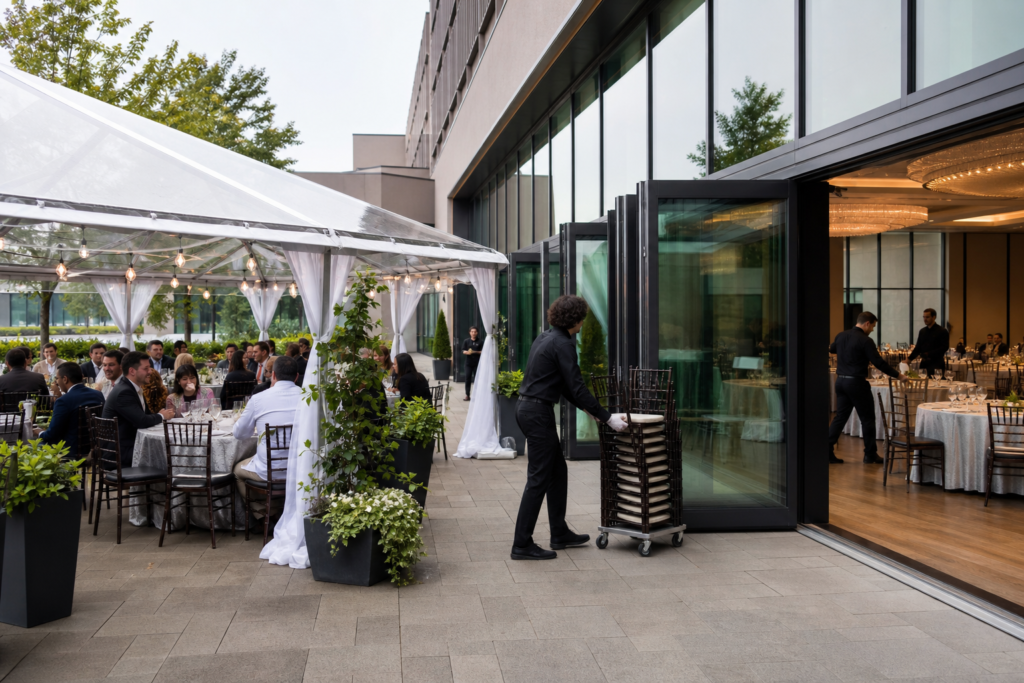
Menu planning is also space planning. Buffets and stations need service corridors, tables need enough room for shared items, plated service needs clear server routes, and every format should preserve accessible paths and sightlines to the stage or presentation area.
Review the available halls, capacity, AV, lighting, staging, technical support, and parking with the venue team. These features provide useful planning context, but the best room and service arrangement depends on your guest count, layout, program, equipment, and catering format.
Ask the venue team to review the proposed menu alongside the floor plan. Discuss buffet or station placement, staging and screen visibility, technical cue points, guest arrival, parking flow, and whether separate rooms or halls are needed for registration, dining, presentations, or specialty meal service.
7. Prepare the details needed for a useful quote
A vague request such as “What is your halal menu price?” usually produces a vague answer. A tailored quote depends on the event’s scale, service requirements, menu direction, schedule, and selected venue services.
Prepare this information before contacting the caterer:
- Event type, preferred date, and approximate duration.
- Estimated and confirmed guest count, including children where relevant.
- Halal requirements, documentation expectations, and questions about preparation controls.
- Estimated vegetarian, vegan, allergen-sensitive, and other specialty meal counts.
- Preferred service format, such as buffet, plated, family-style, stations, or boxed meals.
- Menu influences, spice preferences, and foods or ingredients that should be included or avoided.
- Meal service windows, speeches, prayer breaks, ceremonies, networking, and other program constraints.
- Preferred room layout, AV, staging, lighting, technical support, and parking considerations.
- Whether you want a tasting, venue walkthrough, virtual tour, or follow-up menu review.
Ask the event team how it can assist with room layouts, timelines, menu selections, and event logistics. Final pricing, availability, and package inclusions require a tailored conversation based on your event details.
Service-format comparison at a glance
| Format | Guest experience | Main planning demand | Often worth considering for |
|---|---|---|---|
| Buffet | Choice and flexible portions | Queues, labels, replenishment, and service-point space | Weddings, galas, and mixed-preference groups |
| Plated | Formal and highly sequenced | Accurate counts, table service, and program coordination | Formal dinners, ceremonies, and corporate galas |
| Family-style | Shared, social dining | Table space, quantities, and special-meal handling | Receptions and community celebrations |
| Stations | Interactive and distributed | Placement, signage, equipment, and queue balance | Large receptions and networking events |
| Boxed meals | Fast and individually organized | Packaging, labeling, distribution, and waste planning | Conferences, school programs, and short breaks |
Questions to ask before approving the menu
- What halal sourcing information or documentation can you provide for the proposed menu?
- How are halal ingredients stored, prepared, transported, and served?
- What controls address shared equipment or potential cross-contact?
- How are allergens identified in recipes, labels, and staff instructions?
- Which vegetarian, vegan, and specialty options can be prepared for the expected counts?
- How will special meals be labeled and delivered during buffet or plated service?
- What service equipment, tables, signage, and replenishment arrangements are included?
- How will the meal window fit around speeches, prayer breaks, ceremonies, or presentations?
- What menu changes are possible after a tasting, and when must final counts be confirmed?
- Which room, AV, staging, lighting, and parking details should be included in the quote?
Frequently asked questions
Can an in-house halal catering menu accommodate vegetarian and vegan guests?
It can, depending on the caterer’s available menu and preparation procedures. Ask for proposed dishes, ingredient details, preparation controls, labels, and required advance counts before approving the menu.
What should I ask about halal preparation and cross-contact controls?
Ask about sourcing, supplier documentation, storage, preparation areas, shared equipment, serving utensils, and staff procedures. If guests require formal certification or a particular standard, ask whether the caterer can provide relevant documentation.
Which service format works best for a large conference or wedding?
There is no universal answer. Buffets and stations can offer variety and distribute guest movement, plated service can protect a formal sequence, family-style service can encourage table interaction, and boxed meals can suit short breaks. Compare each option against your schedule, room layout, headcount, and desired guest experience.
When should I request a halal menu tasting?
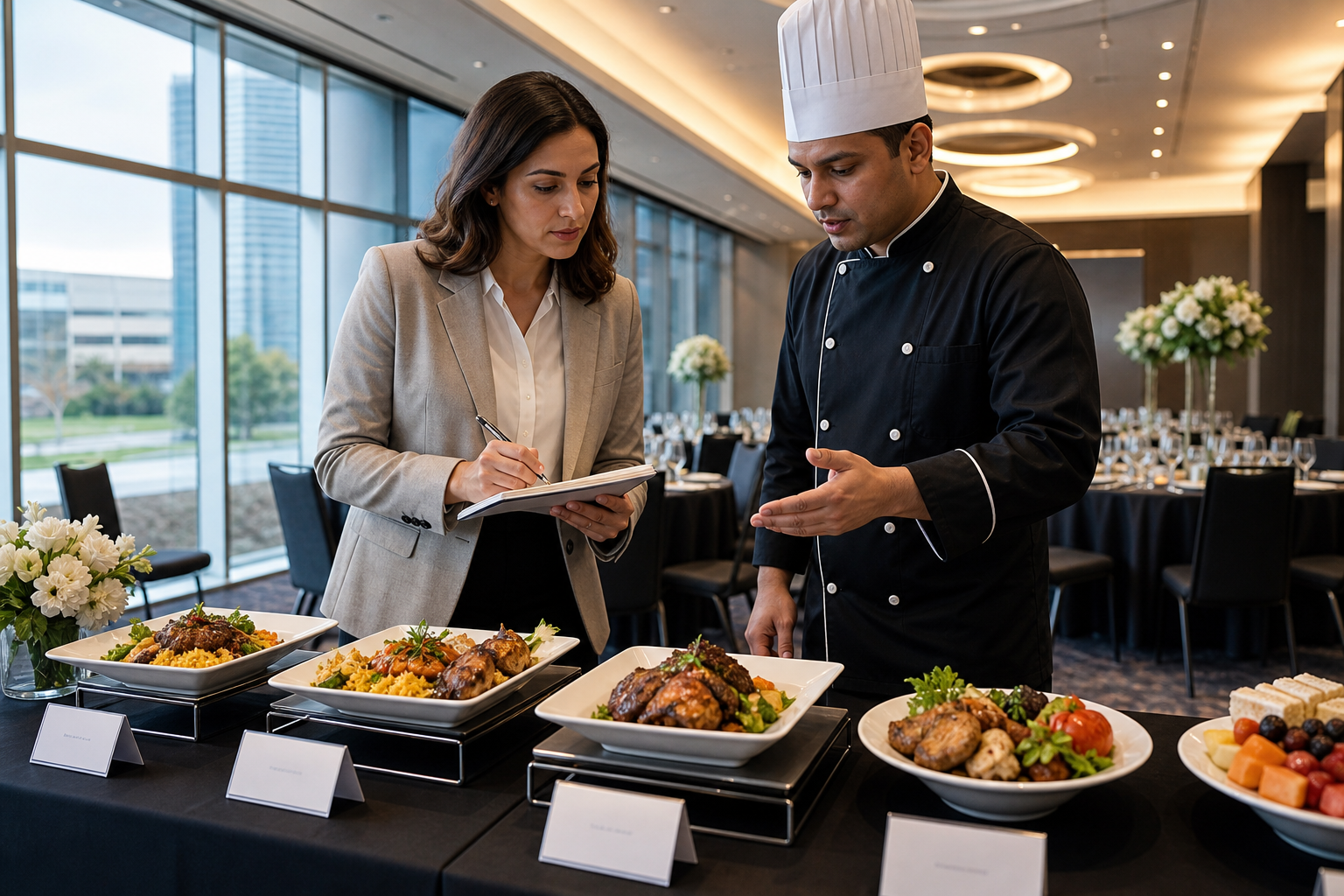
Request a tasting after clarifying the event type, guest count, halal requirements, preferred cultural influences, service format, and major dietary needs. That gives the tasting a clear purpose and makes it easier to evaluate both the food and the practical service plan.
Conclusion: Choose the menu by standards, flow, and fit
The right in-house halal catering menu is not simply the one with the longest list of dishes. It is the option whose halal requirements, preparation controls, service format, dietary coverage, timing, and room logistics fit the event you are actually planning.
Confirm standards first, then balance the menu for your guest mix, select the service format, plan labels and special meals, test the schedule, and review the floor plan with the venue team. When you request a quote or tasting, bring a clear headcount, dietary breakdown, program timeline, room requirements, and questions about preparation and documentation.
Plan your in-house halal catering menu with Mississauga Convention Centre
For in-house halal catering, event rooms, AV support, and menu planning in Mississauga, contact Mississauga Convention Centre with your event details and preferred service format. You can also review halal catering menu planning and conference catering ideas before the conversation. The venue identifies Pakistani Halal, South Asian, Middle Eastern, Sri Lankan, Caribbean, and Continental options, along with halal, vegetarian, vegan, and specialty menus; it also describes seven halls of approximately 4,250 square feet each, total capacity exceeding 2,200 guests, in-house AV, lighting, staging, technical support, and approximately 700 on-site parking spaces. Confirm specific ingredients, preparation procedures, availability, pricing, and package inclusions for your event.