

 20 September, 2026
Last updated: October 2026
By Mississauga Convention Centre
Last updated: October 28, 2026
What does social wedding mean?
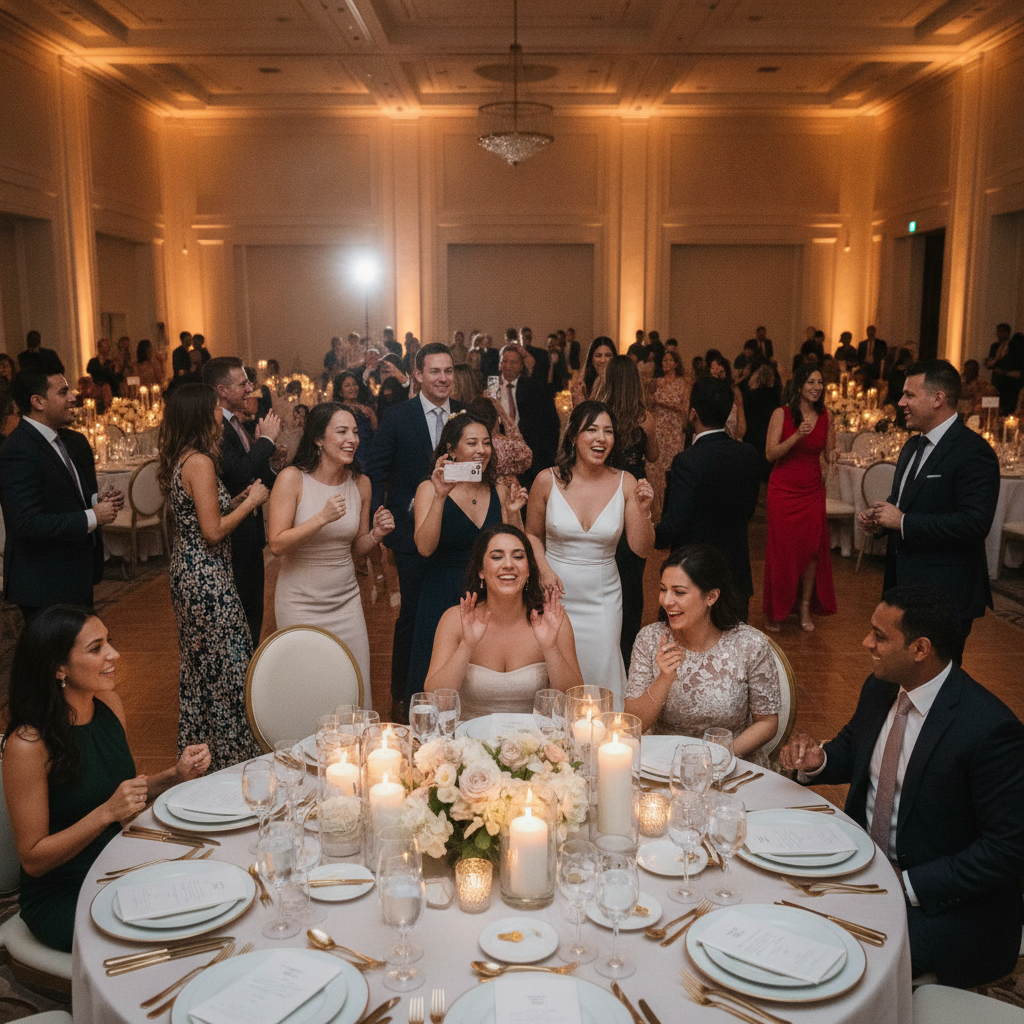
“Social wedding” is useful buyer shorthand for a wedding or wedding reception designed to bring guests into the experience. It is not a distinct current regulatory category or a formal venue programme name in Mississauga. In practical planning terms, it describes a celebration where guest comfort, conversation, participation, photography, food, entertainment, and smooth transitions are considered from the beginning.
That approach can include an unplugged ceremony followed by an inviting reception, a menu that encourages conversation, cultural performances placed thoughtfully between courses, or a shared photo plan that lets guests contribute memories without asking everyone to keep their phones out during the vows. The goal is not to make a wedding feel more digital. The goal is to help people feel present, included, and connected.
For couples considering wedding venues in Mississauga, this distinction matters. A social wedding is less about a particular decoration trend and more about how the venue, floor plan, programme, catering, and technical support work together to create an enjoyable day.
Why plan a social wedding?
A wedding brings together people who may not see one another often, sometimes across several generations, cultures, languages, and expectations. A guest-centred plan gives those people natural opportunities to meet, eat, talk, watch, dance, and celebrate without leaving the couple responsible for every interaction.
It also protects the couple’s time. A well-paced event makes room for greetings, photographs, dinner, and dancing while giving the venue team clear instructions for transitions. Instead of trying to solve every detail during the reception, couples can decide in advance which moments matter most and where guests should go next.
Benefits for couples and guests
- More meaningful interaction: Food service, seating, entertainment, and room design can encourage guests to mix naturally.
- Less day-of decision-making: A shared run-of-show gives the coordinator, DJ, caterer, photographer, and technical team the same plan.
- Better cultural inclusion: Traditions, performances, menus, entrances, and ceremonies can be sequenced rather than treated as last-minute additions.
- More useful memories: Guests can take part in photographs and shared albums at appropriate points without distracting from the ceremony.
- A calmer reception: Buffers between major segments reduce the risk that a late arrival or extended speech affects the entire evening.
The best version still feels like your wedding. Guest-centred planning should support your priorities, not replace them with a fixed template.
How should you choose a venue for a social wedding?
Start with the experience you want guests to have, then test whether the venue can support it. Ask how guests will arrive, where they will wait, how the ceremony will transition into cocktails, where dinner will be served, and whether the room can change from formal dining to dancing without creating unnecessary delays.
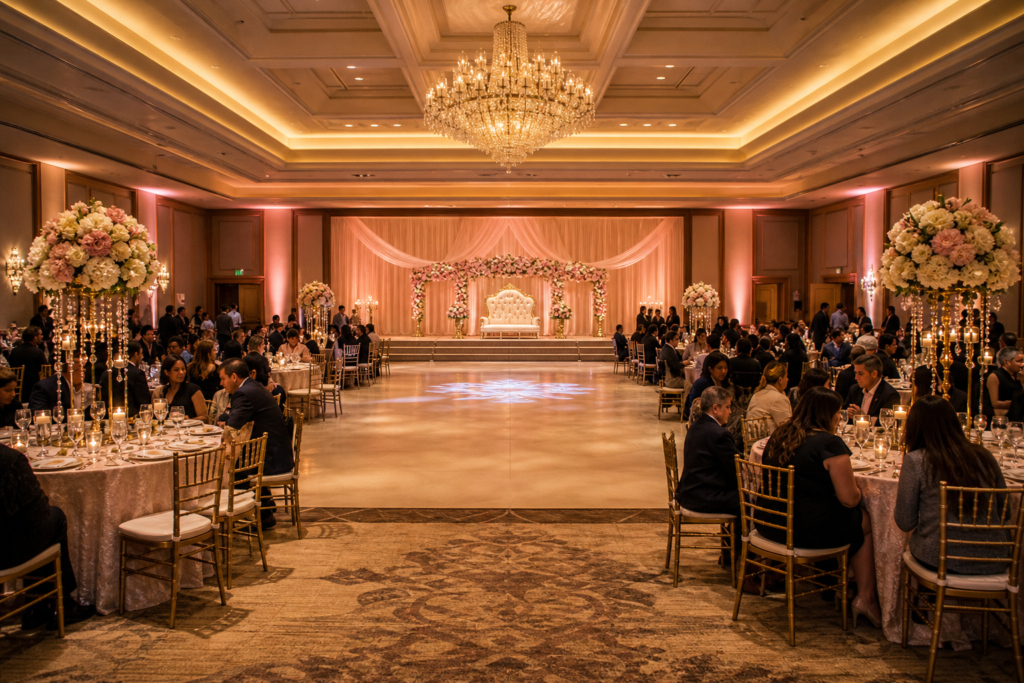
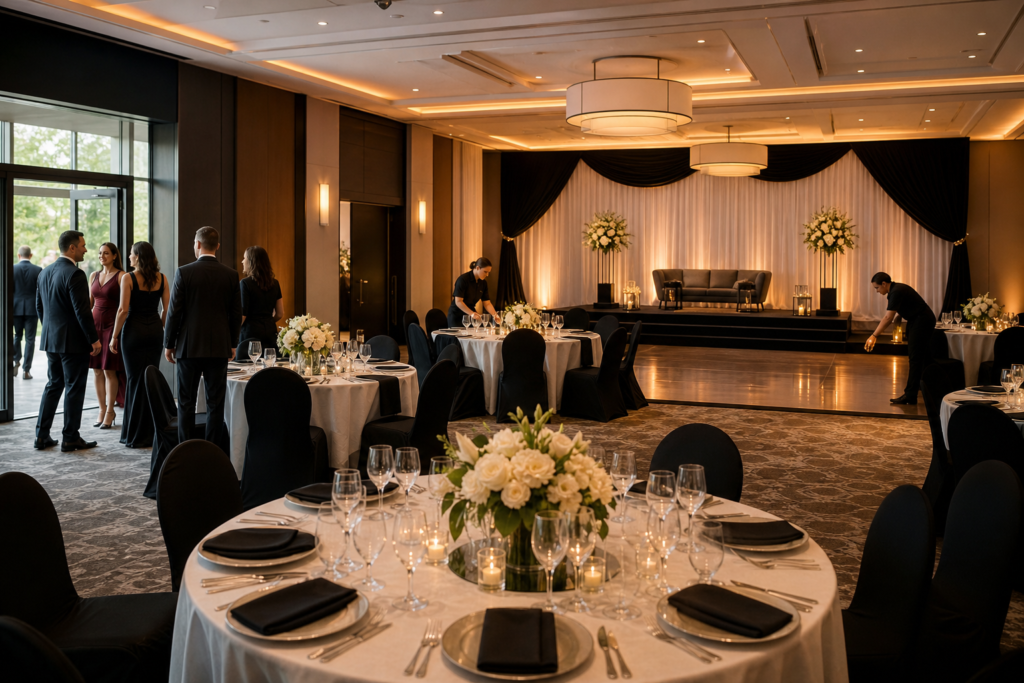
Mississauga Convention Centre at 75 Derry Road West offers seven halls of approximately 4,250 square feet each, with total capacity for more than 2,200 guests and about 700 on-site parking spaces. Those confirmed venue features provide flexibility for different guest counts and event formats, but the right room combination still depends on the final headcount, ceremony style, floor plan, and programme.
Questions to ask during a venue visit
- Can the ceremony, cocktail hour, and reception use separate spaces or be reset efficiently?
- How are microphones, music playback, screens, stage lighting, and entrances coordinated?
- Which menu formats suit the number of speeches, performances, or cultural traditions?
- Where can guests take group photographs without blocking service or guest movement?
- What is the weather plan if an outdoor ceremony or patio moment is included?
- Who owns the final timeline, and when will the venue team review it with other vendors?
A venue should be evaluated as an operating environment, not only as a photograph. Attractive décor matters, but reliable transitions, clear sound, appropriate service pacing, and accessible guest movement often determine whether the celebration feels effortless.
How do you design guest flow?
Guest flow is the path people take from arrival to departure. A social wedding works best when that path feels obvious and comfortable. Signs, staff direction, room placement, lighting, and the timing of announcements all help guests understand what is happening next.
Build the day around distinct experiences
- Arrival: Give guests clear information about parking, entrances, registration, and the ceremony location. Keep the welcome area uncluttered so older guests and families with children can move comfortably.
- Ceremony: Decide whether the ceremony should be unplugged. A polite sign and a brief reminder from the officiant can protect the most intimate part of the day.
- Transition: Move guests toward cocktails with clear verbal cues, staff guidance, and a space that is already prepared. Avoid asking guests to wait in a corridor while a room is being changed.
- Reception reveal: If the dinner room is separate, use the opening as a deliberate moment. Lighting, music, and a coordinated entrance can make the transition feel exciting rather than logistical.
- Programme: Group speeches, dances, performances, and cultural rituals into a sequence that gives guests enough variety without interrupting every course.
- Late evening: Signal the move to open dancing or late-night food with a clear change in music and lighting. Guests should understand that the formal programme has ended.
Separate rooms can help reduce resets and create anticipation, while a well-planned single-room format can work for a smaller or more intimate reception. The decision should be based on guest count, service style, room access, and the number of transitions – not on the label attached to the wedding.
Which social wedding formats work well?
There is no single social wedding format. The most successful option is the one that matches your traditions, guest mix, season, and preferred level of formality. A couple may want a quiet ceremony and energetic reception, while another may place cultural performances and family participation at the centre of the day.
Unplugged ceremony and shared reception
Ask guests to put away phones during the vows, then invite photographs during cocktails and dancing. A single shared album link is easier to understand than several competing apps or hashtags. Assigning one person to monitor contributions can also prevent the couple from checking uploads during the reception.
Culture-forward celebration
Plan entrances, dances, attire changes, blessings, performances, and ceremonial moments in the same run-of-show as speeches and dinner. Tell the venue team what each moment requires, including floor space, microphones, music cues, lighting, staging, and approximate duration. This allows traditions to remain central while reducing improvised pauses.
Patio-to-ballroom experience
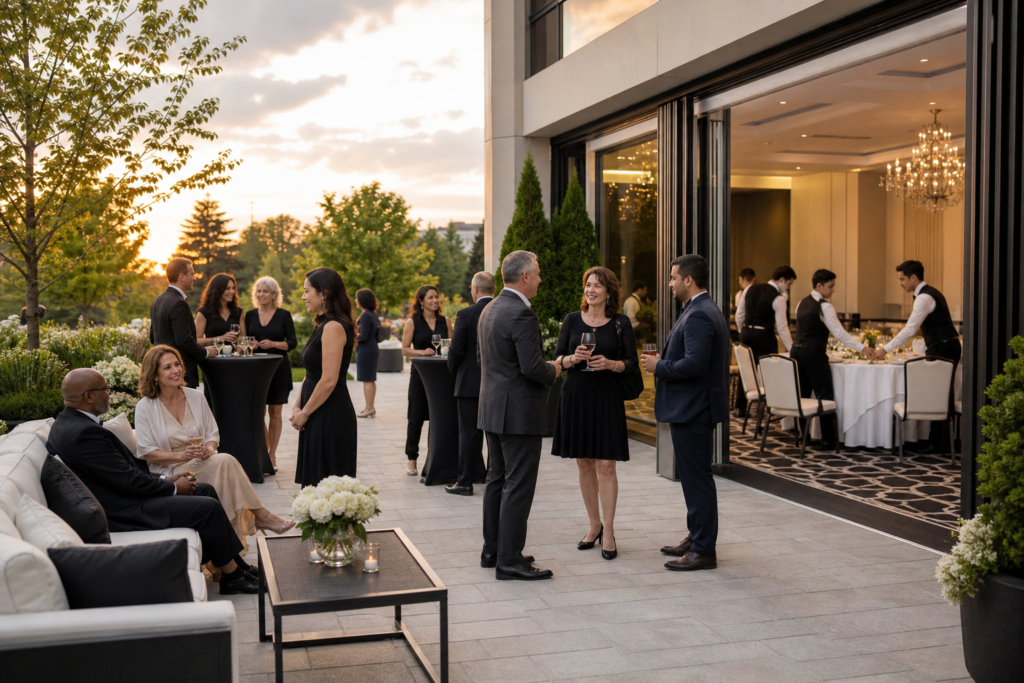
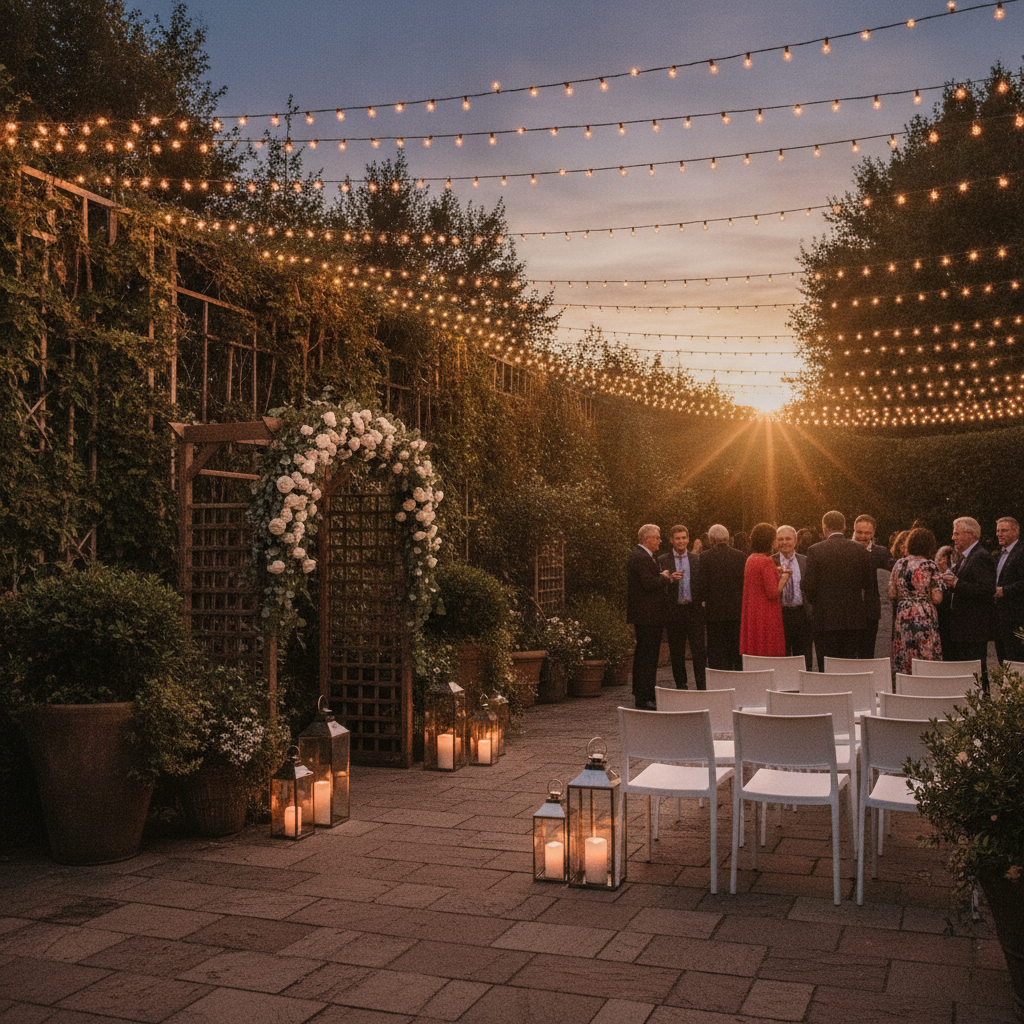
An outdoor ceremony or cocktail moment can create a strong change of atmosphere before guests move indoors. Confirm the weather pivot, guest accessibility, seating requirements, sound plan, and timing for the move. The patio should be treated as part of the operational plan, not only as a photographic backdrop.
Interactive dining
Family-style service, selected stations, or a carefully paced buffet can encourage conversation. Plated service can be equally social when courses are timed around speeches and performances. The important question is whether guests can eat comfortably without missing the moments they came to see.
Formal reception with social details
A social wedding can be elegant. Warm lighting, coordinated service, polished table settings, a concise programme, and professional AV create formality, while conversation prompts, a portrait area, and shared memory capture add participation. Social does not need to mean casual, loud, or technology-led.
How can food support a social wedding?
Food is one of the most reliable ways to help guests connect. It gives people a reason to linger, creates conversation across family groups, and allows couples to express heritage. Menu planning should therefore consider service rhythm as carefully as flavour.
Mississauga Convention Centre provides in-house catering across South Asian, Pakistani Halal, Middle Eastern, Sri Lankan, Caribbean, and Continental cuisines. Couples can discuss how heritage dishes, vegetarian choices, dietary requirements, and familiar crowd-pleasers fit into the overall programme.
Match service style to the programme
- Plated service: A good choice when the event has a formal structure and the couple wants predictable course timing.
- Family-style service: Useful for encouraging table conversation and sharing, provided tables have enough space and service is coordinated.
- Buffet or stations: Flexible for varied preferences, but queues and replenishment should be planned so guests do not miss a major programme moment.
- Late-night food: A small, well-timed offering can restore energy after dancing without interrupting the main dinner.
Ask how the menu will accommodate guests who require Halal, vegetarian, allergy-aware, or other dietary options. Clear labels and informed service are more helpful than asking guests to guess which dishes are suitable.
What should a social wedding timeline include?
A timeline should show more than start times. It should identify who is responsible, where guests are located, what the technical team needs, and how the event moves from one experience to the next. Share one current version with the venue, coordinator, DJ or band, photographer, caterer, decorator, and key family members.
| Segment | Planning focus | Owner or lead |
|---|---|---|
| Guest arrival | Signs, parking guidance, welcome area, accessibility | Venue and coordinator |
| Ceremony | Processional order, microphones, music, unplugged request | Officiant and coordinator |
| Family photographs | Shot list, group order, indoor weather alternative | Photographer and family representative |
| Cocktail hour | Food release, music level, guest direction, room reset | Banquet and venue team |
| Reception entrance | Doors, lighting cue, music playback, seating readiness | Coordinator and DJ or band |
| Dinner and speeches | Course timing, microphone handoff, toast order | Banquet lead and host |
| Dancing and close | Lighting change, late-night food, final announcement | DJ or band and coordinator |
Protect the schedule with buffers. A ten-minute delay may be manageable early in the evening, but several unplanned delays can remove dinner time, shorten dancing, and leave the couple feeling that they were always catching up. Keep the number of major programmed moments realistic and give the coordinator authority to adjust small details.
What AV and technical support does the event need?
Guests notice poor sound immediately, especially during vows, speeches, performances, and music transitions. Before the event, confirm microphone types, speaker placement, playback files, lighting cues, screen requirements, stage dimensions, and who will make technical decisions on the day.
Mississauga Convention Centre offers professional audiovisual systems, lighting, staging, and technical support as part of its in-house services. Couples should still provide a clear cue sheet and test important music and presentation files in advance. In-house support does not remove the need for preparation; it gives the event a team that can coordinate the preparation.
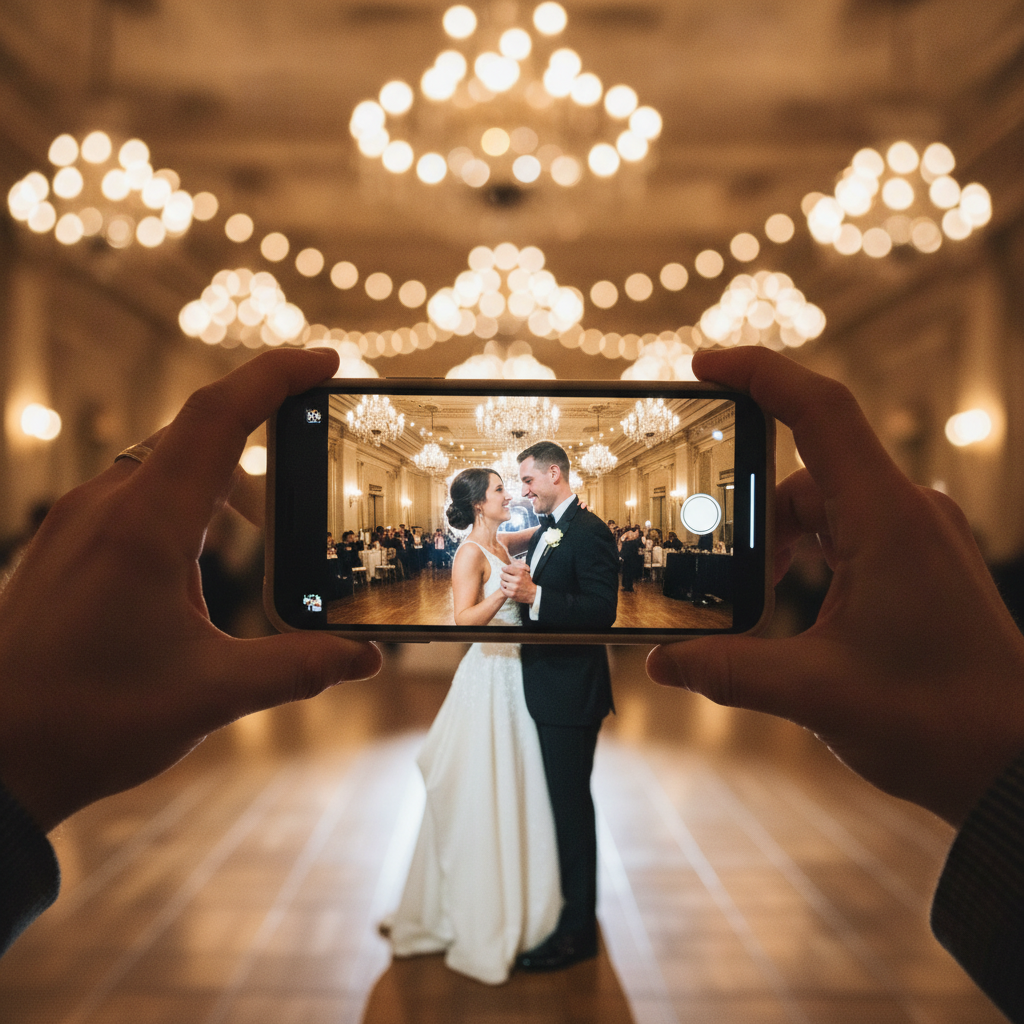
Keep guest sharing intentional
- Use an unplugged request only where it matters, usually during the ceremony.
- Offer one simple destination for guest photographs after the ceremony.
- Create a well-lit portrait area that does not obstruct dining or service paths.
- Ask the photographer and videographer to capture guest interaction, not only formal portraits.
- Avoid requiring guests to download multiple apps or post publicly.
The technology should support the relationship between people in the room. If guests spend more time managing devices than talking, dancing, or watching the programme, the plan needs simplifying.
How is a social wedding different from a traditional wedding?
The difference is planning emphasis, not a separate type of marriage. A traditional wedding can be highly social, and a social wedding can be formal, religious, cultural, or intimate. The term is most useful when it helps a couple make deliberate decisions about participation and flow.
| Planning area | Traditional default | Social wedding emphasis |
|---|---|---|
| Guest engagement | Often develops naturally | Designed through food, seating, prompts, and shared moments |
| Phone use | Usually left to individual guests | Guided by an unplugged request and a later sharing plan |
| Timeline | Major formalities are scheduled | Transitions and guest energy are planned as carefully as formalities |
| Venue layout | One principal room may be sufficient | Multiple rooms may be used to create distinct experiences |
| Food | Selected primarily by menu preference | Selected for preference, heritage, conversation, and programme timing |
Use the label only if it clarifies your decisions. Your venue team should ultimately plan for the actual guest experience you want, regardless of terminology.
What should Mississauga couples plan locally?
Mississauga couples should build arrival and weather buffers into the schedule. Mississauga Convention Centre is at 75 Derry Road West, near major highways and Toronto Pearson International Airport, which can be convenient for local and out-of-town guests. Even with convenient access and on-site parking, guests may arrive at different times because of traffic, airport travel, family photographs, or accessibility needs.
Practical local checks
- Give guests the full venue address and a recommended arrival time rather than relying only on the ceremony start time.
- Tell vendors where and when they should load in, especially when décor, staging, instruments, or cultural ceremony items are involved.
- Keep an indoor alternative for any patio ceremony, outdoor photograph, or cocktail activity.
- Confirm accessibility, seating, washroom directions, and quiet areas for guests who may need a break from music or crowds.
- For a civil ceremony, review current City of Mississauga requirements separately from venue planning. A venue reception and the legal marriage process are related but not identical decisions.
Local planning is not about adding more details to the couple’s workload. It is about identifying the few conditions – arrival, weather, access, legal paperwork, and vendor timing – that can affect the experience if they are left until the last minute.
Social wedding checklist
Use this checklist during venue conversations and the final planning meeting:
- Define the three to eight moments that matter most to you.
- Choose whether the ceremony will be unplugged.
- Decide how guests can contribute photographs after the ceremony.
- Map arrival, ceremony, cocktails, dinner, dancing, and departure.
- Confirm the room combination, guest capacity, table plan, and accessibility needs.
- Match menu style and course timing to speeches, performances, and traditions.
- Prepare a weather pivot for outdoor plans.
- Share one run-of-show with all principal vendors.
- Test microphones, music, presentations, lighting cues, and cultural performance requirements.
- Assign one trusted person to answer questions so the couple can remain present.
The checklist is intentionally simple. A social wedding becomes harder when every guest, vendor, and device receives a different set of instructions.
Frequently asked questions about social weddings
Is “social wedding” an official venue or legal category in Mississauga?
No. In current planning language, “social wedding” is best understood as a description of a guest-centred wedding or wedding reception. It should not be confused with an active regulatory programme or a special venue classification.
Can a social wedding still be formal and elegant?
Yes. Formality comes from the ceremony, attire, service, design, lighting, and programme. A guest-centred approach simply adds intentional opportunities for connection and participation without making the celebration informal.
How do we keep phones from distracting guests during the ceremony?
Use a friendly unplugged request at the entrance and ask the officiant to repeat it briefly before the ceremony begins. Invite photographs afterward through one shared album or another simple method, so guests know when participation is welcome.
What menu style is best for a social wedding?
Family-style, buffet, station, and plated menus can all work. Choose based on guest needs, formality, headcount, and the number of speeches or performances, then coordinate service timing so people can eat without missing important moments.
Plan your Mississauga social wedding
A social wedding is a practical way to describe a celebration built around people: their comfort, participation, memories, and ability to enjoy the day with you. Begin with your guest experience, choose rooms and services that support the flow, and keep the technology, menu, and programme simple enough to manage.
To discuss halls, catering, AV, staging, and a run-of-show for your celebration, contact Mississauga Convention Centre for a venue conversation.