

 20 September, 2026
 “Wedding venue comparison guide” refers to a structured method for evaluating, shortlisting, and selecting reception and ceremony spaces. It scores venues on capacity, layout, catering, AV, parking, accessibility, and flexibility. For couples touring Mississauga venues near 75 Derry Rd W, it turns scattered notes into a confident, apples-to-apples decision.
By Preet Dass — Mississauga Convention Centre • Last updated: 2026-04-27
Your plan to compare wedding venues with confidence
Use a consistent scorecard across capacity, layout, catering, AV, parking, accessibility, and vendor flexibility. Confirm ceremony-to-reception flow, guest travel ease, and hold windows before you sign. Then validate with a site walk-through, an event AV checklist, and a timeline rehearsal.
Planning should feel exciting, not overwhelming. This guide gives you the structure and tools to compare options clearly, ask precise questions on tours, and book a venue that supports your vision without surprises.
At a glance
- What a wedding venue comparison guide includes and why it matters
- How to build a venue short list and score each option fairly
- Capacity, layout, AV, and catering criteria—plus red flags to spot early
- Table comparing banquet halls, hotels, clubs, outdoor patios, and convention centers
- Tools: scorecard template, walk-through script, floor plan checklist, and AV questions
- Real examples from Mississauga Convention Centre’s weddings and receptions
Use the table of contents below to jump to the section you need.
What is a wedding venue comparison guide?
A wedding venue comparison guide is a standardized checklist and scorecard for evaluating event spaces on the same criteria. It aligns your guest count, layout, catering, AV, parking, and accessibility with your timeline and vision, so you can compare venues fairly and choose with confidence.
In plain terms, it’s your decision framework. Instead of collecting random facts from tours, you’ll log the same details for every space and weigh trade-offs. That way, a gorgeous ballroom that lacks parking doesn’t eclipse a slightly smaller hall with better flow and on-site technical support.
Core components
- Capacity fit: Seat counts for ceremony, dinner, head table, dance floor, and late-night stations. Note min/max flexibility.
- Layout and flow: Where guests arrive, where they queue for cocktails, and how they move into dinner and dancing.
- Catering alignment: Menu style (plated, buffet, family-style, live stations), cultural needs, and service rhythm.
- AV readiness: Sound, lighting, projection, stage, and power—plus on-site technicians for show flow.
- Parking and access: On-site capacity, ADA accessibility, coat check, and restroom proximity.
- Flex windows: Setup/strike allowances, early access for décor, and contingency spaces.
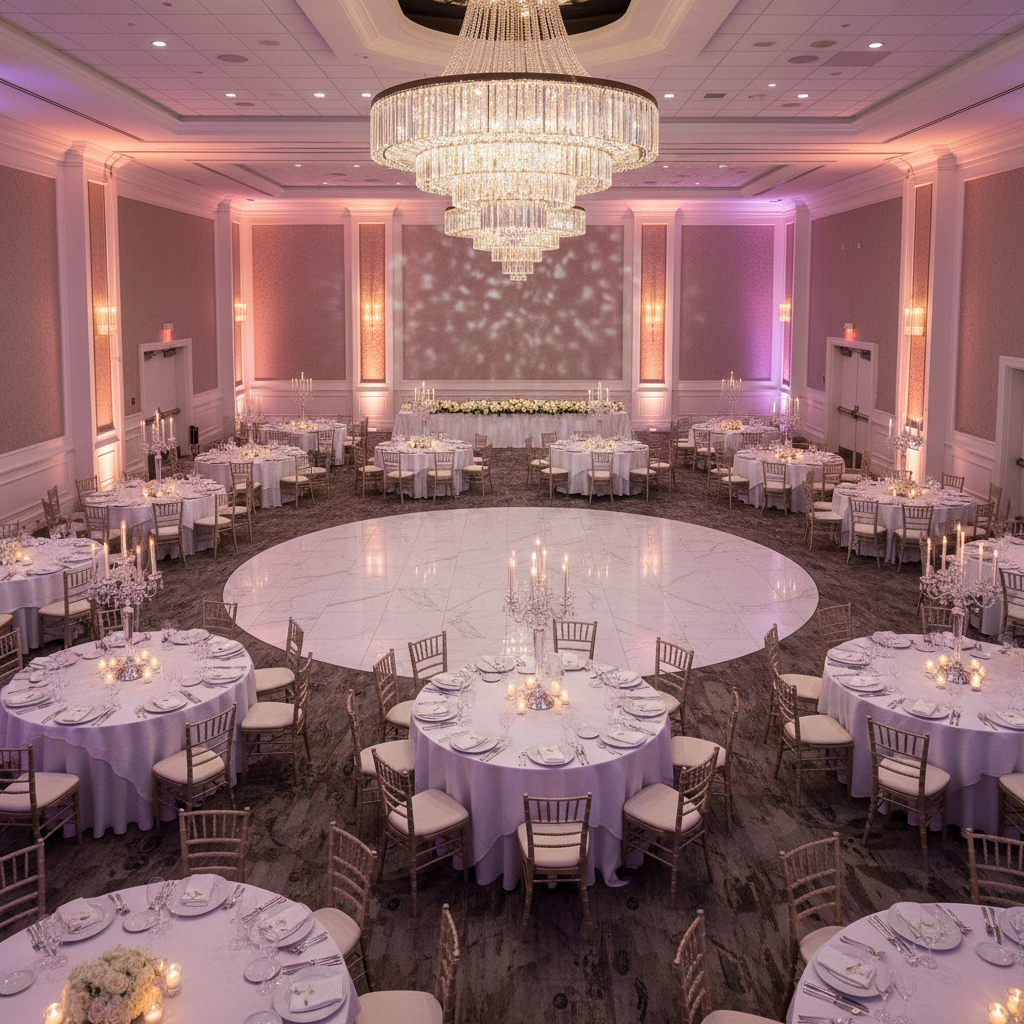
At Mississauga Convention Centre, seven elegant halls (about 4,250 sq ft each) and an outdoor patio provide modular options. Total capacity exceeds 2,200 guests with approximately 700 on-site parking spaces—real numbers you can use to benchmark other venues in your short list.
Why a structured comparison matters
A structured comparison prevents costly compromises. By scoring capacity, flow, catering, and AV together, you reduce risks like cramped seating, echoey speeches, or timeline slippage. A clear framework transforms venue tours into confident yes/no decisions you can defend.
Here’s the thing: most couples fall in love with aesthetics first. Then day-of logistics sneak up—setup windows, mic reliability, or kitchen distance to head table. A guide keeps form and function in balance so you protect comfort, timing, and cultural details.
What couples often overlook
- Dance floor size: Plan roughly 3–5 square feet per dancing guest to avoid shoulder-to-shoulder crowds.
- Line-of-sight: Ensure every table can see the head table and screens; ask for pillar and riser locations.
- Sound bleed: If a venue hosts parallel events, ask how sound isolation is handled and who controls volume.
- Kitchen proximity: Longer runs can delay plated service; walk the path from kitchen to head table.
- Backup plans: Outdoor ceremony? Confirm indoor flip options and how long a weather move takes.
In our experience, venue logistics directly shape guest experience. That’s why our wedding team pairs décor planning with an event AV checklist and floor plan review—small adjustments in speaker placement or buffet route can save 10–15 minutes per service phase.
How the venue comparison process works
Shortlist 3–5 venues that meet your must-haves, then score each on the same criteria. Tour with a scripted checklist, request a scaled floor plan, and run an AV/lighting review. Close with a hold window and a written summary of inclusions, layouts, and support.
Most couples start 12–18 months out for prime dates. Your goal isn’t to tour everywhere—it’s to tour smarter. When a venue aligns on capacity, catering fit, and logistics support, you’ll feel it immediately.
Step-by-step workflow
- Define non-negotiables: Guest count range, ceremony/reception on-site, cultural menu needs, and indoor backup.
- Build your short list: Use photos, floor plans, and accessibility info to narrow to 3–5 spaces.
- Tour with a script: Ask the same 20–30 questions everywhere; capture photos from guest height.
- Request scaled layouts: Confirm table counts, dance floor, staging, and server aisles on a to-scale plan.
- Run an AV check: Microphones, projector/screens, lighting zones, power access, and sound operator plan.
- Validate support: Who is on-site day-of? When do techs arrive? How are flips and cues managed?
- Summarize apples-to-apples: Score each venue 1–5 across categories with short notes and photos.
For a deeper dive into room logistics, see our wedding capacity guide. If AV is a big part of your reception, align with an internal event AV checklist during the walk-through so you can lock show flow early.
Local considerations for 75 Derry Rd W
- Weekend traffic around Mississauga can spike near major venues; plan guest arrival buffers and consider on-site photos to reduce travel time between locations.
- Winter weather can affect ceremony flips and outdoor plans; confirm indoor ceremony options and snow-clearing procedures for entrances and the patio.
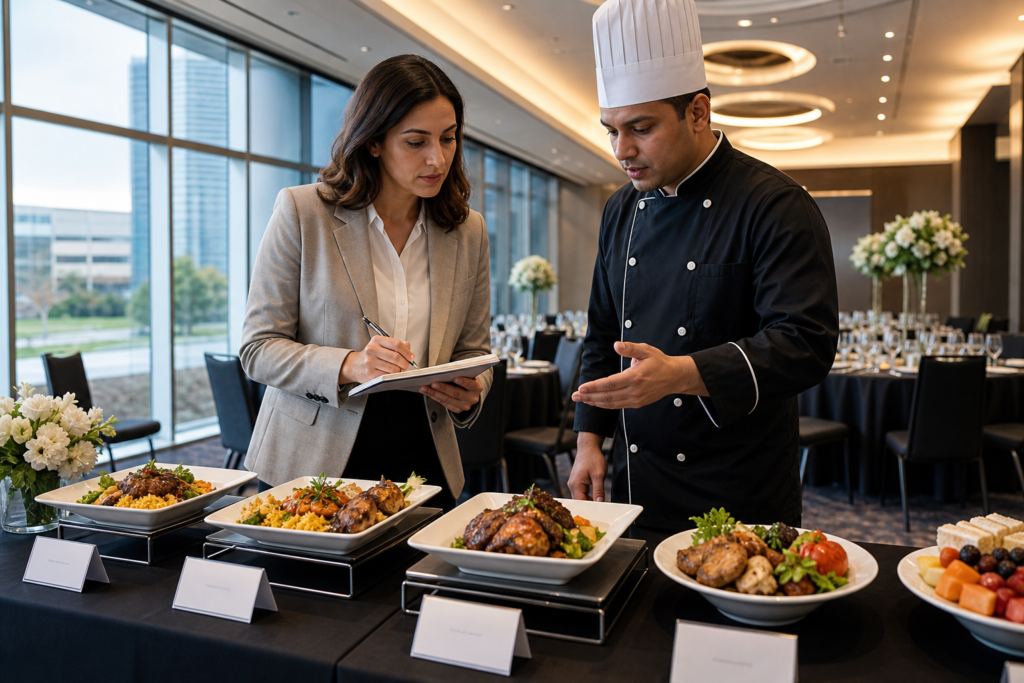
- Multicultural weddings often need Halal, vegetarian, and kid-friendly options; coordinate tasting timelines early so menus and service rhythms are tested together.
Types of venues and how to compare them
Compare venues by capacity, catering control, AV infrastructure, parking, weather risk, and travel convenience. Banquet halls and convention centers often excel in capacity and logistics, while outdoor or boutique spaces trade scale for ambiance and customization.
Different spaces solve different problems. A hotel ballroom may bundle rooms but restrict outside catering. A private club may look stunning but offer limited parking. A multipurpose convention center can stage large, multicultural receptions with integrated AV and on-site technical teams.
Common venue types, at a glance
| Venue Type | Capacity Range | Catering Control | AV + Staging | Parking | Weather Risk | Best For |
|---|---|---|---|---|---|---|
| Hotel Ballroom | 150–600 | In-house only | Basic to strong | Garage/paid | Low (indoor) | Weekend stays, destination guests |
| Banquet Hall | 150–800 | In-house or preferred list | Moderate to strong | On-site/free common | Low (indoor) | Classic receptions, value + scale |
| Restaurant/Club | 60–200 | Chef-driven in-house | Limited add-ons | Street/valet | Low (indoor) | Food-first, intimate settings |
| Golf Course | 120–350 | In-house | Moderate | Lot/valet | Medium (ceremony lawns) | Scenic photos, summer timelines |
| Barn/Loft | 100–250 | Outside caterers common | Rent-in heavy | Lot/street | High (seasonal) | Rustic or industrial vibes |
| Outdoor Patio/Garden | 80–250 (ceremony) | Varies | Rent-in lighting/sound | Varies | High (weather) | Golden-hour ceremonies |
| Convention Centre | 200–2,000+ | In-house, often multicultural | Advanced with tech team | Large on-site lots | Low (indoor) | Large, complex receptions |
If you’re envisioning a large, multicultural reception with a live band, multiple stages, and late-night stations, a convention-style venue with integrated AV and diverse in-house catering can simplify planning and support a tighter show flow.
Best practices and red flags during tours
Arrive with a scripted checklist, request scaled layouts, and observe server paths and sightlines. Test microphones, confirm lighting zones, and ask who calls cues. Red flags: vague setup windows, limited parking, and “we’ll figure it out later” answers.
We’ve found that thorough walk-throughs reduce surprises. When you see a space through your guests’ eyes—entry, cocktail queue, toast visibility—choices become clear. Use the quick lists below as you tour.
Best practices
- Bring your scorecard: Capture the same data at each venue so comparisons stay fair.
- Stand at guest height: Check sightlines to head table and screens from the back corners.
- Map server routes: Ensure trays don’t cross crowded dance floor paths or DJ cables.
- Confirm flips: Time the ceremony-to-dinner reset; 45–75 minutes is common depending on scope.
- Ask for a tech contact: Identify the person operating sound and lighting during speeches.
- Review accessible paths: Confirm barrier-free entry, elevators (if any), and restroom proximity.
Red flags
- Parking uncertainty: No clear plan when lots fill or during winter storms.
- Limited power: AV or band needs outstrip available circuits; ask about dedicated 20A lines and stage power.
- Restricted menus: No Halal or vegetarian support when your guest profile needs it.
- Ambiguous timeline: Vague setup windows or no day-of coordinator/technician.
- Pillar obstructions: Columns blocking sightlines to head table or screens.
As you evaluate, compare your notes to a venue’s documented strengths. Our weddings overview outlines how integrated AV, layout planning, and multicultural menus come together in one place for a smoother experience.
Tools and resources to make comparison easy
Use a printable scorecard, a venue walk-through script, a floor plan checklist, and an event AV checklist. Pair them with scaled layouts and photos from your tour, then review everything with your planner or coordinator before you place a hold.
Tools help you reduce bias and remember details. When you walk three venues in a day, the one with chandeliers can overshadow the one with better staging. The right templates keep your decision grounded.
Core tools you can use today
- Scorecard template: Columns for capacity, layout, catering, AV, parking, accessibility, décor, and overall feel.
- Walk-through script: 25–30 questions you’ll repeat at each stop; include setup/strike windows.
- Floor plan checklist: Verify table count, dance floor, stage, server aisles, and buffet routes.
- Event AV checklist: Microphones, speakers, lighting zones, projector/screens, and cue caller.
- Timeline planner: Ceremony, photos, cocktails, dinner service, toasts, first dance, open dance, late-night.
Want to see how capacity and flow interplay in a real venue? Explore our wedding venue rental details for sample layouts and staging approaches that accommodate both intimate dinners and larger receptions.

Leverage expert content
Broaden your research with GTA-focused pieces that can spark helpful questions during tours. For example, these overviews offer planning angles you can adapt to your needs: an article with broader GTA venue tips, another with a GTA venue guide, and a look at wedding catering menu planning relevant to multicultural receptions.
Case studies and real examples
Turn planning theory into practice with real scenarios. These examples show how capacity, catering, and AV come together—from South Asian receptions to summer patio ceremonies—so you can visualize timeline, flow, and guest comfort.
Examples help you pressure-test your plan. Use them to challenge assumptions and fine-tune your request list before you place a hold.
Example 1: Multicultural reception with Halal service
- Profile: 420 guests, on-site ceremony, cocktail hour, and reception.
- Layout: Ceremony in one hall; flip to reception while cocktails use adjacent pre-function area.
- Catering: South Asian and Pakistani Halal buffet with late-night Middle Eastern station.
- AV: Dual screens, wireless mics, spotlight for entrances, and DJ tie-in to house sound.
- Parking: Leverage the approximately 700 on-site spaces; communicate arrival windows on invitations.
Outcome: Clean transitions, strong acoustics for toasts, and culturally aligned menus. For cuisine flexibility, review our weddings overview to see how in-house teams support diverse menus and service rhythms.
Example 2: Summer patio ceremony, indoor reception
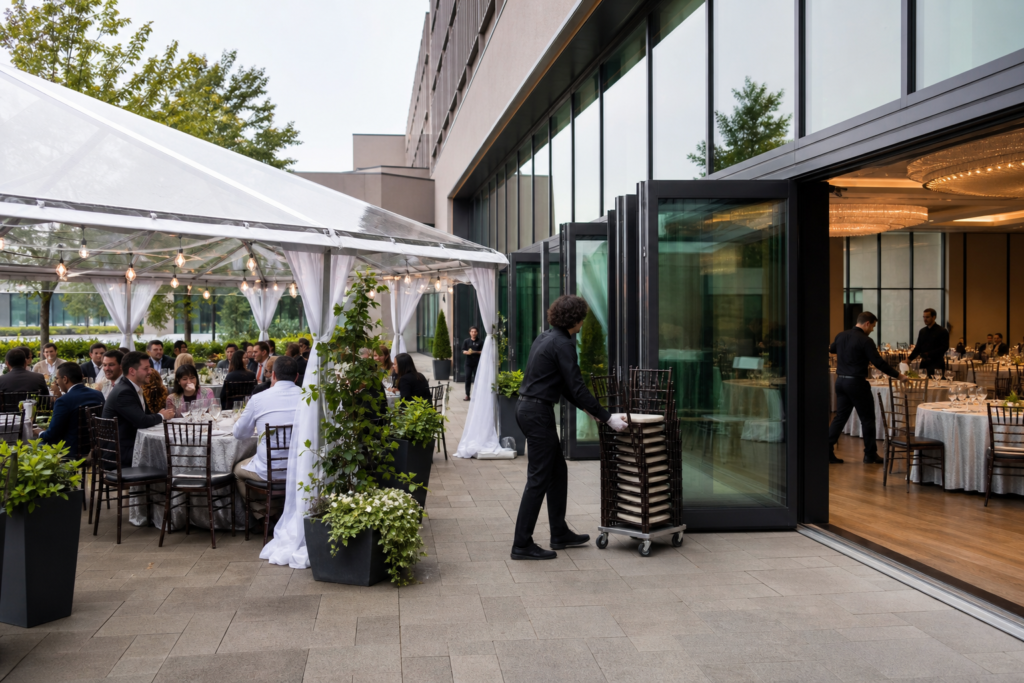
- Profile: 180 guests; golden-hour patio ceremony with string lights; dinner indoors.
- Weather plan: Indoor ceremony backup identified with a 45-minute move protocol.
- Catering: Plated Continental dinner; vegetarian and kid-friendly options.
- AV/Lighting: Outdoor speakers for vows; indoor spotlighting and warm uplighting for dinner and dances.
Outcome: Magical sunset photos without timeline slippage. Explore space options via our wedding venue rental page for patio-to-ballroom flow ideas.
Example 3: Live band + DJ in a large hall
- Profile: 600 guests; extended family-style dinner; band and DJ share the stage.
- Staging: Riser for head table; extended dance floor; cable paths protected from foot traffic.
- Sound: House PA plus band reinforcement; dedicated operator for toasts and cues.
Outcome: Concert-like energy with controlled volumes and clear speeches. For AV-heavy formats, it helps to align early with an internal event AV checklist and, when useful, reference corporate-scale staging norms like those we outline for large gatherings in our corporate event venue guide.
Wedding Venue Comparison Guide: The core criteria
Score venues across seven areas: capacity, layout, catering, AV, parking, accessibility, and flexibility. Confirm ceremony-to-reception timelines, tech support, and cultural menu alignment. Prioritize guest comfort and show flow over décor alone—comfort is what people remember.
Below is a simple scoring model you can copy into a spreadsheet or notes app. Use 1–5 or 1–10 scales to keep rankings clear and simple.
Seven scoring categories
- Capacity: Fits your guest range without crowding; flexible if RSVPs shift.
- Layout: Logistics from arrival to last dance; head table sightlines and dance floor access.
- Catering: Menu style, cultural needs (e.g., Halal), tastings, and service tempo.
- AV: Microphones, speakers, lighting zones, projection, stage, and power access.
- Parking: On-site counts, overflow plans, accessibility, and winter readiness.
- Accessibility: Barrier-free entries, elevators/ramps (if any), and restroom proximity.
- Flexibility: Setup windows, décor allowances, contingency rooms, and tech support.
As you compare, reference real numbers where possible: seven ~4,250 sq ft halls and over 2,200 total guest capacity indicate large-venue readiness; approximately 700 free parking spots suggest easier arrivals, especially helpful during peak weekends.
Catering, culture, and service rhythm
Align cuisine and service style with your guest profile. Confirm Halal, vegetarian, and kid-friendly options, plus service timing for toasts and dances. A venue that can pace service with your program will protect speeches, traditions, and guest comfort.
Food is memory. Whether you prefer South Asian, Pakistani Halal, Middle Eastern, Sri Lankan, Caribbean, or Continental menus, make sure tastings validate flavor and portion expectations. Service rhythm matters too—plated dinners can run 90–120 minutes, while buffets often invite mingling and late-night energy.
- Menu fit: Secure written confirmation for Halal needs and regional dishes.
- Service pacing: Coordinate course timing with toasts and first dances.
- Late-night: Plan a snack that fits your culture and guest flow.
Want inspiration for structuring courses? Some planners browse menu planning ideas to develop tasting notes they’ll bring to their venue chef meeting.

AV, lighting, and staging (don’t skip this)
Great AV makes your program effortless. Confirm microphones, speakers, projection, lighting zones, stage size, and who calls cues. Ask for a tech on-site during speeches and entrances. Strong AV prevents delays and protects the moments you care about.
We operate professional audiovisual systems in-house with lighting, staging, and on-site technical support. In practice, that means you can integrate spotlighted entrances, clear toasts, and a dance floor that feels exciting—without garbled sound or blown circuits.
- Sound: At least two wireless mics (backup ready), balanced for front and back tables.
- Lighting: Dimmable zones and optional uplighting; spotlight for head table and entrances.
- Staging: Head table riser, band/DJ layout, protected cable paths.
- Projection: Screens where every table can see; avoid pillar blocks.
- Tech team: Identify who runs cues and when they arrive for setup.
If you want a primer on venue selection fundamentals alongside AV planning, our venue selection checklist pairs well with your comparison workbook.
Parking, accessibility, and location logistics
Smooth arrivals reduce stress. Confirm on-site parking counts, overflow plans, ADA access, coat check, and restroom proximity. Venues with large free lots and barrier-free entries make timelines steadier, especially during winter and peak weekend events.
Our site features approximately 700 on-site parking spaces and accessibility-conscious design. When parking is abundant and access is straightforward, guests arrive on time and your program stays on track. That’s a quiet advantage you’ll feel all evening.
- Wayfinding: Clear lobby and ballroom signage; avoid long indoor walks in formal wear.
- Accessibility: Confirm ramps/elevators (if needed) and reserved seating plans.
- Seasonal prep: Ask how snow or rain is handled for entries and the patio.
If you’re scanning GTA options broadly, some couples review GTA venue guides for travel-time ideas, then localize those notes to Mississauga traffic patterns and guest origins.
Virtual tours and visualization
Use virtual tours and floor plans to pre-visualize layouts before your site visit. Arrive with marked-up screenshots, then validate measurements on-site. Seeing the room at scale makes conversations about dance floors, stages, and décor faster and clearer.
If you’re still early in planning, a virtual walk-through can answer 80% of your first-visit questions. From there, you can test seating counts and décor options more confidently during your in-person tour.
To explore real layouts and planning approaches, browse our banquet hall overview alongside our weddings page to see how different rooms scale.
Sample timelines, flow, and staffing
Lock a realistic timeline early. Most receptions run 6–7 hours, with 60–90 minutes for cocktails and 90–120 for dinner. Align service pacing with toasts and dances, then back-time décor setup and tech checks so your first look and photos aren’t rushed.
While every celebration is unique, a predictable cadence helps planning partners coordinate. Here’s a sample structure you can tailor to your program and traditions.
- Setup: Décor load-in and tech checks; confirm who has venue access and when.
- Ceremony: 20–40 minutes; build a 45-minute weather move protocol if outdoors.
- Cocktails: 60–90 minutes; great time for photos and a room reset if needed.
- Dinner: 90–120 minutes; coordinate toasts and first dance between courses.
- Open dance: 120–180 minutes; add late-night stations during peak energy.
To translate timelines into floor plans, revisit our capacity guide so you know how many tables and what dance floor size work for your crowd.
Planning support you can lean on
If you want structured help, book a planning conversation with our wedding specialists. We’ll walk through capacity, layouts, AV, and menus together, then map a timeline that fits your traditions and guest flow.
Prefer a quick, low-pressure chat about your short list? Explore our wedding venue rental details, note your must-haves, and reach out. We’ll help you compare options and visualize your ceremony-to-reception flow without guesswork.
Additional research: broaden and refine
Once you have a short list, sanity-check your plan with third-party overviews and catering ideas. Borrow what resonates, discard the rest, and keep your scorecard updated so the best option becomes obvious.
Many couples look at neighborhood-wide posts for context and then localize the advice. For a broad look at Mississauga-area considerations, some planners review regional venue tips and compare against their notes on capacity, parking, and AV.
Frequently asked questions
These short answers address the decisions couples face most often: how to narrow options, how early to book, what to bring to tours, and how AV and catering shape guest comfort. Use them as a quick checkpoint.
How many venues should we tour before deciding?
Three to five tours are usually enough when you’ve prequalified capacity, layout, catering fit, and parking. Use the same checklist at each stop, request a scaled floor plan, and score 1–5 across core criteria so a best option emerges naturally.
When should we book a venue for a peak-season wedding?
Prime dates go quickly. Many couples secure venues 12–18 months in advance, especially for summer weekends and long weekends. If you’re flexible on day of week or season, your window can be shorter—just confirm hold policies and setup access early.
What should we bring to a venue walk-through?
Bring your guest count range, a rough timeline, key traditions, and sample décor inspiration. Add an event AV checklist, a floor plan sketch, and tasting notes if cuisine is central. Taking room photos from guest height helps you validate sightlines later.
How does AV affect the guest experience?
Clear audio and intentional lighting protect the moments you care about—vows, toasts, and first dances. Confirm microphones, lighting zones, projection needs, and who runs cues. A dedicated technician keeps the program on time and the energy just right.
Conclusion and next steps
Choose your venue with structure, not stress. Score capacity, layout, catering, AV, parking, accessibility, and flexibility against your timeline and traditions. The best option will support flow and comfort from arrival to last dance.
Here are quick takeaways and an action plan you can use this week.
Key takeaways
- Use one scorecard for every venue so comparisons stay fair.
- Prioritize capacity, sightlines, and AV alongside décor.
- Confirm cultural menu support and service pacing in writing.
- Protect timelines with clear setup windows and on-site techs.
- Parking and accessibility quietly shape guest comfort.
Action steps
- Download or draft your venue scorecard and walk-through script.
- Shortlist 3–5 venues that meet your non-negotiables.
- Schedule tours and request scaled layouts in advance.
- Review AV, staging, and timeline with a coordinator or tech.
- Place a hold on the front-runner and validate details in writing.
Ready to visualize your day in a flexible, elegant space? Start with our weddings page for an overview, then browse the wedding venue rental details to map layouts and flow. We’d love to help you book a discovery session at our Mississauga venue.