
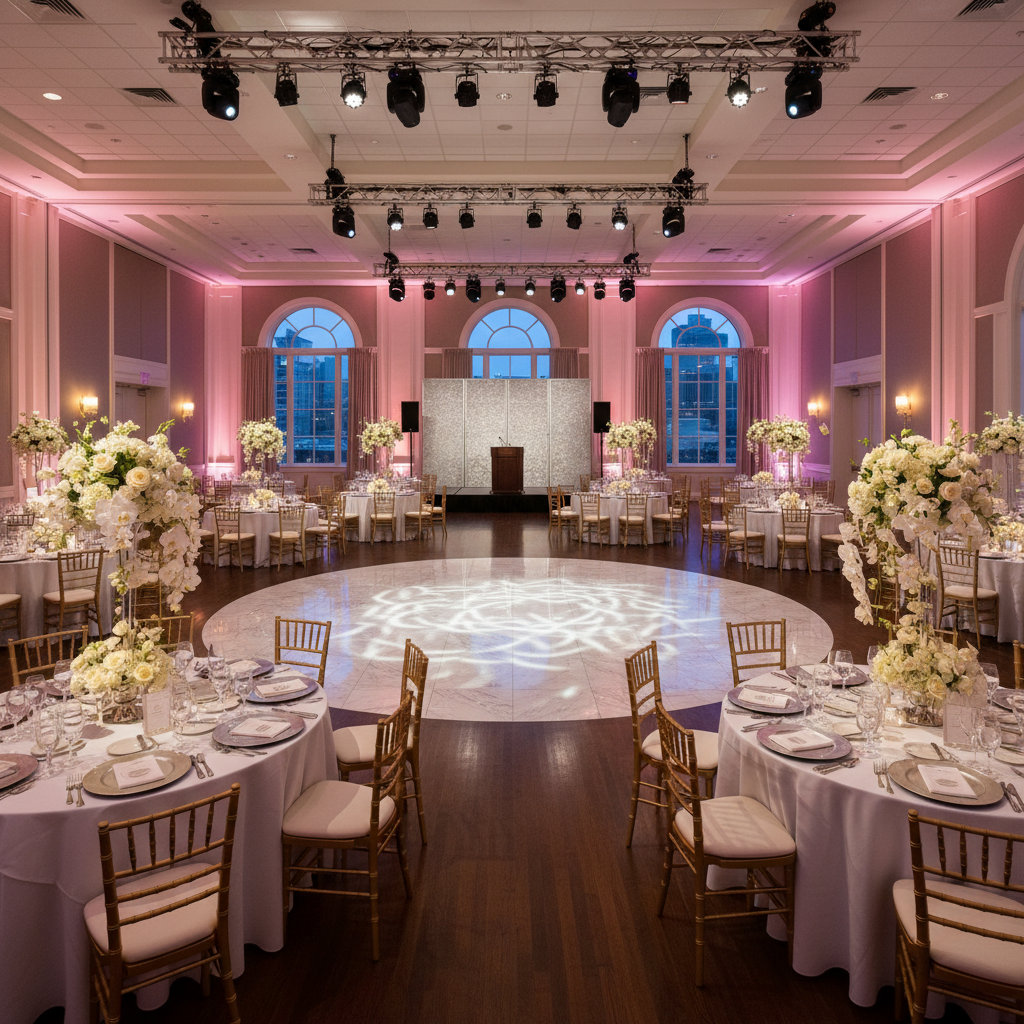
A banquet hall seating chart is a scaled plan that maps where guests sit, how aisles flow, and how service circulates so dinners run on time. At Mississauga Convention Centre in Mississauga, we use seating charts to choreograph arrivals, sightlines, and catering routes for corporate, social, school, and wedding events across the GTA.
By Preet Dass • Last updated: 2026-04-26
Above-Fold Overview: Why your seating chart decides event flow
Your seating chart governs guest comfort, service timing, and safety in one coordinated diagram. Get it right and you’ll eliminate bottlenecks, protect accessible routes, and shorten food service by entire courses. This single document aligns your AV, catering, décor, and stage teams so the show runs on rails.
Think of your floor plan as choreography. When chairs, tables, aisles, and stations are placed with purpose, everything moves faster and feels smoother. In our experience, well-designed layouts trim 10–20 minutes per course and reduce last‑minute fixes.
- Quick Summary
- What Is a Banquet Hall Seating Chart?
- Why Banquet Seating Charts Matter
- How a Seating Chart Comes Together
- Capacity Math and Spacing Standards
- Common Seating Layouts (with Use Cases)
- Assignments, RSVPs, and Wayfinding
- Accessibility and Safety Checklist
- AV and Staging Integration
- Plated, Buffet, and Family-Style Service
- Best Practices That Prevent Mid-Event Fixes
- Tools, Templates, and Resources
- Real-World Examples From Our Halls
- Talk to a Seating Specialist
- Key Takeaways
- Frequently Asked Questions
- Conclusion
Summary
A banquet hall seating chart is the master plan for guest comfort and logistics. Start with your program and anchor points, then layer tables, aisles, and service routes. Validate accessibility and sightlines, export a single versioned PDF, and brief vendors one week out to avoid day‑of surprises.
Use this guide to move from blank room to confident diagram. You’ll learn practical spacing, layout pros/cons, service math, and sequencing that keeps dinner hot and speeches clear. We also link helpful planning resources like our venue capacity guide and corporate planning checklist.
Local considerations for Mississauga events
- Expect regional traffic waves for evening galas. Buffer 15–20 minutes in your run‑of‑show to seat guests before first announcements.
- Winter coats and spring showers affect space needs. Add a coat check footprint and widen entry aisles during peak arrival windows.
- Multicultural menus are common. Cluster dietary tables (e.g., vegetarian or Halal) near kitchen corridors for faster, accurate service.
What Is a Banquet Hall Seating Chart?
A banquet hall seating chart is a scaled floor plan that locates tables, chairs, aisles, dance floors, staging, and stations to serve guests efficiently and safely. It aligns sightlines to stage and screens, enforces accessible routes, and sequences service so meals and program moments happen on time.
At Mississauga Convention Centre, each of our seven halls (about 4,250 square feet each) can be mapped precisely. For larger productions, we combine spaces to support over 2,200 attendees site‑wide, with dedicated service corridors and staging areas that keep courses moving without interrupting speeches or entertainment.

Why define it this way? Because a clear diagram becomes the single source of truth for every vendor. When AV, décor, catering, photo/video, and your MC read the same map, execution tightens and the guest experience feels intentional from first pour to last dance.
Why Banquet Seating Charts Matter
Seating charts protect timing, visibility, and mobility. The right diagram reduces server travel, shortens each course, preserves ADA‑style routes, and improves stage engagement. Small choices—like lane width or table numbering—compound into 15–30 minute gains over a full dinner program.
Scale magnifies impact. Our campus supports more than 2,200 guests with approximately 700 on‑site parking spaces. That volume demands disciplined seating, entry wayfinding, and predictable egress. A good chart also reduces mid‑event reseating by placing elders, families with strollers, and VIPs where they’re comfortable and quickly served.
Equally important is safety. Clear aisles and dispersion of wheelchair spaces ensure guests can move freely, while keeping equipment like camera tripods and light stands outside egress paths prevents pinch points during high‑energy moments such as the first dance or a surprise award.
For research‑minded planners: structured planning improves on‑time delivery in many fields. See these project planning benefits as a helpful analogy for how sequencing and visual plans boost reliability across complex workflows.
How a Seating Chart Comes Together
Sequence your layout in layers. Lock program flow, place the stage and screens, size your dance floor, assign service corridors, then place tables and seats. Label VIPs and dietary clusters, verify accessible routes, and publish a versioned PDF to brief all vendors 5–7 days out.
Step-by-step build (practical order)
- Program first: Outline segments (awards, toasts, entertainment) with time boxes and transitions.
- Anchor points: Place stage, LED walls, projectors, podiums, DJ/band, and tech booth.
- Motion zones: Define dance floor, camera lanes, server corridors, cake and photo areas.
- Tables: Choose 60″ or 72″ rounds, cabaret, long banquet, or mixed zones to match goals.
- Label seats: VIPs close to stage, elders near exits, dietary clusters near kitchen corridors.
- Wayfinding: Number tables logically from entry; ensure signage is readable at a distance.
- Finalize: Export a versioned PDF and send with your run‑of‑show checklist.
Process handoff table
| Step | Primary owner | Support | Typical time |
|---|---|---|---|
| Program + anchors | Event lead | AV, venue | 60–90 min |
| Dance floor + lanes | Event lead | Catering, AV | 30–45 min |
| Table placement | Event lead | Venue coordinator | 60–120 min |
| Seat labeling | Planner/host | Front‑of‑house | 45–90 min |
| Vendor briefing | Event lead | All vendors | 30–60 min |
Need inspiration while you plan? Our conference setup ideas article shows how table geometry supports training, demos, or panel‑heavy agendas without sacrificing service speed.
Capacity Math and Spacing Standards
Use square‑foot factors to estimate capacity fast. Rounds typically need 10–14 sq ft per guest; theater needs 6–8; classroom runs 20–24. Protect 36″ minimum accessible paths and 4–6 ft service lanes. Validate buffers around dance floors and doors to avoid pinch points.
Quick rules of thumb keep you honest as guest counts grow. For example, a 4,250 sq ft hall set with 60″ rounds at 12 sq ft/guest fits around 350 guests before adding dance floor and staging. Add a 24′ x 24′ dance floor (~576 sq ft) and a modest stage and your dining headcount adjusts accordingly.
- Accessible routes: 36″ clear minimum; widen near entries or service stations.
- Service lanes: 4–6 ft wide improves tray stability and speed, especially on plated service.
- Table spacing: 60″ rounds seat 8–10; 72″ rounds seat 10–12 with more elbow room.
- Dance floor buffer: Reserve 6–10 ft of clearance from the nearest table edge.
- Doors and intersections: Keep 4–6 ft of open space to prevent crowding.
For deeper capacity planning across formats, see our event capacity guide and our wedding capacity article—both cover typical factors and example diagrams that translate nicely to seating chart drafts.
Common Seating Layouts (with Use Cases)
Choose layout by program goals. Rounds maximize social dining, cabaret improves sightlines, classroom supports note‑taking, and theater fits the most per square foot. Cocktail raises energy for networking while U‑shape and hollow square enable board‑level discussion.
| Layout | Best for | Typical factor | Notes |
|---|---|---|---|
| 60″ Rounds (8–10) | Weddings, galas | ~10–12 sq ft/guest | Balanced socializing and service speed |
| 72″ Rounds (10–12) | Large banquets | ~12–14 sq ft/guest | Comfortable elbow room at scale |
| Cabaret (no back seat) | Awards dinners | ~12–14 sq ft/guest | Better stage focus with small capacity trade‑off |
| Classroom | Training, CPD | ~20–24 sq ft/guest | Work surface and power access |
| Theater | Keynotes | ~6–8 sq ft/guest | Max headcount, no tables |
| U‑shape / Hollow | Board, committee | Varies | Eye contact and discussion flow |
| Cocktail/Highboys | Mixers | ~5–8 sq ft/guest | Circulation is king; add lounge pods |
Blended rooms often work best. We’ll keep dinner rounds near the dance floor, position a cabaret “stage fan” for awards, and add cocktail pods around the perimeter for mingling. For conferences, mixing theater in front with classroom in the mid‑room helps panels and notetakers share the same stage.

Looking for visuals on meeting‑first formats? Explore our conference room setups to see which shapes support panel Q&A, training rotations, or product demos without slowing food service.
Assignments, RSVPs, and Wayfinding
Seat guests intentionally, then make it easy to find the seat. Group by relationship or team, cluster dietary needs, print legible table numbers, and place escort cards or digital lookup at entry. Number tables clockwise from the entrance and keep a printable backup in the toolkit.
Assignments work best when they reflect how people interact. At weddings, we prioritize family proximity and easy access for elders. For corporate dinners, we cluster cross‑functional tables to spark conversation while seating executives where visibility and stage access are optimal.
- RSVP hygiene: Freeze a working chart 3 weeks out; finalize 5–7 days prior.
- Dietary clustering: Group vegetarian or Halal tables near kitchen corridors to speed accuracy.
- Wayfinding: Use a clear entry map and large table numbers visible from multiple angles.
- Digital backup: Keep a scannable guest list and a printed master for the front‑of‑house lead.
Decor can support navigation. Our event decoration ideas show how lighting cues and centerpiece heights can guide lines of sight without overpowering the room or blocking views of the stage.
Accessibility and Safety Checklist
Protect an unbroken 36″ accessible route from entry to priority tables, restrooms, and stage. Disperse wheelchair spaces, avoid seating directly under ceiling speakers, and keep AV tripods out of egress paths. Add coat check or umbrella bins seasonally to preserve clear walkways.
- Maintain route continuity; avoid tight turns at intersections and doors.
- Disperse accessible seating for equitable sightlines, not only at room edges.
- Keep 6–10 ft of space between dance floor and first row of tables for safety.
- Locate water and coffee stations away from rush zones to prevent spills.
- Place strollers and photo booths outside primary service lanes.
Accessibility and safety are shared responsibilities among planners, venues, and vendors. We build these checks into our pre‑event walk‑through so last‑minute décor or signage doesn’t create new pinch points.
AV and Staging Integration
Design seating around the show. Place screens for wide coverage, align VIP tables with front‑fills, keep projector throws clear, and reserve camera lanes that won’t cut service in half. Coordinate podium moves and band/DJ footprints before you lock final chair counts.
Audio behaves like lighting: where you sit shapes what you hear. We align VIP and sponsor tables with front‑fill speakers for clarity and ensure no table lands directly under a ceiling speaker. For video, we mark clean sightlines to any IMAG screens and put confidence monitors where presenters can see without breaking eye contact.
- Screen geometry: Two side screens often beat one center when pillars or chandeliers exist.
- Projector throws: Keep 8–10 ft cones clear; no tables or tall décor in that path.
- Camera lanes: Reserve 6 ft minimum to avoid service slowdowns.
- Power access: Classroom zones need tidy cable runs and safe covers.
When you’re evaluating venues, use this venue selection guide to spot structural advantages—like built‑in rigging or flexible stage locations—that make your final chart easier and safer.
Plated, Buffet, and Family-Style Service
Match layout to service model. Plated dinners favor straight server corridors and clustered dietary tables; buffets need generous queuing and returns; family‑style benefits from extra elbow room and shorter service radii. Label captain zones and keep paths wide enough for full trays.
Service math matters. For plated dinners, a 4–6 ft lane lets teams move confidently with hot entrees. Dual buffets reduce line times; add stanchions and water stations to keep guests comfortable. For family‑style menus, slightly larger rounds or fewer chairs per table improve reach and reduce accidental spills.
- Plated: 4–6 ft corridors, dietary clusters, and captain zones of ~20–30 tables.
- Buffet: 2‑way lines with visible ends, bussing stations nearby, and clean return paths.
- Family‑style: Wider place settings, compact centerpieces, and shorter server radii.
Menu choices influence layout scale. If you’re planning multicultural dinners—South Asian, Pakistani Halal, Middle Eastern, Sri Lankan, Caribbean, or Continental—we’ll advise on serving styles and lane widths that keep both authenticity and timing intact. For inspiration, browse our corporate catering menu options.
Best Practices That Prevent Mid-Event Fixes
Number tables clockwise from the main entrance, protect 36″+ accessible routes, and keep 4–6 ft server lanes. Place VIP and elder tables near exits, and leave 6–10 ft from dance floor to first row. Print a large, legible entry map and keep a digital backup with your front‑of‑house lead.
- Table numbering: Logical sequencing prevents MC delays and server confusion.
- Dietary accuracy: Color‑dot seating cards reduce swaps at the pass.
- Sightlines: Avoid tall centerpieces near stage; use low, wide florals instead.
- Noise management: Keep speakers away from hard corners and glass walls where possible.
- Change control: Version your diagram; update vendors if any element moves.
These small disciplines add up. We routinely see fewer last‑minute reseats and faster first‑course delivery when charts follow this structure. If you’re comparing venues, also look for in‑house AV and staging—coordination improves when key disciplines operate under one roof.
Tools, Templates, and Resources
Draft to‑scale layouts digitally, then export a single, versioned PDF. Use virtual tours and floor plans to validate counts and camera angles. Keep an accessibility checklist with every plan and add clear labeling for stages, dance floors, buffets, bars, and tech booths.
- Venue assets: Virtual tours, sample diagrams, and lighting plots reduce guesswork.
- Templates: Pre‑sized 60″/72″ rounds, 6’/8′ banquets, highboys, and chair counts.
- Checklists: Add accessibility, safety, and vendor sign‑off lines to every export.
- Wayfinding kit: Entry map, table list, and QR lookup for names and dietary notes.
Exploring the local event scene can also spark ideas. This Mississauga overview on banquet halls with catering and this take on corporate event venues outline considerations you can compare to our in‑house approach—especially useful when building your short list.
Real-World Examples From Our Halls
Different programs demand different seating jobs. Weddings prioritize processional paths and dance energy; conferences prioritize sightlines and note‑taking. These mini case studies show how we translate one question—“How will people move?”—into tailored, high‑function diagrams.
Corporate gala (about 650 guests)
We combined adjacent halls, used 60″ rounds of 10, and carved two parallel 8 ft service lanes for plated courses. A central 24′ x 24′ dance floor and twin screens gave every guest a clean view. Captains managed zones of ~24 tables to balance tray runs.
South Asian wedding (about 450 guests)
We set 72″ rounds of 10–12 for generous elbow room, left a 10 ft processional aisle, and grouped vegetarian tables near the kitchen corridor for speed and accuracy. A low‑profile centerpiece plan protected sightlines to the head table and stage.
Conference plenary (about 900, theater)
Straight aisles every 8–10 chairs improved egress and ushering. We reserved 6 ft camera lanes, aligned front‑fills for clarity, and added confidence monitors so presenters kept eye contact with the audience. Breakouts next door ran classroom to support note‑taking.
Prom and graduation (about 500 dinner + dance)
We ringed the room with dinner rounds, protected a 20 ft DJ/dance footprint, and kept water stations at both entries to prevent crowding. Chaperone tables sat near egress points with clear lines of sight to the floor.
Talk to a Seating Specialist
Have a complex run‑of‑show, VIP protocol, or multicultural menu? Share your draft seating chart, and we’ll pressure‑test it against service math, AV angles, and accessibility. You’ll leave with a versioned plan that vendors can execute confidently.
We host corporate, wedding, school, and social events with in‑house AV, lighting, staging, and diverse catering. If you’re early in venue selection, our venue selection checklist and prom venue tips can help you evaluate spaces through the lens of seating and flow.
Key Takeaways
Start with program goals, then layer anchors, lanes, tables, and labels. Protect 36″ routes and 4–6 ft service corridors, validate sightlines, and number tables logically. Publish one versioned diagram and brief vendors together—your event will feel orchestrated, not improvised.
- Banquet hall seating charts are logistics tools first, décor second.
- Square‑foot factors provide fast, reliable capacity estimates.
- Layout must match service model: plated, buffet, or family‑style.
- Accessibility and safety are baked into the diagram, not added later.
- One shared PDF keeps every vendor aligned and on time.
Frequently Asked Questions
How early should I finalize the banquet hall seating chart?
Lock a working draft 3 weeks out and finalize 5–7 days prior. That window lets catering plan portions, AV place screens, and your MC script walk‑ons. We print an updated chart on event day to reflect last‑minute guest changes.
What’s the difference between banquet rounds and cabaret?
Banquet rounds seat guests fully around the table (8–12 seats). Cabaret removes the back seats so everyone faces the stage. You’ll trade 10–20% capacity for better sightlines—great for awards and entertainment‑led dinners.
How wide should aisles be for accessibility?
Plan 36 inches minimum for accessible routes and expand to 48 inches near entrances or high‑traffic zones. Keep at least one continuous route from entry to priority tables, restrooms, and the stage without obstacles.
Can I mix seating layouts in one room?
Yes. For instance, keep rounds near the dance floor and add cocktail pods along the perimeter for networking. Or split the hall into two zones—classroom for training, theater for keynotes. Just maintain clear aisles and consistent numbering.
Where can I learn more about capacity and layouts?
Start with our event capacity guide, then review conference room setups and wedding capacity tips. These resources translate directly to practical seating charts.
Conclusion
A strong banquet hall seating chart connects guest comfort to service logistics. Build from the program out: anchor points, lanes, then tables and seats. Validate accessibility and sightlines, publish one versioned PDF, and brief vendors together—your event will run with poise and precision.
Great events feel effortless because the plan behind them is exact. If you bring us your draft seating chart, we’ll help pressure‑test it against real‑world service math and AV geometry—so your timeline holds and your guests never feel the friction.