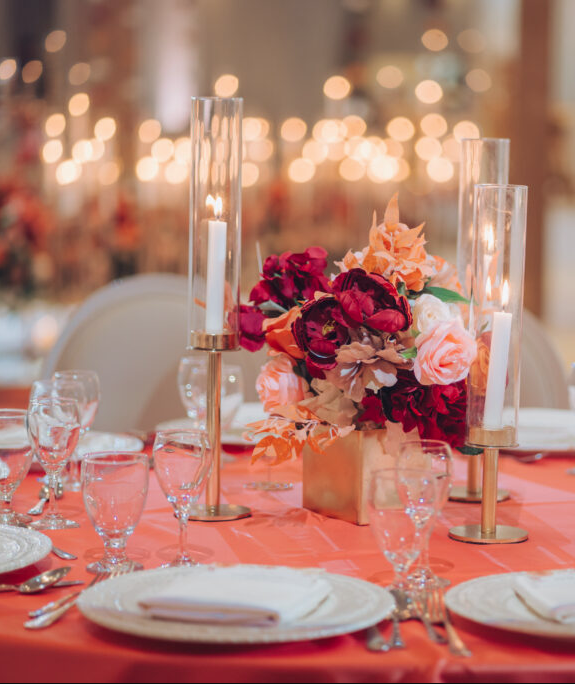

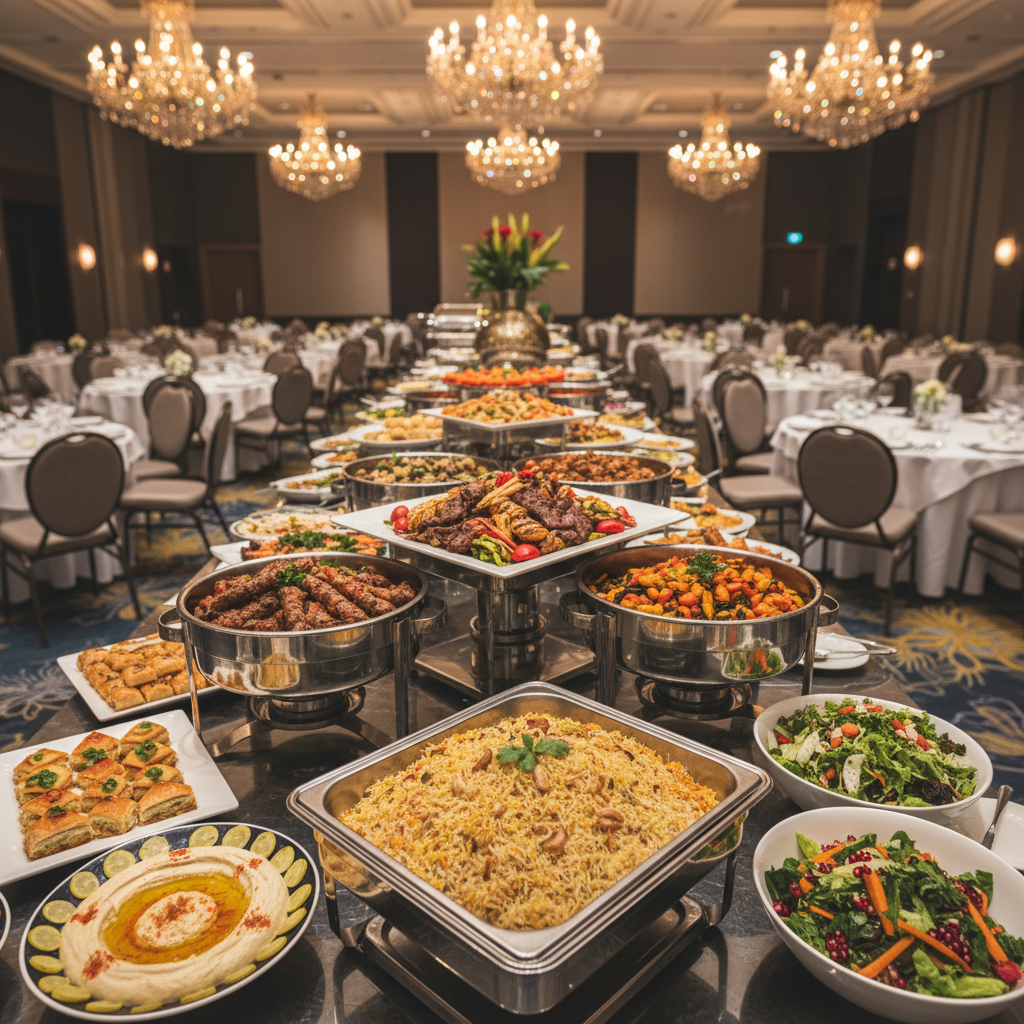
Middle Eastern halal catering is the planning, preparation, and service of Middle Eastern dishes that comply with Islamic dietary laws for events. It confirms halal sourcing, separates equipment from non-halal items, and delivers crowd-pleasing flavors—shawarma, kofta, rice pilaf, mezze—that suit multicultural weddings, corporate functions, galas, and school celebrations across the GTA.
By Mississauga Convention Centre • Last updated: 2026-04-17
Overview
Middle Eastern halal catering pairs authentic regional menus with verified halal processes. For planners, success comes from clear dietary labeling, smart buffet flow, reliable AV timing, and experienced venue partners. At 75 Derry Rd W, our in-house culinary and AV teams coordinate service, staging, and dietary needs so you can focus on your guests.
- What you’ll learn: Practical halal menu planning, buffet design, service styles, and verification steps.
- Who it’s for: Corporate planners, schools, couples, and nonprofits hosting culturally inclusive events.
- Why it matters: Clear halal processes reduce risk, elevate inclusivity, and boost guest satisfaction.
- Where we help: Mississauga Convention Centre (75 Derry Rd W), minutes from Toronto Pearson, with seven elegant halls and 700 parking spots.
Quick Answer
Middle Eastern halal catering means serving certified halal menus—shawarma, kofta, mezze, pilaf—prepared with halal-verified suppliers and separate handling. At 75 Derry Rd W, our in-house team aligns menu, AV, and schedule so corporate programs, weddings, and galas run smoothly—on time and on standard.
Table of Contents
Use this table of contents to jump to planning steps, menu styles, verification, and examples. Each section includes a 40–60 word summary for quick scanning and decision-making.
- What Is Middle Eastern Halal Catering?
- Why It Matters for Modern Events
- How Halal Catering Works (Step-by-Step)
- Service Types, Stations, and Approaches
- Best Practices (Menus, Flow, Labels)
- Tools, Templates, and Resources
- Mini Case Studies & Real Examples
- FAQ
- Key Takeaways & Next Steps
- Related Planning Topics
At a Glance
Plan Middle Eastern halal catering by confirming halal supply chains, labeling dishes clearly, and choosing service styles that match your run-of-show. Pair stations with AV timing, schedule prayer-friendly breaks, and provide vegetarian/vegan mezze. Experienced in-house teams simplify execution and reduce risk.
- Primary goal: Serve memorably flavorful halal menus while meeting cultural and dietary expectations.
- Key hurdles: Verification, cross-contact, buffet bottlenecks, timing around speeches and performances.
- Fast wins: Color-coded labels, dual-sided buffets, and a run-sheet aligned with the kitchen and AV booth.
- Venue advantage: In-house culinary + AV + staging under one roof streamlines change management.
Local Tips
- Tip 1: For large Friday events near 75 Derry Rd W, plan arrivals around Highway 401/410 traffic windows and allow extra time for Pearson-adjacent congestion.
- Tip 2: Spring and fall galas book early; align outdoor patio ceremonies with sunset timing and have an indoor backup for weather shifts.
- Tip 3: If your program includes a prayer break, coordinate the AV dim and service pause with our control booth so the flow feels intentional.
IMPORTANT: These tips reflect our operational reality at 75 Derry Rd W and support smoother halal-friendly programs.
What Is Middle Eastern Halal Catering?
Middle Eastern halal catering is event dining that follows Islamic dietary law from sourcing to service. It relies on certified suppliers, separate handling, and transparent labeling—delivering regional classics like shawarma, kofta, and mezze while ensuring faith-aligned preparation for every guest.
Core Definition and Scope
- Definition: Catering that uses halal-certified meats and compliant ingredients, with vetted supply chains and trained staff.
- Regional focus: Levantine, Persian, Turkish, and Arabian Gulf influences—grilled proteins, rice pilafs, mezze spreads, breads.
- Event coverage: Corporate meetings, conferences, weddings, galas, school formals, and cultural celebrations.
Why this matters: when menus respect dietary law and cultural nuance, attendance rises and guest satisfaction improves. At Mississauga Convention Centre, our in-house catering spans Middle Eastern, South Asian, Pakistani Halal, Sri Lankan, Caribbean, and Continental cuisines—so mixed-audience events feel considered and complete.
What “Halal” Operationally Entails
- Halal vendors: Source from recognized halal suppliers, keep certificates on file, and review renewals.
- Segregation: Dedicated storage, utensils, and prep zones to avoid cross-contact with non-halal items.
- Verification: Documented receiving checks, label auditing, and kitchen sign-offs per event.
- Transparency: On-buffet labels listing allergens and halal status; separate vegetarian/vegan markers.
In our experience hosting 100+ multicultural programs annually, clarity beats assumptions. Simple, legible labels and an MC announcement about halal and vegetarian stations reduce questions at peak service.
Example Menus Guests Recognize
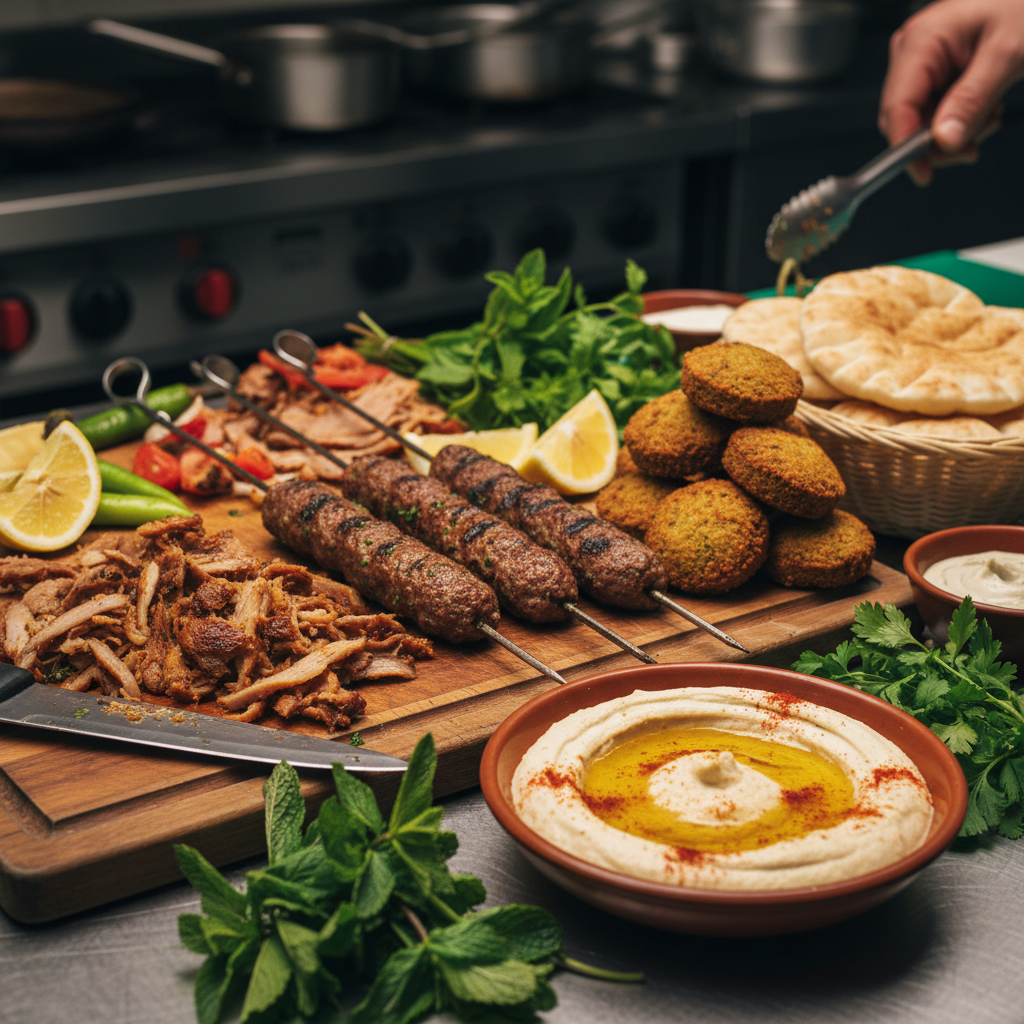
- Proteins: Chicken shawarma, beef/lamb kofta, grilled chicken kebabs, braised lamb.
- Carbs: Saffron rice or rice pilaf, roasted potatoes, spiced couscous.
- Mezze: Hummus, baba ghanoush, tabbouleh, fattoush, pickles, olives.
- Breads: Warm pita, saj, or marked gluten-free wraps.
- Finishes: Tahini, garlic sauce, toum, sumac, fresh herbs, lemon.
Action step: shortlist five dishes you know your group loves, then add two mezze and one dessert for breadth. That keeps the buffet exciting without sprawling too wide.
Why Middle Eastern Halal Catering Matters
It boosts inclusivity, satisfaction, and turnout. Clear halal processes signal respect, reduce dietary risk, and simplify planning for multicultural audiences. Venues that integrate halal catering with AV and staging deliver smoother transitions, stronger engagement, and fewer day-of surprises.
Inclusivity and Attendance
- Signal of respect: Publishing halal options in your invite builds confidence before RSVP.
- Higher turnout: Faith-aligned food reduces friction for attendees deciding whether to join.
- Family-friendly: Balanced menus with kid-ready choices (grilled chicken, rice, salad) remove barriers.
Take a corporate awards night: adding halal shawarma and mezze beside a Continental carving station keeps mixed teams equally energized for the show program.
Risk Reduction and Clarity
- Food safety: Dedicated utensils and labeled allergens lower cross-contact risk.
- Expectation setting: Menu cards and MC notes prevent bottlenecks and questions at peak flow.
- Vendor control: In-house teams coordinate menu, lighting cues, and run sheet under one command.
Here’s the thing: fragmented vendor setups create finger-pointing. Our culinary and AV teams sit side-by-side so the schedule, stations, and stage cues move as one.
Experience and Memory
- Flavor variety: Bright herbs, spice blends, and mezze spreads create visual and taste appeal.
- Interactive stations: Shawarma or falafel stations become natural networking points.
- Program flow: Service that fits speeches and performances sustains energy without interruptions.
When working with clients in Mississauga, we’ve found interactive stations lift dwell time near sponsor activations—useful for conferences and trade shows.
How Halal Catering Works (Step-by-Step)
Align requirements, verify suppliers, design the menu, plan the floor, and lock your run-of-show. Confirm labeling, staff training, and AV cues. On event day, open dual-sided buffets, monitor line speed, and adjust timing from the control booth.
Step 1: Clarify Requirements
- Headcount + profiles: Adults, kids, vegetarian/vegan, gluten-free, nut-free counts.
- Halal depth: General halal vs. stricter preferences (e.g., no alcohol in desserts).
- Program blocks: Speeches, awards, prayer breaks, dance sets.
- Venue constraints: Load-in windows, parking, and hall access points.
Pro tip: Share your draft run sheet with our catering and AV coordinators at the same time; we’ll align service cues and reinforce stage timing.
Step 2: Verify and Document
- Supplier checks: Request current halal certificates; file them with the event folder.
- Kitchen map: Identify halal-only zones and utensils. Color-code if needed.
- Label plan: Template for dish names, allergens, and halal/vegetarian/vegan marks.
- Briefing: Staff training on cross-contact and guest questions.
We incorporate label reviews into the pre-event huddle. One final pass prevents last-minute printer runs and confusion at service.
Step 3: Design the Menu and Flow
- Balance: Protein, carb, salad, and mezze ratios fit the crowd and schedule.
- Stations: Consider shawarma, falafel, and salad bars to spread traffic.
- Dual-sided lines: Two-sided buffets often serve 1.5–2x faster than single-sided.
- Children’s option: A simple grilled chicken/rice plate keeps families happy.
Our teams place buffets away from main entries and near natural return paths, which reduces crowding and keeps exits clear for program transitions.
Step 4: Final Prep and Show Control
- Run-through: MC, AV, and catering confirm cues and mic placement.
- Signage: Place labels before the first guest enters the room.
- Monitor: Watch line length and service time; open extra points as needed.
- Adjust: If a speech runs long, extend hot-hold and re-time openings via the booth.
This is crucial: one control point managing both service and stage eliminates most timing friction.
Service Types, Stations, and Approaches
Choose between buffet, stations, family-style, or plated service. Buffets optimize variety and speed; stations add interaction; family-style fosters connection; plated offers formality. Match style to headcount, program length, and staffing levels.
| Service Style | Best For | Pros | Watch Outs |
|---|---|---|---|
| Buffet (dual-sided) | 300–2,200 guests | Fast throughput; variety | Needs clear labels; line management |
| Action Stations | Networking events | Interactive; fresh-prepared | Staffing at each station |
| Family-Style | Weddings, galas | Shared dishes; warm ambiance | Table space; portion coordination |
| Plated | Awards, formal dinners | Precise timing; elegant look | Less variety; higher coordination |
Popular Middle Eastern Stations
- Shawarma Carving: Chicken or beef/lamb with tahini, garlic sauce, pickles, and warm pita.
- Falafel & Mezze: Falafel, hummus, baba ghanoush, tabbouleh, fattoush, olives, pickles.
- Grill Corner: Kofta kebabs and grilled chicken with sumac onions and herb salad.
- Rice Pilaf Bar: Saffron rice with optional toppings: toasted nuts, fried onions, herbs.
We routinely pair shawarma carving with a salad bar across the room to split traffic. It’s a simple change that halves perceived line time.
Buffet Labeling and Allergen Clarity
- Essential fields: Dish name, halal mark, vegetarian/vegan mark, and key allergens.
- Positioning: Place labels front-left of each chafer for right-handed reading flow.
- Color hints: Consider subtle color coding (e.g., green = vegetarian, blue = halal protein).
- Announcements: Have the MC explain stations right before guests move.
Learn more about our planning approach in this halal catering menu planning guide built for GTA events.
Best Practices (Menus, Flow, Labels)
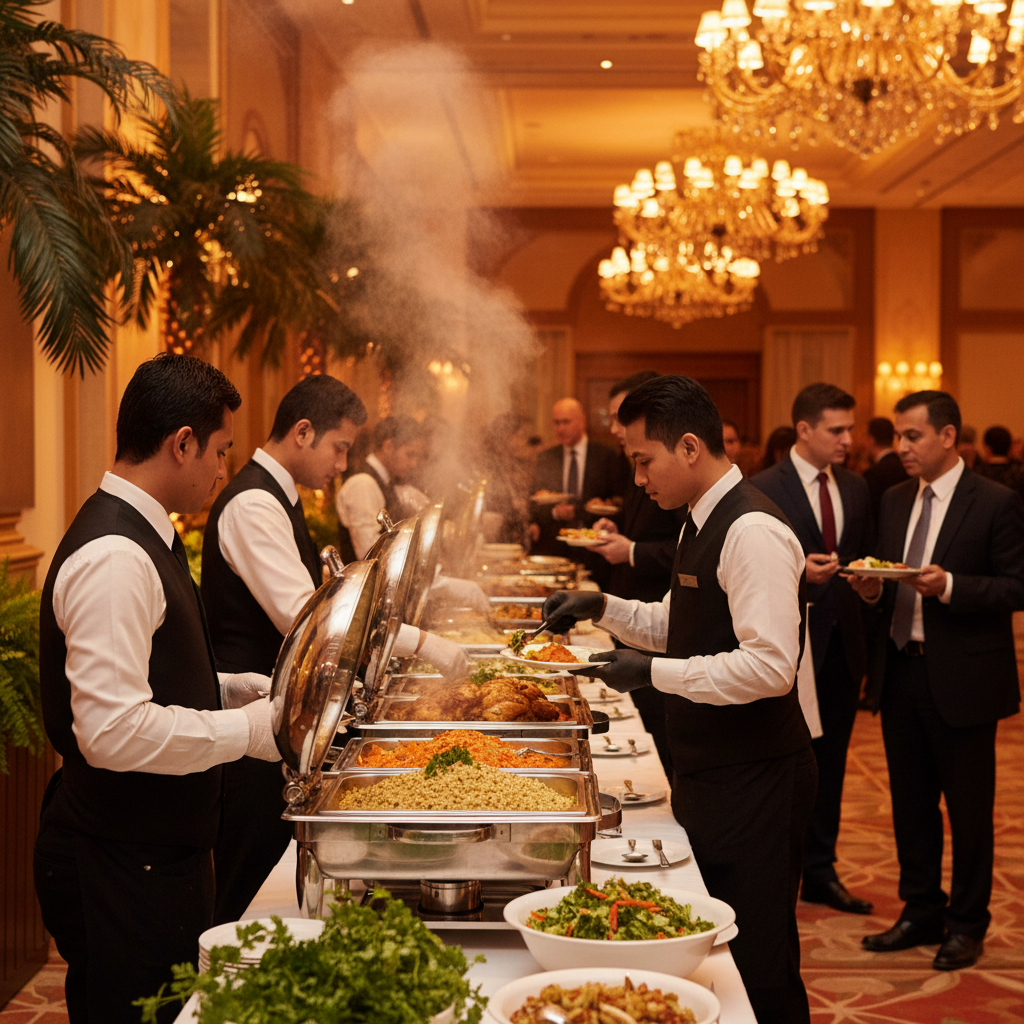
Keep menus focused, lines moving, and labels unmistakable. Confirm halal suppliers, brief staff, and align AV cues with service. Use dual-sided buffets, station separation, and vegetarian mezze to reduce friction and increase satisfaction.
Menu Architecture That Works
- Anchor proteins: 2–3 halal proteins (e.g., chicken shawarma, kofta, grilled chicken).
- Supporting carbs: 1–2 starches (rice pilaf, roasted potatoes, couscous).
- Greens + mezze: 2 salads + 3 mezze for color and texture.
- Finishers: Sauces, herbs, citrus to brighten plates.
Fewer, better-chosen dishes speed decisions. That’s especially true when hundreds of guests move at once.
Flow and Throughput
- Dual-sided stations: Treat each as two lines; place space for plate turns.
- Opposing corners: Put shawarma across from salad to split preferences.
- Path design: Keep entry clear and returns intuitive; avoid crossing streams.
- Spotters: Assign staff at chokepoints to guide traffic and answer questions.
In our ballrooms, we usually stage buffets parallel to the head table, leaving the center aisle open for photography and speeches.
Communication and Signage
- Before service: MC announces station map and halal labeling.
- During service: Runners refresh chafers and check labels remain visible.
- After service: Quick sweep removes empty platters; dessert labels replace savory.
- Contingencies: If an item runs low, open a secondary protein to keep lines moving.
For corporate programs, we time announcements with lighting cues so guests look up from networking and catch the full message.
Allergen Aware, Halal First
- Prep notes: Flag gluten, nuts, eggs, sesame, dairy; mark vegan clearly.
- Separate tongs: One set per chafer; replace if cross-contact occurs.
- Vegan mezze: Lean on hummus, baba ghanoush, fattoush, olives, and pickles.
- Questions desk: Place a staffed point where guests can ask discreetly.
Our corporate catering menu options article shows how we balance variety with line speed for daytime conferences.
Tools, Templates, and Resources
Use simple checklists and run-sheet templates. Document supplier certificates, label drafts, and a floor plan showing stations, AV, and traffic flow. Share one master version with every lead on the event.
Planner’s Halal Catering Checklist
- Halal supplier certificates on file and in the event folder
- Kitchen map: halal-only areas, utensils, and storage identified
- Menu with allergens and vegetarian/vegan notations
- Label set printed and proofed; backups ready
- Station floor plan with guest paths and AV placement
- Run sheet with service, speeches, prayer breaks, and clear cues
- Training brief for staff and volunteers
Run-Sheet (Sample Outline)
- Doors open, soft music, cocktail mezze pass
- MC welcome, halal labeling overview
- Buffets open: dual-sided, spotters in place
- First speech set: dim to 30%, service pause
- Resume service, open dessert and tea station
- Awards segment, then dance/open networking
- Final coffee pass, thank-you announcements
Helpful Context
- Across the GTA, many venues publish halal menu labels; for example, see this menu labeling example adopted by a regional venue.
- Within our halls, the corporate event venue rental guide explains room sizes and staging options that affect station layout.
Free Planning Worksheet (Template Outline)
- Guest profile matrix (diet types, allergens, accessibility)
- Menu block builder (proteins, carbs, greens, mezze, dessert)
- Station map with arrows and buffer zones
- Label text sheet and color key
- AV cue list managed from a single control point
Ask our team to walk you through these templates during a site visit; we’ll tailor them to your hall and agenda.
Need a second set of eyes?
Book a 15-minute planning review with our in-house coordinators. We’ll check your run sheet, station plan, and label pack so your halal service opens right on time.
Mini Case Studies & Real Examples
Real programs show what works: dual-sided buffets, split stations, and clear labels. Coordinated AV cues keep speeches and service in sync. Inclusive mezze and kids’ options maintain momentum.
Corporate Awards Night (800 guests)
- Goal: Fast dinner service before a 60-minute awards block.
- Approach: Two dual-sided buffets + shawarma station opposite salads.
- Outcome: Lines cleared in one song set; speeches began on schedule.
- Tip: Put dessert on a delayed timer so guests stay for awards.
We detail this timing mindset in our planner’s venue rental guide for Mississauga.
Multicultural Wedding Reception (450 guests)
- Goal: Halal-compliant dinner with South Asian and Middle Eastern favorites.
- Approach: Family-style starters, halal buffet mains, vegetarian mezze, kids’ plates.
- Outcome: Seamless dinner service and full dance floor post-dessert.
- Tip: Announce halal labeling and vegan options before first table release.
Couples planning large receptions can review room flows in our wedding venue rental article.
School Formal (300 guests)
- Goal: Inclusive buffet that teens recognize and enjoy.
- Approach: Halal chicken shawarma, grilled chicken, saffron rice, salads, hummus, and pita.
- Outcome: Short lines, positive feedback, minimal food waste.
- Tip: Keep sauces familiar and label them clearly.
Frequently Asked Questions
These quick answers help planners move faster. For specifics, our in-house team at 75 Derry Rd W can tailor menus, floor plans, and labels for your agenda.
How do you verify halal status for catering?
We maintain supplier certificates, audit deliveries, and segregate halal prep areas, utensils, and storage. Labels and staff briefings ensure front-of-house clarity. This documentation sits with your event folder so stakeholders can reference it on-site.
What Middle Eastern dishes work well for large groups?
Chicken shawarma, kofta kebabs, grilled chicken, rice pilaf, fattoush, tabbouleh, hummus, and warm pita serve beautifully at scale. We add tahini, garlic sauce, and herbs so plates feel bright and complete.
How should I design the buffet to avoid long lines?
Use dual-sided buffets and split high-demand items across the room. Place salads opposite shawarma, put spotters at chokepoints, and have your MC explain the station map. Clear, color-coded labels keep guests moving.
Can you accommodate vegetarian and vegan guests within a halal menu?
Yes. We build vegetarian and vegan mezze—hummus, baba ghanoush, fattoush—plus hearty salads and roasted vegetables. Vegan labels and separate utensils reduce cross-contact and make choices obvious.
How do AV and staging affect catering?
Service speed depends on stage timing. Our AV booth coordinates with the kitchen and MC for cues, pausing or resuming service to match speeches and performances. One control point keeps the entire program in sync.
Key Takeaways & Next Steps
Focus your menu, verify halal, label clearly, and design traffic flow. Align AV cues with service and use dual-sided buffets. Partner with a venue that integrates culinary, AV, and staging for smoother delivery.
- Middle Eastern halal catering thrives on clarity and flow.
- Dual-sided buffets and split stations improve speed.
- Vegetarian/vegan mezze broaden inclusivity.
- One control point (AV + kitchen) reduces timing risk.
- In-house expertise at 75 Derry Rd W streamlines execution.
Plan with Us (Soft CTA)
Bring your headcount, agenda, and dietary notes. We’ll co-build a halal menu, station map, and run sheet that match your program—then coordinate AV and staging so service opens right on cue.
Related Planning Topics
Explore adjacent planning areas: room layout, run-of-show timing, and audiovisual cues. These elements shape how catering performs during real programs.
- Room layout and guest path design for large ballrooms
- Run-of-show timing and MC scripting
- Staging, lighting, and cue integration with service
- Outdoor patio ceremonies with indoor backup plans