
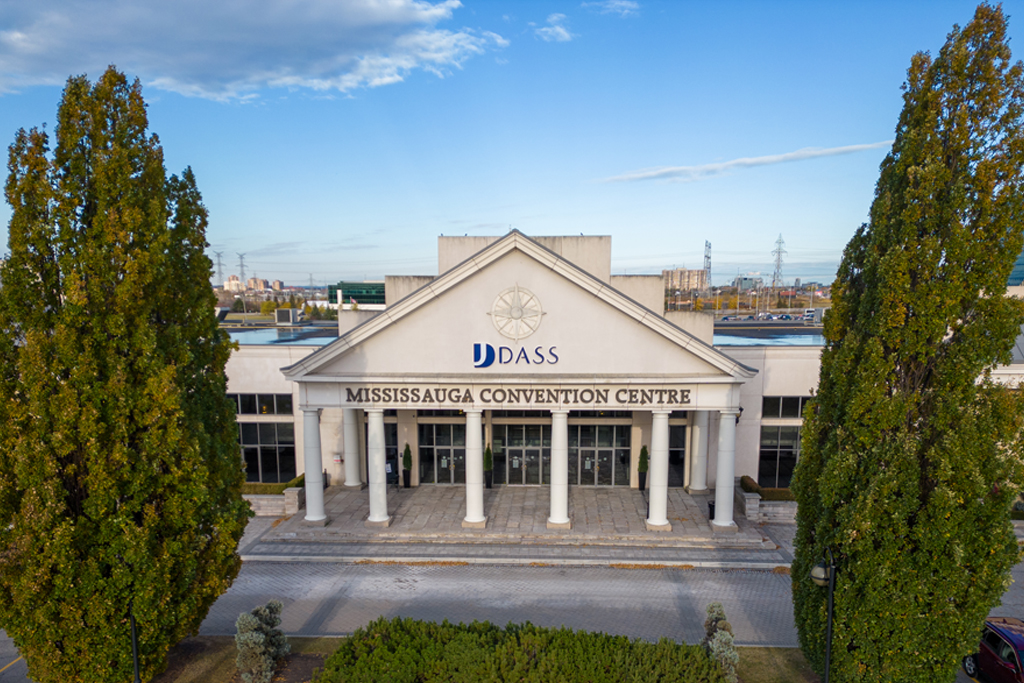
Corporate breakout room ideas are structured small‑group activities that turn big meetings into focused collaboration and faster decisions. At Mississauga Convention Centre in Mississauga (75 Derry Rd W), planners use multiple halls, in-house AV, and diverse catering to run parallel sessions that surface better ideas, align teams, and create clear next steps.
By Preet Dass • Mississauga Convention Centre
Last updated: 2026-05-04
Overview and Table of Contents
Breakout rooms are small, purpose-built spaces inside a larger meeting where 4–10 people work on a focused task. Use clear prompts, tight timing, and facilitation aids. At a multi-hall venue, parallel breakouts multiply participation and speed alignment without crowding your main agenda.
Use this complete guide to design, facilitate, and measure high-impact corporate breakouts that fit your agenda, audience, and space.
- What breakout rooms are and when to use them
- Why they improve retention, decisions, and ROI
- How to plan timing, roles, layouts, and flows
- 21 proven corporate breakout room ideas
- Best practices, tools, templates, and a quick checklist
- Examples mapped to a large Mississauga venue with seven halls
Quick Summary
Plan breakouts by matching the objective to the right format, capping group size at 4–7, and time-boxing 10–25 minutes. Equip every room with whiteboards, sticky notes, timers, and a scribe template. Close with rapid report-outs and capture artifacts so insights become action.
- Group size: 4–7 people per table or circle for maximum talk time.
- Timing: 12–20 minutes per activity, plus 5 minutes to share.
- Rooms: Separate halls reduce noise; cabaret or U-shape works well.
- Roles: facilitator, scribe, timekeeper; rotate on longer agendas.
- Outputs: one-page template or a digital board per team.
What Are Corporate Breakout Rooms?
Corporate breakout rooms are dedicated small-group spaces within conferences or meetings used to ideate, practice, or solve tasks in parallel. They convert passive listening into active participation by pairing a clear prompt with the right layout, tools, and time limits.
Think of them as the workshop engine inside your event. Instead of 200 people listening for 60 minutes, you can run ten concurrent rooms of 20 for 15 minutes and generate ten times more perspectives. With seven similarly sized halls (about 4,250 sq ft each), Mississauga Convention Centre allows clean splits without hallway congestion.
- Purpose-built: breakout spaces are planned in the agenda, not ad hoc.
- Right-sized: 4–10 participants per group unlock balanced contributions.
- Tangible outputs: templates, photos of whiteboards, or a shared digital board.
- Parallel tracks: multiple rooms run at once to compress timelines.
For leadership summits or all-hands events, parallel rooms make it feasible to involve every voice in under 30 minutes—then consolidate ideas in a structured plenary.
Why Breakouts Matter for Participation and ROI
Breakouts increase talk time, psychological safety, and idea diversity. Smaller groups surface more voices, generate clearer decisions, and create artifacts you can execute. When paired with strong facilitation and report-outs, they turn a plenary from lecture into a decision engine.
Large rooms favor a handful of confident speakers. Breakouts rebalance the floor. With 6 people per table and a 15-minute timer, everyone gets 2–3 minutes to contribute. That shift often doubles actionable ideas and sharpens consensus in the same 30-minute window.
- Participation scaling: splitting 180 attendees into 9 rooms of 20 amplifies voice count while staying manageable for AV and facilitation.
- Retention gains: doing beats listening; short cycles (5–15–5) reinforce key messages.
- Decision velocity: parallel rooms converge on options faster than one mic line.
- Artifact trail: photos, boards, and templates convert into post-event tasks.
In our experience hosting corporate events across the GTA, teams that end every breakout with one explicit owner and due date see stronger follow-through during the first 30 days post-event.
How Breakouts Work: Agenda, Roles, and Room Flow
Define one outcome, assign roles (facilitator, scribe, timekeeper), pick a layout that fits the task, and time-box segments. Close with a 30–60 second pitch per group and capture artifacts. Repeat this rhythm across rooms to scale impact.
Core planning steps (10–12 minutes each)
- Clarify the objective (e.g., “draft three onboarding experiments”).
- Write a concrete prompt with constraints (time, budget, audience).
- Assign roles before people sit: facilitator, scribe, timekeeper.
- Choose a layout: cabaret for ideation, U-shape for discussion, circle for coaching.
- Equip the room: whiteboard, sticky notes, markers, timer, and a one-page template.
- Time box: 5 minutes to think, 10 to build, 5 to decide, 1 to pitch.
- Capture: snap photos, collect templates, and post to a shared board.
At Mississauga Convention Centre, in-house AV and staging make it easy to run 6–10 rooms with identical kits and countdown timers. That standardization reduces drift and allows fair comparisons in the plenary.
Breakout Formats and Approaches (21 Proven Ideas)
Match your goal to a format. Use rapid ideation for volume, decision jams for convergence, role-play for skills, and rotations for cross-pollination. Keep groups small, prompts tight, and outputs visible to ensure ideas move from talk to action.
Ideation and prioritization
- 1) Brainwriting 6–3–5: 6 people, 3 ideas each, 5-minute rounds; pass sheets and build.
- 2) Lightning decision jam: list problems (5 min), reframe (5), vote (2), plan (8).
- 3) Dot-vote gallery walk: post ideas on walls; 5 dots per person to prioritize.
- 4) “Kill, Combine, Keep”: prune features fast; keep three, combine two, drop the rest.
Customer and product learning
- 5) Role-play calls: practice discovery or support calls; rotate roles every 7 minutes.
- 6) Jobs-to-be-done canvas: map pains, gains, and desired outcomes onto a single sheet.
- 7) Prototype critique: print screens or mockups; use “I like/I wish/What if”.
- 8) Assumption test matrix: label critical vs. uncertain; design one quick test.
Team alignment and strategy
- 9) North Star cascade: align team metrics to one top metric; set 90‑day moves.
- 10) Pre‑mortem: assume failure in 6 months, list causes, and write preventions.
- 11) Risk poker: silent risk scoring (1–5); discuss outliers; agree mitigations.
- 12) Decision canvas: options, criteria, weights, quick score; pick a path.
Culture, leadership, and coaching
- 13) Peer coaching circles: 5–6 peers; each gets 8 minutes of focused coaching.
- 14) Values to behaviors: translate values into “always/never” behaviors.
- 15) Feedback dojo: practice SBI (Situation–Behavior–Impact) with real scenarios.
Operations and enablement
- 16) SOP teardown: pick one process; remove 20% of steps without harm.
- 17) Handoff map: draw current vs. ideal handoffs; assign one fix per handoff.
- 18) Playbook sprint: outline a one‑pager playbook; assign owners for completion.
Engagement and energy
- 19) World Café rotations: 3 tables, 12 minutes each; harvest patterns at the end.
- 20) Fishbowl mini‑debate: 4 inside, 6 outside; rotate every 5 minutes.
- 21) Outdoor patio huddles: 10–15 minutes of fresh‑air thinking to reset energy.
These formats pair well with the venue’s flexible rooms, outdoor patio option, and on-site technical support. For example, run four World Café tables in adjacent halls and use identical AV timers to keep rotations crisp.
Best Practices That Prevent Flop Sessions
Give each room one outcome, a concrete prompt, and a visible timer. Keep groups to 4–7 people, assign roles, and use a report-out template. Close with owners and due dates so momentum continues after the event.
- One outcome per room: e.g., “Draft three pilots,” not “Brainstorm everything.”
- Write the prompt big: Use a single sentence with constraints (audience, deadline).
- Use time signals: 5 minutes left, 2 minutes, 30 seconds—then hard stop.
- Rotate roles: fresh facilitators prevent dominance and fatigue.
- Equalize voices: start with silent brainwriting to avoid groupthink.
- Standardize kits: every room gets the same materials and template.
- Photograph outputs: collect and upload within 15 minutes of closing.
For room setup nuances, see these detailed setup ideas. They pair layouts (cabaret, classroom, U-shape) with specific goals so your breakout format actually matches the task.
Tools and Resources That Help Breakouts Run Smoothly
Equip each room with whiteboards, sticky notes, markers, a visible timer, and a one-page scribe template. Add a digital board and QR links for hybrid capture. Pre‑pack identical kits so facilitators can start in under two minutes.
Physical room kit
- Large mobile whiteboard + low‑odor markers
- Sticky notes (3×3 and 4×6), index cards, dot stickers
- Analog timer or countdown on the projector
- Printed one‑page template with fields for problem, options, next steps
- Numbered table tents for quick wayfinding between parallel rooms
Digital capture
- Shared digital board per room for photos and notes
- QR code on the template linking to the board (post on door and screen)
- Polling app for rapid dot‑votes during report‑outs
At a venue with on-site AV, it’s straightforward to mirror this kit across 6–10 rooms. If you’re weighing must-haves for a corporate venue, review the key elements checklist to ensure infrastructure supports parallel sessions.
Sample Agenda, Timing, and Room Flow
Use a 5–10–5 rhythm: 5 minutes to frame and think, 10 to co-create, 5 to decide and assign owners. Repeat 2–3 cycles. Allow 30–60 seconds per table in plenary so every group’s output is heard without derailing timing.
| Segment | Time | Facilitator Actions | Participant Output |
|---|---|---|---|
| Frame + roles | 3–5 min | State objective, assign roles, post prompt | Shared understanding |
| Silent brainwrite | 5 min | Start timer, keep silence | Individual ideas |
| Discuss + cluster | 7–10 min | Guide clustering, enforce time | 3–5 themes |
| Decide + assign | 5 min | Dot‑vote, pick top 1–2 | Owner + due date |
| Report‑outs | 30–60 sec/table | Keep cadence tight | Concise share-back |
For a 300‑person conference, run 15 rooms of 6–8 people (two per hall) and schedule two cycles before lunch. Consolidate themes after lunch and move straight into an action sprint.
Room Layouts and Setup That Fit the Work
Choose cabaret or clusters for ideation, U‑shape for discussion and training, and circle for coaching. Separate rooms minimize sound bleed. Place whiteboards and screens behind facilitators so visuals stay in view without blocking eye contact.
- Cabaret (rounds, no seats at stage side): ideal for sticky‑note sprints and gallery walks.
- U‑shape: best for training, demos, and debate-style sessions.
- Circle: great for coaching and feedback dojos.
- Standing pods: short, energetic huddles; perfect between plenaries.
For pictures and layout tips, browse our conference room setup ideas, which map formats to outcomes and show how to route foot traffic between parallel rooms.
Case Examples at Mississauga Convention Centre
Leverage seven similarly sized halls (~4,250 sq ft), on‑site AV, and diverse in‑house catering to run parallel breakout tracks. Use the outdoor patio for energy resets and cultural menus to honor teams’ preferences while keeping timing tight.
- Leadership summit (280 people): 14 rooms of 6–8; two 20‑minute idea jams; post‑lunch decision sprint; outdoor huddle before closing.
- Product kickoff (450 people): two halls for plenary, five for breakouts; prototype critique stations; dot‑vote gallery walk.
- Sales enablement day (220 people): role‑play rooms with staged call stations; timers synced via in-house AV.
See how packages bundle rooms, AV, and menus in our corporate packages overview, then compare options using the package comparison guide. If you need a high-level overview first, start with this planner’s guide to venue rental.
Local considerations for 75 Derry Rd W
- Plan arrival windows for GTA commuters; morning buffers (15–20 minutes) keep breakout starts on time.
- Seasonal tip: winter coats and boots add check‑in time; add a staffed cloak area so rooms fill quickly.
- Operational nuance: schedule prayer breaks and Halal‑friendly menus; the venue’s in‑house catering supports diverse cultural needs.
Facilitation Tips, Roles, and Scripts
Start with a crisp objective, read the one‑sentence prompt aloud, and set a visible timer. Use silent brainwriting first, then discuss. Close with a 30‑second pitch and a named owner. This script keeps rooms on track without heavy facilitation.
- Open: “Our goal is to surface three pilots we can run in 60 days. You have 5 minutes to write silently, then we’ll cluster and pick one.”
- Mid‑session: “Two minutes left—circle one idea you’ll pitch.”
- Close: “Each table: owner, next step, date. You have 30 seconds—go.”
Rotate facilitators across cycles to maintain energy and distribute ownership. Where possible, train 1 facilitator per 3 tables and circulate during the first minute of each segment.
Measuring Success and Follow‑Through
Measure participation, volume of ideas, and conversion to action. Track: percent of attendees who spoke, count of viable ideas, and how many became pilots within 30 days. Close the loop with a shared dashboard and scheduled check‑ins.
- Participation: quick pulse—did 80%+ of attendees contribute this cycle?
- Idea volume: aim for 3–5 strong ideas per table per 15 minutes.
- Conversion: 1–2 pilots per room with named owners by end of day.
- Momentum: 30/60/90‑day reviews to celebrate progress and clear blockers.
Teams that photograph every board and upload within 15 minutes preserve context and sustain energy. A shared folder per room avoids post-event drift.
Comparison of Popular Breakout Formats
Pick formats by outcome: ideate for volume, decide for convergence, role‑play for skills, and rotate for synthesis. Use the table to match group size, time, and layout so you deploy the right tool at the right moment.
| Format | Best For | Group Size | Time | Layout |
|---|---|---|---|---|
| Brainwriting | Idea volume | 5–6 | 12–18 min | Cabaret |
| Decision jam | Prioritization | 5–8 | 15–25 min | U‑shape |
| Role‑play | Skills practice | 4–6 | 10–15 min | Circle |
| World Café | Cross‑pollination | 12–30 | 36–45 min | Clusters |
| Fishbowl | Debate | 8–12 | 12–20 min | Circle/U |
Pair this with venue logistics: distance between rooms (2–3 minutes), signage, and synchronized timers so rotations start and end together.
Planning with a Large Mississauga Venue
Use seven flexible halls, strong wayfinding, and on‑site AV to run parallel tracks without friction. Build a hub‑and‑spoke floor plan, standardize room kits, and stage catering near rooms to keep cycles tight and energy high.
- Hub‑and‑spoke routing: plenary hub with nearby rooms to reduce walk time.
- Wayfinding: color‑coded doors and room numbers on agendas.
- Staging: water, coffee, and snacks within 30 steps of each room.
- AV mirroring: identical countdown timers, mics, and screens in every room.
- Catering variety: South Asian, Pakistani Halal, Middle Eastern, Sri Lankan, Caribbean, and Continental menus to fit diverse teams.
For a venue overview and logistics, see corporate events in Mississauga and the corporate venue rental overview. Use the event planning checklist to sequence outreach, site tours, and agenda builds.
Plan Your Breakouts with Us (Soft CTA)
If you’re running a conference or offsite in the GTA, we’ll help you map objectives to breakout formats, room layouts, and a tight agenda. Our team can coordinate AV, staging, and catering so your facilitators focus on outcomes.
Want a second brain on your agenda? Share your objectives and attendee count, and our coordinators will propose a floor plan, breakout kit list, and timing grid you can review in under 48 hours.
Frequently Asked Questions
Great breakout rooms keep groups small, prompts specific, timing tight, and outputs visible. Below are crisp answers to the questions planners ask most when turning big meetings into high‑engagement working sessions.
What is the ideal group size for a corporate breakout room?
Aim for 4–7 people per group. That range balances talk time with diversity of perspectives and keeps decision cycles under 20 minutes. For rooms above 10, split into two tables and run parallel sprints.
How long should each breakout activity run?
Use 12–20 minutes for most tasks. A simple rhythm is 5 minutes to think, 10 to co‑create, and 5 to decide. Add 30–60 seconds per table for report‑outs to keep the plenary moving.
How do we prevent dominant voices from taking over?
Start with silent brainwriting so everyone contributes. Assign a facilitator to round‑robin shares, use time signals, and stick to the prompt. Rotating facilitators across cycles also reduces repetition and dominance.
What room layout works best for brainstorming vs. training?
For brainstorming, use cabaret or clusters so people face each other and can stand. For training or demos, a U‑shape improves sightlines and discussion. Circles work best for coaching and feedback practice.
How do we turn ideas into action after the event?
Capture every board, assign owners and dates in the room, and post outputs to a shared board within 15 minutes. Schedule 30/60/90‑day reviews to track pilots and clear blockers quickly.
Conclusion and Next Steps
Small, well‑run breakouts multiply voices and speed decisions. Keep groups to 4–7, time‑box work, and capture outputs. Standardize kits and rooms so parallel tracks run smoothly. Close with owners and timelines so ideas turn into pilots.
- Key takeaways: match format to goal; keep groups small; standardize kits; capture fast; assign owners.
- Next steps: tour the venue, map a hub‑and‑spoke floor plan, and pilot two breakout formats before your event.
Ready to see how your agenda fits the space? Book a discovery session in Mississauga and we’ll co-design your breakout tracks, logistics, and timing grid.