
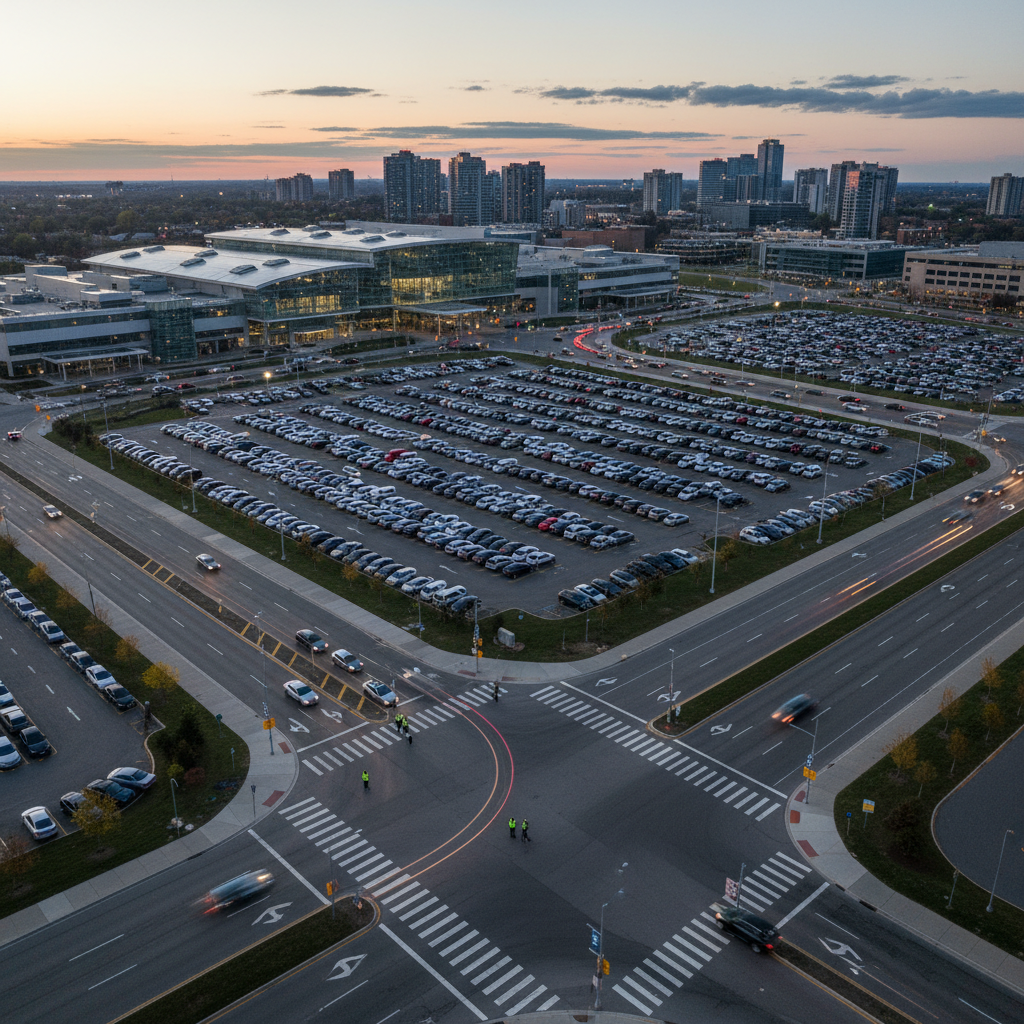
Parking for large events is the coordinated design of traffic flow, space allocation, and guest communications that moves big crowds efficiently. At 75 Derry Rd W, Mississauga Convention Centre applies 700 on-site spaces, trained attendants, and shuttle options so conferences, weddings, and trade shows start on time with less wait.
By Preet Dass — Mississauga Convention Centre
Last updated: 2026-06-05
Quick Summary & Table of Contents
This guide explains how to plan event parking that feels fast, safe, and predictable. You’ll learn capacity math, arrival patterns, wayfinding, staffing, and overflow strategies tailored to Mississauga Convention Centre’s layout, audience mix, and regional transit options—so guests park quickly and walk in smiling.
- What “parking for large events” means (and why it matters)
- How parking operations work at scale (flow, zoning, timing)
- Approaches: on-site, overflow, rideshare, shuttle, VIP, accessibility
- Step-by-step planning with timelines and staffing ratios
- Best practices for signage, safety, weather, and communications
- Tools, templates, and resources you can adapt today
- Real scenarios from conferences, galas, and cultural celebrations
- Jump to: What Is It? • Why It Matters • How It Works • Approaches • Step-by-Step • Best Practices • Tools & Resources • Case Studies • FAQ
Parking for Large Events: What It Is
Parking for large events is the end-to-end system that gets vehicles in, parked, and guests to doors with minimal delay. It blends demand forecasts, route design, wayfinding, accessibility, safety, and staffing to handle high volumes without gridlock or confusion.
At Mississauga Convention Centre, event parking planning starts with real numbers: seven halls (~4,250 sq ft each), a total capacity beyond 2,200 guests, and about 700 on-site spaces. Those figures define arrival waves, turnover assumptions, and whether overflow or shuttles are required.
Core building blocks
- Demand forecast: Expected attendees, vehicle-per-party ratio, and peak arrival window.
- Ingress/egress design: How cars enter, queue, park, and exit without conflict.
- Wayfinding & comms: Clear pre-event directions and on-site signage reduce hesitation.
- Accessibility: Reserved, closest routes with curb ramps and smooth surfaces.
- Safety: Pedestrian-first controls, lighting, and speed management.
Why this definition matters
- Timeliness: Clean arrivals save 10–20 minutes per guest group compared with unclear routing.
- Experience: Less time parking means more time networking, celebrating, or exploring exhibits.
- Operations: Predictable patterns make catering, staging, and registration run on schedule.
Example you can model
- A 1,000-guest gala with 2.2 persons per vehicle expects ~455 vehicles; two staffed ingress lanes, pre-assigned zones, and succinct SMS instructions reduce backup during the 45-minute peak.
Why Parking Strategy Matters for Big Crowds
Parking strategy protects guest experience, schedule integrity, and safety. When arrivals flow, check-in lines shrink, programs start on time, and risk drops. For corporate meetings, weddings, and trade shows, this is often the first impression guests will remember.
We’ve found parking shapes mood before anyone sees a ballroom. A smooth five-minute park-and-walk can offset long travel days. Conversely, a 15-minute jam at the lot undermines keynote energy, ceremonies, or exhibitor load-ins.
Business-critical outcomes
- Uptime: Every on-time start protects agendas, speaker contracts, and meal service timing.
- Safety: Clear pedestrian aisles and lighting lower incident risk during evening events.
- Branding: Great first impressions boost attendee satisfaction scores and repeat bookings.
Real numbers you can use
- 700 on-site spaces provide baseline capacity for most conferences and multi-hall weddings.
- 2,200+ total guest capacity means layered arrivals for parallel sessions or ceremonies.
- Arrival peaks of 30–50 minutes are typical for single-program starts; plan staffing accordingly.
Scenario tie-in
- For a trade show opening at 10:00 a.m., 60% of vehicles may arrive between 9:20 and 9:50 a.m. Assign more attendants early, then redeploy to pedestrian safety as queues fall.
How Large-Event Parking Works at 75 Derry Rd W
At 75 Derry Rd W in the Regional Municipality of Peel, large-event parking relies on zoned lots, dual-lane ingress, and staged overflow. Clear signs and attendants guide drivers; guests walk lit, marked paths to doors while shuttles, rideshare, and accessibility bays handle special arrivals.
Design starts with splitting traffic by purpose—general guests, VIP, vendors, and accessibility. Each flow uses dedicated signs, cones, and marshals. With arrivals concentrated inside a 30–60-minute window, attendants accelerate decisions at lane merges and high-friction turns.
Flow in three moves
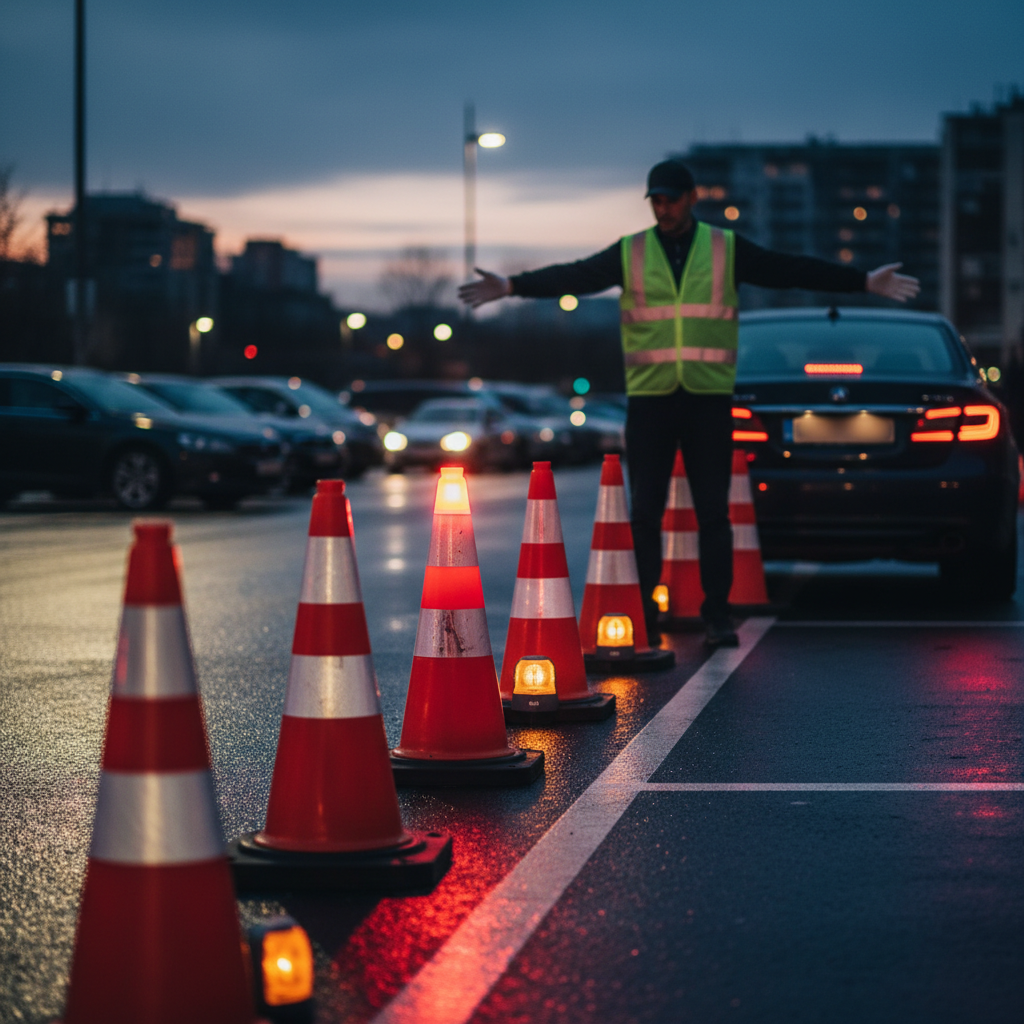
- Ingress: Use two staffed lanes during peak; cones and arrows prevent cross-traffic.
- Park: Fill closest zones first to shorten pedestrian time; pivot to overflow when 80% full.
- Exit: Hold a late-event outflow lane with a marshal to keep vehicles moving steadily.
Supporting elements
- Lighting: LED towers and building lights protect evening pedestrians and attendants.
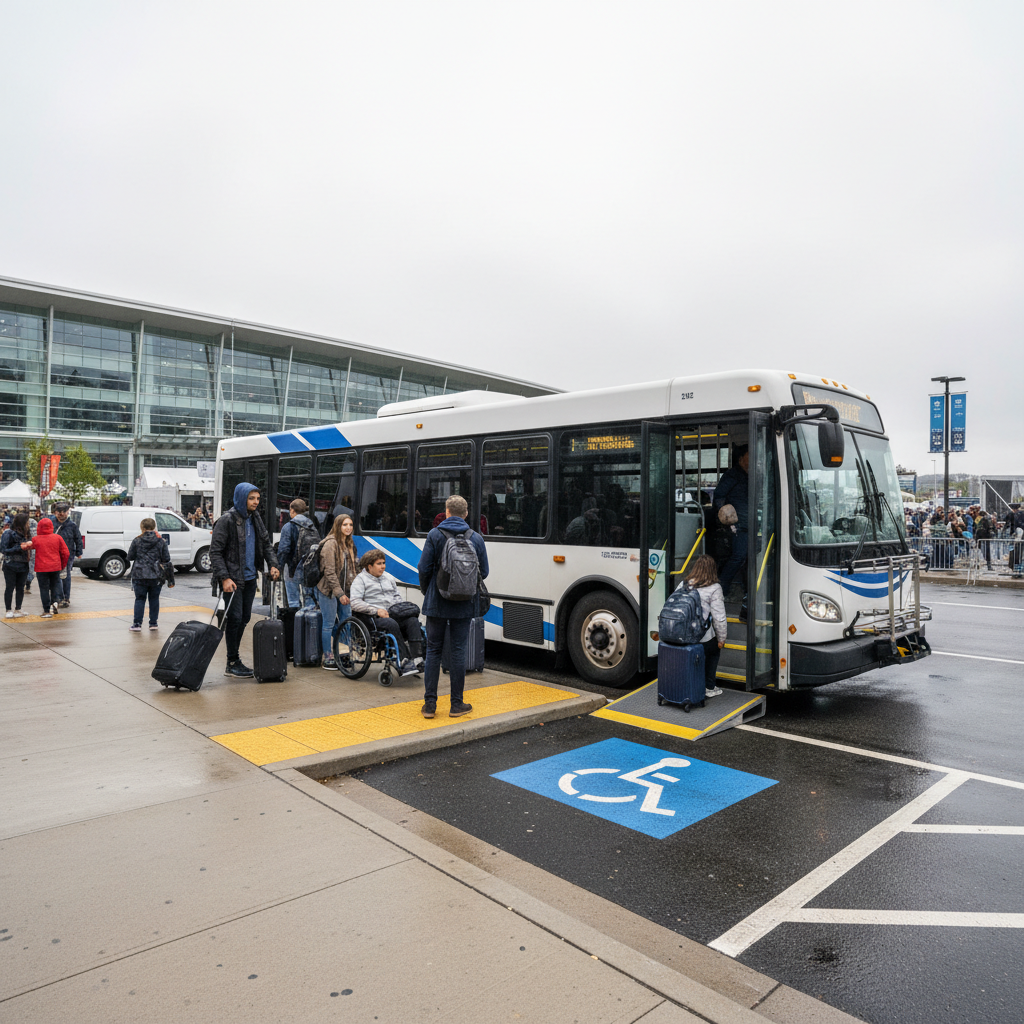
- Accessibility: Signed, near-entry bays with curb ramps and level surfaces.
- Comms: Pre-event emails, site maps, and day-of SMS update routes or overflow when needed.
Local considerations for 75 Derry Rd W
- Use the nearby Derry Rd At Hurontario St stop to encourage transit for staff or staggered guest arrivals.
- Plan evening egress around HWY 407 Park and Ride traffic pulses after 9:00 p.m.
- Winter events: pre-stage salt and a snow push plan to keep curb ramps and crossings clear.
Approaches: On-Site, Overflow, Rideshare, Shuttles, and VIP
Blend approaches based on guest count, arrival timing, and audience mix. On-site lots handle the core load; overflow agreements, rideshare zones, shuttles, VIP staging, and robust accessibility bays ensure every group parks quickly without clogging main lanes.
There’s no single best model. The right mix depends on daytime vs. evening schedules, guest demographics, and whether multiple halls are active. We tune configurations for corporate trainings, cultural galas, and exhibitions differently.
On-site first, then overflow
- On-site baseline: Fill closest bays to reduce walking; pivot when occupancy hits 80%.
- Overflow options: Pre-negotiate a nearby lot with a shuttle; sign it clearly on the day.
- Map integration: Include both lots on the guest map to reduce last-second detours.
Rideshare and shuttles
- Rideshare curb: A well-marked pickup/drop-off cuts dwell times at doors.
- Shuttles: For parallel sessions, a 5–10-minute shuttle loop supports staggered starts.
- Signaling: Handheld LEDs and reflective paddles keep low-speed areas predictable.
VIP, vendors, and accessibility
- VIP: Reserve near-entrance spaces with escorts to keep red carpets on time.
- Vendors: Stage load-in bays with time windows to prevent choke points.
- Accessibility: Keep accessible spaces open and signed; maintain snow/ice clearing in winter.
Step-by-Step Planning for Parking Success
Use a phased plan: forecast demand, map zones, staff the peak, communicate directions, and rehearse contingencies. Lock overflow, rideshare, and accessibility details early, then run a quick pre-open huddle so every attendant knows signals and priorities.
1) Forecast demand
- Headcount: Total invited, likely attendance, and vehicle-per-party estimate (1.8–2.5 typical).
- Peak window: Single-program starts compress arrivals into 30–50 minutes; staggered agendas widen the curve.
- Distribution: Expect 60–70% to arrive within the peak block for most galas and keynotes.
2) Design the lot
- Zones: General, rideshare, accessibility, VIP, vendors, shuttle loop.
- Flow: Cones and arrows reduce decision points; left-turns at peak are risky—limit them.
- Pedestrian paths: Light crossings; add attendants where walkers and cars meet.
3) Staff to the peak
- Ratios: One attendant per 80–120 vehicles at peak, more for complex merges.
- Roles: Lane marshal, parker, crosswalk guard, shuttle coordinator, supervisor.
- Briefing: 10-minute pre-open huddle: hand signals, radios, overflow trigger, and safety focus.
4) Communicate early and often
- Pre-event email: Map, arrival window guidance, rideshare pin, and accessibility notes.
- SMS day-of: “Doors at 6:00. Use Entrance A. Overflow signed if needed.”
- On-site: Large arrows, color-coded zones, and friendly, clear gestures from staff.
5) Rehearse contingencies
- Weather: Rain tents at curb; wind-rated cones; salt for freeze warnings.
- Overflow: Open when occupancy hits 80%; send SMS with map link.
- Incidents: Place a spare cone kit, first-aid, and flashlight at the supervisor station.
Best Practices We Use (and You Can Too)
Make decisions easy for drivers and safe for pedestrians. Use large arrows, staffed merges, and short walking paths. Protect accessible bays, keep lighting strong, and update guests via email and SMS. Treat egress like a mini-peak with lanes and marshals.
Wayfinding that works
- Big arrows beat words: Drivers decide in under 2 seconds at merges—keep signs simple.
- Zone colors: Color codes are quicker to follow than small text in low light.
- Redundancy: Pair fixed signs with an attendant at the first conflict point.
Safety is non-negotiable
- Slow zones: Set 5–10 mph near pedestrian crossings with visible attendants.
- Lighting: Add mobile LEDs to reduce trip hazards and improve visibility in photos.
- Winter protocols: De-ice curb ramps and crosswalks before doors open.
Accessibility and inclusion
- Proximity: Reserve closest, level spaces; keep paths plowed and dry.
- Communication: Include accessible arrival notes in invites and confirmation pages.
- Training: Attendants should know how to offer help respectfully and safely.
For deeper context on accessibility planning at event venues, see our internal guide to welcoming every guest.
Tools, Templates, and Helpful Resources
Build a lightweight toolkit: a capacity calculator, a one-page parking ops sheet, annotated maps, and pre-event email/SMS templates. Use these to align planners, security, attendants, and vendors so everyone shares the same playbook on event day.
Quick-use tools
- Capacity math sheet: Inputs headcount and carpool ratio; flags overflow thresholds.
- Ops one-pager: Zones, radio channels, hand signals, and escalation contacts.
- Annotated map: Color-coded zones, pedestrian paths, accessibility bays, shuttle loop.
- Comms set: Email and SMS templates for doors, maps, and weather switches.
Internal resources you can reference
- Review our venue overview for hall layouts and flow ideas.
- Explore banquet hall planning to align arrivals with grand entrances.
- See event formats we host to tailor traffic by audience.
Expert reading on event parking
For more tactical insights on queue control, staffing, and timing strategies specific to big audiences, consult these articles:
- Practical conference parking tips for planners facing tight morning peaks.
- A full event parking logistics guide focused on operations.
- A helpful venue capacity explainer to align arrivals with room turnover.
Case Studies and Real-World Examples
Real events prove the model: tune zones to audience behavior, staff merges during peaks, and pre-communicate maps. These short scenarios show how conferences, galas, and multicultural weddings achieved smooth five-minute park-to-door experiences at scale.
Corporate conference, two halls active
- Setup: 1,200 attendees, weekday 8:00 a.m. start; two parallel tracks.
- Plan: Dual-lane ingress, 8 attendants, rideshare curb, overflow on standby.
- Result: 65% of vehicles arrived 7:20–7:55; average walk time 3–5 minutes.
Gala with VIP arrivals
- Setup: 900 guests, evening red carpet.
- Plan: VIP queue near entrance, vendor load-in by appointment, color-coded zones.
- Result: Zero backstage delays; VIP dwell times under two minutes.
Multicultural wedding with midday ceremonies
- Setup: 700 guests, mixed-age groups, cultural processions.
- Plan: Accessibility bays expanded, shuttle loop active, clear SMS timing prompts.
- Result: Smooth transitions across ceremonies; family groups parked closest.
Planning something similar? Our corporate event planning guide shows how room sets and parking timing work together.
On-Site vs Overflow: A Simple Comparison
On-site lots maximize convenience and speed; overflow lots provide scalability when attendance spikes. Use on-site first to protect walk times, then open overflow when occupancy nears 80% and shuttle on a short loop to keep main lanes clear.
| Approach | Best Use | Benefits | Watchouts |
|---|---|---|---|
| On-site parking | Most events up to ~700 vehicles | Shortest walks, fastest decisions, best experience | Fills fast during compressed peaks |
| Overflow lot + shuttle | High-attendance or parallel-hall programs | Scales capacity, protects main lanes | Requires clear comms and reliable loop timing |
| Rideshare zone | Evenings, urban attendees, winter conditions | Low dwell at doors, flexible capacity | Needs strong wayfinding and curb management |
| VIP/Accessibility bays | Keynotes, red carpet, mobility needs | On-time starts, dignified access | Must be protected and monitored |
Guest Communications That Reduce Wait Times
Tell guests where to go before they leave home. A map, timing guidance, and an SMS on event day cut wrong turns and last-second decisions. Clear emails and simple arrows can save several minutes per vehicle at the first merge.
What to send and when
- Seven days out: Email map, arrival notes, and accessibility information.
- Day-of morning: SMS reminder with doors time and primary entrance.
- At 80% occupancy: Activate overflow SMS with map link and shuttle frequency.
Message templates to adapt
- General: “Doors open 6:00 p.m. Follow signs to Zone A. Rideshare at south curb.”
- Accessibility: “Accessible bays by Entrance B. Curb ramps are salted and lit.”
- Shuttle: “Overflow open. Park at Lot 2. Shuttle every 6–8 minutes to the main entrance.”
Need a full-picture view? Start with our venue overview and align your comms with actual door locations and paths.
Weather, Seasonality, and Risk Management
Weather changes traffic behavior. Build a wet, cold, or heat plan that protects visibility, footing, and timing. Position tents and cones for rain, salt for freeze, and water for heat. Keep radios charged and assign a safety lead to monitor conditions.
Winter-ready operations
- Pre-treat: De-ice curb ramps and pedestrian crossings pre-arrival window.
- Visibility: Use reflective gear and LEDs as twilight comes early.
- Egress: Manage cautious driving with attendants at bottlenecks.
Rain and wind
- Tents: Position rain tents at curb; weigh them against gusts.
- Cones: Use weighted bases; avoid narrow placements near drains.
- Hydroplaning risk: Extend peak staffing 10–15 minutes during downpours.
Heat and sun
- Shade: Rotate attendants; supply water and hats.
- Glare: Angle signage to stay readable in bright light.
- Shuttles: Increase frequency for older or mobility-limited guests.
Planning a big arrival? Let’s align early.
A 10-minute pre-planning call clarifies zones, signage, and timing so your guests roll in smoothly. We match your agenda to a proven parking plan for conferences, galas, weddings, and exhibitions at Mississauga Convention Centre.
See how our flows, hall layouts, and operations connect in the venue overview. Then coordinate room sets and arrivals using our corporate event planning guide.
Frequently Asked Questions
These quick answers cover the most common questions planners ask us about large-event parking: capacity, arrival timing, accessibility, and overflow. Use them to finalize programs and guest communications.
How early should I communicate parking details to attendees?
Send a parking map and arrival guidance one week before your event, then a short SMS the morning of the event. If overflow opens, trigger a second SMS with the lot location and shuttle frequency. Clear, early communication consistently reduces wrong turns and dwell times.
When do you open overflow parking?
We monitor occupancy and open overflow around 80% to keep decisions simple at the first merge. An attendant redirects drivers, and we send an SMS with a map and shuttle timing. This protects main-lane flow and shortens walking distances to active entrances.
How do you manage accessibility needs during large events?
We reserve near-entrance accessible spaces, confirm curb ramps and lighting, and include arrival notes in pre-event communications. Attendants are trained to offer respectful assistance and to keep accessible routes clear during both arrivals and egress.
What staffing do big events usually need for parking?
For a compressed peak, plan roughly one attendant per 80–120 vehicles, increasing coverage at merges and crosswalks. Roles include lane marshals, parkers, crosswalk guards, a shuttle coordinator, and a supervisor to track occupancy and adjust flows.
Key Takeaways
Plan for the peak, not the average. Keep decisions obvious, protect pedestrian safety, and communicate early. Use on-site first, open overflow at 80%, and treat egress like a second mini-peak with attendants and lighting.
- On-site lots handle core demand; overflow and shuttles add scalability.
- Simple arrows, color zones, and friendly attendants beat long text.
- Accessibility and safety require proximity, lighting, and training.
- SMS timing prompts reduce last-second decisions at merges.
Conclusion
Great event parking is designed, not improvised. With forecasting, clear zones, trained attendants, and timely guest communications, large crowds park faster and walk in relaxed—ready for the experience you’ve planned.
At Mississauga Convention Centre, we tailor parking to your audience—corporate trainings, exhibitions, galas, school events, and multicultural weddings. Explore hall options, parking flows, and accessibility details, then book a site preview at 75 Derry Rd W to finalize your plan with our team.
Ready to design fast, friendly arrivals? Coordinate your agenda and arrivals using our event formats overview and accessibility checklist. We’ll help you stage a seamless welcome for every guest.