

 20 September, 2026
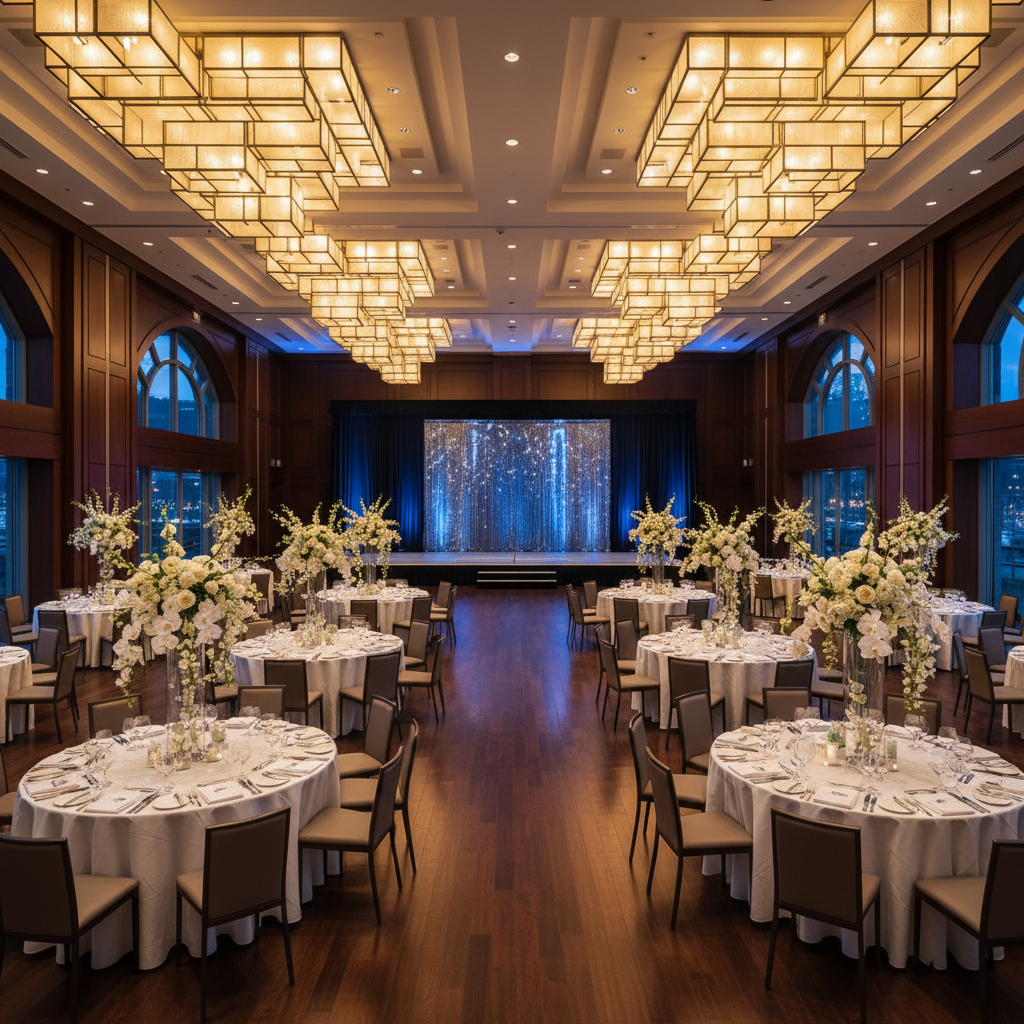
 Banquet halls in Mississauga are full-service event spaces designed for weddings, galas, conferences, school formals, and trade events. At 75 Derry Rd W, Mississauga Convention Centre offers seven ~4,250 sq ft ballrooms, scalable layouts, and 700 on-site parking spots. These features let planners host 100–2,200+ guests with reliable AV, staging, and multicultural in-house catering.
By Preet Dass — Mississauga Convention Centre
Last updated: 2026-06-05
Above-Fold Overview
Use banquet halls in Mississauga to deliver large, polished events with dependable logistics. You’ll get modular rooms, robust AV, and parking capacity that support weddings, galas, corporate conferences, and school formals—without juggling multiple vendors. This guide shows how to plan bigger, smoother programs at 75 Derry Rd W and across the GTA.
Planning a high-stakes event should feel organized, not overwhelming. Here’s how to use modern banquet spaces to simplify decisions, minimize risk, and impress your audience.
At a Glance
- Seven elegant halls (~4,250 sq ft each) with total capacity over 2,200 guests
- 700 free on-site parking spaces; minutes from major highways and Toronto Pearson
- In-house AV, lighting, staging, and on-site technical support
- Multicultural in-house catering including Halal and regional cuisines
- Outdoor patio customization and a virtual tour for faster planning
Summary
- Define the purpose first, then match layouts, AV, and run-of-show to outcomes.
- Use venue infrastructure to reduce vendor count and coordination risk.
- Lock logistics (access, load-in, parking, accessibility) before content and décor.
- Test AV and stage plans early to prevent show-day surprises.
- Leverage in-house catering for menu diversity, consistency, and timing control.
Banquet Halls in Mississauga: What They Are and When to Use Them
A banquet hall is a purpose-built event space with catering, AV, staging, and staff ready to execute weddings, galas, meetings, or school formals. In Mississauga, halls near 75 Derry Rd W add highway and airport access plus 700 on-site parking spots, making large guest counts simpler to manage in the Regional Municipality of Peel.
Banquet halls are designed to deliver a complete hospitality experience in one place. Instead of stitching together many vendors, you coordinate with one team that controls rooms, kitchens, AV, and load-in routes.
Why this matters
- Reliability under pressure: Complex shows need redundant power, tech support, and built-in staging.
- Flow and comfort: Wide foyers, coat checks, and restrooms prevent bottlenecks at peak times.
- Predictable timing: In-house kitchens align service with your agenda so programs stay on schedule.
At Mississauga Convention Centre, seven similarly sized halls let you scale from 120-person meetings to 1,000+ guest galas or combine rooms for exhibitions. For context, a 60-inch round typically seats 8–10 guests—useful when forecasting capacities.
Who should book a banquet hall
- Corporate planners: Keynotes, breakouts, awards dinners, and trade showcases.
- Schools: Proms, graduations, formals, and parent banquets.
- Couples and families: Weddings, receptions, anniversaries, and cultural celebrations.
If you need multiple rooms, reliable AV, and timing that supports speeches, entertainment, and plated or buffet service, a full-service hall is the simplest path to a polished event.
Why Mississauga Banquet Halls Matter for Big Events
Mississauga halls combine capacity, access, and services: seven ~4,250 sq ft rooms, 2,200+ total guest capacity, and 700 on-site parking spots. With Pearson Airport minutes away and major highways nearby, regional and international attendance becomes easier, which improves on-time starts and guest satisfaction.
Attendance rises when travel is easy and parking is abundant. That’s why proximity to Toronto Pearson and highway connections is a real advantage for Mississauga venues.
- Capacity that scales: Host parallel sessions, expand to foyer exhibits, or combine halls for headliner segments.
- On-site AV and tech: Lighting, projection, and staging are integrated, with technicians on call.
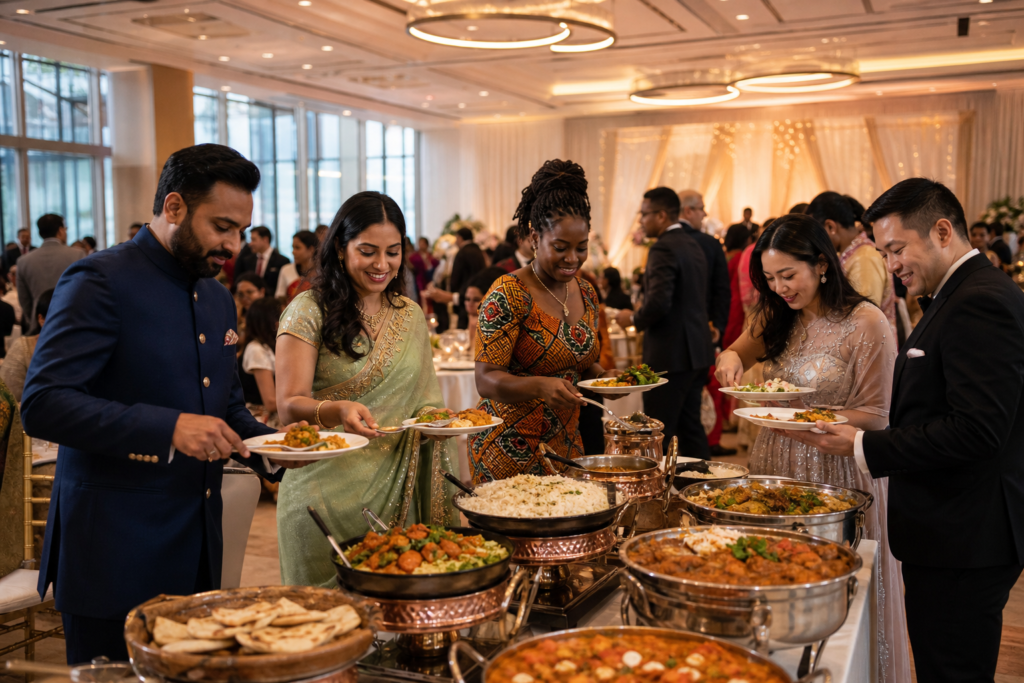
- Diverse menus: South Asian, Pakistani Halal, Middle Eastern, Sri Lankan, Caribbean, and Continental options support inclusive hospitality.
For competitive context, reading another Mississauga banquet hall perspective helps clarify which features matter for your specific program structure and guest profile.
How Booking, Setup, and Show Day Work
Great events flow from a tight process: define goals, book the right hall and date, map layouts and AV, lock logistics, then rehearse. At Mississauga Convention Centre, integrated catering, staging, and technical support streamline decisions and reduce vendor risk from planning through show day.
Use a simple sequence so the plan stays organized and deadlines are clear.
Five-phase planning framework
- Define outcomes: Clarify headcount, agenda, and program goals (education, celebration, sales enablement).
- Select space + date: Choose halls that match capacity, ceiling heights, and loading access.
- Design experience: Seating maps, stage plot, lighting looks, and menu strategy.
- Lock logistics: Load-in schedule, parking allocations, accessibility routes, and backstage flow.
- Rehearse + refine: Full AV run-through, time checks, and staffing confirmations.
Process table: from inquiry to applause
| Stage | Owner | Key Deliverables |
|---|---|---|
| Discovery | Planner + Venue | Event goals, headcount range, preferred dates, cultural or dietary needs |
| Proposal | Venue | Recommended halls, draft layouts, AV/staging outline, sample menus |
| Design | Planner | Final seating chart, stage plot, run-of-show, décor plan |
| Operations | Venue + Vendors | Load-in/out schedules, parking map, accessibility routes, security posts |
| Show Day | Venue + Planner | Rehearsal, cue-to-cue, dining service pacing, strike plan |
Tip: Lock your seating chart early. A 60-inch round usually fits 8–10, while theater rows maximize headcount. Classroom setups often target 2–3 per 6-foot table to balance note-taking space with density.
For more details on mapping seats by layout style, see this helpful banquet hall seating chart.
Types of Halls, Layouts, and Approaches
Most Mississauga banquet halls support multiple formats: banquet rounds for dining, theater for keynotes, classroom for training, and expo pods for showcases. With seven ~4,250 sq ft rooms at 75 Derry Rd W, you can host parallel breakouts or combine halls for a dramatic mainstage or exhibition floor.
Choose based on content flow, stage sightlines, and service timing—not just the headcount.
Common layout choices
- Banquet rounds: Best for dinners, galas, and receptions with staged remarks.
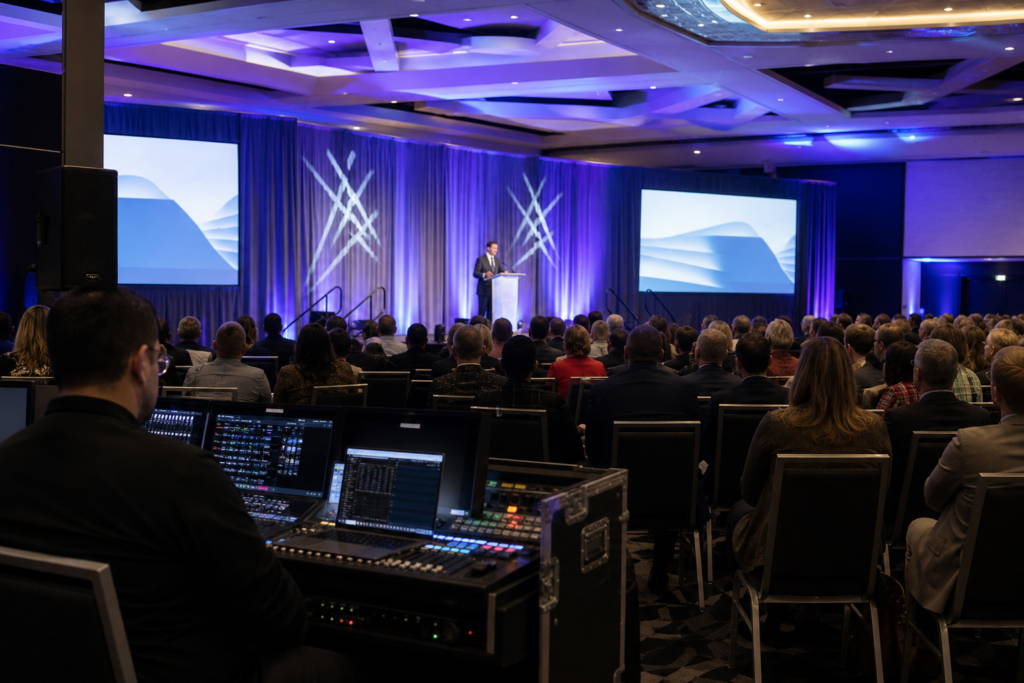
- Theater: Ideal for keynotes and ceremonies where everyone faces the stage.
- Classroom: Training, workshops, and meetings that require note-taking.
- U-shape or hollow square: Board-style discussions and collaborative sessions.
- Expo pods + foyer: Product showcases, recruiting fairs, and sponsor villages.
Capacity planning cues
- Estimate 10–12 sq ft per guest for dining rounds with service aisles.
- A typical 16′ x 24′ stage fits a lectern, panel table, and small band setup.
- Plan 1 registration station per ~100 guests to avoid long queues.
Mississauga Convention Centre’s parallel halls make it simple to separate reception, dinner, and dancing—or hold keynotes in one hall while running sponsor activations next door.
Comparison table: layout trade-offs
| Layout | Strength | Watch-out |
|---|---|---|
| Banquet Rounds | Comfortable dining and conversation | More square footage per guest |
| Theater | Max audience for speeches | Limited table space for materials |
| Classroom | Note-taking and training-friendly | Lower density than theater rows |
| U-Shape | Facilitates discussion | Not ideal for large audiences |
Best Practices for a Seamless Experience
Start with objectives, then reverse-engineer room plans, AV cues, and service timing. At 75 Derry Rd W in the Regional Municipality of Peel, leverage seven adjacent halls, 700 parking spots, and on-site kitchens to cut friction—from arrival and registration to final speeches and the dance floor.
After hundreds of shows, we’ve found simple habits drive consistently better outcomes.
Planner’s checklist
- Define outcomes first: Education? Celebration? Fundraising? Let the objective guide room flow.
- Design for movement: Place bars and food stations to reduce congestion near doors.
- Rehearse tech cues: Run lighting, audio, and stage timing before doors open.
- Sequence service: Align courses with speeches to avoid clashing attention.
- Back-of-house map: Mark staging, storage, and vendor routes to stay clear of guest traffic.
Local considerations for 75 Derry Rd W
- Use nearby transit stops like Hurontario St At Derry Rd to guide guest wayfinding on invites.
- Winter events: Add extra coat check and snow-mat coverage; summer: shade and hydration stations on the patio.
- Friday peaks near HWY 407 Park and Ride: stagger vendor load-in and extend registration windows.
Minimize risk with fewer vendors
- AV in-house: Faster fixes, better integration, and consistent gear.
- Catering in-house: More control over pacing, temperatures, and cultural service customs.
- One operations plan: Unified schedules keep teams aligned—no finger-pointing.
When we host 1,000+ guest galas, two things keep programs on time: early AV rehearsals and clear service cues. That’s the advantage of consolidated teams inside one venue.
In-House Catering and Cultural Hospitality
Diverse, in-house catering ensures menus match your guests and program timing. Mississauga Convention Centre offers South Asian, Pakistani Halal, Middle Eastern, Sri Lankan, Caribbean, and Continental cuisines, aligning culinary experience, dietary needs, and cultural customs with your agenda.
Food anchors the guest experience. Pair the menu with your run-of-show so attention peaks happen between courses, not during them.
Menu planning cues
- Match service to content: Plated service for formal awards; stations for networking.
- Honor traditions: Build menus that reflect cultural customs and dietary preferences.
- Time the kitchen: Lock times for hors d’oeuvres, mains, and dessert against speech cues.
Explore our teams and options on the corporate events guide and wedding venue rental pages for examples of how we pace service.
Tools and Resources That Save Time
Use venue-provided tools—virtual tours, seating maps, AV plots, and run-of-show templates—to accelerate planning. Centralizing assets reduces revision cycles, speeds sign-offs, and cuts risk on show day.
The right resources help you visualize and decide faster.
- Virtual tour: Walk spaces online to shortlist halls and plan guest flow before site visits. Start with our Mississauga Convention Centre overview.
- Venue selection tips: See the event venue checklist to avoid common misses.
- Format fit: Review banquet hall vs. event space to pick the right model for your program.
Real-World Examples From 75 Derry Rd W
Big wins happen when logistics, AV, and menus align with objectives. At 75 Derry Rd W, we routinely host 500–1,200 guest galas, multicultural weddings, and corporate conferences with parallel breakouts, maintaining on-time agendas through integrated kitchens, staging, and technical crews.
Here are condensed scenarios that mirror common planner goals.
Corporate sales kickoff (1,000+ guests)
- Objective: Energize teams and unveil the roadmap.
- Approach: Theater mainstage with LED wash, two adjacent breakout halls, and a sponsor foyer.
- Result: On-time program with precise meal pacing; sponsors saw higher traffic from foyer activations.
South Asian wedding weekend (700–900 guests)
- Objective: Celebrate across multiple ceremonies and receptions.
- Approach: Separate halls for mehndi, sangeet, and reception; custom décor; Halal menus.
- Result: Smooth transitions; elders appreciated shorter walking distances and ample parking.
School prom + graduation (600–800 guests)
- Objective: Formal dinner with award moments and dancing.
- Approach: Banquet rounds near the stage, photo wall in foyer, later-night snacks.
- Result: Balanced program with easy chaperone coverage; quick bus staging thanks to dedicated load-out.
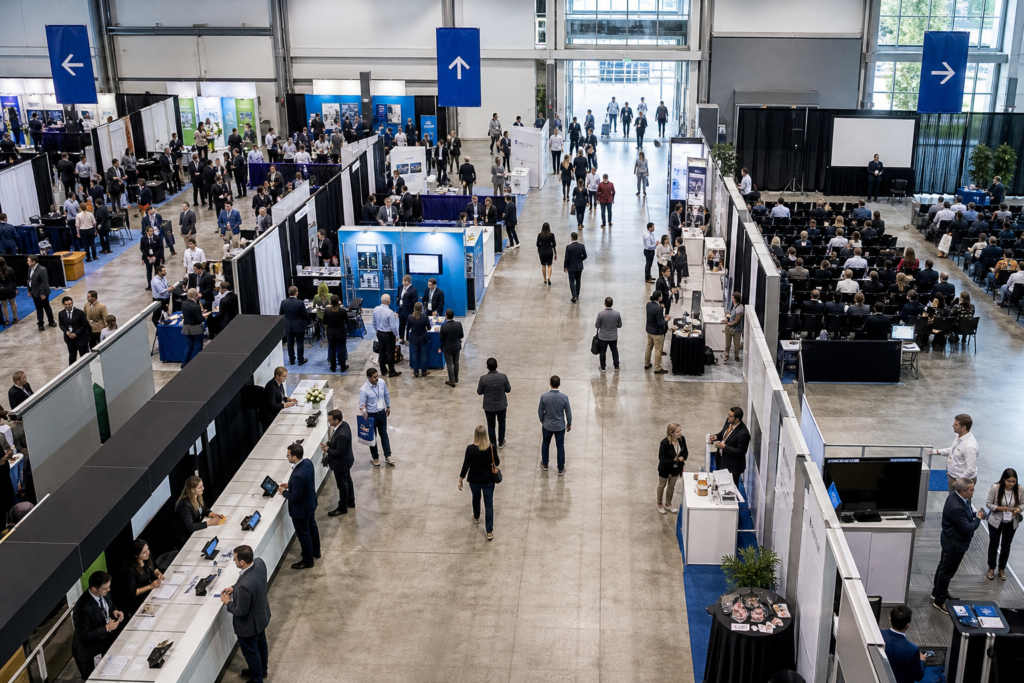
Trade showcase (75 booths + mainstage)
- Objective: Product demos, lead capture, and live keynotes.
- Approach: Combined halls into an expo floor, theater seating for timed talks, back-of-house storage.
- Result: Strong booth flow and clear line-of-sight to presentations; load-in concluded ahead of schedule.
Packages, Inclusions, and What Affects Investment
Packages bundle room rental, staffing, and services so planners get predictable inclusions. Your investment varies by date, guest count, menu style, AV complexity, décor scope, and load-in needs. Focus on value: integrated AV, kitchens, and parking reduce vendor fees and coordination hours.
While specific pricing depends on scope, these factors commonly shape proposals:
- Guest count + layouts: Room selection, density, and furniture needs.
- Menu and service style: Plated, buffet, or stations; cultural and dietary requirements.
- AV + staging: Projection, lighting looks, stage size, and rehearsal time.
- Décor and enhancements: Linens, florals, drapery, and specialty lighting.
- Operations: Load-in timing, security, and extended hours.
Planners often find that fewer vendors and an experienced in-house team lead to fewer change orders and smoother show days—value that goes beyond a line item.
Access, Arrivals, and Guest Experience
Great events feel effortless. With 700 on-site parking spaces and clear wayfinding, arrivals move quickly. Inside, wide foyers, accessible routes, and thoughtful bar/food placement reduce congestion so guests spend more time enjoying content and connection—not waiting in lines.
Arrival friction erodes goodwill fast. Fix it through signage, registration staffing, and well-placed hospitality stations.
- Wayfinding: Clear signage from curb to coat check to ballroom.
- Accessibility: Confirm routes for mobility devices, interpreters, and companion seating.
- Service pacing: Open additional bars at peak times to shorten queues.
Plan With an Expert (Soft CTA)
A 15-minute planning consult helps align goals, layouts, AV, and menus—saving hours later. Share your headcount and program shape; we’ll suggest halls, staging, and service pacing that fit your objectives and brand.
Prefer to explore on your own first? Start at our corporate events overview and bookmark the venue selection checklist for stakeholder reviews.
Frequently Asked Questions
Here are direct answers to common planner questions about Mississauga banquet halls—covering capacities, layouts, timelines, and services—so you can make fast, confident choices.
How far in advance should I book a banquet hall?
Prime dates fill earliest. For large galas or weddings, secure your hall 9–12 months ahead; for midweek corporate and school events, 4–6 months often works. If you’re flexible on dates, holds and waitlists can still land you a preferred timeframe.
What layout fits my program best?
Match layout to outcomes. Theater maximizes audience for keynotes. Banquet rounds support dining and conversation. Classroom suits training. Many planners split formats—keynote in theater, dinner in rounds, then a dance floor reveal after dessert.
Can you accommodate Halal and culturally specific menus?
Yes. Mississauga Convention Centre supports South Asian, Pakistani Halal, Middle Eastern, Sri Lankan, Caribbean, and Continental cuisines. We tailor menus for traditions and dietary needs while syncing service with your program’s pacing.
How do I prevent lines at registration and bars?
Plan for guest flow. Add extra registration stations for peak 30-minute windows, test scanners, and place bars away from doorways. Staggered call-times and foyer activations spread arrivals and reduce bottlenecks.
Conclusion and Next Steps
Choose banquet halls in Mississauga when you need scale, flexibility, and integrated services. With seven ~4,250 sq ft halls, 2,200+ capacity, and 700 parking spots at 75 Derry Rd W, you can orchestrate ambitious programs with fewer vendors and fewer risks.
Ready to align a space to your program? A focused conversation often saves weeks of back-and-forth.
Key takeaways
- Start with objectives, then choose layouts, AV, and menus to serve them.
- Use integrated AV and kitchens to cut risk and keep timing tight.
- Design the flow: arrivals, service, stage moments, and exits.
- Leverage seven adjacent halls and 700 parking spots for big turnouts.
Next step: Book a planning chat or explore our spaces via the virtual tour overview. Prefer in-person? We’re minutes from major highways near Toronto Pearson—easy to visit on a lunch break or after work.