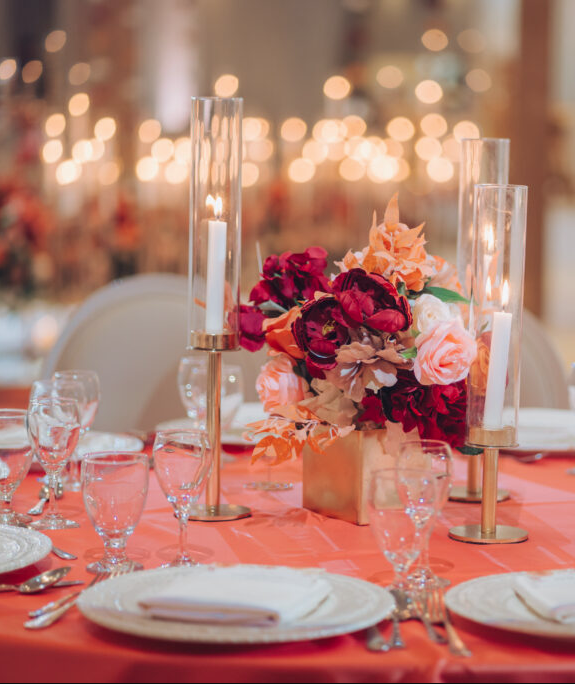

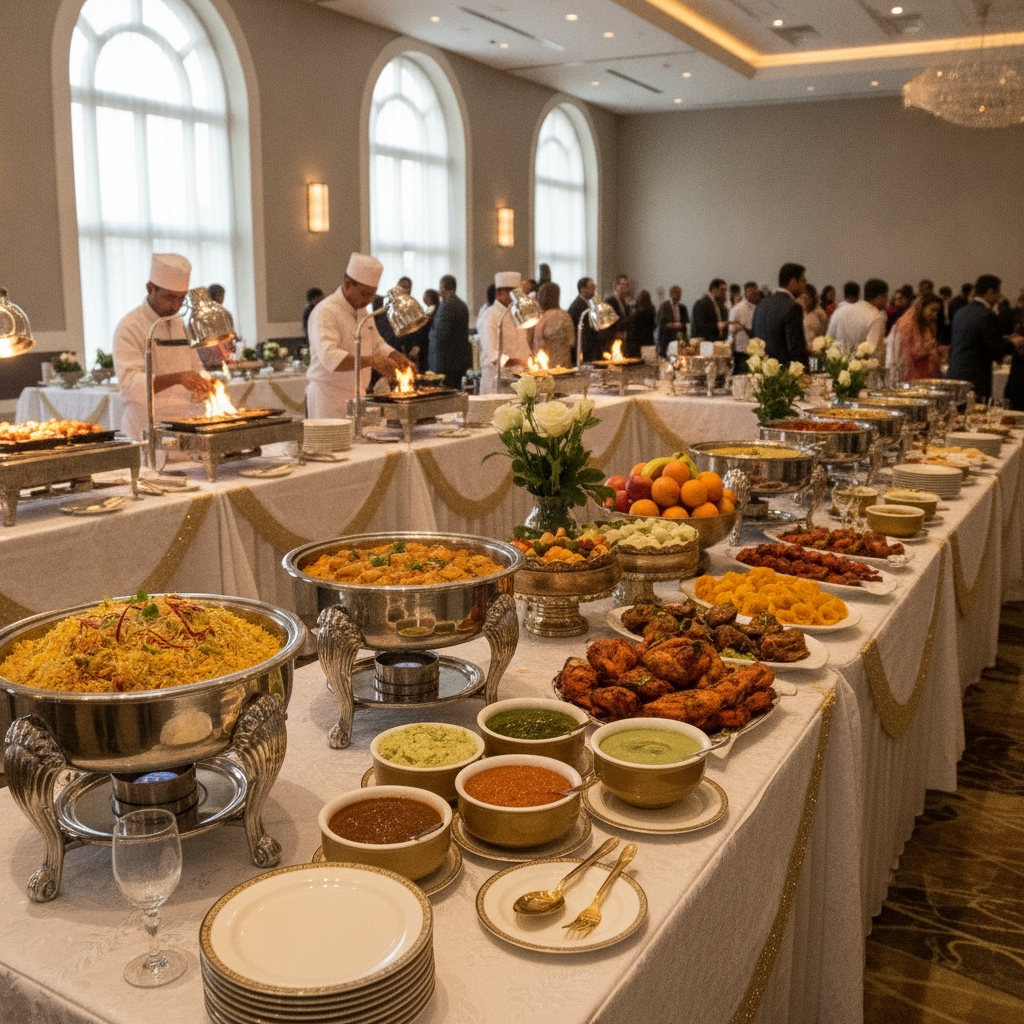
South Asian wedding catering ideas are practical strategies for planning diverse, Halal-friendly, and vegetarian-inclusive menus that delight large guest lists. At 75 Derry Rd W in Mississauga, our in-house culinary team curates live stations, regional dishes, and service styles that scale for 200–2,200+ guests. The result is flavorful variety guests remember—and hosts can trust.
By Preet Dass • Mississauga Convention Centre • Last updated: June 19, 2026
At a Glance
Plan South Asian wedding catering by balancing Halal standards, vegetarian and Jain needs, and regional favorites with scalable service styles. Use live stations for energy, smart sequencing for flow, and an on-site team to manage timing. At Mississauga Convention Centre, seven halls and 700 parking spots simplify large, multicultural celebrations.
South Asian wedding catering can be both vibrant and organized. With seven elegant halls (~4,250 sq ft each) and a total capacity over 2,200, we handle multi-day events, parallel sangeet and reception setups, and elaborate food flows. Guests arrive stress-free thanks to 700 on-site parking spots and easy highway access.
- Primary focus: Flavor-forward variety, Halal assurance, and guest inclusivity
- Works best for: Large weddings, receptions, gala dinners, and fusion events
- Critical enablers: On-site AV, lighting, staging, and in-house culinary teams
- Outcome: Consistent service, smooth timing, and memorable dining moments
What Is South Asian Wedding Catering?
South Asian wedding catering is the culinary planning and service of Indian, Pakistani, Sri Lankan, and regional dishes—often Halal and vegetarian-friendly—at wedding events. It blends live stations, signature mains, and sweets with careful timing across sangeet, ceremony, and reception for large, multicultural guest lists.
In practice, this means pairing beloved dishes—like biryani, haleem, paneer, and hoppers—with modern service. It also means building for inclusivity: Halal standards, vegetarian and Jain options, gluten-aware choices, and child-friendly picks. For large guest counts, operational precision matters as much as flavor.
Local considerations for 75 Derry Rd W
- Coordinate shuttle or arrival cues near Hurontario St At Derry Rd during peak ceremony windows to keep service on time.
- Plan warm beverages and cozy canapés for winter receptions; summers favor patio mocktails and chilled chaat.
- Consider a short photo walk near Mississauga’s Ram Mandir before cocktail hour to stagger arrivals and ease buffet flow.
Why Catering Strategy Matters
A clear catering strategy protects guest experience and event flow. When menus, stations, and timing align with rituals and speeches, service stays warm, lines stay short, and dietary needs are met. The best plans scale for 200–2,200+ guests without delays or flavor trade-offs.
Here’s the thing: food anchors memory. Guests will recall taste, speed, and thoughtfulness. That’s why we map food service to ceremony beats and dance sets. At our address in the Regional Municipality of Peel, we routinely synchronize cues across multiple halls, easing transitions between sangeet, pheras, and reception.
- Guest inclusivity: Halal, vegetarian, Jain, and allergy-aware labels build trust and comfort.
- Flow and timing: Staggered station openings reduce bottlenecks and keep food fresh.
- Signal moments: Pair dessert releases with toasts or first dance for shared excitement.
- AV synergy: Lighting and audio cues direct attention and pace service.
In our experience, simple sequencing—welcome bites, two live stations, mains, and sweets—outperforms crowded layouts. It concentrates energy where it counts and ensures hot food lands hot. That’s especially crucial with premium items like tandoori platters or dosa made-to-order.
How Menu Planning Works Here
We start with a tasting, define dietary standards (Halal, vegetarian, Jain), choose service styles, and map courses to your timeline. Then we align staffing, AV cues, and kitchen batching so every plate or station hits temperature, presentation, and pace—across one or multiple halls.
At Mississauga Convention Centre, our process is transparent and collaborative. We tailor South Asian wedding catering ideas to your traditions and guest mix. Everything is on-site—kitchens, AV, staging—so we control timing end to end. That’s how large receptions run on schedule without sacrificing flavor.
- Discovery and tasting: Share must-have dishes, regional preferences, and no-go ingredients. We refine a balanced menu at a guided tasting.
- Dietary mapping: Confirm Halal certification, vegetarian/Jain segregation, and nut/allergen controls. We label clearly on buffets and stations.
- Service style selection: Choose plated, family-style, buffet, or stations—or combine them by course.
- Timeline integration: Sequence bites around rituals, speeches, and dance sets to keep energy high.
- Operational run-sheet: Lock staff counts, batch schedules, and AV cues so kitchens and floor teams move as one.
Want a head start? Our planners can share a structured menu template you can adapt to each event phase. See our wedding menu template for inspiration and structure you can print for tastings.
Approaches, Stations, and Service Styles
Mix service styles to match your guest count and vibe. Use chaat or dosa live stations for energy, a compact buffet for variety, and plated or family-style mains for speed and elegance. Keep vegetarian/Jain lanes separate and clearly labeled for trust.
South Asian wedding catering ideas shine when styles complement each other. We often open with interactive stations, then seat for mains, then invite guests back to explore sweets and late-night snacks. Below is a quick comparison to help you choose the right mix for your reception.
| Service Style | Best For | Strengths | Watch-outs |
|---|---|---|---|
| Live Stations (Chaat, Dosa, Tandoor) | Energy during cocktail hour | Fresh, interactive, custom orders | Line control; needs strong staffing |
| Buffet | Variety for large groups | Many choices; easy refills | Flow management, labeling, heat control |
| Family-Style | Communal reception dining | Fast at-table variety | Table space; portion calibration |
| Plated | Formal gala dinners | Elegant pacing, precise plating | Advance selections; tight kitchen timing |
High-impact live stations
- Chaat bar: Pani puri, bhel, and papdi with sweet-tart chutneys; easy to brand with your monogram colors via garnishes.
- Dosa or uthappam: Made-to-order with potato masala or cheese-chili; great vegetarian anchor.
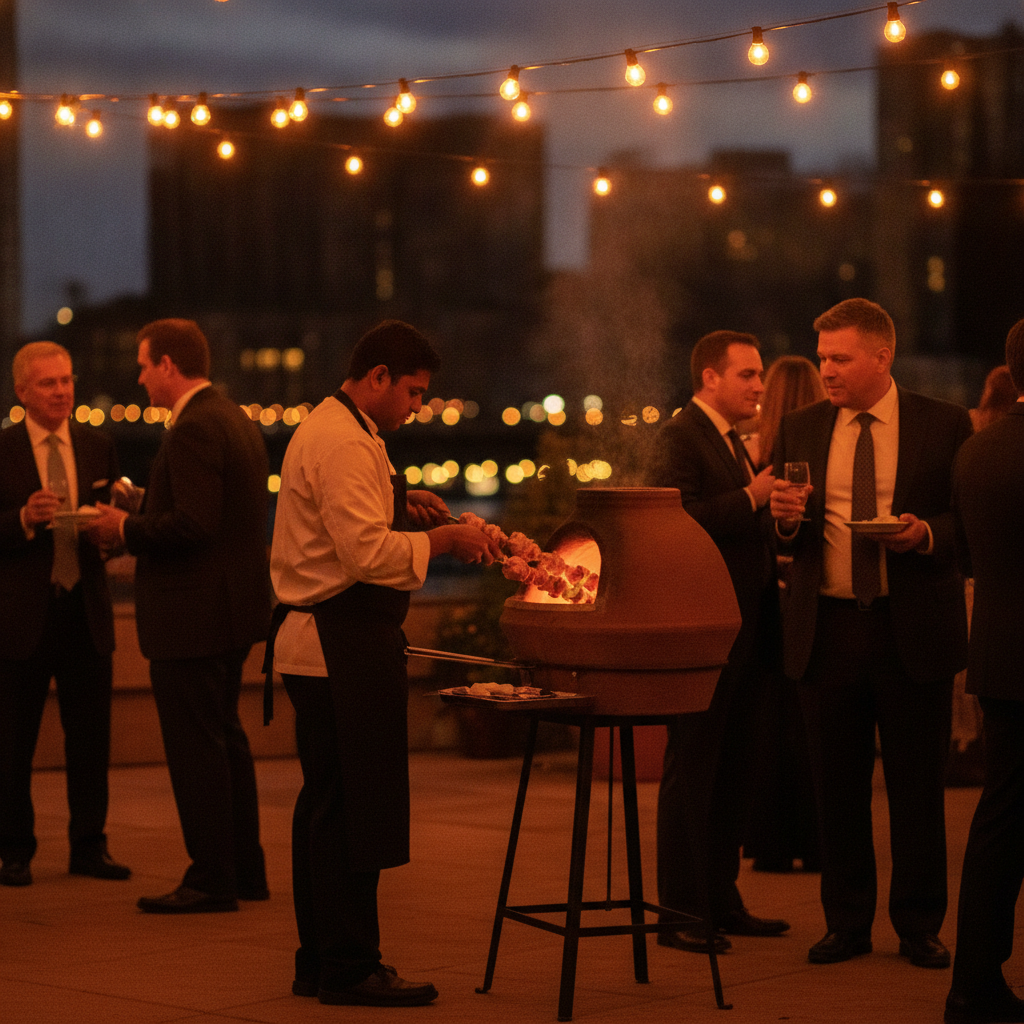
- Tandoor grill: Seekh kebabs, malai tikka, paneer tikka; dramatic aroma and visuals on the outdoor patio.
- Sri Lankan hopper corner: Egg or plain hoppers with seeni sambol—light and photo-friendly.
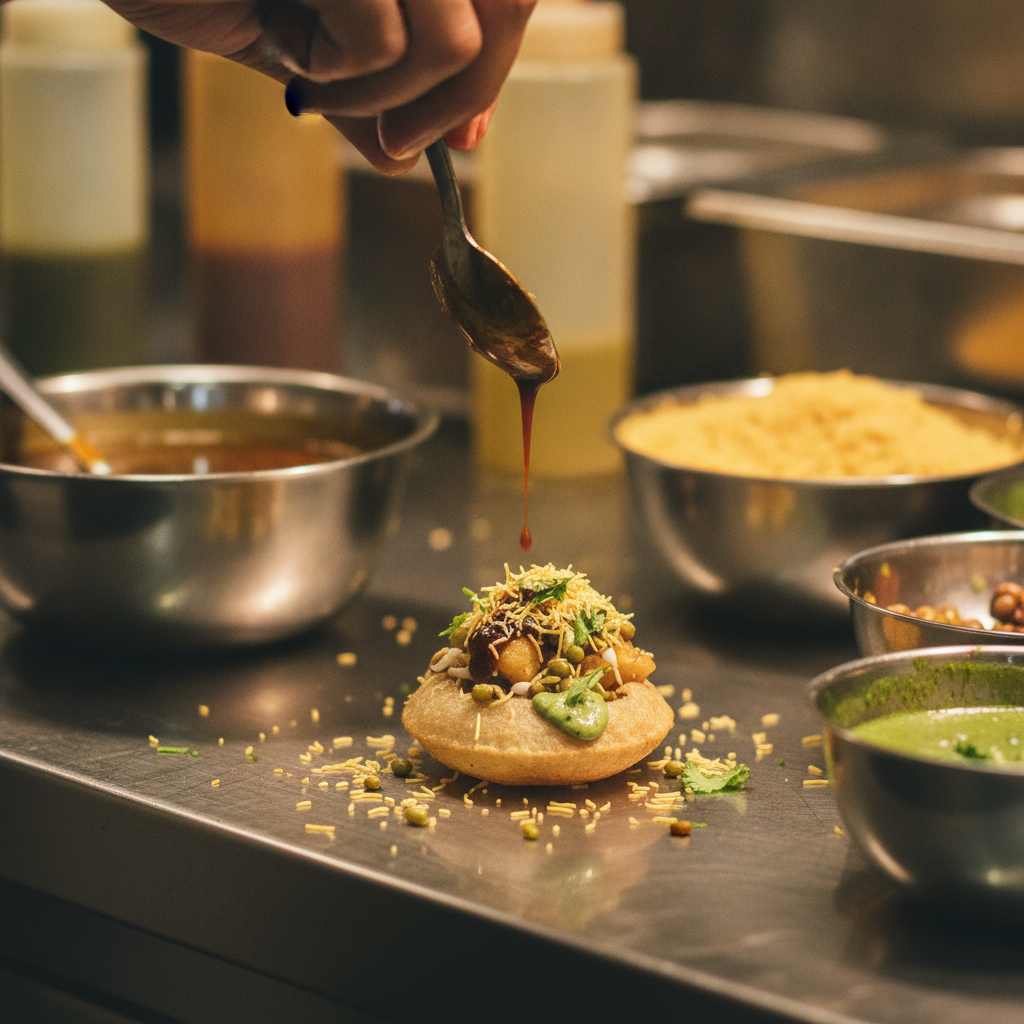
Station success comes down to flow. We position bustle-friendly stations near cocktail zones and quieter stations deeper in the room. For 500+ guests, we mirror identical stations on both sides to halve line lengths. Clear signage and color-coded plates prevent cross-traffic and keep Jain lines protected.
Main courses guests request again
- Fragrant biryani duo: Chicken or goat plus a vegetable biryani; both hold heat well for service windows.
- Paneer two ways: Rich matar paneer and smoky kadai paneer to satisfy diverse palates.
- Regional rotations: Haleem or nihari for Pakistani menus; hoppers and kottu roti for Sri Lankan spreads.
- Bread basket strategy: Keep naan, roti, and paratha cycling fast; gluten-aware tags help guests choose confidently.
Desserts and late-night bites
- Mithai table: Burfi, gulab jamun, and rasmalai presented in tiers near the dance floor for visual impact.
- Warm + cold duet: Jalebi with kulfi or rabri—pair temperature contrast for crowd-pleasing effect.
- After-hours snacks: Mini kathi rolls, masala fries, and spiced popcorn to recharge dancers.
For even more ideas, see our in-depth multicultural wedding catering guide—it pairs South Asian favorites with Middle Eastern, Caribbean, and Continental accents for fusion receptions.
Best Practices (2026)
Use a tasting to shape must-haves, lock dietary labeling early, and mirror stations for big crowds. Sequence courses to ceremony beats, and assign one captain to each 100 guests. Integrate AV cues so food, lights, and speeches move together without bottlenecks.
Great South Asian wedding catering ideas become great experiences when logistics are simple. Our venue design—seven halls at roughly 4,250 sq ft each—lets us split programming or create parallel food flows. The on-site kitchens keep temperatures consistent, even when we’re plating for back-to-back halls.
- Plan the plate: Build a balanced trio—protein/vegetable, starch, and sauce—so every plate looks complete and eats clean.
- Labeling clarity: Consistent icons for Halal, vegetarian, and Jain reduce questions and lines.
- Mirror and multiply: Duplicate high-demand stations to keep pace during peak 30-minute windows.
- Temperature strategy: Rotate shallow hotel pans; batch small and refill often to keep texture right.
- Timeline anchors: Open chaat at cocktail, seat for mains, then reopen stations for sweets and snacks.
- Allergy lane: Provide a supervised table for nut-aware or gluten-aware plates prepared separately.
- Kid-friendly picks: Butter chicken sliders or paneer skewers; simple desserts like fruit cups near the dance floor.
For couples planning a fusion gala, we often coordinate with staging and lighting to turn dessert reveals into photo moments. If you’re exploring gala dinner staging, our corporate events team shares ideas that translate to receptions—see our catering menu options for inspiration.
Tools and Resources
Use a printable menu template, a dietary matrix, and a station placement map to keep everyone aligned. Pair these with a tasting worksheet and a run-of-show that lists food cues, speeches, and AV lighting hits by minute.
Templates save time. They also prevent the most common issue we see—overcrowded menus that slow service. Start lean, then add a single “wow” moment like a live dosa station or a theatrical tandoor grill outside. You can adapt our wedding menu template to map each course.
- Menu template: Organize welcome bites, stations, mains, desserts, and late-night snacks in one sheet.
- Dietary matrix: Track Halal, vegetarian, Jain, gluten-aware, nut-aware by dish and by label color.
- Station map: Place interactive stations to minimize cross-traffic and preserve dance space.
- Tasting worksheet: Rate texture, spice level, and heat retention—future you will thank you.
- Run-of-show: Tie food cues to rituals, photo sets, and dance blocks; share with MC and band/DJ.
For additional cultural menu planning context from outside sources, browse this overview of wedding catering menu planning and this directory of authentic South Indian catering providers for regional inspiration.
Case Studies and Menu Examples
Successful South Asian wedding menus balance familiar comfort with one or two signature moments. Start with a lively station, keep mains focused, and stage a dessert reveal near speeches. The formula scales for 250 to 1,000+ guests without overwhelming kitchens or guests.
Below are three composites drawn from recent receptions at 75 Derry Rd W. They reflect the real constraints we manage—tight turnarounds, big dance floors, and multi-generational palates—while showcasing South Asian wedding catering ideas that travel well from kitchen to table.
Example A: North + West Indian vegetarian focus (600 guests)
- Welcome: Mini kachori, masala peanuts, mango lassi shots.
- Stations: Chaat trio (pani puri, bhel, papdi), live dosa with potato masala and cheese-chili.
- Mains: Veg biryani, kadai paneer, dal makhani, jeera aloo; bread basket cycling.
- Desserts: Rasmalai, jalebi-kulfi duet, seasonal fruit display.
- Notes: Mirrored chaat on both sides; Jain-labeled pans placed on dedicated risers.
Example B: Pakistani Halal with spice-forward accents (750 guests)
- Welcome: Seekh kebab bites, chaat cones, rose sharbat.
- Stations: Outdoor tandoor—malai tikka, chicken tikka; indoor haleem crocks for winter warmth.
- Mains: Chicken biryani, nihari, palak paneer, roasted vegetables.
- Desserts: Hot gulab jamun with rabri shot; falooda cart late-night.
- Notes: Speech block timed with dessert reveal; AV amber wash for photo pops.
Example C: Sri Lankan spotlight (500 guests)
- Welcome: Fish cutlets, vegetable patties, ginger beer.
- Stations: Hoppers with seeni sambol and coconut sambol; kottu roti flattop with vegetarian and chicken options.
- Mains: Yellow rice, black pork curry (where appropriate), tempered dhal, jakfruit curry.
- Desserts: Watalappan cups, milk toffee, tropical fruit.
- Notes: Clear signage for non-spicy alternatives near kid tables.
Want to deep-dive Sri Lankan menu building? Explore our overview of Sri Lankan catering options for more regional pairings and service tips.
Plan a tasting at Mississauga Convention Centre
Our in-house culinary team crafts Indian, Pakistani Halal, Sri Lankan, Middle Eastern, Caribbean, and Continental menus. Book a guided tasting and walk the halls to visualize service. We’ll align food, AV, and staging to your timeline—so dinner fuels the party.
Begin with our Halal menu planning guide and this South Asian venue planning guide to shortlist ideas.
Frequently Asked Questions
Most couples balance one interactive station with a focused main course and a dessert reveal. Keep Halal, vegetarian, and Jain lines clearly labeled, and mirror high-demand stations for pace. A single catering captain per 100 guests keeps flow predictable.
How do we balance Halal, vegetarian, and Jain needs in one menu?
Plan parallel lanes. Keep Halal proteins separate from vegetarian/Jain stations and label all allergens. Use distinct utensils, color-coded risers, and mirrored vegetarian lines so guests don’t need to cross mixed-protein areas.
Which live stations work best for big South Asian weddings?
Chaat bars, dosa griddles, and outdoor tandoor grills perform well because they cook fast and entertain. Mirror high-demand stations on both room sides, and add clear signage so guests know where to queue.
Should we choose plated, family-style, or buffet service?
Pick what fits your vibe. Plated is elegant and precise, family-style is communal and quick, and buffet maximizes variety. Many couples combine styles—stations at cocktail, seated mains, then a dessert station reopen.
How can we keep lines short during peak service?
Mirror stations, pre-plate a few bestsellers, and open lines in waves. Place bustle-friendly stations near the bar and calmer ones deeper in the room. A captain per 100 guests helps direct traffic and timing.
What desserts pair well with tea and coffee service?
Rasmalai, burfi, and warm gulab jamun pair beautifully with chai and coffee. For contrast, add citrus fruit cups or kulfi. Stage the dessert reveal near speeches to spotlight the display and avoid crowding.
Key Takeaways
Start with a tasting, keep menus focused, and mirror stations for speed. Label dietary needs clearly, time dishes to ceremony beats, and let one or two signature moments—like dosa or tandoor—carry the show. Use templates and maps so every partner stays aligned.
- South Asian wedding catering ideas work best when you mix one live station with streamlined mains.
- Operational clarity—dietary mapping, station mirroring, and AV cues—beats long menus every time.
- Our seven halls and 700 parking spots make parallel programming and big guest counts manageable.
- Use our menu templates and planning guides to save weeks of back-and-forth.
Conclusion and Next Steps
The smartest South Asian wedding menus are inclusive, focused, and paced to the party. With on-site kitchens, AV, and staging at Mississauga Convention Centre, we turn bold ideas into smooth service for 200–2,200+ guests—without losing heat, timing, or joy.
Ready to build your own plan? Explore these resources and schedule a tasting:
- Design your flow with our South Asian venue checklist.
- Map inclusivity using our Halal menu planning guide.
- Compare reception layouts in our wedding venues guide.
Book a discovery session at 75 Derry Rd W to walk the halls, visualize stations, and taste through your short list. We’ll coordinate cuisine, staging, and lighting so every course earns applause.