


 19 August, 2026
 What this checklist delivers and how to use it
This all inclusive event packages decision checklist converts vendor conversations into verifiable items you can use during site visits, virtual tours, and contract reviews. Use it to align stakeholders, compare package quotes apples to apples, and extract the single contractual clause that closes common gaps. Early planning steps such as clarifying event goals, finalizing a budget range, and locking a date remain essential before deep vendor negotiation (see industry pre-event guidance). For related first-party details, review A Practical Guide to Event Center.
For a venue walkthrough or to preview spaces remotely, request the venue’s virtual tour and documented floor plans so your team can confirm dimensions and sightlines before committing. If you plan a local visit, use the venue’s event centre page to arrange an in-person walkthrough or access additional resources.
Seven checks to confirm in every all inclusive event package
Below are the seven verification items every planner should confirm. Each item explains what to verify, why it matters, and the exact proof or contract language to request from a prospective venue or package provider.
-
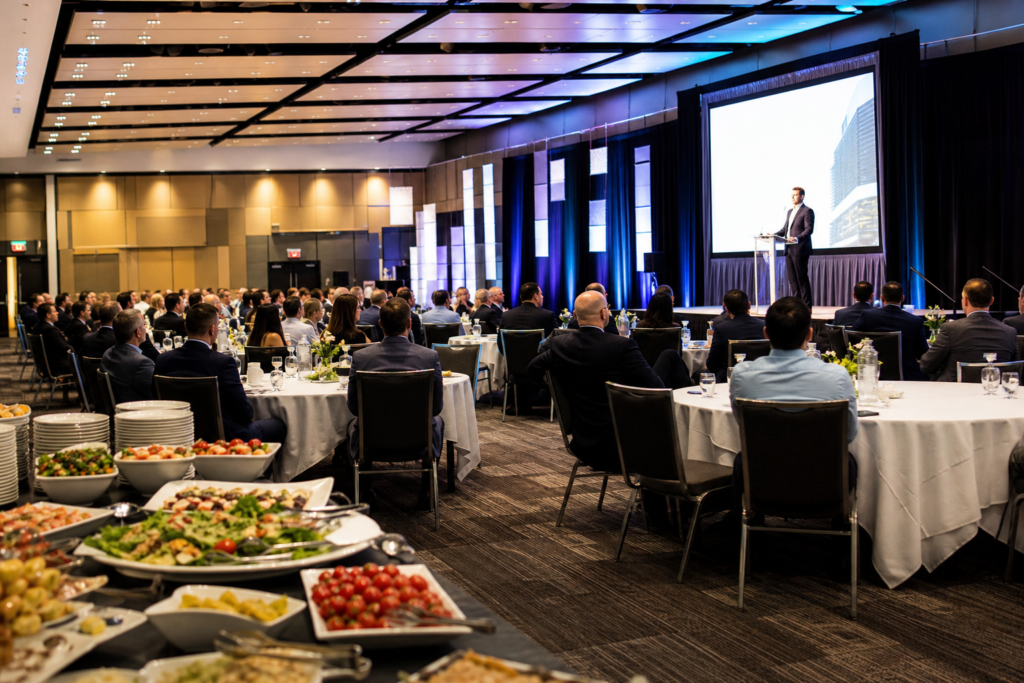
Room configuration and guaranteed capacity
What to confirm: exact room names, usable square footage, a clear guest capacity for your chosen layout, and any limits for parallel events. Ask for a signed floor plan appendix that lists capacities by layout: banquet, theatre, classroom, and reception. Request the number of entrances, coat-check locations, and staging zones if you plan performances or presentations.
Why it matters: advertised capacity alone can be misleading. A room that fits 500 theatre style may not comfortably fit the same number for a plated banquet. Get layout-specific numbers to avoid last-minute reductions or additional rental charges.
Contract language to request: “Venue will provide dedicated use of [named hall(s)] measuring [sq ft] with a confirmed maximum capacity of [number] guests for the agreed layout. Any change to layout or capacity must be approved in writing and may affect final charges.”
-
Full catering inclusions and substitution guarantees
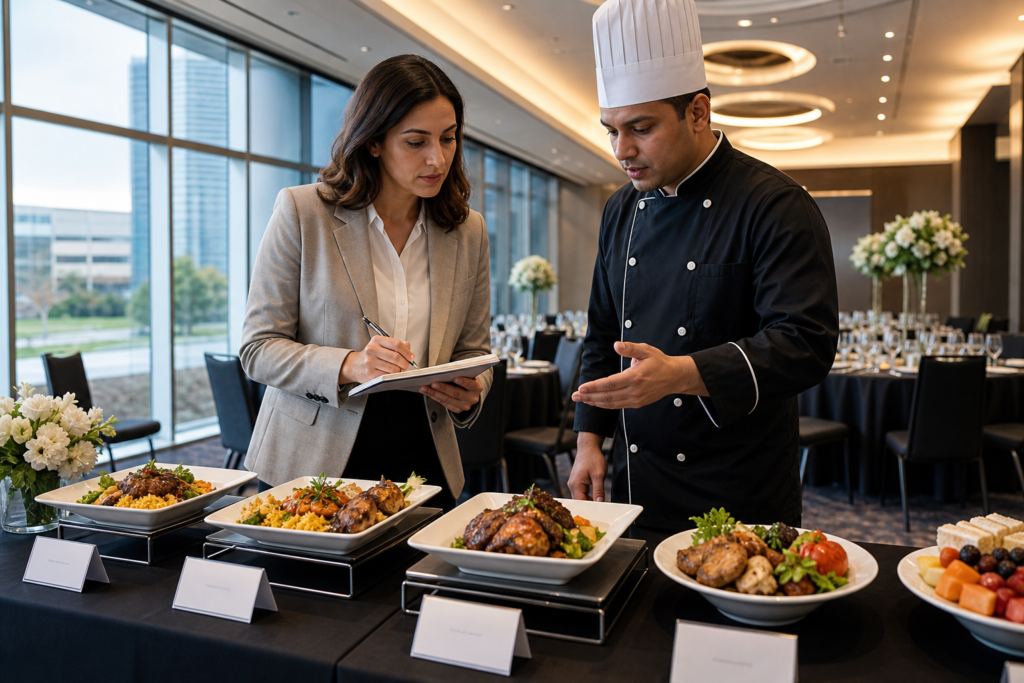
What to confirm: whether food and beverage are included, the exact menu items and portion counts, plating and service style, and any culturally specific guarantees such as Halal or other dietary accommodations. If the venue offers in-house multicultural menus, request sample menus and ingredient lists. Require a clause preventing last-minute substitutions without client approval.
Why it matters: menu substitutions and missing items are among the most disruptive complaints after an event. Confirming specific menu items in writing protects guest experience and gives you a remedy if the final service departs from what was sold.
Contract language to request: “Caterer will provide the menu as attached in Appendix B. Any substitution affecting main dishes must be communicated 7 days prior and requires client written approval. In the event of missing items on the event day, the venue will provide an agreed remedy or credit.”
-
Staffing levels, roles and overtime rules
What to confirm: the number of service staff, kitchen staff, supervisors, and the dedicated event manager assigned to your date. Ask how many on-site technicians are included for AV, and how overtime or extra headcount is priced. Verify the start and end times covered by the package and the per-hour overtime rates for staff, technicians, and room use.
Why it matters: inadequate staffing increases service delays and guest complaints. Overtime rules are a common source of surprise bills after late program finishes. Confirming headcounts and hourly rates prevents disputes and helps your run-of-show team make realistic timing decisions.
Contract language to request: “Package includes the following minimum on-site staffing: [list]. Included venue access time is [start] to [end]. Overtime will be billed at [amount] per hour per role and must be approved in writing by the client prior to incurring charges.”
-
Audio visual and technical coverage
What to confirm: which AV components are included in the package, how many technician hours are covered, who owns the equipment, and whether lighting and staging are part of the base fee. Ask for an AV inventory sheet and a technician schedule that lists setup, rehearsal, show, and strike hours.
Why it matters: AV failures are highly visible and costly. Knowing technician coverage avoids emergency call-outs and overtime charges when rehearsals or run-throughs run long. Confirm compatibility with presenter devices and request a rehearsal window in writing.
Contract language to request: “Package includes the AV inventory listed in Appendix C and up to [number] technician hours. Additional technician time is billed at [amount] per hour. Venue will confirm compatibility testing 48 hours prior to the event.”
-
Breakdown of fees, taxes and service charges
What to confirm: a line-by-line quote showing room rental, catering base price, service charges, gratuities, taxes, and any mandatory fees such as security, insurance, or cleaning. Ask whether prices are per person or per table, and when headcount cut-offs apply for final billing.
Why it matters: an all-inclusive label does not always mean all fees are included. Transparent line items let you compare vendors fairly and budget for mandatory extras that may be added later.
Contract language to request: “The total guaranteed price will be presented as a line-item invoice. Any mandatory fees or taxes not shown in the signed estimate require prior written consent from the client. Final billing will use the agreed cut-off for headcount adjustments.”
-
Cancellation, force majeure and liability terms
What to confirm: deposit amounts, refund schedules, force majeure definitions, and the venue’s liability limits. Ask how the vendor handles cancellations for reasons within their control and whether the contract allows reasonable rescheduling without excessive penalties.
Why it matters: clear cancellation and refund language prevents disputes and preserves budget control when plans change. Look for balanced wording that protects both parties and provides a reasonable rescheduling pathway.
Contract language to request: “Deposit and refund schedule outlined in Appendix D. Force majeure defined consistent with industry norms and allowing rescheduling within [timeframe] without penalty where applicable. Venue liability capped at [amount] unless gross negligence is demonstrated.”
-
Proof of quality: references, reviews and site verification
What to confirm: recent client references, sample event documentation, and public ratings. Request a site visit or a live virtual tour and a list of recent events similar in size or scope. If you rely on public reviews, check the venue’s Google Business Profile for volume and average rating.
Why it matters: customer feedback reveals recurring service strengths and weaknesses. For example, Mississauga Convention Centre publishes a long hospitality history, seven flexible halls, and extensive on-site parking on its website. Independent profile data and recent reviews can reveal consistent strengths or areas to verify during a tasting or rehearsal.
Proof to request: recent references for events of similar scope, access to a virtual tour or in-person walkthrough, and permission to contact the named event manager who will run your date. Review the venue website and public listings to confirm claims such as hall sizes, capacity and parking.
Questions to ask and specific contract language to request

Use the following short script during vendor meetings. Ask the salesperson to mark each item on your printed quote and initial where applicable. If the salesperson cannot sign to confirm, add this clause to the contract:
- “All items listed in the attached quote are guaranteed inclusions and form part of the binding event agreement.”
- “Any substitution of major menu items, equipment, or staffing must be approved in writing and will trigger a documented remedy.”
- “Overtime will not be charged without prior client approval except as required by law or emergency.”
Common hidden fees and warning signs to watch for
Watch for mandatory gratuities applied as a percentage without staff headcounts or role descriptions, outside-vendor surcharges, corkage and cake-cutting fees buried in terms, minimum staff requirements that raise costs, and unclear AV technician overtime clauses. If a salesperson resists putting inclusions into the contract, treat that as a warning sign and escalate to legal or procurement review.
Mississauga-specific logistics to verify

When comparing local venues, confirm operational points that affect guest experience and the bottom line. The Mississauga Convention Centre advertises seven halls of approximately 4,250 square feet each, a total capacity exceeding 2,200 guests, and about 700 on-site parking spaces. These facts are material to large events and to arrival planning for regional attendees. Confirm shuttle access, preferred parking zones for VIPs, loading-dock availability, and vendor access hours in a contract appendix to avoid day-of bottlenecks. For venue layout details and to arrange a walkthrough, use the venue event centre page.
Also check public business listings for review volume and average rating. These listings often surface recurring themes you should ask the venue to address in writing before signing.
How to weigh price versus inclusions: a simple decision matrix
Use three weighted criteria when comparing package quotes: must-have inclusions (40 percent), guest experience impacts such as food quality and AV reliability (35 percent), and vendor reliability signals like references and clear contract terms (25 percent). A higher base price is defensible when it removes multiple out-of-scope vendors, provides guaranteed technician coverage, and includes a serviceable staffing ratio. Build a short scoring spreadsheet using these weights to compare proposals objectively.
FAQ and next steps
What is typically included in an all inclusive event package and what should I always verify in writing?
Typical inclusions are room rental, basic AV, standard catering, staff, and cleanup. Always verify specific menu items, technician hours, staff headcounts, and the exact time window for venue access in writing so the vendor cannot change core deliverables at the last minute.
How do I confirm Halal or other cultural menu guarantees and what documentation should I request?
Ask for a written certification from the kitchen or a signed attestation that specified items are prepared to the cultural or religious standard required. Request ingredient lists and a tasting where possible, and include a substitution remedy in the contract if required items are unavailable on the day.
What hidden fees should I ask about before signing a contract for an all inclusive package?
Ask explicitly about mandatory gratuities, security fees, cake-cutting fees, corkage, outside-vendor penalties, AV technician overtime, and minimum staff surcharges. Require the final estimate to be line-itemed and to state which charges are refundable or adjustable.
How flexible are guest counts and overtime policies in package contracts and how should they be written?
Guest counts are usually subject to a final cut-off date for billing adjustments. Overtime policies should define included hours and the exact per-hour rates for room use and staff. Write both into the contract and require pre-approval for any overtime charges.
Can I get a virtual tour or sample floor plan to confirm capacity and layout before I sign?
Yes. Ask for a virtual tour, recent photos from events of a similar scale, and a sample floor plan sized to your guest count. If an in-person walkthrough is not possible, request a recorded walkthrough with the event manager and include the floor plan as an appendix to your contract.
Next steps: request a virtual tour or site visit, obtain a sample contract with appendices for menus and AV inventory, confirm a single point of contact for day-of coordination, and schedule a menu tasting and AV rehearsal window in writing.
References: Live Nation Special Events, “The Ultimate Pre-Event Checklist” and venue details published on the Mississauga Convention Centre website. For planning tools and the venue event centre resources, visit the venue event centre page.