

 04 October, 2026
 The strongest South Asian wedding menu is not built by choosing dishes one at a time. It starts with the guest profile, wedding format, dietary requirements, service style, schedule, and venue logistics, then turns those decisions into a menu the caterer can quote accurately.
Whether you are comparing South Asian wedding catering in Mississauga or planning across the GTA, use the seven decisions below to make the conversation more productive. The goal is not to create the longest menu. It is to create a menu that respects your traditions, serves guests smoothly, and fits the way your celebration will actually run.
Key Takeaways
- Understanding your guest profile and regional preferences is essential for a successful wedding menu.
- Clarifying dietary requirements early can prevent complications during meal service.
- Choosing the right service style can enhance the overall guest experience.
- Aligning the menu with the wedding timeline ensures a smooth flow of events.
- Requesting a detailed quote helps clarify expectations and avoid surprises.
Quick summary

- Separate essential regional preferences from optional menu variety before meeting the caterer.
- List vegetarian, Jain, Pakistani Halal, allergy-related, and other dietary requirements early.
- Choose a service style that suits your guest count, formality, room layout, and desired pace.
- Coordinate meal service with ceremonies, entrances, speeches, performances, and room changes.
- Request a quote that clearly identifies menu selections, service assumptions, venue support, and enhancements.
1. Start with guest profile and regional preferences
A South Asian wedding may bring together guests with different regional backgrounds, family traditions, ages, and expectations. Before discussing individual dishes, write down who you are serving and which culinary preferences are essential to the couple and their families.
Separate your priorities into three groups: must-have regional options, preferred additions, and welcome extras. This prevents a mixed menu from becoming so broad that it is difficult to coordinate, explain, or serve consistently. Consider whether the reception is primarily centred on one regional tradition or needs a balanced selection for a multicultural guest list.
Ask the venue or caterer how the proposed menu will represent those preferences, how choices will appear in the quote, and whether the same service plan can accommodate different guest groups. Mississauga Convention Centre’s Indian wedding offering identifies South Asian, Gujarati, vegetarian, Jain, Halal, North Indian, and South Indian options, with customization available. When comparing South Asian wedding menus, use that regional detail as a starting point, then confirm the options available for your date and event.
2. Confirm dietary requirements before choosing dishes

Dietary planning should happen before the menu is finalized, not after the main selections have been made. Create a working list of vegetarian, Jain, Pakistani Halal, allergy-related, and other dietary requirements, while noting whether each applies to a few guests or a substantial part of the reception.
Requirements may affect ingredients, preparation, service separation, labels, substitutions, and the way guests access food. Ask specific questions: Which dietary options can be included in the main menu? Can substitutions be made? How will special meals or stations be identified? What information should be provided about ingredients and cross-contact?
Mississauga Convention Centre lists South Asian and Pakistani Halal catering among its in-house options, and its Indian wedding offering also identifies vegetarian, Jain, and Halal selections. That supports an initial conversation, but do not assume that a menu label answers every dietary question. Ask the venue to confirm the exact menu, preparation arrangements, and event-specific accommodations in writing.
3. Match the service style to guest count and event priorities
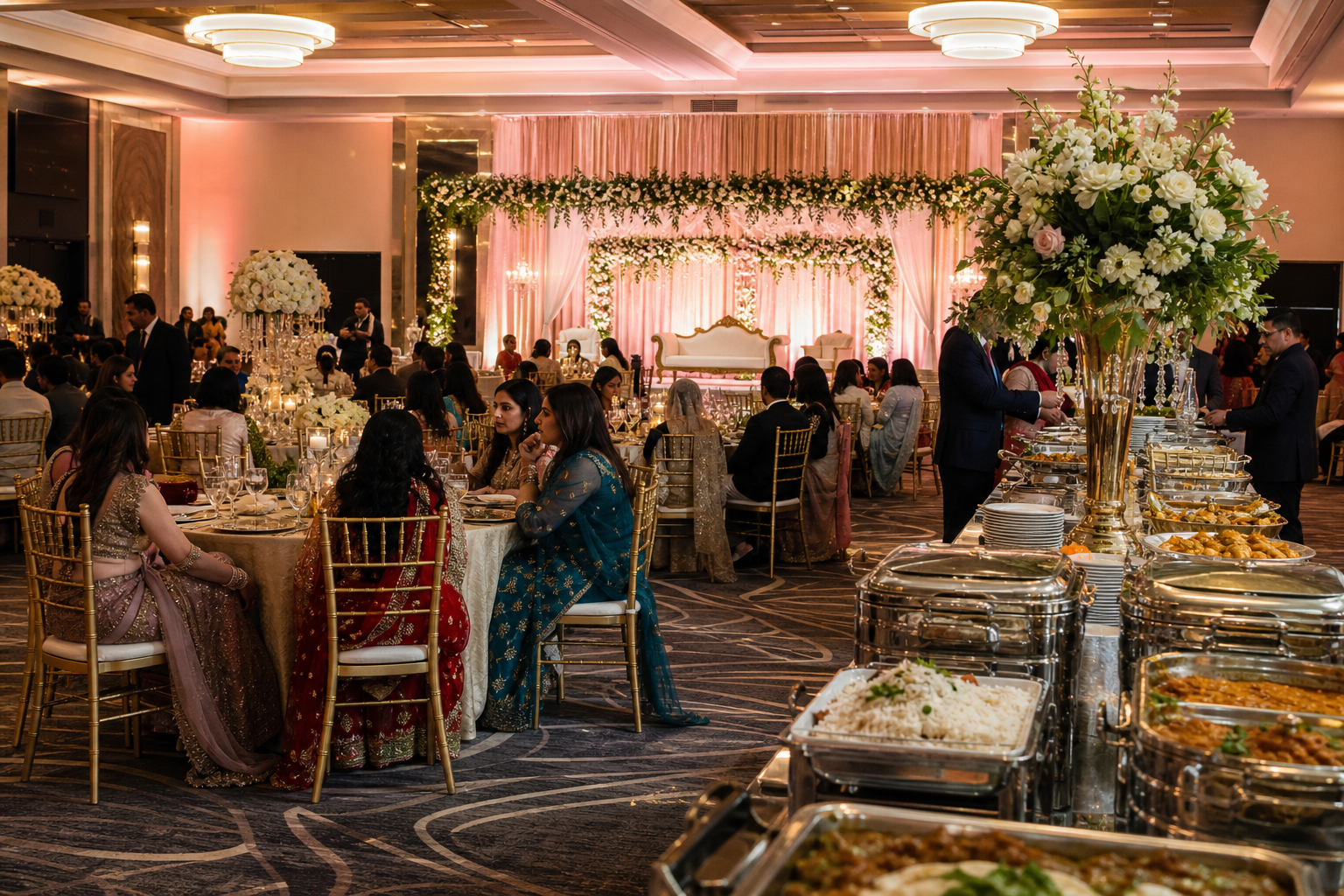
The same menu can feel very different when it is served as a buffet, through stations, by plated service, or through another format. Your choice should reflect the balance you want between variety, formality, guest movement, service pace, and control over portions.
A buffet may make it easier for guests to choose among several options, while stations can help divide traffic and create a more interactive experience. Plated service may offer a more structured flow, but it requires accurate meal selections and careful timing. None of these formats is automatically best. The right choice depends on the menu, room, schedule, and guest profile.
Give the caterer your expected guest count, approximate age mix, event format, and timing expectations. Ask how the proposed service style affects table service, queue management, meal duration, staffing assumptions, replenishment, and access for guests with mobility needs. Confirm whether the quote is based on a particular format and what changes if your final head count moves.
4. Build the menu around the wedding timeline
Food service must fit around the moments that make up the celebration. Ceremonies, entrances, cocktail periods, speeches, performances, photographs, room changes, and dancing can all affect when guests are seated and when food can be served.
Prepare a simple run-of-show before finalizing the menu. Mark the expected arrival period, ceremony or reception start, meal service, speeches, performances, and any transition between spaces. Then ask the venue and caterer where food preparation, service, clearing, and replenishment fit within that timeline.
For a broader planning framework, South Asian wedding menu planning should be considered alongside ceremony timing, room flow, staging, and guest logistics. A menu that looks excellent on paper may still create pressure if guests are expected to queue during an entrance or if speeches begin before most tables have been served.
Ask whether the menu and service plan can support your program without rushing guests. Confirm the order of service, who communicates timing changes, and how delays will be handled if a ceremony or performance runs longer than expected.
5. Check room layout, AV, staging, and guest flow
Menu decisions are also room-planning decisions. Buffet lines, food stations, service access, head tables, dance floors, stages, guest seating, and photography areas all compete for space. If food is difficult to reach, it can affect both guest comfort and the pace of the evening.
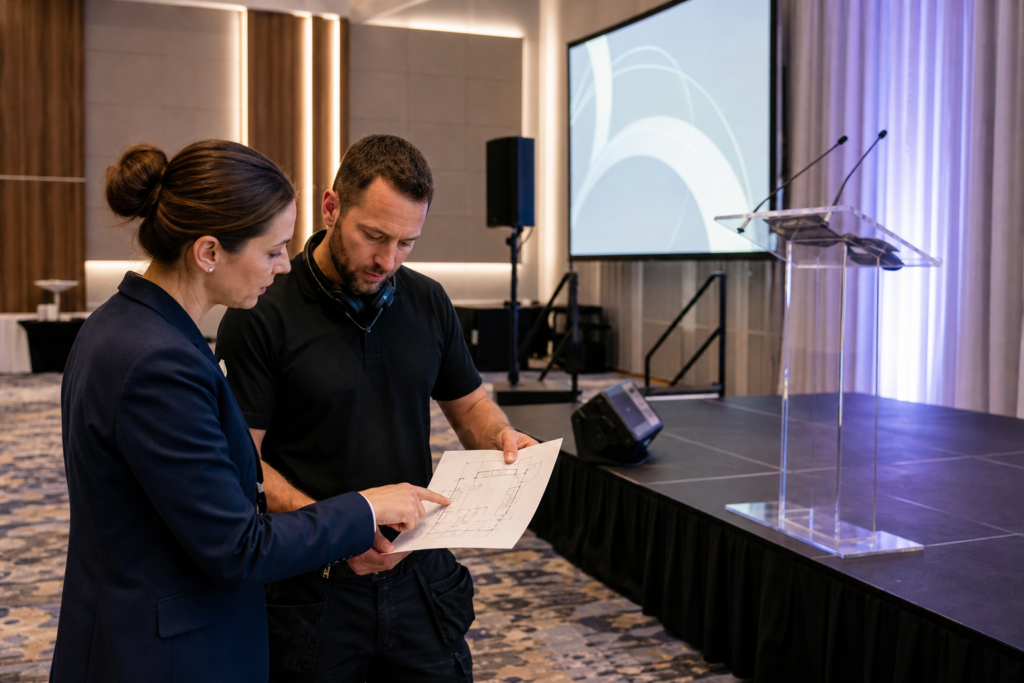
Ask the venue to review the proposed menu alongside a preliminary floor plan. Consider where guests will enter the meal area, how queues will form, whether tables have clear access, and how servers or replenishment staff will move without interrupting speeches or performances.
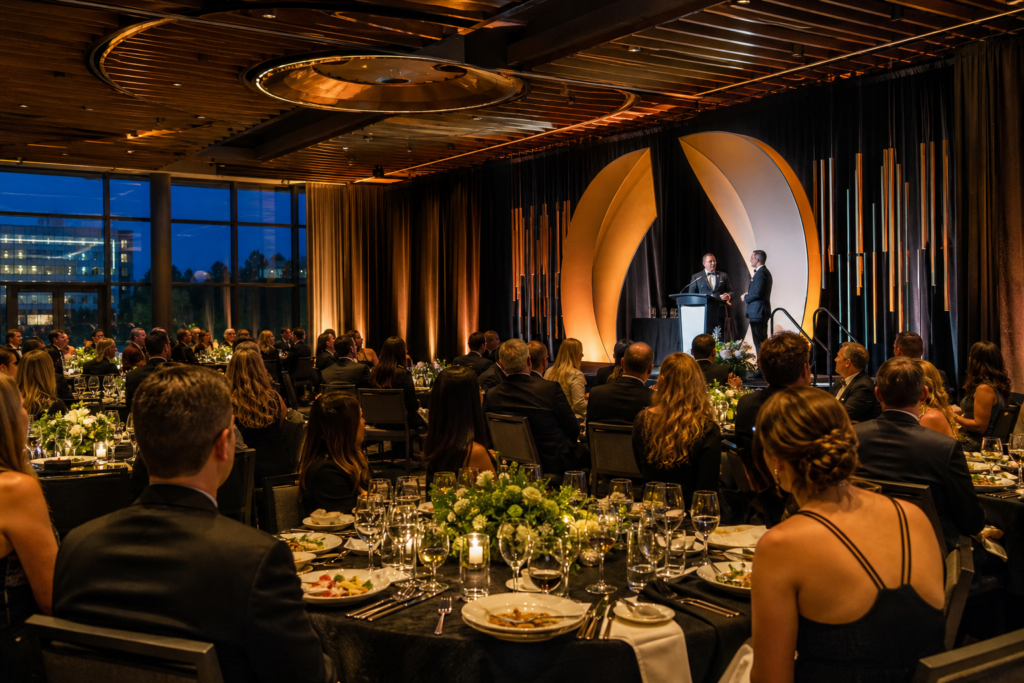
Production requirements matter as well. Mississauga Convention Centre describes professional audiovisual systems, lighting, staging, and technical support as part of its event services. Confirm which elements support your particular celebration, including microphones, music, presentations, entrances, performances, and stage placement. Also ask whether décor, lighting packages, or an outdoor patio option changes the usable room plan.
Do not approve a menu in isolation from the venue layout. A site visit, measured plan, or virtual review can help your family, planner, caterer, and technical team discuss the same version of the event.
6. Clarify customization and menu review details
Customization can mean different things. It may involve combining regional preferences, adding vegetarian or Jain selections, adjusting a service sequence, substituting an item, or creating separate choices for specific guest groups. Ask what can be changed and at what stage decisions become fixed.
Bring a written list of requested changes rather than relying on informal conversations. For every proposed adjustment, ask whether it affects ingredients, presentation, service timing, dietary labelling, guest access, or the quote. Confirm how the final selections will be documented so the couple, family, planner, venue, and catering team are working from the same menu.
Mississauga Convention Centre states that its Indian wedding menus can be customized to suit preferences and traditions. That is useful context when beginning the discussion, but the specific combination of regional, vegetarian, Jain, and Halal requirements should still be confirmed for your event. Ask about the menu review process, final approval deadline, and how late guest-count or dietary updates can be handled.
7. Request a quote that includes food and venue logistics
A useful quote should allow you to understand what you are paying for and what still needs confirmation. Provide the event date, estimated guest count, reception format, preferred cuisines, dietary categories, service style, program requirements, and any ceremony or room-flow considerations.
Ask the quote to identify the menu selections, service format, guest-count assumptions, dietary accommodations, staffing or service conditions, and optional items. Review venue-related elements at the same time, including audiovisual support, lighting, staging, décor, patio use, room configuration, and technical requirements.
Mississauga Convention Centre is located at 75 Derry Rd W in Mississauga, near major highways and Toronto Pearson International Airport. The venue describes seven halls of approximately 4,250 square feet each, total capacity exceeding 2,200 guests, and approximately 700 on-site parking spaces. Ask how the selected room, arrival plan, parking, supplier access, and guest movement relate to your specific event rather than treating general venue capacity as a guaranteed layout.
Pricing is customized according to event details and selected services, so request clarification on every inclusion, enhancement, assumption, and potential change. A clear quote is easier to compare than a low headline figure with important services left undefined.
South Asian wedding menu consultation checklist
Take this checklist to your venue or caterer consultation:
- Guest profile: What regional cuisines and traditions are essential, preferred, or optional?
- Dietary needs: How many guests require vegetarian, Jain, Pakistani Halal, allergy-aware, or other accommodations?
- Service style: Which format best suits the guest count, formality, room, and desired pace?
- Timeline: When will ceremonies, entrances, speeches, performances, photographs, and meal service happen?
- Room flow: Where will food be placed, and how will guests, servers, performers, and suppliers move?
- Customization: Which substitutions or regional combinations are possible, and when must they be approved?
- Quote: Are menu, service, dietary accommodations, AV, staging, lighting, décor, parking, and other enhancements clearly identified?
FAQ
Can a South Asian wedding menu include Gujarati, vegetarian, Jain, and Halal options together?
It may be possible to plan those categories together, but the exact combination, preparation requirements, menu choices, and service arrangements must be confirmed with the venue or caterer. Ask how each category will be represented in the final menu and quote.
What should couples ask about Pakistani Halal wedding catering before booking?
Ask which Pakistani Halal menu options are available, how dietary requirements are documented, whether substitutions are possible, how food will be identified during service, and what preparation or certification information the venue can provide. Do not assume that the phrase “Halal menu” confirms every requirement your family may have.
How does guest count affect South Asian wedding catering service?
Guest count can influence the practical choice of service format, queue management, room layout, replenishment, timing, and the assumptions used in a quote. Provide an expected range as early as possible and ask how changes to the final count affect the plan.
What information should be ready before requesting a wedding menu quote?
Prepare the date, estimated guest count, reception format, regional preferences, dietary categories, preferred service style, event timeline, room or staging needs, and any décor or AV requirements. The more complete this brief is, the more useful and comparable the quote should be.
Make the menu support the whole celebration
South Asian wedding menu planning works best when food is treated as part of the full event design. Start with the people you are serving, then connect regional preferences and dietary needs to service style, guest count, timing, room flow, production, customization, and the quote.
For couples and planners seeking a venue with in-house South Asian and Pakistani Halal catering, regional menu options, professional AV and staging support, scalable halls, and GTA access, discuss your requirements directly with Mississauga Convention Centre.