

 01 October, 2026
 A useful wedding reception timeline checklist is not a rigid script. It is a shared running order connecting guest arrival, ceremony transitions, meal service, speeches, traditions, dancing, and closing activities while leaving room for real-life changes.
Start with the elements that cannot move, then build around them. Ceremony location, meal format, venue access, cultural traditions, photography, entertainment cues, and the required event end time should shape the order.
Contents
- Guest arrival and venue access
- The ceremony-to-reception transition
- Cocktail hour
- Meal format
- Speeches and formalities
- Cultural and personal traditions
- Closing and buffer time
- Flexible timeline example
- Venue and vendor checklist
1. Set the guest arrival and venue-access window first

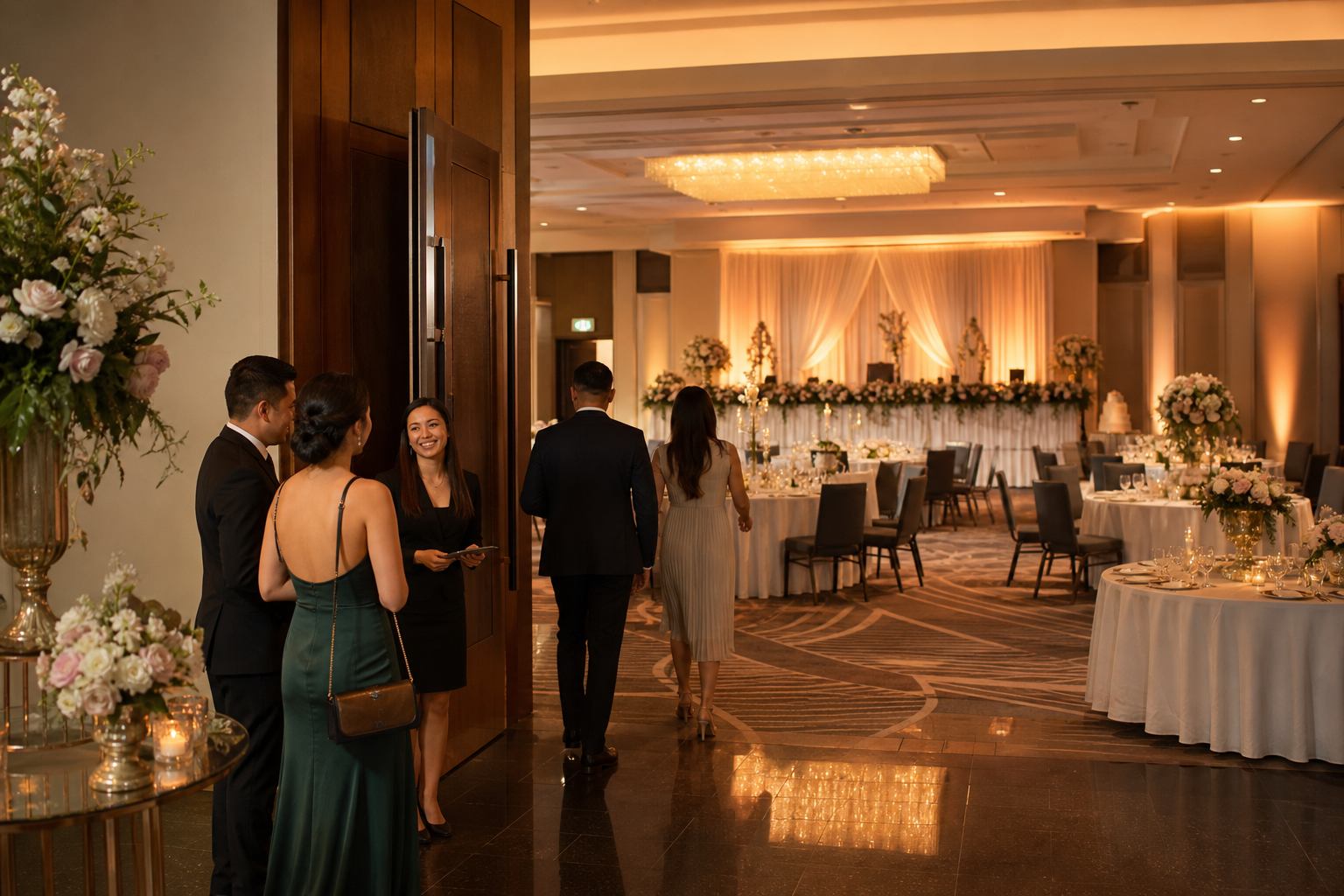
Separate guest-facing timing from behind-the-scenes access. Guests need a clear arrival point, while vendors need time for setup, sound checks, décor, catering preparation, and photography details. Confirm the actual access window with the venue instead of assuming a standard time.
Map the route from parking or drop-off to the welcome area. Include signage, accessible paths, restrooms, coat storage if applicable, welcome drinks, and the guest book. Before finalizing this section, use these wedding venue checklist questions to verify capacity, layouts, catering policies, AV, outdoor plans, and contract details.
2. Plan the ceremony-to-reception transition
The transition changes depending on whether the ceremony and reception share a venue. Confirm whether guests move directly to cocktails, whether the reception room needs a reset, and where formal photographs will take place. For separate locations, include travel, parking, directions, and late arrivals.
Do not treat photography as an undefined gap. List the required groups, gathering contact, location, and deadline. If guests enter the reception room before photographs finish, decide whether the MC, venue team, or a family member will manage the transition.
Review these wedding venue decisions to align guest count, format, travel logistics, room layout, and booking deadlines.
3. Define what happens during cocktail hour
Cocktail hour may absorb photographs, room preparation, guest mingling, welcome drinks, appetizers, entertainment, cultural activities, or a receiving line. Write down what guests should experience and where each activity occurs.
Keep entertainment away from congested entrances, clarify when the reception entrance begins, and confirm routes, lighting, accessibility, and weather arrangements for outdoor spaces. If the couple will be absent, tell the photographer and MC where they will be and who communicates the next cue.
4. Match the meal format to the running order
Plated service, buffets, stations, and family-style meals create different movement patterns. Show when guests are seated, how tables are served or released, when dietary meals are identified, and when dessert or late-night food is expected.
Coordinate speeches and introductions with the caterer. With stations or buffets, decide whether formalities should happen before guests leave their tables and ensure lines do not block entrances or the dance floor. Family-style service may require additional table space and careful décor placement.
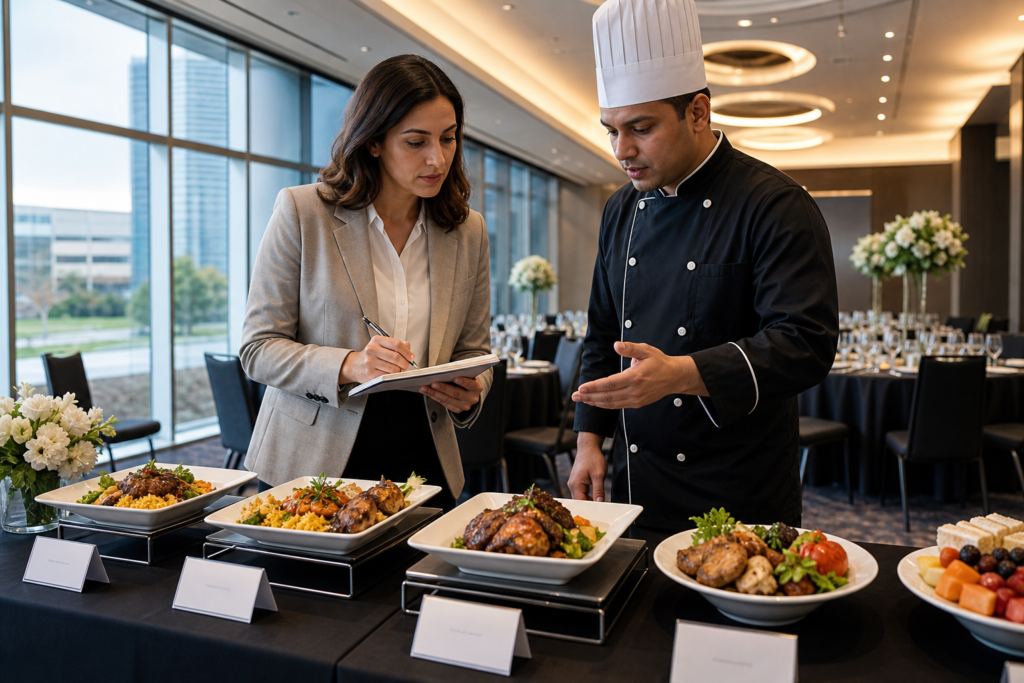
Confirm dietary requirements and service details with the catering team. South Asian, Pakistani Halal, Middle Eastern, Sri Lankan, Caribbean, and Continental menus may require specific questions about labeling, delivery, guest communication, and timing.
5. Place speeches, entrances, and formalities where guests can follow them
Group formalities thoughtfully so guests can pay attention without feeling that dinner is repeatedly interrupted. Possible elements include wedding party and couple entrances, welcome remarks, speeches, toasts, cake cutting, first dances, parent dances, and presentations.
Decide whether speeches happen before dinner, between courses, or afterward. The best choice depends on guest attention, meal format, speaker count, and service sequence. Record the speaker order, approximate length, microphone type, and presentation cues.
The MC owns public cues, the venue or catering lead confirms readiness, and the AV lead manages microphones, music, screens, lighting, and staging. A technical check can prevent missing equipment or incorrect cues.
6. Build cultural and personal traditions into the schedule
Plan cultural and personal traditions as core program elements. A baraat-style arrival, family introduction, special dance, live performance, religious observance, outfit change, or extended photography session can affect guest movement, staging, music, catering, and formal entrances.
For each tradition, record who participates, where it happens, what equipment is needed, how guests receive instructions, and what follows it. If a performance needs a stage, open floor, lighting cue, or rehearsal, include those requirements in the venue discussion.
Share the schedule with family members and performers early. They should know where to be without relying on the couple for instructions during the reception.
7. Plan the closing sequence and protect buffer time
List the final dance, announcements, guest departure, transportation coordination, personal-item collection, vendor strike, and teardown responsibilities. Confirm which tasks happen while guests remain present and which wait until the room is clear.
Add buffer around guest movement, photographs, room changes, meal service, outfit changes, performances, and outdoor activities. The right amount depends on guest count, layout, vendors, and venue rules, not a universal formula.
Identify who can make timing decisions if the schedule changes. The couple may be unavailable, so the MC, venue lead, or another agreed decision-maker should know when to shorten, delay, or reorder an activity.
A flexible wedding reception timeline example
This is an illustrative framework, not a universal hour-by-hour schedule. Adjust it for the ceremony location, access rules, meal format, traditions, photography plan, and required end time.
| Time block | Activity | Lead | Planning check |
|---|---|---|---|
| Arrival window | Guest arrival, welcome area, parking, and wayfinding | Venue lead | Are entrances, signage, and accessibility routes clear? |
| Transition | Ceremony conclusion, photographs, and guest movement | Photographer and family contact | Who gathers participants and directs guests? |
| Cocktail period | Drinks, appetizers, mingling, and entertainment | Venue and catering team | Is the reception room ready? |
| Entrance | Guest seating, wedding party entrance, and couple’s entrance | MC and entertainment lead | Are music, lighting, staging, and sightlines ready? |
| Meal | Remarks, dinner, service flow, and dietary meals | Caterer and MC | Does the formalities plan match service? |
| Formalities | Speeches, dances, cake cutting, and cultural elements | MC and AV lead | Are speakers, microphones, and cues prepared? |
| Open celebration | Dancing, dessert, and guest interaction | Entertainment and venue team | Is guest flow clear around food and activity areas? |
| Closing | Final dance, announcements, departure, and wrap-up | MC and venue lead | Who manages transport, items, and the room check? |
Venue and vendor confirmation checklist
- Room and sightlines: Confirm the floor plan, tables, dance floor, stage, head table, photo areas, and guest pathways.
- Catering flow: Confirm seating, service sequence, dietary meals, stations, speeches during dinner, dessert, and cultural food requirements.
- AV and staging: Confirm microphones, music cues, screens, lighting, staging, power, technical support, and rehearsal timing.
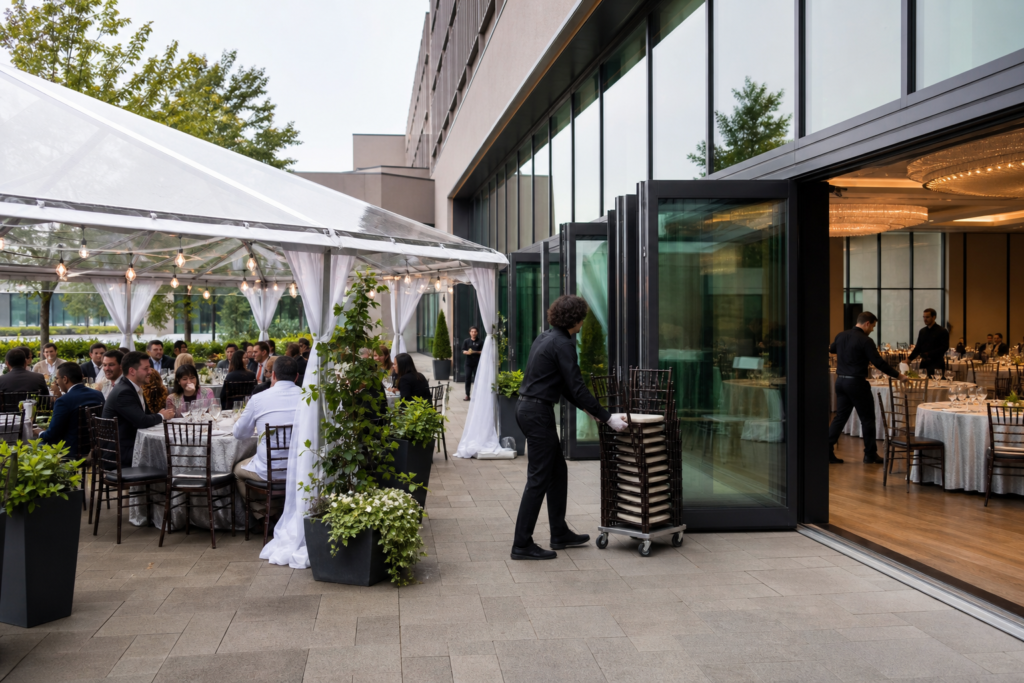
- Décor and outdoor plans: Confirm setup responsibilities, permitted décor, patio access, lighting, weather backup, and indoor alternatives.
- Arrival and access: Confirm vendor access, delivery windows, parking, drop-off, accessible routes, signage, and storage.
- Contract details: Review event end time, setup and teardown requirements, included services, change deadlines, and restrictions.
- Final walkthrough: Review the layout, timeline, menu, technical plan, and responsibilities. Identify who approves day-of changes.
Frequently asked questions
How much buffer should a wedding reception timeline include?
There is no single correct amount. Add buffer where people must move, gather, change clothes, complete photographs, reset a room, serve food, or prepare equipment. Ask vendors where their process is most sensitive, then avoid filling every minute with formalities.
When should speeches happen?
Speeches can happen before dinner, between courses, or afterward. Choose the placement that fits the speakers, guest attention, catering sequence, and AV setup. Give the MC and caterer one agreed order.
How do cultural traditions change the running order?
They may change entrances, music cues, performances, staging, family participation, food service, and photography. List each tradition as its own activity and confirm its space, equipment, participants, instructions, and following transition.
What must the venue confirm before the timeline is final?
Confirm room access, layout, sightlines, catering, dietary arrangements, AV, staging, lighting, décor rules, outdoor plans, parking, vendor access, contract requirements, and the final walkthrough. Agree on who can approve changes.
Turn the checklist into a shared running order
The strongest wedding reception timeline is specific enough to guide every transition but flexible enough to absorb normal changes. Build it around arrival, ceremony transition, cocktail hour, meal format, formalities, traditions, and closing. Then assign an owner, cue, and planning check to each part.
Circulate one approved version to the couple, MC, venue, caterer, photographer, entertainment team, technical lead, and anyone managing family or cultural traditions. A shared running order makes dependencies visible and gives everyone a clear response when timing changes.
For couples planning a reception in Mississauga, Mississauga Convention Centre offers wedding reception and ceremony spaces with in-house catering, AV systems, lighting, staging, décor options, and an outdoor patio option at 75 Derry Road West.
Key Takeaways
- The wedding reception timeline should be flexible yet structured, allowing for real-life changes while ensuring smooth transitions.
- Assign clear roles to vendors and family members to manage transitions effectively.
- Incorporate cultural and personal traditions into the timeline to enhance the guest experience.
- Always confirm venue details and vendor requirements to avoid last-minute surprises.
- Utilize a shared running order to keep all parties informed and aligned throughout the event.