
Event venue capacity planning is the process of calculating safe, comfortable attendee numbers for a specific room. It blends building-code limits with real-world space for aisles, staging, AV, and service. For Mississauga events at Mississauga Convention Centre, this event venue capacity guide helps you right-size rooms so guests move easily and enjoy the program.
By Preet Dass — Mississauga Convention Centre
Last updated: 2026-04-23
Quick Summary & Table of Contents
Right-size your event by matching room setup, square footage, and code-based occupant loads. Start with purpose, estimate space per person, then subtract aisles, staging, and service areas. Validate with a site walk-through and a taped test layout before sending invites for a smooth, safe experience.
This complete guide is a practical playbook for corporate meetings, conferences, trade shows, galas, weddings, and school events across the GTA. You’ll learn how capacity is set, how to size layouts, and how to prevent crowding—leveraging our seven flexible ~4,250 sq ft halls, modern AV, and multicultural in-house catering.
- What event venue capacity means and how it’s established
- Fast math to estimate occupant load in minutes
- Setup types: banquet, theater, classroom, cocktail, expo
- Safety, comfort, and flow benchmarks to hit
- Tools, checklists, and Mississauga-specific examples
What Is Event Venue Capacity?
Event venue capacity is the maximum number of people a space can safely and comfortably hold, based on building codes, exit routes, and usable floor area after aisles, staging, AV, and service zones. Your chosen room setup and furniture refine that number to match your program.
Capacity has three layers: a code-driven ceiling, a comfort target, and an operational reality. The code layer relies on occupant-load factors and egress width. The comfort layer considers seat pitch, table spacing, and acoustics. Operations include AV footprints, buffets, coat checks, and bar lines that carve out real space.
- Code-driven limit: Life-safety rules set a hard cap per square foot and exit width.
- Comfort-driven limit: Sightlines, elbow room, and traffic lanes optimize experience.
- Operational limit: Stages, booths, bars, and service corridors reduce net seating.
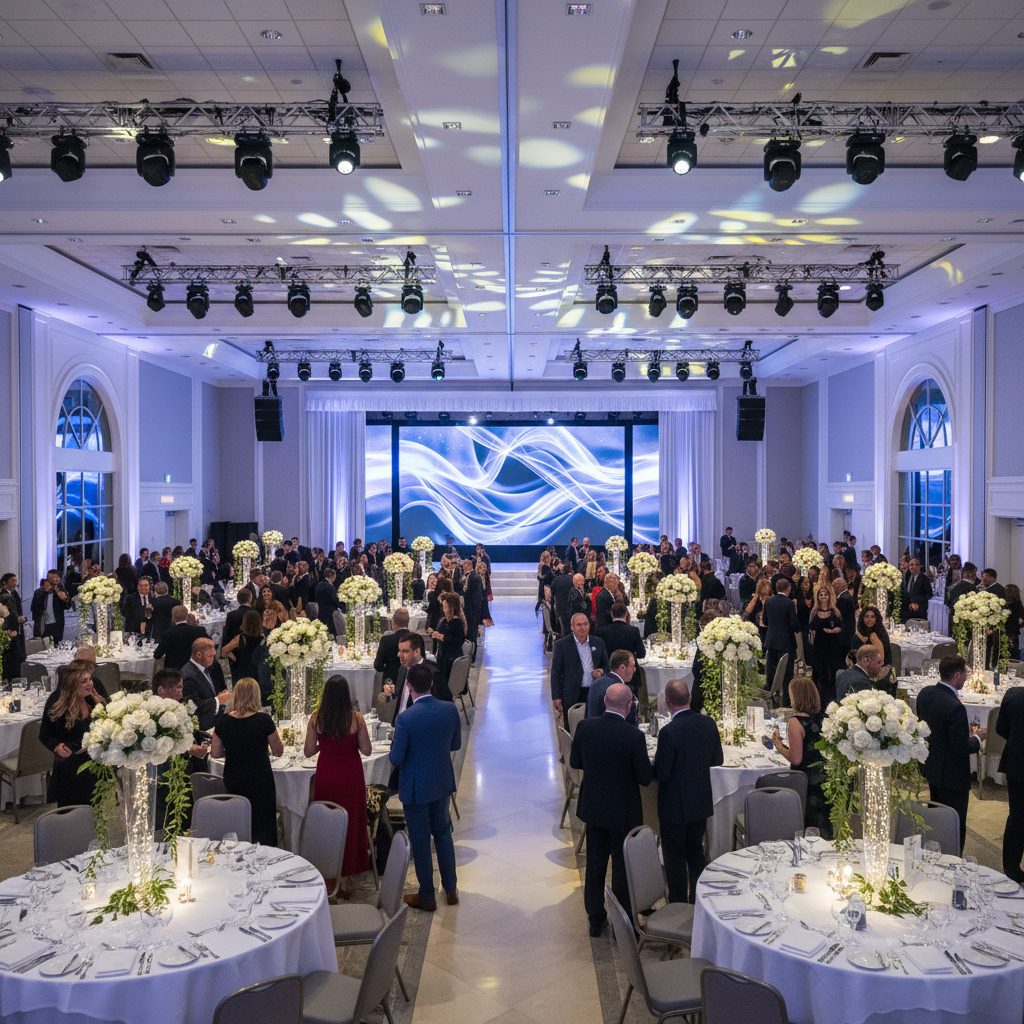
We balance all three across our seven similarly sized halls (~4,250 sq ft each) so your final headcount fits the agenda—gala, seminar, expo, or reception—without squeezing the guest experience.
For venue selection fundamentals beyond capacity, see our concise checklist in how to choose an event venue.
Why Capacity Planning Matters
Capacity planning protects safety, guest comfort, and program quality. It prevents blocked exits and long queues, preserves sightlines and audio clarity, and keeps service running on time. Right-sized rooms consistently deliver higher satisfaction and smoother operations.
Even a modest 5% overfill can stretch registration and bar waits by 20–30%, while tight aisles increase trip risk and slow servers. Conversely, adequate spacing boosts networking, reduces heat buildup, and improves visibility and audibility—especially in theater and classroom layouts where sightlines and acoustics are sensitive to density.
- Safety: Clear egress and reasonable density reduce incident likelihood.
- Experience: Extra inches at seats and tables lift comfort and conversation.
- Program quality: Proper sightlines and sound help audiences track content.
- Operations: Predictable flows let AV, culinary, and service teams hit marks.
We’ve seen post-event surveys jump by double digits when capacity is right-sized and bar/buffet lines are placed off main egress routes. For planning a full program timeline, our corporate event planning checklist helps align capacity with run-of-show milestones.
Event Venue Capacity Guide: How It Works
Estimate capacity by dividing usable square footage by a layout factor (chairs-only vs. tables). Then subtract space for aisles, staging, AV, bars, and coat checks. Validate the number with egress width rules and a taped mock layout to confirm flow and sightlines.
Start with usable area, not just room size. In one of our ~4,250 sq ft halls, reserving 15–20% for aisles, stage, and service yields ~3,400–3,600 sq ft net. Apply planning factors to that net area, then pressure-test the plan onsite with our coordinator and AV lead.
- Theater (chairs only): ~6–8 sq ft/person for dense seating and strong sightlines.
- Banquet rounds: ~10–12 sq ft/person for comfortable dining and service lanes.
- Classroom: ~8–10 sq ft/person to allow table depth and chair clearance.
- Cocktail/reception: ~6–10 sq ft/person, depending on furniture and bars.
- Expo aisles: 8–12 ft mains; 6–8 ft secondaries for two-way traffic.
Always verify against posted occupant loads and local authority guidance before finalizing. When combining multiple halls, extend aisle lines through the partition points so service and egress stay continuous.
Example math you can trust
- Banquet in one hall (~4,250 sq ft): Reserve ~20% (≈850 sq ft) → ~3,400 sq ft net. At 12 sq ft/person ≈ ~280 seats.
- Theater in one hall: Net ~3,400 sq ft. At 7.5 sq ft/person ≈ ~450 seats.
- Multi-hall gala (3 combined): Net ~10,200 sq ft at 12 sq ft/person ≈ ~850 seats plus a dance floor.
These are planning estimates. Final capacities are confirmed onsite with posted life-safety limits and your exact AV and service plan. For large corporate programs up to 2,200 guests, explore our corporate venue rental overview.
Types and Approaches to Sizing Your Event
Pick the layout that serves your goals, then size from the inside out. Place the stage and tech first, map primary and secondary aisles, allocate bars and buffets, and only then add tables or rows. This sequence preserves egress and service flow.
Common setup types
- Banquet rounds (60″/72″): Great for galas and weddings. Plan 5–6 ft aisles between table edges; allow 24–30 inches of table edge per chair.
- Theater: Highest density. Add a center aisle beyond ~300 seats; include 48–60 inch cross-aisles every 10–12 rows.
- Classroom: Ideal for trainings. Use 18–24 inches per person at tables and maintain ~36 inches behind chairs for passage.
- Cocktail/reception: Flexible density. Blend tall rounds and lounge vignettes; keep 6–8 ft lanes to bars and stations.
- Trade show/expo: Grid booths and keep 8–12 ft main aisles for two-way flow and strollers.

Inside-out sizing method (7 steps)
- Define program priorities (presentations vs. dining vs. networking).
- Place the stage, screens, cameras, and tech tables.
- Map primary and secondary aisles with tape on the floor.
- Allocate catering, bars, and coat checks off main entries and exits.
- Reserve accessibility clearances (36–48 inches typical paths).
- Add tables or rows in the remaining net area.
- Pressure test: walk the routes, time a service lap, adjust choke points.
For wedding-specific sizing tips (head tables, dance floors, and photo moments), see our wedding venue capacity guide. Prom committees will find tailored ideas in our prom venue selection tips.
Best Practices to Right-Size Any Event
Protect exits, keep aisles generous, and build in 10–20% headroom for late RSVPs. Walk the floor with AV and culinary leads before you publish the plan so service, staging, and sightlines work in harmony from doors-open to last toast.
Must-hit spacing and flow benchmarks
- Aisles: 6–8 ft primaries; 4–6 ft secondaries. Widen near doors, buffets, and bars.
- Stages: Don’t block exit sightlines; leave 4–6 ft behind drape lines for backstage flow.
- Food & beverage: One clear 6–8 ft lane to each bar or buffet; avoid cross-traffic at entries.
- Registration: One staffed counter per ~100–150 arrivals in 10 minutes; rope serpentine queues.
- Coat check (winter): ~1 rail per 50–60 coats plus bag space; keep egress paths clear.
- AV sightlines: Keep 2–3 seat rows between projector throw and first row; avoid center-pole obstructions.
Operational safeguards
- Publish two numbers: program capacity (ideal) and absolute capacity (hard cap).
- Color-code seating, service, and egress zones on the plan; review with our coordinator.
- Schedule a pre-open 15-minute sweep to verify clear aisles and exit signs.
- Plan post-session resets: ~10–15 minutes per 100 seats to re-square rows.
- Staffing signal: add a floor captain when crossing ~300 seated or 500 reception guests.
Parking and arrival patterns also influence flow. If you expect charter buses or ride-share surges, coordinate staging with our team; our parking logistics guide shows how to keep entry points and coat checks moving even at peak minutes.
Mid-article CTA: Want a second set of eyes on your floor plan? Our coordinators, AV technicians, and culinary leads review flow, sightlines, and service timing together so your capacity plan works from first arrival to dessert.
Tools and Resources Planners Actually Use
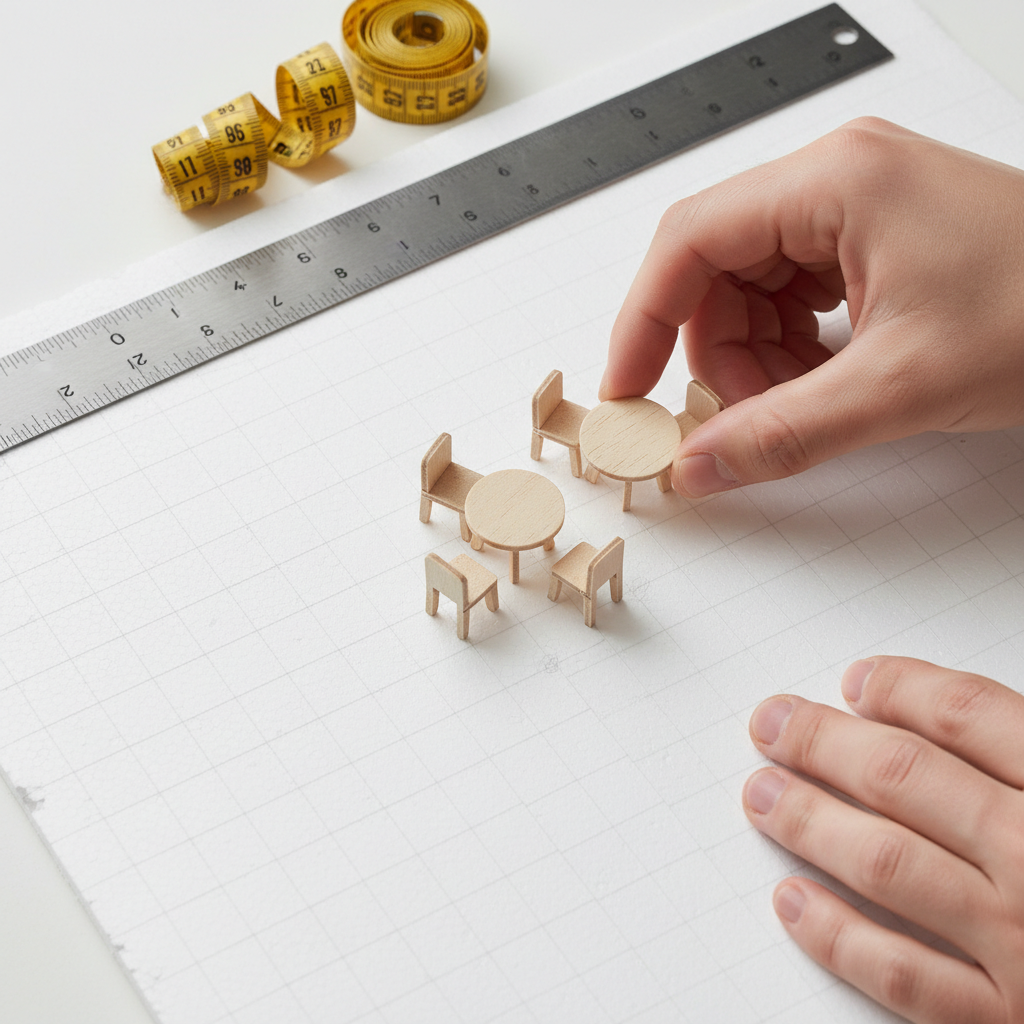
Use a capacity calculator, a scaled grid (1:50 or 1:100), and a tape walk-through to validate. Digitize the plan, then confirm onsite—especially when adding stages, dance floors, or exhibits—so measurements match reality and egress stays clear.
- Capacity calculator: Input square footage and layout to set a fast baseline.
- Scaled templates: 60″ and 72″ rounds, 8′ tables, chairs, and 10′ booths at true scale.
- AV plot overlay: Mark screens, speakers, cameras, truss, and tech tables first.
- Service timing matrix: Model servers per table band to keep courses timely.
- Virtual walkthrough: Preview sightlines and flow before your site visit.
We can mock up your plan and walk it with tape to confirm fit. That 30-minute exercise often reveals an extra aisle needed near bars or a rotated stage for better sightlines.
Case Studies and Real Mississauga Examples
These real-world scenarios show how we convert square footage into smooth experiences. Use them as starting points, then tailor with our team so capacity, service, and décor all synchronize with your goals.
Corporate awards gala (3 halls combined)
- Program: reception → plated dinner → awards.
- Net seating area: ~10,000+ sq ft after stage, aisles, bars, and photo op wall.
- At ~12 sq ft/person banquet: ~800–850 seats plus a ~24′ dance floor.
- Flow tactics: dual bars, two dessert stations, 8 ft primary aisle to exits, lounge pockets near photo op.
Education conference (theater)
- Program: keynote + three breakouts; foyer exhibits.
- Per hall: ~3,400 sq ft net at ~7.5 sq ft/person ≈ ~450 theater seats.
- Breakouts: classroom at ~9 sq ft/person for note-taking comfort.
- Flow tactics: center and side aisles; 60″ cross-aisles every 10–12 rows; tech tables at rear.
South Asian wedding reception
- Program: grand entrance, dinner, program, open dance floor.
- Banquet rounds at ~12 sq ft/person with a head table and elevated stage.
- Halal menu with live action stations placed off primary egress paths.
- Flow tactics: 6–8 ft lanes to bars/buffets; dedicated lane to the DJ booth.
Local considerations for Mississauga planners
- Peak seasons: spring proms and summer weddings compress lead times—lock halls and menu style early.
- Winter realities: plan larger coat checks and entry mats; add buffer for arrivals during snow.
- Airport adjacency: build schedule buffer for flight arrivals and 400-series highway traffic.
Room Setup Comparison Table
Use this table to compare typical space allowances, when to use each layout, and what you trade off. Always validate with your room dimensions, AV plot, and egress requirements before finalizing your invite count.
| Setup | Typical Sq Ft / Person | Best For | Trade-offs |
|---|---|---|---|
| Theater | 6–8 | Keynotes, ceremonies | Highest density; minimal workspace |
| Classroom | 8–10 | Seminars, trainings | Lower density; better note-taking |
| Banquet | 10–12 | Galas, weddings | More space for aisles and service |
| Cocktail | 6–10 | Receptions, networking | Variable density; manage bar lines |
| Expo | N/A | Trade shows | Plan 6–12 ft aisles; traffic dictates |
Frequently Asked Questions
Most capacity questions hinge on occupant-load factors, aisle widths, and your program’s footprint. These quick answers cover what planners ask weekly so you can act fast and avoid crowding.
How do I estimate capacity without a full CAD drawing?
Multiply usable square footage by a layout factor (e.g., ~12 sq ft/person for banquet). Subtract aisles, staging, AV, and service zones. Tape the plan onsite to confirm, then we’ll validate against posted occupant loads and egress routes.
What changes capacity the most?
Setup choice (theater vs. banquet) and non-seating footprints (stage, dance floor, bars) have the biggest impact. A stage and dance floor alone can trim dining seats by 10–20% in the same room.
How early should I lock capacity?
Lock a conservative capacity before invitations. Keep 10–20% headroom for VIPs and late RSVPs. Finalize after the site walk and AV plot review, then publish a hard cap to your team and vendors.
Can capacity differ by cuisine or service style?
Yes. Live stations, family-style platters, and multi-course plated menus change aisle widths and service timing. We adjust table spacing and bar placement so culinary service flows without blocking exits.
Key Takeaways
Start with usable square footage and the right layout factor, then protect aisles and exits. Add AV and service zones first, and keep 10–20% headroom. Validate on the floor with our team so your plan turns into a seamless guest experience.
- Use net area, not gross, when estimating capacity.
- Stages, bars, and coat checks reduce seating—plan them first.
- Keep primary aisles 6–8 ft and avoid blocking exits.
- Build flexible headroom for VIPs and late RSVPs.
- Walk the plan with AV and culinary before you publish.
Next Steps in Your Venue Planning
Move from math to momentum: schedule a walkthrough, finalize your layout, and preview sightlines with a virtual tour. Align AV, culinary, and décor so your capacity plan becomes a frictionless guest journey.
Ready to turn an estimate into a confident plan? Book a quick discovery call with our team. We’ll review your goals, sketch a right-sized layout, and align AV and culinary service for smooth flow from arrival to last toast.
Final CTA: Planning in Mississauga? Let’s right-size your next program. Connect with our coordinators to pressure-test capacity, flow, and service—before you send invitations.