


 21 August, 2026
 How to use this seven-item checklist and a short disclosure
This checklist is a practical, non-ranking decision tool designed to help GTA trade show planners rapidly compare venues and build an informed shortlist. Use it on site visits, in RFPs, and when you review exhibitor manuals. The seven items below reflect the operational priorities most event producers must confirm: space, exhibitor logistics, technical infrastructure, internet, catering, attendee access, and costs/support. For planning best practice—clarify your event goals, measurement, stakeholders, and budget before you start venue conversations—see a trade show planning checklist that recommends aligning internal objectives early for measurable results trade show planning checklist.
Tip: print this page or save a copy of the venue’s floor plans, power specs, and exhibitor manual on your tablet before the walkthrough.
1. Space and modular layout: confirm usable square footage and how the halls divide
Why it matters: your exhibit footprint, aisle widths, and session rooms depend on usable square footage, column placement, and how halls join or divide. Ask for a labelled scale floor plan and a copy of the venue’s room specification sheet.
Key specifics to request
- Usable square footage by hall and combined configurations, plus net, load-bearing columns, and blind spots.
- Ceiling height and any fixed rigging or clearance restrictions (ask for a drawing).
- Typical aisle widths and egress routes for peak attendance.
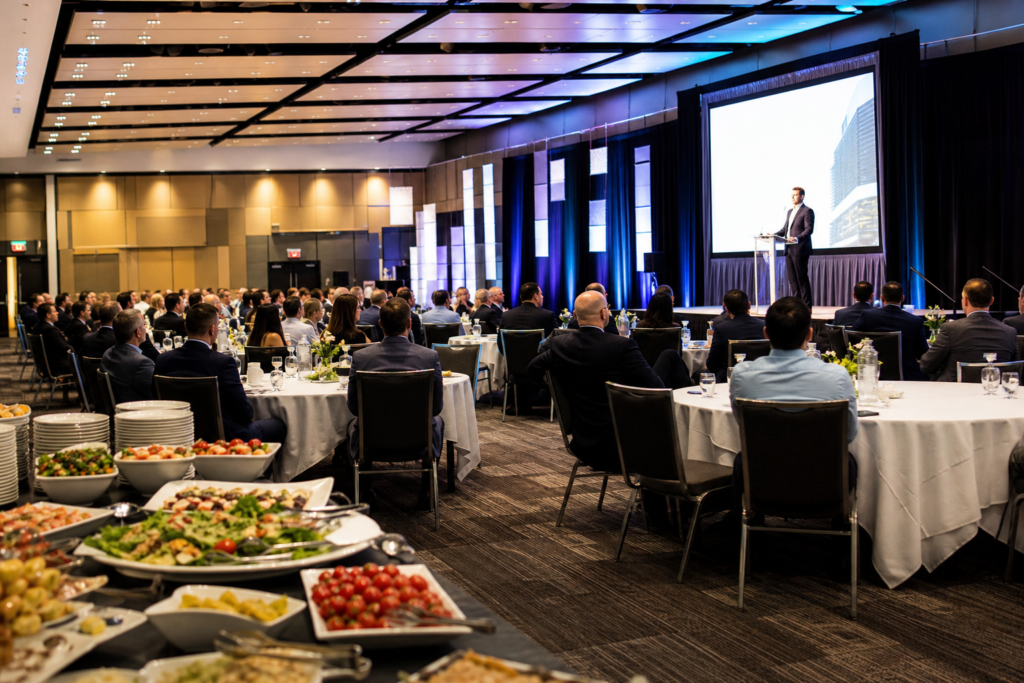
Illustrative example: some venues offer repeatable modular halls that simplify layout planning—Mississauga Convention Centre lists seven similarly sized halls of approximately 4,250 square feet each and a combined capacity exceeding 2,200 guests, which helps when you need parallel aisles or repeat booth bays Mississauga Convention Centre.
2. Exhibitor logistics and move-in/out: get freight, dock and schedule details in writing

Why it matters: booth materials, large builds, and timed installs require clear freight procedures. First-time exhibitors often overlook venue-specific rules, so gather all details before ordering booths or crating shipments first time trade show planning checklist.
What to confirm
- Loading-dock dimensions, door clearances, number of docks, and whether levelers or ramps are provided.
- Move-in and move-out windows, staged freight areas, and available on-site storage or short-term holding.
- Material handling services: in-house forklift/crane availability and rates or approved third-party contractors.
- Any union, contractor, or insurance requirements and how they will be enforced.
3. Power, rigging and technical infrastructure: verify in-house capabilities and specs
Why it matters: inadequate power or ambiguous rigging policies will disrupt large displays, live demos, and lighting needs. Ask for a technical specification sheet and a named technical contact.
Questions to ask the technical team
- What is included as house power, lighting, and sound? Request a line-item list of standard equipment.
- Are rigging points available in the ceiling, what are their certified load limits, and what is the lead time for rigging requests?
- Where are service panels located, and does the venue supply temporary distro or require external electricians?
- Do technicians from the venue provide on-site support during move-in and show hours, and what are their response times and hourly rates?
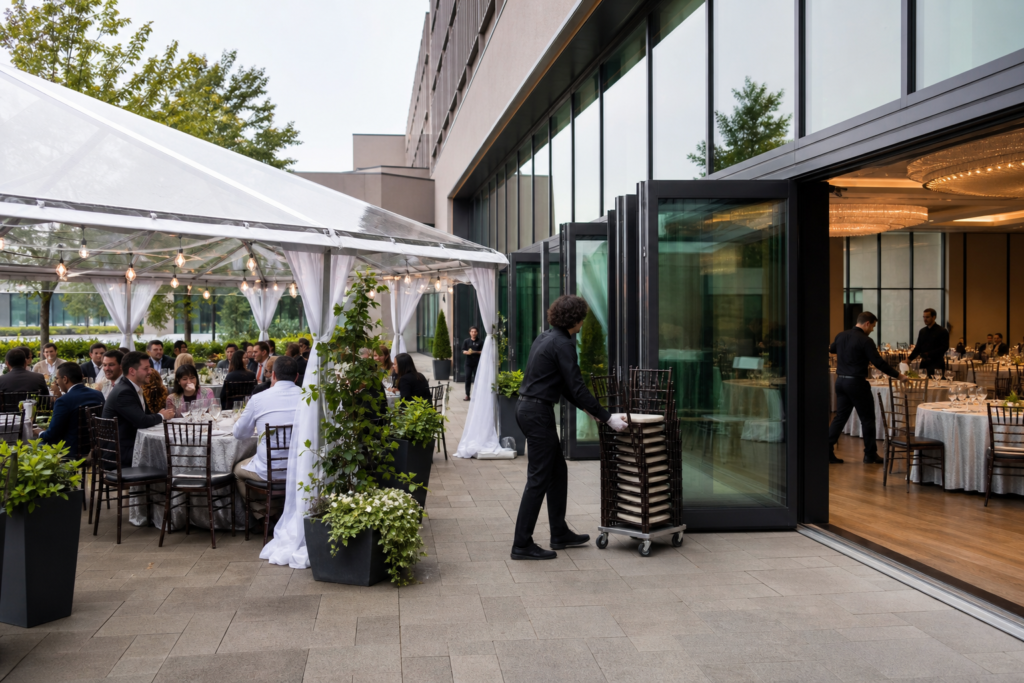
Example: venues that provide integrated audiovisual systems, staging, and on-site technical support reduce the number of external vendors you must manage; ask the venue to confirm which services are in-house and which require outside contractors Mississauga Convention Centre.
4. Internet and exhibitor communications: confirm bandwidth, wired options and costs
Why it matters: exhibitors depend on reliable connectivity for payments, demos, and lead capture. Confirm whether show Wi-Fi is shared or segmented and whether dedicated wired lines can be reserved.
Connectivity checklist
- Request the venue’s Wi-Fi topology and whether you can reserve dedicated bandwidth for exhibitors or streaming.
- Ask about wired Ethernet packages, pricing, and how IP addressing is handled during the event.
- Check cellular coverage inside the halls and whether the venue can support temporary signal boosters or private networks.
- Require lead times for ordered bandwidth and any service-level information for uptime or prior performance reports.
Align your connectivity ask with the show’s goals and measurement plan so you know how much reserved bandwidth you should budget for trade show preparation guidance.
5. Catering, exhibitor services and dietary needs: verify in-house menus and meal logistics

Why it matters: onsite food services affect exhibitor satisfaction and attendee experience. For multicultural events, confirm certified dietary offerings and practical meal service logistics.
What to request in writing
- Sample menus and confirmation of in-house cuisine options, including Halal and regionally specific menus if required.
- If Halal is offered, request certification or documentation from the venue’s catering team.
- Rules for exhibitor meals, boxed lunches, on-floor food service, and late-load or after-hours catering.
- On-site food service capacity during peak breaks and options for exhibitor-only meal areas.
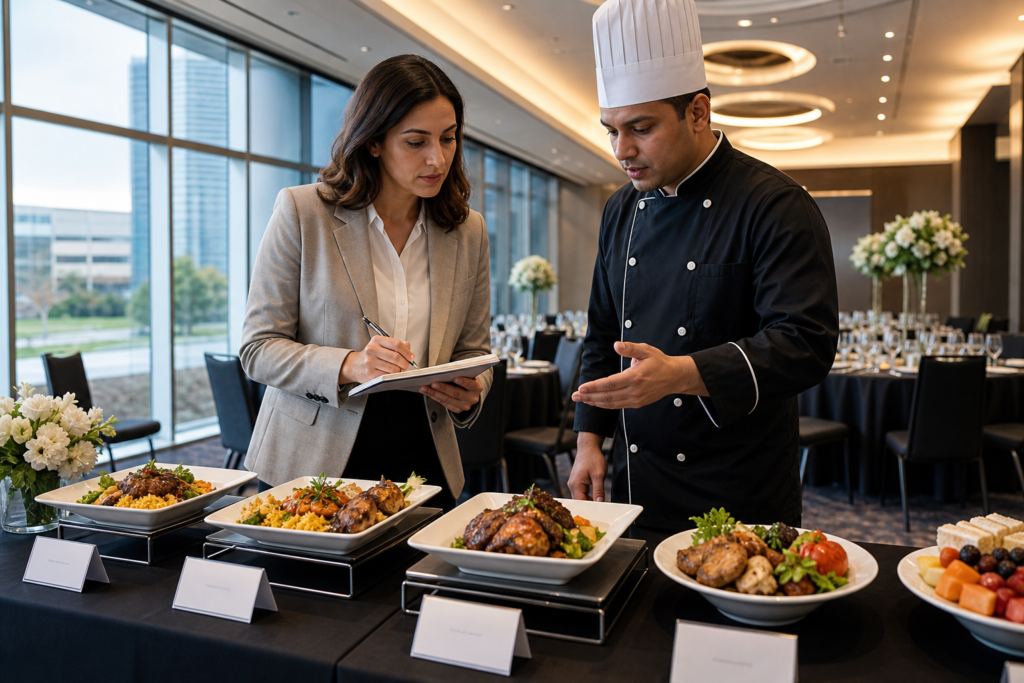
Example: some centres list a wide range of in-house menus—South Asian, Pakistani Halal, Middle Eastern, Sri Lankan, Caribbean, and Continental—to support culturally diverse events; verify documentation and portion logistics with the catering manager Mississauga Convention Centre.
6. Attendee access, parking and local transport: confirm capacity and regional connectivity
Why it matters: attendees will judge your event by how easy it is to reach and park. Ask for event-day traffic plans and hotel recommendations.
Access items to verify
- On-site parking capacity, overflow arrangements, and shuttle options for peak arrivals. For example, some venues publish approximately 700 on-site parking spaces—confirm current counts and reserved vendor parking policies with the venue Mississauga Convention Centre.
- Proximity to major highways and airports, and recommended routes for freight and attendee shuttles. Confirm nearby hotel inventory and preferred partner properties with room‑block procedures.
- Public transit stops nearby and whether the venue recommends dedicated event routing or off-site staging lots.
7. Costs, packages and planning support: clarify what is included and next steps
Why it matters: a clear, itemized quote reduces surprises and helps you compare venue value. Ask for written documents that show precisely what is included and available add-ons.
What to request with your RFP
- A detailed, line-item written quote showing room rental, standard AV, basic power, Wi-Fi options, security, housekeeping, and labour rates.
- Explanation of any all-inclusive trade-show packages and what they cover, including exhibitor services and show management support.
- The venue’s single point of contact for the event and whether they offer an on-site coordinator during move-in, show days, and move-out.
- Availability of a virtual tour or an in-person site walk and the materials the venue requires with a formal RFP (expected attendance, booth counts, power requests, and target move-in/out dates). For convenience, request booking or quote options through the venue’s trade show page trade shows.
Questions to ask the venue during a walkthrough
- Can you provide the exhibitor manual and technical spec sheet now?
- Who is our single point of contact and who handles technical emergencies?
- What exact power, rigging and networking will be available at each booth location?
- Can you confirm parking counts and exhibitor loading access on event days?
- Do you have sample invoices for a similarly sized trade show so we can budget accurately?
Operational red flags that should remove a venue from your shortlist
- No written exhibitor manual or unwillingness to provide technical specs on request.
- Unclear or absent loading-dock dimensions and no alternative freight plan.
- No in-house technical support and restricted access to vetted contractors during move-in.
- Undefined Wi-Fi topology and no option to reserve dedicated bandwidth for exhibitors.
- Inability to provide proof of Halal or other dietary certifications when required for your audience.
Frequently asked questions
What minimum venue information should I request before issuing an RFP for a trade show
Request the exhibitor manual, a labelled floor plan, technical spec sheet (power and rigging), Wi-Fi options and pricing, loading-dock specs, and a sample line-item quote. These documents allow you to produce an accurate RFP and avoid late surprises.
How do I verify a venue can support heavy exhibit builds or rigging for large displays
Ask for certified rigging point data, ceiling structure drawings, and service-panel locations. Confirm whether the venue provides in-house rigging technicians or requires approved contractors, and request insurance and load-limit policies in writing.
What connectivity guarantees should I ask for when exhibitors depend on live demos or payments
Require options for dedicated bandwidth or reserved wired connections, lead times for ordering, pricing, and any uptime or post-event connectivity reports the venue can share. If payments are critical, plan for wired Ethernet fallback or private cellular hotspots as redundancy.
Which catering questions should I ask to ensure dietary and Halal needs are met for exhibitors and attendees
Request sample menus, confirmation of in-house dietary offerings, and certification or documentation for Halal and other specialty diets. Ask how meals are timed during peak hours and whether boxed or exhibitor-area meals are available.
What are common operational red flags that should remove a venue from my shortlist
Red flags include refusal to provide exhibitor manuals or technical specs, missing freight or dock details, no option for reserved bandwidth, lack of on-site technical support, or inability to document dietary certifications needed for your audience.
Key takeaway: take this seven-point checklist to every site visit, collect the exhibitor manual and technical specs, and insist on written confirmations for any critical items before you sign a contract. For an example of a venue that provides modular halls, in-house AV, diverse catering, and on-site parking, see details from Mississauga Convention Centre Mississauga Convention Centre and request a virtual walk-through or quote through the venue’s trade show page trade shows.
Request a venue walk-through or customized trade-show quote from Mississauga Convention Centre — visit Mississauga Convention Centre.