

 27 July, 2026
 Your baby’s first birthday is a milestone for the whole family. The right 1st birthday party venue should make it easy for little ones to nap, snack, and play safely—while adults can mingle, enjoy a meal, and take great photos. This guide walks you through the core decisions, questions to ask, and a day-of plan that helps you host confidently without getting lost in the details.
Decision factors that matter most
Start with the essentials and work outward. A great venue for a first birthday balances baby comfort with adult convenience.
- Guest count and age mix: Tally adults, toddlers, and babies. Plan for strollers, car seats, and grandparents who may prefer seating near quieter areas.
- Location and travel: Choose a venue reasonably close to most guests or easy to find. Consider parking availability and accessibility for families carrying gear.
- Indoor vs. outdoor: Outdoor spaces are bright and airy but need a weather backup. Indoor spaces offer climate control and predictable acoustics.
- Date and time: Late morning or early afternoon often aligns with baby wake windows. Aim for a 2–3 hour event to prevent overtired meltdowns.
- Food approach: Decide on simple finger foods for toddlers and a straightforward menu for adults. Check the venue’s policies for outside food, cakes, cultural dishes, or specialty diets.
Safety and comfort checks
Baby comfort is the top reason parents love a venue—or leave early. Make a quick safety sweep part of your site visit.
- Entrances and elevators: Step-free access for strollers and mobility devices.
- Clean floors and stable furniture: Smooth surfaces, no loose cables, and tables that won’t tip.
- Quiet corners: A small, dimmable area or side room can double as a nursing nook or nap space.
- Restrooms with changing space: Confirm changing tables and room to maneuver a stroller.
- Temperature control: Babies overheat quickly; adjustable heating/cooling matters.
- Sound level: Avoid booming speakers near the toddler zone. Test the room’s echo if you plan music.
- Secure décor plan: Keep balloons and banners out of reach of tiny hands. Use removable, child-safe hanging tools.
Pack a small venue kit: outlet covers, painter’s tape, zip ties, a compact first-aid pouch, spare pacifiers, and extra wipes. Even if the venue has supplies, having your own reduces last-minute stress.
Room layout and flow
A clear layout makes the event feel effortless. Sketch your floor plan before you book to confirm the venue can support it.
- Welcome zone: A check-in spot for gifts and cards, plus stroller parking. Keep it uncluttered to prevent bottlenecks.
- Main seating: Mix low and regular-height seating if you can. Ensure aisles wide enough for strollers.
- Toddler play area: Soft mats, board books, stacking cups, and a bubble machine. Place it away from hot drink stations and high-traffic paths.
- Feeding corner: High chairs and wipeable surfaces. If you expect bottle warming, ask about access to hot water.
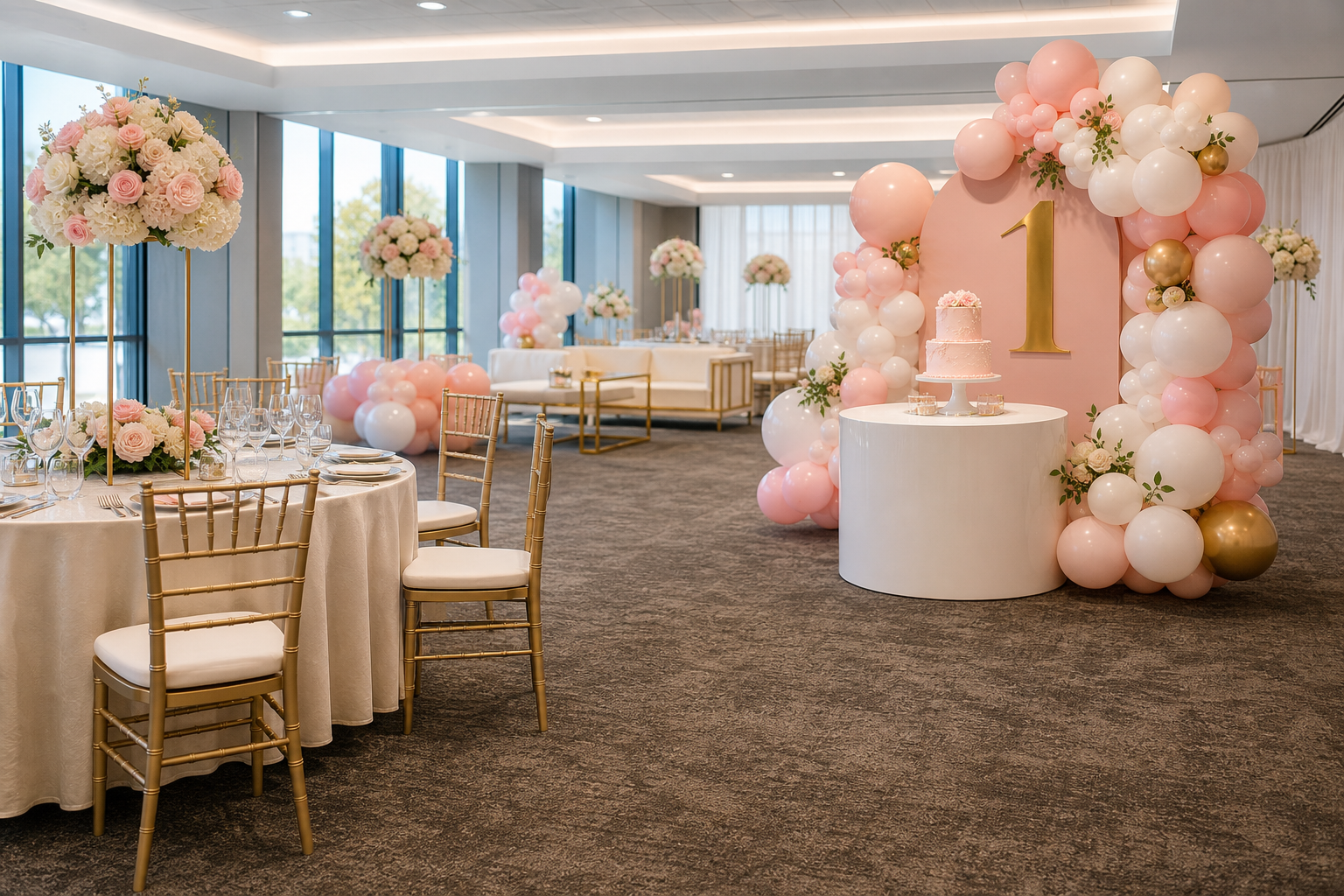
- Cake and photo backdrop: Good natural light or adjustable lighting helps. Keep a 3–4 foot buffer so excited toddlers don’t topple the cake.
- Nursing/nap nook: A quieter corner with a chair and small table for essentials. If a separate room is available, even better.
Pro tip: Walk from the entrance to each zone carrying a diaper bag and a child in your arms—if you can do it smoothly, guests likely can, too.
Food, allergies, and cake plans
Food should be simple, safe, and clearly labeled. Babies and toddlers taste with their hands; plan for mess and minimize risk.
- Labeling: Use large, legible cards for common allergens. Separate kid-friendly items from adult dishes.
- Finger foods: Soft fruit slices, cheese cubes, mini sandwiches, or steamed veggies are easy wins.
- Warmers and refrigeration: Confirm what the venue can provide or permit for food safety.
- Outside food policy: Ask about bringing a smash cake, cultural sweets, or specialty items; confirm any restrictions in writing.
- Hydration station: Water jugs and cups at toddler height reduce spills at adult buffets.
For the cake moment, pre-cut a small portion for photos and keep the rest chilled or covered. Set out extra napkins, baby wipes, and a trash bin within arm’s reach.
Schedule and timeline
A gentle timeline keeps energy up and tears down. Plan around the birthday baby’s best wake window.
- 0:00–0:20 Welcome – Guests arrive, drop gifts, settle in. Soft music and bubbles in the play area.
- 0:20–0:50 Activities – Simple crafts, story time, or a sensory bin.
- 0:50–1:20 Food – Serve adults and toddlers together; keep lines short.
- 1:20–1:40 Cake and photos – Position the family near good light; designate one photographer to avoid crowding.
- 1:40–2:00 Free play and goodbyes – Offer favor bags by the exit. Start light cleanup.
Build 15–30 minutes of buffer time into your venue booking for late arrivals, diaper changes, and quick resets between segments.
Activities and entertainment that actually work
At age one, simple, sensory-rich play beats complex entertainment. Choose a few low-effort stations and let kids explore.
- Soft play corner: Foam blocks, mats, and a small tunnel.
- Bubble station: Battery bubble blower plus towels for drips.
- Music moment: Shakers, scarves, and a short sing-along.
- Quiet table: Board books, chunky crayons, and stickers for older siblings.
- Photo booth: A simple backdrop with a few props; keep trip hazards out of the frame.
If you hire performers, choose calm, short sets and confirm any sound limits or space needs with the venue in advance.
Budget and contract basics
Keep costs predictable with a short list of must-haves. Then confirm the rules in writing.
- Core budget buckets: Venue, food and cake, décor, activities/entertainment, photography, favors.
- Hidden line items: Setup and teardown windows, cleaning requirements, service fees, rentals (high chairs, mats), and delivery access.
- Policies to confirm: Outside food, candles/sparklers, wall mounting, confetti, glitter, helium balloons, amplified music, and parking.
- Payment terms: Get due dates, acceptable payment methods, and refund/postponement terms in writing.
Questions to ask on a site visit
Use this list to evaluate any space quickly and consistently.
- Is the entrance step-free and wide enough for double strollers?
- How many high chairs are available? Are changing tables in nearby restrooms?
- What are the rules for décor (balloons, wall hangings, backdrop stands)?
- Are there restrictions on outside food or specialty cakes?
- Is there a safe, out-of-the-way area for gifts and stroller parking?
Sustainability and sanity savers
Small choices reduce waste and keep the party manageable.
- Decor you’ll reuse: Neutral banners, fabric table runners, and photo backdrops that work for future birthdays.
- Real or sturdy reusables: Opt for durable plates and cups if allowed; designate one rinse bin to streamline cleanup.
- Simple favors: Board book swaps, seed packets, or bubbles instead of trinkets.
- Digital invites and QR menus: Reduce paper and make updates easy.
Day-of checklist
Print this and hand it to a helper so you can focus on your child and guests.
- Arrive early to set up welcome table, stroller parking, and gift station.
- Toddler zone: lay mats, set out toys, and secure any cables.
- Feeding corner: position high chairs, wipes, napkins, and trash bin.
- Cake area: prep table, plates, forks, and a backup cake knife; confirm lighting.
- Photo backdrop: test a quick photo for exposure and framing.
- Allergy labels: place cards in front of each dish before guests arrive.
- Hydration station: water jugs, cups, and towels for spills.
- Emergency kit: diapers, wipes, bandages, stain remover, and extra outfits.
- Assign roles: greeter, photographer, cake helper, and cleanup lead.
- Set a timer for cake time and group photo so you don’t miss the moment.
Frequently asked questions
How long should a first birthday party last?
Two to three hours works well for most families. It’s long enough to welcome guests, serve food, and enjoy cake without pushing babies past their wake windows. If travel times are longer, consider a slightly extended welcome period so latecomers don’t miss the main moments.
What time of day is best for a 1st birthday party?
Late morning to early afternoon usually aligns with typical nap schedules. Choose a time when the birthday child is most alert. If your child is a midday napper, an early lunch party with cake before nap time can be ideal.
What should I put in the toddler play area?
Think soft and simple: foam mats, stacking cups, large blocks, board books, and a bubble machine. Avoid tiny pieces and keep the area away from hot beverages and heavy foot traffic. A small gate or furniture boundary helps define the space.
Do I need entertainment for a first birthday?
Not necessarily. Most one-year-olds are happiest exploring a few sensory stations. If you add entertainment, keep it brief, gentle, and at a comfortable volume.
How can I handle food allergies safely?