

 05 August, 2026
 Searches for “inexpensive reception venues near me” aim to find lower-cost locations for receptions and parties. The phrase is a relative label, not a fixed quality grade. This article defines the term, explains why the label matters for your booking decision, and gives a compact, Mississauga-focused checklist to compare budget options in Mississauga, Toronto, and the wider GTA.
Definition: what ‘inexpensive reception venue near me’ usually means
An “inexpensive reception venue near me” typically describes a venue whose headline rental price is below average for the local market because the location reduces included services or limits amenities. Lower headline cost is often achieved by one or more of these design choices: a simpler room or community-hall style space, limited in-house staffing, a requirement to use outside caterers or pay corkage, shortened event hours, or fewer built-in production elements like lighting and in-house AV.
Why precise price ranges are not used
Local markets and seasons vary, so the same venue could be inexpensive in one neighbourhood and average in another. Because pricing fluctuates by date, group size, and included services, avoid assuming a single number when searching for “inexpensive reception venues near me”. Instead, compare what is included in the base rate and ask for a sample itemised quote.
How local market factors in Mississauga affect the meaning of “inexpensive”
In Mississauga and the GTA, convenience to major highways and to Toronto Pearson International Airport increases a venue’s baseline value, so venues near these corridors tend to price higher. Venues that trade off amenities for location or flexibility may appear inexpensive but add cost through a la carte fees.
Why the label matters when you book a reception
Choosing a venue purely on the lowest headline rate increases the risk of hidden fees, vendor coordination work, and day-of problems. That tradeoff matters because a reception requires coordinated food service, traffic flow, audiovisual production, and guest comfort. Small savings on rent can easily be exceeded by charges for table setup, extra hours, cleanup, or rental of sound and lighting equipment.
Typical hidden costs to watch for
- Corkage or mandatory external caterer fees when the venue lacks in-house catering
- Hourly overtime for event staff or security
- Set-up and strike fees for tables, chairs, and décor
- Charges for in-house AV, microphones, or technician time if not included
- Cleaning fees or damage deposits withheld after the event
How service gaps affect the day-of timeline and guest experience
When a venue offers fewer included services, the planner typically juggles multiple vendors. That increases coordination time and the chance of miscommunication at set-up. The result can be delayed meal service, audio problems during speeches, or mismatched décor and lighting, which directly affects guest satisfaction.
Common features and tradeoffs of inexpensive venues

Lower-cost reception venues often make tradeoffs across space, food, production, and staffing. Recognising the pattern helps you estimate real value.
Space and capacity tradeoffs
- Simpler rooms with basic finishes rather than formal ballrooms
- Fixed layouts that limit flexibility for ceremony, cocktail hour, and reception flow
- Smaller or shared washroom capacity that can slow guest flow at peak times
Catering and food-service tradeoffs
- No in-house kitchen, which may require an outside caterer or create corkage rules
- Limited menu variety or fewer options for dietary needs unless you bring a specialised caterer
Production and AV tradeoffs
- Minimal fixed lighting and no integrated sound system, requiring rentals and technicians
- Staging or rigging restrictions that limit decor and multimedia presentations
Staffing, timing, and décor tradeoffs
- Fewer on-site staff for service, coat check, and coordination
- Stricter move-in and move-out windows to reduce staffing costs
- Limited or no décor packages included, which increases vendor sourcing work
A local checklist: compare options in Mississauga, Toronto, and the GTA
Use this checklist to compare inexpensive venues side-by-side and to quantify what you would need to add to match a full-service experience.
Capacity and hall layout
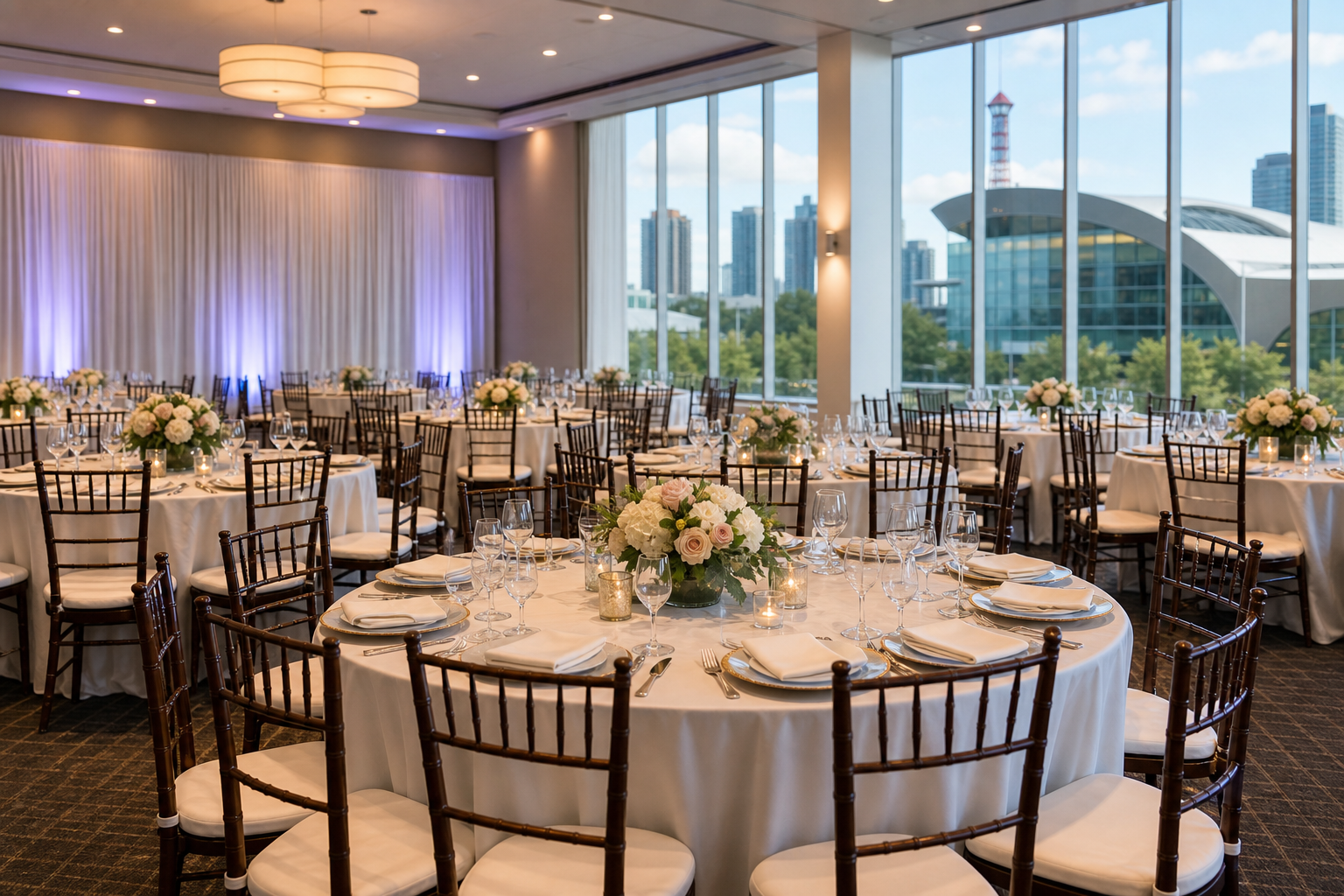
Confirm minimum and maximum capacities for the configuration you want. Ask whether rooms combine or partition, and whether floor plans are available. For comparison, Mississauga Convention Centre publishes seven similarly sized halls of about 4,250 square feet each, with a total capacity over 2,200 guests, which allows modular combinations for larger receptions. See the venue website for details.
Parking and transit access
Check on-site parking counts and nearby transit stops. A venue that advertises free, ample parking often reduces guest stress and potential shuttle costs. For example, the Mississauga Convention Centre offers approximately 700 on-site parking spaces, which benefits large events and guests arriving from out of town, and more information is available on the venue site.
Catering and dietary options
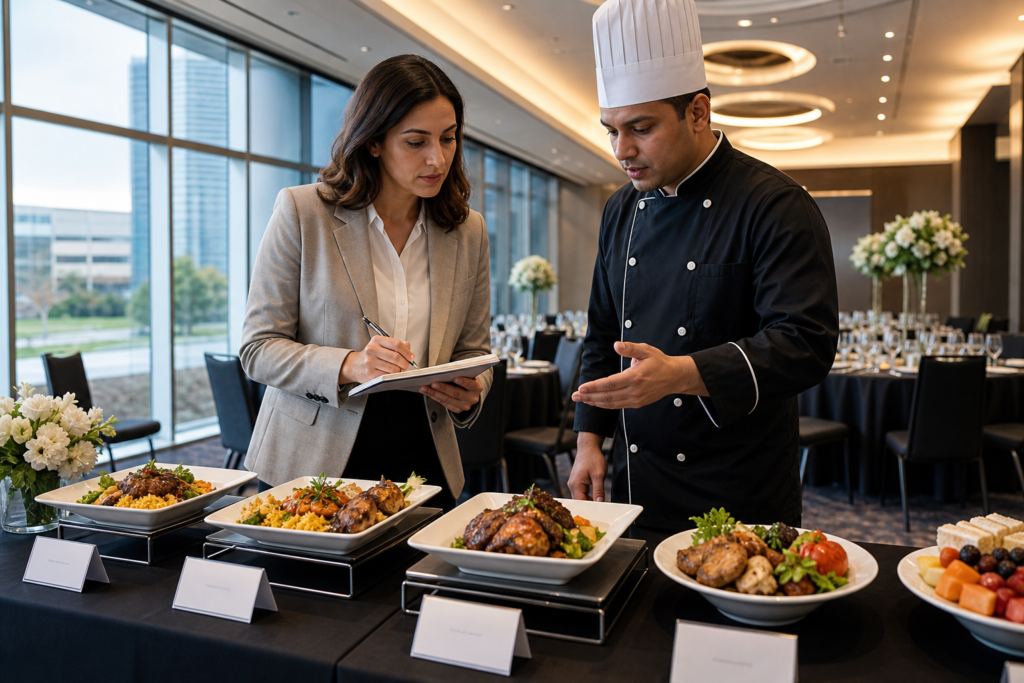
Ask whether the venue has in-house catering and which cuisines or dietary accommodations are offered. In-house menus reduce coordination and usually include service staff. The Mississauga Convention Centre lists diverse in-house catering including South Asian, Pakistani Halal, Middle Eastern, Sri Lankan, Caribbean, and Continental options, which can eliminate external caterer fees for culturally specific events. Review menus and sample packages on the wedding reception page.
AV, staging, and technical support
Confirm whether the venue provides built-in AV systems, lights, staging, and an on-site technician. If a venue lacks these, budget rental and technician fees into the total cost. The Mississauga Convention Centre advertises professional audiovisual systems, lighting, staging, and on-site technical support, which streamlines production for ceremonies and speeches.
Accessibility and washroom capacity
Verify accessibility accommodations, elevator access for multi-level venues, and the number of washrooms relative to guest count. These elements affect flow and guest comfort, especially for older or mobility-restricted attendees.
Packages, inclusions, and a la carte items
Ask for the base package and an itemised list of add-ons. A low base price that excludes essentials is not a saving. Request a sample contract that lists what is and is not included so you can compare total costs reliably.
Virtual tours and floor plans
Virtual tours and floor plans let you evaluate a room before an in-person visit. Use them to check sightlines for a stage, dance floor, and dining tables. Many full-service venues provide virtual tours to speed the decision process; request one when you call.
Contracts, deposits, cancellation, and payment terms
Insist on clear deposit schedules and cancellation terms. Avoid venues that require full prepayment well before the event without a clear refund policy. Check online reviews and the venue’s public profile for past client experiences and any payment-related complaints.
Red flags and questions to ask every low-cost venue
Use these red flags and exact questions during your first call or tour to expose hidden risks.
Contract red flags to watch for
- Vague language about inclusions such as staffing, linens, or AV
- No itemised sample contract available on request
- Ambiguous cancellation, damage, or cleaning fees
Service red flags and day-of risks
- No on-site event manager or coordinator assigned for the day
- Restrictions on arrival times that prevent full vendor setup
- Reports of repeated audio or food-service issues in online reviews
Billing red flags including full prepayment demands
A common unhappy experience arises when venues demand full payment long before the event and then fail to deliver agreed services. Check recent guest reviews and the venue’s public profile before sending large deposits.
Decision criteria: when to choose a budget venue and when to invest in full service
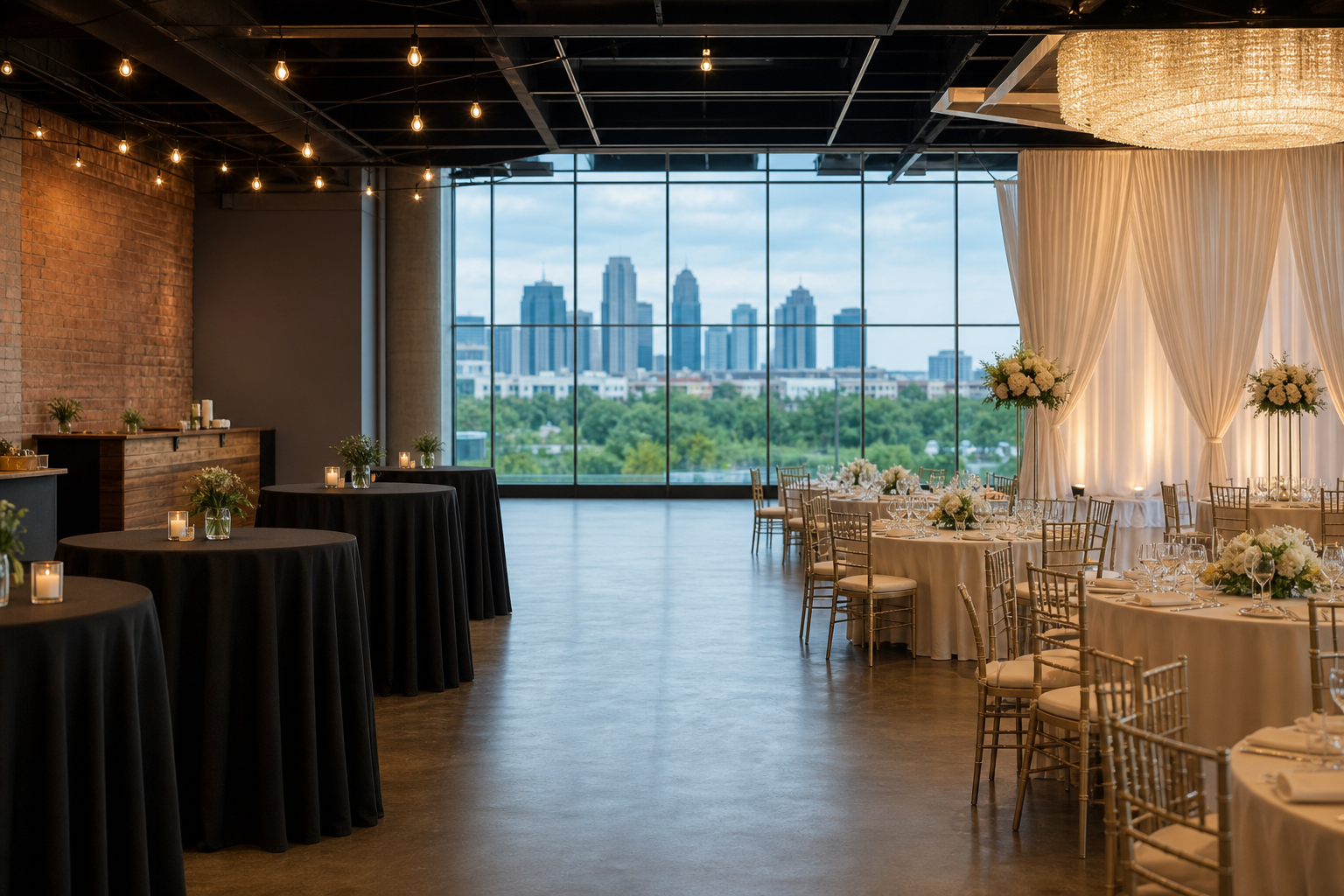
Score options by answering five quick questions: guest count, production complexity, cultural or dietary requirements, out-of-town guest logistics, and your tolerance for vendor coordination. If most answers point to high complexity, a full-service venue reduces risk and often saves time and hidden costs.
Use these questions to score options
- Is your guest list under 75 and low on special dietary needs? A budget venue may be fine.
- Do you plan multiple staged moments, speeches, or complex AV? Full-service is safer.
- Will many guests travel from out of town and need parking or airport access? Prioritise venues near highways and Pearson.
- Are you hosting a culturally specific menu needing Halal or regional chefs? In-house multicultural catering can simplify planning.
- Do you prefer one point of contact and fewer vendors? Full-service venues reduce coordination work.
If you conclude full service is needed, the Mississauga Convention Centre offers large-capacity halls, integrated AV and technical support, in-house multicultural catering, and abundant parking. Review wedding reception options and request a virtual tour on the venue’s wedding reception page.
Booking checklist, next steps, and a short CTA
Use this ten-point checklist on your first call or tour. Then request a sample contract, schedule a virtual tour, and ask for an itemised quote before you sign.
10 quick items to confirm on your first call
- Event date availability and deposit schedule
- Base package inclusions and an itemised list of a la carte fees
- Capacity for your preferred layout and whether rooms combine
- On-site parking count and guest drop-off locations
- Whether the venue has in-house catering and sample menus
- AV, lighting, and staging inclusions and technician fees
- Assigned event manager or day-of coordinator
- Move-in and move-out windows for vendors and decor rules
- Cancellation and refund terms for deposits and final payments
- Access to virtual tours, floor plans, and recent client references
How to use a virtual tour to save time
Request a virtual tour before an in-person visit to confirm sightlines, table placement, and traffic flow. If a venue offers a virtual tour and floor plan, you can eliminate venues that do not meet basic functional needs and focus your site visits on the best matches.
When you need a full-service option that handles catering, AV, staging, and large-capacity requirements in Mississauga, consider contacting the Mississauga Convention Centre. The venue highlights seven large halls, on-site technical support, diverse in-house catering, and generous parking. To request a virtual tour, view wedding reception packages, or ask for an itemised quote, visit the Mississauga Convention Centre wedding reception page: Mississauga Convention Centre wedding reception options.
Frequently asked questions
How does an ‘inexpensive’ reception venue differ from a budget-friendly full-service venue in Mississauga
An inexpensive venue usually reduces headline cost by excluding services or amenities, while a budget-friendly full-service venue includes core services but optimises them for price. Always compare itemised inclusions to decide which option offers true value.
What specific questions should I ask to reveal hidden fees at a low-cost reception hall
Ask for an itemised sample contract, clarify overtime rates, request setup and teardown rules, confirm whether linens, chairs, and tableware are included, and ask about mandatory service charges or cleaning fees.
Are Halal and multicultural catering options commonly available in affordable venues near Mississauga
Availability varies. Some affordable venues partner with outside caterers, while other venues provide in-house multicultural and Halal menus. If cultural dining is essential, prioritise venues with in-house options to reduce coordination; review menu examples on the Mississauga Convention Centre wedding reception page.
When is it safer to choose a full-service venue rather than a cheaper reception hall
Choose full-service when your event has a large guest count, complex production, strict dietary requirements, or many out-of-town guests. Full-service venues reduce vendor juggling and often prevent day-of problems from hidden gaps.
What paperwork and deposit terms are reasonable to expect from reception venues in the GTA
Reasonable venues provide a written, itemised contract, a clear deposit schedule, and defined cancellation and refund terms. Avoid venues that demand full prepayment long before the event without clear protections in writing. Check public reviews and the venue’s business profile before sending large deposits.