

 11 August, 2026
 Use this ordered decision checklist on a venue tour or in vendor briefs to lock down lighting design for weddings, conferences, proms, trade shows and banquets. The steps guide you from objectives to technical rehearsal, and include the exact questions to bring to Mississauga Convention Centre during your walkthrough.
1. Define event goals and lighting objectives
Before any technical specification, list what lighting must achieve. Typical objectives include atmosphere and mood, photographer-friendly light, readable presentation surfaces for speakers, broadcast or livestream exposure, brand-colour moments, accessibility for guests with low vision, and timed cues for program highlights. A checklist approach to goals reduces on-site surprises; industry checklists recommend confirming event goals, attendee count and key program moments early in the process (Complete AV Checklist for Event Planners).
Also review local trends to decide whether you will use moving lights, perimeter LED effects or more traditional stage wash to shape arrival, ceremony and reception experiences (Event lighting design trends in Ontario).
2. Venue assessment: what to inspect on a tour
The venue assessment is the critical point where physical constraints shape your lighting choices. Treat a site visit like a technical audit: capture dimensions, power, rigging and sightlines so designers can translate artistic goals into a safe, reliable plan. The Event Manager’s checklists emphasise that venue assessment reveals the constraints that shape every technical decision (The Event Manager’s Complete AV Checklist).
What to measure and photograph on site
- Ceiling height and any dropped ceilings, HVAC ducts or lights that block rigging.
- Wall finishes and colours, because reflective or absorbent surfaces affect perceived intensity.
- Stage dimensions, sightlines to each seating sector, and camera positions for broadcast.
- Exact locations and photos of power outlets, floor boxes and distribution panels.
- Loading dock dimensions, door widths, elevator access and closest parking for crew vehicles.
- Blackout capability and natural light sources for daytime events.
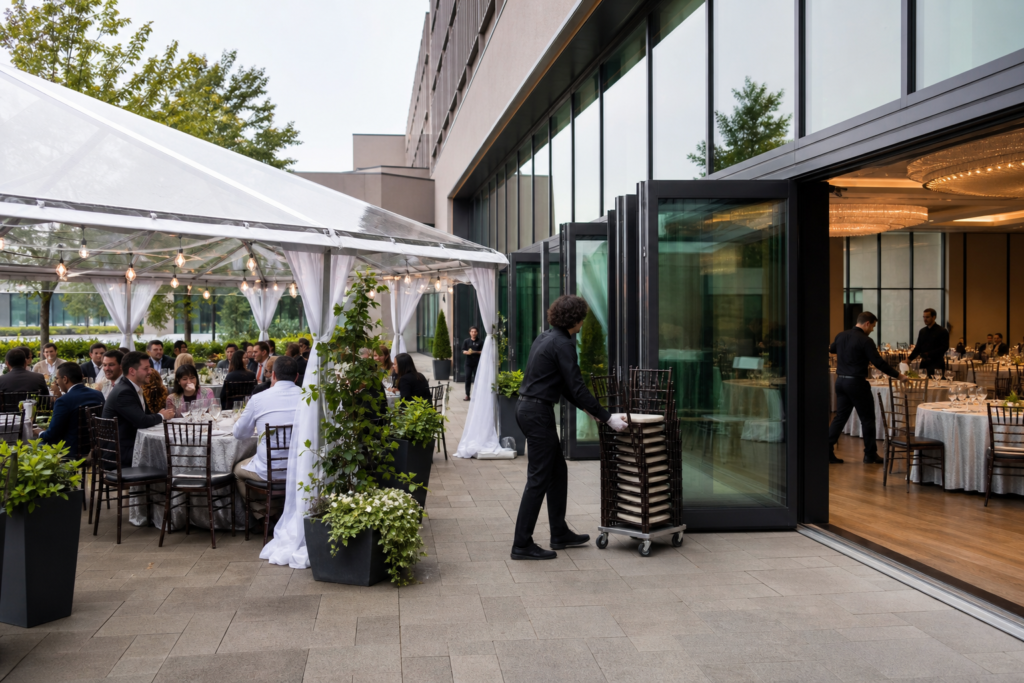
- Outdoor patio entry points, nearby ambient light sources and weather exposure.
Perimeter uplighting and fixture spacing must be planned relative to outlet positions and wall height; event lighting guides recommend confirming fixture counts and positions during the venue survey to ensure even coverage (Watch Party Lighting Ideas for Toronto Venues).
Questions to bring when you ask Mississauga Convention Centre
Bring a written list and collect technical answers from the venue technical contact or sales rep. Confirm these specific items with Mississauga Convention Centre, which offers seven halls of approximately 4,250 square feet each, in-house AV, and an outdoor patio option (Mississauga Convention Centre).
- Do you provide an up-to-date technical rider or system diagram for the hall I plan to use?
- What in-house AV and lighting services are included or available as upgrades? Please send scope and crew rates in writing (lighting services page).
- Where are the nearest power panels and how many usable circuits are accessible from the event floor?
- Are there permanent rigging points, and what are the published load limits? What is the procedure to request temporary rigging?
- What are load-in/load-out windows, vendor parking and loading dock dimensions?
- Is the outdoor patio available for lighting fixtures, and are there restrictions or weather contingency rules?
- Can you provide a virtual tour and technical photos of the selected hall to test sightlines remotely?
3. Choose fixtures and control systems that match goals
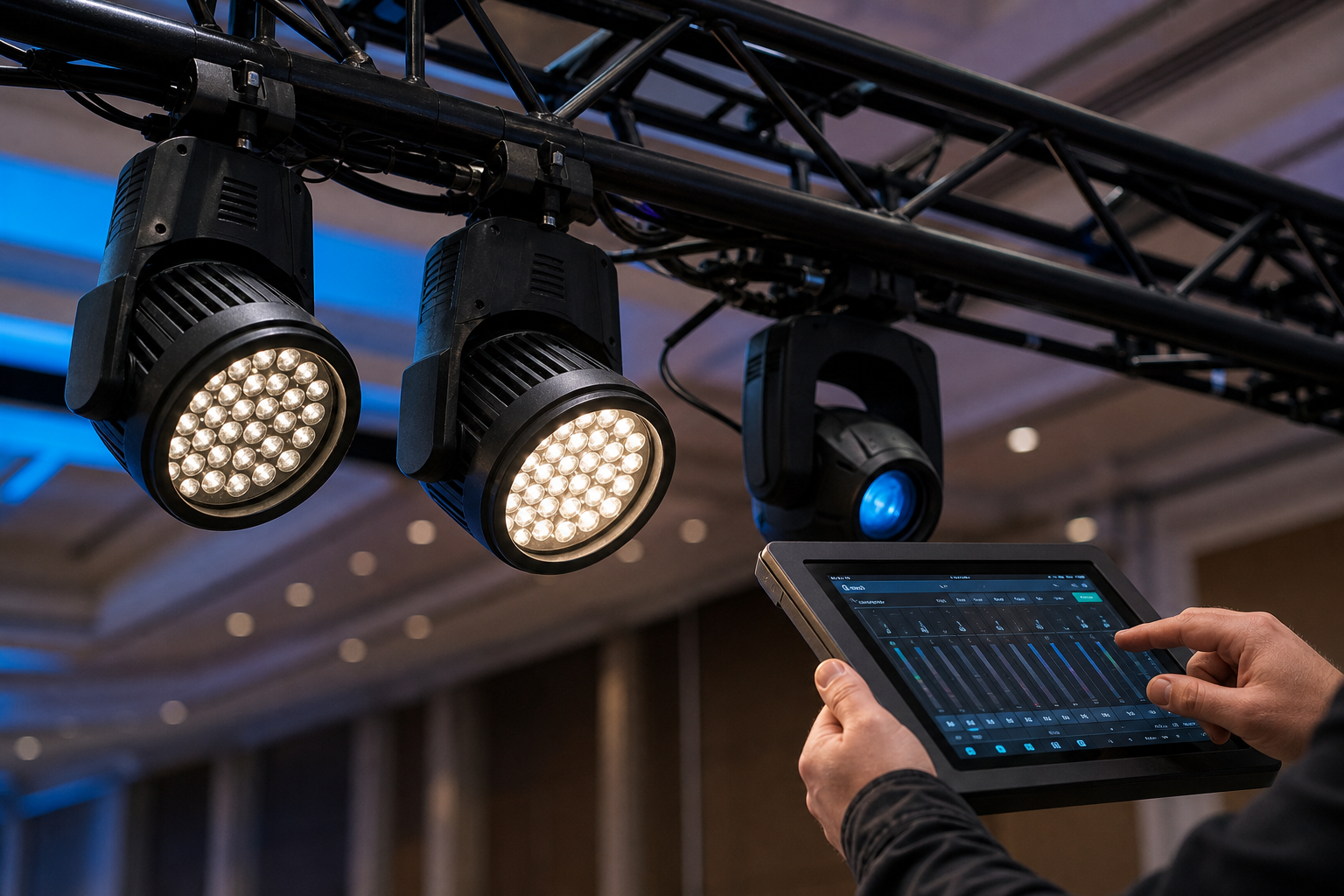
Translate your objectives into a fixture and control strategy. Compare fixture optics, beam angles, lumen output and power draw when choosing LEDs, moving heads, ellipsoidals or LED wash fixtures. A buyer’s guide helps you compare optical and electrical specs and control protocols so your artistic goals become technical specs (Custom LED Lighting Buyer’s Guide).
Decide whether you need a dedicated lighting console or a software-based controller. DMX is the standard signalling protocol; larger setups or distributed networks often use Art-Net or sACN to bridge multiple nodes. Smaller events may manage with a compact console or laptop-based software and a DMX interface.
For intimate decorative accents or wedding details, mini LED spots and moving heads are common; specification checklists explain how to choose mini moving heads by beam quality, weight and control options (How to Choose Mini LED Spot Moving Heads).
For additional creative inspiration and designer-level approaches, read Designer Lighting: The Complete Guide for 2026 Events to see how fixtures, gobo textures and layered effects create narrative moments (Designer Lighting: The Complete Guide for 2026 Events).
When to choose uplighting, moving heads, gobos or a full rig
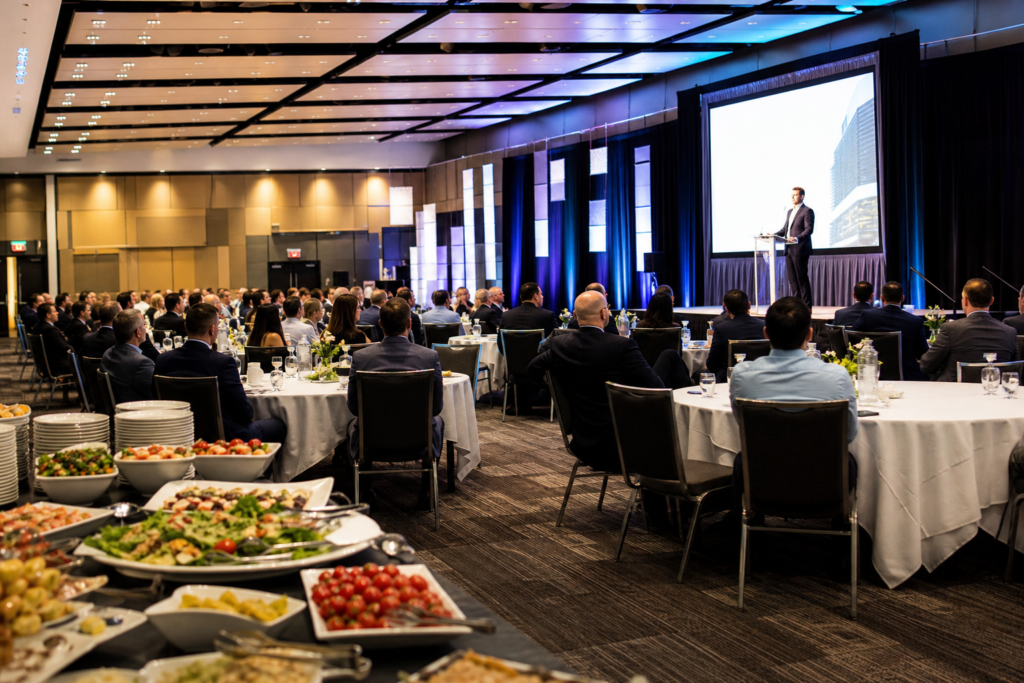
- Weddings and banquets: prioritise warm stage/key light for photography, perimeter uplighting for mood, and subtle moving-head accents for the dance floor. For a 4,250 sq ft hall consider moderate perimeter uplighting and 6–12 moving-head accents depending on ceiling height and dance-floor size.
- Corporate conferences: prioritise bright, even stage wash, presenter key light and neutral audience light that supports note-taking and camera exposure. Add branded gobos or colour washes only where they do not interfere with legibility.
- Trade shows and product demos: specify focused spot fixtures and backlighting to highlight products, and aisle wash to keep visitor flow visible.
- School dances and proms: add moving-heads, beam effects and floor-mounted wash to create kinetic energy; verify safety for dance-floor lighting and any low-lying fixtures.
4. Power, rigging and safety checks you must confirm
These are non-negotiable technical stop points. Confirm usable breaker capacity, dimmer or LED driver locations, the presence of a stage dimmer rack, and the available distribution panels. If you bring external racks or dimmers, the venue must confirm how you will feed them. Live production checklists emphasise specifying power distribution and IP ratings for outdoor fixtures well before load-in (AVL Equipment Checklist for Live Events).
- Request a published floor plan showing breaker and panel locations.
- Obtain any rigging point load limits in writing and confirm the venue’s rigging certification process.
- For outdoor patio use, confirm fixture IP ratings or the venue’s policy for weather protection and safe power routing.
- Confirm emergency lighting, exit path visibility and whether any decorative lighting may be disabled by the venue’s life-safety systems.
5. Coordinate with the venue’s in-house AV team and set rehearsal timing
Define responsibilities in writing: who will patch and address DMX channels, patch audio/video feeds, and operate the lighting console during the show. Exchange system diagrams, stage plots and cue sheets at least two weeks before the event where possible. Industry AV checklists recommend documenting roles, cue responsibility and a rehearsal plan to avoid misunderstandings (Complete AV Checklist for Event Planners, The Event Manager’s Complete AV Checklist).
Mississauga Convention Centre lists professional audiovisual systems, lighting, staging and technical support as in-house services; confirm which functions their technicians will perform and which require an external operator (Mississauga Convention Centre).
Technical rehearsal checklist
- Confirm key light on every speaker and check camera exposure under event lighting.
- Run each lighting cue in sequence and time it to stage action and video playback.
- Test all transitions, video playback and any media server cues with full audio levels.
- Verify emergency lighting behavior and that exit signage remains visible under show lighting.
- Record final DMX addressing and label cables and equipment for strike day.
6. Quick spec templates by event type
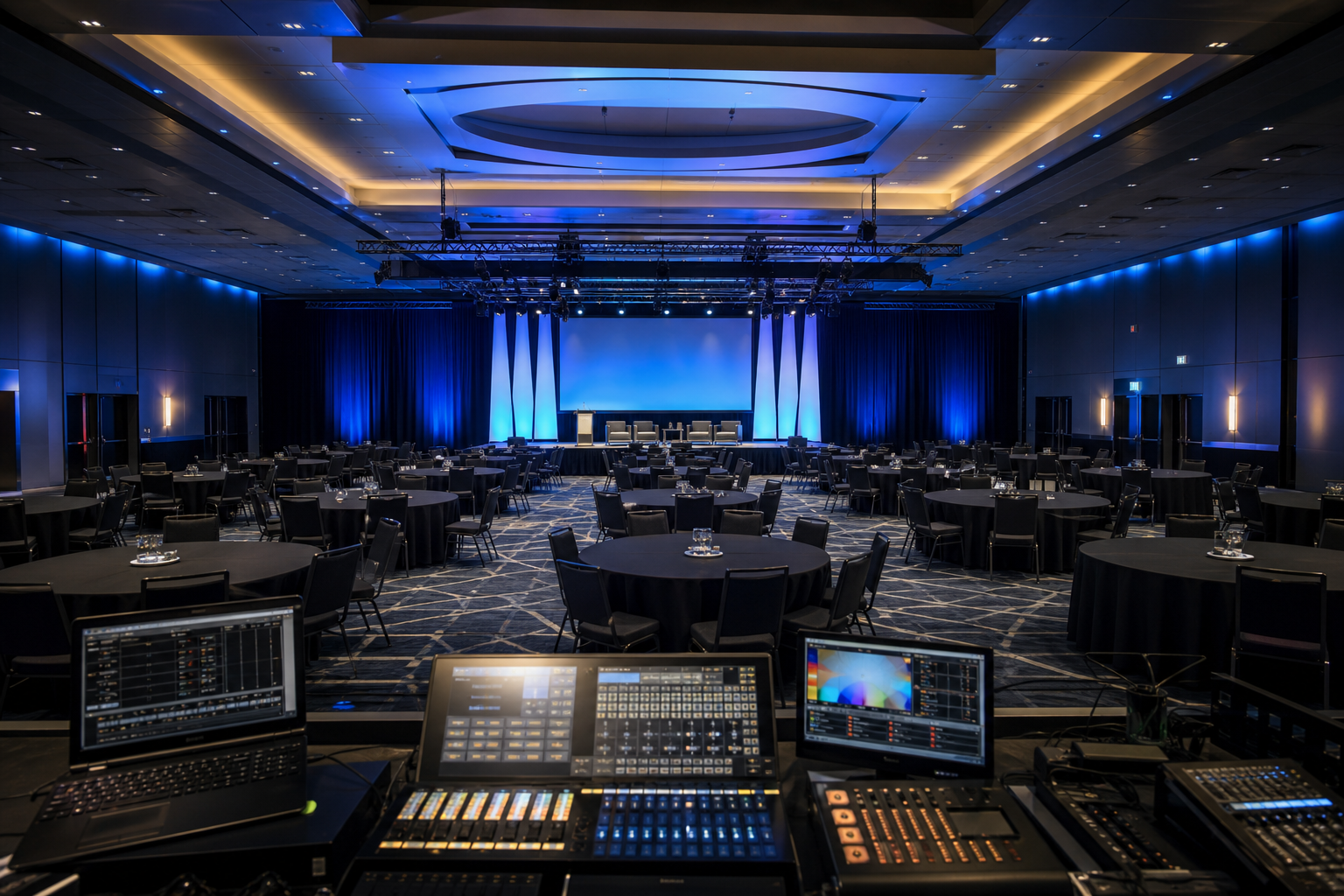
Copy-ready templates to paste into vendor briefs or RFPs. Adjust counts to the hall size you will use.
Wedding reception (banquet hall, seated 200)
- Essentials: warm stage wash (2–4 LED wash fixtures), 12–18 perimeter uplights, 4 moving-head accents for dance floor, 1 lighting console operator.
- Control: DMX console with scene presets and timed cues.
- Power note: confirm two separate power feeds for wash and moving fixtures.
Corporate keynote (theatre setup)
- Essentials: bright stage wash (4–6 fixtures), 2–3 key lights per presenter position, neutral audience wash for note-taking, gobo slot for logo projection if required.
- Control: console with click-to-cue and interlock to video playback system.
- Power note: request confirmed dimmer racks and camera-friendly flicker testing prior to rehearsal.
Trade show demo booth
- Essentials: focused spots for product (2–6), backlight for displays, aisle wash for navigation.
- Control: local DMX node or intelligent fixtures with preprogrammed scenes.
- Power note: note exact booth feed location and cable protection plan.
School prom or dance
- Essentials: moving-heads for beams and wash, LED uplights, haze for beam visibility (if permitted).
- Control: operator or automated chase scenes with emergency cutoff plan.
- Power note: secure floor-mounted fixtures and protect runs in heavy foot-traffic areas.
7. Final decision checklist and non-negotiable stop points before you sign
- Written technical rider from venue and confirmation of in-house scope.
- Published load limits for rigging points and the venue’s rigging approval process.
- Signed agreement on who supplies operators and whether overtime rates apply.
- Confirmed load-in schedule, dock dimensions and vehicle parking for crew.
- Power distribution diagram and any additional generator or distro requirements spelled out in the contract.
- Weather and outdoor contingency plan for patio events, including IP rating or coverings.
The AV planning literature highlights these stop points as contract-level items that prevent costly on-site changes (DC Live Productions AV checklist, FPC Events checklist).
8. Common objections, negotiable trade-offs and contingency planning
Expect objections such as power-surcharge requests, vendor exclusivity, or limited rigging. Practical responses include negotiating a capped power allowance with defined overage rates, asking for a list of approved external riggers, or accepting a hybrid approach where the venue supplies basic wash and your vendor brings specialty moving fixtures. Always ask to add any negotiated technical commitments to the event contract.
Next step: test the checklist at your venue tour
Bring a printed one-page version of this tour checklist when you visit Mississauga Convention Centre, request their virtual tour and technical rider, and confirm any open stop points in writing before you sign. The Centre’s halls, on-site AV and patio option make it well suited to apply each step in this guide (Mississauga Convention Centre, lighting services).
Ready to test this checklist at Mississauga Convention Centre?
Frequently asked questions
How much power and how many circuits do event lighting rigs typically require?
Power needs vary by fixture type and count. Small decorative setups may run on a few standard circuits; a medium professional rig commonly requires dedicated dimmer/LED driver racks and multiple 20–30 amp circuits. Always request the venue’s distribution diagram and specify total amp draw so the venue can confirm available breaker capacity (AVL Equipment Checklist).
Does Mississauga Convention Centre provide rigging points and in-house technicians for lighting setups?
Mississauga Convention Centre lists professional audiovisual systems, lighting, staging and technical support as in-house services. Confirm the hall-specific rigging options and any published load limits during your technical tour and ask for those details in writing (Mississauga Convention Centre).
What is the minimum technical rehearsal time I should budget for a conference keynote with video playback?
Budget at least one hour for line-checks and camera tests, plus an additional 60–90 minutes for a full dress run that includes all cues, video playback and presenter checks. Larger productions should schedule a longer tech day to allow for camera blocking and full cue timing (DC Live Productions AV checklist).
Which outdoor lighting precautions matter when using the Centre’s patio for ceremonies?
Confirm fixture IP ratings for weather, safe routing of power runs, appropriate cable protection, and a weather contingency plan that covers sound and lighting adjustments. If fixtures are not IP-rated, plan for covered installations or bring weather-rated alternatives (AVL Equipment Checklist).
If you have additional technical questions or want a printable one-page tour checklist, test these steps at your next venue walkthrough and request the Centre’s technical rider and virtual tour to close any open items.