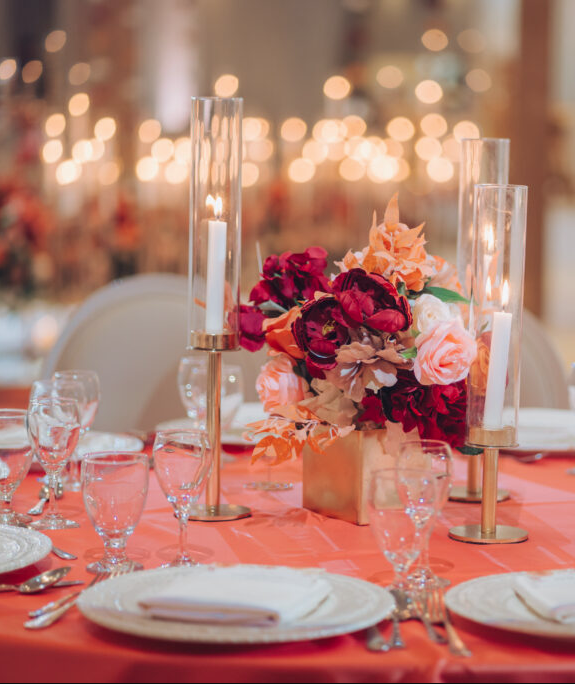

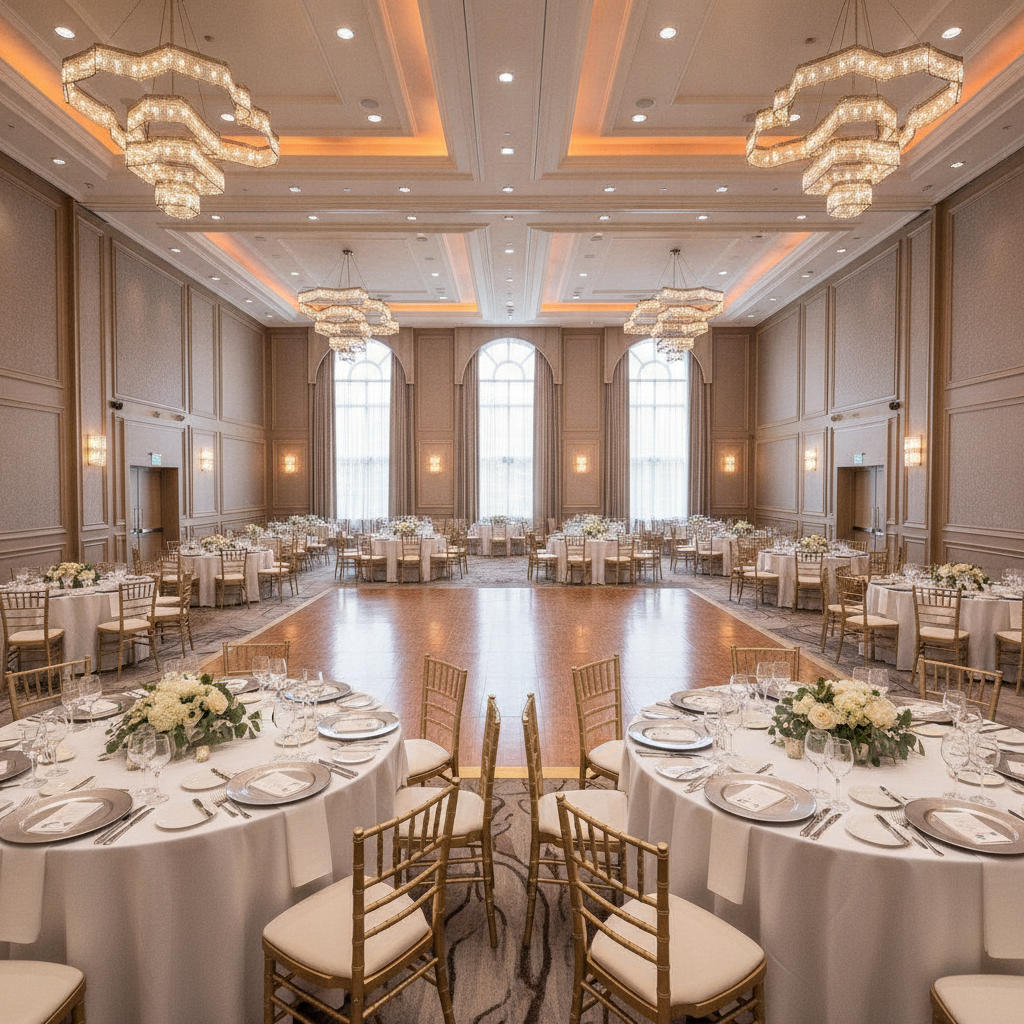
Mississauga banquet hall capacity is the safe, comfortable headcount a venue can host based on room size, layout, and event needs. For context, Mississauga Convention Centre features seven halls of about 4,250 square feet each, with a total capacity over 2,200 guests. Getting capacity right prevents crowding, protects flow, and elevates guest experience.
By Preet Dass — Mississauga Convention Centre
Last updated: 2026-06-25
Quick Summary and Table of Contents
Banquet hall capacity depends on square footage, seating style, and space reserved for staging, bars, and aisles. For a 4,250 sq ft ballroom, working benchmarks range from roughly 250–300 for banquet rounds to 400–450 for theater-style. Always confirm with your venue’s event team and local fire authorities.
Here’s how to use this guide quickly and confidently.
- Understand what “capacity” really means and why it varies by layout.
- Use simple math to estimate guest counts for 4,250 sq ft rooms.
- See planning benchmarks for banquet, theater, cocktail, and classroom setups.
- Apply best practices, real examples, and checklists to your program.
- Plan smarter for corporate meetings, weddings, school events, and holiday parties in Mississauga.
- What Is Banquet Hall Capacity?
- Why Capacity Planning Matters in Mississauga
- How Capacity Works: Space, Layout, and Flow
- Seating Layout Types and Typical Capacities
- Best Practices to Right-Size Your Event
- Tools and Resources (Diagrams, Tours, Checklists)
- Case Studies: Real Mississauga Examples
- Frequently Asked Questions
- Key Takeaways
What Is Banquet Hall Capacity?
Banquet hall capacity is the maximum number of guests a room can host safely and comfortably for a specific layout. It reflects room size, egress paths, furnishings, staging, and service areas. Capacity is scenario-based: the same room fits different counts for banquet rounds, theater, cocktail, or classroom setups.
Capacity is not a single number—it’s a set of numbers that change with your format and production needs. A 4,250 sq ft hall with banquet rounds has a different practical limit than the same room in theater-style.
- Room size: Mississauga Convention Centre halls are approximately 4,250 sq ft each, enabling modular planning.
- Furniture and equipment: Rounds, risers, dance floors, bars, buffets, and AV change usable space by hundreds of square feet.
- Circulation and egress: Aisles, doorways, and service lanes protect flow; tight layouts slow service and impact safety.
- Event format: Seated dinner, theater, classroom, and cocktail receptions each need distinct space per guest.
In practice, event teams translate these variables into guest counts that balance comfort, service speed, and show control. The result is a capacity that feels right—on paper and in the room.
Why Capacity Planning Matters in Mississauga
Capacity planning ensures guests have room to breathe, servers can move efficiently, and production teams can operate safely. It also protects your run of show—speakers stay on cue, courses arrive hot, and dancing feels energetic, not cramped.
In our experience hosting corporate meetings, weddings, galas, and school proms across the GTA, right-sizing the room has an outsized impact on experience. Small mismatches compound fast: 10 extra tables can consume 600–800 sq ft once you add chairs and aisles.
- Guest comfort: Crowded rooms lead to long lines and higher noise; an extra 1–2 feet in aisles improves flow measurably.
- Service efficiency: For plated dinners, servers need clear 36–48 inch lanes to maintain course timing.
- Program quality: Presentations depend on sightlines; too many tables outside the projection cone reduce engagement.
- Safety and egress: Unobstructed exits are non‑negotiable; always align with venue guidance and local authorities.
Mississauga Convention Centre’s total guest capacity exceeds 2,200 across seven halls, supported by roughly 700 on-site parking spaces and integrated AV. Those hard numbers translate into smoother arrivals, faster room turns, and reliable show starts.
How Capacity Works: Space, Layout, and Flow
Capacity is a function of usable square footage divided by space-per-guest benchmarks for your layout, minus space reserved for staging, dance floor, bars, buffets, and aisles. Start with room size, subtract production needs, then apply realistic per-guest factors to project a safe, comfortable count.
Think in three layers: the shell (room size), the production footprint (stage, AV, décor, service), and the guest layout (tables/chairs). A 4,250 sq ft hall becomes smaller once you reserve 400–800 sq ft for stage and dance floor.
- Shell size: ~4,250 sq ft (single hall) • ~8,500 sq ft (two combined) • ~12,750 sq ft (three combined).
- Production footprint: Typical stages range 16×24 ft (384 sq ft) to 24×32 ft (768 sq ft). Dance floors often start near 400–600 sq ft for 200–300 dancers.
- Service areas: Bars, buffets, coffee stations, and registration can claim 150–400 sq ft each.
Worked example (single 4,250 sq ft hall): Subtract a 24×24 ft stage (576 sq ft), a 24×24 ft dance floor (576 sq ft), and two bars at 150 sq ft each (300 sq ft). Usable area ≈ 4,250 − 1,452 = 2,798 sq ft for seating and aisles.
- Banquet rounds planning factor: 12–15 sq ft per guest is a common working range for comfortable dinners.
- Estimated guests (banquet): 2,798 ÷ 12–15 ≈ 186–233 guests with generous aisles and service lanes.
- Theater-style factor: 8–10 sq ft per guest often fits; 2,798 ÷ 8–10 ≈ 280–350 seats with good sightlines.
These are planning estimates to kickstart discussions. Your final capacity depends on the precise stage, dance floor, table size, aisle widths, and accessibility paths you approve during diagram reviews.
Seating Layout Types and Typical Capacities
Choose a seating layout that matches your goals. Banquet rounds support dining and conversation; theater maximizes audience size; classroom balances note‑taking and comfort; cocktail receptions boost mingling. Each layout uses different space-per-guest benchmarks that meaningfully change your capacity.
Planning Benchmarks and Sample Capacities
Use these benchmarks as a starting point for Mississauga planning. We’ll illustrate with a single 4,250 sq ft hall and then show how combining halls scales capacity.
| Layout | Planning Benchmark | 4,250 sq ft (no stage/dance floor) | 4,250 sq ft (with 1,152 sq ft stage+dance) | Two Halls ~8,500 sq ft (similar setup) |
|---|---|---|---|---|
| Banquet rounds | 12–15 sq ft/guest | 283–354 guests | 186–233 guests | 566–708 guests |
| Theater | 8–10 sq ft/guest | 425–531 seats | 280–350 seats | 850–1,062 seats |
| Classroom | 16–20 sq ft/guest | 213–265 guests | 140–175 guests | 426–530 guests |
| Cocktail/standing | 6–8 sq ft/guest | 531–708 guests | 350–466 guests | 1,062–1,416 guests |
These numbers are practical event-planning ranges, not code limits. They assume clear aisle plans and do not replace official occupancy calculations. We’ll collaborate on final diagrams so your MC, photographers, and service team can perform flawlessly.
When to Favor Each Layout
- Banquet rounds: Weddings, galas, and awards shows where dining and conversation matter.
- Theater-style: Keynote sessions, town halls, or product reveals where seating density and sightlines win.
- Classroom: Seminars and trainings prioritizing note‑taking and table space.
- Cocktail: Receptions and networking where movement and bars are focal points.
Choosing between a dedicated banquet hall and a flexible event space? Our comparison of setup control and flow in banquet hall vs event space can help you land on the right canvas for your program.
Best Practices to Right-Size Your Event
Start with your run of show, then build the room around it. Clarify stage needs, video projection, dance floor, and service style. Add 10–15% buffer for late RSVPs. Lock aisle widths and accessible routes early so diagrams hold up when décor and AV are added.
Lock the Program Before the Floor Plan
- Define segments: keynote, awards, plated dinner, performances, or open networking.
- Decide service style: plated, family‑style, buffet, or cocktail stations.
- Confirm stage size, screen locations, and camera risers before placing the first table.
Use Realistic Space Buffers
- Add 10–15% headcount flex to absorb late additions without compressing aisles.
- Reserve 36–48 inch service lanes between table blocks for consistent timing.
- Scale dance floors to participation; 400–600 sq ft often suits 200–300 active dancers.
Design for Sightlines and Sound
- Keep tables inside the throw of projectors; avoid placing guests beyond screen edges.
- Place audio fills to cover rear tables; avoid dead zones that trigger chatter.
- Use drape and soft seating to tame echo in high-energy receptions.
For a broader planning primer on room choice and flow, see our Mississauga banquet halls guide, which expands on staging, guest journey, and arrival logistics.
Tools and Resources (Diagrams, Tours, Checklists)
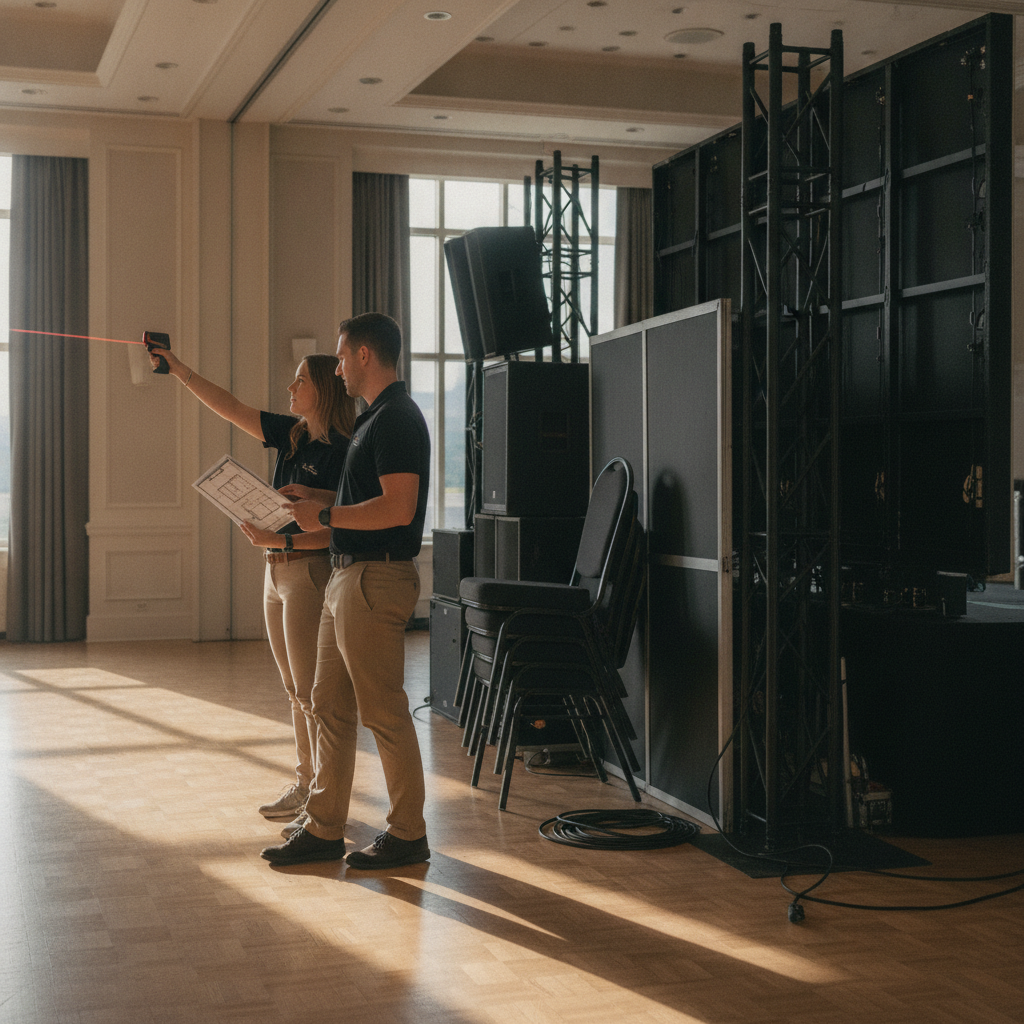
Leverage diagrams, a virtual tour, and site visits to validate capacity. Walk the room with a tape or laser, then overlay your stage, bars, and tables. Use checklists to confirm aisles, accessibility, and service routes before you sign off on the final layout.
- Virtual planning: Explore the venue’s spaces with a virtual tour to visualize table blocks and stage sightlines.
- Diagram review: Approve annotated floor plans showing table counts, aisle widths, and all production elements.
- On-site walk‑through: Measure a sample pod, pace key distances, and test views from back‑row seats.
Planning a plated networking dinner for executives? Our private dining planning guide outlines table spacing and service rhythms that scale up seamlessly to ballrooms.
For wedding inspiration and a deeper dive on choosing a hall, browse these perspectives: a practical overview on the perfect venue for your wedding and a complementary take from another venue on ways to evaluate options before you book.
Case Studies: Real Mississauga Examples
Capacity decisions become clear when you see the math and the room. These real‑world scenarios show how our 4,250 sq ft halls scale for corporate, weddings, school events, and holiday parties—while preserving service lanes, sightlines, and dance energy.
Corporate Town Hall (Single Hall)
- Objective: 60‑minute address + 30‑minute Q&A for 320 employees.
- Layout: Theater, 24×24 ft stage (576 sq ft), twin screens.
- Result: Usable ≈ 3,674 sq ft after stage and tech risers; at 9 sq ft/seat, ≈ 408 seats possible. We set 360 seats to increase 42–48 inch aisles for fast exits and mic runners.
South Asian Wedding Reception (Two Halls Combined)
- Objective: Reception for ~600 guests with open dance floor and extended family photos.
- Layout: Banquet rounds, 24×32 ft stage (768 sq ft), 24×24 ft dance floor (576 sq ft), two bars.
- Result: Usable ≈ 8,500 − 1,494 = 7,006 sq ft. At 13–14 sq ft/guest, ≈ 500–540 guests at rounds; adding a third hall boosted comfort to ~750 without compressing service lanes.
Planning a culturally rich menu? Our kitchen supports South Asian, Pakistani Halal, Middle Eastern, Sri Lankan, Caribbean, and Continental cuisines. See our South Asian wedding venue planning guide for flow ideas around receiving lines, photo stages, and dessert stations.
School Prom (Single Hall + Pre‑Function)
- Objective: Dinner + dancing for ~240 students.
- Layout: Banquet rounds, 24×24 ft dance floor, DJ booth, photo backdrop in pre‑function.
- Result: With 1,152 sq ft allocated to stage/dance, rounds at ~12–13 sq ft per guest supported ~190–230 diners; we opened the pre‑function area for photos to relieve ballroom congestion.
Holiday Party Venue Scenario (Two Halls)
- Objective: Festive reception for ~900 with food stations and live band.
- Layout: Cocktail reception, 24×16 ft band stage (384 sq ft), four station clusters at ~200 sq ft each (800 sq ft).
- Result: Usable ≈ 8,500 − 1,184 = 7,316 sq ft. At 7 sq ft/guest, ≈ 1,045 capacity; we targeted ~900 to increase flow between stations and bar lines.
These examples highlight a central truth: capacity is the output of your program design. When you tune stage size, dance floor, and station placement, guest counts fall naturally into place.
Local considerations for 75 Derry Rd W
- Plan coach and rideshare flow near Hurontario St At Derry Rd to reduce lobby crowding during peak arrivals.
- Winter events: build extra cloakroom space; December holiday parties load in earlier as roads near Mississauga’s Ram Mandir can be busier during cultural festivities.
- Corporate mornings: align with your internal commute windows; our 700-space on‑site parking smooths arrivals during 8–9 a.m. starts.
Frequently Asked Questions
These concise answers address the capacity questions we hear most from planners. For precise numbers, we’ll confirm your final diagram after a site visit and technical review.
How do I estimate capacity for a 4,250 sq ft hall?
Subtract space for stage, dance floor, bars, and risers, then divide the remaining area by a realistic per‑guest factor. For banquet rounds, 12–15 sq ft per guest is a common planning range; for theater, 8–10 sq ft per seat. We’ll validate with a diagram.
What changes when I add a dance floor?
A dance floor of 400–600 sq ft reduces seating by 25–50 banquet guests in a 4,250 sq ft room, depending on your aisle plans and bar placement. We’ll balance music energy, photography angles, and service routes so the room still feels lively.
Can combining halls significantly increase capacity?
Yes. Two adjacent halls yield around 8,500 sq ft; three reach ~12,750 sq ft. That scale supports 500–700 guests for banquet rounds or 850–1,050 for theater—before accounting for stages and aisles. We’ll right‑size based on your program.
How does in-house catering affect capacity?
Buffet lines and station clusters require dedicated footprints—typically 150–300 sq ft each—plus queuing room. For plated dinners, servers need 36–48 inch lanes. We’ll place bars and stations to preserve seating counts and service speed.
Key Takeaways
Right-sizing capacity starts with your program, not a static number. Confirm stage, dance floor, and service areas, then apply realistic per‑guest benchmarks. Combine halls when you need headroom, and test your layout with a walkthrough before you lock invitations.
- Capacity varies by layout; a single 4,250 sq ft hall supports ~186–233 banquet diners with stage + dance floor.
- Reserve 36–48 inch service lanes to protect timing and guest comfort.
- Two halls (~8,500 sq ft) often suit 500–700 banquet guests or 850–1,050 theater seats.
- Use diagrams, virtual tours, and site walks to validate assumptions.
Ready to design your layout? Explore more ideas in our banquet hall articles and corporate banquet planning tips. We’ll build a diagram that fits your program—and your guests—perfectly.
Soft CTA: Planning a gala, wedding, prom, or holiday party venue near 75 Derry Rd W? Book a planning session with our events team to review capacity, menus, AV, and flow. We’ll help you move from idea to signed diagram in one smooth step.