

 20 September, 2026
 Staging ideas for gala dinners are the creative and technical choices that shape your stage, lighting, sound, scenic elements, and guest flow to elevate awards, speeches, and entertainment. At 75 Derry Rd W in Mississauga, our in-house AV, lighting, and staging teams turn concepts into show-ready experiences guests remember long after the evening ends.
By Mississauga Convention Centre • Last updated: 2026-06-21
Overview and Table of Contents
This complete guide shows how to plan, design, and execute gala dinner staging that wows. You’ll learn definitions, why staging matters, proven formats, step-by-step planning, safety best practices, and real examples from Mississauga Convention Centre. Use the table of contents to jump directly to the section you need.
In this guide, you’ll find:
- What gala staging is and the outcomes it should deliver
- Why staging ideas influence guest experience and fundraising
- How staging works with lighting, sound, video, and décor
- Stage formats and scenic design approaches that fit your program
- A practical, step-by-step planning workflow
- Safety, accessibility, and run-of-show tips
- Tools, checklists, and real-world examples
- What Is Staging for Gala Dinners?
- Why Staging Ideas Matter
- How Staging Works at Mississauga Convention Centre
- Types of Stages and Scenic Approaches
- Step-by-Step Planning Process
- Best Practices for Impact and Safety
- Tools and Resources
- Case Studies and Examples
- FAQ
- Key Takeaways
- Conclusion
What Is Staging for Gala Dinners?
Gala staging is the integrated design of the platform, lighting, audio, video, scenic elements, and pathways that frame your program. The goal is to focus attention, keep energy high, and move people smoothly from reception to awards and entertainment without friction or downtime.
At Mississauga Convention Centre, we define staging as the show architecture behind your gala. It blends creative direction with technical execution so every moment—entrances, awards, performances—lands clearly and emotionally.
- Core components: Stage platform, backdrop/scenic, lectern, confidence monitors, risers, and runway when needed.
- Show systems: Lighting looks, audio coverage, video playback/IMAG, cueing, and stage management.
- Guest journey: How guests enter, find seats, view the stage, participate in segments, and exit.
- Run-of-show: A minute-by-minute plan that coordinates presenters, media cues, and room resets.
With seven elegant halls of roughly 4,250 sq ft each and total capacity over 2,200, our venue provides scale for major galas while keeping sightlines and acoustics optimized for dinner seating and award pacing.
Why Staging Ideas Matter
Great staging turns a dinner into a show. It clarifies sightlines, reduces dead time, improves speech intelligibility, and amplifies emotion. For fundraisers and corporate galas, strong staging directly supports goals like pledges, recognition, and brand storytelling.
Here’s why the investment in thoughtful staging ideas for gala dinners pays off.
- Attention and emotion: Lighting, music stings, and scenic reveals guide attention during key moments.
- Clarity: Proper audio coverage and well-placed screens make every seat feel like the best seat.
- Momentum: Clean transitions keep your audience engaged through multi-course service and speeches.
- Brand presence: Scenic textures, color palettes, and runway shapes reinforce your theme and identity.
- Inclusion: Accessibility-minded layouts and wayfinding welcome every guest and honoree.
We’ve found that when cues are tight and sightlines are deliberate, audiences stay present. Sponsors notice. Award recipients feel celebrated. And teams breathe easier because the program runs on rails.
How Staging Works at Mississauga Convention Centre
Our in-house AV, lighting, and staging teams coordinate design, setup, rehearsal, and live operations. With 700 free on-site parking spots and modular halls, we schedule efficient load-ins, soundchecks, and show runs—so your gala flows from reception through awards without stress.
Here’s how we integrate creative and technical workstreams at 75 Derry Rd W.
- Discovery and goals: Purpose of the gala, show flow, VIP moments, fundraising mechanics, and accessibility needs.
- Room and stage layout: Dinner table map, stage/riser sizes, dance floor, runway or thrust, and seating zones.
- AV system design: Audio zones, lighting looks, projection/LED, confidence monitors, and camera positions.
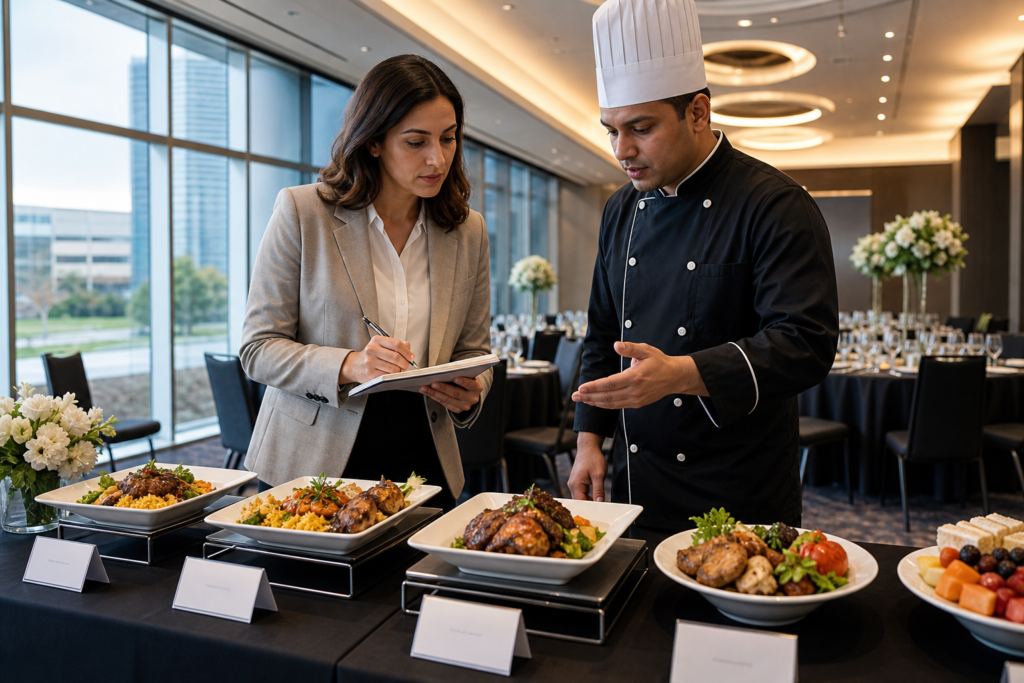
- Menu choreography: Course service aligned with speeches to avoid clatter competing with mic’d content.
- Rehearsals and cues: Walk-ons, award handoffs, sting lengths, and slide playback are locked before doors.
Our halls support diverse catering—South Asian, Pakistani Halal, Middle Eastern, Sri Lankan, Caribbean, Continental—so your stage theme can harmonize with menu storytelling and cultural performances without needing outside vendors.
For a deeper dive into venue selection and show planning, see our corporate gala venue guide and our conference centre overview.
Types of Stages and Scenic Approaches
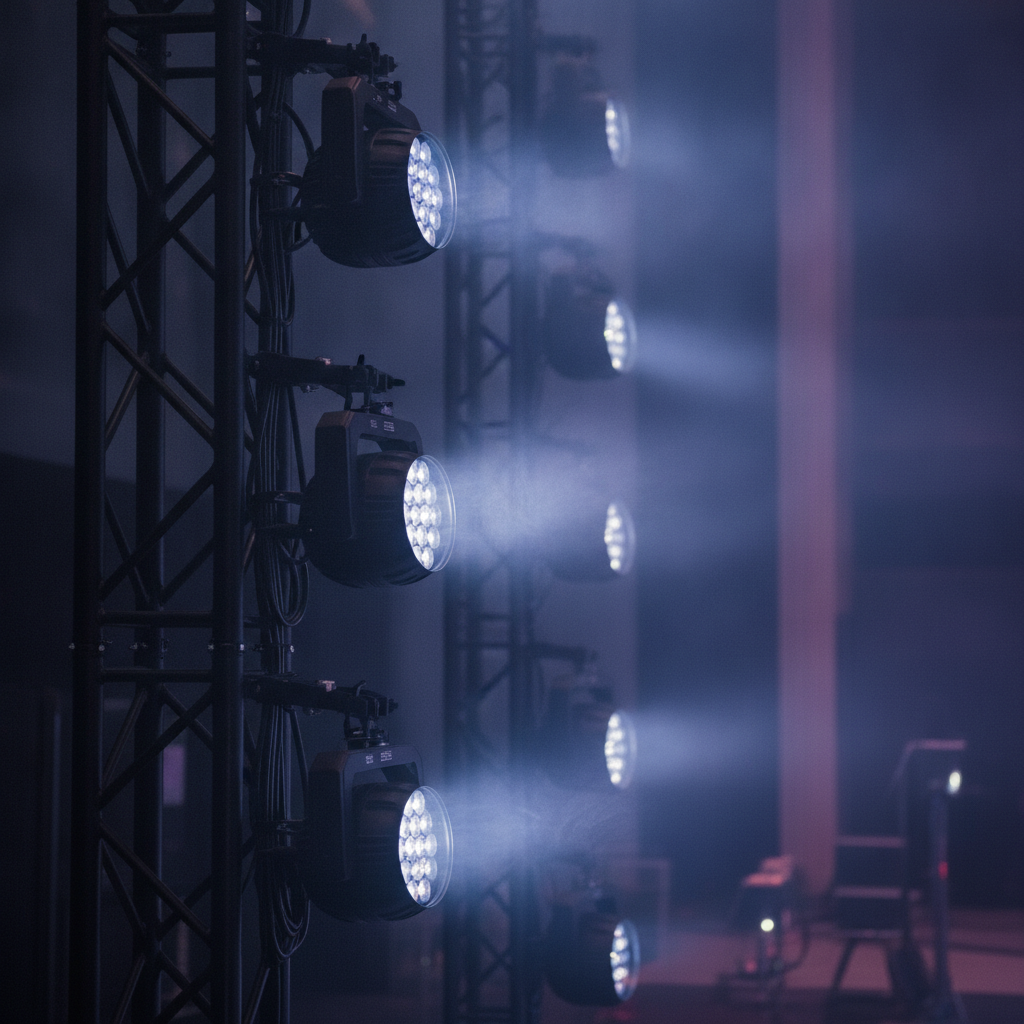
Choose a stage format that matches your program: end-stage for formal awards, thrust or runway for fashion and performances, or in-the-round for interactive segments. Then layer scenic textures—drapery, LED, florals, or branded panels—to reinforce theme, color, and mood.
Common stage formats
- End-stage: Classic rectangular platform with backdrop and side screens; best for keynote + awards.
- Thrust: Stage extends into the audience to bring presenters closer to tables.
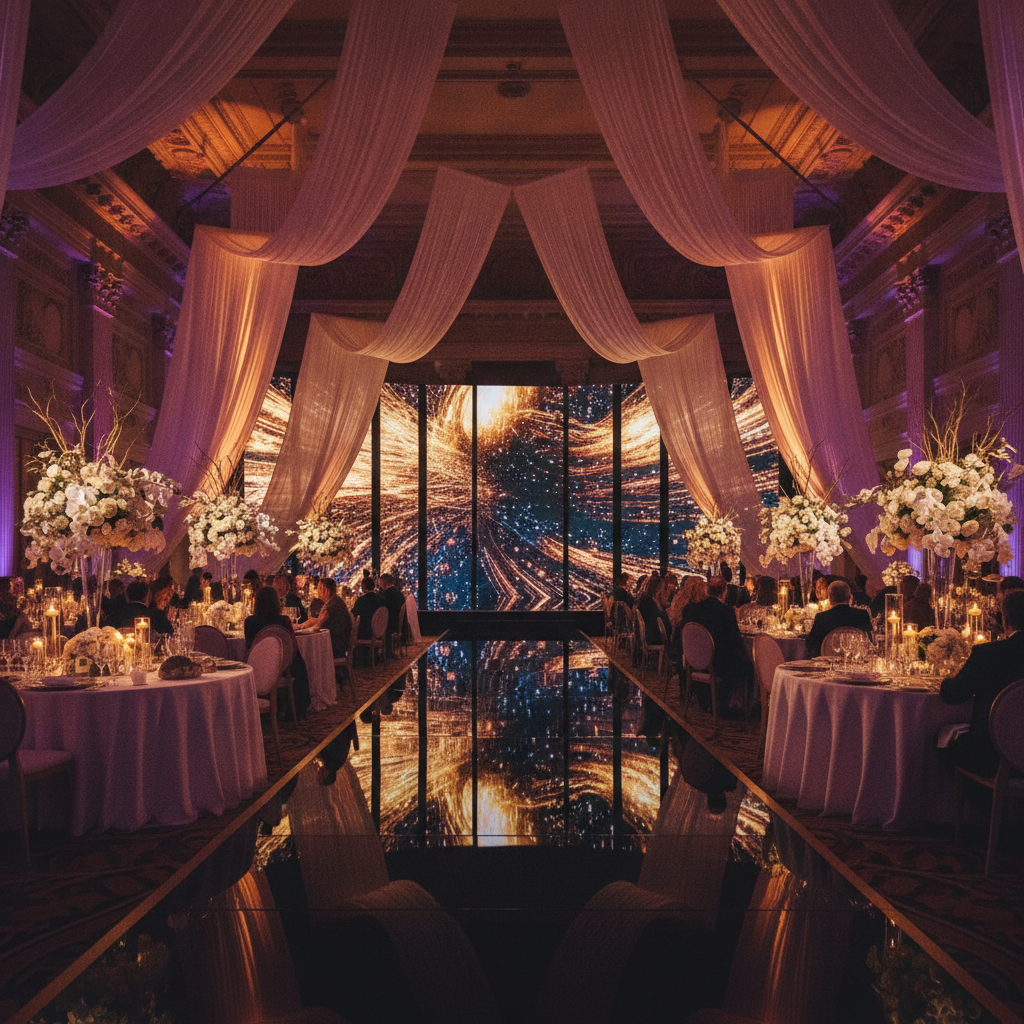
- Runway: Ideal for fashion segments and live auctions that benefit from movement and proximity.
- In-the-round: Central platform with 360° seating; great for immersive performances.
Scenic building blocks
- Drapery and voile: Soften lines and create depth; uplighting renders rich color gradients.
- LED walls or projection: Dynamic looks for logos, motion backgrounds, and honoree photos.
- Textural panels: Wood, metallics, or geometric walls deliver a premium “set” feel.
- Floral and greenery: Tie the stage to your table centerpieces for visual coherence.
- Architectural lighting: Gobos and beams shape ceilings and walls, expanding the stage presence.
Quick comparison
| Format | Best for | Sightlines | Energy | Notes |
|---|---|---|---|---|
| End-stage | Keynotes, awards | Strong front-facing | Formal, focused | Pairs well with dual side screens |
| Thrust | Performances, interviews | Improved mid-room | Engaging, intimate | Use low-profile monitors on edges |
| Runway | Fashion, auctions | Great for long rooms | High energy | Stanchions help manage crossings |
| In-the-round | Immersive performances | 360° views | Dynamic | Requires distributed screens and audio |
Need help choosing? Our banquet halls guide and event staging services overview show room examples that map to each format.
Step-by-Step Planning Process
Plan staging in seven steps: define objectives, map the room, set the stage format, design AV, lock run-of-show, rehearse with cues, and finalize show-calling. Align service timing with speeches so every moment lands without distraction.
- Define success: Pledges, recognition, entertainment impact, sponsor visibility, and guest comfort.
- Assess the room: Seating density, ceiling height, rigging options, power, load-in routes, and ADA-friendly paths.
- Pick a format: End-stage, thrust, runway, or in-the-round based on agenda and headcount.
- Design AV: Microphone plan, audio zones, screen sizes, LED/projection, and lighting looks.
- Build the show flow: Segment lengths, transitions, sting cues, content rolls, and reveal timings.
- Rehearse and refine: Onstage walk-throughs with presenters, mic checks, playback, and stage traffic.
- Call the show: A show-caller advances cues, keeps pace, and adapts calmly to changes.
Download a run-of-show template during your planning kickoff and assign one owner to maintain the master. Consistency prevents crossed wires as vendors and volunteers rotate through tasks.
For décor pairings that strengthen stage presence, explore our venue decoration ideas.
Best Practices for Impact and Safety
Prioritize sightlines, speech clarity, and safe traffic paths. Set stage heights that clear heads yet feel intimate, distribute audio evenly, and mark all edges. Rehearse walk-ons and handoffs. Document cue sheets so everyone moves in sync when the room is full.
Visual and audio clarity
- Sightlines: Keep decor under sightline thresholds; elevate LED enough for back tables to read motion graphics.
- Audio coverage: Use front fills and delays so every table hears at conversational volume.
- Monitors: Confidence screens reduce paper shuffling and speed transitions.
Safety and accessibility
- Edge marking: Gaffer-tape stage edges and stairs; add handrails where appropriate.
- Clear paths: Protect ramps and aisles from floral spillover or cable runs.
- Crew briefings: Review cueing, extinguishers, emergency egress, and headset protocols.
Run-of-show discipline
- Timebox segments: Keep speeches concise with music stings that nudge pacing.
- Backstage traffic: Label entry/exit points; rehearse award lines and photo spots.
- Menu sync: Avoid clashing service windows with honoree remarks.
These practices consistently reduce dead time and presenter stress in our galas across Mississauga, Toronto, and Brampton audiences.
Tools and Resources
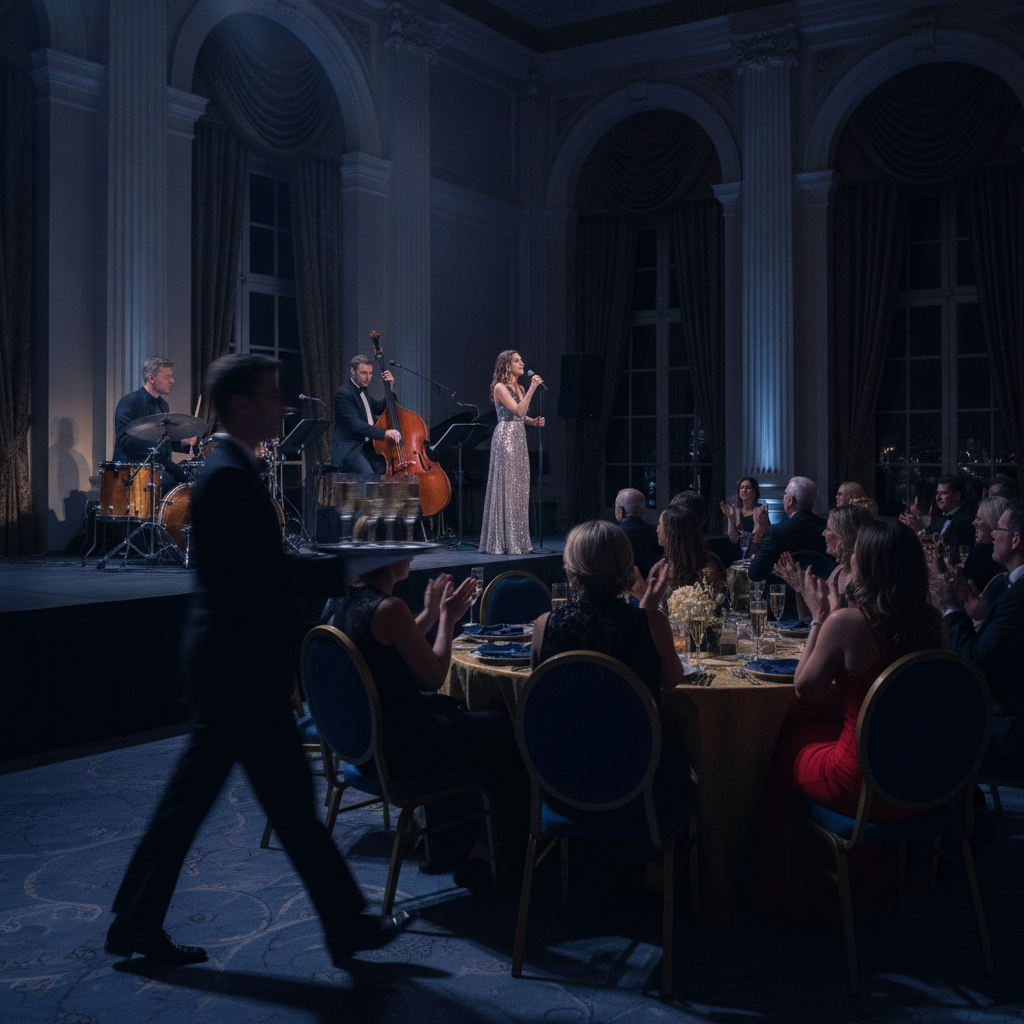
Use simple, reliable tools: a shared run-of-show, stage plot, cue sheet, and seating plan layered with AV overlays. Pair them with rehearsal checklists and a show-calling script so every presenter and tech knows the next move.
- Run-of-show spreadsheet: Segment names, owners, durations, cues, and contingency notes.
- Stage plot: Mic stands, lectern, monitors, risers, stairs, ramp, and safe zones.
- Seating map + AV overlay: Table numbers with screen sightlines and audio coverage zones.
- Cue sheets: Lighting looks, playback rolls, and mic assignments by segment.
- Rehearsal checklist: Presenter arrivals, wardrobe notes (shiny fabrics vs. LED), and mic technique.
To see how room setup influences staging, skim our social event venue overview and banquet halls guide with sample floor plans.
Case Studies and Examples
Real programs reveal what works. Below are anonymized snapshots from recent galas in our seven-hall facility—showing how runway choices, LED content, and service pacing shaped guest experience and outcomes.
Awards gala with thrust stage
- Objective: Celebrate corporate milestones and top performers.
- Format: Thrust stage with dual side screens and subtle LED motion backdrop.
- Effect: Presenters felt closer to the room; photos captured cleanly; speeches stayed on time with walk-in stings.
Fashion-forward fundraiser
- Objective: Increase pledge participation with high-energy segments.
- Format: Runway down the room’s center; riser for live band; GOBO patterns across ceiling.
- Effect: Movement kept attention during service; auctioneer worked the runway to pull in bids between courses.
Multicultural celebration
- Objective: Honor community leaders with performances and South Asian cuisine.
- Format: End-stage with rich drapery and warm amber uplights to match menu storytelling.
- Effect: Seamless transitions between awards and dance; cuisine and scenic palette felt cohesive and celebratory.
For seasonal inspiration and décor pairings, browse these ideas on decoration themes and room setups.
Local Staging Considerations Near 75 Derry Rd W (Regional Municipality of Peel)
Planning in the Regional Municipality of Peel means coordinating easy access to 75 Derry Rd W, aligning load-ins with hall schedules, and anticipating seasonal traffic. Our on-site parking and proximity to Hurontario simplify guest arrivals and vendor timing for stress-free galas.
Local considerations for 75 Derry Rd W
- Time doors around evening traffic on Hurontario; the Hurontario St At Derry Rd stop signals peak arrivals for rideshare and shuttles.
- Winter galas: add extra buffer for coat check and stage dry-mop cycles. Summer: prep shaded pre-function on warm days.
- When cultural performances are planned, stage-right quick-change racks help groups near Mississauga’s Ram Mandir coordinate entrances smoothly.
For a general planning refresher, our corporate gala venue guide walks through vendor coordination and timing windows specific to our campus.
Incorporating the Menu Into Your Stage Story
Align scenic color, lighting temperature, and interstitial content with the menu. When cuisine and stage visuals tell one story, guests feel a curated experience—from South Asian sizzles to Caribbean steel pans and Continental classics.
- Color temperature: Warm ambers pair with rich spiced menus; cooler hues suit modern Continental plates.
- Interstitials: Short kitchen-cam clips or chef cameos between courses keep energy up.
- Performance tie-ins: Dance or music elements that echo regional flavors amplify the reveal as plates arrive.
See how social programs integrate dining and décor in our social event overview.
AEO-Friendly Checklists You Can Use
Use concise checklists for setup, rehearsal, and show time. Define owners, timing, and acceptance criteria. Clear lists reduce surprises and keep your gala on pace—especially during awards turns and entertainment changeovers.
Setup day
- Stage and scenic built; edges taped; stairs/rails installed.
- Audio line check complete; wireless spare kit staged.
- Lighting focus done; looks stored; blackout test passed.
- Projection/LED tested with sponsor and honoree content.
- Seating map confirmed; sightline hot spots resolved.
Rehearsal
- Presenter walk-ons and mic technique reviewed.
- Run-of-show timing validated; sting music set.
- Playback operator and show-caller synced on cues.
- Award line and photo marks taped and tested.
Show time
- Doors playlist rolling; hosts in comms; backups prepped.
- Service timing aligned to remarks; floor captains briefed.
- Stage traffic monitored; ramp kept clear; next speakers staged.
- Strike plans set; vendor load-out windows coordinated.
Plan With Our Team
Need help translating your theme into a show-ready stage? Our in-house AV, lighting, and culinary teams collaborate under one roof, so you make one call and get a unified plan with fewer moving parts.
Explore how we streamline planning in our event staging services guide or contact us through the site to coordinate a site visit and virtual tour walkthrough.
Frequently Asked Questions
These quick answers help you finalize format, timing, and technical decisions. If you’re still unsure, our team can walk the room with you and recommend a layout tied to your specific agenda and headcount.
What’s the best stage height for a gala dinner?
For seated dinners, a moderate elevation usually works best—high enough to clear heads in the back half of the room, low enough to keep speakers connected to the front tables. Your ceiling height, seating density, and screen placement will guide the exact dimension.
Should I choose projection screens or an LED wall?
LED walls excel for motion graphics and bright rooms; projection works well in controlled lighting and can scale to very wide formats. Consider your content, room brightness, and audience distance. We’ll recommend the right canvas during a site visit.
How do I keep speeches engaging?
Timebox remarks, use walk-on music, and place confidence monitors so speakers stay oriented. Interleave short videos and recognition moments between courses. Rehearsals with the show-caller ensure tight turns and clean transitions.
Can you support multicultural performances and Halal menus?
Yes. Our culinary program spans South Asian, Pakistani Halal, Middle Eastern, Sri Lankan, Caribbean, and Continental menus, and our stages are designed for dance, music, and cultural presentations. We coordinate rehearsals and back-of-house flow to keep segments seamless.
Key Takeaways
Match your stage format to the agenda, pair scenic with menu and music, and use clean run-of-show documents to keep the night moving. With integrated AV and culinary services on-site, you’ll spend less time coordinating and more time celebrating.
- Pick a stage format that supports your core moments.
- Design for sightlines, speech clarity, and accessible paths.
- Sync service timing with awards and entertainment.
- Use checklists and a show-calling script for pace.
- Leverage in-house AV, staging, and catering for cohesion.
Conclusion
Great gala staging is intentional, not accidental. When the platform, lighting, audio, visuals, and menu storytelling align, your guests feel taken care of—and your program hits every beat with confidence.
We host galas across seven elegant halls with advanced AV, custom décor, and diverse in-house catering—all minutes from Toronto Pearson. Ready to translate your theme into a show-ready plan? Book a discovery session at 75 Derry Rd W. We’ll walk layouts, run cues, and build a cohesive experience your guests will rave about.
Start by exploring our social event venue overview and event staging services guide—then schedule a site visit.