

 13 August, 2026
 When you plan a large banquet where guests represent multiple cultures, choosing the right menu affects guest comfort, flow, and the tone of the event. This article compares seven practical multicultural banquet menu ideas, each with sample dishes, recommended service style, and venue logistics notes tied to Mississauga Convention Centre features so you can pick the best fit for weddings, corporate galas, or school events.
Selection criteria to compare menu options
Before the seven ideas, use these objective criteria to compare options. These points guide tradeoffs between variety, speed, cost control, and cultural authenticity.
- Service style, for example buffet, plated, family-style, or stations, because service determines throughput and table staffing.
- Dietary inclusivity, such as Halal, vegetarian, vegan, and common allergens, to ensure legal and cultural requirements are met.
- Guest familiarity versus discovery, how much new cuisine you want guests to try, and whether you will include clear labels and translations.
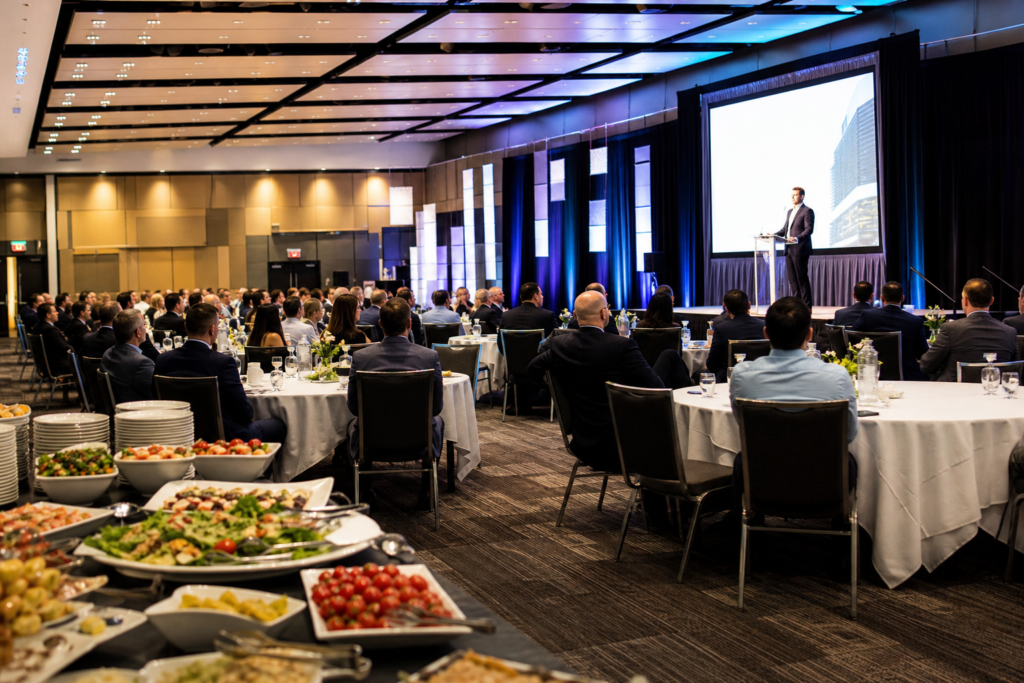
- Logistics for large halls, including portioning, serving lanes, timing, and staff levels for halls of about 4,250 square feet each.
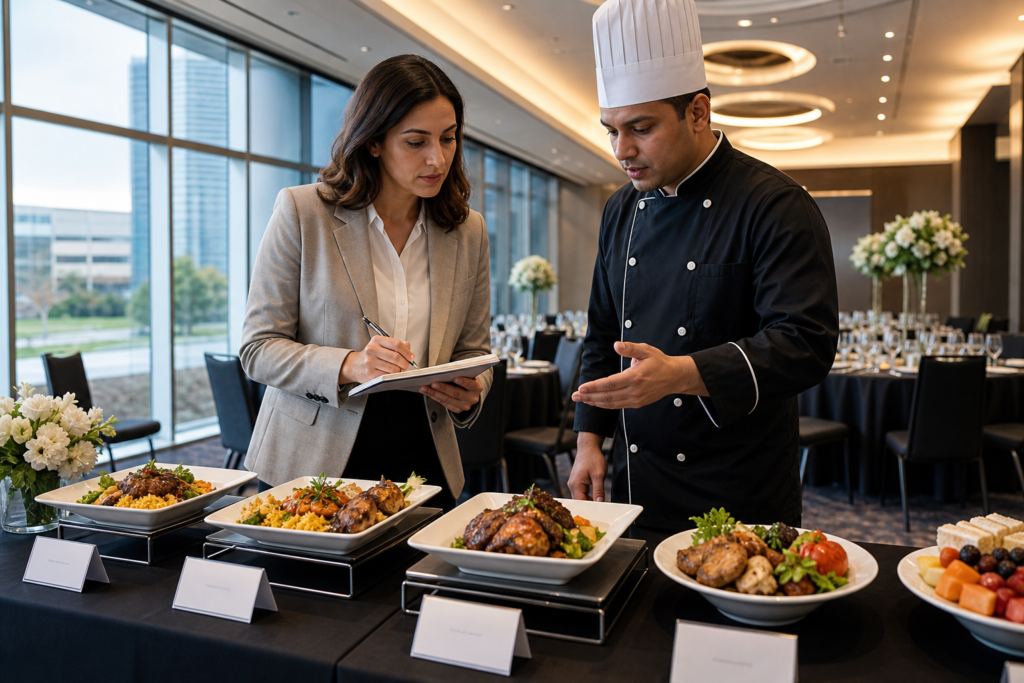
- Tasting availability and decision timeline, plan tastings early so your caterer can refine spice levels and plating.
- Labeling and translations, multilingual menus or dish cards reduce confusion for international attendees and speed service.
These criteria are informed by event planning practice and menu translation workflows used by professional caterers and hotels, which help avoid day-of confusion and speed guest choice for international groups. See guidance on blending menus and multilingual banquet menus for further context.
Learn more about wedding-specific menu choices at how to choose the perfect multicultural menu for your wedding, which uses similar selection points tailored to social ceremonies.
Seven menu ideas compared
1. Regional stations buffet: multiple cuisines side by side
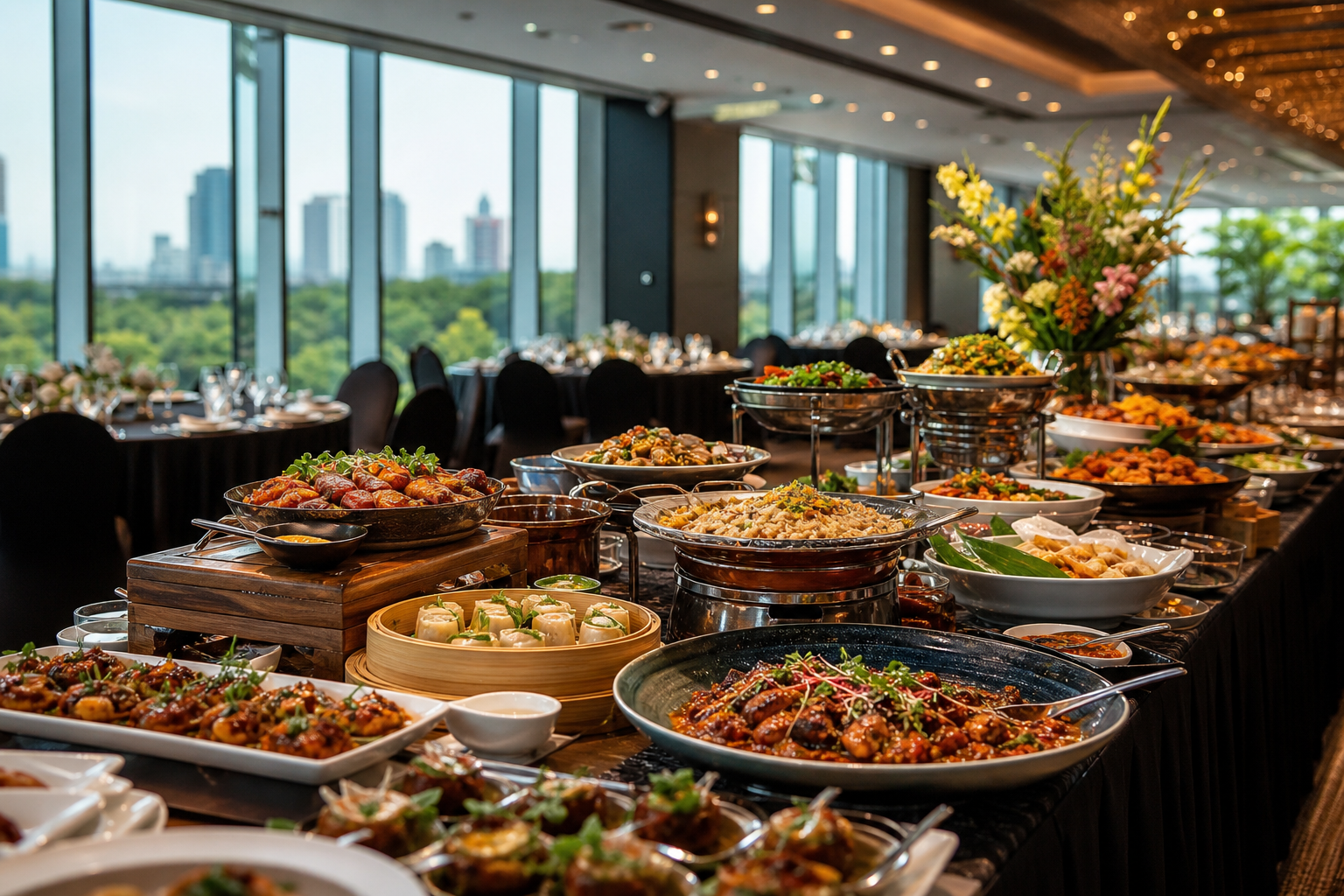
What it is: Dedicated serving stations or islands, each highlighting a region or cuisine, for example South Asian, Middle Eastern, Caribbean, and Continental. Guests circulate to the stations they want, creating choice without mixing preparations.
Sample dishes: Chicken biryani, butter chicken, naan and chana masala at the South Asian station; lamb shawarma, fattoush, and hummus at the Middle Eastern station; jerk chicken, plantain, and rice and peas at the Caribbean station; roasted seasonal vegetables and a composed fish entrée at the Continental station.
When to choose it: For large mixed groups who want both familiar dishes and the chance to explore specialties. Buffet stations are especially useful when guests have diverse dietary needs, because stations can be dedicated Halal, vegetarian, or gluten friendly.
Venue logistics: Station layouts scale well to the Centre’s large halls, where separate lines avoid congestion. The Centre’s in-house multicultural catering expertise supports distinct stations for South Asian and Pakistani Halal menus, which reduces coordination across vendors and helps ensure compliance with dietary requests. Event planners should place popular stations on opposite sides of the room to improve flow and allow room for multilingual signage and dish labels.
Evidence and planning tip: When blending cultural cuisines, buffet or family-style service gives guests the chance to try everything they want, which improves satisfaction for discovery-minded groups How To Blend Menus For A MultiCultural Event.
2. Family-style shared platters: communal, experiential dining
What it is: Large shared platters or bowls placed at the centre of each table to be passed and shared. Variations include communal Kamayan or large family platters that reflect a single culture or a curated mix.
Sample dishes: A family platter of tandoori meats with mixed vegetable sabzis and dal; a Mediterranean mezze set with grilled fish and roasted vegetables; a Kamayan-style seafood and rice spread with tropical sides for Caribbean themes.
When to choose it: For events prioritizing intimacy, cultural authenticity, and guest interaction. Family-style works well when guests are comfortable sharing and you want an experiential meal that becomes a talking point.
Venue logistics: Family-style requires careful portion planning because plates are shared across tables. In the Centre’s 4,250 square foot halls, allow space for servers to refill dishes and for access aisles. Provide clear allergen marking and separate vegetarian platters where needed. The communal format benefits from the Centre’s in-house staffing and technical support to coordinate timing with speeches or performances Mississauga Convention Centre.
Local idea: Community-style menus are common in Toronto multicultural catering, where curated communal experiences are recommended for memorable celebrations The Ultimate Guide to Multicultural Catering.
3. Plated fusion tasting menu: curated multi-course experience
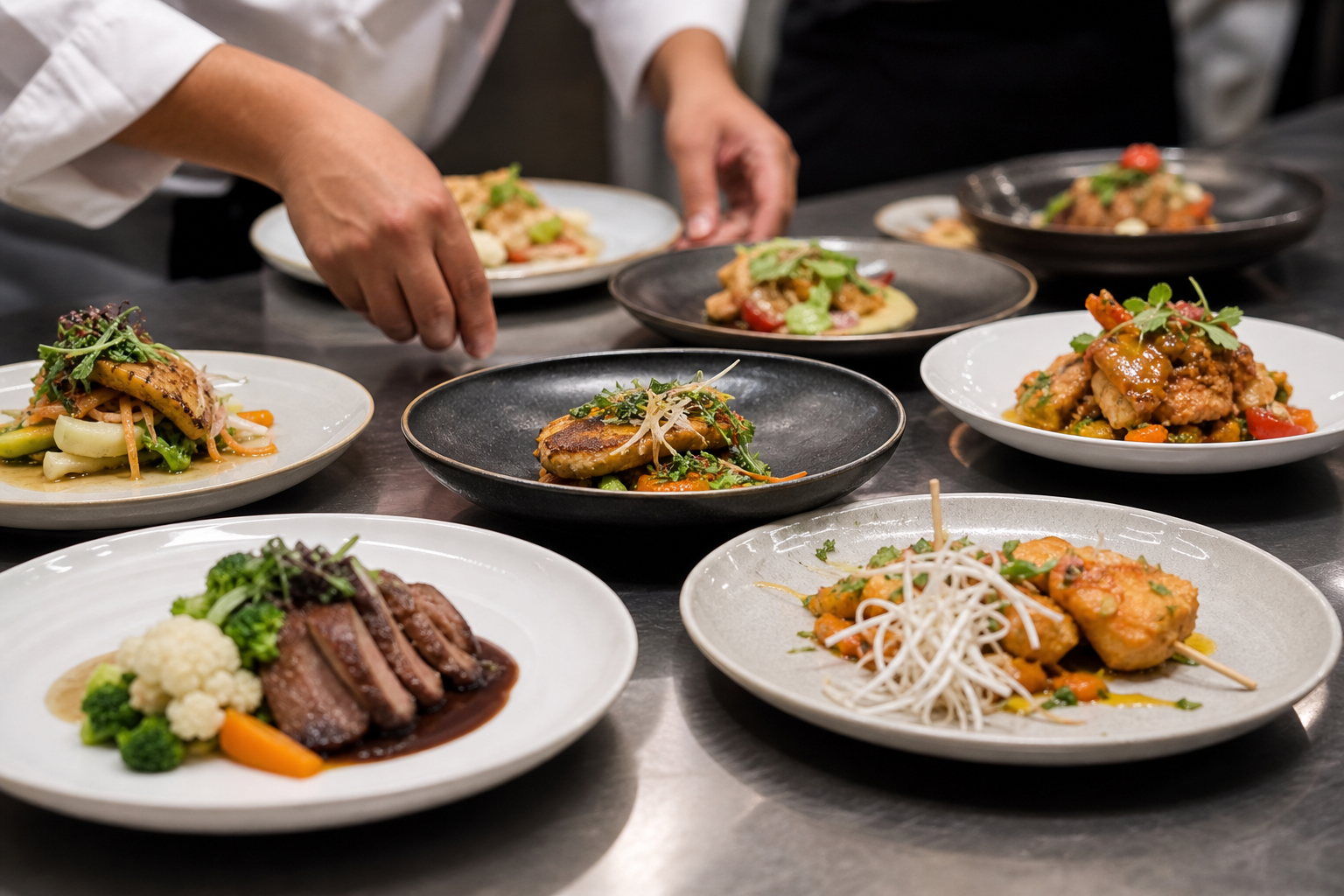
What it is: A plated, multi-course meal that intentionally blends elements from several cultures across sequential courses. Each course is plated and served by staff, creating a refined, restaurant-style experience.
Sample sequence: An amuse-bouche melding spice profiles, a seafood course using East Asian sauces, an intermezzo palate cleanser with mango and cardamom, and a main course that pairs a braised Western cut with South Asian spices, finishing with a fusion dessert.
When to choose it: For smaller guest lists, VIP dinners, or when you need controlled presentation and timed service to align with AV elements. Plated service narrows choices but increases control over portions and presentation.
Venue logistics: Plated service requires higher staff-to-guest ratios and strict timing. Use the Centre’s on-site technical and AV support to coordinate course transitions with speeches or multimedia. For large halls, consider splitting plated seating into multiple dining rooms or using a staged schedule to keep service crisp Mississauga Convention Centre.
Planning note: Hotels and larger caterers use multilingual menu translations to ensure guests understand each course when dishes are culturally complex, which reduces confusion at the table Hotel Banquet & Catering Menus.
4. Traditional multi-course banquet: formal table service
What it is: A culture-specific, sequential banquet such as a Cantonese multi-course wedding menu, traditionally served table by table with set courses and symbolic dishes.
Sample structure: Appetizer platter, double-boiled soup, seafood course, meat course, rice or noodle course, and ceremonial dessert. A Cantonese wedding might feature a 10 to 12 course sequence with symbolic dishes that honour guests.
When to choose it: When the event follows cultural ritual or ceremony and guests expect a formal sequence. This format supports traditions that use specific dishes to mark milestones.
Venue logistics: Multi-course banquets need experienced service teams to maintain pace and keep hot courses hot. The Centre’s large capacity and in-house AV support allow ceremonies to run alongside service in a way that keeps both on schedule. Traditional banquet formats are well documented in cultural banquet guides, such as the southern Chinese 12-course banquet framework The 12 Course Banquet.
5. Halal-focused South Asian banquet: single-cuisine depth
What it is: A comprehensive banquet centred on Halal South Asian cuisine, offering deep variety within one culinary tradition, including multiple mains, breads, biryanis, vegetarian mains, and sweets.
Sample dishes: Hyderabadi biryani, slow-cooked kebabs, paneer and mixed vegetable curries, a selection of breads, raita and chutneys, followed by traditional desserts such as gulab jamun and kheer.
When to choose it: When a significant portion of guests require Halal meals or when hosts want a focused cultural programme. Single-cuisine depth often reduces complexity because one culinary team prepares all items, and taste profiles remain cohesive.
Venue logistics: Choosing the Centre’s in-house Pakistani Halal and South Asian catering options reduces the need for multiple external vendors and simplifies service coordination at scale Halal catering menu planning and South Asian wedding catering ideas. Ensure you collect dietary confirmations in advance so the kitchen can set cross-contamination controls.
6. Small plates and stations tasting circuit: high-touch sampling
What it is: Dozens of small-plate offerings and canapé stations positioned around the room so guests sample many cuisines in bite size. This format emphasises variety and mingling rather than seated meal length.
Sample small plates: Korean beef bites, mini samosas with chutney, mezze spoons with labneh and zaatar, mini jerk tacos with pineapple salsa, and fusion desserts in shot-glass portions.
When to choose it: For cocktail-style receptions, networking events, or when you want to keep the evening lively and mobile. Small plates are effective for events that include lengthy programming or large exhibition areas.
Venue logistics: Small-plate circuits need more servers to replenish stations and staff to maintain hygiene. At the Centre, leverage the hall layout and in-house technical support to map stations and manage crowd control. Curated tasting circuits are widely recommended for multicultural celebrations that prioritise sampling over full plates Multicultural Catering Guide.
7. Hybrid buffet plus plated VIPs with customizable outdoor patio
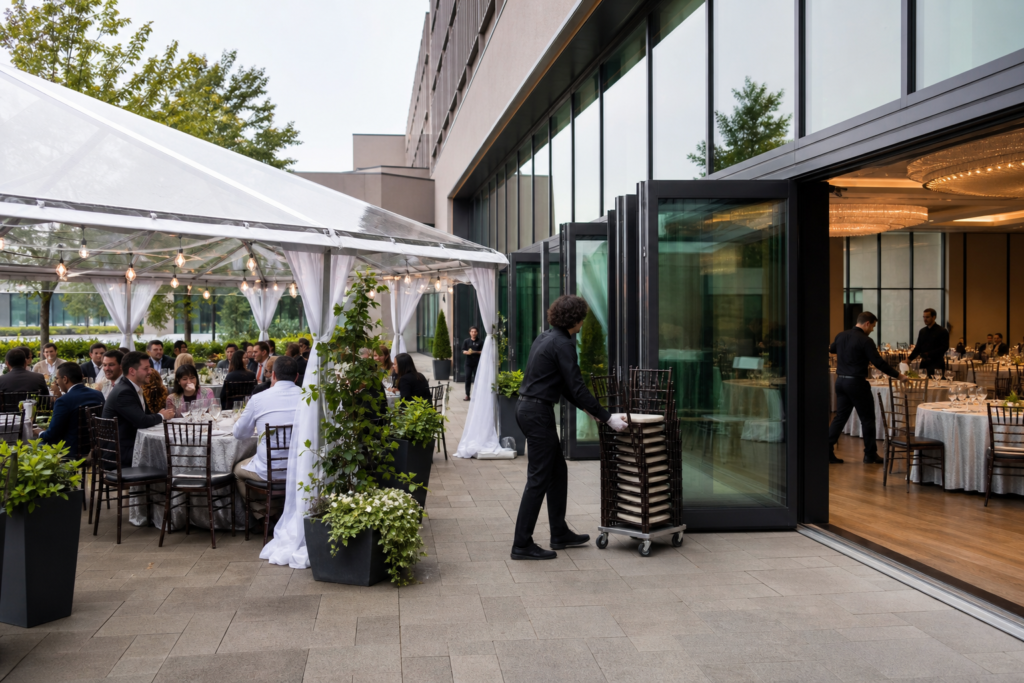
What it is: The majority of guests use a well-run buffet or station system while VIPs and small parties receive plated service. The outdoor patio can host cocktail hour, ceremony moments, or a private plated dining experience.
Sample configuration: Stations for general guests covering two or three cuisines, a plated VIP menu reflecting the same flavours but with elevated presentation, and an outdoor patio reserved for a welcome reception or a private dessert lounge.
When to choose it: When you must balance budget, speed, and prestige. Hybrid service keeps general guest flow efficient while giving key attendees a premium experience.
Venue logistics: The Centre’s seven similarly sized halls and outdoor patio let planners separate service areas so VIPs are not delayed by buffet lines. The Centre’s staging, lighting, and in-house AV support can coordinate plated service timing and transitions across spaces to keep the event running smoothly Mississauga Convention Centre.
Practical next steps for planners
Follow these steps after you pick a menu concept.
- Collect dietary and allergy information early using a guest form, and create clearly labelled counters for Halal, vegetarian, and allergen-free options.
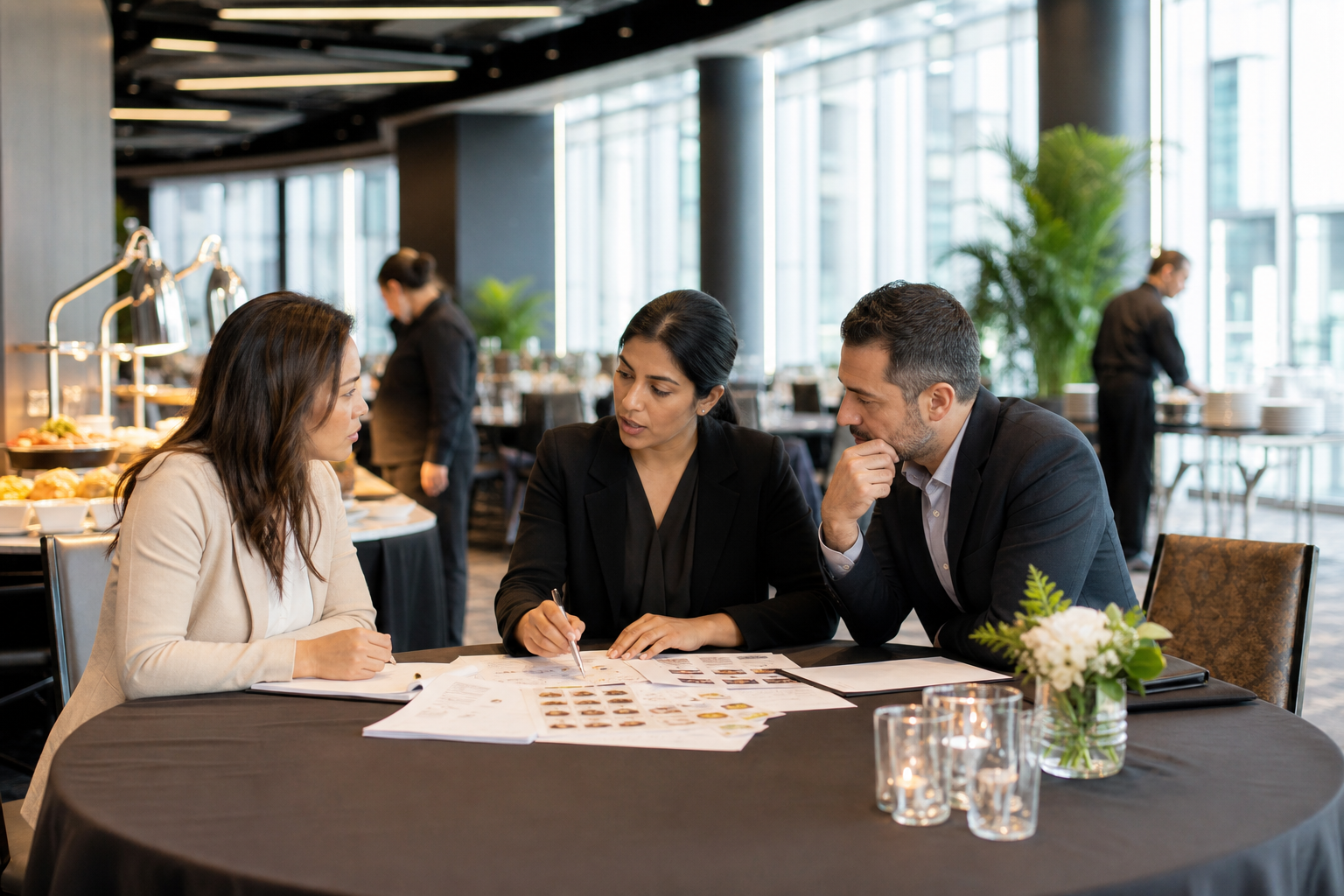
- Schedule at least one tasting for key courses and a follow-up where possible, giving the kitchen time to adjust spice and portion sizes.
- Plan station layouts, staffing counts, and bilingual or multilingual dish cards; hotels and caterers often provide translated menus to avoid day-of confusion hotel banquet guidance.
- Use the venue’s virtual tour and floorplans to design service lanes and staging areas. Mississauga Convention Centre offers a virtual tour and configurable halls to preview flow and spacing Mississauga Convention Centre.
Frequently asked questions
How do I ensure Halal and vegetarian options are kept separate to avoid cross-contamination?
Require the kitchen to set dedicated preparation and serving stations for Halal and vegetarian dishes. Ask for labelled servers and separate utensils. Confirm these controls during your tasting and in your contract to make sure the venue practices align with your expectations.
What service style is fastest for feeding 500 to 2,000 guests in one of the Centre’s halls?
Station-based buffets and regional stations usually provide the best throughput for very large groups because multiple lines operate in parallel and guests choose what they want, which shortens queue times.
How far in advance should I schedule tastings for a multicultural banquet?
Book initial tastings at least three months before the event. If you are confirming large or custom menus, allow a second tasting four to six weeks before the date so the kitchen can refine recipes.
Should I label dishes with cultural origin or allergen information, and what is the best practice?
Label every dish with a brief name, cultural origin, and a clear allergen list. For international groups include translated names or short descriptions. This practice helps guests navigate unfamiliar dishes and reduces accidental allergen exposure menu labelling guidance.
Can the venue provide translated menu cards or multilingual signage for international guests?
Many banquet venues and professional caterers use multilingual menu workflows to avoid day-of confusion. Ask your venue contact whether they can provide translated cards, or whether they will accept your translated copy for printing multilingual menu workflows.
If you are ready to explore options, schedule a tasting, request the virtual tour, or get a tailored quote by contacting Mississauga Convention Centre.