

 20 September, 2026
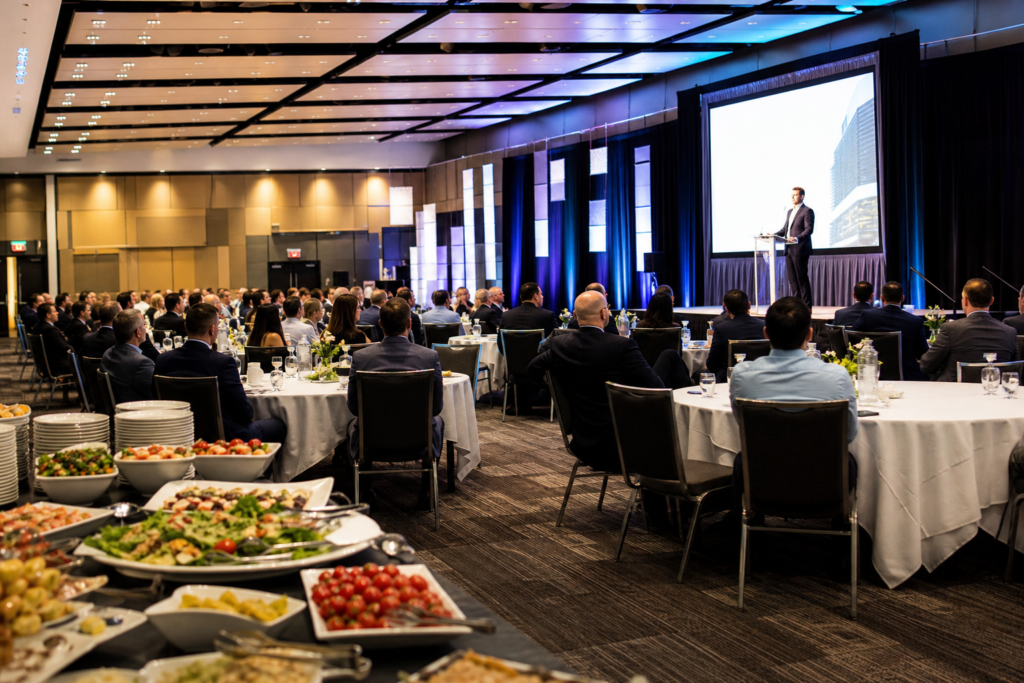
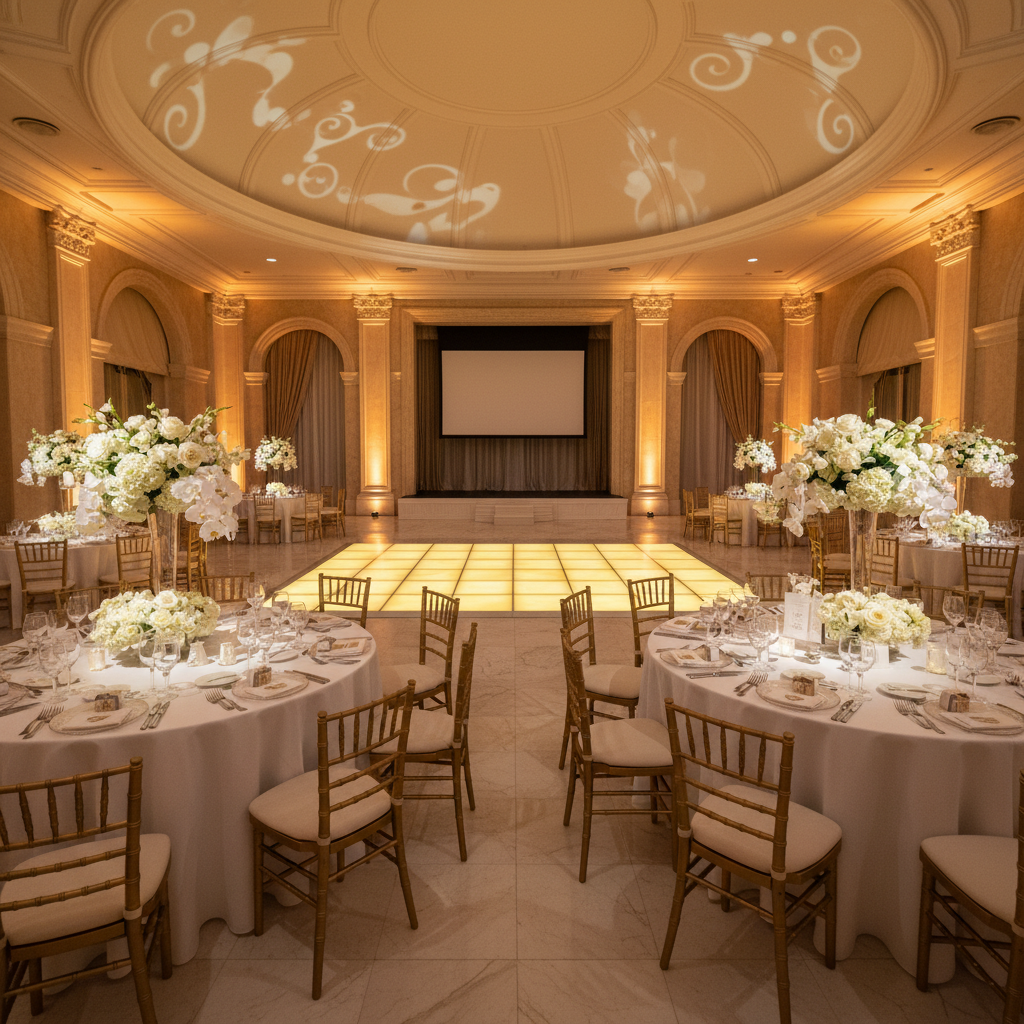
 Lighting design for banquets is the intentional layering of ambient, accent, and functional light to shape mood, visibility, and guest flow for large gatherings. At 75 Derry Rd W, Mississauga Convention Centre uses in-house AV and staging to tailor lighting looks for weddings, galas, conferences, and school formals—so your theme photographs beautifully and runs smoothly.
By Preet Dass · Mississauga Convention Centre
Last updated: June 5, 2026
Overview
Great banquet lighting blends atmosphere and utility. Use warm ambient washes for comfort, pinspots for centerpieces, targeted stage lighting for speakers and performances, and dynamic effects for dancing. At Mississauga Convention Centre, in-house AV simplifies planning so looks stay consistent from cocktail hour through last call.
If you’re planning lighting design for banquets at a large, flexible venue, here’s what this guide gives you in minutes, not months of trial and error.
- Clear definitions of core lighting layers and what they do
- Step-by-step planning workflow and timelines
- Technique deep dives (uplighting, pinspots, gobos, stage, dance floor)
- Room-by-room examples drawn from our halls (~4,250 sq ft each)
- Checklists for ceremonies, dinners, awards, and after-parties
- Local planning tips for 75 Derry Rd W in the Regional Municipality of Peel
Jump to practical tips below, or save this page for your vendor kickoff meeting. We’ve organized everything for fast scanning and real-world use.
What Is Banquet Lighting Design?
Banquet lighting design is the planned combination of ambient, accent, and task lighting that directs attention, supports photography, and keeps guests comfortable over multi-hour programs. It turns a neutral ballroom into a branded, story-driven experience—without sacrificing sightlines, safety, or stage visibility.
Think of it as experience architecture. The goal is to move guests from welcome to wow to memorable send-off while maintaining comfort and clarity at every seat.
- Ambient/base light: Soft, even illumination for dining (often 10–20 foot-candles). Sets overall mood and color temperature.
- Accent light: Pinspots for florals, gobos for patterns, and wall uplighting to add depth. Guides the eye to key moments.
- Task/stage light: Focused fixtures (typically 35–70 foot-candles on lecterns/performers) for cameras and in-room visibility.
- Dynamic/effects: Moving heads, haze, and pixel-mapped fixtures for dance floors or reveals—used sparingly for impact.
At Mississauga Convention Centre, we combine these layers with integrated AV controls so transitions are smooth—pre-dinner ambiance, awards spotlighting, then dance-floor energy—without blinding your audience or flattening photos.
Why Lighting Matters for Banquets
Lighting affects guest comfort, photo quality, and program clarity. Good designs hold attention, reduce eye strain, and highlight what matters—logos, head tables, honorees, and speakers. Poor lighting flattens décor, hides expressions, and makes video look noisy or dull.
Here’s why it deserves a seat at your first planning meeting.
- Comfort and energy: Warm white (2700–3200K) keeps dinners cozy; cooler white (3500–4500K) supports conferences and product showcases.
- Attention and storytelling: Pinspots lift centerpieces from 2D to 3D; gobos reinforce brand motifs without extra signage.
- Photography and broadcast: Cameras need consistent exposure. We target 35–50 foot-candles on speaking zones for crisp video and natural skin tones.
- Safety and flow: Illuminated aisles, steps, and exits reduce trips and keep catering teams moving efficiently.
- Budget efficiency: One well-aimed pinspot can replace multiple centerpiece upgrades. Smart placement beats more props.
In our experience, lighting tweaks often deliver the biggest before/after reveal on site—faster than reprinting signage or redoing florals.
How Banquet Lighting Works (Step-by-Step)
Plan banquet lighting by defining goals, mapping zones, choosing fixture types, and locking cues with your AV team. Build scenes for each program moment—welcome, dinner, awards, entertainment—and rehearse transitions. The best results come from clear timelines and a single team orchestrating sound, light, and staging.
Use this practical workflow to stay on schedule and avoid rework.
- Define outcomes (15 minutes): Three adjectives (e.g., “warm, modern, cinematic”). Align on color temperature and intensity targets.
- Map the room (30 minutes): Note head table, stage, dance floor, screens, aisles, and power. At our halls (~4,250 sq ft), zones are easy to scale.
- Choose layers (20 minutes): Ambient wash (10–20 fc), pinspots for florals/cakes, stage front light (35–70 fc), optional gobos/effects.
- Draft a cue sheet (30 minutes): Program cues for toast, award, performance, reveal, and last dance. Keep changes intentional and minimal.
- Coordinate vendors (20 minutes): Share looks with décor, floral, and photo/video so palettes match and glare is avoided.
- Rehearse on site (45–60 minutes): Walk lighting levels with music and mic checks; lock dimmer curves and blackout options.
At Mississauga Convention Centre, our in-house technicians handle patching, focus, and playback, so you can keep your attention on people and program timing.
Types of Lighting for Banquets
Common banquet lighting types include wall uplighting, pinspotting, wash lighting, stage front light, patterned gobos, dance-floor effects, and outdoor accent lighting. Combine two to four types per scene to keep looks clean, expressive, and photo-ready without overwhelming your guests.
| Technique | Primary Effect | Best Used For | Pro Tips |
|---|---|---|---|
| Uplighting | Vertical color wash adds depth and warmth | Ballroom perimeters, drape lines, columns | Keep 8–12 ft spacing; pick 2700–3200K for dinners |
| Pinspotting | Narrow beam highlights a small object | Centerpieces, cakes, awards, signage | Aim from 12–20 ft; avoid guest sightlines |
| Stage Front Light | Even facial light for speech/performance | Lecterns, panels, performances | 35–70 fc; add soft back/rim light for depth |
| Gobo Projection | Patterned texture or logo projection | Branding, ceilings, dance floors | Use custom gobos for logos; reduce brightness for texture-only looks |
| Wash Lighting | Wide, even coverage | General dining, lounge areas | Mimic candlelight warmth for dinners; cooler for exhibits |
| Dance-Floor Effects | Movement and energy with beats | After-parties, DJ sets, live bands | Program 2–3 looks; limit strobe intensity and duration |
| Outdoor Accent | Path and feature lighting | Patios, ceremony arches, signage | Warm white for people zones; mark edges and steps |
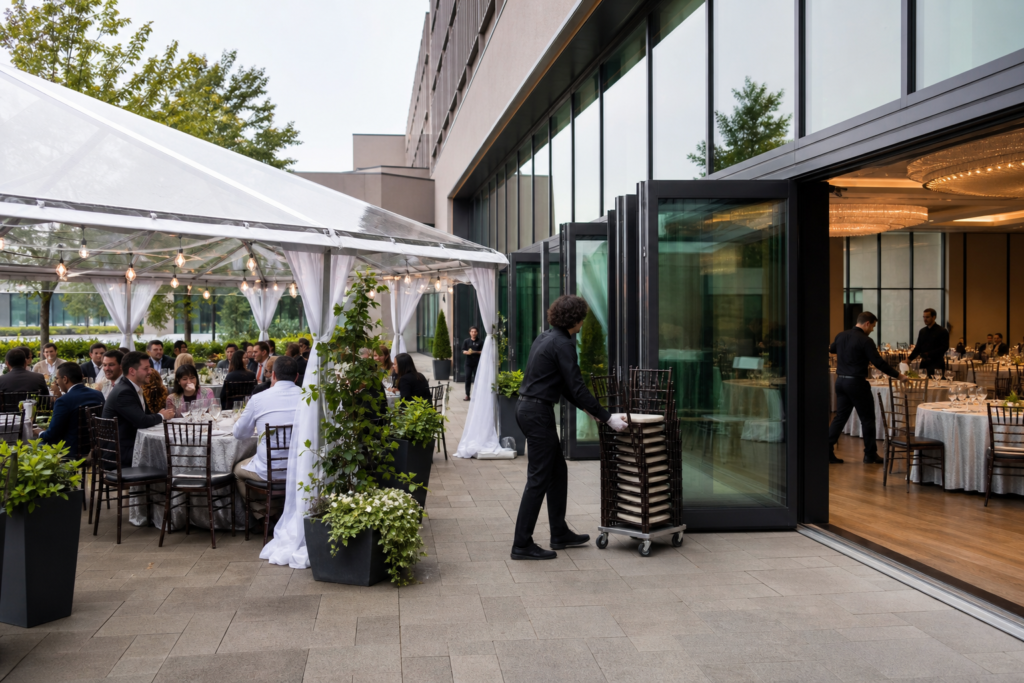
Our halls handle moving heads and wash fixtures without rigging headaches, and our outdoor patio supports romantic stringers, lanterns, and architectural accents for ceremonies and cocktail hours.
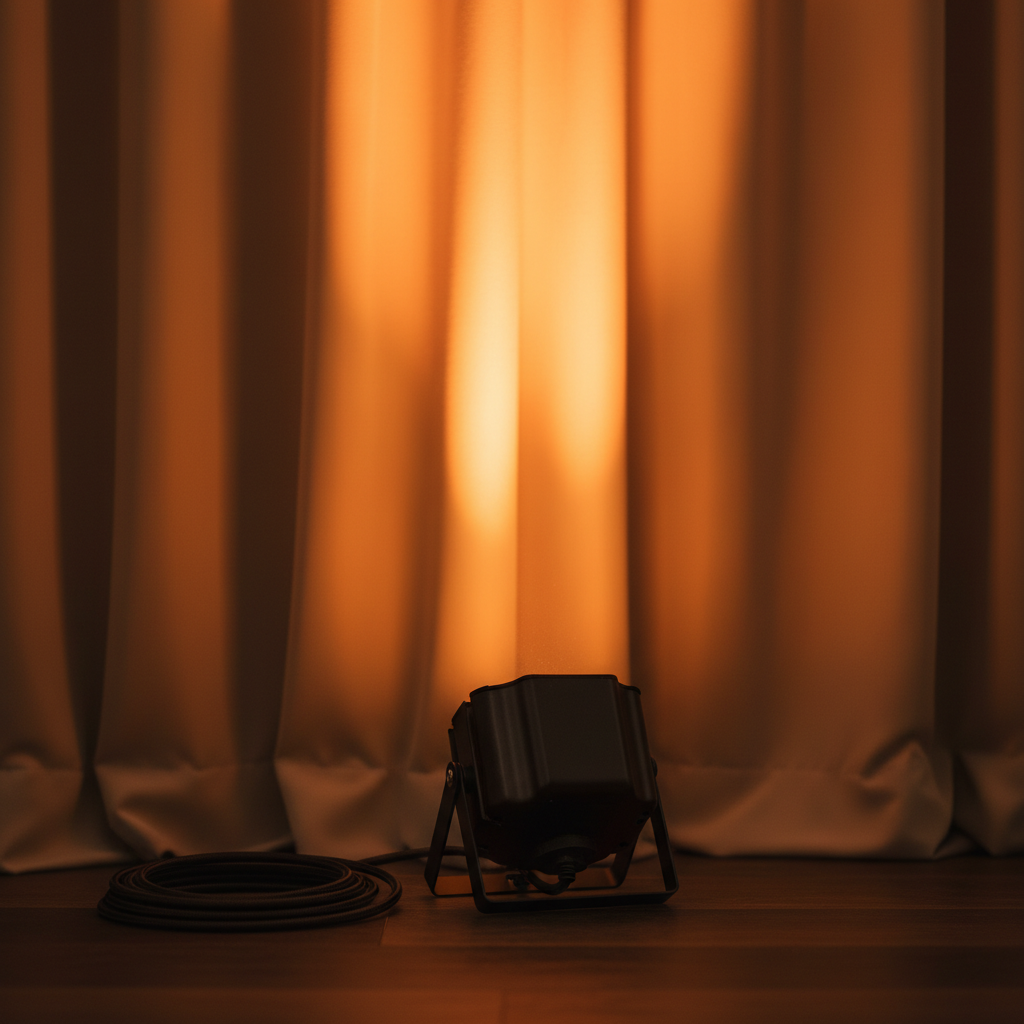
- Color strategy: Stick to two-key hues plus white per scene. Too many colors read messy on camera.
- Color rendering: Choose CRI 90+ for true florals and skin tones.
- Dimmer curves: Gentle fades (3–5 seconds) keep transitions elegant.
- Glare control: Barn doors and tilt angles protect guest eyes and photography.
Best Practices (What Pros Do Differently)
Pros design for cameras first, then the room. They keep ambient light warm and low, isolate focal points with narrow beams, and rehearse cues so transitions feel intentional. They also coordinate palettes with florals and linens to avoid color clashes on site and in photos.
- Design to the running order: Build looks around moments—entrance, first toast, award three, first dance, final song.
- Protect skin tones: Avoid saturated magenta/green on faces. Keep stage whites neutral.
- Engineer for sightlines: Mount pinspots high and shallow, not directly above guests.
- Calibrate for cameras: Lock white balance and exposure in rehearsal; adjust dimmers to avoid banding on video walls.
- Plan redundancy: Have a quiet house look ready (40–50%) for speeches or unexpected program holds.
- Mind acoustics: Fixture fans and hazers should be quiet near microphones; coordinate with audio techs.
When working with clients in Mississauga, we’ve found a small set of rehearsed looks (usually 4–6) outperforms a long list of ad-hoc changes. Guests notice flow, not fixture counts.
Tools and Resources You’ll Use
Your toolkit blends venue infrastructure, LED fixtures, reliable control, and a cue sheet everyone can follow. At Mississauga Convention Centre, integrated dimming, rigging points, and in-house consoles speed setup and keep colors consistent across seven modular halls.
- Venue infrastructure: Power distribution, rigging points, blackout capability, ceiling height for throws (often 12–25 ft).
- Fixtures: LED uplights, ellipsoidals for stage front light, moving heads for effects, battery-powered accents for fast turns.
- Control: DMX or networked lighting control with labeled cues; backup looks stored on console.
- Measurement: Light meter app to check foot-candles; color temperature presets to match camera white balance.
- People: A single show-caller coordinating lighting with audio and catering for quiet, clean transitions.
To align décor and lighting early, explore our event decoration ideas and this event lighting basics primer for shared language with creatives.
Planning Lighting at 75 Derry Rd W (Regional Municipality of Peel)
At 75 Derry Rd W in Mississauga, within the Regional Municipality of Peel, flexible halls and on-site parking simplify drops, rehearsals, and late-night strikes. In-house AV reduces vendor stacks, and our outdoor patio enables smooth ceremony-to-reception transitions with warm path lighting and subtle architectural accents.
Local considerations for 75 Derry Rd W
- Use our load-in windows to avoid peak traffic near Hurontario St At Derry Rd; your crew can patch and focus before décor hits the floor.
- Winter sunsets arrive early; schedule photo-first looks before 5 pm, then shift to warm indoor scenes. Summer patio events love golden-hour uplighting.
- For shuttle timing, coordinate guest drops with the HWY 407 Park and Ride rhythm; our team adjusts cue timing if speeches start slightly late.
These small moves keep your show on rails—especially when VIPs or school groups run a few minutes behind.
Case Studies and Real-World Examples
Lighting wins come from simple, intentional choices. Across our seven ~4,250 sq ft halls, we tailor a few focused looks to each program—corporate awards, South Asian weddings, school formals, and trade shows—so décor, catering, and cameras all read exactly as planned.
Corporate gala and awards
- Goal: Elevated brand presence and crisp broadcast-style stage.
- Design: Neutral stage whites at ~4200K, 40–60 fc on lectern, soft rim lights, and logo gobo on cyc at 20% for texture.
- Result: Presenters pop without glare; photographers keep ISO low for sharp images.
- Tip: Reference our corporate gala guide when aligning color with brand standards.
South Asian wedding reception
- Goal: Rich, cinematic palette that honors tradition and photographs accurately with Halal-forward menus.
- Design: Amber/marigold uplights, jewel-tone pinspots on florals, and a creamy white for couples’ portraits.
- Result: Décor glows; skin tones remain natural for cinematic videos.
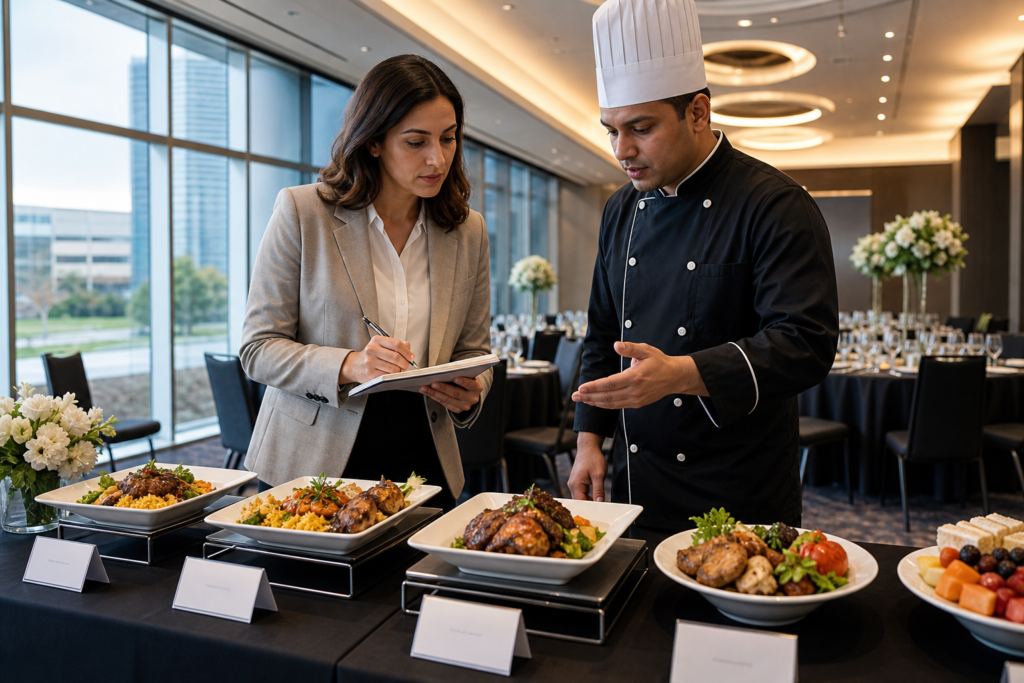
- Tip: Pair lighting choices with our diverse in-house catering presentation styles for cohesive imagery.
Prom and graduation
- Goal: High-energy dance with safe sightlines for chaperones.
- Design: Two dynamic looks (chorus/verse), ceiling gobos at 15–25%, and clear perimeter washes for circulation.
- Result: Energy without chaos; staff can monitor easily.
- Tip: See our award ceremony guide for stage and trophy highlights.
Trade show or product showcase
- Goal: Bright, consistent visibility that flatters materials and faces.
- Design: 3500–4000K wash at 25–35 fc, plus targeted ellipsoidals for demo tables.
- Result: Buyers can evaluate finishes and read small print comfortably.
- Tip: Decide early whether the stage is for keynotes or continuous demos; that choice drives fixture placement.
Timeline and Checklists You Can Reuse
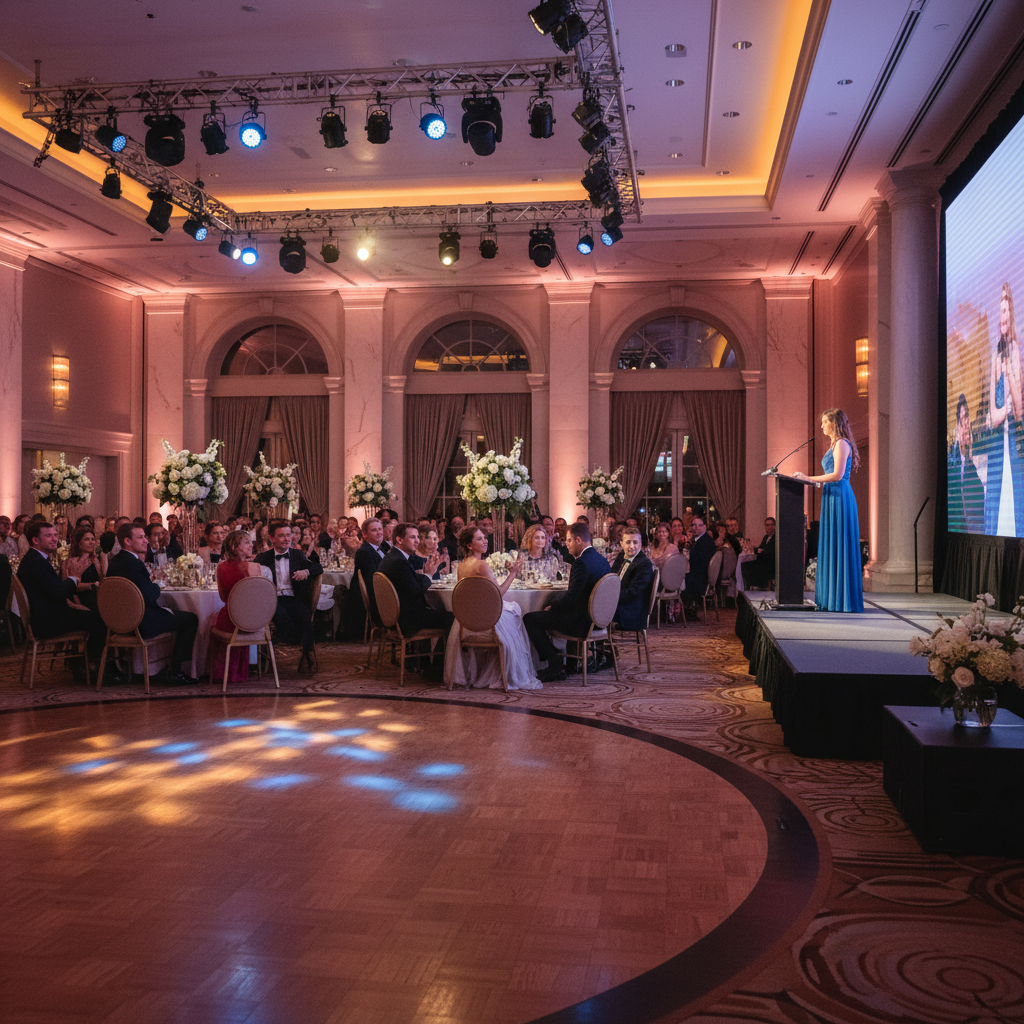
Lock lighting looks 2–3 weeks before your banquet, then rehearse transitions on site. Use a single-page cue sheet, a zone map, and a dimmer plan. These three documents prevent 90% of day-of changes and speed sign-off from stakeholders and photo/video teams.
Recommended planning timeline
- 6–8 weeks out: Define adjectives, palettes, and program moments. Book any custom gobos.
- 4 weeks out: Share room map with décor, floral, and AV. Confirm camera positions.
- 2 weeks out: Finalize cue sheet; choose 4–6 looks total.
- Event week: Focus fixtures; rehearse with mics and walk-ins; calibrate white balance.
- Show day: Tech arrives early; verify patch; run a 10-minute cue drill before doors.
Banquet lighting checklist
- Ambient base at 30–40% during dinner; drop to 20–25% for toasts and entertainment.
- Lectern at 40–60 fc; backlight at 10–20% for depth; dim gobos during speeches.
- Pinspots at narrow beam; confirm no glare at chairs #3 and #7 on round tables.
- Dance-floor looks programmed with safe strobe limits and clean blackout button.
- All aisles and steps marked; catering routes softly lit for service.
Lighting Design for Banquets: Common Questions, Quick Answers
Use warm whites for dining, keep 35–70 foot-candles on speakers, and save saturated colors for décor and dance. Build 4–6 looks that match your run-of-show. Rehearse cues once. At Mississauga Convention Centre, our in-house team programs transitions so your event feels polished.
For deeper dives and booking logistics, our team has organized practical guides that complement this article, including a professional lighting design guide and a concise banquet hall vs. event space overview.
Plan Lighting With Our In‑House Team
Streamline your banquet with a single AV and lighting partner. Our technicians program cues, balance color, and align with décor so every phase—from welcome to final dance—reads exactly as intended. Share your run-of-show, and we’ll translate it into camera-friendly, guest-loving light.
Free planning tip: Bring your photographer’s preferred white balance and any “must-capture” shots to our site visit. We’ll shape looks so those moments sing on camera.
Want more context before a walkthrough? Compare room formats in our venue overview, skim the lighting basics, then align décor ideas here: decoration ideas.
Frequently Asked Questions
Banquet lighting FAQs focus on visibility, color choices, fixture counts, and rehearsal timing. The quick rule: keep base light warm and moderate, isolate focal points with narrow beams, and rehearse one time with your AV team. Below are answers planners ask most often.
How bright should banquet lighting be during dinner?
Aim for a soft ambient level around 10–20 foot-candles, with brighter pools on centerpieces and the head table. Keep lecterns at 35–50 foot-candles for speeches, then lower house lights slightly for entertainment to preserve mood and camera contrast.
What color temperature works best for banquets?
Warm white (2700–3200K) flatters skin tones and dinner service. For conferences or exhibits, a neutral white (3500–4100K) keeps materials crisp without turning cool. Always match stage whites so photos and video look consistent from angle to angle.
Do I need haze or moving lights for a banquet?
Not always. Haze makes beams visible and adds drama for dances or reveals, but it’s optional. Many banquets succeed with tasteful uplighting, pinspots, and clear stage whites. If you use effects, keep intensity and motion controlled so they support, not distract.
How early should we finalize lighting cues?
Two weeks out is an ideal target. Lock 4–6 looks that match your run-of-show, then rehearse with audio and video on site. Final checks confirm dimmer curves, lectern levels, and any logo or pattern projections before guests arrive.
What’s the simplest way to make a big room feel intimate?
Lower the ambient base, warm the color temperature, and highlight only a few focal points—head table, cake, florals. Add perimeter uplighting and shrink the visual field by leaving far walls darker. The space feels cozier without moving a single table.
Key Takeaways
Keep scenes simple: warm base, isolated focal points, neutral stage whites, and 4–6 programmed looks. Rehearse transitions, protect sightlines, and design for cameras. At Mississauga Convention Centre, integrated AV and flexible halls make those best practices easy to execute.
- Design to the program, not the gear list.
- Warm, low ambient light flatters dinners and portraits.
- Pinspots and gobos do more with less when aimed well.
- Lock cues two weeks out; rehearse once with audio and video.
- Lean on in-house AV for faster setup and cleaner results.
Conclusion
Banquet lighting succeeds when it’s intentional, camera-friendly, and easy to run. With integrated AV, flexible halls, and an outdoor patio, Mississauga Convention Centre transforms your plan into a polished, memorable experience—from welcome wash to final dance-floor look.
Ready to translate your run-of-show into light? Share your goals, palette, and program moments—our team will craft a simple set of scenes that look beautiful in person and on camera. Explore a deeper professional lighting guide or compare spaces in our venue overview to start.