

 13 May, 2026
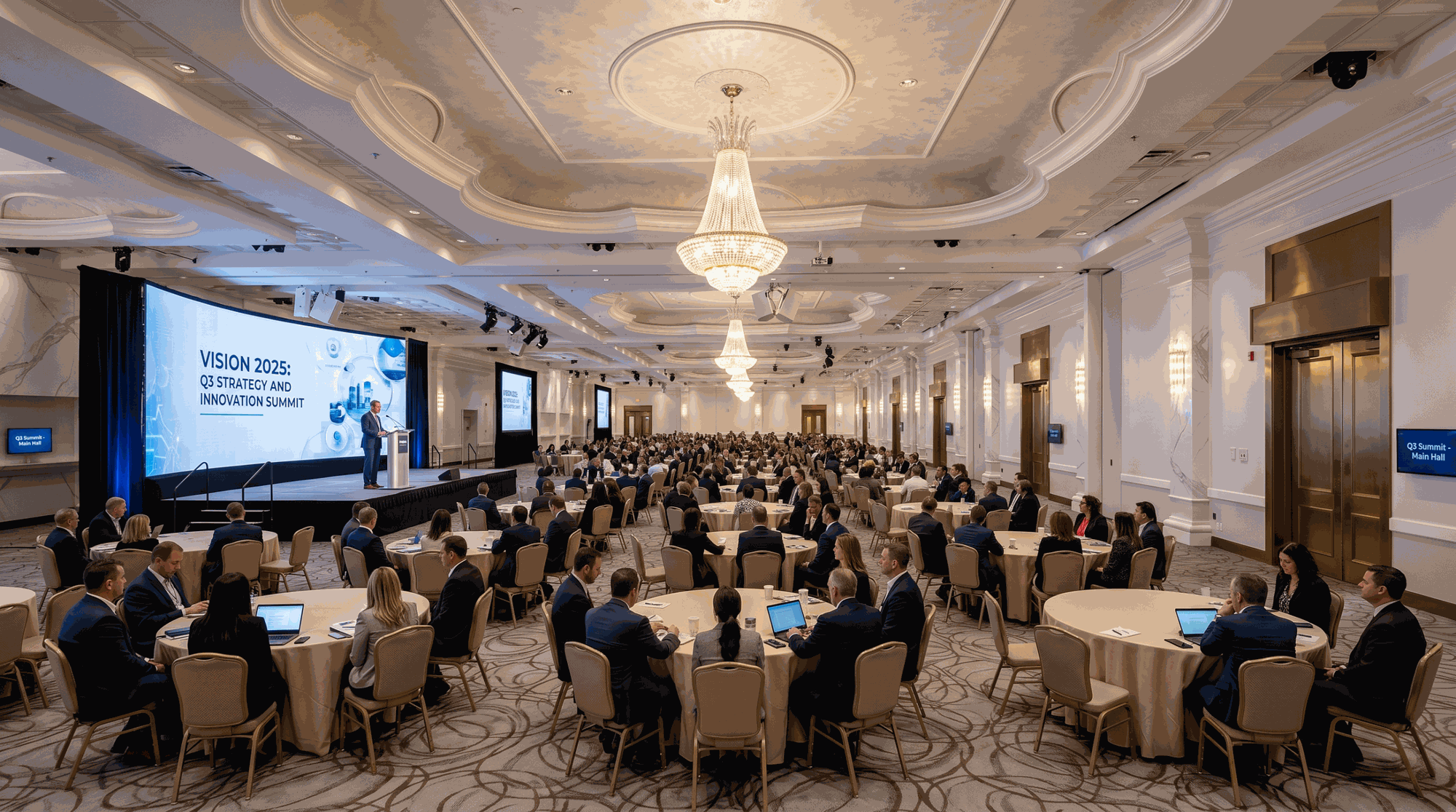
 A corporate gala venue is a professional event space designed for formal business celebrations, awards nights, and fundraising dinners with integrated dining, staging, and audiovisual support. In Mississauga, Mississauga Convention Centre offers seven scalable ballrooms, in-house AV, and multicultural catering that streamline planning for corporate planners seeking a polished gala experience.
By Preet Dass • Last updated: 2026-05-13
Above the Fold: Hook & Table of Contents
Plan a standout corporate gala by locking the purpose, guest journey, and logistics early. Choose a venue with integrated AV, staging, and in-house catering; build a precise run-of-show; and design lighting and seating that support both program moments and high-energy networking.
- What is a corporate gala venue?
- Why galas matter for brand, culture, and fundraising
- How gala planning works (step-by-step)
- Types of gala formats and layouts
- Best practices and checklists
- Tools and resources (including an event AV checklist)
- Case studies and examples in Mississauga
- FAQ and next steps
Quick Summary
A high-performing gala hinges on a venue that balances scale, service, and production. Look for flexible rooms, strong AV, diverse menus, and an experienced team. Align the program to your purpose, plan seating and wayfinding, and script transitions to keep energy high from arrival to encore.
At Mississauga Convention Centre, we support corporate planners with seven elegant halls (~4,250 sq ft each), over 2,200 total guest capacity, and approximately 700 on-site parking spots. Our in-house audiovisual systems, lighting, staging, and technical support reduce vendor complexity and speed up decision-making during pre-production.
What Is a Corporate Gala Venue?
A corporate gala venue is a purpose-built space for formal business celebrations that integrates banquet service, stage production, lighting, and sound. The best venues combine flexible layouts, experienced staff, and multicultural menus to deliver a seamless guest journey from check-in to closing remarks.
In practice, a gala venue needs to deliver three things reliably: space, flow, and production. Space means right-sized rooms with ceiling height for lighting truss and scenic elements. Flow covers check-in, photo moments, seating, and bar service. Production includes power, rigging, sound, projection, and a competent tech team.
- Space: Seven similarly sized halls give you modular choices for receptions, dinners, and backstage areas.
- Flow: Clear wayfinding, adequate foyers, and bar placements prevent bottlenecks during arrivals and intermissions.
- Production: In-room power distribution, lighting grids, and in-house AV ensure consistent quality and fewer points of failure.
Self-contained answer: A corporate gala venue is a full-service event space equipped for formal dining and stage moments. It should include banquet seating, stage risers, integrated lighting and audio, backstage support areas, and skilled technicians to run the show smoothly.
Why Corporate Galas Matter
Corporate galas reinforce brand reputation, celebrate performance, and strengthen community ties. When done well, they generate memorable recognition moments, activate donor or partner engagement, and create shareable content that lives beyond the night itself.
We’ve found galas succeed when they serve a clear purpose. That purpose often fits one of three buckets: recognition, relationship-building, or fundraising. Each goal shapes choices like seating style, show pacing, menu design, and stage time. For example, awards-heavy programs benefit from dinner service that finishes before speeches to keep attention on stage.
- Recognition: Celebrate teams, partners, and milestones with crisp stagecraft and high-impact visuals.
- Relationships: Favor networking-friendly layouts, strolling desserts, and music that supports conversation.
- Fundraising: Make the case visually and emotionally, then remove friction for pledges or silent auctions.
At our Mississauga venue, corporate recognition events frequently seat 500–1,200 guests across round tables for balanced sightlines and stage focus. With in-house lighting and staging, transitions between dinner and awards can be timed to the minute, ensuring the program lands on schedule.
How Gala Planning Works (Step-by-Step)
Successful gala planning moves from purpose to production: define goals, build a brief, secure a venue with integrated AV and catering, confirm your run-of-show, and lock talent and staging. Rehearse transitions, finalize seating, and prepare contingency plans for tech, timing, and dietary needs.
Step-by-step framework
- Clarify purpose: Define the outcome (e.g., recognition, relationships, fundraising).
- Quantify scope: Guest count, VIPs, accessibility needs, and dietary requirements.
- Select venue: Evaluate ceiling height, rigging, power, green rooms, and loading access.
- Lock production: Lighting plot, sound plan, stage dimension, projection/LED strategy.
- Menu strategy: Choose service style (plated, family-style, stations) with multicultural options.
- Run-of-show: Script arrivals, dinner windows, awards blocks, and entertainment cues.
- Rehearsals: Tech checks, mic handoffs, walk-ons/offs, and timing marks.
- Contingencies: Backup mics, alternate content, dietary swaps, and speaker arrivals.
Concrete example: A GTA technology firm hosted a 900-guest awards gala using one of our larger hall combinations for dinner and a contiguous foyer for arrivals and step-and-repeat photos. We built a 36-foot stage with twin screens, handled all lighting cues in-house, and coordinated Halal-friendly plated service timed to the first award block.
For planners who like checklists, we maintain a practical approach in our planner’s venue guide and a detailed run-of-show outline inside our corporate packages.
Types of Corporate Gala Venues and Formats
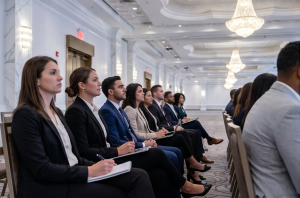
Choose a format that matches your goal and guest mix. Common options include seated banquets with stage awards, reception-style networking with stations, and hybrid programs that blend a plated main with roaming desserts and entertainment.
Popular formats we host
- Seated banquet + awards: Classic plated dinner followed by speeches and recognition.
- Reception forward: Heavy hors d’oeuvres and chef stations for constant mingling.
- Hybrid dinner: Plated main + dessert stations to reopen movement post-program.
- Showcase gala: Add product displays, partner booths, or a mini-exhibit to the foyer.
- Black-tie entertainment: Live band or DJ with lighting looks that evolve through the night.
Sample seating plans
- Rounds of 8–10: Balanced sightlines, fast service, and predictable show pacing.
- Mixed lounge + rounds: Creates zones for networking without sacrificing stage focus.
- VIP front tiers: Reserved rows or cabaret tables to keep honorees near the stage.
Self-contained answer: For awards-centric programs, seated rounds keep attention on stage and simplify service timing. For partnership-building, reception-forward layouts with multiple stations drive movement and conversation, especially when paired with staggered entertainment sets and dynamic lighting.
How to Choose the Right Corporate Gala Venue
Prioritize capacity fit, ceiling height, built-in AV, menu flexibility, and experienced staff. Walk the load-in path, confirm power and rigging points, and review sample run sheets. Ask for diagrams that show real seating, staging, and tech positions for your guest count.
Must-have evaluation criteria
- Capacity and scale: Ensure the room handles your guest count with a proper stage and camera lanes.
- Technical readiness: In-house lighting, sound, projection, and reliable power distribution.
- Menu flexibility: Diverse, Halal-friendly, and regional options for inclusive dining.
- Wayfinding and flow: Foyers for arrivals, coat checks, and elegant bar placements.
- Experienced team: Coordinators and technicians who run galas weekly, not rarely.
At Mississauga Convention Centre, seven ~4,250 sq ft halls can be combined or separated to suit 200–1,500 seated guests per configuration. Our AV team supports lighting looks from a clean awards wash to dynamic party states and builds run-of-show cues that match your script to the minute.
For a broader take on essentials, see these reference points summarized by key venue elements and a companion perspective on banquet hall selection.
Comparison: Venue Types for Corporate Galas
Match venue type to program needs. Convention-style ballrooms excel for scale and production, hotels add room blocks, museums offer ambiance but tighter AV, and outdoor sites provide atmosphere with weather risk and extra logistics.
| Venue Type | Strengths | Watch-outs | Best For |
|---|---|---|---|
| Multi-purpose convention ballroom | Scale, ceiling height, in-house AV, flexible layouts | Requires detailed diagrams to avoid under/over-scaling | 500–2,000+ guest awards galas |
| Hotel ballroom | Room blocks, integrated services | Power/rigging may be limited vs. convention facilities | Out-of-town delegations |
| Museum/art space | Unique ambiance, built-in storytelling | Load-in restrictions; sensitive exhibits limit lighting | Brand showcases, smaller VIP galas |
| Outdoor venue/pavilion | Open-air feel, customizable atmosphere | Weather risk; added tenting, power, and flooring | Summer receptions, hybrid dinners |
Self-contained answer: If you need a high-production awards night with screens, lighting, and cameras, a convention-style ballroom with in-house AV is typically the best corporate gala venue. For boutique donor events, museum spaces can add storytelling but require tighter production planning.
Best Practices for Planning and Running a Corporate Gala
Lock the purpose, script your show, and over-communicate. Use detailed floor plans, rehearse technical cues, and design seating to drive connection. Build contingency menus and backup mics, and keep transitions short to maintain momentum.
Production and program
- Show flow: Keep segments 8–10 minutes; bundle awards into themed blocks.
- Lighting: Clean keynote looks for speeches, then evolve to party scenes post-program.
- Audio: Always have spare handhelds and a hardwired podium mic.
- Visuals: Use twin screens or LED for equitable sightlines at 500+ guests.
Guest experience
- Arrivals: Position photo ops before coat checks to reduce foyer congestion.
- Table talk: Music at conversational levels during dinner keeps the room engaged.
- Menu inclusivity: Offer Halal-friendly and regional favorites to honor guests.
- Accessibility: Reserve aisles for wheelchairs and confirm step-free stage access.
We often deploy a 180–210 minute run-of-show for corporate galas: 30-minute arrivals, 75 minutes for dinner, 45–60 minutes of awards, and a 30–45 minute celebration set to close. Tight scripts and practiced cues keep that timeline on track.
Looking to refine décor? Our team shares ideas in this article on transforming spaces, and we summarize menu planning inside our corporate catering options.
Tools and Resources (Including an Event AV Checklist)
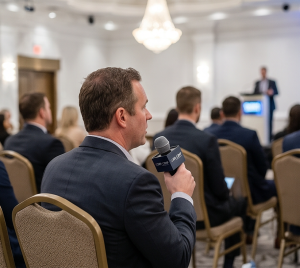
Use structured checklists to de-risk your gala. Start with an event AV checklist, detailed floor plans, and a run-of-show. Pre-brief presenters, label all content files, and centralize approvals to keep timelines moving.
High-utility tools
- Event AV checklist: Inputs for power, rigging, microphones, projection/LED, and playback.
- Floor plan + seating map: Scaled diagrams prevent last-minute compromises.
- Run-of-show: Minute-marked cues with owners and contingencies.
- Menu matrix: Tracks dietary requests and service cadence.
Prefer a quick start? Our corporate events overview outlines how we support planners end-to-end, including AV, staging, and multicultural catering under one roof.
Catering and Menus That Win Over Guests
Design a menu that balances familiarity and flair, respects dietary needs, and serves fast. Multicultural, Halal-friendly options with plated mains and dessert stations keep service smooth and guests engaged between program moments.
- Inclusive options: South Asian, Pakistani Halal, Middle Eastern, Sri Lankan, Caribbean, and Continental menus.
- Service speed: Synchronize courses with stage blocks to avoid noise during speeches.
- Late-night bite: Re-energize the room with stations when entertainment ramps up.
Example: For a 1,000-guest recognition night, we paired a Halal-friendly plated main with three regional dessert stations to reopen movement once awards wrapped. That shift increased networking and created natural photo moments under party lighting looks.
Case Studies and Examples (Mississauga)
Real programs prove what works. Below are three anonymized gala scenarios—awards, fundraising, and product showcase—each mapped to room selection, staging, menu, and pacing at Mississauga Convention Centre.
Awards Gala for a Tech Firm (900 guests)
- Rooms: Combined halls for dinner; adjacent foyer for arrivals and brand step-and-repeat.
- Stage: 36′ main with twin projection and confidence monitors.
- Menu: Halal-friendly plated service; dessert stations post-awards.
- Run-of-show: 30-min arrivals; 75-min dinner; 50-min awards; 40-min celebration set.
Nonprofit Fundraiser (600 guests)
- Rooms: One hall for seated dinner; foyer activations for silent auction.
- Stage: Lectern + live auction camera; sponsor loop on screens.
- Menu: Plated main with vegetarian and Halal-friendly variants.
- Run-of-show: Appeals woven between courses; silent auction closes pre-dessert.
Product Launch Showcase (750 guests)
- Rooms: Dinner hall + foyer showcase pods for hands-on demos.
- Stage: Reveal moments synced to lighting cues; music stingers.
- Menu: Reception-forward with chef stations; late-night snack to extend dwell time.
- Run-of-show: Short speeches; multiple demo blocks; after-party under party looks.
Self-contained answer: Use modular halls to right-size each element—foyer for arrivals and activations, ballroom for dinner and awards, and technical support rooms for stage management and content control. Align menu and pacing to the moments you want guests to remember.
Local considerations for 75 Derry Rd W
- Plan arrival windows suited to Mississauga commuter patterns to reduce lobby congestion.
- Peak gala season spans spring and late fall; secure dates early and hold weather-aware plans for any outdoor elements.
- For regional teams across the GTA, prioritize venues with ample on-site parking and straightforward highway access for smooth departures.
Frequently Asked Questions
Planners typically ask about capacity, AV, seating, and menu inclusivity. Below are concise answers you can use during shortlisting and site visits, tailored to corporate gala needs in Mississauga.
What makes a venue ideal for a corporate gala?
Look for flexible ballroom space, integrated AV with lighting and sound, ceiling height for scenic elements, and experienced staff. Add diverse catering with inclusive menus and verify diagrams that show real seating, staging, and camera positions for your guest count.
How far in advance should I book a corporate gala venue?
Book as early as your internal timeline allows, especially for spring and late-fall peaks. Securing a date 6–12 months ahead protects production lead times, menu tastings, and creative approvals, while also improving sponsor and VIP availability.
What seating format works best for awards?
Rounds of 8–10 create equitable sightlines and predictable service windows, making them ideal for awards programs. Place VIPs near the stage and leave camera lanes to reduce disruptions when honorees move to and from the platform.
Can a venue handle multicultural and Halal-friendly menus?
Yes—venues with diverse in-house catering can offer South Asian, Pakistani Halal, Middle Eastern, Sri Lankan, Caribbean, and Continental options. Centralize dietary requests on a menu matrix so service teams can stage accurate plates at pace.
How do I de-risk show production on gala night?
Run full tech checks, label files clearly, and script walk-ons and mic handoffs. Keep spare handhelds and a wired podium mic, and align lighting looks to each program segment. Short, rehearsed transitions protect pacing and audience energy.
Conclusion and Key Takeaways
Your corporate gala succeeds when purpose, production, and hospitality work as one. Choose a venue that matches scale and supports AV, align the show to your goals, and design a menu and seating plan that keeps conversation and recognition in balance.
- Anchor on purpose: Recognition, relationships, or fundraising drives every decision.
- Right-size the room: Use modular halls to balance intimacy with impact.
- Centralize production: In-house AV, lighting, and staging reduce risk and speed approvals.
- Honor guests: Multicultural, Halal-friendly menus and clear wayfinding elevate experience.
Next step: If you’re evaluating a corporate gala venue in Mississauga, our team can create sample diagrams and a minute-marked run-of-show based on your objectives. Schedule a discovery walkthrough to see layouts and lighting looks firsthand.
Related Topics and Next Steps
Deepen planning with venue selection criteria, décor strategies, and AV readiness. Review internal guides and checklists to shorten timelines and raise show quality without adding vendors.
Compare spaces using this perspective on banquet halls vs. event spaces, then align design choices with our décor transformations. For broad planning context, this outside overview of banquet halls offers a complementary lens: complete 2026 venue guide.