

 02 October, 2026
 Effective gala dinner menu planning starts with the event, not the dish list. The right menu depends on whether guests are attending an awards night, fundraiser, client appreciation event, networking reception, or formal celebration, as well as how much time the program allows for dining and movement.
Before comparing individual dishes, decide how food should be served, when guests will eat, what dietary and cultural requirements must be accommodated, and how the room will support service. The seven decisions below can help you prepare a focused brief for a venue or caterer.
Gala dinner menu formats at a glance
There is no single best format for every gala. Use the comparison below to identify the option that fits your program and guest experience, then refine the menu with the venue or caterer.
| Format | Strengths | Planning considerations | Best fit |
|---|---|---|---|
| Plated meal | Formal presentation and predictable seating | Requires coordinated table service and a protected dining window | Awards, recognition, and formal corporate dinners |
| Buffet or stations | Greater guest choice and natural movement | Needs thoughtful placement, queue management, and clear access | Networking-focused galas and varied preferences |
| Reception-style service | Encourages conversation and circulation | Food planning must support guests who may not be seated for a full meal | Mixers, fundraising receptions, and relationship-building events |
| Hybrid service | Combines structured dining with later movement | Transitions must be reflected in the run of show and room plan | Programs that become more social later |
1. Start with the gala’s purpose

The purpose of the gala should determine the role food plays in the evening. A recognition event may need guests focused on the stage during awards, while a fundraising gala may need time for conversation, auctions, pledges, or sponsor engagement. A client appreciation dinner may place more emphasis on relaxed interaction and hospitality.
Write the primary objective in one sentence before discussing the menu. Also identify secondary priorities such as formality, networking, entertainment, cultural celebration, or sponsor visibility. When priorities conflict, decide which one should guide the menu, or consider a hybrid structure that separates the two parts of the evening.
2. Choose the service style before the dishes
Compare the service style against the event format and guest profile before selecting specific dishes. This prevents a menu from looking appealing on paper but working poorly with the room or schedule.
A plated meal can support a polished, formal experience and help keep guests seated during presentations. Buffets and chef stations can offer more choice, but they require space for queues and movement. Reception-style service works when conversation and circulation are central, while hybrid service can provide structured dining early and reopen movement later.
3. Build the menu around the program timeline
Food service should have a defined place in the run of show. List guest arrival, networking, opening remarks, dinner, awards, entertainment, fundraising activities, closing remarks, and any transition to dancing or informal conversation.
Identify when guests must be seated, when they can move freely, and when the stage needs uninterrupted attention. Share the schedule with catering and production teams early. Mississauga Convention Centre describes its event services as including professional AV systems, lighting, staging, and technical support, which is relevant when menu service must be coordinated with production.
Do not promise a service time before the venue has reviewed the guest count, room configuration, menu structure, and program. Ask the venue to identify realistic service windows and any transitions that may need adjustment.
4. Plan for the guest profile and dietary requirements
Prepare a guest profile before requesting menu recommendations. Include estimated attendance, VIP considerations, allergies, dietary restrictions, accessibility-related needs, and preferences important to the audience.
Separate confirmed requirements from assumptions. Ask how dietary options will be identified, communicated, and served, and whether alternatives are available within the chosen service format. Provide the best available information even if the guest list is not final.
5. Confirm multicultural and Halal menu needs early
For a multicultural gala, cuisine is part of the guest experience and should be treated as an early planning decision. Ask which cuisines, preparation requirements, and menu choices matter to the audience, and whether those needs apply to the full menu or selected options.
Mississauga Convention Centre’s verified in-house catering includes South Asian, Pakistani Halal, Middle Eastern, Sri Lankan, Caribbean, and Continental cuisines. This range can give planners a useful starting point, but the final menu, preparation details, and available options should be confirmed directly with the venue.
State whether Pakistani Halal options are required, whether separate alternatives are needed for other dietary restrictions, and whether guests should choose between different menu directions. Do not assume that a broad cuisine category addresses every guest’s needs.
6. Coordinate the menu with the floor plan and service routes
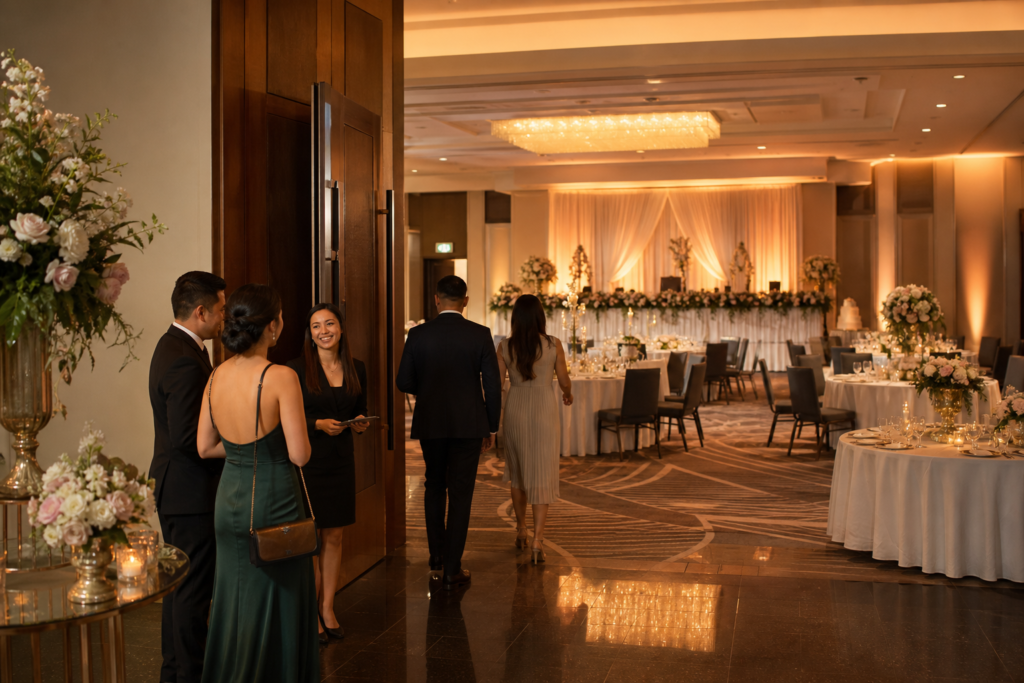
Food service works best when it is designed with the room rather than added after the seating chart is complete. Coordinate the gala dinner floor plan with service routes and table style so guests, servers, presenters, and equipment can move without competing for the same space.
For plated meals, consider how tables will be reached and how service will coexist with aisles, stage access, and sightlines. For buffets or stations, consider queue locations, return paths, accessibility, and whether guests will miss a key program moment while collecting food.
The plan should account for doors, bars, buffets, staging, AV equipment, and sponsor areas. Ask for a diagram that reflects the selected menu format, then review it with catering and production contacts when the guest count or room plan changes.
7. Match the menu plan to venue capabilities and the quote brief
A gala menu is only one part of the venue decision. Confirm the available room configuration, event scale, catering scope, AV, lighting, staging, technical support, parking, and package or décor enhancements.
Mississauga Convention Centre offers seven halls of approximately 4,250 square feet each, total capacity for more than 2,200 guests, and approximately 700 on-site parking spaces. It also provides in-house catering and integrated AV, lighting, staging, and technical support.
Ask how the selected menu interacts with the proposed room. Mississauga Convention Centre indicates that pricing is based on a tailored quote involving event type, size, menu, and selected enhancements. Treat those variables as part of your brief and clarify what is bundled, optional, or dependent on final details.
Pre-quote gala menu checklist
- Purpose: Awards, fundraising, networking, recognition, appreciation, or celebration.
- Event details: Date, location, duration, and estimated attendance.
- Guest profile: VIPs, groups, accessibility needs, and expected interaction patterns.
- Service format: Plated, buffet, stations, reception-style, or hybrid.
- Menu requirements: Cuisine preferences, Pakistani Halal needs, allergies, and dietary restrictions.
- Program schedule: Arrival, networking, meal windows, speeches, awards, entertainment, and closing activities.
- Room and production: Table style, stage, screens, microphones, lighting, staging, bars, and buffets.
- Enhancements: Décor, lighting packages, technical support, or other additions.
A complete brief helps the venue assess the event as a whole and makes proposals easier to compare.
Frequently asked questions
Which gala dinner service style works best for an awards or recognition event?
A plated meal often suits a formal awards program because it creates a defined dining structure and can help keep guests seated during presentations. The final choice depends on the schedule, guest profile, room layout, and venue recommendation.
How early should dietary and Halal menu requirements be included?
Include them in the first brief, even if the guest list is not final. Early information helps the venue explain options and reflect requirements accurately in the proposed menu and quote.
What information does a venue need for a gala dinner quote?
Provide the purpose, date, attendance, service format, menu direction, dietary and cultural requirements, program schedule, room needs, AV and staging requirements, and desired enhancements.
Conclusion: Make the menu serve the gala
Strong gala dinner menu planning begins with purpose and continues through service style, program timing, guest requirements, cultural preferences, floor-plan coordination, and venue capabilities. Choosing dishes becomes easier once those decisions are settled.
Prepare one concise brief explaining what the event should achieve, how guests should experience it, when food can be served, and what the room and production teams must support. Review those requirements with Mississauga Convention Centre.