 13 November, 2026
The right private event venue supports your event’s purpose from arrival through departure, not simply the room with the largest advertised capacity. Compare the layout, catering timing, AV and staging, guest access, parking, staffing, setup and teardown terms, and complete written quote before you book. For a corporate or mixed-format event, ask each venue to confirm its current room options, service scope, technical capabilities, access arrangements, and tailored proposal before you compare venues.
Start With the Event Outcome, Not the Room
A private event venue is more than an attractive room. It is the combination of space, operating plan, food service, technology, staffing, access, and timing that allows an exclusive gathering to run as intended.
Begin with four decisions:
- Purpose: Are you informing, celebrating, recognizing, launching, networking, fundraising, or bringing family and friends together?
- Attendance: How many people are invited, and how many are likely to arrive at the same time?
- Program: Will the event include speeches, presentations, dinner, dancing, demonstrations, sponsor activity, or several room transitions?
- Guest experience: What should guests see, do, eat, and understand from arrival to departure?
This brief prevents a common mistake: choosing a room based on its maximum capacity and discovering later that registration, dining, staging, entertainment, or networking has nowhere practical to go.
Match the Venue to the Event Format
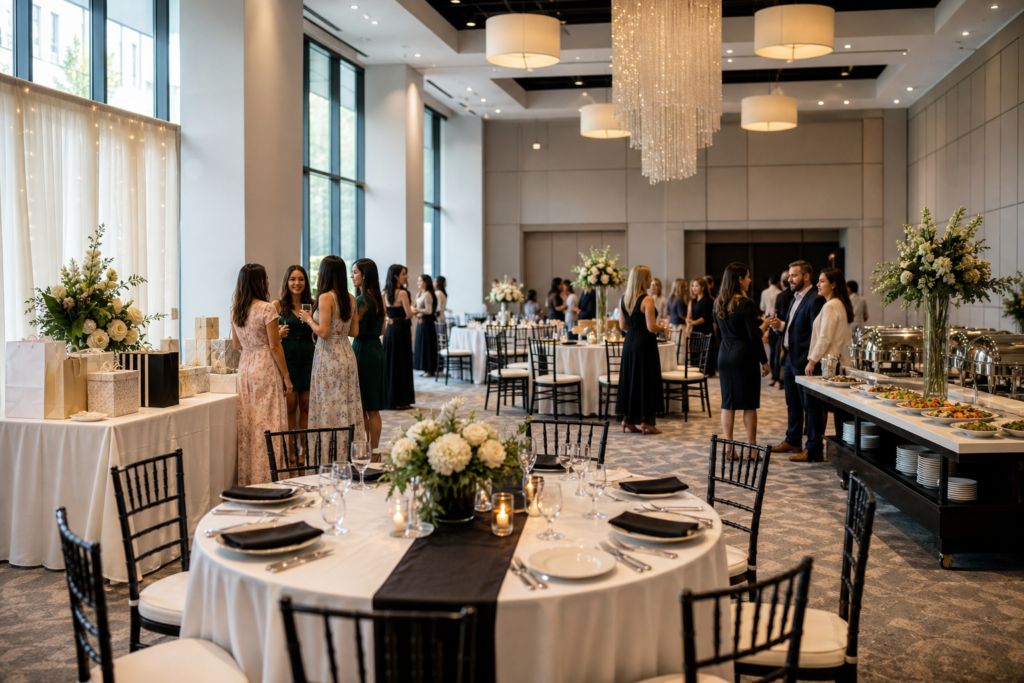
Different private events place different demands on a venue. A networking reception needs circulation and conversation zones, while an awards dinner needs strong sightlines, timed meal service, a stage, and controlled attention during presentations.
For a corporate event, begin by asking whether the venue can support your specific format, such as a conference, seminar, trade show, presentation, reception, awards program, holiday gathering, or mixed-format meeting. Mississauga Convention Centre’s accepted event information identifies conferences, seminars, trade shows, meetings, exhibitions, and corporate events as relevant uses. For a broader social-event comparison, review the factors in this guide to choosing a social event venue.
| Event format | Prioritize | Questions to resolve |
|---|---|---|
| Networking reception | Open circulation, registration, food access, conversation areas, and comfortable sound levels | Where will guests register? Can food stations avoid queues at the entrance? Where will sponsors or exhibitors be placed? |
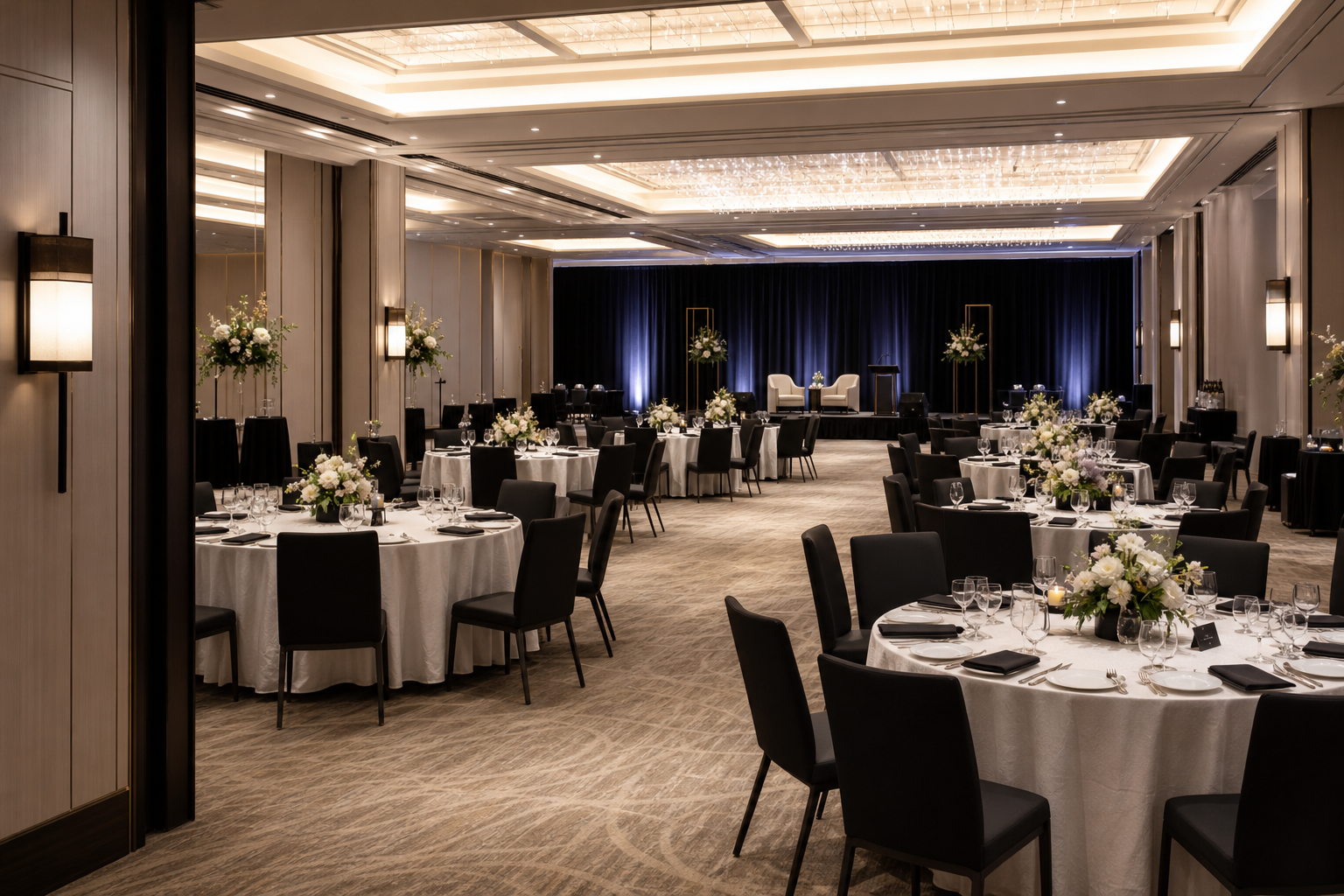
| Awards dinner | Stage sightlines, table orientation, microphone coverage, meal timing, and lighting cues | Can every table see the stage? How will courses be timed around speeches? Where will recipients wait before going on stage? |
| Holiday party | Dining, entertainment, dancing, décor, arrival flow, and coat or personal-item arrangements | How much space remains after tables and production are placed? What setup and teardown windows apply? |
| Product launch | Presentation visibility, demonstration space, branding, guest movement, and photography positions | Where can guests gather before the reveal? Is there enough power and clear floor space? |
| Milestone celebration | Dining comfort, speeches, music, cultural requirements, photographs, and family or community movement | Does the layout support both formal moments and conversation? How will catering reflect guest preferences? |
| Mixed-format gathering | Separate zones for registration, presentation, meal service, networking, entertainment, or exhibits | Can the room change without moving guests through service areas? Which transitions need buffer time? |
Compare Capacity, Room Configuration, and Guest Flow
Capacity is useful only when it is tied to the activity taking place in the room. A venue may accommodate many guests overall, yet a presentation with banquet seating, a dance floor, buffet stations, and sponsor displays will use space differently from a theatre-style seminar.
Ask the venue for current capacity figures for your proposed layout instead of relying on a headline number. Request the recommended setup for your attendance, program, furniture, production, service requirements, and any separate registration or networking areas.
Assess the room in zones:
- Arrival: Place registration, welcome signage, coat storage, and guest check-in where they will not block the main entrance.
- Presentation: Check sightlines, stage position, screen placement, microphone coverage, and presenter movement.
- Dining: Allow room for tables, chairs, service routes, buffet or food stations, and comfortable movement.
- Networking: Create standing areas away from registration queues, speakers, and loud entertainment.
- Branding: Identify approved locations for sponsor walls, directional signs, stage graphics, displays, and demonstrations.
- Access: Confirm accessible routes, seating positions, washrooms, drop-off arrangements, and communication supports.
For smaller private gatherings, compare usable activity space as carefully as guest capacity. This private party venue comparison is useful when dining, entertainment, or family activities compete for the same floor area.
Use Room-Flow Examples to Test the Plan
The following examples are hypothetical planning scenarios, not descriptions of past events. Their purpose is to show how to test a private event venue before requesting a proposal.
Networking reception with registration and sponsor activity
Place registration near the entrance, then lead guests toward a central networking area. Keep sponsor displays visible without forcing attendees to queue beside food service. Ask the venue to map power, display locations, microphone coverage, signage, food replenishment, and staff movement.
Awards dinner with a timed program
Orient tables toward the stage and leave a clear route for presenters and award recipients. Build meal service into the running order so speeches, courses, entertainment, and photographs do not compete for guests’ attention.
Product launch followed by a reception
Use the first phase for registration and presentation, then guide guests toward the product demonstration and reception. Discuss branding permissions, screen content, sound, lighting, demonstration power, photography positions, and equipment deliveries.
Treat Catering and Production as Part of the Program
Catering and production should be planned with the agenda, not added after the room is chosen. Meal timing affects registration, breaks, speeches, room changes, networking, entertainment, and guest movement.
Ask the venue which catering formats, menu options, dietary accommodations, audiovisual systems, lighting, staging, and technical support are available for your event. The scope should be confirmed in writing because service availability, equipment, staffing, and operating rules vary by venue and event format.
Define the menu format, service window, special meals, labeling, staffing, setup, equipment, and cleanup in the proposal instead of assuming they are included. The venue’s private dining planning considerations can also help you think through food service, room use, and guest comfort.
- Which microphones, screens, sound systems, and lighting options suit the program?
- Is technical support available during setup, rehearsal, and the live event?
- What setup, rehearsal, strike, and equipment-delivery windows are available?
- Can the room support entertainment without overwhelming conversation or speeches?
- What arrangements apply to internet access, recording, remote participation, or livestreaming?
Outside catering, bar service, internet, rehearsal time, staffing, hybrid production, and entertainment infrastructure should all be discussed before signing. Do not treat them as standard package inclusions without written confirmation.
Compare the Full Venue Quote, Not Just the Room Price
There is no dependable average private event venue cost because the total depends on date, duration, attendance, room count, food and beverage, AV, staffing, setup, décor, taxes, and contract terms. A lower room price may not represent a lower total if it excludes setup hours, technical equipment, taxes, overtime, cleanup, décor, or required rentals. Related reading: What Is a Private Dining Rental for Edmonton Events?.
| Quote area | Ask the venue to identify | Why it matters |
|---|---|---|
| Space | Assigned hall, additional rooms, access time, setup, and teardown windows | More rooms or longer access periods can change the total. |
| Food and beverage | Menu, service style, guest-count basis, dietary meals, bar service, staffing, equipment, and cleanup | Different formats require different staffing and timing. |
| AV and production | Microphones, screens, sound, lighting, staging, technicians, rehearsal, and operator hours | A dinner with speeches needs a different scope from a casual reception. |
| Operations | Registration support, room resets, event-day contacts, vendor access, deliveries, and security | Unassigned tasks become last-minute costs or planning gaps. |
| Commercial terms | Taxes, service charges, payment schedule, deposit, overtime, cancellation, postponement, and refund rules | These terms affect budget and financial risk. |
Ask the venue to label each item as included, optional, excluded, variable, or requiring confirmation. A useful proposal should identify the event space, timing, food and beverage, audiovisual services, staffing, access information, taxes, payment terms, and optional charges.
Check Arrival, Parking, Accessibility, and Operations
Arrival planning affects the first impression and the pace of the entire event. Before booking, confirm the venue’s current address, route options, parking arrangements, accessible parking and drop-off, pedestrian paths, entrance signage, and registration placement.
Ask how guests will move from arrival to the event space, and whether the proposed route works for people using mobility aids or requiring other accommodations. Confirm the route to entrances, washrooms, seating, stage access, registration, and communication supports.
- Where do vendors and production teams load in, and during which hours?
- Who receives deliveries and approves changes on event day?
- When can décor, AV, signage, and catering teams enter?
- Who is responsible for setup, room resets, teardown, waste, and personal items?
- Which venue contact can make operational decisions during the event?
For a fundraiser, gala, or community event, add donor registration, auction or sponsor displays, stage access, payment stations, and guest privacy to the operations brief. A practical fundraiser venue planning checklist can help identify these zones.
Prepare a Venue Enquiry That Produces a Useful Proposal
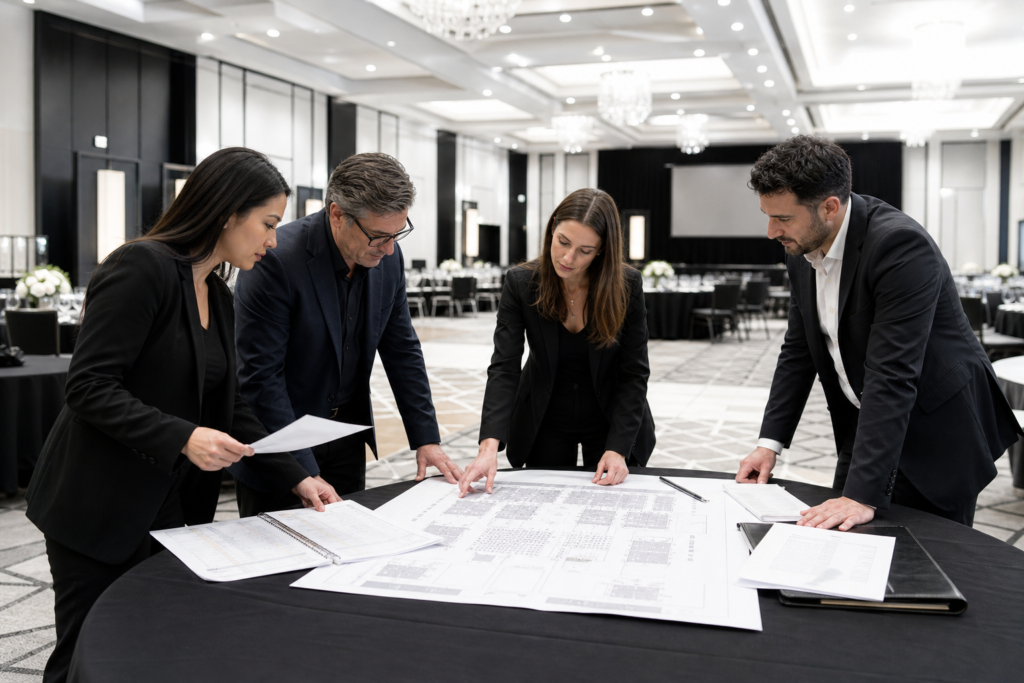
Include the date range, attendance, purpose, schedule, preferred layout, catering format and dietary needs, AV and staging, branding, registration, parking, accessibility, vendors, setup and teardown, budget range if available, and decision deadline.
Ask how far in advance the venue recommends enquiring for your event type and date. The answer depends on season, day of week, attendance, program complexity, and date flexibility, so a fixed lead time would be misleading.
Private Event Venue Questions to Ask Before Booking
- Which hall and layout are proposed, and what guest count does that setup support?
- Can the room accommodate registration, dining, presentations, networking, entertainment, displays, and accessible routes together?
- What are the room access, setup, rehearsal, event, and teardown hours?
- Which catering, bar, staffing, equipment, setup, cleanup, and service items are included?
- What AV, lighting, staging, microphones, screens, and technical support are included or optional?
- What branding, décor, sponsor, entertainment, and outside-vendor rules apply?
- How will parking, drop-off, registration, accessibility, and guest wayfinding work?
- Who manages deliveries, vendor access, room resets, changes, and event-day decisions?
- What taxes, service charges, overtime, payment dates, cancellation, postponement, and cleanup terms apply?
Record the answers in one comparison sheet. The strongest option is the venue that fits the complete operating plan, not necessarily the one with the lowest first number.
FAQ: Private Event Venue Decisions
What is the average cost of a private event venue?
There is no dependable average price because the total depends on date, duration, attendance, room count, food and beverage, AV, staffing, setup, décor, taxes, and contract terms. Request an itemized proposal separating included, optional, excluded, variable, and confirmation-required costs.
How far in advance should you contact a private event venue?
Contact the venue as soon as you know the event purpose, approximate attendance, preferred date, and required program. Season, date flexibility, event size, and production complexity determine realistic timing.
Why should outside catering be discussed before booking a venue?
Outside catering affects kitchen access, staffing, equipment, delivery, service timing, dietary communication, waste, cleanup, and venue responsibilities. Discuss it before signing because each venue sets its own operating requirements.
Can one private event venue support both a presentation and a dinner?
Yes, when the room, stage, sightlines, meal service, technical setup, and transition plan are designed together. Ask for a layout and run of show showing seating, food service, and any room changes.
What is the best place for a birthday party?
The best birthday venue fits the guest count, meal format, entertainment, cultural or dietary needs, accessibility requirements, and desired privacy. Compare usable activity space and guest flow, then confirm what the quote includes for food, décor, music, setup, and cleanup.
Turn the Comparison Into Your Next Step
Prepare a short event brief with the date range, attendance, purpose, schedule, layout, catering, production, access needs, and commercial terms you want itemized. To compare availability, layouts, catering, AV, access, and event requirements, speak with Mississauga Convention Centre about its corporate event spaces.