 20 September, 2026
Last updated: October 2026
By Preet Dass – Mississauga Convention Centre
Last updated: October 29, 2026
What to Look for in a Cultural Celebration Venue
Choosing a venue for a cultural celebration involves more than checking capacity. The room must accommodate the shape of the program, including ceremonies, processions, speeches, performances, dining, dancing, photography, and any quiet or prayer requirements. It should also make it straightforward to communicate dietary expectations, production cues, accessibility needs, and arrival plans to one coordinated team.
Mississauga Convention Centre at 75 Derry Road West offers seven halls of approximately 4,250 square feet each, total capacity of more than 2,200 guests, and approximately 700 on-site parking spaces. Its in-house services include audiovisual systems, lighting, staging, technical support, and catering across South Asian, Pakistani Halal, Middle Eastern, Sri Lankan, Caribbean, and Continental cuisines.
- Start with the ceremony and reception program, not just the guest count.
- Check whether halls can be used separately or together.
- Confirm Halal, vegetarian, vegan, allergen-aware, and regional menu options.
- Ask who operates microphones, screens, lighting, and performance cues.
- Map parking, accessible entry, vendor access, guest wayfinding, and weather-sensitive arrivals.
What Is a Cultural Celebration Venue?
A cultural celebration venue is an event space designed or equipped to support traditions, rituals, performances, community gatherings, and culturally specific hospitality. The phrase is descriptive rather than a formal venue classification, so the useful question is not whether a building carries that label. Ask instead whether it can support the customs, menu, schedule, room layout, and guest experience your event requires.
A suitable venue may need space for a ceremonial entrance, a mandap or canopy, a family head table, a stage, a large dance floor, regional food stations, a quiet room, or a separate area for photographs. It may also need enough loading and service access for décor teams, musicians, caterers, staging, and audiovisual equipment.
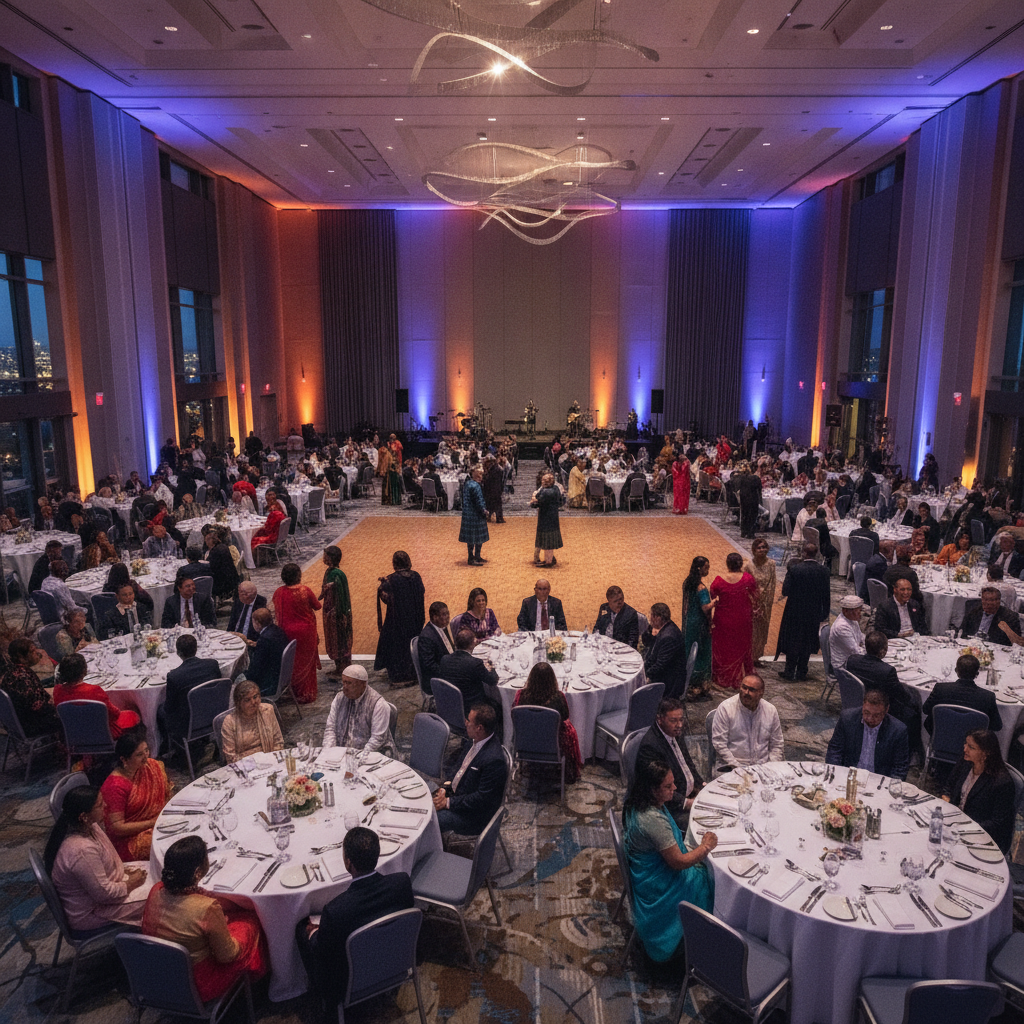
For planners, flexibility is often more important than a single impressive ballroom. Mississauga Convention Centre’s seven similarly sized halls can be arranged for one large gathering or divided between a ceremony, reception, exhibition, family area, and after-party. The best configuration depends on the run-of-show and how much separation the program needs.
Why the Venue Matters for an Inclusive Celebration
Cultural events often combine several experiences in one day. Guests may move from a welcome or ceremony to dinner, speeches, live music, dancing, and photographs, while different generations and family groups have different comfort needs. A venue that plans these transitions deliberately can reduce crowding and protect the meaning of important moments.
Respect traditions through practical planning
Respect is reflected in operational details. A procession needs a clear route; a performance needs sightlines and a tested sound system; elders may appreciate seating away from loud speakers; and a prayer or quiet area may need to be identified before the room is dressed. Discuss these requirements during the tour rather than assuming they can be added on the event day.
Make hospitality inclusive
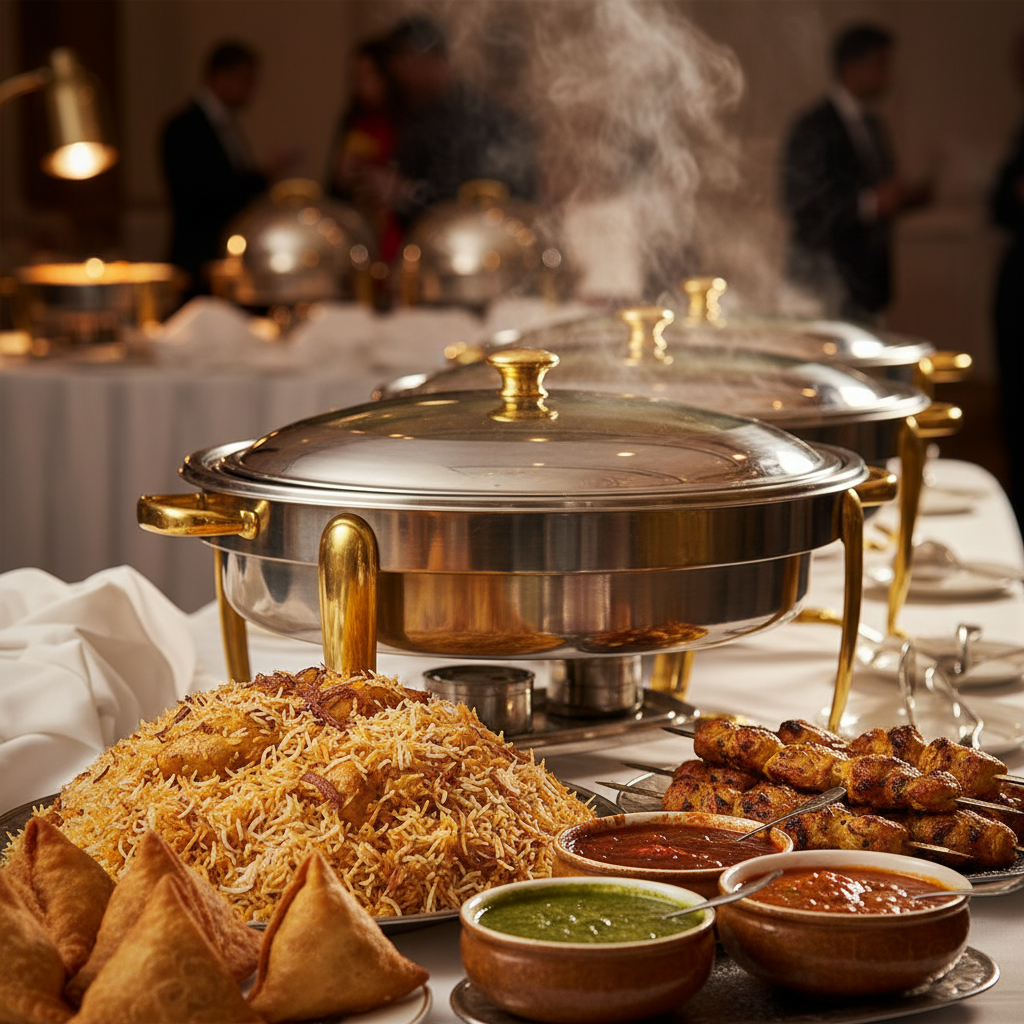
Menu planning should cover both cultural expectations and individual dietary needs. Confirm how Pakistani Halal, South Asian, Middle Eastern, Sri Lankan, Caribbean, Continental, vegetarian, vegan, and allergen-aware choices will be prepared, labelled, displayed, and served. A tasting is useful because it lets the planning group assess flavour, service style, portioning, and timing together.
Protect the guest experience
Accessible entrances, intuitive wayfinding, comfortable seating, clear sightlines, and nearby parking affect how welcome guests feel. The Centre’s approximately 700 on-site parking spaces can simplify arrivals for large groups, while a pre-function area can give guests room to gather before the main program begins.
For broader room-flow ideas, the guide to planning a smooth social event explains how hospitality touchpoints and guest movement can work together.
How to Choose a Cultural Celebration Venue Step by Step
The most efficient venue search starts with the event’s sequence. A guest count alone cannot tell you whether you need one hall, multiple rooms, a large stage, a separate dining area, or space for a procession. Use the following process to compare venues consistently.
1. Write the program before touring
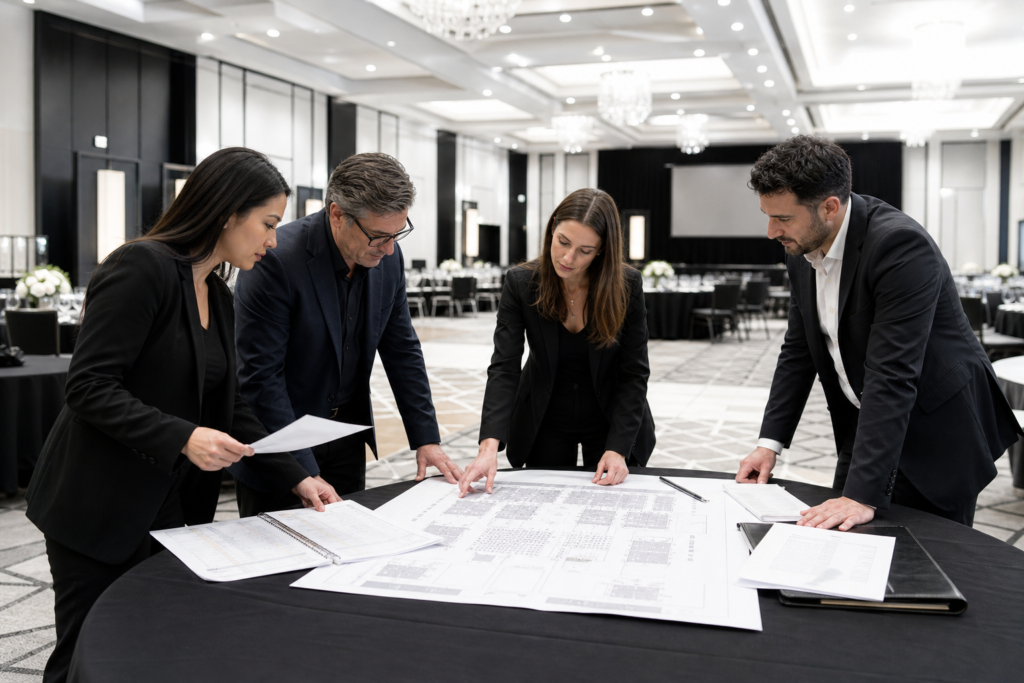
List every planned element in order: arrival, welcome, ceremony, procession, photographs, cocktails, dinner, speeches, performances, dancing, dessert, and departure. Note which moments need privacy, a stage, a microphone, a screen, a dance floor, or a room change. This creates a practical brief that a venue team can respond to.
2. Estimate the full attendance footprint
Include guests, children, elders, performers, musicians, hosts, vendors, photographers, and service staff when thinking about space. A 500-person dinner may require more room than a 500-person lecture if it includes a stage, buffet stations, dance floor, photo backdrop, and family seating. Keep a realistic range until invitations and confirmations are complete.
3. Shortlist for flexibility and support
Prioritize modular halls, culturally appropriate catering, dependable production, accessible access, and parking. An all-inclusive package can reduce the number of vendors and handoffs, but ask exactly what is included and which decisions remain with your planning group.
4. Tour the room as a guest
Walk the arrival route, registration or welcome area, ceremony path, dining layout, washrooms, stage sightlines, photo locations, and exit route. Ask where décor can be installed, how vendors load in, where performers wait, and whether service corridors intersect with ceremonial movement.
5. Align catering and production
Confirm menu requirements, tasting arrangements, service style, allergen communication, sound checks, screens, lighting looks, staging, and cue ownership. A single production conversation is especially valuable when a live band, DJ, cultural performance, speeches, and formal ceremony all share the same schedule.
6. Build the run-of-show and lock responsibilities
Record arrival windows, room access, setup deadlines, sound checks, meal service, speeches, transitions, and teardown. Assign each cue to the MC, DJ or band, venue technician, caterer, décor team, or family representative. Add modest buffers between major activities so a delayed photograph or procession does not disrupt dinner service.
The practical overview on how to choose an event venue can help committees create a first-pass comparison before a site visit. If the day combines business sessions with an evening celebration, the corporate venue planning guide offers useful ideas for keeping both programs in one location.
Celebration Formats and Space Planning Approaches
Different cultural celebrations need different layouts. The same hall may work beautifully for one program and feel constrained for another if the stage, dance floor, dining tables, and ceremony area are placed without considering movement. Begin with the moments that cannot be compromised, then build the surrounding hospitality zones.
South Asian weddings and multi-event programs
Sangeets, mehndi celebrations, baraats, ceremonies, and receptions may require different layouts and energy levels. Plan a clear procession route, a mandap or canopy footprint where applicable, a dance floor sized for the expected participation, and food stations that do not block photography or guest circulation. Separate halls can make a multi-event program feel intentional rather than like a rapid room reset.
Middle Eastern and family-style celebrations
Family-style dining, live music, dessert displays, and a strong dance-floor focus often benefit from generous circulation around tables. Discuss speaker placement, seating for elders, prayer or quiet requirements, and whether the stage remains visible from every family section.
Caribbean, Sri Lankan, and community celebrations
Live bands, DJs, cultural performances, tributes, and dance presentations place particular demands on sound, lighting, stage access, and changeovers. A cue sheet and a full technical rehearsal can prevent microphone, playback, and transition problems during a long program.
Galas, festivals, graduations, and school events
Community galas and cultural festivals may need registration, sponsor displays, exhibitions, performances, dining, and multiple entry points. Graduations and school formals need clear stage sightlines, controlled access, safe movement, photo areas, and a layout that can shift from ceremony seating to a reception.
For South Asian programs, the South Asian wedding planning guide provides more detail on procession flow and ritual-focused layouts.
| Format | Planning priority | Helpful venue features |
|---|---|---|
| South Asian wedding | Mandap or canopy, procession, dining, and dancing | Modular halls, staging, lighting, multicultural menus |
| Middle Eastern celebration | Family-style service, live music, and guest comfort | Flexible seating, strong sound support, adjacent space |
| Caribbean or Sri Lankan event | Performance energy and reliable changeovers | Stage access, tested microphones, cue-based lighting |
| Community gala | Exhibits, sponsors, performances, and dinner | Multiple halls, pre-function areas, wayfinding |
| Graduation or formal | Stage visibility, photographs, and controlled entry | Theatre-style layouts, AV support, accessible routes |
Reviewing banquet hall setup options is useful when comparing table plans, staging positions, room combinations, and sightlines.
Mississauga Logistics for a Cultural Celebration
Location affects the event before guests enter the hall. Mississauga Convention Centre is at 75 Derry Road West, serving Mississauga, Toronto, Brampton, and the wider GTA, and is minutes from major highways and Toronto Pearson International Airport. Those connections can help when families, speakers, performers, or community groups are travelling from different parts of the region.
Arrival and parking
Plan a simple arrival message that includes the full address, parking instructions, entrance details, and an approximate arrival window. Approximately 700 on-site parking spaces can reduce the need for guests to search for parking, but large programs should still assign a greeter or wayfinding plan. Reserve convenient drop-off consideration for elders, guests with mobility needs, and families carrying ceremonial items.
Weather and seasonal comfort
Winter arrivals, rain, and hot summer conditions can change the guest experience quickly. Use indoor pre-function space for welcomes and coat management, protect outdoor ceremony elements with a contingency plan, and confirm how décor or temporary structures will be handled before finalizing the design.
Access for vendors and performers
Ask about load-in timing, staging storage, sound checks, dressing or waiting areas, and the route from loading access to the stage. The same conversation should cover décor installation, photography, entertainment, floral arrangements, specialty food stations, and teardown. Clear access rules protect both the event schedule and the building.
Catering, AV, Décor, and Accessibility Checklist
A cultural celebration feels cohesive when food, room design, and production support the same program rather than competing for attention. Bring the caterer, venue coordinator, décor lead, MC, and technical team into the planning conversation early enough to identify conflicts.
Catering questions
- Which South Asian, Pakistani Halal, Middle Eastern, Sri Lankan, Caribbean, and Continental dishes are available?
- How will Halal, vegetarian, vegan, and allergen-aware dishes be separated and labelled?
- Will food be plated, family-style, buffet service, stations, or a combination?
- How will dinner timing work around speeches, prayers, performances, and dancing?
- Can the planning group taste the menu before approving the final selection?
Production and décor questions
- Where will the stage, screens, speakers, dance floor, backdrop, and lighting fixtures go?
- Who manages microphone passes, music playback, video, lighting cues, and troubleshooting?
- Can performers enter and leave without crossing active service routes?
- What are the approved installation, rigging, flame, candle, and teardown requirements?
- Where can photographers create a backdrop without narrowing guest circulation?
Accessibility and comfort questions
Confirm accessible entry, seating locations, washroom access, quiet areas, clear sightlines, and a route that does not require guests to cross a dance floor or service line. Ask the venue team to review the plan with the family or community representatives who understand the guests’ needs best.
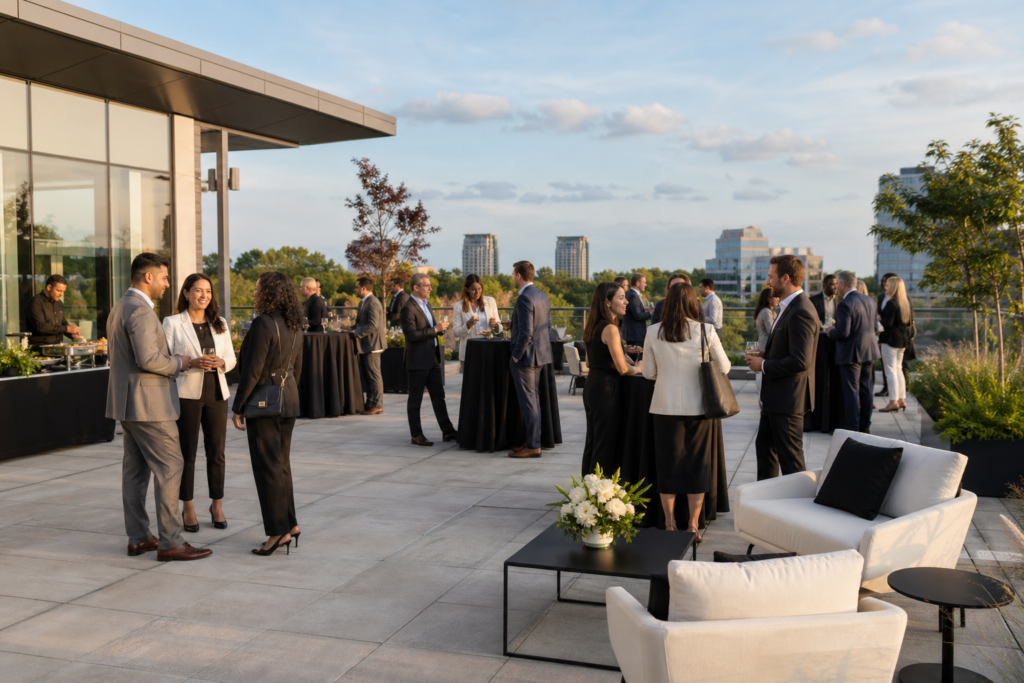
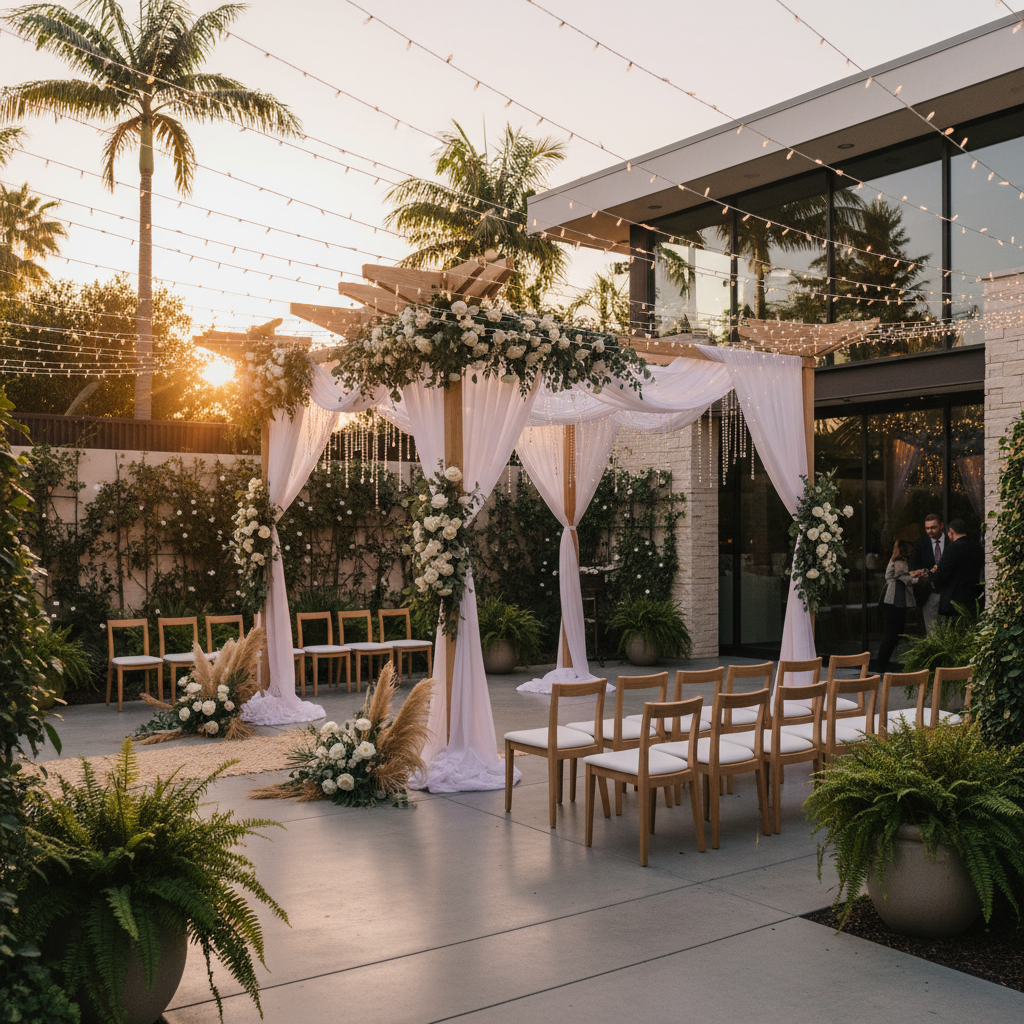
The Centre’s customizable patio may suit a ceremony or cocktail hour with a canopy or string lighting, subject to the event plan and venue requirements. For wedding-focused layouts, see the guide to wedding venues and guest flow.
How Flexible Halls Add Value
The value of a venue is not only the appearance of the ballroom. It also includes the number of planning decisions the venue team can coordinate, the number of room changes avoided, and the amount of risk removed from the event day.
One hall for a focused reception
A single-hall reception can work when the ceremony, dining, stage, and dance floor share one carefully planned footprint. The advantage is a simple guest journey, but the layout must protect service routes and keep the stage visible from dining and family seating.
Separate halls for a multi-part program
Using separate rooms for a ceremony, reception, exhibition, or after-party can preserve the atmosphere of each part of the day. It can also reduce the pressure of a fast room flip, provide a quieter place for guests who need a break, and let technical teams prepare the next space in advance.
Multiple halls for a large community event
A gala or community celebration may combine registration, sponsor activity, exhibits, performances, dinner, and dancing. Seven halls of approximately 4,250 square feet each give planners options to create zones while the total venue capacity of more than 2,200 guests supports larger gatherings. The final arrangement should be based on attendance, program sequence, service style, and evacuation or access requirements rather than capacity alone.
For a concise overview of the Centre’s amenities and planning approach, see the Mississauga Convention Centre venue overview. If you are comparing wedding-specific options, the wedding venue rental guide also illustrates how ceremony, dining, and reception flow can be coordinated.
A Practical Booking Checklist
Before signing an agreement, ask the venue team to respond to the same checklist you use for every finalist. Written answers make it easier for a family, committee, or corporate sponsor to compare options and avoid assumptions.
- Does the available date support the complete setup, event, and teardown schedule?
- Does the proposed room arrangement fit the guest range, stage, dining, dance floor, and cultural elements?
- Are the required Halal, regional, vegetarian, vegan, and allergen-aware menu choices available?
- Which AV, lighting, staging, technician, furniture, and décor services are included?
- Where will ceremonies, processions, performances, photographs, prayer, and quiet breaks take place?
- How will guests, caterers, entertainers, décor teams, and accessible arrivals move through the building?
- What is the weather contingency for outdoor components?
- When will the final guest count, menu, floor plan, cue sheet, and payment schedule be confirmed?
A venue tour should end with a short written action list. Include the next tasting date, the responsible person for each decision, the deadline for the floor plan, and the point of contact for event-day questions.
Frequently Asked Questions
What makes a good cultural celebration venue?
A good venue combines flexible rooms, culturally appropriate catering, dependable AV and staging, accessible guest routes, and practical arrival support. It should be able to explain how ceremonies, performances, dining, dancing, and photography will share the space without creating avoidable conflicts.
Can a cultural celebration use separate rooms for the ceremony and reception?
Yes. Separate rooms can protect the atmosphere of each part of the program, reduce the need for a fast room flip, and give planners more control over technical preparation. The venue should confirm guest wayfinding, accessibility, service routes, and the transition time between rooms.
Does Mississauga Convention Centre support Halal and multicultural catering?
Mississauga Convention Centre offers South Asian, Pakistani Halal, Middle Eastern, Sri Lankan, Caribbean, and Continental cuisines, along with vegetarian, vegan, and allergen-aware planning options. Confirm the final menu, labelling, service style, and tasting process with the venue team for the specific event.
How should planners handle AV for cultural performances and speeches?
Build a written cue sheet covering microphones, music playback, video, lighting, entrances, exits, and transitions. Schedule a sound check with the MC, DJ, band, performers, and venue technicians so everyone understands who owns each cue and how problems will be handled.
Plan Your Cultural Celebration in Mississauga
Choose a cultural celebration venue that can honour the program while simplifying the practical work behind it. Share your guest range, traditions, menu requirements, room sequence, and production needs with Mississauga Convention Centre to begin mapping a suitable plan at 75 Derry Road West.
Contact Mississauga Convention Centre to discuss available spaces, catering, AV, staging, parking, and the next steps for your celebration.